宏观政策

Search documents
铝锭:成本端受消息面提振,铝价暂偏强震荡,成材:重心下移偏弱运行
Hua Bao Qi Huo· 2025-05-22 02:37
Report Summary 1) Report Industry Investment Rating No specific industry investment rating is provided in the report. 2) Report's Core View - For building materials, the price is expected to move in a volatile and consolidating manner, with its center of gravity shifting downward and showing a weak performance [1][2]. - For aluminum ingots, the price is expected to fluctuate strongly in the short - term range, and attention should be paid to macro - sentiment and downstream start - up [3]. 3) Summary According to Relevant Content Building Materials - **Production Impact**: Yunnan - Guizhou short - process construction steel enterprises' shutdown during the Spring Festival is expected to affect 741,000 tons of building steel production. In Anhui, 6 short - process steel mills have different shutdown schedules, with a daily production impact of about 16,200 tons during shutdown [1][2]. - **Market Transaction Data**: From December 30, 2024, to January 5, 2025, the total transaction area of new commercial housing in 10 key cities was 2.234 million square meters, a 40.3% decrease from the previous period and a 43.2% increase year - on - year [2]. - **Price Trend**: Building materials continued to oscillate downward yesterday, reaching a new low. In the context of weak supply and demand and pessimistic market sentiment, the price center has been continuously shifting downward, and this year's winter storage is sluggish, providing little price support [2]. Aluminum Ingots - **Alumina Situation**: Last week, southern alumina enterprises had concentrated maintenance and production cuts, with the operating capacity decreasing by 2.9 million tons/year compared to the previous period. Alumina enterprises have been facing losses, and the spot price has continued to rebound due to tightened supply and strong price - holding intentions [2]. - **Bauxite Event**: The revocation of some mining rights in Guinea has affected the supply of bauxite. The specific impact needs to be evaluated, and it may provide short - term emotional support to the cost of alumina [2][3]. - **Inventory Status**: On May 19, the inventory of electrolytic aluminum ingots in major domestic consumption areas was 585,000 tons, an increase of 4,000 tons from last Thursday and a decrease of 16,000 tons from last Monday. The subsequent inventory trend depends on the matching of downstream export order restocking demand and incoming goods [2].
上海财经大学校长刘元春:4月经济数据彰显韧性,政策评估与展望需多维考量
Zheng Quan Shi Bao Wang· 2025-05-21 11:31
Group 1 - The core viewpoint is that recent economic indicators for April demonstrate the resilience of China's economy, with some data exceeding market expectations, particularly an 8.1% year-on-year increase in goods exports in USD terms [1] - Despite a decline in exports and imports with the US by 21% and 13% respectively, exports to non-US regions have significantly increased, indicating a need to reassess the impact of tariffs on the economy in May and June [1] - The expectation for further policy easing may need to be re-evaluated based on the stable growth in production and demand, contrary to previous market expectations of economic pressure [1] Group 2 - The next phase will see more proactive fiscal policies and moderately loose monetary policies, with a focus on stabilizing the domestic economic cycle, particularly through the real estate market [2] - From January to April, general public budget expenditure increased by 4.6%, while government fund budget expenditure rose by 17.7%, indicating a broad fiscal expenditure growth of over 7% [2] - The adjustment of micro-policies is crucial, as current low price phenomena are influenced not only by supply relations but also by the micro-market environment and pricing systems [2] Group 3 - The expansion of domestic demand strategy should focus on structural adjustments rather than just short-term stimulus, requiring a shift in understanding macro policies from crisis management to mid-term structural adjustments [3] - A better understanding of the relationship between policy choices, coordination of macro and micro policies, and the balance between short-term policies and mid-term reforms is essential for enhancing economic resilience [3]
华宝期货晨报铁矿石-20250521
Hua Bao Qi Huo· 2025-05-21 05:15
晨报 铁矿石 铁矿石:地产数据偏弱 矿价波动加剧 整理 投资咨询业务资格: 从业资格号:F3059924 投资咨询号:Z0002978 电话:010-62688526 成 材:武秋婷 从业资格号:F3078638 投资咨询号:Z0018248 电话:010-62688555 从业资格号:F3038114 投资咨询号:Z0014834 电话:010-62688541 原材料: 冯艳成 从业资格号:F3059529 投资咨询号:Z0018932 电话:010-62688516 供应方面:外矿环比显著增加,整体同比降幅趋于收窄。5 月份是外矿发运旺季,主流矿 山预计发运保持平稳回升态势,供给端支撑力度边际减弱。 需求方面:国内需求整体处于历史同期高位区,铁水环比回落至 244.8(-0.87),短期需 求端见顶,国内终端需求进入淡季,但当前钢厂盈利率水平较高且出口端预期上修,预期铁水 将整体高位回落走势但下行斜率偏低,短期对价格影响程度尚不显著。 原材料:程 鹏 库存方面:从当前国内高企的需求水平来看,5 月份港口库存水平将保持相对平稳或偏向 于去化态势,但整体评估来看,库存整体处于高位,库存高位阶段性去库难以提供 ...
权威解读丨从4月份数据看中国经济增长点
Xin Hua She· 2025-05-20 12:09
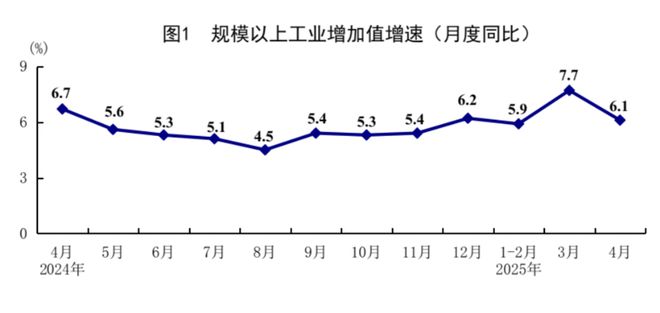
Economic Overview - In April, China's economy demonstrated stable growth supported by proactive macro policies, with production and demand maintaining a steady increase [1] - The industrial added value for large-scale enterprises grew by 6.1% year-on-year, while the service production index increased by 6.0% [3] - Retail sales of consumer goods reached 37,174 billion yuan, marking a year-on-year growth of 5.1% [3] Investment and Consumption - Consumption and investment both showed stable growth, with the "old-for-new" policy supporting steady consumption growth [3] - Infrastructure investment maintained a stable growth rate of 5.8%, while manufacturing investment slightly declined but remained significantly above economic growth rates [3] - High-tech industries such as information services, computers, and aerospace continued to see double-digit growth, providing crucial support for domestic demand [3] Supply Chain and Production - The production of 3D printing equipment, industrial robots, and new energy vehicles maintained rapid year-on-year growth, indicating a recovery in the economic supply-demand structure [3] - The total import and export value of goods increased by 2.4% year-on-year, with a notable 9.5% growth in the export of electromechanical products [9] Policy and Future Outlook - The coordination of monetary and fiscal policies has played a positive role in stabilizing domestic demand [7] - The government aims to implement more proactive macro policies to stabilize employment, businesses, markets, and expectations, while promoting high-quality development and strengthening domestic circulation [9]


【新思想引领新征程】4月份我国经济顶住压力稳定增长 延续向新向好发展态势
Yang Guang Wang· 2025-05-20 06:34
Economic Overview - China's economic foundation is stable, with multiple advantages, strong resilience, and significant potential, maintaining a long-term positive trend [1][4] - In April, the industrial added value for large-scale enterprises grew by 6.1% year-on-year, marking one of the fastest monthly growth rates since last year [1][4] Employment Situation - The urban survey unemployment rate in April was 5.1%, a decrease of 0.1 percentage points from the previous month, continuing a downward trend for two consecutive months [2] - Employment policies have been strengthened to support key groups such as youth and migrant workers, contributing to overall employment stability [2] Consumer and Investment Trends - The total retail sales of consumer goods in April increased by 5.1% year-on-year, reflecting the effectiveness of consumption-boosting policies [3] - Fixed asset investment grew by 4% from January to April, with equipment and tool purchases rising by 18.2%, contributing 64.5% to total investment growth [3] Foreign Trade Performance - Despite a challenging external environment, China's foreign trade maintained stable growth, with total goods import and export value increasing by 2.4% from January to April [3][4] - In April, the total goods import and export value grew by 5.6%, with exports rising by 9.3%, demonstrating strong resilience and international competitiveness [3][4]
钢铁4月数据跟踪:粗钢产量同比持平,需求预期有望改善
GOLDEN SUN SECURITIES· 2025-05-20 03:23
Investment Rating - The report maintains a "Buy" rating for the steel industry, suggesting a positive outlook for the sector [4]. Core Insights - The crude steel production in April 2025 remained flat year-on-year at 86.02 million tons, with a daily average production of 2.867 million tons, reflecting a month-on-month decrease of 4.3% [2][7]. - The steel industry's profitability has improved, with the profit ratio of steel mills rising to 59.3% as of May 16, 2025, driven by falling raw material prices [2]. - The net financing of local government bonds reached 528.1 billion yuan in April 2025, indicating a significant increase in fiscal spending, which is expected to support demand in the steel sector [2][3]. - The apparent consumption of steel in April 2025 was 76.08 million tons, slightly down by 1.7% year-on-year, influenced by uncertainties from US-China tariff disputes [2][3]. Summary by Sections Production and Consumption - In April 2025, the production of pig iron was 72.58 million tons, up 0.7% year-on-year, while steel production increased by 6.6% to 125.09 million tons [7]. - The manufacturing purchasing managers' index (PMI) was at 49.0%, indicating a slight contraction, while the non-manufacturing PMI remained in the expansion zone at 50.4% [2]. Export and Import Dynamics - Steel exports in April 2025 reached 9.94 million tons, a year-on-year increase of 16%, benefiting from price advantages [3][7]. - Iron ore imports rose by 1.3% year-on-year to 103.14 million tons in April 2025, although overall iron ore imports for the first four months decreased by 5.5% [7]. Policy and Economic Outlook - The Central Political Bureau emphasized the need for proactive macroeconomic policies, including increased fiscal spending and monetary easing to support the economy [3]. - The report suggests that with the anticipated improvement in demand and supply-side adjustments, the long-term fundamentals of the steel industry are expected to improve [3]. Investment Recommendations - The report recommends stocks such as Hualing Steel, Nanjing Steel, Baosteel, and others, highlighting their potential benefits from the current economic conditions and demand recovery [8][9].


4月份主要指标继续向好——我国经济顶住压力稳定增长
Jing Ji Ri Bao· 2025-05-19 22:02
Economic Growth and Policy Implementation - The national economy has shown resilience and stable growth in April, supported by proactive macro policies that effectively respond to external shocks [1][2] - Major production demand indicators have seen significant growth compared to the previous year, with industrial value-added increasing by 6.1% year-on-year in April [2] - Fixed asset investment has also expanded, with a year-on-year growth of 4% in the first four months [2] Trade and External Resilience - Despite a challenging international environment, China's foreign trade has maintained steady growth, with total goods import and export value increasing by 2.4% year-on-year in the first four months [3] - Trade with countries involved in the Belt and Road Initiative has grown by 3.9%, indicating a diversification in trade partnerships [3] Consumer Market Dynamics - The consumer market has shown stable growth, with retail sales of consumer goods increasing by 4.7% year-on-year in the first four months, supported by policies promoting consumption [4] - The "old for new" consumption policy has positively impacted sales in various categories, with significant year-on-year growth in household appliances and communication equipment [4] New Economic Drivers - New consumption drivers are emerging, with online retail and instant retail gaining popularity, leading to a 5.8% year-on-year increase in physical goods online retail sales [4] - The high-tech manufacturing sector has also seen robust growth, with a 10% year-on-year increase in value-added for high-tech manufacturing in April [3] Policy Effectiveness and Future Outlook - The effectiveness of macro policies has been evident, with a focus on stabilizing employment, businesses, and market expectations to ensure sustainable economic development [5][8] - The government aims to enhance consumer capacity and improve the consumption environment to further unlock consumption potential [5]
4月份经济运行保持总体平稳
Zhong Guo Zheng Quan Bao· 2025-05-19 21:23
Economic Performance - In April, the industrial added value above designated size increased by 6.1% year-on-year, while the total retail sales of consumer goods rose by 5.1% year-on-year [1] - From January to April, fixed asset investment (excluding rural households) grew by 4.0% year-on-year [1] - The growth rate of 6.1% in industrial production is one of the fastest monthly rates since last year, with 36 out of 41 major industries showing growth [1][2] High-tech and Emerging Industries - The added value of high-tech manufacturing above designated size increased by 10.0% year-on-year, outperforming the overall industrial growth by 3.9 percentage points [2] - Specific sectors such as intelligent unmanned aerial vehicle manufacturing and smart vehicle equipment manufacturing saw significant growth, with increases of 74.2% and 29.3% respectively [2] - The production of industrial robots surged by 51.5% year-on-year, indicating a strong trend towards industrial upgrading and innovation [2] Consumer Market Trends - The total retail sales of consumer goods in April grew by 5.1%, driven by policies such as trade-in programs [3] - The retail sales growth rate has remained above 5% for two consecutive months, reflecting stable market conditions [3] - Service retail sales also showed positive growth, with travel-related consumption increasing rapidly [3] Policy and Economic Outlook - Despite external shocks, the overall economic recovery trend remains unchanged, supported by proactive macroeconomic policies [4] - The need for coordinated policy efforts is emphasized, particularly in boosting consumption through both short-term measures and long-term reforms [4] - Future consumption-boosting policies should focus on demand-side initiatives, especially in fiscal policy [4]
中国经济延续向新向好态势(锐财经)
Ren Min Ri Bao Hai Wai Ban· 2025-05-19 21:22
Economic Overview - In April, China's economy demonstrated resilience amid external shocks and internal challenges, with various regions and departments implementing proactive macro policies to stabilize growth [1][2] - Key economic indicators showed stable growth, with industrial added value increasing by 6.1% year-on-year and the service sector production index rising by 6.0% [1][2] Industrial Performance - The industrial sector maintained rapid growth, with the added value of industrial enterprises above designated size increasing by 6.1%, marking one of the fastest monthly growth rates since last year [1][5] - Equipment manufacturing saw significant growth, with a year-on-year increase of 9.8%, contributing 55.9% to the overall industrial growth [1][5] Service Sector Growth - The service sector's production index grew by 6.0%, with notable increases in information transmission, software, and IT services (10.4%) and leasing and business services (8.9%) [2][3] - Retail sales of consumer goods increased by 4.7% year-on-year from January to April, with service retail sales growing by 5.1% [3][4] Consumption Trends - The consumption of home appliances and cultural office supplies saw substantial growth, with retail sales increasing by 38.8% and 33.5% respectively in April [3][4] - Travel and communication services experienced double-digit growth due to increased demand during holidays [3][4] Investment Dynamics - From January to April, fixed asset investment (excluding rural households) reached 147,024 billion yuan, growing by 4.0% year-on-year, with high-tech industries showing significant investment growth [5][6] - The manufacturing sector exhibited rapid growth, particularly in integrated circuits (21.3%) and new energy vehicles (38.9%) [5][6] Future Outlook - Despite ongoing international uncertainties, China's economic fundamentals remain strong, supported by coordinated macro policies and innovation-driven growth [5][6] - The industrial sector is expected to continue its transformation and upgrade, with a focus on expanding domestic demand and fostering new industries [6]

4月经济实现稳定增长:出口表现好于预期,规上工业增长6.1%
2 1 Shi Ji Jing Ji Bao Dao· 2025-05-19 09:27
Economic Overview - In April, major economic indicators such as industrial added value, service production index, and retail sales showed a slight decline compared to March, but overall performance remained stable, contributing to an upward trend in some indicators from January to April [1][3] - The industrial added value in April grew by 6.1% year-on-year, a decrease of 1.6 percentage points from March, while the growth for January to April was 6.4%, down by 0.1 percentage points from the previous quarter [1][3] Service Sector Performance - The service production index in April increased by 6.0% year-on-year, down 0.3 percentage points from March, while the growth for January to April was 5.9%, slightly up by 0.1 percentage points from the previous quarter [3] - Retail sales of consumer goods in April rose by 5.1% year-on-year, a decline of 0.8 percentage points from March, with a growth of 4.7% for January to April, which is an increase of 0.1 percentage points from the previous quarter [3] Trade and Export Dynamics - The total import and export value in April, measured in RMB, grew by 5.6% year-on-year, down 0.3 percentage points from March, while the growth for January to April was 2.4%, an increase of 1.1 percentage points from the previous quarter [6] - Exports in April increased by 9.3% year-on-year, despite a 4.1 percentage point decline from March, leading to a 7.5% growth in exports for January to April, up by 0.6 percentage points from the previous quarter [6][7] Impact of Tariffs - The significant increase in tariffs on exports to the U.S. has impacted trade, with exports to the U.S. in April totaling $33.024 billion, a year-on-year decrease of 21.2%, and a total of $148.602 billion for January to April, down 2.5% year-on-year [7] - Despite the tariff impacts, the resilience of exports was noted, attributed to factors such as "export grabbing" in markets outside the U.S. and the delayed implementation of high tariffs [8][9] Investment Trends - Fixed asset investment in January to April grew by 4%, a slight decline of 0.2 percentage points from the previous quarter [7] - The macroeconomic policies have been supportive, allowing for stable economic growth despite external shocks, with industrial production continuing to show rapid growth [10]