
量子计算

Search documents
沐曦股份IPO上会在即,国产GPU迎历史性机遇,半导体产业ETF(159582)盘中涨近3%
Sou Hu Cai Jing· 2025-10-24 02:14
Group 1: Semiconductor Industry Performance - The China Securities Semiconductor Industry Index rose by 2.79% as of October 24, 2025, with notable gains from stocks like Jingrui Electric Materials (up 11.67%) and Tuojing Technology (up 6.69%) [2] - The Semiconductor Industry ETF (159582) increased by 2.80%, reaching a latest price of 2.17 yuan, and has seen a cumulative increase of 43.47% over the past three months [2] - The average daily trading volume for the Semiconductor Industry ETF over the past month was 75.01 million yuan [2] Group 2: Chip Sector Developments - The Shanghai Stock Exchange Sci-Tech Innovation Board Chip Index surged by 2.88%, with significant increases from Huahong Semiconductor (up 7.23%) and Tuojing Technology (up 6.69%) [2] - The Bosera Sci-Tech Chip ETF (588990) rose by 2.77%, with a latest price of 2.53 yuan, and has experienced a 51.29% increase over the last three months [2] - The average daily trading volume for the Bosera Sci-Tech Chip ETF over the past month was 155 million yuan [2] Group 3: New Materials Sector Performance - The Shanghai Stock Exchange Sci-Tech Innovation Board New Materials Index increased by 1.69%, with stocks like Sree New Materials (up 6.41%) and Shen Gong Co. (up 5.42%) showing strong performance [4] - The Bosera Sci-Tech New Materials ETF (588010) rose by 1.50%, with a latest price of 0.81 yuan, and has seen a cumulative increase of 24.15% over the past three months [4] - The average daily trading volume for the Bosera Sci-Tech New Materials ETF over the past month was 31.53 million yuan, ranking first among comparable funds [4] Group 4: Major Events in Technology - Google announced the achievement of the world's first verifiable "quantum advantage" algorithm on its self-developed Willow chip, running 13,000 times faster than the world's strongest supercomputer [5] - Anthropic confirmed a multi-billion dollar partnership with Google Cloud, acquiring up to 1 million TPU chips and over 1 gigawatt of computing power for training the next generation of Claude models [5] - Domestic GPU manufacturer Muxi Integration is set to hold an IPO meeting on October 24, 2025, attracting market attention as a key player in the domestic GPU sector [5] Group 5: Price Adjustments in Capacitor Market - Yageo Group announced a price increase for multiple series of polymer tantalum capacitors starting November 1, driven by surging AI demand leading to supply-demand imbalances [6] - Major players like KEMET, AVX, and Vishay are also experiencing extended delivery cycles, indicating a potential continuation of the price increase trend for tantalum capacitors [6] Group 6: Institutional Insights - The market is characterized by a dual-driven pattern of "computing power technology breakthroughs + supply chain price increases," with Google's quantum algorithm validation enhancing global focus on high-end computing chips and quantum hardware ecosystems [7] - The substantial procurement by Anthropic reinforces the ongoing expansion phase of AI computing power, providing valuation support for domestic GPU, storage, and power device sectors [7] - The overall sentiment in the sector is expected to remain strong in the short term, with a focus on the sustainability of the "domestic computing power chain" and the transmission space of the price increase cycle [7]

10.24犀牛财经早报: 娃哈哈经销商接通知称明年不卖娃小宗 CS2饰品市场估值一天蒸发超10亿美元
Xi Niu Cai Jing· 2025-10-24 02:06
Group 1: Equity Funds Performance - In the first three quarters of the year, 53 public funds achieved a net value growth rate exceeding 100% [1] - The top three performing funds were Yongying Technology Smart Mixed Fund A (194.49%), Huitianfu Hong Kong Advantage Selected Mixed Fund A (161.10%), and Zhongou Digital Economy Mixed Fund A (140.86%) [1] - These high-performing funds focused on sectors such as technology and innovative pharmaceuticals, with fund managers optimistic about long-term prospects in core areas [1] Group 2: Pharmaceutical Industry Insights - The pharmaceutical industry is expected to see continued strong performance in Q3, particularly in upstream sectors like CRO and CDMO [1] - Segments such as traditional Chinese medicine, medical devices, raw materials, and pharmacies also showed promising results [1] - Recent data disclosures from the 2025 European Society for Medical Oncology (ESMO) conference and ongoing business development transactions indicate a positive outlook for related innovative sectors [1] Group 3: Solid-State Battery Industry - The solid-state battery sector is experiencing significant breakthroughs and accelerated industrial progress [2] - Related stocks have seen substantial gains this year, and funds heavily invested in solid-state battery concepts have reported impressive returns [2] - Fund institutions believe the industry's development from 0 to 1 is occurring faster than market expectations, with considerable market potential and investment value [2] Group 4: Meta's Workforce Changes - Meta's Super Intelligence Lab has laid off approximately 600 employees, primarily affecting the FAIR, product, and infrastructure departments [3] - The lab, established in July, focuses on accelerating the development of artificial general intelligence (AGI) [3] - Affected employees have been notified and Meta plans to assist them in finding other positions within the company [3] Group 5: OpenAI Acquisition - OpenAI announced the acquisition of Software Applications, the developer of the natural language interface Sky for Mac [4] - The acquisition aims to integrate Sky's features into ChatGPT, with the entire Sky team joining OpenAI [4] - Software Applications was founded by former Apple employees in 2023, some of whom worked on the iPhone's "Shortcuts" application technology [4] Group 6: Financial Performance of Companies - Huada Gene reported a net loss of 21.39 million yuan for the first three quarters, with a revenue of 2.674 billion yuan, down 5.39% year-on-year [10] - The company achieved a revenue of 1.042 billion yuan in Q3, reflecting a 9.19% year-on-year growth, but still reported a net loss of 27.17 million yuan for the quarter [10] Group 7: Stock Market Trends - The three major U.S. stock indices closed higher, with the Nasdaq up 0.89%, S&P 500 up 0.58%, and Dow Jones up 0.31% [11] - Market sentiment improved ahead of key U.S. CPI data, with notable performances from Tesla and Honeywell [11] - The total market valuation of the game CS2 dropped over 1 billion USD in one day due to significant changes in the in-game item market [11]
给日欧中东做样板,美韩加速3500亿美元投资协议,特朗普亚洲行收获“万亿大礼包”?
Hua Er Jie Jian Wen· 2025-10-24 01:10
Core Viewpoint - The U.S. and South Korea are accelerating negotiations on a $350 billion investment agreement, shifting focus from currency swap concerns to investment structure design, with a potential finalization during the APEC summit next week [1][2]. Investment Structure - The South Korean government is prioritizing a balanced investment scheme that may include direct investments, loans, and guarantees, with the necessity and scale of currency swaps depending on the final agreement structure [2][3]. - South Korea aims to finalize the agreement during the APEC summit, with the government committed to achieving this goal [2][3]. Tariff Disadvantages - Ongoing negotiations have been slow, with South Korea facing a 25% tariff on automobiles compared to Japan's 15%, putting Korean automakers at a competitive disadvantage [3][4]. - The potential loss of zero-tariff status for South Korean automotive exports to the U.S. raises concerns, as both countries may be subjected to a new 15% tariff framework [3][4]. Feasibility Concerns - The scale of the investment commitments from both the U.S. and Japan raises questions about feasibility, with the $350 billion commitment equating to 6.5% of South Korea's GDP, needing to be completed within three years [5][6]. - The investment model, which allows the U.S. government to control funds without congressional oversight, has sparked concerns about resource misallocation and corruption opportunities [6]. Governance Risks - The investment funds may lead to significant resource misallocation and potential corruption, as political pressures could influence funding decisions towards enterprises aligned with presidential and Republican interests [6]. - The lack of precedent for allowing a president to freely allocate billions in investments raises governance concerns, especially given the political accountability of Japanese and South Korean officials [6].
快1.3万倍,谷歌量子计算再现突破
3 6 Ke· 2025-10-24 00:48
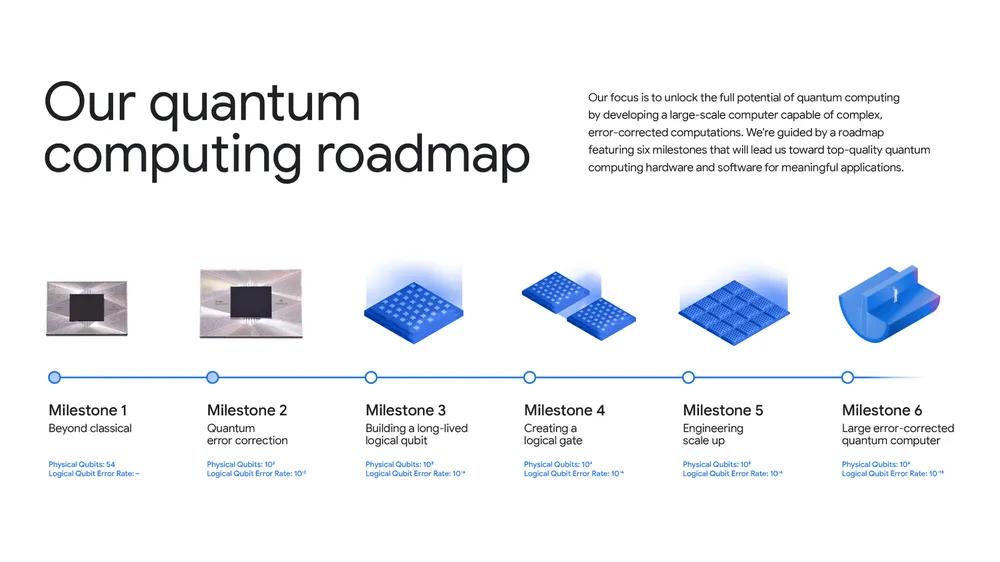
Group 1 - Google CEO Sundar Pichai announced significant progress in quantum algorithms on the Willow chip, achieving the first verifiable quantum advantage algorithm, which is 13,000 times faster than the best supercomputer [1] - The algorithm, named "Quantum Echoes," utilizes nuclear magnetic resonance to explain interactions between atoms in molecules, potentially paving the way for applications in drug development and materials science [1] - The research paper features Michel Devoret, a Nobel Prize winner, highlighting the foundational work in macroscopic quantum effects that contributed to this study [1] Group 2 - The algorithm's results can be replicated or confirmed through experiments by other quantum computers, marking an important step towards practical applications of quantum computing [1] - According to Google's strategic roadmap, the company has achieved key milestones in "super-classical quantum computing" and "quantum error correction prototypes," but significant distance remains before launching a "large-scale error-corrected quantum computer" [1] - Quantum computing is still in the early stages of technological development, with substantial progress expected in the next 5 to 10 years, as noted by reports from IBM and the China Academy of Information and Communications Technology [3] Group 3 - In China, there is a combination of policy and technological advantages in quantum computing, with significant achievements in research exemplified by "Zuchongzhi No. 3" and advancements in industrial applications by companies like GuoDun Quantum [3] - The global quantum race is accelerating, with the "14th Five-Year Plan" expected to enhance support for quantum information investments [3] - The commercialization of quantum information is entering a new accelerated phase, with the U.S. and China leading globally, and breakthroughs in quantum error correction significantly impacting the progress of quantum computing [3]

前三季涉外收支创新高,菜鸟参与闪购小时达业务 | 财经日日评
吴晓波频道· 2025-10-24 00:30
Group 1: Foreign Exchange and Cross-Border Capital Flow - In the first three quarters of 2025, China's foreign exchange receipts and payments reached a record high of $11.6 trillion, with a net inflow of $119.7 billion and a surplus of $63.2 billion in bank settlement and sale of foreign exchange [2] - In September, cross-border capital flows remained active, with total income and expenditure of non-bank sectors reaching $1.37 trillion, a month-on-month increase of 7% [2] - The capital and financial account showed an expanded deficit in September, indicating that domestic institutions and residents are seeking overseas assets to diversify risks amid economic uncertainties [3] Group 2: Quantum Computing Breakthroughs - Google announced a significant breakthrough in quantum computing with its Willow chip, demonstrating that a quantum computer can successfully run a verifiable algorithm, outperforming the fastest classical supercomputers by 13,000 times [4] - The ability to repeat and verify quantum computing results is crucial for practical applications, potentially enhancing drug development and materials science [4][5] Group 3: E-commerce and Instant Retail - Cainiao Supply Chain is participating in Taobao's flash purchase service, offering "hourly delivery" in cities like Shanghai and Hangzhou, which intensifies competition in the instant retail sector [6] - Taobao's entry into local life services, combined with its established partnerships with brands, positions it well to capture market share in instant retail [7] Group 4: Tesla's Financial Performance - Tesla reported third-quarter revenue of $28.095 billion, a year-on-year increase of 12%, with a net profit of $1.77 billion, down 29% year-on-year [8] - The automotive revenue was $21.205 billion, showing a 6% increase year-on-year, while the gross margin for automotive business was 15.4%, slightly below analyst expectations [8] - Tesla's focus on new business areas like Robotaxi and Semi truck production is expected to drive future growth, despite challenges from subsidy reductions [9] Group 5: Meta's AI Department Restructuring - Meta is laying off approximately 600 employees from its AI department to streamline operations and enhance organizational flexibility [10] - The restructuring aims to reduce redundancy and focus on specific areas within AI, as Meta continues to invest heavily in AI technology [11] Group 6: S&P 500 Earnings Performance - Approximately 85% of S&P 500 companies that have reported third-quarter earnings exceeded profit expectations, marking the highest percentage since 2021 [14] - Strong performance in sectors like finance and consumer goods indicates resilience in the U.S. economy, despite concerns over consumer demand and tariff policies [14][15]

华盛顿成最大风投?美国政府“入股”量子计算圈
阿尔法工场研究院· 2025-10-24 00:04
Core Viewpoint - The U.S. government is increasing its intervention in key economic sectors, particularly in quantum computing, by negotiating equity stakes in several companies in exchange for federal funding support [2][3]. Group 1: Government Involvement - Multiple quantum computing companies, including IonQ, Rigetti Computing, and D-Wave Quantum, are in talks to include "government as a shareholder" clauses in agreements to secure federal funding, with minimum funding amounts expected to be $10 million [2]. - This initiative reflects the Trump administration's broader strategy to hold equity in companies receiving taxpayer-funded financial support, as seen in previous agreements with companies like Intel [3]. Group 2: Quantum Computing Industry - Quantum computing is recognized as a critical next-generation technology capable of performing complex calculations much faster than current computers, potentially revolutionizing drug development, materials science, and overall economic efficiency [6]. - The stock prices of quantum computing companies have seen significant increases this year, although a recent downturn has been noted [6]. - Major players in the quantum computing field, such as IBM and Microsoft, are investing heavily, while China is also actively developing its capabilities in this area [6]. Group 3: Funding and Agreements - The funding discussions are being led by Paul Dabbar, the U.S. Deputy Secretary of Commerce, who has a background in the quantum computing industry [6][7]. - The agreements under negotiation may include not only equity stakes but also warrants, intellectual property licenses, and revenue-sharing arrangements [7]. - Companies like Rigetti and D-Wave are optimistic about the potential for government equity stakes, indicating a positive outlook for future collaborations [7].

纳斯达克中国金龙指数涨1.66%;阿里巴巴将开启夸克AI眼镜预售;量子通信获重大突破,光信号与量子密钥分发共纤传输距离创全球最高纪录——《投资早参》
Mei Ri Jing Ji Xin Wen· 2025-10-23 23:58
Market News - The three major US stock indices closed higher, with the Nasdaq up 0.89%, S&P 500 up 0.58%, and Dow Jones up 0.31% [1] - Major tech stocks mostly rose, with Intel up over 3%, Tesla up over 2%, and Alibaba up 3.65% among Chinese stocks [1] - Gold prices increased by 0.7% to $4126.49 per ounce, while oil prices saw significant gains, with WTI crude up 5.56% to $61.75 per barrel [1] - European stock indices also saw slight increases, with the DAX and CAC40 both up 0.23% and the FTSE 100 up 0.67%, reaching a historical high [1] Industry Insights - Recent breakthroughs in quantum technology in China include a significant advancement by China Telecom's Quantum Research Institute, achieving over 80 kilometers of classical optical signal and quantum key distribution transmission with a speed exceeding 10Tb/s [2] - The successful experiment has been recognized internationally, marking China's growing technical strength in quantum communication [2] - The quantum computing industry is transitioning from laboratory experiments to commercial applications, with a projected market size reaching hundreds of billions by 2030 [3] - Alibaba announced the pre-sale of its self-developed AI glasses, which feature various functionalities aimed at transforming the smart glasses market [3] - The AI glasses market in China is expected to grow by 188% by 2025, driven by ecosystem collaboration and technological advancements [4] - The Chinese battery industry is dominated by local companies, holding 69% of the global market share among the top 10 battery manufacturers [5] - Solid-state batteries are anticipated to replace traditional lithium-ion batteries, with China expected to capture 40% of the global market share by 2030 [5]

美股三大指数收高,国际油价暴涨超5%
Di Yi Cai Jing Zi Xun· 2025-10-23 23:43
Core Points - The US stock market closed higher on Thursday, with the Dow Jones up 144.2 points (0.31%) at 46,734.61, the S&P 500 up 39.04 points (0.58%) at 6,738.44, and the Nasdaq up 201.4 points (0.89%) at 22,941.8 [2] - Major tech stocks performed well, with Intel rising over 3% and reporting Q3 revenue of $13.65 billion, a 2.8% year-over-year increase, and an adjusted gross margin of 40%, significantly above the market estimate of 36.1% [2] - The Nasdaq Golden Dragon China Index rose 1.66%, with Alibaba up over 3%, Baidu nearly 3%, and JD.com over 2% [2] - Energy stocks were the strongest sector of the day, driven by a surge in international oil prices following President Trump's sanctions on Russian oil companies [5] Company Performance - ExxonMobil rose 1.1% and Chevron increased by 0.6%, while Valero Energy surged 7% due to better-than-expected earnings [3] - Molina Healthcare's stock plummeted 17.5% after lowering its annual profit forecast, while Honeywell's stock rose 6.8% on strong aviation demand [4] - Dow Chemical reported a smaller-than-expected quarterly loss, leading to a 13% increase in its stock price [4] - IBM's stock fell 0.9% as its key cloud computing business showed slowing growth, overshadowing positive earnings [3] Market Trends - Over 25% of S&P 500 companies have reported earnings, with approximately 86% exceeding expectations, and analysts now expect a 9.9% year-over-year increase in Q3 earnings, up from 8.8% at the beginning of October [3] - The 10-year US Treasury yield rose by 4.4 basis points to 3.995%, while the 2-year yield increased by 3.8 basis points to 3.482%, indicating cautious investor sentiment regarding future interest rate paths [4]
美股三大指数收高,国际油价暴涨超5%
第一财经· 2025-10-23 23:39
Core Viewpoint - The article discusses the recent performance of the U.S. stock market, highlighting the impact of earnings reports and geopolitical developments on investor sentiment. Market Performance - The U.S. stock market closed higher, with the Dow Jones up 144.2 points (0.31%) at 46,734.61, the S&P 500 up 39.04 points (0.58%) at 6,738.44, and the Nasdaq up 201.4 points (0.89%) at 22,941.8. The Russell 2000 index rose 31.10 points (1.27%) to 2,482.66 [3] - Large-cap tech stocks showed strength, with Intel rising over 3% and later gaining over 6% in after-hours trading. The company reported Q3 revenue of $13.65 billion, a year-on-year increase of 2.8%, with an adjusted gross margin of 40%, significantly above the market estimate of 36.1% [3] - Other notable tech stocks included Tesla (+2.28%), Amazon (+1.44%), Nvidia (+1.04%), Google A (+0.55%), Apple (+0.44%), Meta (+0.08%), and Microsoft unchanged [3] - Chinese concept stocks also rebounded, with the Nasdaq Golden Dragon China Index up 1.66%. Alibaba rose over 3%, Baidu nearly 3%, and JD.com over 2% [3] Earnings Reports - The earnings season has shown strong performance, with over 25% of S&P 500 constituents reporting. Approximately 86% of these companies exceeded earnings expectations. Analysts currently forecast a 9.9% year-on-year increase in S&P 500 earnings for Q3, up from 8.8% at the beginning of October [5] - Individual stock movements included IBM down 0.9% due to slowing growth in its key cloud computing business, and Molina Healthcare plunging 17.5% after lowering its annual profit forecast. Honeywell rose 6.8% on strong aviation demand, while American Airlines increased 5.6% after raising its profit outlook [5] Energy Sector - President Trump announced sanctions against Russian oil companies, leading to a surge in international oil prices and making energy stocks the strongest sector of the day. ExxonMobil rose 1.1% and Chevron 0.6%, while Valero Energy surged 7% due to better-than-expected earnings [4][5] - Following the sanctions, WTI crude oil futures rose by $3.29 to $61.79 per barrel (5.62% increase), and Brent crude oil futures increased by $3.40 to $65.99 per barrel (5.43% increase). The S&P 500 energy sector rose 1.3% [6] Other Market Movements - The 10-year U.S. Treasury yield rose by 4.4 basis points to 3.995%, while the 2-year yield increased by 3.8 basis points to 3.482%, reflecting cautious investor expectations regarding future interest rates [6] - Gold futures also saw an increase, settling at $4,145.6 per ounce, up 1.97%, driven by safe-haven demand [7]
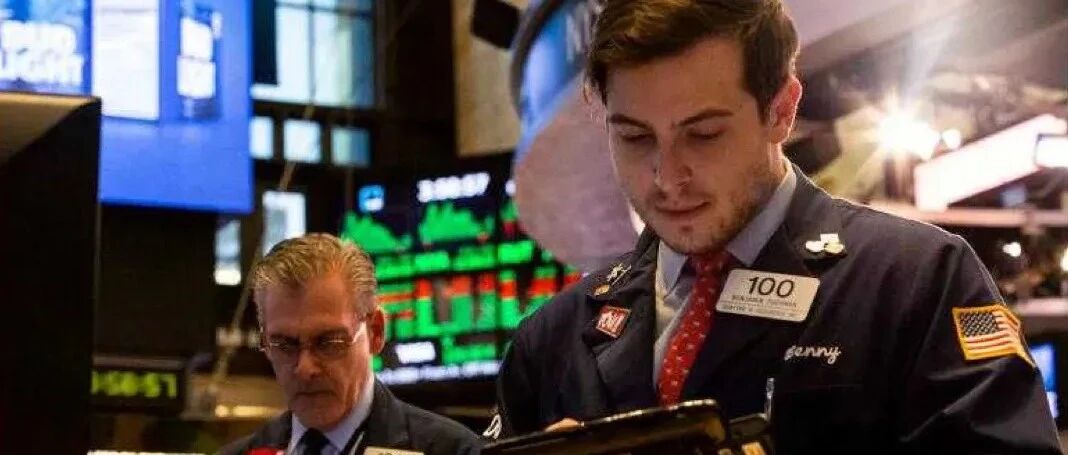
美股三大指数收高,中国金龙指数收涨1.66%,国际油价暴涨超5%
Di Yi Cai Jing Zi Xun· 2025-10-23 23:04
Core Insights - Intel's Q3 revenue of $13.65 billion exceeded expectations, with a year-over-year growth of 2.8% and an adjusted gross margin of 40%, significantly above the market estimate of 36.1% [1] - The S&P 500 companies have shown strong earnings performance, with over 86% of reported earnings exceeding expectations, leading to an anticipated year-over-year growth of 9.9% for Q3 [2] - Energy stocks surged following President Trump's sanctions on Russian oil companies, with WTI crude oil prices rising by 5.62% to $61.79 per barrel [4] Company Performance - Intel's stock rose over 3% and continued to increase by over 6% in after-hours trading due to strong earnings [1] - Valero Energy's stock jumped 7% after reporting better-than-expected earnings [2] - Dow Chemical's stock increased by 13% after reporting a smaller-than-expected quarterly loss, supported by cost reductions and sales growth [4] Market Trends - The S&P 500 energy sector rose by 1.3%, driven by the increase in oil prices [4] - The Nasdaq China Golden Dragon Index increased by 1.66%, with notable gains from Alibaba (over 3%), Baidu (nearly 3%), and JD.com (over 2%) [1] - The 10-year U.S. Treasury yield rose by 4.4 basis points to 3.995%, reflecting cautious investor sentiment regarding future interest rate paths [4]