
脑机接口

Search documents
脑机接口商业化蓄势待发
Jing Ji Ri Bao· 2026-01-18 22:15
Core Insights - The clinical transformation speed of brain-computer interface (BCI) technology is accelerating, with China's semi-invasive BCI "Beina No. 1" implanted in six patients and invasive products like "Beina No. 2" expected to enter clinical trials by 2026 [1] - The industry is entering a critical phase of clinical value verification and early commercialization, driven by strong policy support, high capital interest, and urgent clinical demand, while facing challenges from international competition and ethical controversies [1] Policy Framework - In 2023, the Ministry of Industry and Information Technology (MIIT) established a BCI track under the "Future Industry Innovation Task" and released a plan for standardization from 2023 to 2035 [2] - By 2025, multiple provinces in China have included BCI technology in their charging catalogs, paving the way for future clinical applications [2] Local Initiatives - Various provinces, including Beijing, Shanghai, and Shandong, have introduced special policies to support BCI industry development, with Shanghai focusing on creating specialized incubators [3] - The Tianjin Binhai High-tech Zone has also implemented supportive policies for BCI industrialization [3] Clinical Validation - BCI technology is categorized into invasive, non-invasive, and semi-invasive types, with invasive and semi-invasive technologies becoming core breakthroughs in medical rehabilitation [4] - The most mature application of BCI technology is in medical rehabilitation, particularly in restoring motor and speech functions [4] Application Expansion - The application scenarios for BCI technology are diversifying, with invasive BCIs focusing on medical settings and non-invasive BCIs being tested in various fields such as industrial safety and education [7] - Non-invasive BCIs are being piloted in industrial safety to monitor fatigue among operators, while consumer-grade applications are emerging in education and entertainment [7] Market Development - The consumer market for BCI technology is still in its nurturing phase, with products like brainwave headphones and brain-controlled gaming devices lacking sufficient user experience [8] - The medical rehabilitation sector is expected to dominate the market in the next five years, while consumer and industrial products will rely on technological breakthroughs for wider adoption [8] Industry Challenges - BCI technology faces challenges in core technology, application scenarios, market competition, and industry ecology, necessitating policy guidance and standardization [9] - Key technological breakthroughs in biocompatible flexible electrodes and AI decoding algorithms are essential for practical implementation [9] Technological Advancements - BCI technology is undergoing rapid iterative upgrades, with advancements in hardware and software, as well as interdisciplinary innovations in materials science and chip design [10] - The enhancement of full-chain technological capabilities will facilitate the transition of BCI systems from laboratory research to practical applications [10]
“手痒式交易”与“躺平式持股” 2026开年投资者姿势各异
Zhong Guo Zheng Quan Bao· 2026-01-18 21:34
Group 1 - The core viewpoint of the articles highlights the contrasting investment strategies between long-term value investors like Duan Yongping and the short-term trading behaviors prevalent in the current market environment [1][5][6] - Duan Yongping's investment in Apple since 2011 has yielded a cumulative return of 1623.48%, showcasing the benefits of patience and long-term commitment to a single stock [2][3] - Duan's strategic timing for his investments coincided with market lows, such as after Steve Jobs' death in 2011 and during the supply chain crisis in 2022, indicating a contrarian approach to investing [2][3] Group 2 - Duan Yongping's portfolio, managed by H&H International Investment, had a market value of nearly $14.7 billion as of September 2025, with Apple and Berkshire Hathaway being the top two holdings, comprising nearly 80% of the total portfolio [3] - Berkshire Hathaway's recent investment in Alphabet, acquiring approximately 17.85 million shares, marks a significant shift in its investment strategy towards technology stocks, reflecting a broader adaptation of value investing principles [4] - The articles emphasize the need for investors to adapt to changing market conditions and technological advancements, suggesting that long-term investment strategies should be based on continuous learning and research [5][6]
成长股仍是优先主线
Xin Lang Cai Jing· 2026-01-18 17:25
Group 1 - The performance of various industry sectors was mixed, with notable gains in the computer, electronics, non-ferrous metals, and media sectors, driven by AI application concepts and the information technology innovation sector [1] - The electronics sector strengthened due to better-than-expected performance in storage chips and expectations of expanded demand for semiconductor equipment [1] - The non-ferrous metals sector maintained an upward trend supported by the strength of precious metals, industrial metals, and small metals sub-sectors [1] Group 2 - Growth stocks remain the market's priority, although there will be some internal structural shifts, with previously hot sectors like commercial aerospace, brain-computer interfaces, and AI applications experiencing short-term pullbacks [2] - As the earnings forecast disclosure period approaches, sectors with high earnings certainty such as AI computing power construction, storage chips, semiconductor equipment materials, innovative drugs, and CXO are recommended for allocation [2] - The continuous rise in commodity prices has increased market volatility, and regulatory tightening adds uncertainty, making stock opportunities potentially more reliable than commodities, while also highlighting the need to pay attention to underperforming sectors like rare earths [2]
腾讯研究院AI速递 20260119
腾讯研究院· 2026-01-18 16:01
Group 1 - xAI's Colossus 2 is the world's first supercomputer cluster to reach 1GW power, with plans to upgrade to 1.5GW in April and a final capacity of 2GW [1] - The cluster will house 555,000 GPUs, surpassing Meta and Microsoft, dedicated to training Grok 5 with 60 trillion parameters [1] - The surge in power demand from data centers may lead to rolling blackouts for 67 million residents in the US PJM grid area, prompting xAI to deploy 168 Tesla Megapack energy storage systems [1] Group 2 - OpenAI has launched an $8/month ChatGPT Go subscription service, offering the GPT-5.2 Instant version with message and image creation limits ten times that of the free version [2] - The company plans to test advertisements in the US on both free and Go versions, with ads clearly marked and not affecting response content [2] - OpenAI assures that user data will not be sold to advertisers, and users can opt out of personalized ads and delete related data [2] Group 3 - OpenAI has quietly launched the ChatGPT Translate tool, supporting over 50 languages and allowing users to adjust the tone of translations [3] - Google has responded with the open-source TranslateGemma model, supporting 55 languages and featuring 12 billion parameters, surpassing the previous 27 billion baseline [3] - TranslateGemma retains multimodal capabilities to translate text in images, with a 4 billion version that can run on mobile devices [3] Group 4 - Black Forest Labs has open-sourced the FLUX.2 Klein model, achieving end-to-end inference in under 0.5 seconds on modern hardware, unifying text-to-image generation and editing [4] - The 4 billion parameter model requires only 13GB of VRAM to run on consumer-grade GPUs, while the 9 billion version matches the performance of models with five times the parameters [4] - The model offers FP8 and NVFP4 quantized versions, achieving inference speedups of up to 1.6x and 2.7x on RTX GPUs, with VRAM usage reduced by 40% to 55% [4] Group 5 - Meituan has released the LongCat-Flash-Thinking-2601 model with 560 billion parameters, introducing a rethinking mode that allows for simultaneous parallel thinking [7] - The model shows significant improvements in tool usage and search benchmarks, with a new evaluation method for generalization capabilities in automated environment scaling [7] - The model employs environment scaling and multi-environment reinforcement learning, enhancing adaptability in out-of-distribution scenarios [7] Group 6 - The court has unsealed over 100 documents in the lawsuit between Musk and OpenAI, revealing that Altman indirectly holds shares in OpenAI through the YC fund [8] - A diary entry from Brockman in 2017 admits to wanting to turn OpenAI into a for-profit company and remove Musk, stating it was the only chance to get rid of him [8] - OpenAI refutes claims that Musk sought a 50%-60% equity stake and CEO position, with the judge deeming the evidence too contentious for a jury trial set for April 27 [8] Group 7 - Neuralink's first subject revealed that brain chips can be upgraded without surgery through three methods: Telepathy app updates, OTA firmware updates, and hardware iterations [9] - After 85% of electrodes detached, the team used software algorithms to enhance the performance of the remaining 15%, achieving better results than intact electrodes [9] - Future plans include a "dual-chip configuration" to create a "digital bridge" between the brain and spinal cord, potentially allowing paralyzed individuals to walk again [9] Group 8 - Sequoia Capital partners have published a blog asserting that AGI has arrived, defining it as the ability to clarify tasks [10] - The article cites an example of an intelligent agent completing a recruitment task autonomously in 31 minutes, demonstrating its capability to form hypotheses and validate them [10] - The capabilities of long-cycle intelligent agents are expected to double every seven months, with predictions that by 2028 they could complete a human expert's daily work [10] Group 9 - OpenAI's post-training lead stated that the intelligence of a model is determined by how well it understands user queries [11] - GPT-5.1 has transformed all chat models into reasoning models, allowing them to autonomously decide on thinking duration based on question difficulty [11] - Improvements have been made in context memory, automatic model switching, and user-defined expression styles, with future models expected to be more customizable [11] Group 10 - Anthropic's new Economic Index report indicates that AI accelerates significantly with task complexity, achieving speedups of 9 times for high school tasks and 12 times for college tasks [12] - Human-AI collaboration has extended the time limit for AI tasks from 2 hours to 19 hours, nearly a tenfold increase, emphasizing the importance of human feedback [12] - The report warns of the "de-skilling" risk, as AI systematically removes high-intelligence components from work, with tasks now requiring an average of 14.4 years of education [12]


知名机构,集体盯上1900亿龙头
Zhong Guo Zheng Quan Bao· 2026-01-18 14:25
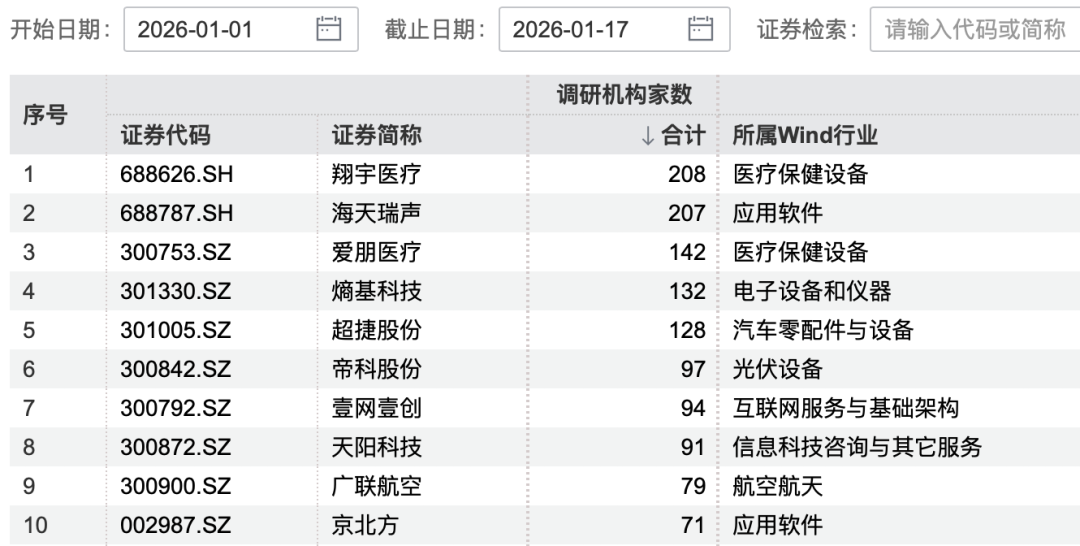
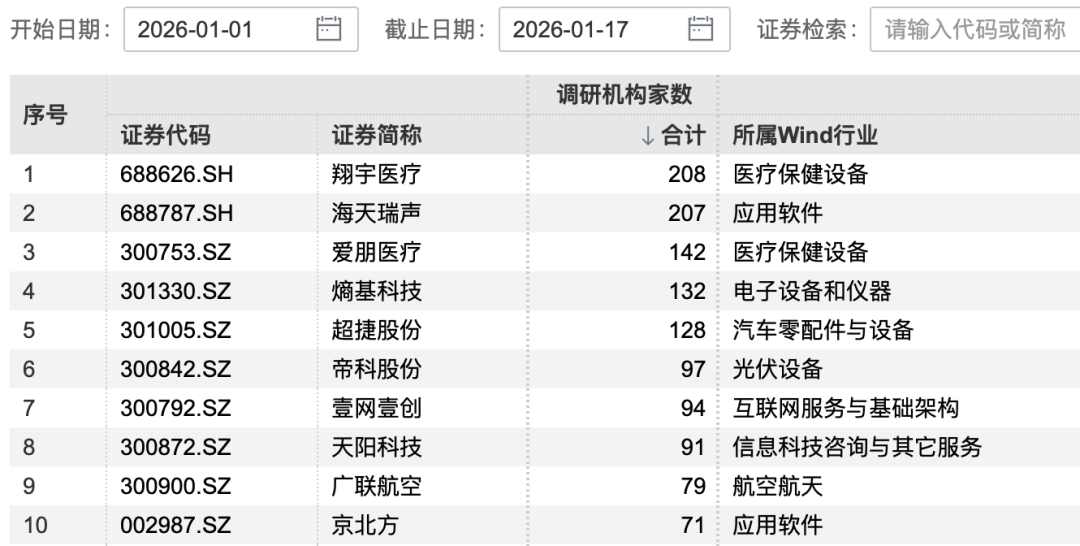
Group 1: Institutional Research Activity - A total of 316 listed companies have disclosed institutional investor research records this year [1][2] - Xiangyu Medical received the highest number of institutional inquiries, totaling 208 [2][3] - Multiple prominent institutions have intensively researched SF Holding, with 35 institutions focusing on it this year [4][6] Group 2: Key Companies and Their Focus Areas - The top ten A-share companies by the number of institutional inquiries include Xiangyu Medical, Haitan Ruisheng, and Aipeng Medical, with inquiries ranging from 132 to 208 [3] - SF Holding has been a focal point for several well-known fund companies, including Huaxia Fund and E Fund, indicating strong interest in its strategic partnership with Jitu Express [4][6] Group 3: Strategic Developments - SF Holding and Jitu Express announced a strategic mutual shareholding agreement with an investment amount of HKD 8.3 billion [8] - The collaboration between SF Holding and Jitu Express has expanded across various levels, enhancing service stability and customer satisfaction in both domestic and international markets [7] Group 4: Brain-Computer Interface Focus - The brain-computer interface sector has gained significant market attention, with companies like Xiangyu Medical and Aipeng Medical actively developing products in this area [10][11] - Xiangyu Medical plans to upgrade 27 core products by mid-2026 and launch nearly 100 brain-computer interface products by the end of 2026 [10] - Aipeng Medical is exploring investments in brain-computer interface technologies, focusing on clinical applications for various mental health conditions [11]

知名机构 集体盯上1900亿龙头
Zhong Guo Zheng Quan Bao· 2026-01-18 14:20
Core Insights - Institutional enthusiasm for researching listed companies remains high, with 316 companies disclosing investor research records this year [1][2] - The brain-computer interface sector has seen increased attention from institutional investors, with companies like Xiangyu Medical and Aipeng Medical leading in research inquiries [11][12] Group 1: Institutional Research Activity - A total of 316 listed companies have disclosed institutional investor research records this year, with Xiangyu Medical receiving the highest number of inquiries at 208 [2][3] - Other companies with significant institutional interest include Haitan Ruisheng (207 inquiries), Aipeng Medical (142 inquiries), and Shiji Technology (132 inquiries) [3] - Notably, multiple prominent funds have shown concentrated interest in SF Holding, with 35 institutions conducting research on the company [5][6] Group 2: SF Holding and Strategic Partnerships - SF Holding and Jitu Express announced a strategic mutual shareholding agreement on January 15, with an investment transaction amounting to HKD 8.3 billion [9] - The partnership aims to enhance operational synergies, utilizing SF's delivery network in domestic markets and Jitu's established networks in international markets like the Philippines and Saudi Arabia [8] - SF Holding's stock price was reported at CNY 38.81 per share, with a market capitalization of CNY 194.1 billion as of January 16 [10] Group 3: Brain-Computer Interface Developments - Xiangyu Medical plans to upgrade 27 core products by June 2026, integrating brain-computer interface technology to transform passive rehabilitation devices into active ones [11] - Aipeng Medical is focusing on exploring brain-computer interface investments aligned with its strategic direction, emphasizing research in sensors, electrodes, and clinical applications for mental health disorders [12]
江苏南京:平台“挑大梁”,创新企业“轻装上阵”跑快车
Xin Lang Cai Jing· 2026-01-18 14:16
江苏生命科技创新园 "最忙的时候,现场有近200名工人。"施工负责人袁清华穿梭在楼层之间,指着零星进行扫尾作业的十 余名工人说。近4个月紧锣密鼓的施工,这处承载着脑机接口领域新期待的载体已接近竣工验收,"预计 过完春节,这里就能正常运转了。" 不远处,D1栋的6层实验室已启用,那里也是江苏脑机接口研究院的核心公共实验研发平台。行走在园 区,不时能遇见前来参观交流、洽谈入驻的企业代表。他们审视着空间,探讨着可能性,为栖霞区这片 创新热土增添了涌动的活力。 "我们不只招商,更在'选'商,目标是构建一个创新生态。"江苏脑机接口研究院产业孵化部部长朱珊珊 的手机里,来访预约信息从未间断。她坦言,研究院落子栖霞后共建江苏脑机接口创新产业园,目前入 驻园区的11家企业,主要聚焦产业上游元器件和传统康复产业升级领域。研究院的策略很清晰:既要吸 引充满锐气的初创型企业,也着力引进能带动上下游的"链主"企业。"我们做好共性技术的'防御',避免 重复投入,旨在为企业提供成熟的全链条服务。"朱珊珊解释,研究院在实验硬件上的投入居于行业领 先,能为入驻企业降低研发门槛,5年免租空间、科研补助30%等多维支持,也让"每天都有企业过来交 ...
策马逐牛5:中国优势资产春水长流
CAITONG SECURITIES· 2026-01-18 13:51
Core Insights - The report emphasizes long-term opportunities with the strategy "蓄力新高" suggesting that the Shanghai Composite Index briefly broke 4000, while the 2026 strategy "奔马资产, 策马逐牛" focuses on embracing "奔马资产" (globally competitive leaders) leading to a revaluation of value [3][10] - The mid-term analysis indicates a potential for market fluctuations towards the end of the year, with a strong market rally observed in the first week of January, confirming previous predictions [3][10] Industry and Sector Analysis - Leading sectors such as telecommunications, electronics, and non-ferrous metals remain core themes, with internal shifts observed, such as a transition from rare earths and precious metals to industrial metals and lithium-cobalt-nickel within non-ferrous metals, and from consumer electronics to storage and semiconductor equipment in electronics [4][14] - The report identifies three key investment directions: 1. Core growth assets, particularly in the Hang Seng Internet sector, benefiting from platform economy support and potential AI catalysts, alongside improvements in US-China relations and passive foreign capital inflow due to RMB appreciation [5][13] 2. Globally competitive assets (奔马 50), which are expected to benefit from global economic recovery, strong policy support, and institutional capital inflow, with a high cost-performance ratio due to trends in AI, high-end manufacturing, and resource supply-side adjustments [5][13] 3. Emerging growth sectors, particularly those related to the "Musk chain," focusing on AI applications and underground transportation, with a bottom-up investment approach in areas like computing power and humanoid robots [5][13] Market Dynamics - The report notes that despite recent volatility, the fundamentals of a long-term bull market remain intact, with market sentiment high and financing balances nearing a ten-year high, indicating a healthy market environment [7][11] - Historical patterns suggest that after a major rally, the market may enter a consolidation phase, but the underlying growth logic remains strong, particularly in technology and cyclical sectors [12][14]
计算机周观点第 31 期:千问发布 AI 助手,C 端进入超级 Agent 时代-20260118
GUOTAI HAITONG SECURITIES· 2026-01-18 13:43
Investment Rating - The report maintains an "Overweight" rating for the computer sector [4]. Core Insights - In January, Qianwen App achieved over 100 million monthly active users (MAU) and fully integrated with Alibaba's ecosystem to create a "Super Agent" [3][4]. - Alibaba Cloud is significantly increasing its investment in AI infrastructure, aiming to capture 80% of the incremental AI cloud market in China by 2026 [4]. - The brain-computer interface (BCI) industry is experiencing dual drives from policy and capital, with a focus on medical applications and ambitious targets set for 2027 and 2030 [4]. - AI4S is benefiting from policy support, with significant potential for applications in pharmaceuticals and new materials, as well as global innovation in AI applications [4]. Summary by Sections Qianwen App and AI Assistant - Qianwen App's MAU surpassed 100 million within two months of launch, integrating over 400 new features and becoming the first AI assistant to achieve a full-service chain from "search-decision-payment-fulfillment" [4]. Alibaba Cloud Investment - Alibaba Cloud plans to invest over 380 billion yuan in AI infrastructure over the next three years, with a goal to dominate the AI cloud market in China by 2026 [4]. Brain-Computer Interface Industry - The Shanghai government has issued a plan for BCI development, targeting high-quality "brain control" by 2027 and establishing a global innovation hub by 2030 [4]. - Zhejiang Qiang Brain Technology recently raised approximately 2 billion yuan for R&D and production, focusing on non-invasive technologies for rehabilitation [4]. AI4S Policy Support - The Chinese government has prioritized AI4S in its policy framework, with extensive support for its development across various sectors [4]. - Major tech companies like Apple and Google are collaborating to enhance their AI capabilities, indicating a robust market for AI innovations [4].





宏观周报:持续加大推进清理拖欠企业账款力度-20260118
KAIYUAN SECURITIES· 2026-01-18 13:42
Economic Policy - The focus on economic growth includes efforts to clear overdue corporate payments and wages, with special bonds issued to support local responsibilities[10] - The government aims to enhance housing supply to meet diverse consumer needs, emphasizing urban planning and infrastructure improvements[12] Infrastructure and Industry - Recent policies include the "AI + Manufacturing" initiative, targeting significant advancements in AI technology by 2027[11] - The government investment fund will support key strategic industries, including new energy, high-end equipment, and emerging technologies like quantum information and generative AI[11] Monetary Policy - The central bank has lowered the re-lending and rediscount rates by 0.25 percentage points and introduced a new 500 billion yuan re-lending for small and micro enterprises[14] - There is an expectation of 1-2 interest rate cuts in 2026, depending on economic conditions[15] Real Estate Policy - Tax incentives for home purchases have been extended, including a reduction in the minimum down payment for commercial property loans to 30%[17] Consumer Policy - The government is promoting green consumption, with initiatives to support the replacement of old products with new, energy-efficient ones[18] Financial Regulation - The minimum margin requirement for financing securities has been increased from 80% to 100% for new contracts, aimed at reducing leverage and protecting investors[21] Trade Policy - Adjustments to export tax rebates for photovoltaic products will take effect from April 1, 2026, with a reduction in the VAT rebate rate from 9% to 6%[25] Overseas Macro Policy - The U.S. Federal Reserve indicates that interest rates are nearing a neutral level, with future policy adjustments dependent on economic data[27] Risk Warning - There is a risk of divergence in domestic and foreign monetary policies, with potential underperformance in the execution of domestic policies[31]