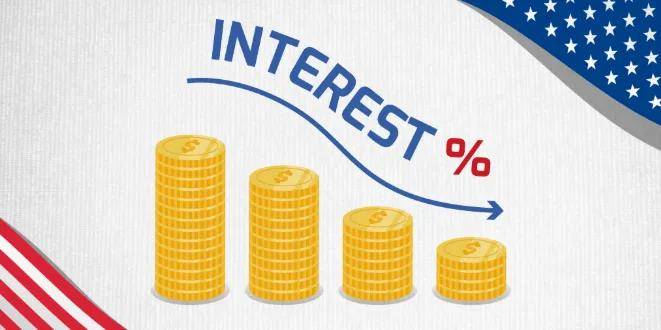
通胀预期

Search documents
7月宏观月报:关税效应进入“数据验证期”-20250713
Shenwan Hongyuan Securities· 2025-07-13 06:42
Group 1: Macro Overview - In June, the overseas market saw a resurgence of the "Goldilocks" trade, while domestic market sentiment was buoyed by a mild economic recovery[1] - The "Goldilocks" trade was driven by three factors: successful implementation of the "Beautiful America Act," lower-than-expected inflation data in May, and resilient employment data despite a mild economic slowdown[2] - The S&P 500 index experienced a slight decline of 0.3% since July 7, while the US dollar rebounded by 0.9%[5] Group 2: Domestic Market Focus - Domestic economic recovery was supported by effective consumption policies, with retail sales growth in May reaching a new high since 2024[3] - The core CPI in June rose by 0.3 percentage points to 0.6%, indicating sustained domestic demand release[3] - Manufacturing PMI in June exceeded expectations, with domestic orders recovering faster than new export orders[3] Group 3: Key Concerns for July - Overseas, the focus shifted to potential inflation risks, with rising retail prices and manufacturing price indices indicating upward inflation pressure in the US[4] - Domestic attention remains on "anti-involution" policies aimed at balancing supply and demand, with a focus on structural upgrades in industries[4] - The US announced tariff increases on 14 countries effective August 1, with rates including 25% on Japan and South Korea, and 30% on South Africa[5] Group 4: Economic Indicators - The US unemployment rate fell to 4.1%, with non-farm payrolls in June adding 147,000 jobs, primarily supported by government sectors[3][4] - The US fiscal deficit for 2025 is projected to reach $804.4 billion, indicating a significant increase compared to previous years[5]
凯德北京投资基金管理有限公司:美联储年内两次降息仍是主剧本
Sou Hu Cai Jing· 2025-07-12 11:50
Group 1 - San Francisco Fed President Daly emphasized that two rate cuts this year remain the most likely choice for the Fed, as the impact of new tariffs on consumer prices may be milder than expected [1][3] - Daly noted that many companies are actively sharing the burden of tariff costs through supply chain negotiations rather than passing the costs directly to consumers, which could prevent significant inflation spikes [3] - The internal consensus at the Fed is not aligned, with most officials worried about persistent inflation pressures from tariffs, while a minority believes it is a one-time price disturbance [3][5] Group 2 - St. Louis Fed President Bullard expressed caution, stating that the effects of tariffs are still uncertain and may take time to permeate the economy, with key data from June to September being critical for observation [5] - Market anxiety is rising due to policy ambiguity, with traders indicating that clarity on the final scope of tariffs before their implementation on August 1 is unlikely, making a July rate cut nearly impossible [5][6] - The Fed's rate strategy is becoming more complex as the observation period highlighted by Bullard coincides with the new tariff list being considered by Trump [6]


亚盘金价压力位震荡,关注承压后空单布局方案
Sou Hu Cai Jing· 2025-07-11 04:01
Group 1 - Current gold market is experiencing a tug-of-war between safe-haven demand and a rebound in the US dollar, with gold trading around $3327.68 per ounce [1] - Trump's announcement of a 50% tariff on copper imports from Brazil has raised concerns about escalating global trade tensions, providing support for gold as a traditional safe-haven asset [1][3] - Unexpected decline in US initial jobless claims to 227,000 has pushed the dollar index to a two-week high of 97.92, which has suppressed gold demand priced in dollars [1] Group 2 - The implementation of tariffs may increase commodity prices, potentially exacerbating inflationary pressures, which presents both opportunities and challenges for gold [3] - Rising inflation expectations could enhance gold's appeal as an inflation hedge, but the strengthening dollar and rising US Treasury yields may offset this benefit [3] - The uncertainty surrounding the tariff policy complicates the inflation outlook, and the Federal Reserve's cautious stance may continue to limit gold's upward potential [4] Group 3 - The gold market is influenced by multiple factors, including Trump's tariff policy providing safe-haven support, while the strong dollar and rising Treasury yields restrict price increases [4] - Short-term gold prices are likely to remain within the current range unless there is a significant escalation in geopolitical or trade tensions [4] - Investors should closely monitor the upcoming CPI data on July 15 and the Federal Reserve's policy direction, as these factors will provide clearer guidance for future gold price movements [4]
强劲就业数据提振美元 金价承压多空拉锯
Jin Tou Wang· 2025-07-11 03:00
Group 1 - The core viewpoint of the articles indicates that the recent decline in initial jobless claims in the U.S. has led to a temporary strengthening of the dollar, which in turn has pressured gold prices [2][3] - Initial jobless claims decreased by 5,000 to 227,000, marking the lowest level in two months and the fourth consecutive week of decline [2] - The rise in continuing claims to 1.97 million is the highest level since the end of 2021, suggesting difficulties for unemployed Americans in finding jobs [2] Group 2 - The U.S. dollar index reached a two-week high of 97.92, which negatively impacts gold prices as a stronger dollar increases the cost of gold for holders of other currencies [2] - The 10-year Treasury yield rose slightly to 4.352%, while the 30-year yield fell to 4.861%, influenced by strong employment data and inflation expectations [3] - Investors are advised to monitor the upcoming Consumer Price Index (CPI) data on July 15, which will be crucial for assessing inflation pressures and Federal Reserve policy direction [3] Group 3 - Technical analysis indicates that gold is currently in a narrow trading range, with short-term moving averages flattening, suggesting a likely continuation of this trend [4] - Key resistance levels for gold are identified at $3,345 and $3,345, while support is noted at $3,317 [4]
金晟富:7.11黄金震荡走高顺势而为!周线收官黄金分析参考
Sou Hu Cai Jing· 2025-07-11 02:11
换资前言: 黄金,依然维持高位盘整震荡格局。现在,很多人在担心黄金还能不能涨,还会不会涨,涨是肯定的, 只不过,时间会消耗掉一切,这个时间有多长,没人知道,但可以确定的是,目前的盘整,就是为上涨 蓄力,盘整的时间越长,积蓄的力度就越大。每一次下探,都是买入机会,但是每一次反弹,又都是卖 出机会。说白了,就是震荡,主力洗盘。这种情况下,看涨看跌,看起来都是对的,但是却抓不到幅 度,将近2周的时间了,还在3330上下晃荡。这种时候,看大方向已经没有意义了,除非不参与短线。 这就是当下的市场,一天一个方向,不知道利好和利空那个先来,也无法预期可能出现的消息,涨跌全 靠特朗普。 7.11黄金操作策略参考: 空单策略: 策略一:黄金反弹3365-3370附近分批做空(买跌)十分之二仓位,止损10个点,目标3350-3340附近, 破位看3330一线;(策略具有时效性,更多实时布局策略在实盘学员内部公布。) 美联储的政策动向是影响金价的另一大关键因素。6月美联储会议记录显示,尽管部分官员认为最早可 能在本月降息,但大多数决策者对关税引发的通胀压力保持警惕,倾向于维持当前4.25%-4.50%的政策 利率区间不变。圣路易斯 ...
冠通期货资讯早间报-20250711
Guan Tong Qi Huo· 2025-07-11 01:11
Report Industry Investment Rating No relevant content provided. Core View of the Report The report comprehensively presents the overnight performance of global markets, including trends in international and domestic futures, important macro - economic and industry - specific news, and financial market conditions across various regions. It also provides upcoming economic data release schedules and event calendars. Summary by Directory Overnight Night - Market Trends - International oil prices weakened. The U.S. crude oil main contract fell 2.21% to $66.87 per barrel, and Brent crude main contract dropped 1.91% to $68.85 per barrel due to concerns about global demand and an unexpected increase in U.S. EIA crude inventories [2][47]. - International precious metal futures generally rose. COMEX gold futures increased 0.36% to $3333.00 per ounce, and COMEX silver futures climbed 2.72% to $37.63 per ounce, supported by inflation concerns and central bank gold purchases [2][49]. - Most London base metals closed higher. LME nickel rose 2.04% to $15285.00 per ton, LME zinc increased 1.26% to $2777.00 per ton, and LME copper edged up 0.53% to $9682.00 per ton, with copper prices in a volatile trend [2][49]. - Domestic futures contracts mostly rose. Coking coal and glass rose over 2%, while fuel oil dropped over 1% [2]. - Most Chicago Board of Trade (CBOT) agricultural futures closed higher. Soybean futures increased 0.67% to 1014 cents per bushel, corn futures rose 0.12% to 416.5 cents per bushel, and wheat futures climbed 1.28% to 554.5 cents per bushel [3]. Important Information Macroeconomic News - On July 10, Chinese Foreign Minister Wang Yi met with Russian Foreign Minister Lavrov in Kuala Lumpur to exchange views on the Iran nuclear issue [6]. - On July 9, Trump announced a 50% tariff on copper, which China opposes [6]. - The U.S. and China are maintaining close communication on economic and trade concerns at multiple levels [7]. - Fed official Musalem said the full impact of tariffs may be felt later this year or early next year [8]. - San Francisco Fed President Daly believes there may be two rate cuts this year, and the impact of tariffs on prices may be milder than expected [9]. Energy and Chemical Futures - As of July 10, domestic soda ash manufacturers' total inventory reached 186.34 million tons, up 5.39 million tons or 2.98% from last Thursday, approaching the historical high [11]. - As of July 10, the national float - glass sample enterprises' total inventory was 67.102 million heavy boxes, down 1.983 million heavy boxes or 2.87%, hitting a two - and - a - half - month low [13]. - In May 2025, Malaysia's natural rubber exports decreased 29.3% year - on - year to 35,939 tons, and production decreased 12.2% year - on - year to 22,494 tons [13]. - Some photovoltaic glass enterprises plan cold - repairs in July and August, with an estimated reduction of nearly 2000 tons per day in July and an additional 2400 tons per day in August [14]. - As of the week of July 9, Singapore's fuel oil inventory rose 1.328 million barrels to a 29 - week high of 24.708 million barrels [15]. - OPEC lowered its global oil demand forecast for the next four years but raised the long - term forecast. Global oil demand is expected to reach 106.3 million barrels per day in 2026 and 111.6 million barrels per day in 2029 [15]. - OPEC + is discussing pausing further production increases after the next monthly increase in September [15]. - By July 1, 2028, the European market will stop importing Russian and Belarusian fertilizers due to EU tariff policies [15]. Metal Futures - Starting from July 14 settlement, the daily price limit of polysilicon futures contracts will be adjusted to 9%, and the speculative trading margin standard to 11%, and the hedging trading margin standard to 10% [18][50]. - Trump announced a 50% tariff on copper starting from August 1, 2025 [19][40]. - In June 2025, the domestic polysilicon enterprises' capacity utilization rate was 35.5%, up 1.5% from May, and is expected to reach 39.3% in July [19]. - BMI expects global copper production to grow at an average annual rate of 2.9% from 2025 to 2034, reaching 30.9 million tons in 2034 [19]. - As of July 10, the total social inventory of industrial silicon in major areas was 551,000 tons, down 1000 tons from last week [19]. - As of Thursday, the national metallurgical - grade alumina's operating capacity utilization rate was 79.92%, down 0.05 percentage points from last week [20]. Black - Series Futures - Coal mines affected by safety and environmental inspections are resuming production. The utilization rate of 523 coking coal mines reached 85.5% this week, up 1.7% [22]. - Shanxi steel mills have received a verbal notice of crude steel production restrictions, aiming for a nearly 6 - million - ton reduction in annual production [22]. - As of the week of July 10, rebar production, social inventory, and apparent demand decreased, while factory inventory increased [22]. - Shanxi Meijin Iron and Steel plans to overhaul a 1080m³ blast furnace on July 15, affecting about 3000 tons of hot - metal production daily [23]. Agricultural Futures - In 2025, the national summer grain sowing area was 26.5784 million hectares, down 0.1% from 2024 [25]. - In June 2025, Malaysia's palm oil exports decreased 10.52% month - on - month, production dropped 4.48% month - on - month, and inventory increased 2.41% month - on - month [25]. - Different institutions' data on Malaysia's palm oil exports from July 1 - 10 show mixed trends [25][27]. - CONAB predicts that Brazil's 2024/25 soybean production will reach 169.4879 million tons, and corn production will be 131.974 million tons [27]. - U.S. soybean and corn export net sales increased in the latest week [27]. - As of July 8, about 9% of U.S. soybean - growing areas and 12% of U.S. corn - growing areas were affected by drought [27]. - Brazil's National Grain Exporters Association expects July soybean exports to reach 11.93 million tons, up 24.27% year - on - year [28]. - High - temperature and precipitation in Xinjiang may affect wheat growth and harvest [29]. - As of the week of July 6, Canada's rapeseed exports decreased 72.1% to 48,400 tons [29]. - As of July 3, the number of unpriced sell and buy orders for U.S. cotton ON - call increased [29]. Financial Market Financial - On Thursday, A - shares rose, with real - estate stocks surging and bank stocks hitting new highs. The Shanghai Composite Index rose 0.48% to 3509.68 points [32]. - The Hong Kong Hang Seng Index rose 0.57% to 24028.37 points, with financial and real - estate stocks rising and gold stocks falling [32]. - As of July 10 at 12:00, 129 out of 147 A - share listed companies expected to be profitable in the first half of the year [32]. - Chen Guangming and Howard Marks believe in China's long - term economic competitiveness and the potential of the capital market [32]. - This year, active equity funds have outperformed passive index funds, with the best - performing active equity fund's return nearly 100% [33]. - As of July 10, 206 Hong Kong - listed companies have launched share - repurchase plans, involving HK$100.7 billion [35]. - Zhiyuan Robot denies the rumor of a Hong Kong IPO [36]. Industry - In 2025, the national summer grain output reached 299.48 billion jin, with wheat production at 276.32 billion jin, achieving stable production [37]. - In June, China's auto production and sales increased 11.4% and 13.8% year - on - year respectively, and new - energy vehicle production and sales increased 26.4% and 26.7% year - on - year respectively [37]. - As of July 9, China's express delivery volume exceeded 100 billion pieces, 35 days earlier than in 2024 [37]. - In the first half of the year, the transfer fee of residential land in 300 cities increased 27.5% year - on - year, but the transaction area decreased 5.5% [37]. - Wuxi's Binhu District introduced housing subsidies for football - related people, and at least 10 real - estate projects have participated [38]. Overseas - Trump announced a 50% tariff on imported copper starting from August 1, 2025 [40]. - Fed Governor Waller said the Fed could consider a rate cut in July and adjust its asset holdings [40]. - Fed Daly believes there may be two rate cuts this year, and tariffs may not lead to significant price increases [40]. - Fed Musalem said tariffs may increase inflation expectations, and a weaker dollar may further push up inflation [40]. - The U.S. Department of Defense will invest $400 million in MP Materials, and the company has received $1 billion in financing commitments [41]. - The U.S. initial jobless claims fell for the fourth consecutive week to 227,000, a two - month low [42]. - The Bank of Korea kept its benchmark interest rate at 2.5% and may cut rates in the next three months [42]. - The Bank of Japan maintained its economic assessment of Japan, and U.S. tariffs' impact on exports is currently limited [44]. International Stock Markets - U.S. stocks rose slightly. The Dow Jones Industrial Average rose 0.43%, the S&P 500 Index rose 0.27%, and the Nasdaq Composite Index rose 0.09%. The S&P 500 and Nasdaq hit new highs [45]. - European stocks had mixed results. The German DAX Index fell 0.38%, the French CAC40 Index rose 0.3%, and the UK FTSE 100 Index rose 1.23% [45]. - Most Asia - Pacific stocks rose. The South Korean Composite Index rose 1.58% to 3183.23 points, hitting a four - year high [46]. - Delta Air Lines re - issued its full - year profit forecast, expecting an adjusted EPS of $5.25 - $6.25 [46]. Commodities - International oil prices declined due to demand concerns and inventory increases [47]. - International precious metal futures advanced, supported by inflation and central bank purchases [49]. - London base metals mostly rose, with copper prices volatile [49]. - Polysilicon futures contract trading rules will be adjusted on July 14 [18][50]. - OPEC adjusted its oil demand forecast and OPEC + may pause production increases [15][50]. Bonds - Domestic inter - bank bond yields rose, and bond futures fell. The central bank conducted 90 billion yuan of reverse repurchases, with a net injection of 32.8 billion yuan [51]. - Japan's 20 - year government bond auction showed weak investor demand [51]. - U.S. Treasury yields increased as initial jobless claims fell [51][52]. Foreign Exchange - The on - shore RMB against the U.S. dollar rose on Thursday, and the RMB is expected to appreciate to 7 per U.S. dollar by next mid - year [53]. - The U.S. dollar index rose 0.10%, and non - U.S. currencies showed mixed performance [53]. Upcoming Economic Data and Events - Economic data such as Germany's June wholesale price index, UK's May GDP, etc., will be released at specific times [55]. - Events including China's central bank's reverse - repurchase maturity, IEA's monthly oil market report release, and European Central Bank officials' speeches are scheduled [57].
黄金今日行情走势要点分析(2025.7.11)
Sou Hu Cai Jing· 2025-07-11 00:54
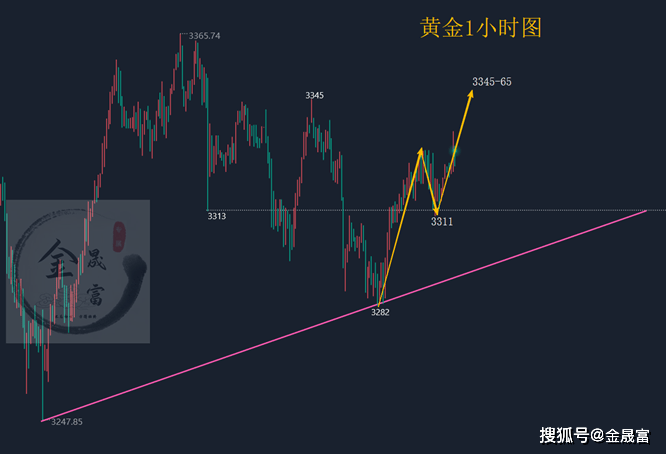
Fundamental Analysis - Trump's tariff policy is set to impose a 50% tariff on imported copper and Brazilian goods starting August 1, escalating trade tensions with Brazil. Brazilian President Lula seeks diplomatic solutions but warns of reciprocal measures if tariffs are enacted. This policy may increase commodity prices, intensifying inflationary pressures, which presents both opportunities and challenges for gold as an inflation hedge. However, a stronger dollar and rising U.S. Treasury yields could offset this benefit [3]. - Recent U.S. labor data shows initial jobless claims fell to 227,000, below the expected 235,000, marking a seven-week low. Conversely, continuing claims rose to 1.965 million, the highest since November 2021, indicating increased difficulty for unemployed individuals in finding new jobs [4]. - Strong employment data has bolstered the dollar and U.S. Treasury yields, further suppressing gold prices. Potential signs of labor market weakness may provide support for gold's safe-haven demand in the future [5]. - The June Federal Reserve meeting minutes indicate that while some officials suggest a possible rate cut this month, most remain cautious about inflation pressures from tariffs, preferring to maintain the current policy rate of 4.25%-4.50%. St. Louis Fed President Bullard noted that the impact of tariffs on inflation may not fully materialize until late 2025 or early 2026, leading to a cautious stance on rate cuts. The futures market anticipates a 25 basis point cut in September and a total of 53 basis points by year-end. Fed Governor Waller's comments have injected some optimism, suggesting that the upcoming policy meeting may open the door for rate cuts. Lower interest rates typically weaken the dollar and boost gold prices, but the uncertainty surrounding tariff policies may continue to limit gold's upside potential [6]. Technical Analysis - On the daily chart, gold prices have been in a converging triangle pattern since encountering resistance at the 3500 level on April 22. Following a recent decline, gold showed signs of recovery, closing with a small gain on Thursday. The current moving averages are intertwined, indicating a short-term sideways market. Key resistance levels to watch are between 3340-3346, which coincide with the 20-day and 30-day moving averages and previous resistance points. A breakout above this range could extend the bullish trend towards the previous highs of 3365-3366 and the Fibonacci retracement level of 3374. Support is focused around 3284, formed by connecting the lows from May 15 and June 30 [7]. - On the four-hour chart, the price has recently approached a trendline resistance formed by the previous high since the decline from 3452. The price touched the 3330 resistance level, and there are indications of a potential upward breakout. If this occurs, the strategy should focus on maintaining support at the recent low of 3310, looking for buying opportunities during price pullbacks. Key upward targets include the 3345/3346 and 3365/3366 regions, while support levels to monitor are the recent low of 3310 and the lower low of 3282 [9].

国际金融市场早知道:7月11日
Xin Hua Cai Jing· 2025-07-11 00:29
Group 1 - President Trump announced a 50% tariff on imported copper starting August 1, 2025, impacting the U.S. which relies on imports for nearly half of its copper consumption, primarily from Chile [1][1] - The White House National Economic Council Director criticized the Federal Reserve for a lack of transparency regarding the impact of tariffs on economic models, expressing concerns about the decoupling of U.S. and European interest rates [1][1] - The Federal Reserve's Daly indicated two potential rate cuts within the year due to a weak labor market, while inflation concerns may influence policy direction [1][1] Group 2 - The Bank of Korea decided to maintain its benchmark interest rate at 2.5%, citing significant economic uncertainty due to U.S. tariffs [1][1] - The Bank of Japan kept its economic assessment unchanged across nine regions, believing the impact of U.S. tariffs on exports to be limited, although there are concerns about long-term global demand [1][1] Group 3 - Initial jobless claims in the U.S. fell to 227,000, marking the fourth consecutive week of decline and the lowest level in two months, while continuing claims stood at 1.965 million, the highest since the end of 2021 [2][2] - OPEC revised down its global oil demand forecast for the next four years, projecting an average demand of 100.5 million barrels per day for this year, increasing to 106.3 million barrels per day by 2026 [2][2] Group 4 - The Dow Jones Industrial Average rose by 0.43% to 44,650.64 points, with the S&P 500 and Nasdaq Composite indices reaching all-time highs [3][3] - COMEX gold futures increased by 0.36% to $3,333.00 per ounce, while silver futures rose by 2.72% to $37.63 per ounce [3][3] Group 5 - U.S. crude oil futures fell by 2.21% to $66.87 per barrel, and Brent crude oil futures decreased by 1.91% to $68.85 per barrel [4][4] - The U.S. dollar index increased by 0.10% to 97.59, with mixed movements against other currencies [4][4]
中美关税最新消息!纽约联储称通胀已回落,特朗普再加征200%关税
Sou Hu Cai Jing· 2025-07-10 21:32
Group 1 - The core of the tariff policy under the Trump administration is an attempt to achieve economic goals through increased tariffs, but the consequences are more complex than anticipated [1] - Analysts on Wall Street identify the tariff policy as the biggest obstacle to the Federal Reserve's ability to lower interest rates, creating uncertainty for businesses and consumers [3] - The tariffs imposed by the Trump administration have significantly impacted global trade dynamics, with various countries facing different tariff rates, such as 25% on Japan and South Korea, and up to 200% on key sectors like pharmaceuticals and semiconductors [5] Group 2 - Despite the strong tariff measures, consumer inflation expectations have surprisingly decreased to 3.02%, the same level as before the tariff war began, although this optimism may be unfounded [6] - The progress in U.S.-China trade negotiations contrasts with the difficult negotiations with other countries, largely due to China's control over critical rare earth resources, which gives it leverage in discussions [8] - The overall effects of the tariff policies remain unpredictable, with potential inflation risks still present despite a temporary decline in consumer expectations [8]
美联储内部政策矛盾,7月份降息概率为6.7%
Sou Hu Cai Jing· 2025-07-10 09:53
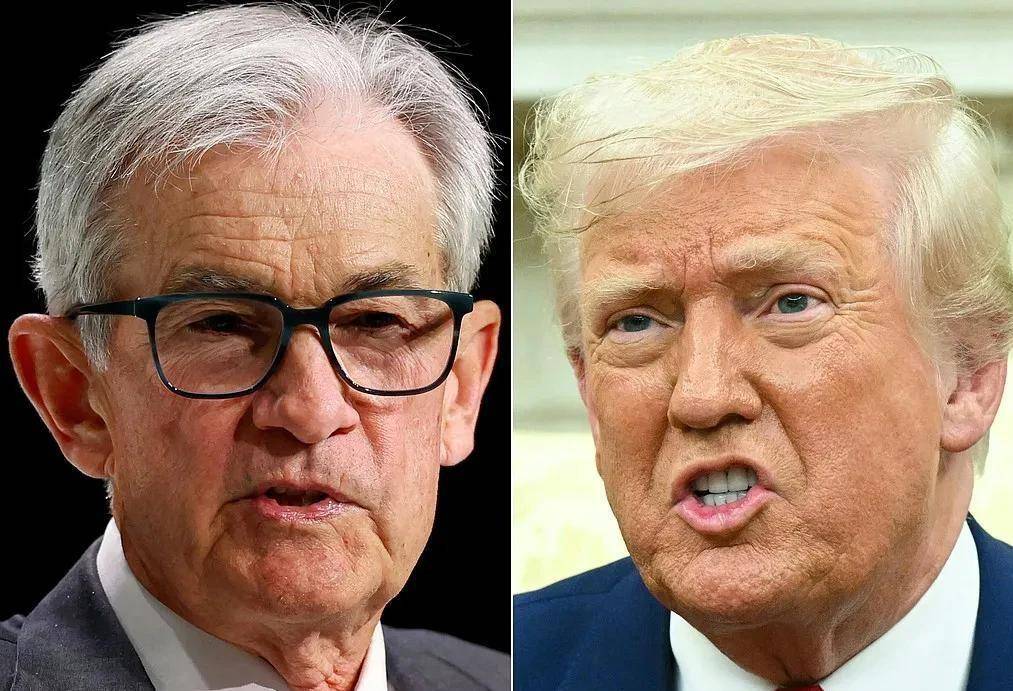
Core Viewpoint - The recent FOMC meeting minutes reveal significant internal divisions within the Federal Reserve regarding future interest rate decisions, primarily influenced by differing opinions on the impact of tariffs on inflation [1][3]. Summary by Relevant Sections Interest Rate Decisions - A majority of officials lean towards a potential interest rate cut later this year, but there is a notable faction that believes current inflation levels are still far from the 2% target, which does not justify an immediate rate cut [3]. - The FOMC has maintained the interest rate unchanged for the fourth consecutive meeting, with 10 out of 19 officials predicting two rate cuts within the year, while 7 believe there will be no cuts until 2025 [3]. Economic Data and Risks - Current economic data has not provided sufficient signals for action, with ongoing risks related to inflation and a weak labor market [5]. - There is a lack of consensus on the impact of tariffs, with opinions ranging from minimal effects to concerns about long-term implications [5]. Market Expectations - Market expectations indicate a likelihood of rate cuts in September and December, as investors await key economic indicators such as CPI and unemployment rates [7]. - The Federal Reserve is also considering enhancing policy communication strategies to clarify its economic forecasts and analyses [7]. Overall Sentiment - The prevailing sentiment among Federal Reserve officials is one of caution, emphasizing patience over aggressive action in response to economic data [8].