
智能化

Search documents
中铝青年突击队:做创新阵地上的“尖兵”
Zhong Guo Qing Nian Bao· 2025-12-10 22:40
Core Viewpoint - The article highlights the significant role of youth innovation teams within the China Aluminum Group, emphasizing their contributions to high-quality development through technological advancements and digital transformation in various sectors of the company [1][6]. Group 1: AI and Digital Innovation - At China Aluminum Capital, a youth team has developed an industrial big data platform that enhances futures brokerage services through algorithmic analysis, generating over 300,000 yuan in direct economic benefits within six months [2]. - The team has created four AI application scenarios, including a risk warning assistant, which advanced to the semifinals of the first "Kun'an Cup" AI application innovation competition [2]. Group 2: Transformation of Traditional Industries - In Baotou Aluminum, a youth team has implemented a "smart" approach to revitalize a 60-year-old electrolytic aluminum plant, achieving a cumulative economic benefit of 97.25 million yuan through automation and digitalization [3]. - The team consists of 39 highly educated members, with a focus on practical and efficient project management, leading to significant energy savings and operational improvements [3]. Group 3: Technological Breakthroughs in Mining - In Ningxia, a youth innovation team has developed a dual-directional monorail system for underground transport, improving efficiency by 30% and reducing costs by 25%, with a U.S. patent granted for the technology [4]. - In Shanxi, a youth innovation group has increased bauxite extraction rates from 50% to 70% through a new "filling mining" technique, generating nearly 40 million yuan in economic benefits [5]. Group 4: Youth Innovation Ecosystem - The rapid development of youth teams is supported by a structured innovation model within China Aluminum Group, which includes competitions and direct support from senior experts to foster practical skills and innovation [6][7]. - Initiatives like the "Youth Technology Arena" provide a platform for young engineers to showcase their work, enhancing their visibility and engagement in the industry [6].



第二十一届长沙国际车展开幕
Shang Hai Zheng Quan Bao· 2025-12-10 17:57
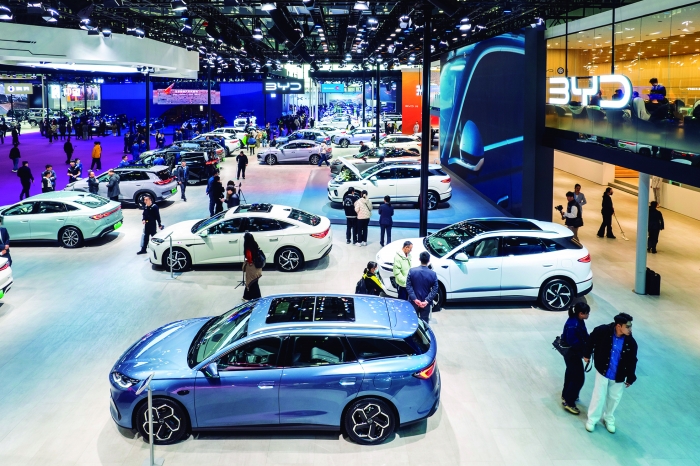
Core Viewpoint - The 21st Changsha International Auto Show has commenced, focusing on the trends of electrification and intelligence in the automotive industry, featuring over 70 domestic and international brands with nearly 1,000 vehicle models on display [2] Group 1 - The auto show lasts for six days, highlighting the growing importance of electric and intelligent vehicles in the market [2] - The event attracts a diverse range of automotive brands, showcasing the competitive landscape and innovation within the industry [2]
2026全球全品类消费趋势报告
Sou Hu Cai Jing· 2025-12-10 16:57
Group 1: Home and Living Trends - The concept of "home" is being redefined through five key scenes: sleep, air quality, garden, kitchen, and security, focusing on the dual upgrades of "intelligent" and "sustainable" [1] - North American consumers are willing to pay a premium for smart mattresses with built-in sensors, while European regulations require mattresses to include a "digital passport" [2][25] - In Japan, the demand for modular bedding that is foldable and space-saving is increasing due to smaller living spaces [2][25] - Air purifiers and garden systems are evolving from standalone products to interconnected, traceable, and self-checking nodes, with a focus on carbon footprint and recycling paths [3] Group 2: Automotive and Outdoor Trends - The automotive aftermarket and outdoor sports sectors are shifting from a focus on specifications to a focus on values and identity [4] - American car owners view modifications as "adventure badges," while European consumers prioritize eco-friendly materials [5] - In the outdoor sector, 66% of European consumers prioritize "repairable and recyclable" products, while American consumers seek a combination of professional functionality and stylish design [6] Group 3: Health and Wellness Trends - The aging population and Gen Z's sleep anxiety are driving the demand for health monitoring technologies in personal spaces like bedrooms and bathrooms [8] - American seniors are willing to invest in electric wheelchairs and smart mattresses to maintain independent living, while Japanese seniors prefer non-medical-looking devices [9] - Approximately 40% of Gen Z experiences sleep anxiety at least three times a week, leading to a shift towards non-pharmaceutical sleep aids that utilize technology and plant-based ingredients [10] Group 4: Parenting and Beauty Trends - New parents are facing challenges related to safety, environmental concerns, and efficiency in childcare, with a focus on "invisible monitoring" and "algorithmic feeding" [12] - The beauty industry is seeing a shift towards products that combine functionality with emotional value, with a growing preference for natural ingredients and sustainable packaging among European consumers [12][74] - The toy market is experiencing structural changes, with educational toys becoming the fastest-growing category, driven by collectors and emotional engagement [35] Group 5: Fashion and Wearable Technology Trends - Fashion items are transitioning from mere clothing to wearable technology, with AI-driven apps and smart fabrics becoming integral to personal health monitoring [14][17] - The competition in the fashion industry will focus on integrating flexible sensors into clothing, enhancing both functionality and emotional connection [17] - The global consumer market is expected to shift towards purchasing identity, values, and data sovereignty rather than just functionality [17] Group 6: Consumer Electronics Trends - The smart home ecosystem is evolving, with consumers seeking seamless integration of devices and prioritizing basic functionality and cost-effectiveness [25] - The demand for smart wearables is increasing, particularly in North America, where consumers value health data management and aesthetic design [40][45] - The earphone market is rapidly growing, driven by gaming and streaming, with a focus on sound quality and immersive experiences [52]
星宇股份拟回购股份用于员工持股计划
Zheng Quan Ri Bao· 2025-12-10 16:15
Core Viewpoint - The company, Changzhou Xingyu Automotive Lighting Co., Ltd. (Xingyu Co., 601799), announced a share buyback plan to enhance employee stock ownership and demonstrate confidence in its future development and self-value recognition [1][2]. Group 1: Buyback Plan Details - The total amount for the buyback is set between 200 million and 300 million yuan, with a maximum repurchase price of 180 yuan per share [1]. - The estimated number of shares to be repurchased ranges from 1.111 million to 1.667 million, representing 0.39% to 0.58% of the company's total share capital [1]. - The buyback aims to establish a long-term incentive mechanism, aligning the interests of shareholders, the company, and key employees [1]. Group 2: Financial Position - As of September 30, 2025, the company reported total assets of 18.226 billion yuan, net assets attributable to shareholders of 11.070 billion yuan, and current assets of 12.975 billion yuan (unaudited) [1]. - The maximum buyback amount of 300 million yuan constitutes only 1.65% of total assets, 2.71% of net assets, and 2.31% of current assets, indicating a relatively low impact on the company's financials [1]. Group 3: Market and Industry Context - The automotive industry is undergoing significant transformation towards electrification and intelligence, with lighting systems being a core component that combines functionality and smart attributes [3]. - The buyback and employee stock ownership plan are seen as strategies to retain core talent and stimulate innovation in advanced fields such as intelligent lighting and automotive-grade lighting systems [3]. - The company's decision to use its own funds for the buyback reflects a strong judgment on industry transformation trends and aims to enhance capital market attractiveness through optimized equity structure and improved shareholder returns [3].

【图解】前11个月税收数据显示——经济高质量发展动能强劲
Zhong Guo Jing Ji Wang· 2025-12-10 14:00
Group 1 - The core viewpoint of the article highlights the strong momentum for high-quality economic development in China, supported by effective incremental and stock policies [5] - Tax revenue data for the first 11 months indicates that the total tax revenue exceeded 29 trillion yuan, with tax revenue (excluding export tax rebates) growing by 3.1% to over 16 trillion yuan [9] - The number of active enterprises in China increased by 9.8% year-on-year, reflecting a stable economic environment and active capital markets [8] Group 2 - The sales revenue of the equipment manufacturing industry grew by 8.3% year-on-year, indicating a solid performance in the manufacturing sector [9] - The sales revenue from high-tech industries increased by 14.7% year-on-year, driven by continuous innovation and supportive tax policies [12] - The sales revenue from clean energy sectors, including wind, solar, and hydropower, rose by 14.9% year-on-year, reflecting a rapid transition towards a greener energy structure [10]

办公室进化论:是什么让人愿意出门上班?
Di Yi Cai Jing Zi Xun· 2025-12-10 13:18
Core Insights - The office environment is becoming a crucial factor for young professionals in their job selection, shifting from a "functional" to a "human-centered" space that fosters warmth, happiness, and growth [1][4][23] - The integration of AI technology in office spaces aims to maximize human potential and create engaging environments that encourage employees to work more efficiently [1][21] Group 1: Shift in Office Space Philosophy - The core transformation of office spaces is from "functional containers" to "human-centered spaces," with 81% of companies prioritizing "employee experience" in space planning, significantly surpassing "cost control" [4][19] - A survey indicates that 79% of Gen Z employees believe they are more efficient working in an office, yet only 11% are satisfied with their current workspace [4][19] Group 2: Corporate Investment in Office Spaces - Leading companies are the primary drivers of this spatial revolution, as they seek to attract top talent who demand more freedom and warmth in their work environments [7][12] - Companies focused on brand image view office spaces as physical embodiments of their brand philosophy, with examples like Meihua Group investing in international office designs to reflect their global vision [10][12] Group 3: Employee-Centric Design - The design of office spaces is shifting to accommodate the diverse needs of employees, particularly Gen Z, who desire clear decision-making paths alongside a flat collaborative atmosphere [14][16] - Informal communication spaces are essential for fostering mentorship and knowledge transfer, which are difficult to replicate in remote work settings [14][18] Group 4: Sustainability in Office Spaces - Office spaces are critical for sustainable practices, with companies like Steelcase implementing eco-friendly materials and carbon-neutral certifications to enhance their ESG credentials [19][21] - The commitment to sustainability is increasingly seen as a competitive advantage, particularly among younger employees who prioritize social responsibility [19][21] Group 5: Future of Office Spaces - The ideal future office space will leverage smart technology to enhance human interaction and productivity, emphasizing a blend of digital, physical, and emotional elements [21][23] - The ultimate goal is to transform the perception of going to the office from a mandatory task to a valued choice, highlighting the importance of human connection and meaningful work [23]

2025年汽车悬架行业词条报告
Tou Bao Yan Jiu Yuan· 2025-12-10 12:13
Investment Rating - The report does not explicitly state an investment rating for the automotive suspension industry Core Insights - The automotive suspension industry is undergoing a profound transformation driven by electrification and intelligence, shifting the competitive focus from traditional mechanical hardware to a comprehensive system capability defined by software [4] - The demand for lightweight structural components and high-performance suspensions is increasing due to electrification, while intelligence is pushing the evolution of suspensions from passive adaptation to active prediction [4] - The value distribution across the entire industry chain will be redefined in this technological revolution, with investment opportunities focusing on leading domestic component manufacturers, system integrators with advantages in electric control suspensions, and suppliers providing key enabling technologies for intelligent suspensions [4] Summary by Sections Industry Overview - The automotive suspension system connects the vehicle body to the wheels, playing a crucial role in cushioning road impacts and ensuring good contact between the wheels and the ground [5] - The industry can be categorized into passive, semi-active, and active suspensions based on their working principles and application scenarios [5][6] Industry Characteristics - High-end market core technology barriers are significant, with foreign companies having established a "patent moat" in core suspension technologies [8] - Electrification is driving technological iterations, with new energy vehicles imposing stricter requirements on suspension systems [9] - Intelligent technology is enabling the transition of suspension systems from mechanical passive modes to electronically controlled active modes [10] Development History - The automotive suspension system has evolved from passive systems in the 1930s to semi-active systems in the 1970s, and to active systems gaining traction in the 1990s [11][12][13][14][15] Industry Chain Analysis - The automotive suspension industry chain consists of upstream (core materials and components), midstream (system design and assembly), and downstream (vehicle application and aftermarket services) [16] - The upstream component supply segment is highly concentrated, dominated by international suppliers like ZF and Continental [17][22] - Midstream, system integrators are increasingly investing in R&D to enhance differentiation and supply chain security [18][19] Market Size and Growth - The automotive suspension market size is projected to grow from 67.25 billion RMB in 2019 to 83.42 billion RMB in 2024, with a compound annual growth rate (CAGR) of 4.40% [29] - The market is expected to further expand to 111.45 billion RMB by 2029, with a CAGR of 6.10% [29] Future Trends - The demand for high-performance suspension systems is increasing, with technology being downscaled to mid-range markets [32] - The rise of line-controlled suspension systems is anticipated to support the development of automotive intelligence [33] Competitive Landscape - The competitive landscape is characterized by a "global leaders and Chinese tiered catch-up" scenario, with high market concentration [39] - Chinese manufacturers are rapidly closing the technology gap with international giants, driven by the growth of the new energy vehicle market [43][44]





中国长安第3000万辆中国品牌汽车下线 力争2030年实现整车产销500万辆
Zheng Quan Shi Bao Wang· 2025-12-10 12:00
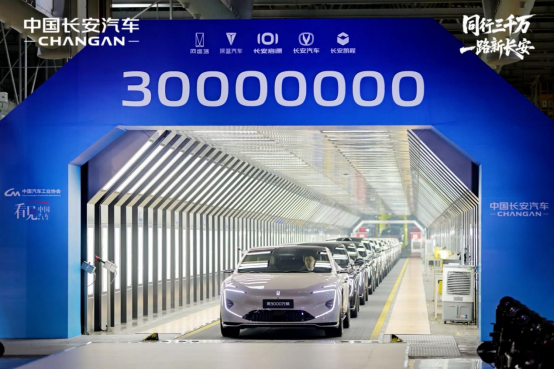
Core Insights - China Changan has officially launched its 30 millionth Chinese brand vehicle, the Avita 12 Four Laser Edition, marking it as the fastest company to reach this milestone in the Chinese automotive industry [1][3] Group 1: Milestone Achievement - The achievement of 30 million vehicles illustrates the "Changan Speed" in high-quality development, with the first 10 million reached in 30 years, the second 10 million in 7 years, and the third expected to be achieved in just 4.5 years [3][4] - This milestone signifies Changan's entry into a new phase of scaled, global, and high-quality development, showcasing the strength and responsibility of new state-owned enterprises [3] Group 2: Brand Development - Changan has established a five-brand matrix, enhancing brand momentum, with Avita positioned as a "new luxury electric vehicle," maintaining over 10,000 units sold for nine consecutive months [4] - The Deep Blue brand has attracted over 700,000 young global users, leading in sales among state-owned enterprises in the new energy sector [4] - The Changan Qiyuan brand targets mainstream global family users, achieving over 46,000 units sold in November alone [4] Group 3: Future Goals - Changan aims to exceed 1 million new energy vehicle sales by 2025, with the 30 million milestone serving as a new starting point [4] - The company plans to transform into a smart low-carbon travel technology company, targeting 5 million total vehicle sales by 2030, with over 60% being new energy vehicles and over 30% from overseas markets [4][5] - In the new energy sector, Changan will focus on developing the Avita, Deep Blue, and Changan Qiyuan brands, while also investing in next-generation batteries and IGBT technologies [5]

第二十一届长沙国际车展启幕 全球车企比拼新技术
Zhong Guo Xin Wen Wang· 2025-12-10 11:06
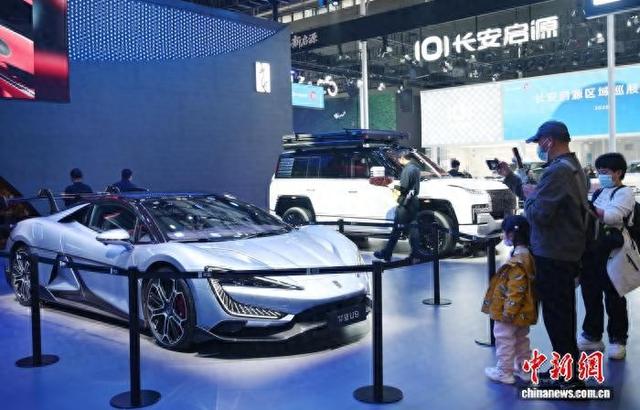
中新网长沙12月10日电(记者 唐小晴)为期六天的第二十一届中国(长沙)国际汽车博览会(简称"长沙国际 车展")10日在长沙国际会展中心启幕。 " 我们打造了超3000平方米的智能化体验场景,涵盖智能驾驶、整车智能、智能座舱三大技术板 块。"比亚迪长沙片区销售经理刘豹告诉记者,为全方位呈现新能源汽车领域的技术实力,比亚迪展示 了全场景数字钥匙、智能泊车场景和全球首款量产车载无人机系统。 小鹏汇天"陆地航母"分体式飞行汽车的亮相亦十分吸睛。"这是全球首款面向个人用户量产交付的飞行 汽车产品,采用'陆行体+飞行器'分体设计。"汇天航空航天公司副总裁李锐说,位于广州的小鹏汇天飞 行汽车量产工厂满产状态下,生产线每30分钟可下线一台飞行器,工厂已将汽车工业的流水线引入航空 领域。 在本届长沙国际车展上,还有20多款首发新车迎来华中首秀,许多热门新车也纷纷亮相,鸿蒙智行全系 新车则展示最前沿的智驾科技。 年轻人在 车企布置的打卡区拍照。中新网记者 唐小晴 摄 作为中部地区规模最大、最具影响力的汽车行业盛会,本届长沙国际车展共有71个知名汽车品牌参展, 近1000款新车亮相,集中展示汽车领域的电动化、智能化新趋势。 民众 ...

汽车ETF(516110)涨超1.0%,行业迎双轮驱动
Mei Ri Jing Ji Xin Wen· 2025-12-10 07:07
Core Viewpoint - The automotive and parts industry is expected to benefit from the dual drivers of smart manufacturing and green transformation during the "14th Five-Year Plan" period, with a focus on electric, intelligent, and connected vehicles [1] Industry Trends - The widespread use of data elements is driving the transformation and upgrading of traditional manufacturing, enhancing the resilience and security of supply chains [1] - Key development areas include smart connected vehicles and parts, with the market penetration of new energy vehicles continuously increasing, leading to new demands for charging stations, smart driving, vehicle networking, and battery recycling [1] - The green low-carbon transition is promoting the development of new energy and energy storage systems, with technologies such as electrochemical energy storage and hydrogen energy entering a critical period, providing support for the automotive industry [1] Investment Opportunities - The automotive ETF (516110) tracks the 800 automotive index (H30015), which selects representative listed company securities from the automotive-related industry, covering vehicle manufacturing, parts supply, and automotive services [1] - This index, with its high industry concentration and market representation, offers investors a convenient tool for industry investment [1]