全球化

Search documents
腾讯重回7000亿美金
投中网· 2025-08-15 06:10
Core Viewpoint - The article discusses Tencent's transition from AI as a research investment to a significant driver of revenue and profit, highlighting the company's strong financial performance and strategic shifts in AI commercialization and global expansion [6][34]. Group 1: Financial Performance - Tencent's Q2 2025 revenue reached 184.5 billion yuan, a 15% year-on-year increase, with gross profit at 105 billion yuan, up 22% [6][7]. - The company's operating profit under Non-IFRS was 69.25 billion yuan, reflecting an 18% growth [6]. - Following the earnings report, Tencent's ADR surged nearly 7%, pushing its market capitalization back to 700 billion USD [7]. Group 2: AI Strategy and Implementation - Tencent's AI strategy has shifted from heavy investment to realizing commercial benefits, marking a new phase of accelerated returns [7][9]. - The company invested 20.25 billion yuan in R&D during Q2, a 17% increase, with total R&D spending since 2018 exceeding 379.5 billion yuan [9][10]. - Capital expenditures reached 19.11 billion yuan, a 119% increase, indicating significant investment in infrastructure for AI model training [10]. Group 3: AI-Driven Business Growth - Tencent's advertising revenue grew to 35.76 billion yuan, a 20% increase, attributed to AI-driven improvements in its advertising platform [14][15]. - The gaming segment saw total revenue of 59.2 billion yuan, driven by both international and domestic markets, with international game revenue up 35% [20][23]. - The company is leveraging AI in its gaming products, enhancing user engagement through features like AI companions in popular games [24][25]. Group 4: Global Expansion - Tencent's international game revenue growth reflects a strategic focus on global markets, with significant contributions from titles like "PUBG MOBILE" and "Clash Royale" [20][21]. - The company is also expanding its cloud services globally, having served over 10,000 international clients across 80 countries [31][32]. - Tencent's commitment to building a global cloud service network includes investments in data centers in the Middle East and Japan [32][33]. Group 5: To B Strategy - Tencent's enterprise services revenue reached 55.54 billion yuan, a 10% increase, driven by demand for AI-related services [28][29]. - The company is enhancing its AI tools for developers, exemplified by the launch of CodeBuddy IDE, which significantly reduces development time [30]. - Tencent's AI capabilities are being packaged into user-friendly solutions for businesses, facilitating cost reduction and efficiency improvements [30][31].



贵州茅台(600519):Q2务实降速,市场化、全球化持续推进
HUAXI Securities· 2025-08-15 05:48
Investment Rating - The investment rating for the company is "Buy" [1] Core Views - The company reported a pragmatic slowdown in Q2, reducing channel fund occupation and increasing financial support for its sauce-flavored liquor distributors [3] - The company achieved a revenue of 893.89 billion yuan in H1 2025, a year-on-year increase of 9.10%, and a net profit attributable to shareholders of 454.03 billion yuan, up 8.89% year-on-year [2] - The company is focusing on long-term development by slowing down the growth of its series liquor and strengthening its self-operated store system while continuing its globalization strategy [4] Financial Performance - In Q2 2025, the company achieved a revenue of 387.88 billion yuan, a year-on-year increase of 7.28%, and a net profit of 185.55 billion yuan, up 5.25% year-on-year, indicating a pragmatic approach in response to weakening demand [3] - The cash flow from sales in Q2 2025 was 389.43 billion yuan, a decrease of 4.64% year-on-year, but the cash collection rate remained above 1, indicating good liquidity [3] - The company’s gross profit margin in Q2 2025 was 90.63%, a slight decrease of 0.26 percentage points year-on-year, primarily due to price inversions in non-standard products [6] Sales and Distribution - The revenue from the company's flagship liquor reached 320.32 billion yuan in Q2 2025, a year-on-year increase of 10.99%, while the revenue from series liquor declined by 6.53% [4] - The company has 2,280 domestic distributors as of Q2 2025, with a net addition of 160 distributors in H1, indicating a strong focus on expanding the series liquor distribution network [5] - The overseas revenue increased by 31.29% year-on-year, reflecting the successful implementation of the company's globalization strategy [5] Profitability and Cost Management - The company’s net profit margin in Q2 2025 was 50.79%, a decrease of 0.90 percentage points year-on-year, attributed to the slower profit growth compared to revenue growth [6] - The total expenses increased, with the tax and additional fees rate at 17.09%, up 0.07 percentage points year-on-year, while the total expense rate rose to 8.72%, an increase of 0.68 percentage points year-on-year [6] Future Outlook - The company has slightly adjusted its profit forecast due to the pragmatic slowdown in Q2 and the weak industry demand, but it still aims for a 9% revenue growth target for the year [7] - The revenue estimates for 2025-2027 have been adjusted to 1898.50 billion yuan, 1997.91 billion yuan, and 2068.43 billion yuan respectively, while net profit estimates have been revised to 935.45 billion yuan, 990.17 billion yuan, and 1029.35 billion yuan [7]

连连国际2025生态大会召开 携手合作伙伴共赢“全球化航海新时代”
Zhong Guo Chan Ye Jing Ji Xin Xi Wang· 2025-08-15 04:05
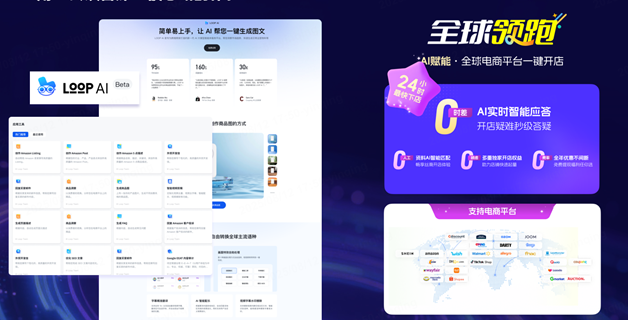
Group 1 - LianLian International held the 2025 Ecological Conference in Shenzhen, focusing on technological innovation and global market opportunities for outbound enterprises [1] - The event featured industry experts discussing new strategies for cross-border e-commerce, emphasizing the importance of collaboration and open ecosystems for success [1] - LianLian International has established a robust global presence with over 60 payment licenses and a network covering more than 100 countries, serving over 5.9 million outbound enterprises [1] Group 2 - LianLian International launched the "LianLian Cross-Border Merchant Confidence Index" project to assess market conditions and seller expectations across seven dimensions, aiding industry understanding [2] - The company introduced the CrossLink open platform to share its user ecosystem and facilitate diverse business scenarios, partnering with LooperBuy to enhance B2B sourcing services [2] - A global e-commerce entrepreneurship competition named "Breaking Boundaries Future" was announced to support small and medium-sized entrepreneurs in overcoming challenges related to funding, direction, and resources [2] Group 3 - LianLian International is integrating advanced AI technology to enhance product capabilities, offering free AI experiences to cross-border sellers and launching tools like "LOOP AI" for streamlined operations [3] - The company aims to empower the industry through technology and warm services, fostering trust and collaboration among ecosystem partners for a new era of globalization for Chinese enterprises [5]
外卖等新业务亏损147.77亿元,京东CEO许冉:带来了显著的流量和用户增长|直击业绩会
Sou Hu Cai Jing· 2025-08-15 01:58
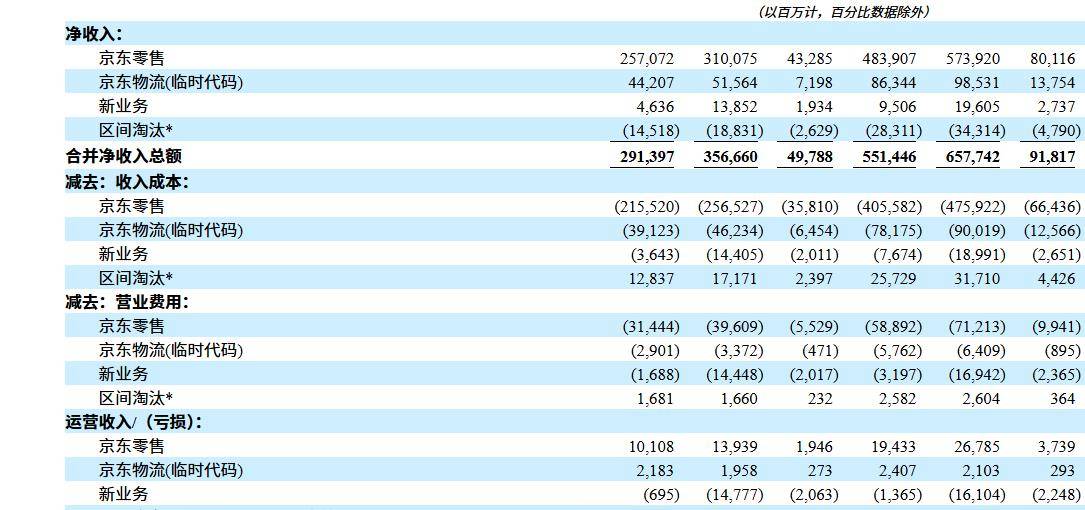
Core Insights - JD Group reported strong revenue growth in Q2 2025, with total revenue reaching 356.7 billion yuan, a year-on-year increase of 22.4%. However, net profit attributable to ordinary shareholders fell to 6.2 billion yuan, down 51% from 12.6 billion yuan in the same period last year due to significant investments in the food delivery business [1][2][5]. Revenue Breakdown - JD Retail generated revenue of 310.1 billion yuan in Q2, up from 257.1 billion yuan year-on-year [2][3]. - JD Logistics reported revenue of 51.6 billion yuan, compared to 44.2 billion yuan in the previous year [2][3]. - New business revenue, including food delivery, surged by 198.8% year-on-year to 13.9 billion yuan, but the operating loss for this segment expanded dramatically to 14.8 billion yuan, with an operating margin of -106.7% [2][3]. Marketing and Investment - Marketing expenses increased significantly to 27 billion yuan, a 127.6% rise from 11.9 billion yuan year-on-year, primarily due to promotional spending for new business initiatives [3][4]. - The company aims to leverage new business investments to overcome growth bottlenecks and create long-term value, despite short-term impacts on profit margins [5]. Food Delivery Business - During the 618 shopping festival, JD's food delivery service achieved over 25 million daily orders, with more than 1.5 million quality merchants onboard and a workforce of over 150,000 full-time delivery riders [4]. - JD plans to open 10,000 new stores under the "Seven Fresh Kitchen" initiative over the next three years, although currently, only one store is operational in Beijing [4]. Global Expansion - JD Logistics has accelerated its internationalization efforts, managing over 130 bonded and overseas warehouses across 23 countries and regions [6][7]. - The company has launched its self-operated delivery brand "JoyExpress" in Saudi Arabia, establishing a complete logistics network for efficient delivery services [7]. Acquisition Strategy - JD has made a public acquisition offer to Ceconomy shareholders, with plans to complete the acquisition by mid-2026, emphasizing its focus on supply chain capabilities in international markets [8][9]. Technology and Innovation - The company is actively integrating new technologies, including AI and automation, into its operations, with significant investments in R&D exceeding 150 billion yuan since 2017 [10][11].

中金:维持吉利汽车(00175)跑赢行业评级 目标价26港元
智通财经网· 2025-08-15 01:57
Core Viewpoint - The report from CICC maintains the profit forecast for Geely Automobile (00175) for 2025 and 2026, with a target price of HKD 26.00, indicating a potential upside of 37.2% from the current stock price [1] Group 1: Sales and Revenue Growth - In 1H25, total sales increased by 47% year-on-year to 1.409 million units, driving total revenue up by 40% to CNY 150.29 billion [2] - The sales of new energy vehicles surged by 126% year-on-year to 725,000 units, accounting for 51.5% of total sales, with the Galaxy brand sales increasing by 232% to 548,000 units [2] - Exports of new energy vehicles also performed well, rising by 146% year-on-year to 40,000 units [2] - The company plans to launch six new models in the second half of the year, aiming to exceed total sales of 3 million units for the year [2] Group 2: Profitability and R&D Investment - The gross profit margin in 1H25 was 16.4%, with the profitability of GEA architecture models offsetting some pricing pressures [3] - Lean management led to a reduction in sales and management expense ratios by 1.1 percentage points and 0.7 percentage points year-on-year to 5.6% and 1.9%, respectively [3] - R&D investment increased by 21.3% year-on-year to CNY 7.33 billion, focusing on advanced driving assistance systems and new architecture development [3] - Core operating profit in 1H25, excluding foreign exchange and last year's one-time subsidiary sale impacts, rose by 102% year-on-year to CNY 6.66 billion, indicating a trend of profit recovery [3] Group 3: Strategic Reconfiguration and Globalization - The company is accelerating the implementation of the "One Geely" strategy to achieve resource synergy across multiple brands [4] - In terms of globalization, the company invested in Renault Brazil to leverage its established production system and distribution network for entry into the Latin American market; the Egypt factory has commenced production, and the Indonesia base has started trial production to enhance local supply chain capabilities [4] - The product strategy focuses on comprehensive intelligence, with plans to launch new models equipped with advanced driving solutions, covering the market from entry-level to luxury segments [4]

外卖等新业务亏损147.77亿元,京东CEO许冉:带来了显著的流量和用户增长
Feng Huang Wang· 2025-08-15 00:50
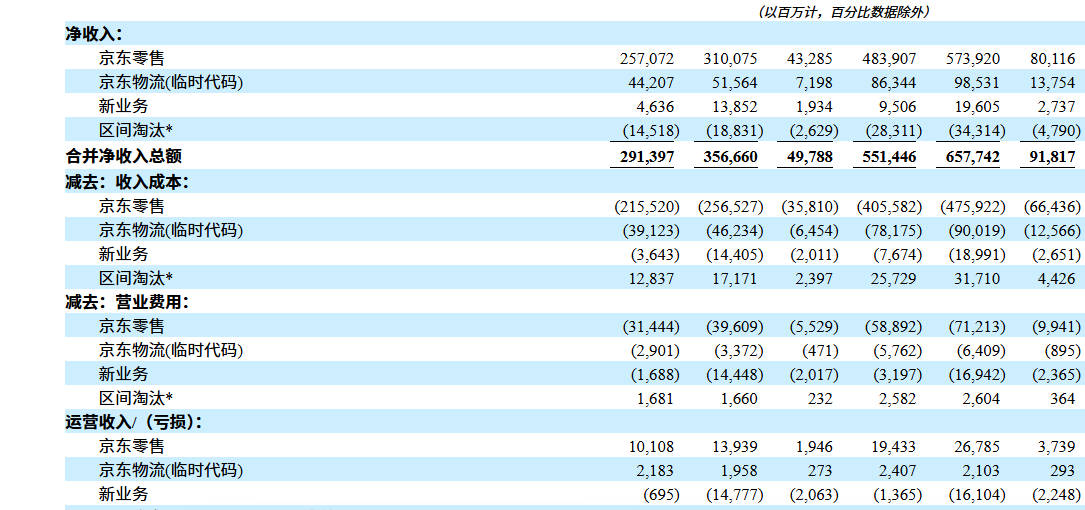
Core Viewpoint - JD Group reported strong revenue growth in Q2 2025, with revenue reaching 356.7 billion yuan, a year-on-year increase of 22.4%. However, net profit attributable to ordinary shareholders fell by 51% to 6.2 billion yuan due to significant investments in the food delivery business [1][2]. Financial Performance - JD Retail achieved revenue of 310.1 billion yuan in Q2, up from 257.1 billion yuan in the same period last year [2][3]. - JD Logistics reported revenue of 51.6 billion yuan, compared to 44.2 billion yuan in the previous year [2][3]. - New business revenue, including food delivery, surged by 198.8% year-on-year to 13.9 billion yuan, but the operating loss for this segment expanded dramatically to 14.8 billion yuan, with an operating margin of -106.7% [2][3]. Marketing and Expenses - Marketing expenses increased significantly to 27 billion yuan, a 127.6% rise from 11.9 billion yuan in the previous year, with the marketing expense ratio climbing from 4.1% to 7.6% [3]. Business Expansion and Strategy - JD's food delivery business saw daily orders exceed 25 million during the 618 shopping festival, with over 1.5 million quality merchants onboard and a full-time rider workforce exceeding 150,000 [4]. - The company plans to open 10,000 new stores over the next three years under the "Seven Fresh Kitchen" initiative, although currently only one store is operational in Beijing [4]. - JD's CEO emphasized that the food delivery sector is a long-term strategic focus, aiming to enhance operational efficiency and system capabilities [4][5]. Globalization Efforts - JD Logistics has expanded its international presence, managing over 130 bonded and overseas warehouses across 23 countries, and launched its self-operated delivery brand "JoyExpress" in Saudi Arabia [6][7]. - The company is pursuing a strategic acquisition of Ceconomy, aiming to enhance its supply chain capabilities and brand presence in Europe [7][8]. Technological Innovation - JD is actively integrating new technologies across its operations, including AI applications in retail and automated logistics solutions [9][10]. - The company has invested over 150 billion yuan in R&D since 2017, with a supply chain infrastructure asset scale nearing 170 billion yuan [10].
联影医疗(688271):“高端化+全球化+智能化”三擎驱动,打造医疗影像领军者
Xinda Securities· 2025-08-14 11:13
Investment Rating - The investment rating for the company is "Buy" [2] Core Views - The report emphasizes that the company, as a leading domestic medical imaging equipment manufacturer, has made significant breakthroughs in product high-endization, market globalization, and technological intelligence. With high product barriers, deepening global layout, and the formation of an AI ecosystem, the company's business is expected to maintain rapid growth and continuous improvement in profitability [6][10][12] Summary by Sections Company Overview - The company focuses on R&D and has established a comprehensive product line covering MR, CT, XR, MI, and RT. As of the end of 2024, it has launched over 140 products, achieving multiple "first in the country/industry" breakthroughs [13][14] Financial Performance - The company's revenue has grown from 2.035 billion yuan in 2018 to 10.3 billion yuan in 2024, with a compound annual growth rate (CAGR) of 31%. The net profit for 2024 is projected to be 1.262 billion yuan, reflecting a year-on-year decrease of 36.1% due to short-term policy impacts [6][20][23] Product Matrix - The company has a complete product line and is gradually achieving advantages in mid-to-high-end products, with a focus on high-end product development to break the import monopoly. The company is the only one in China with a 320-slice/640-layer CT product and has a leading market share in PET/CT [33][34] Market Expansion - The company is actively expanding its domestic and international markets. In 2024, its domestic revenue reached 7.664 billion yuan, and it ranked first in the new market share for imaging products in China. The company has also established a presence in over 70% of U.S. states and has expanded into key European markets [11][12][20] AI Integration - The company is integrating AI technology into its medical imaging devices throughout their lifecycle, creating a comprehensive digital platform. The launch of the intelligent CT, uCT Orion, has already received over 100 orders by early 2025, showcasing the successful application of AI in enhancing product performance [12][10][6] Revenue Forecast - The company is expected to achieve revenues of 12.062 billion yuan, 14.156 billion yuan, and 16.657 billion yuan for the years 2025, 2026, and 2027, respectively, with corresponding net profits of 1.748 billion yuan, 2.197 billion yuan, and 2.749 billion yuan [6][7][20]

24小时直达中东门户,极兔海口-特拉维夫全货机首航成功
Jing Ji Guan Cha Bao· 2025-08-14 11:08
Core Points - J&T Express has successfully launched its first direct cargo flight from Haikou to Tel Aviv, marking a significant milestone in connecting China's Hainan Free Trade Port with the Middle East economic hub [1][2] - The new route significantly reduces the delivery time for goods from China to Israel, cutting the previous 5-7 days transit time to under 24 hours, achieving an efficiency improvement of over 50% [1] - The launch of this route addresses the shortage of direct cargo transport resources in Israel, which is crucial for its high-tech, finance, and biopharmaceutical sectors [1] Company and Industry Summary - The Haikou-Tel Aviv route is a key component of J&T Express's strategy to build a global and intelligent logistics network [2] - The opening of this route is expected to enhance logistics efficiency between China, particularly the South China and Hainan regions, and the broader Middle East and European markets [2]
今元集团土耳其公司持证经营,强化区域网络助中企拓展全球市场
Sou Hu Cai Jing· 2025-08-14 09:26
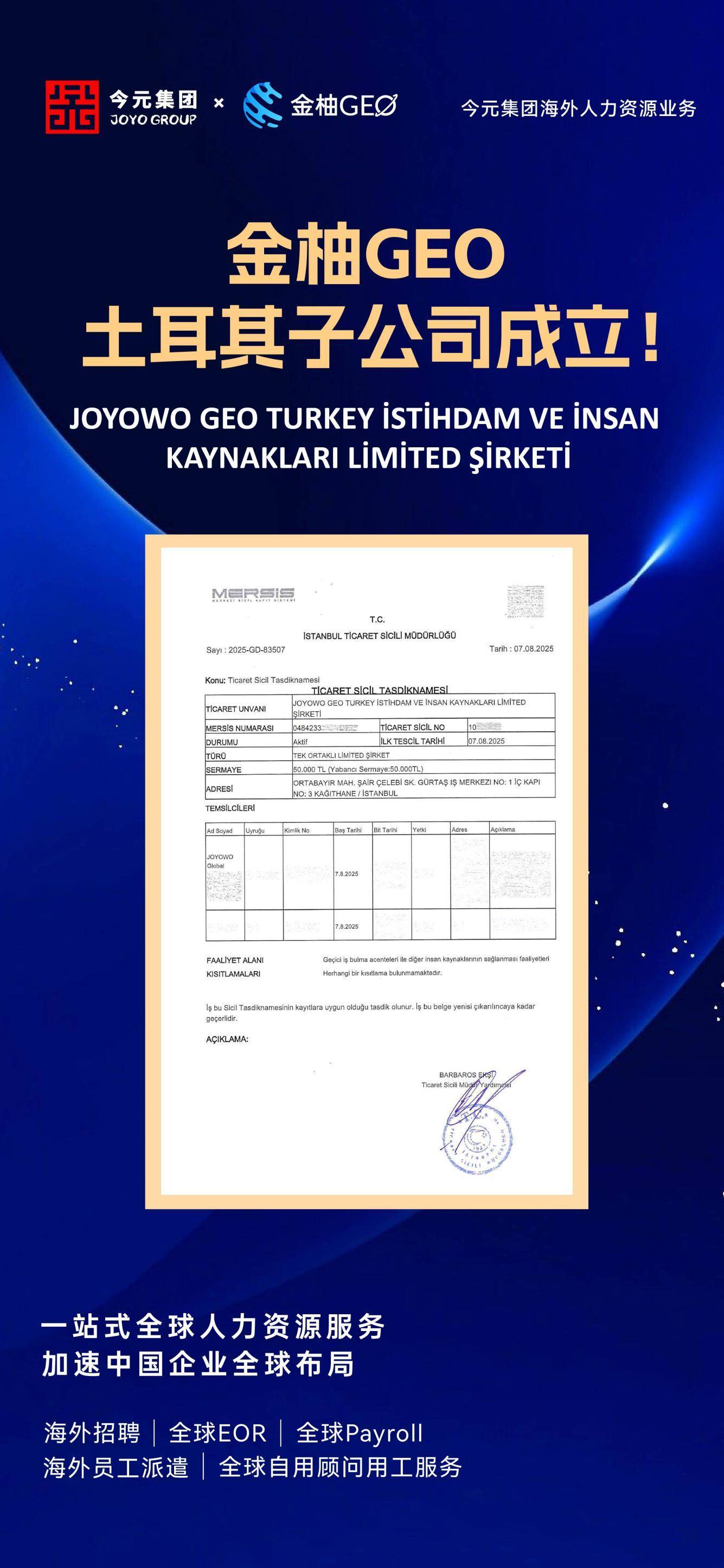
近日,今元集团旗下海外人力资源业务品牌"金柚GEO"在土耳其成立自营公司。此举标志着继中国香港、新加坡、印尼、越南、马来西亚、澳大利亚等关键 节点布局后,今元集团在"一带一路"中东-欧洲走廊核心区完成战略性纵深部署,实现本地化服务网络的能级跃升。通过构建覆盖战略规划、合规准入、人 力资源配置及长效运营的全链路支撑体系,集团正系统性赋能中国企业以土耳其为支点,撬动欧亚非三大陆的万亿级市场机遇。 | | | I CARE SIGIL IASDIKNAMESI | | | --- | --- | --- | --- | | TICARET UNVANI | JOYOWO GEO TURKEY İSTİHDAM VE İNSAN KAYNAKLARI LİMİTED | | | | | SIRKETI | | | | MERSİS NUMARASI | TICARET SICIL NO 0484233 -------- | | | | DURUMU | ILK TESCIL TARIHI Aktif | | 07.08.2025 | | TÜRÜ | TEK ORTAKLI LİMİTED ŞİRKET | | | ...
美国39%关税重击瑞士:“中立国模式”还能玩多久?
阿尔法工场研究院· 2025-08-14 00:06
Group 1 - Trump's tariff policy is reshaping global supply chains and investment landscapes, prompting Switzerland to reassess its role in the world [1][2] - Switzerland has been historically viewed as a neutral mediator, but the current geopolitical climate raises questions about the viability of this stance [1][2] - The U.S. has imposed a 39% tariff on Swiss goods, shocking the nation as the U.S. is its largest single export market, with exports including watches, chocolate, pharmaceuticals, and machine tools [4][5] Group 2 - The trade deficit with the U.S. reached $48 billion as of June, primarily due to surging imports of pharmaceuticals and gold [4] - Swiss companies are considering relocating production to neighboring countries due to the high tariffs, with some already planning to shift operations [5][7] - The Gruyère cheese industry, representing 1,600 dairy farmers, anticipates a decline in exports to the U.S., which accounts for one-third of its market [7] Group 3 - The political debate in Switzerland is intensifying regarding whether to strengthen ties with the EU, with a potential public vote on expanding access to the EU single market [9][10] - Analysts suggest that the tariff situation may inadvertently bolster pro-EU sentiments among the Swiss population [10][11] - The historical neutrality of Switzerland is being challenged, especially in light of recent geopolitical events, including the war in Ukraine [8][11]