
扩内需政策

Search documents
经观月度观察|经济韧性显现,提高资金向实体传导效率
Jing Ji Guan Cha Bao· 2025-10-23 15:39
Core Insights - Economic resilience is evident, but pressures remain, necessitating further expansion of domestic demand policies to effectively stimulate real demand in manufacturing and services while improving the efficiency of fund transmission to the real economy [1] CPI Insights - The CPI for September showed a year-on-year decline of -0.3%, a slight improvement from -0.4% in August, with core CPI rising to 1.0%, the highest in 19 months, indicating sustained recovery in internal demand [2] PPI Insights - The PPI decreased by -2.3% year-on-year in September, a reduction in the decline from -2.9% in the previous month, with expectations of a potential positive turnaround in the first half of next year [3] PMI Insights - The manufacturing PMI increased to 49.8% in September from 49.4% in August, indicating slight improvement in manufacturing activity, although the index remains in contraction territory for six consecutive months, highlighting ongoing economic pressures [4][5] Fixed Asset Investment Insights - Fixed asset investment fell by -7.1% year-on-year in September, with significant declines in infrastructure, manufacturing, and real estate investments, reflecting persistent weakness in investment activity [6] Credit Insights - New RMB loans increased by 1.29 trillion yuan in September, a rise of 700 billion yuan from the previous month, maintaining a steady credit scale despite a year-on-year decrease [7] M2 Insights - The M2 growth rate was 8.4% year-on-year in September, indicating a slight decline in the growth rate, with the efficiency of fund transmission to the real economy still needing improvement [8][9]
经济韧性显现,提高资金向实体传导效率
Jing Ji Guan Cha Wang· 2025-10-23 14:59
Core Insights - Economic resilience is evident, but pressures remain, necessitating further expansion of domestic demand policies to effectively stimulate real demand in manufacturing and services while improving the efficiency of financial support to the real economy [1] CPI: Sustained Recovery of Internal Momentum - The CPI for September increased from -0.4% to -0.3%, with a core CPI rising to 1.0%, the highest in 19 months, indicating a sustainable recovery in internal demand [4][2] - Prices of gold and platinum jewelry surged by 42.1% and 33.6% respectively, reflecting accelerated consumer demand [4] PPI: Gradual Recovery Expected - The PPI for September decreased by 2.3%, a reduction of 0.6 percentage points from the previous month, with expectations of a potential positive turn in the first half of next year [7][5] - The recent implementation of anti-involution measures in key sectors like photovoltaics and new energy is showing positive effects on price governance [7] PMI: Need for Further Demand Stimulation - The manufacturing PMI rose to 49.8%, indicating slight improvement, but still reflects economic pressure with a widening supply-demand gap [11][8] - The production index's increase is attributed to the release of backlogged orders and exporters ramping up shipments [11] Fixed Asset Investment: Weak Performance - Fixed asset investment fell by 7.1% year-on-year in September, with significant declines in infrastructure, manufacturing, and real estate investments [14][12] - The real estate market remains weak, with a 10.5% drop in sales area and an 11.8% decrease in sales value [14] Credit: Steady Scale - New RMB loans increased by 1.29 trillion yuan in September, reflecting a seasonal uptick, with overall credit scale remaining stable [17][15] - Factors contributing to this include the implementation of new policy financial tools and improved corporate operating conditions [17] M2: Need for Improved Transmission Efficiency - M2 growth slowed to 8.4%, indicating insufficient credit generation and limited fiscal counteraction [20][18] - The structure of deposits shows a shift from fiscal departments back to residents and enterprises, highlighting the need for enhanced efficiency in transmitting funds to the real economy [20]

“稳、进、韧”前三季度中国经济顶压前行
Shang Hai Zheng Quan Bao· 2025-10-20 18:13
Group 1 - The core viewpoint of the articles highlights the resilience of China's economy amid global challenges, with a focus on the positive impact of service consumption and government policies on economic growth [1][3][4] - In the first three quarters, the total retail sales of consumer goods increased by 4.5% year-on-year, while service retail sales grew by 5.2%, indicating a faster growth rate in the service sector [1] - The contribution rate of final consumption expenditure to economic growth reached 53.5%, an increase of 9.0 percentage points compared to the previous year, reinforcing its role as the main engine of economic growth [3] Group 2 - The government has implemented several policies to stimulate consumption, including the issuance of 300 billion yuan in special bonds to support the replacement of old consumer goods, which has shown positive effects [1][2] - The manufacturing purchasing managers' index has shown signs of recovery, and key industrial product prices have been rising, which is beneficial for improving corporate profitability [4] - The macroeconomic policies are expected to enhance the stability of economic growth, with a focus on structural monetary policy tools and support for high-tech industries [4][5]
前三季度消费支出对经济增长贡献率为53.5%|快讯
Hua Xia Shi Bao· 2025-10-20 05:14
Core Insights - The data released by the National Bureau of Statistics indicates that China's consumption potential is being continuously released, with consumption policies effectively boosting service consumption and stabilizing the overall consumption market [2] Group 1: Economic Contribution - In the first three quarters, final consumption expenditure contributed 53.5% to economic growth, driving GDP growth by 2.8 percentage points [2] - In the third quarter, final consumption expenditure's contribution to economic growth increased to 56.6%, contributing 2.7 percentage points to GDP growth [2] - The contribution rate of final consumption expenditure in the first three quarters increased by 9.0 percentage points compared to the entire previous year, reinforcing its role as the main engine of economic growth [2] Group 2: Policy Impact - The government has allocated 300 billion yuan in special long-term bonds in four batches to support the consumption of new goods through trade-in programs, directly aiding the release of consumer demand [2] - Retail sales of household appliances, audio-visual equipment, cultural office supplies, furniture, and communication equipment involved in the trade-in policy have all maintained double-digit growth [2] - As of September 10, over 8.3 million applications for vehicle trade-ins have been submitted nationwide, averaging more than 30,000 applications per day [2] Group 3: Industry Development - The "Two New" and "Two Heavy" policies are continuously transmitting effects to the production side, driving the manufacturing of equipment and consumer goods [3] - These policies are promoting production expansion and technological iteration in smart manufacturing, green manufacturing, and digital technology sectors [3] - The initiatives are accelerating the optimization of industrial structure and the transition from old to new growth drivers [3]
9月PMI数据点评:年内扩内需政策或仍值得期待
Bank of China Securities· 2025-10-16 01:29
Manufacturing Sector Insights - The manufacturing PMI for September is 49.8%, a month-on-month increase of 0.4 percentage points, indicating a slight recovery within the contraction zone[3] - The new orders index stands at 49.7%, up 0.2 percentage points from the previous month, while the new export orders index increased by 0.6 percentage points to 47.8%[3] - The production index rose to 51.9%, reflecting a month-on-month increase of 1.1 percentage points, indicating active manufacturing activities[3] Price and Demand Dynamics - The major raw material purchase price index remains high at 53.2%, despite a month-on-month decline of 0.1 percentage points[8] - The "anti-involution" policy has supported the prices in certain manufacturing sub-sectors, with the specialized equipment manufacturing price index rising by 2.2 percentage points[2] - However, the overall demand remains weak, as evidenced by declines in finished goods inventory and new orders in the electrical machinery and general equipment manufacturing sectors[2] Non-Manufacturing Sector Overview - The non-manufacturing PMI for September is 50.0%, down 0.3 percentage points, indicating stagnation at the threshold level[4] - The new orders index for non-manufacturing is at 46.0%, a decrease of 0.6 percentage points, while the new export orders index improved to 49.8%, up 1.0 percentage points[10] - The employment index in the non-manufacturing sector is at 45.0%, reflecting a contraction with a month-on-month decline of 0.6 percentage points[10] Sector-Specific Performance - The construction sector's PMI is at 49.3%, with a new orders index of 42.2%, indicating continued contraction despite a slight month-on-month improvement[14] - The service sector PMI is at 50.1%, showing a slight decline of 0.4 percentage points, but still within the expansion zone[14] - Notably, the metal products and automotive manufacturing sectors have shown significant month-on-month improvements in their economic performance[16]
前三季度进出口数据点评:出口同比增速延续正增长
Bank of China Securities· 2025-10-16 01:19
Export Performance - In the first three quarters, China's export value increased by 6.1% year-on-year, with a trade surplus of $875.08 billion[1] - In September, exports grew by 8.3% year-on-year, a significant acceleration of 3.9 percentage points compared to the previous month[1] - ASEAN and EU contributed positively to September's export growth, with contributions of 2.4 and 2.0 percentage points, respectively[1] Import Trends - Imports decreased by 1.1% year-on-year in the first three quarters, but the decline narrowed by 1.1 percentage points compared to the previous period[1] - In September, imports increased by 7.4% year-on-year, a notable rise of 6.1 percentage points from the previous month[1] - High-tech product imports remained active, with semiconductor device imports growing by 3.0% and integrated circuit imports by 8.8% in the first three quarters[2] Trade Dynamics - The trade surplus for the first three quarters was 628.21 billion yuan, with exports growing by 7.1% year-on-year in RMB terms[1] - Exports to the US saw a decline of 27.0% year-on-year in September, but the negative impact on overall export growth narrowed by 0.9 percentage points compared to August[1] - The overall trade environment remains uncertain, with expectations for domestic demand expansion policies in the fourth quarter[2]
核心CPI同比涨幅回升至1%
Sou Hu Cai Jing· 2025-10-15 05:14
Core Insights - The Consumer Price Index (CPI) decreased by 0.3% year-on-year in September, while the core CPI, excluding food and energy, increased by 1.0%, marking the first return to a 1% increase in nearly 19 months [1][2][4] - The Producer Price Index (PPI) saw a year-on-year decline of 2.3%, but the rate of decline narrowed by 0.6 percentage points compared to August [5][6] CPI Analysis - The decline in CPI was primarily driven by a significant drop in food prices, which fell by 4.4% year-on-year, and energy prices, which decreased by 2.7%, contributing approximately 0.2 percentage points to the overall CPI decline [3] - Seasonal factors, such as the end of summer and the timing of the Mid-Autumn Festival, led to a decrease in prices for air tickets, hotel accommodations, and tourism services by 13.8%, 7.4%, and 6.1% respectively [3] Core CPI Insights - The continuous rise in core CPI reflects the effectiveness of domestic demand expansion policies and an improving market supply-demand relationship [4][7] - The core CPI's increase for five consecutive months indicates a positive trend in consumer spending and economic circulation [4] PPI Insights - The PPI remained flat month-on-month for two consecutive months, with certain industries showing positive price changes due to effective macroeconomic policies and capacity management [6] - Specific industries, such as coal processing and battery manufacturing, experienced a narrowing of price declines, indicating a potential recovery in those sectors [6] Future Outlook - Experts suggest that further efforts are needed to expand domestic demand and regulate competition among enterprises to promote reasonable price recovery [1][7] - The government is expected to continue implementing measures to boost consumption and effective investment, which may positively impact both CPI and PPI in the coming months [7]
薛鹤翔:中美欧PPI为什么脱钩?
Sou Hu Cai Jing· 2025-10-14 06:31
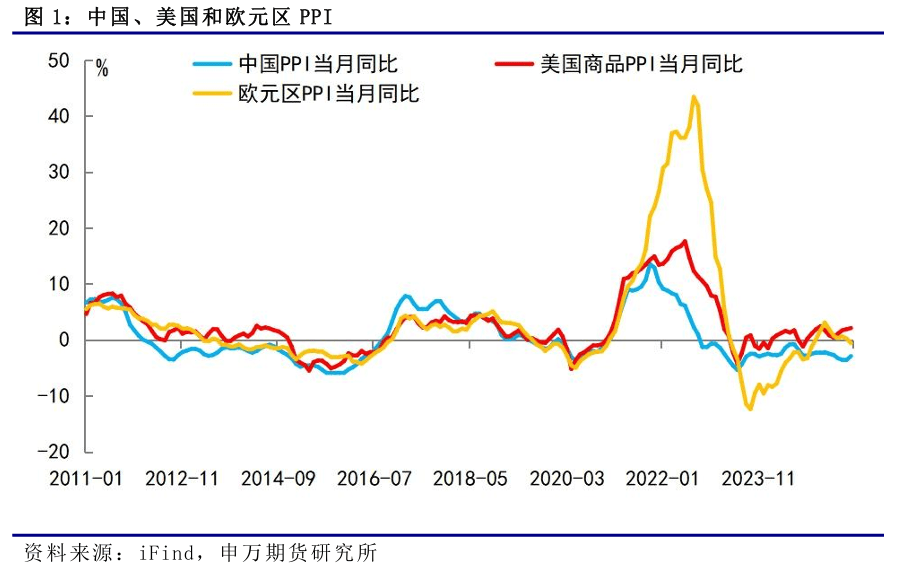
Core Insights - The PPI trends in China, the US, and Europe have diverged significantly post-pandemic, with China experiencing low PPI, the US maintaining relatively high PPI, and Europe showing considerable volatility. This divergence is primarily attributed to differences in energy structures and demand dynamics across these regions [1][4]. Energy Structure Impact - China's PPI is highly sensitive to coal prices, which are currently low due to weak demand and expanded supply. The domestic coal production has exceeded historical levels, and the demand from traditional sectors like real estate has decreased, leading to a prolonged low PPI [8][18]. - The US has a strong energy independence, primarily relying on oil and natural gas. The PPI is less affected by energy price fluctuations compared to Europe, with stable natural gas prices and a significant impact from rising oil prices due to global supply and demand dynamics [11][13]. - Europe's PPI has been significantly influenced by volatile natural gas prices, especially following the Russia-Ukraine conflict, which led to a sharp increase in energy costs. The subsequent measures to reduce dependency on Russian gas have also contributed to PPI fluctuations [14][22]. Demand Dynamics - In China, the transition from traditional to new economic drivers is underway, with the real estate sector in a downturn. This has led to reduced demand for related products, suppressing PPI. However, new economic drivers are beginning to support a gradual recovery in PPI [2][16]. - The US has shown strong demand resilience due to substantial fiscal stimulus during the pandemic, which increased disposable income and consumer spending. Despite rising labor costs and interest rates, the PPI has only seen moderate declines [19][20]. - Europe is experiencing a mild recovery in demand post-pandemic, but high energy costs and external demand declines have previously suppressed PPI. Recent economic recovery efforts and fiscal policies are expected to support a gradual increase in PPI [15][22].
轻工制造行业快评报告:必选食饮制造行业利润正增长,可选消费行业表现平淡
Wanlian Securities· 2025-10-10 10:01
Investment Rating - The industry investment rating is "Outperform the Market," indicating an expected increase of over 10% in the industry index relative to the broader market in the next six months [9]. Core Insights - The profit of major industrial enterprises in China improved significantly in August 2025, with total profits reaching CNY 46,929.7 billion, a year-on-year increase of 0.9%. This marks a turnaround from negative to positive growth, with August profits alone showing a year-on-year increase of 20.4% [2][3]. - In the consumer goods manufacturing sector, essential food and beverage manufacturing industries experienced positive profit growth, while optional consumer sectors showed lackluster performance. Specifically, the agricultural and sideline food processing sector saw profits rise by 11.8% year-on-year, while nine other sectors reported negative growth, with declines exceeding 10% in five sectors [3][4]. Summary by Relevant Sections Industrial Profit Performance - From January to August 2025, major industrial enterprises achieved a total profit of CNY 46,929.7 billion, reflecting a year-on-year increase of 0.9% and an improvement of 2.6 percentage points compared to the previous month [2]. - The total operating revenue for the same period was CNY 896,231.9 billion, with a year-on-year growth of 2.3%, remaining stable compared to the previous month [2]. Consumer Goods Manufacturing - Among 13 major categories in consumer goods manufacturing, four sectors, including agricultural and sideline food processing, food manufacturing, beverage and tea, and tobacco products, reported positive profit growth from January to August 2025 [3]. - The beverage and tea sector saw a profit growth rate increase of 22.7% compared to the previous month, while the chemical fiber and paper industries also experienced slight improvements [3]. Investment Recommendations - The report suggests focusing on the following sectors: 1. **Food and Beverage**: The white liquor industry is seen as bottoming out, with low valuations and high dividends providing strong support. The report anticipates a market upturn ahead of financial performance improvements [4]. 2. **Social Services**: As a key driver of consumption recovery, sectors like tourism, duty-free, hotels, and restaurants are expected to benefit from policy support [4]. 3. **Retail**: The gold and jewelry sector is highlighted due to its appeal as a safe-haven asset amid global trade uncertainties, while domestic cosmetics brands are gaining traction [4]. 4. **Light Industry Manufacturing**: The report notes potential demand recovery in home appliances and furniture due to government policies aimed at stabilizing the real estate market [4].
四季度首席经济学家经济预测问卷调查结果出炉
Xin Jing Bao· 2025-10-05 05:01
Core Viewpoint - The meeting organized by the China Securities Association focused on the economic outlook for the fourth quarter of 2025 and new investment opportunities amid the "anti-involution" trend, with participation from 14 chief economists from various securities firms [1] Economic Forecast - Nearly 60% of chief economists predict an increase in the year-on-year growth rate of fixed asset investment in the fourth quarter, which is expected to enhance its contribution to economic growth [1] - Over 80% of economists anticipate a year-on-year rise in both CPI and PPI in the fourth quarter [1] Consumption and Investment Strategies - Experts recommend multiple measures to stimulate potential consumption, emphasizing the development of new consumption types such as digital, green, and health-related consumption [1] - There is a call to cultivate new growth points in consumption, including cultural and entertainment tourism, sports events, and domestic trendy products [1] - The need to accelerate the establishment of a new model for real estate development is highlighted to promote a stable and healthy real estate market [1]