新能源汽车

Search documents
碳酸锂:基本面偏强叠加现货采买意愿升温,短期下方空间有限
Guo Tai Jun An Qi Huo· 2026-01-18 07:55
二 〇 二 六 年 度 2026 年 1 月 18 日 碳酸锂:基本面偏强叠加现货采买意愿升温, 短期下方空间有限 邵婉嫕 投资咨询从业资格号:Z0015722 shaowanyi020696@gtjas.com 刘鸿儒 投资咨询从业资格号:Z0023466 liuhongru028781@gtjas.com 报告导读: 本周价格走势:先涨后跌,波动放大 本周碳酸锂期货合约先涨后跌。2605 合约收于 146200 元/吨,周环比上涨 2780 元/吨,2607 合约收 于 146940 元/吨,周环比上涨 2800 元/吨,现货周环比上涨 18000 元/吨至 158000 元/吨。SMM 期现基差 (2605 合约)上涨 15220 元/吨至+11800 元/吨,富宝贸易商升贴水报价-1390 元/吨,周环比走强 120 元 /吨。2605-2607 合约价差-740 元/吨,环比走弱 20 元/吨。 供需基本面:淡季需求偏强带动行业去库,海外矿山存复产预期 政策:工信部等 6 部门联合发布《新能源汽车废旧动力电池回收和综合利用管理暂行办法》,对新能源 汽车动力电池生产与编码、废旧动力电池回收和综合利用、 ...
1340亿美元!马斯克要求OpenAI和微软赔偿金额曝光;万达轻资产平台首位女性CEO走向前台;追觅科技俞浩再谈打造百万亿美元公司丨邦早报
创业邦· 2026-01-18 01:08
Group 1 - Elon Musk demands compensation from OpenAI and Microsoft ranging from $79 billion to $134 billion, claiming OpenAI has deviated from its non-profit mission and engaged in fraudulent activities [1] - OpenAI plans to test targeted advertising within the ChatGPT application to diversify revenue streams ahead of a potential IPO, targeting free and low-cost subscription users while excluding premium users from ads [12] - Nvidia's H200 chip suppliers have halted production of critical components to avoid inventory write-downs, impacting the supply chain for this specific chip [7] Group 2 - Xingyuan Automotive announces a five-year investment of approximately $15 billion to develop 17 new models focused on smart new energy multifunctional vehicles [8][9] - Maruti Suzuki plans to invest $3.9 billion in a new factory in Gujarat, India, which will increase its annual production capacity by up to 1 million vehicles by the fiscal year 2029 [12] - The Ministry of Industry and Information Technology of China has introduced a management method to include technology-based SMEs in its cultivation program, aiming to enhance the quality of small and medium enterprises [16] Group 3 - SpaceX successfully launched the NROL-105 satellite into orbit using the Falcon 9 rocket, marking the 600th mission of the Falcon series [12] - The commercial space launch company Starship Dynamics reported a failure during the first flight test of its Ceres II rocket, with ongoing investigations to determine the cause [6] - The market for recycling used power batteries in China is projected to exceed 100 billion yuan by 2030, driven by the increasing volume of retired batteries from electric vehicles [17]




回眸2025年,看见中国汽车业的向上力量
Bei Jing Ri Bao Ke Hu Duan· 2026-01-18 00:25
Core Insights - In 2025, China's automotive industry achieved record production and sales figures, with 34.53 million vehicles produced and 34.40 million sold, marking year-on-year growth of 10.4% and 9.4% respectively, showcasing resilience and vitality in the sector [1] - The year marked a significant shift in the market, with new energy vehicles (NEVs) surpassing 50% of domestic new car sales, indicating their transition from niche products to mainstream market leaders [2][3] - The automotive export volume exceeded 7 million units, with NEV exports reaching 2.615 million units, reflecting a robust growth trajectory and the establishment of overseas markets as new growth drivers [2][11] New Energy Vehicles (NEVs) as Market Leaders - NEVs accounted for 50.8% of domestic new car sales in 2025, with production and sales reaching 16.626 million and 16.49 million units respectively, representing year-on-year growth of 29% and 28.2% [3] - The competitive landscape has shifted, with domestic brands capturing nearly 70% of the passenger car market share, marking a significant reversal against joint venture brands [3][4] Technological and Policy Support - The growth of NEVs is attributed to supportive policies, technological advancements, and a well-structured supply chain, with over 11.5 million vehicles replaced under the trade-in policy, contributing to a sales boost of over 1.6 trillion yuan [5] - Innovations in technology have led to improved vehicle performance, with average electric vehicle ranges reaching around 500 kilometers and significant reductions in battery costs and charging times [6] Smart Driving Developments - The approval of the first L3-level conditional autonomous driving vehicles in December 2025 marks a pivotal moment in China's autonomous driving sector, transitioning from technology validation to mass production [7][9] - The penetration rate of vehicles equipped with L2-level driving assistance features reached 64% in the first three quarters of 2025, driven by decreasing costs and increased availability in lower-priced models [9] Global Expansion and Localization - China's automotive exports reached 7.098 million units in 2025, with a year-on-year increase of 21.1%, highlighting the importance of overseas markets for growth [11] - Localization efforts are intensifying, with over 20 Chinese automotive brands establishing manufacturing facilities in Thailand and Brazil, enhancing local production capabilities and supply chain integration [12] Market Competition Restructuring - The introduction of compliance guidelines aims to curb price wars and establish a more orderly competitive environment, shifting focus from price competition to quality and service [13][15] - The automotive industry is transitioning from a phase of scale expansion to one of quality enhancement, necessitating a comprehensive approach to governance and market regulation [15][16]

【回眸二〇二五】看见中国汽车业的向上力量
Jing Ji Ri Bao· 2026-01-17 23:13
Core Insights - In 2025, China's automotive industry demonstrated resilience and growth, achieving record production and sales figures, with production reaching 34.53 million vehicles and sales at 34.40 million, marking year-on-year increases of 10.4% and 9.4% respectively [1] - The year marked a significant shift in the market, with new energy vehicles (NEVs) accounting for over 50% of domestic new car sales, indicating a transition from niche to mainstream [2] - The automotive export sector also thrived, with exports surpassing 7 million vehicles, driven by technological innovation and a robust supply chain [10] New Energy Vehicles - NEVs achieved a domestic sales share of 50.8%, with production and sales figures of 16.63 million and 16.49 million respectively, reflecting year-on-year growth of 29% and 28.2% [2] - The competitive landscape shifted dramatically, with domestic brands capturing nearly 70% of the passenger car market, reversing the dominance of joint ventures [2][3] Technological Advancements - The automotive industry is undergoing a transformation driven by electrification and intelligent technology, with significant advancements in product performance and consumer acceptance [4][5] - Innovations in battery technology have led to a 30% reduction in battery costs and a 40% increase in lifespan, enhancing the competitiveness of Chinese automotive products [5] Intelligent Driving - The approval of L3-level conditional autonomous driving vehicles marks a pivotal moment in China's autonomous driving sector, transitioning from technical validation to mass production [6] - The penetration rate of vehicles equipped with Level 2 autonomous driving features reached 64%, with a year-on-year growth of 21.2% in the first three quarters of 2025 [8] Export Growth and Localization - China's automotive exports reached 7.1 million units in 2025, with NEV exports doubling to 2.615 million units, showcasing the global competitiveness of Chinese automotive products [10] - Localization strategies are being implemented, with over 20 Chinese automotive brands establishing manufacturing facilities in Thailand and other regions to enhance local production capabilities [11] Market Competition Dynamics - The introduction of compliance guidelines aims to curb price wars and establish a more orderly competitive environment, shifting the focus from price competition to quality and service [12] - The automotive industry is transitioning from a focus on volume to an emphasis on quality, with a profit margin of only 4.4% in the first eleven months of 2025, below the manufacturing industry average [12][13]
聚苯醚(PPO)研究:算力时代的底层基石与高端制造的国产替代先锋(附42页PPT)
材料汇· 2026-01-17 16:02
Core Viewpoint - The article emphasizes the transformative potential of Polyphenylene Oxide (PPO) in various industries, particularly in high-performance applications such as AI servers and electric vehicles, highlighting its transition from a general-purpose material to a strategic specialty material [4][18]. Summary by Sections Introduction - The evolution of material science, particularly engineering plastics, is linked to significant industrial transformations, with PPO being a key player in the information and green energy eras [3]. Chapter 1: Overview of PPO - PPO, known for its high production barriers and stringent polymerization processes, is recognized as one of the five major engineering plastics globally [4]. - Its unique molecular structure provides several physical advantages, including low dielectric loss, excellent thermal stability, and high mechanical strength [7][9][11]. Chapter 2: Industry Chain Analysis - The PPO industry chain is characterized by high technical and capital intensity, spanning from upstream raw materials to specialized downstream applications [20]. - The production process involves synthesizing the core monomer 2,6-Dimethylphenol (DMP), which constitutes 60%-70% of production costs [25]. Chapter 3: Market Analysis - The global PPO market is projected to grow from approximately 22.55 billion yuan in 2023 to nearly 30.68 billion yuan by 2030, with a CAGR of 3.5% [33]. - The demand for PPO is driven by the rise of AI servers and the electrification of vehicles, with significant growth expected in high-frequency communication applications [32][46]. Chapter 4: Technical Analysis - PPO's competitive edge lies in its unique molecular structure, which results in low dielectric loss and high thermal stability, making it ideal for high-performance applications [56]. - The production process, primarily through oxidative coupling, presents significant technical challenges, including the need for precise control of catalysts and reaction conditions [57]. Chapter 5: Application Scenarios - PPO is increasingly utilized in strategic sectors such as AI servers, electric vehicles, and renewable energy, where its properties ensure reliability and performance [16][50]. - The material's low water absorption and high electrical insulation make it particularly suitable for high-voltage applications in electric vehicles and charging infrastructure [51].
BBA,势败如山倒
虎嗅APP· 2026-01-17 13:44
Core Viewpoint - The article discusses the significant decline in sales for traditional luxury car brands (BBA: BMW, Benz, Audi) in China in 2025, highlighting their reliance on marketing language to mask underlying issues [4][7]. Sales Performance - In 2025, the sales figures for BBA in China were as follows: BMW (including MINI) sold 625,500 units, down 12.5%; Audi (including FAW and SAIC) sold approximately 617,000 units, down 5%; and Mercedes-Benz (including commercial vehicles) sold 575,000 units, down 19% [5][7]. - All three brands saw their annual sales drop below 700,000 units, ending a five-year period of stable high sales [4]. Market Dynamics - The decline in BBA sales is attributed to a structural loss in the face of the rising tide of new energy vehicles (NEVs), with NEV penetration in China approaching 60% and domestic brands capturing 65% of the market share [8]. - The retail sales of fuel vehicles dropped by 30% year-on-year, indicating a significant shift in consumer preferences [8]. Consumer Sentiment - BBA's customer loyalty has fallen below 18%, meaning that out of 100 previous BBA customers, fewer than 18 intend to repurchase from the same brand [14]. - In contrast, new energy brands like AITO, Li Auto, Tesla, and Xiaomi have a high percentage of potential customers coming from BBA, with figures of 36.81%, 27.22%, 24.21%, and 19.15% respectively [14]. Strategic Responses - Audi plans to launch new models like the A6L e-tron and E7X in 2026 to address its technological shortcomings [15]. - Mercedes-Benz aims to introduce 15 new models in 2026, including a locally produced GLC, to enhance its market position [15]. - BMW's new generation iX3 is set to launch in late 2026, featuring advanced technology and local AI capabilities, with pricing being a critical factor for its success in the NEV market [16].
南京泉峰汽车精密技术股份有限公司 2025年年度业绩预告
Zhong Guo Zheng Quan Bao - Zhong Zheng Wang· 2026-01-17 02:13
Core Viewpoint - The company forecasts a net loss for the year 2025, with expected figures ranging from -340 million to -290 million CNY for net profit attributable to shareholders [1][2]. Group 1: Performance Forecast - The performance forecast period is from January 1, 2025, to December 31, 2025 [1]. - The expected net profit attributable to shareholders is projected to be between -340 million and -290 million CNY [2]. - The expected net profit after deducting non-recurring gains and losses is projected to be between -350 million and -300 million CNY [2]. Group 2: Previous Year Performance - In the same period last year, the total profit was -569.994 million CNY, with a net profit attributable to shareholders of -516.7451 million CNY [4]. - The net profit after deducting non-recurring gains and losses was -521.6202 million CNY [4]. - The basic earnings per share were -1.9745 CNY [5]. Group 3: Reasons for Performance Changes - The company expects sales revenue to grow year-on-year due to the increasing penetration of the new energy vehicle industry and the ramp-up of designated models [6]. - The Anhui Ma'anshan production base is expected to achieve an output value exceeding 1.1 billion CNY for the year [6]. - The company is still in a loss position due to increased competition in the new energy vehicle market, which has affected product gross margins, alongside significant prior capital investments [6]. - However, improvements in production efficiency and cost reduction measures have led to a decrease in unit costs compared to the previous year, and the gross margin has shown recovery [6]. - Management and R&D expenses as a percentage of revenue have continued to decline, and financial expenses have decreased due to exchange gains and successful fundraising efforts [6]. - The company aims to focus on market expansion, product mass production, and cost reduction to enhance profitability in 2026 [6].

重夺“汽车第一城”,西部大佬杀回来了
创业邦· 2026-01-17 01:36
Core Viewpoint - The competition for the title of "Automobile Capital" in China is intensifying, with Chongqing set to achieve a record automotive production of 2.788 million vehicles in 2025, marking a 9.7% increase, and a significant rise in new energy vehicle (NEV) production to 1.296 million units, up 36% [6][8]. Group 1: Historical Context and Challenges - Chongqing aimed to become "China's Detroit" in 2013, reaching a peak production of 3.156 million vehicles in 2016, but faced a decline starting in 2017, with production dropping to 1.383 million vehicles by 2019 [8][9]. - The decline was attributed to a mismatch between Chongqing's focus on mid-to-low-end vehicles and the market's shift towards mid-to-high-end preferences, alongside production capacity issues [8][9]. - The rise of NEVs began to disrupt the traditional automotive landscape, with national sales surpassing 100,000 units within three years after first exceeding 10,000 units in 2015 [9]. Group 2: Strategic Shifts and Collaborations - Changan Automobile, a leading player in Chongqing, announced a plan in 2017 to phase out traditional fuel vehicles by 2025, but initially struggled to keep pace with national NEV growth [9][10]. - A turning point occurred in 2021 when Changan partnered with Huawei and CATL to launch new high-end NEV brands, resulting in a significant increase in sales, with total vehicle sales reaching 2.913 million units and NEV sales up 51.1% to 1.11 million units [10][14]. - The collaboration with Huawei has been pivotal for both Changan and Seres, with Seres becoming the first company to benefit from Huawei's "Smart Selection" model, leading to increased competitiveness in the NEV market [13][14]. Group 3: Future Prospects and Competitive Landscape - The automotive industry is entering a new competitive phase, with Chongqing positioned to lead in NEVs and smart driving technologies, especially after receiving approval for L3-level autonomous driving vehicles [17][19]. - Chongqing's strategic focus on becoming a "Smart Connected New Energy Vehicle Capital" by 2024 aims to leverage its unique geographical features for testing smart vehicles [19][20]. - However, challenges remain, including a lack of competitiveness in AI technology and talent shortages, which could hinder Chongqing's ability to maintain its leading position in the next industrial competition [21][22].



一车三动力,五菱星光560将中型SUV门槛拉低至6万元
Jing Ji Guan Cha Wang· 2026-01-17 01:24
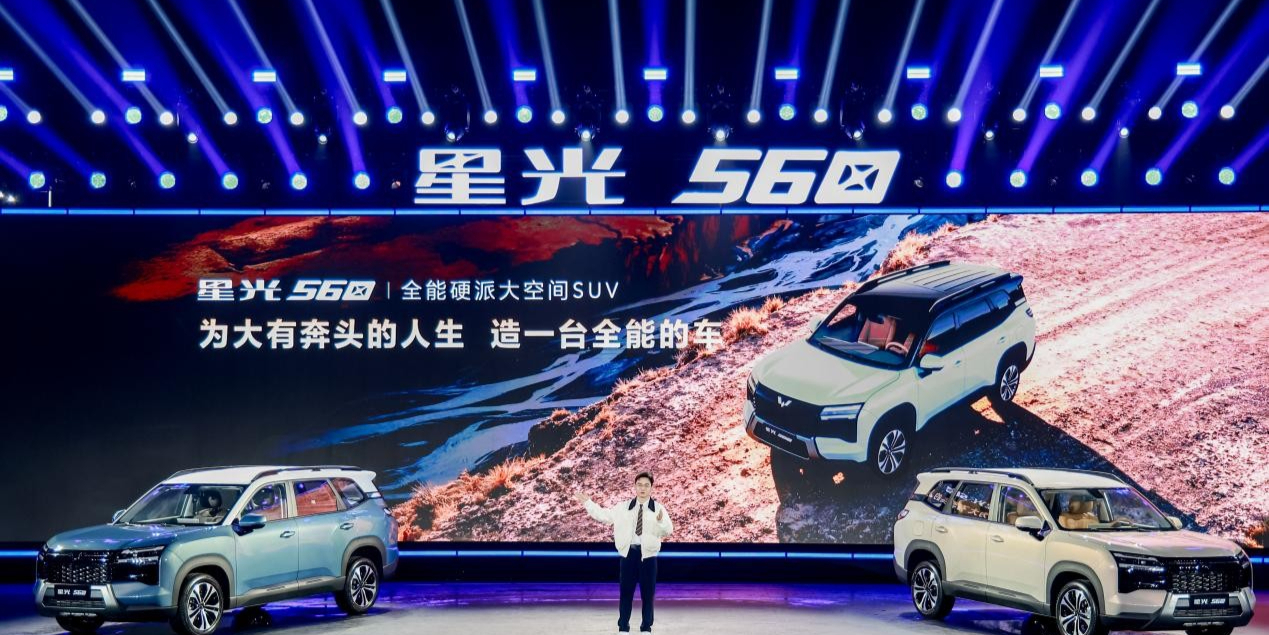
Group 1 - The core viewpoint of the news is the launch of the SAIC-GM Wuling Xingguang 560, which offers four configurations and aims to meet diverse consumer needs with its design, space, and safety features [2] - The Xingguang 560 is positioned as a mid-size SUV with the largest space in its class, featuring dimensions of 4745*1850*1755mm and a wheelbase of 2810mm, providing an effective internal length of 3202mm and a roominess rate of 83% [2] - The vehicle offers three powertrain options: a fuel version with a 1.5T engine, a plug-in hybrid with a comprehensive range of 1100km, and a pure electric version with a range of 500km, catering to various usage scenarios [2] Group 2 - In 2025, Wuling's total output value is expected to exceed 100 billion yuan, with a year-on-year growth of 24%, and new energy vehicle sales are projected to surpass 1 million units, marking a 31.9% increase [3] - The Xingguang family, under the Wuling Silver brand, has shown strong market performance, with the Hongguang MINIEV family leading A00-class new energy vehicle sales for 65 consecutive months, achieving cumulative sales of over 1.85 million units [3] - The company plans to continue launching new products in 2026, including the Xingguang L, the fifth-generation Hongguang MINIEV, and new models from the Bingguo family, while also developing high-end products under the Baojun brand in collaboration with Huawei [3]
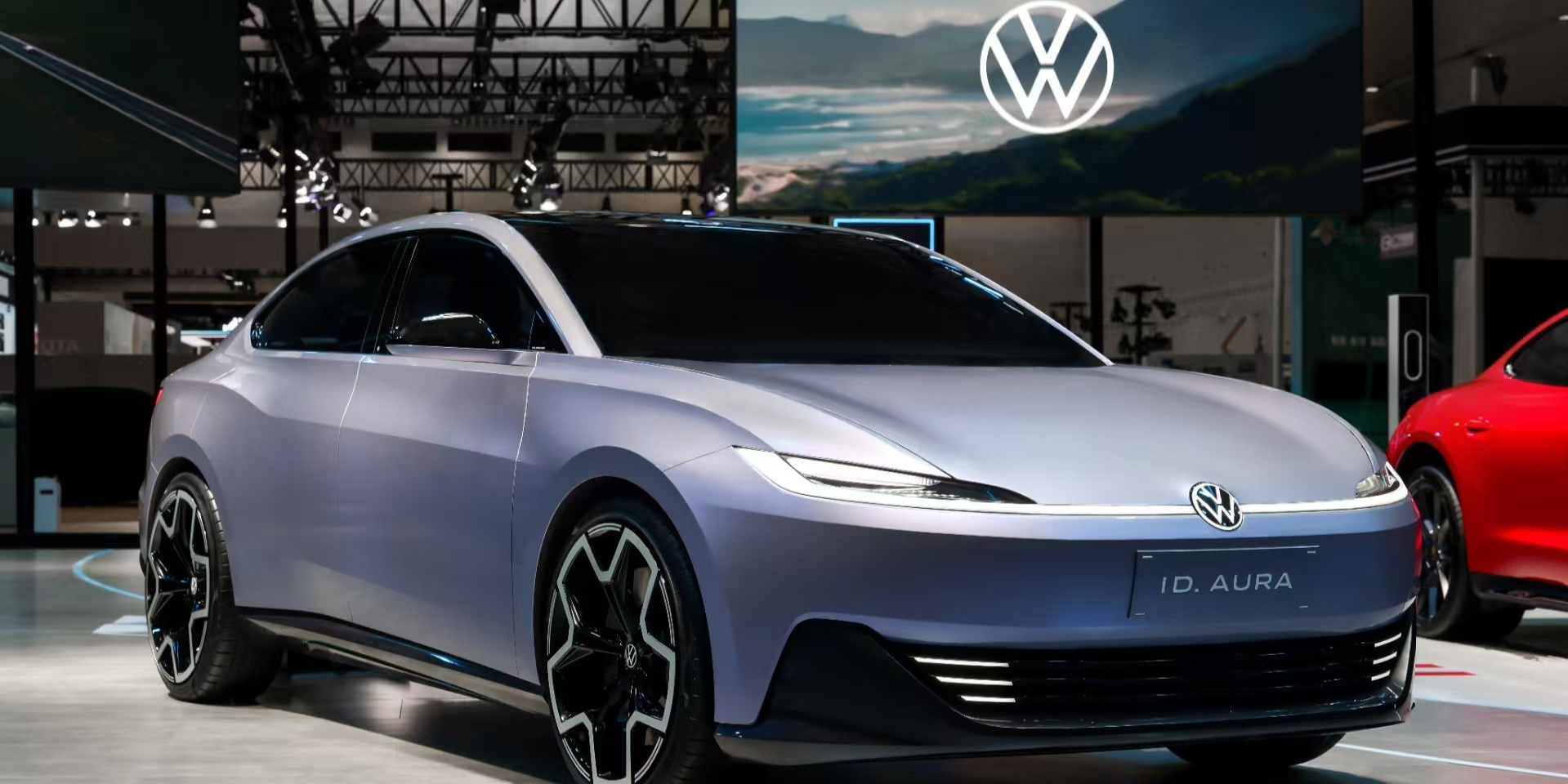
在华全力保盈利 大众2025年新能源销量缩回四年前
Jing Ji Guan Cha Wang· 2026-01-17 01:04
Core Insights - Volkswagen Group's global vehicle deliveries in 2025 exceeded 8.98 million, with pure electric vehicle deliveries reaching 983,100, a year-on-year increase of 32%, accounting for 10.9% of total global sales, up 2.7 percentage points from the previous year [2] Group 1: Sales Performance - In China, Volkswagen delivered over 2.69 million vehicles in 2025, with over 2.57 million being fuel vehicles and approximately 120,000 being new energy vehicles [2] - Volkswagen's sales in China declined by 8% compared to the previous year (2.93 million), with its share of global sales dropping from 32% to between 29.9% and 30% [3] - The market share of fuel vehicles in China increased to over 22%, marking a ten-year high since 2005, despite an overall decline in fuel vehicle sales [3] Group 2: New Energy Vehicle Strategy - New energy vehicle sales in China fell to 120,000 in 2025, a 40% decrease from 200,000 in 2024, representing only 4.5% of total sales, significantly lower than the global average [4] - Volkswagen's strategy focuses on profitability over market share, emphasizing the importance of fuel vehicle sales while preparing for the launch of new energy models [5] - The decline in new energy vehicle sales is attributed to both competitive pressures and a strategic shift towards fuel vehicles [5] Group 3: Future Plans and Developments - Volkswagen plans to launch over 20 new electric and hybrid models in 2026, including models based on new platforms and advanced technologies [7] - The company aims to enhance its new energy vehicle matrix to increase their share in overall sales, with a target of over 30 electric models by 2027 and around 50 by 2030 [8] - Volkswagen's export strategy from China has commenced, with the first vehicles successfully exported to the Middle East, aiming to expand into other potential markets [8]