
财政政策

Search documents
跟着财政做配置——宏观备忘录第2期
CAITONG SECURITIES· 2025-06-01 13:15
Group 1: Macroeconomic Policy Insights - The current macroeconomic policy framework has significantly changed compared to the past, with a notable impact on risk appetite in the market[2] - Fiscal policy, traditionally seen as a counter-cyclical tool, may exhibit pro-cyclical characteristics due to constraints on government borrowing and spending patterns[4][6] - The growth rate of broad fiscal expenditure has not kept pace with GDP growth in recent years, primarily due to the limitations of land finance[7] Group 2: Fiscal Policy Dynamics - The government debt level in China is relatively low, at less than 90% compared to over 210% in Japan and 110% in the US, indicating room for increased leverage[13] - The fiscal deficit target has been set at 4%, breaking the previous constraint of 3%, allowing for more flexible budget adjustments[16] - The shift in fiscal focus from public investment to public consumption is evident, with a decrease in spending on infrastructure-related projects and an increase in social services[29] Group 3: Investment Strategy Recommendations - Investment strategies should align with fiscal policy directions, particularly focusing on technology and consumption sectors[31] - Fiscal support for consumption is characterized by "inclusive consumption," with policies like the large-scale replacement of old consumer goods driving sales in sectors like automobiles and home appliances[38] - The trend of equity investment replacing debt investment in state-owned capital operations suggests a new direction for fiscal funding, particularly favoring technology leaders[34]
明明:下半年宏观经济和金融市场展望2025下半年投资机会前瞻
2025-05-30 16:09
Summary of Conference Call Records Industry Overview - The global economy is facing structural challenges related to debt and inflation, with a combination of high debt and low inflation in some countries, necessitating public sector debt expansion to repair private sector balance sheets [2][3] - The U.S. is experiencing a weakening dollar and rising Treasury yields, indicating increased fiscal refinancing pressure [2][6] - China's GDP growth target for 2025 is set at 5.0%, with a "front high, back low" trend anticipated [2][3] Key Points and Arguments - **Debt and Inflation Dynamics**: The relationship between debt and inflation is changing, with some countries experiencing high debt alongside low inflation, which suppresses consumption and inflation [2] - **China's Economic Strategy**: China plans to implement a combination of fiscal expansion and monetary easing, focusing on infrastructure investment and manufacturing upgrades as key drivers [1][2] - **Commodity Prices**: There is a divergence between copper prices and PMI, while gold prices are expected to rise due to weakened dollar credit, although high volatility risks remain [1] - **Manufacturing and Consumption Trends**: Manufacturing is under pressure due to weak external demand, with new export orders at a near-low, while domestic consumption is recovering, driven by policies promoting upgrades in sectors like automotive and home appliances [4][5] - **Real Estate Market**: The real estate market is still focused on destocking, with new housing starts down 24.4% year-on-year in Q1 2025, although mortgage rates are expected to decline, aiding price recovery [5][10] Additional Important Insights - **U.S. Economic Conditions**: The U.S. faces structural contradictions with high inflation and debt, leading to increased fiscal pressures. The government debt-to-GDP ratio is nearing 130%, with significant implications for future fiscal policy [6][7] - **China's Export Diversification**: The share of exports to the U.S. is projected to decrease from 20% in 2018 to around 12% by 2025, while exports to ASEAN and Belt and Road countries are expected to rise significantly [10] - **Monetary Policy Outlook**: The Federal Reserve is expected to adopt a cautious approach to interest rate adjustments, with potential cuts not anticipated until mid-2025, depending on economic conditions [6][10] - **Fiscal Policy in China**: China's broad fiscal policy is set to increase, with a projected deficit rate of 4% and a focus on special bonds to stimulate economic recovery [7][8] This summary encapsulates the critical insights from the conference call, highlighting the interplay between macroeconomic factors, industry trends, and policy responses in both the U.S. and China.
瑞银全球财富管理公司的Ulrike Hoffmann-Burchardi:我们预计随着贸易和财政政策相关的新闻不断出现,市场将继续进一步波动。我们仍预期美股在未来12个月将会上涨,但今年近期内的涨幅可能较为有限。
news flash· 2025-05-29 21:55
Core Viewpoint - UBS Global Wealth Management's Ulrike Hoffmann-Burchardi anticipates continued market volatility due to ongoing news related to trade and fiscal policies [1] Group 1: Market Outlook - The company expects U.S. stocks to rise over the next 12 months, although the near-term gains for this year may be limited [1]
闫瑞祥:黄金早盘高点成关键,欧美回踩趋势线看承压
Sou Hu Cai Jing· 2025-05-29 05:26
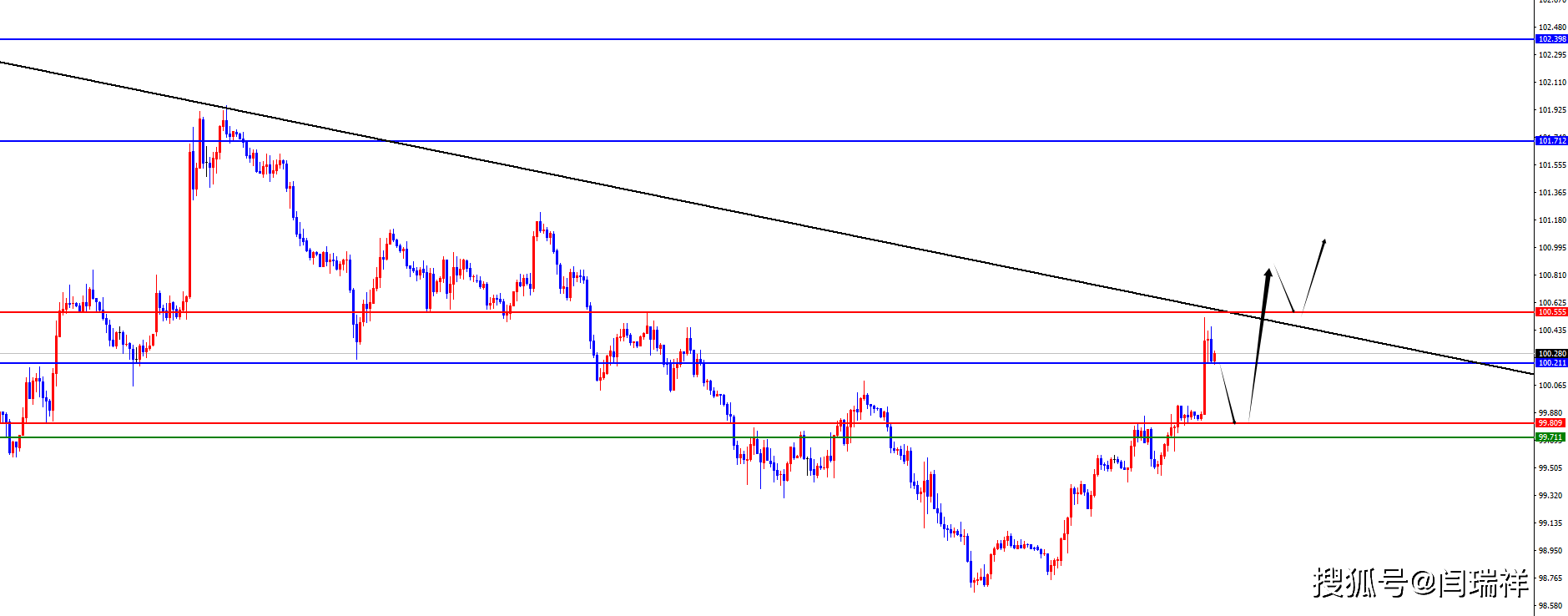
Macroeconomic Overview - The U.S. International Trade Court ruled that the Trump administration's "Day of Liberation" tariff policy exceeded its authority, leading to a suspension of its implementation, emphasizing that presidential trade management powers cannot surpass those granted to Congress by the Constitution [1] - This lawsuit, initiated by five small import businesses, marks the first significant legal challenge against the tariff policy, with seven similar lawsuits ongoing [1] - The ruling has alleviated market concerns regarding the trade war, resulting in a rise in U.S. stock index futures, with the Nasdaq futures increasing by 1.8% [1] - The dollar index surpassed the 100 mark, reflecting a positive market sentiment following Trump's postponement of tariffs on the EU and an agreement with China to reduce tariffs [1] - The Federal Reserve's May meeting minutes indicate officials are grappling with the dual challenges of rising inflation and unemployment, with a 60% probability of a rate cut in September [1] - Despite gold prices rising by 26% this year, the cautious stance of the Federal Reserve has suppressed gold prices [1] - Consumer confidence data exceeded expectations, reinforcing a robust economic outlook, while investors are focused on upcoming GDP, PCE data, and fiscal policy developments [1] Dollar Index - On Wednesday, the dollar index showed an upward trend, reaching a high of 99.933 and a low of 99.414, closing at 99.865 [2] - The market exhibited a bullish sentiment after a brief period of fluctuation, with a significant rise in the U.S. trading session [2] - Key resistance levels to watch include 100.20, with a focus on whether the index can maintain this level [2] - The weekly analysis indicates resistance at 101.70, suggesting a potential bearish trend in the medium term [2] Gold Market - Gold prices experienced a decline on Wednesday, with a high of 3325 and a low of 3276.48, closing at 3288.35 [4] - The market showed a bearish trend after testing key resistance levels, leading to a significant downward movement [4] - Current support levels are identified at 3270, with a focus on potential further declines if this level is breached [5] Euro/USD - The Euro/USD pair showed a downward trend on Wednesday, with a low of 1.1283 and a high of 1.1344, closing at 1.1289 [6] - The market remains under pressure due to resistance levels, indicating a bearish outlook [6] - Long-term support is noted at 1.0800, while short-term focus is on the 1.1130 area [6] Key Financial Data and Events - Upcoming key financial events include the Bank of England Governor Bailey's speech, Canadian current account data, U.S. initial jobless claims, and revisions to U.S. GDP [11]


蒋飞:论降息的重要性
Jing Ji Guan Cha Bao· 2025-05-28 14:47
Core Viewpoint - The discussion on whether to continue interest rate cuts after the central bank's reduction on May 8 remains ongoing, with optimists believing the economy has stabilized and pessimists arguing that economic pressures persist, indicating that the rate-cutting cycle is not over [1][3] Long-term Importance of Rate Cuts - Since 2018, China has entered a long-term interest rate cut cycle, which is expected to continue due to ongoing adjustments in population, debt, and real estate cycles [4] - The population is projected to decline, with a decrease of 1.39 million in 2024 compared to 2023, and a forecasted reduction of 20.4 million by 2054, impacting long-term economic growth [4] - The macro leverage ratio is approaching critical levels, with a projected 298.4% by Q1 2025, necessitating debt management strategies supported by interest rate cuts [4][5] - The real estate market is still adjusting, with the price-to-rent ratio remaining high, indicating potential downward pressure on housing prices until a more stable equilibrium is reached [5] Short-term Importance of Rate Cuts - The need for stable growth remains crucial, especially in the context of global economic uncertainties and rising protectionism, which necessitates internal stability [7] - The real estate market's recovery is contingent on continued interest rate support, as housing assets constitute 66.8% of urban residents' total assets, significantly influencing consumption and investment [8] - A strong savings tendency among residents has led to a disparity between loan and deposit growth rates, indicating a need for lower interest rates to stimulate demand [8] Issues Not Resolved by Rate Cuts - Rate cuts do not address the issues of ineffective interest rate transmission, as the market remains segmented and the sensitivity of loan rates to market rates is low [10][12] - The persistent rise in leverage ratios is not solely a result of low interest rates; rather, it is influenced by investment efficiency and institutional frameworks [10] - The narrowing of banks' net interest margins is attributed to supply-demand dynamics in the banking sector rather than solely to interest rate reductions [11] - The widening of domestic and international interest rate differentials is influenced by differing economic conditions, necessitating a focus on domestic monetary policy rather than maintaining international rate parity [12] Remaining Space for Rate Cuts - There is still room for further interest rate reductions, with projections indicating that to maintain the government leverage ratio by 2025, the real interest rate should decrease to 0.32%, significantly lower than the current rate of 4.52% [13]
ETF日报:未来应着重关注财政政策的发力节奏,以及地产、上游原材料的企稳信号,可关注十年国债ETF
Xin Lang Ji Jin· 2025-05-28 13:05
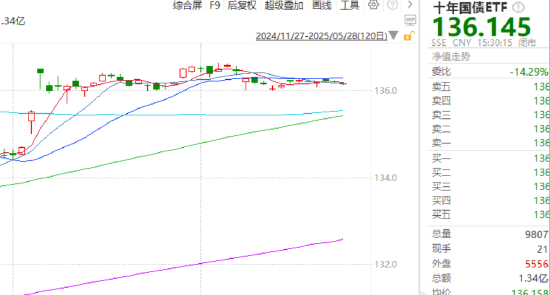
Market Overview - The A-share market showed overall weakness today, with the Shanghai Composite Index down 0.02% at 3339.93 points, the Shenzhen Component down 0.26%, the ChiNext down 0.31%, and the Sci-Tech Innovation Board down 0.41% [1] - The trading volume in the Shanghai and Shenzhen markets reached 1.01 trillion, an increase of 11 billion compared to the previous trading day [1] - Defensive sectors such as telecommunications, transportation, cash flow, and coal performed well, while sectors like semiconductors, automobiles, and military showed declines [1] Economic Indicators - The ten-year government bond ETF (511260) has seen minimal movement, with a slight increase of 0.46% since April 7. The yield on ten-year government bonds rose from 1.632% to 1.720%, indicating a price drop [1] - The bond market is expected to experience volatility in the short term, with limited downside risk. Long-term trends are influenced by fundamental and policy factors, particularly inflation and economic growth [3] Investment Dynamics - Investment, including real estate, consumer spending, and foreign trade, remains the main driver of China's economic growth, influenced by policy direction [4] - In the first quarter, export delivery value increased by 6.7% year-on-year, while the real estate sector continues to show negative growth in new construction and sales areas [4] Price Trends - April's Producer Price Index (PPI) was -2.70%, primarily affected by declines in the mining and raw materials sectors. The demand for coal and steel remains weak due to insufficient demand and overcapacity [6] - The real estate sector's stabilization is crucial for the macroeconomic outlook, with ongoing concerns about the performance of upstream raw materials [6] Fiscal Policy Impact - Recent government initiatives aim to accelerate urban renewal projects, which could significantly impact economic data if progress is made [8] - The central bank's recent monetary policy adjustments, including a reduction in the one-year Loan Prime Rate to 2.94%, signal a supportive stance towards the bond market [9] Automotive Sector Insights - The new energy vehicle ETF (159806) has seen a decline of 5.41% over the past five days, despite a year-on-year production and sales growth exceeding 30% in April [10] - BYD initiated a price war with significant discounts on multiple models, prompting other automakers to follow suit, indicating intense competition and potential financial risks within the industry [12][13]

2025年一季度债券市场分析报告-大公国际
Sou Hu Cai Jing· 2025-05-28 05:48
一、宏观动态 宏观政策:财政政策更积极,赤字率提至4%,专项债限额4.4万亿,超长期特别国债1.3万亿;货币政策适度宽松,央行一季度净投放3.02万亿元,3月MLF 改革,利率市场化再进一步。 宏观数据:经济景气回升,3月综合PMI 51.4%,投资消费回暖,社融增量创同期新高,但进出口承压,通胀温和,M1-M2剪刀差扩大。 基准利率:10年期国债收益率震荡上行,受经济预期、政策及资金面影响,3月因MLF改革等因素波动。 人民币汇率:对美元升值,对欧元、日元贬值,受中美政策、贸易顺差等因素影响。 二、债券市场 一级市场:发行规模12.19万亿元,同比增21.8%,地方政府债增69.07%,信用债发行降5.07%,成本双降,产业债中公用事业增108.53%,城投债发行收 缩,央企融资提升,民企净流出。 二级市场:信用债成交环比降18.3%,利差整体收窄但震荡大,产业债多数行业利差收窄,城投债仅河北微升,整体收窄30.15bp。 三、违约与评级调整 违约:1家企业首次违约,2家展期,违约金额20亿元,集中于汽车零售和多元金融行业。 评级调整:国内上调10家(城投占半),国际上调3家;国内下调7家,国际下调11家, ...

经济萎靡+通胀持续缓和 韩国央行有望开启新一轮降息
智通财经网· 2025-05-27 02:07
5月19-25 日期间接受调查的36位全球范围内的经济学家全部预计,韩国央行将于5月29日把韩国基准利 率下调 25个基点至2.50%,该水平的利率上次出现于2022年8月。 来自法国兴业银行的韩国首席经济学家吴锡泰表示:"4月的货币政策会议上,政策制定者们已强烈暗示 将会降息,且短期经济增长预期也可能被显著下调。此后公布的数据并未出现足以阻止韩国央行降息的 因素。事实上,一季度经济收缩、美国关税不确定性持续以及美元/韩元汇率下跌,都进一步支持韩国 央行货币宽松政策。" 在提供长期利率展望的27名受访经济学家中,有 23位经济学家预计到下一季度末基准利率将在当前水 平基础上再降50个基点至 2.25%,该观点与上期调查数据大体一致。 智通财经APP获悉,一项面向多位经济学家的最新调查数据显示,他们集体预计韩国央行将于周四把关 键政策利率下调25个基点,主要因上季度韩国经济活动意外萎缩且通胀持续趋于温和,加之央行的政策 制定者们已经充分暗示了降息可能性,为韩国央行重启宽松货币政策周期提供了重要的数据凭证。 值得注意的是,韩国央行行长李昌镛此前在4月的货币政策会议上已暗示降息的可能性,叠加几天后公 布的韩国官方数 ...
以色列央行:利率路径将根据通胀趋向其目标、金融市场的持续稳定、经济活动以及财政政策的情况而定。
news flash· 2025-05-26 13:06
Group 1 - The central bank of Israel will determine the interest rate path based on inflation trends towards its target, the stability of financial markets, economic activity, and the state of fiscal policy [1]
宏观经济研究:论降息的重要性
Great Wall Securities· 2025-05-26 12:44
Long-term Importance of Rate Cuts - Since 2018, China has entered a long-term rate cut cycle, which is expected to continue due to ongoing adjustments in population, debt, and real estate cycles[8] - In 2024, China's total population is projected to be 1.408 billion, a decrease of 1.39 million from 2023, indicating a long-term trend of population decline[8] - By the first quarter of 2025, China's macro leverage ratio reached 298.4%, nearing the critical level of 300% identified as a potential financial crisis threshold[9] Short-term Importance of Rate Cuts - The contribution of net exports to GDP reached 38.9% in the first quarter, the highest since 2009, highlighting the need for internal stability amid external uncertainties[13] - Real estate assets account for 66.8% of urban residents' total assets, making housing market stability crucial for consumer spending and investment[14] - The current real estate interest rates remain high, suppressing demand, necessitating further rate cuts to stimulate the market[14] Limitations of Rate Cuts - Rate cuts cannot resolve issues such as poor interest rate transmission and rising leverage ratios, which require broader macroeconomic reforms[15] - The banking sector's net interest margin is under pressure not solely due to low rates but also due to a significant oversupply of capital in the market[16] - Domestic and international interest rate differentials are widening, with external factors influencing domestic monetary policy decisions[17] - To maintain a stable government leverage ratio by 2025, actual interest rates need to decrease to 0.32%, significantly lower than the current rate of 4.52%[17]