全球化

Search documents
美图公司(1357.HK)深度:影像龙头 借AI推开世界之门
Ge Long Hui· 2025-07-31 02:50
Core Viewpoint - Meitu has successfully transitioned through three technological revolutions: from PC internet to mobile internet, and now to the AI era, enhancing its product offerings and user engagement [1] Group 1: Development Stages - The initial phase involved the launch of Meitu Xiuxiu in 2008, which simplified photo editing and attracted a large user base, reaching over 200 million users across PC and mobile by 2012 [1] - The company shifted focus to a subscription model starting in 2018, moving away from a traffic-based revenue model to enhance quality and user experience [1] - In the AI era, Meitu has integrated AI capabilities across all its products, resulting in increased monthly active users and improved payment rates [1] Group 2: Competitive Advantages - Meitu's strong channel capabilities and centralized operational system have allowed it to adapt to market changes and maintain a leading position in the beauty app sector [2] - The brand recognition and user loyalty built through Meitu Xiuxiu serve as a competitive advantage, enabling the company to quickly respond to market trends and consumer preferences [2] - The company leverages insights from its existing user base to innovate new products, such as Wink and Meitu Design Studio, which are informed by user needs [2] Group 3: Future Growth Strategies - Future growth for Meitu is centered around three main areas: global expansion, development of productivity tools, and ongoing investment in AI [3] - Meitu's products have strong competitive advantages in overseas markets, with clear operational strategies for international versions of its core products [3] - The company is expanding its productivity tools, like Meitu Design Studio, which targets the "communicator" user group and aims to democratize technology for consumers [3]
56天光速成立的新央企,要进全球汽车厂商前十
Nan Fang Du Shi Bao· 2025-07-31 02:44
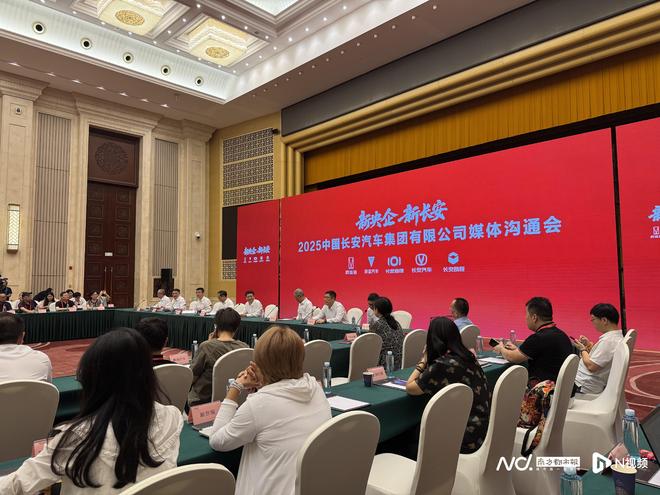
从官宣独立到正式挂牌,长安只花了56天。"6月4号领导找我谈话,让我牵头重组,10号中国长安就独 立。到昨天新集团正式成立,耗时只有56天,这样的速度史无前例。"7月30日中国长安汽车董事长朱华 荣感叹道。 7月29日,中国长安汽车集团有限公司在重庆正式挂牌成立。新集团正式成立后的第二天,即7月30日, 中国长安汽车集团有限公司召开首场媒体沟通会,会议持续三个小时左右,以朱华荣为代表的新8人领 导班子集体亮相,向外界介绍了处于新起点的长安汽车如何向"世界一流汽车集团"的目标迈进。 第100家央企,第3家汽车央企 "中国长安汽车"的新使命 6月23日,曾经的长安汽车官宣更名为"辰致汽车科技集团有限公司"(以下简称"辰致集团"),归入新 集团下属,集中负责零部件板块业务,而"中国长安汽车集团有限公司"之名则让位给了新长安汽车(以 下简称"中国长安汽车")。 董事长朱华荣介绍称,中国长安汽车由长安汽车、辰致集团等117家分子公司组建而成,注册资本金200 亿元,资产总额3087亿元,从业人数约11万人,业务涵盖汽车整车及零部件、汽车销售、金融及物流服 务、摩托车等多个领域。 目前,中国长安汽车是与中国一汽、东风集团 ...


智研咨询发布:仓库行业报告(附市场竞争格局、发展现状及趋势预测)
Sou Hu Cai Jing· 2025-07-31 02:33
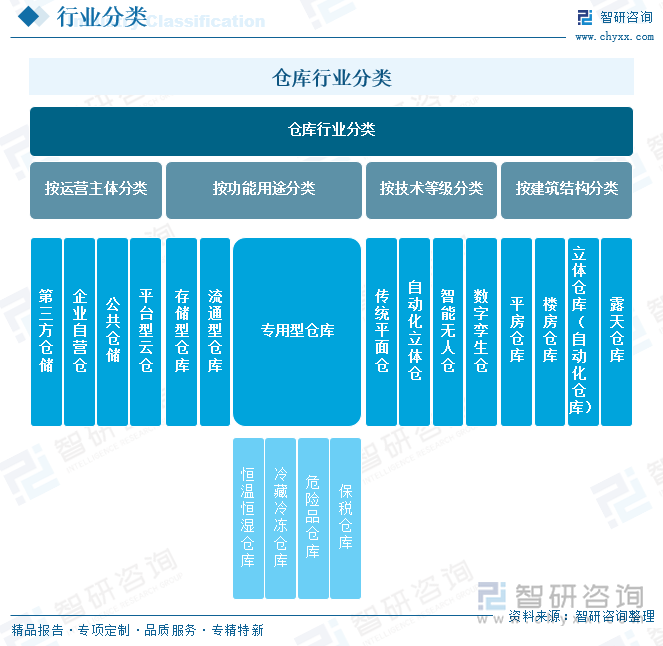
Core Insights - The warehouse industry is a crucial segment of modern supply chains, providing storage, management, sorting, and distribution services, which are essential for the efficient operation of the economy [3][5][11] - The industry is experiencing a transformation from "scale expansion" to "quality upgrade," driven by technological advancements and supply chain changes, with a focus on smart, green, and global operations [7][11] Industry Definition and Function - The warehouse industry encompasses logistics infrastructure operations that facilitate the storage, management, sorting, and distribution of goods, ensuring safety, efficiency, and cost reduction in supply chains [5][9] - Warehouses can be categorized by operational entities (third-party, self-operated, public, cloud-based), functionality (storage, circulation, specialized), technology level (traditional, automated, smart), and structural design (single-story, multi-story, automated, outdoor) [5][9][11] Industry Development Scale - The total warehouse area in China has seen significant growth, with 32.96 million m² completed in 2023, an increase of 4.17 million m² from 2022; however, a decline to 25.08 million m² is expected in 2024, a 24% decrease [6][11] - The total area of general warehouses is projected to reach approximately 1 billion m² in 2024, an increase of 517 million m² from 2023, with a rental area of 54.898 million m² and 1.722 million m² under construction [6][11] Warehouse Demand Distribution - By warehouse size, the largest demand in 2024 will be for warehouses sized 0-999 m², accounting for 33.33%, followed by those over 10,000 m² and those sized 1,000-1,999 m², each representing 19.3% [6][11] - Warehouse leasing constitutes 75.44% of the demand, with the eastern region accounting for 63.16% of warehouse leasing activity, while the northeastern region shows no leasing demand [6][11] Competitive Landscape - The warehouse industry in China features a multi-tiered competitive structure, with major players including national logistics giants, specialized logistics real estate firms, vertical operators, and regional small to medium-sized enterprises [7][11] - Leading companies like JD Logistics, SF Express, and Cainiao Network dominate the first tier, while firms like Prologis and Wanwei Logistics occupy the second tier, focusing on standardized assets and fund management [7][11]
「匠心」即答案,国产品牌驶向「大航海时代」|2025出海大会
36氪· 2025-07-30 13:35
Core Viewpoint - Chinese enterprises are transitioning from "Made in China" to "Created in China," and further to "Belief in China," emphasizing the importance of craftsmanship in this evolution [2][6][56]. Group 1: Event Overview - The "East Forward" conference, held on July 25, 2025, in Zhejiang, focused on the theme of "craftsmanship" as a key to global expansion for Chinese brands [2][6]. - The event was supported by various governmental bodies and aimed to build a robust overseas service system for enterprises [2][3]. Group 2: Challenges and Strategies - The journey of brands like Yuanqi Forest illustrates the challenges of capturing user needs, innovating cultural symbols, and overcoming compliance hurdles in global markets [10]. - The renewable energy sector is witnessing a shift from participation to leadership, with companies like Zhejiang Chint New Energy focusing on building a global sales network and enhancing brand credibility [12]. Group 3: Cultural and Technological Integration - The integration of AI technology is reshaping industry logic, allowing Chinese stories to resonate globally, with companies becoming co-creators of value rather than mere exporters [16][19]. - The importance of localizing operations and understanding cultural nuances is highlighted as essential for successful market penetration [19][31]. Group 4: Compliance and Risk Management - Compliance with data regulations is critical, as over 80% of countries have implemented data laws, necessitating a global control mechanism for enterprises [22][25]. - The financial inefficiencies faced by outbound enterprises can be mitigated through services that ensure competitive pricing and comprehensive support [27]. Group 5: Market Opportunities - Dubai is emerging as a prime location for Chinese enterprises due to its strategic advantages, including a robust financial system and favorable tax policies [34][41]. - The conference also facilitated discussions on investment opportunities in the UAE, providing a platform for Chinese companies to connect with local stakeholders [41][52]. Group 6: Future Outlook - The concept of "craftsmanship" is seen as a guiding principle for Chinese brands to navigate global markets and establish a lasting presence [38][56]. - The conference concluded with the release of the "East Forward 2025 Global Innovation Directory," aimed at guiding Chinese brands in their international endeavors [38].

中国长安汽车集团正式成立 其商用车品牌长安凯程将加速转型
Cai Jing Wang· 2025-07-30 08:17
Group 1 - The establishment of Changan Automobile Group on July 29 marks a strategic shift for the company, with its commercial vehicle brand, Changan Kaicheng, focusing on "electrification, intelligence, pickup, and globalization" to accelerate transformation and resource integration [1] - In the first half of the year, Changan Kaicheng launched multiple strategic products, achieving sales of 140,300 units, a year-on-year increase of 10.1% [1] - Changan Kaicheng aims to leverage the advantages of being a state-owned enterprise to integrate various resources and utilize passenger vehicle technology to capture future logistics development trends [1] Group 2 - The global light commercial vehicle market is projected to reach a scale of 14 million units by 2030, with Changan Kaicheng rapidly advancing its international expansion through establishing overseas KD factories, production bases, and expanding channel networks in Southeast Asia, Central and South America, Europe, the CIS, and the Middle East and Africa [4] - In 2024, Changan Kaicheng is expected to export a cumulative total of 66,700 units, with export sales in the first half of the year reaching 43,200 units, reflecting a year-on-year growth of 7.9% [4] - Changan Kaicheng has successfully completed over 2 billion yuan in Series A financing and is now initiating Series B financing, with the establishment of the group enhancing its brand image and accelerating the process for independent listing [4]
中国长安管理层首次公开亮相 董事长朱华荣:已有众多企业来和我们谈合作
Mei Ri Jing Ji Xin Wen· 2025-07-30 06:47
Group 1 - China Chang'an has been separated from China Weaponry Equipment Group, facilitating the expansion into international markets [1] - The establishment of China Chang'an Automobile Group has been approved by the State Council, with the State-owned Assets Supervision and Administration Commission representing the State Council in its investment responsibilities [1] - The new structure allows China Chang'an to broaden its capabilities beyond just vehicle manufacturing, enhancing its resource integration and globalization efforts [1] Group 2 - China Chang'an operates 117 subsidiaries, focusing on vehicle manufacturing, sales, financial and logistics services, and motorcycles [1] - A recent collaboration with Haier Group aims to explore various sectors including automotive product development, personalized modification, and capital cooperation in advanced fields like flying cars and humanoid robots [1] - The sales target for China Chang'an is to achieve a vehicle production scale of 5 million by 2030, with over 60% being new energy vehicles and over 30% from overseas markets [2]
趋势研判!2025年中国仓库行业产业链、发展现状、竞争格局、代表企业及行业发展趋势分析:仓库需求越来越大,智能化、绿色化、全球化为仓库的竞争核心[图]
Chan Ye Xin Xi Wang· 2025-07-30 01:30
Core Insights - The warehouse industry is a critical component of the modern logistics system, providing essential services such as storage, inventory management, sorting, packaging, and distribution, which are vital for the efficient operation of the real economy [1][4] - The demand for warehouses has significantly increased due to the rise of e-commerce and consumption upgrades, leading to a substantial growth in warehouse completion area in recent years [4][6] - In 2023, China's warehouse completion area reached 32.96 million m², an increase of 4.17 million m² compared to 2022, while a projected decrease of 24% is expected in 2024 with a completion area of 25.08 million m² [4][6] Warehouse Industry Definition and Classification - The warehouse industry encompasses the operation of logistics infrastructure that provides storage, custody, sorting, distribution, and related value-added services, forming a core part of the modern supply chain [2] - Warehouses can be classified based on operational entities (third-party, self-operated, public, and platform-based cloud warehouses), functional purposes (storage, circulation, and specialized warehouses), and technological levels (traditional, automated, intelligent, and digital twin warehouses) [2] Current Development Status - The general warehouse area in China has been on a growth trend, with the total area expected to reach approximately 1 billion m² by 2024, an increase of 517 million m² from 2023 [6] - The rental area of general warehouses is 54.898 million m², with 1.722 million m² currently under construction and a total of 40,274 warehouse parks [6][8] Industry Chain - The warehouse industry chain revolves around the core link of "goods storage and circulation," involving a wide range of upstream and downstream related industries [10] - Upstream includes suppliers of storage infrastructure and equipment, while midstream consists of warehouse service operations, and downstream includes demand from manufacturing, retail, e-commerce, and logistics sectors [10][11] Competitive Landscape - The warehouse market in China exhibits a multi-tiered differentiation structure, with major players including national logistics giants, specialized logistics real estate companies, and regional small to medium-sized storage enterprises [12] - National logistics giants like JD Logistics, SF Express, and Cainiao Network lead the first tier, while specialized logistics real estate firms like Prologis and Wanwei Logistics occupy the second tier [12] Future Development Trends - The warehouse industry is undergoing a transformation from "scale expansion" to "quality upgrade," with leading companies consolidating their advantages through technological investments and mergers [19] - Future competition in the warehouse industry will focus on intelligence, sustainability, and globalization [19]


美图公司(01357):影像龙头,借AI推开世界之门
Changjiang Securities· 2025-07-29 23:30
Investment Rating - The report assigns a "Buy" rating for Meitu Company (1357.HK) [13] Core Insights - Meitu Company has successfully transformed from a traffic-based business model to a subscription-based model, leveraging its strong aesthetic know-how and technological foundation [3][9] - The company has experienced three technological transformations: from PC internet to mobile internet, and now to the AI era, which has enhanced its product capabilities and user engagement [9][20] - Meitu's growth strategy focuses on three main lines: globalization, expansion of productivity tools, and continuous investment in AI [11][20] Summary by Sections Company Overview - Founded in 2008, Meitu has evolved through significant technological changes, initially launching the PC version of Meitu Xiuxiu, which simplified photo editing for users [20] - The company shifted its focus back to software tools and began transitioning from a traffic monetization model to a subscription model starting in 2018 [9][20] Competitive Advantages - Meitu's strong channel capabilities and accumulated user aesthetic recognition have allowed it to maintain a leading position in the competitive beauty app market [10][57] - The company has built a robust product matrix that includes both lifestyle and productivity tools, with flagship products like Meitu Xiuxiu and BeautyCam leading their respective categories [27][93] AI Integration - All of Meitu's products have integrated AI capabilities, which have driven new growth in key metrics such as monthly active users (MAU) and payment rates [9][11] - The launch of the MiracleVision AI model in 2023 has provided a foundation for enhancing the AI capabilities across Meitu's product ecosystem [66] Market Position - Meitu holds a dominant market share of approximately 55.96% in the photo editing software sector, significantly ahead of its closest competitor [67] - The company has successfully expanded its user base internationally, particularly in Southeast Asia, where its products have gained substantial traction [93][104] Financial Performance - The subscription revenue has become a major pillar of Meitu's total income, with the subscription rate doubling from the initial phase of the transition [33][39] - The gross margin has improved significantly, rising from 15% to 69% by the end of 2024, reflecting the successful shift away from low-margin hardware businesses [39][41]
上市公司业绩预告喜忧参半,哪些行业景气度改善?
第一财经网· 2025-07-29 11:50
Group 1 - A total of 1580 A-share listed companies disclosed performance forecasts, with 700 companies expecting positive results and 875 companies expecting negative results, resulting in a positive forecast rate of 44% [2][4] - Among the companies expecting positive results, the leading sectors include electronics (78 companies), basic chemicals (60 companies), machinery (57 companies), automobiles (47 companies), pharmaceuticals (44 companies), and power equipment (42 companies) [4] - Conversely, the sectors with the highest number of companies expecting negative results include basic chemicals (72 companies), pharmaceuticals (62 companies), machinery (55 companies), computers (54 companies), real estate (53 companies), and power equipment (49 companies) [4] Group 2 - The analysis indicates that upstream price increases, along with strong demand in the midstream and TMT sectors, are expected to benefit non-bank financials due to an upward market trend [4] - The strategy team at招商证券 identified several sectors with a higher proportion of positive forecasts, including non-bank financials, non-ferrous metals, electronics, agriculture, automobiles, and machinery [5] - Among the 700 companies expecting positive results, 374 anticipate a net profit increase of over 100%, with 29 companies expecting a net profit increase of over 1000% [5] Group 3 - Of the 875 companies expecting negative results, 635 anticipate a decline in performance, with 282 expecting a net profit decrease of over 100% [6] - Notably, *ST南置 and ST晨鸣 expect net profit declines exceeding 1200%, while 中化国际 and 光明地产 expect declines between 2000% and 7900% [6] - In the 83 companies that disclosed performance reports, 57 companies reported year-on-year growth in both operating income and net profit attributable to shareholders [6] Group 4 - The overall expectation for A-share mid-year performance is mixed, with some analysts predicting a recovery in profit growth while others anticipate continued pressure based on industrial enterprise performance [3][8] - The strategy team at招商证券 expects mid-year performance to remain under pressure, while sectors like TMT, automotive, and consumer services are projected to show improvement [8] - Analysts suggest focusing on companies with strong mid-year performance and long-term growth potential, particularly in sectors like non-bank financials, innovative pharmaceuticals, and global competitiveness [9][10]
关于全球化,中国企业最该知道的三件事——专访霍尼韦尔前CEO高德威
Sou Hu Cai Jing· 2025-07-29 11:13
Core Insights - The article emphasizes the importance of localization in globalization strategies, highlighting that compliance costs cannot be compromised and must respect the efforts of employees working abroad [2][3][14]. Group 1: Company Performance and Leadership - Under David Cote's leadership from 2002 to 2017, Honeywell's revenue grew from $22.3 billion to $40.5 billion, and its market value increased from $20 billion to $120 billion, achieving an 800% return for shareholders [2][3]. - Cote implemented the "Winning Now, Winning Later" strategy, focusing on both short-term performance and long-term growth without compromising financial integrity [2][3]. - Cote's leadership style involved significant changes in company culture, including the introduction of the "One Honeywell" concept to unify the organization and eliminate internal conflicts [3][4]. Group 2: Globalization Strategy - Cote prioritized globalization while ensuring that 55% of Honeywell's revenue came from outside the U.S. by 2017, with significant contributions from high-growth markets like China and India [3][4]. - The company adopted a "slow and steady" approach to globalization, avoiding mergers and acquisitions in favor of organic growth and maintaining consistent business standards and corporate culture globally [3][4][21]. - Cote emphasized the necessity of building local capabilities and ensuring that local teams understood and embodied Honeywell's corporate culture, which led to higher profitability in China compared to the U.S. [10][11]. Group 3: Compliance and Local Talent - Cote stressed the importance of compliance with local regulations, asserting that understanding local laws is crucial for successful operations in foreign markets [14][15]. - Hiring local talent is essential not only for compliance but also for understanding local market dynamics, which can help avoid costly legal issues [15][16]. - Cote maintained that reducing compliance costs is a misguided approach; instead, companies should focus on ensuring compliance from the outset to avoid future complications [15][18]. Group 4: Employee Management and Development - Honeywell implemented a Management Resource Review (MRR) process to ensure that expatriate employees returning from overseas assignments were adequately positioned within the company, thus valuing their international experience [23][24]. - The company aimed to create a positive feedback loop where high-performing employees were encouraged to take international assignments, knowing they would return to valuable positions [24][25]. - Cote believed in the importance of not forcing employees into international roles against their will, recognizing the personal circumstances that may affect their decisions [25][26]. Group 5: Future of Manufacturing in the U.S. - Cote discussed the challenges facing U.S. manufacturing, including supply chain vulnerabilities exposed by the COVID-19 pandemic and ongoing trade tensions [27][28]. - He argued that while the U.S. has not lost its manufacturing capabilities entirely, there is a need for a balanced approach to globalization and localization, particularly in critical industries [28][29]. - Cote highlighted the importance of maintaining a degree of self-sufficiency in key sectors, such as defense, while also leveraging global supply chains where appropriate [29][30].