
自主可控

Search documents
【申万宏源策略 | 一周回顾展望】牛市中的调整波段
申万宏源研究· 2025-08-05 01:16
Core Viewpoint - The market is currently experiencing a short-term adjustment due to the full execution of a rotation and supplementary rally, leading to a slight decline in market stability. The political bureau meeting in July and the new round of China-US negotiations did not provide new breakthrough clues, resulting in a return to a volatile market. The focus is on structural adjustments and the expectation of economic growth slowing down in the second half of 2025 [2][3][4]. Market Adjustment Background - The adjustment is characterized by a shift from a previous breakout to a high-cut-low market, driven by policies against involution and the Yarlung Tsangpo River hydropower project. However, the essence remains a process of rotation and supplementary rally, with the market needing to refocus on main lines, which has led to the current adjustment [2][3][4]. Economic Growth Expectations - The original market expectation is for economic growth to slow in the third quarter, with policy focus shifting towards structural adjustments. This adjustment is not expected to be of a large scale, as the supply-demand pattern is likely to improve in 2026 compared to 2025. The reinforcement of anti-involution policies enhances the visibility and sustainability of this expectation [4][5]. Market Outlook - The market is expected to return to a volatile state in August, with potential upward movements before the September 3 military parade. The core idea is that time is a friend of the bull market, with improvements in fundamentals and incremental capital inflows into A-shares being crucial. The window for institutional investors to accumulate profit effects may arrive earlier than expected in the first half of 2026 [4][5][6]. Sector Performance - High-growth sectors such as pharmaceuticals and overseas computing are leading the market, with expectations of short-term excess returns. The anti-involution policy is seen as a major catalyst for future upward movements, particularly in the midstream manufacturing sector, which is expected to improve profitability over the long term [5][7]. Investment Strategy - The strategy suggests focusing on sectors with high dividends and micro-cap stocks, which may see a rebound. The potential bull market is likely to be driven by technology sectors, particularly AI and robotics, as well as advanced manufacturing boosted by anti-involution policies [5][6][7].

资产配置日报:缩量上涨-20250804
HUAXI Securities· 2025-08-04 15:18
Market Overview - The equity market experienced a volume contraction rebound on August 4, with trading volume decreasing from 2 trillion to 1.5 trillion yuan. The morning session saw strong performance from bank stocks, while small-cap stocks gained strength in the afternoon as market risk appetite improved [1] - Major indices rebounded, with the Shanghai Composite Index and CSI 300 rising by 0.66% and 0.39% respectively. The STAR Market and ChiNext indices saw increases of 1.22% and 0.50%, while the Hang Seng Tech Index rose by 1.55% [1] - The bond market showed a divergence between short and long ends, with 10-year and 30-year government bonds rising by 1.30 basis points and 1.55 basis points to 1.71% and 1.92% respectively [1] Monetary Policy and Liquidity - The central bank maintained a net injection of liquidity at the beginning of the month, with a large reverse repo of 544.8 billion yuan announced to alleviate month-end cash withdrawal pressure, resulting in a net injection of 49 billion yuan [2] - The overnight interbank rates opened at 1.43%-1.47% and later fell to 1.40%-1.43%, stabilizing around 1.35% in recent days. The 7-day funding rate decreased by 1 basis point to 1.48% [2] - Short-term interest rates declined, with 1-year and 3-year government bond yields falling by 0.37 and 0.59 basis points to 1.37% and 1.44% respectively [2] Bond Market Dynamics - The bond market exhibited a "see-saw" dynamic influenced by stock market movements, with yields initially declining before reversing as equity markets rebounded. The 10-year government bond yield rose to 1.71% after a brief dip to 1.68% [3] - Market sentiment weakened as expectations for new government bonds emerged, leading to significant selling by funds and brokerages. However, as rumors were dispelled, bond yields gradually decreased [3] Future Outlook - The bond market may see downward opportunities in August due to expected stable liquidity conditions and a "wide monetary" policy stance from the central bank. Historically, August experiences limited fluctuations in funding rates [4] - The equity market is anticipated to continue its rebound, with the total trading volume at 1.52 trillion yuan, down 101.7 billion yuan from the previous week. This pattern resembles previous market behavior following significant corrections [4] - Market risk appetite shows signs of decline, with a decrease in financing balances and net outflows from equity ETFs, indicating potential concerns regarding U.S.-China relations and slower-than-expected economic recovery [5] Sector Performance - The banking sector performed well in the morning, with the SW Bank Index rising by 1.45%, driven by risk-averse sentiment. In the afternoon, small-cap stocks surged, with the CSI 2000 index increasing by 1.56% to a historical high [5] - Notable sectors included defense and robotics, with respective index increases of 3.06% and 3.42%, likely influenced by upcoming events such as the September 3 military parade and the World Robotics Conference [5] - Precious metals also saw gains, with the SW Precious Metals Index rising by 4.80%, possibly in response to global risk appetite shifts following non-farm payroll data releases [6]
芯片股走强,自主可控重要性凸显!海光信息涨超3%,电子ETF(515260)成份股迎“喜报潮”!
Xin Lang Ji Jin· 2025-08-04 11:53
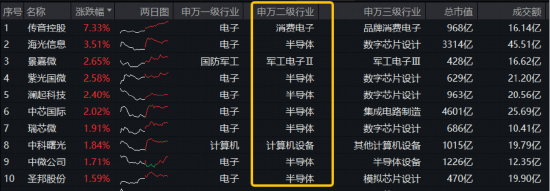
Group 1 - The semiconductor sector significantly led the electronic sector, with the electronic 50 index showing strong performance, particularly in semiconductor stocks [1] - Major semiconductor companies such as Haiguang Information, Unisoc, and SMIC saw stock increases of over 2%, while the consumer electronics leader Transsion Holdings rose by over 7% [1] - The electronic ETF (515260) tracking the electronic 50 index experienced fluctuations, reaching a peak increase of 0.52% before closing up 0.31% [1] Group 2 - The National Cyberspace Administration's discussions regarding Nvidia's H20 chip highlight the need for supply chain security in domestic chips, reflecting the ongoing US-China tech competition [3] - Open Source Securities suggests that this event may accelerate the development of a self-controlled system in China's AI industry, promoting a more stable and healthy industry growth [3] - Huaxi Securities indicates that the US chip security legislation and related discussions could expedite the domestic AI chip development, with a clearer long-term growth trajectory [4] Group 3 - As of August 3, 2023, 17 out of 50 companies in the non-ferrous metals index have released mid-year profit forecasts for 2025, with 16 expecting profits, and 15 predicting year-on-year net profit growth [4] - Notable companies like Silan Microelectronics and Wingtech Technology forecasted net profit increases of 1203% and 317% year-on-year, respectively [4][5] - The electronic sector is expected to recover, with semiconductor domestic substitution accelerating and consumer electronics benefiting from AI integration [6] Group 4 - The electronic ETF and its linked funds cover key sectors such as AI chips, automotive electronics, 5G, and cloud computing, providing exposure to core electronic assets in the A-share market [6] - The ETF is positioned to capitalize on the growth of the semiconductor and consumer electronics industries, as well as other emerging sectors [6]

超级赛道再迎利好,融资客加仓叠加筹码集中
Sou Hu Cai Jing· 2025-08-04 06:34
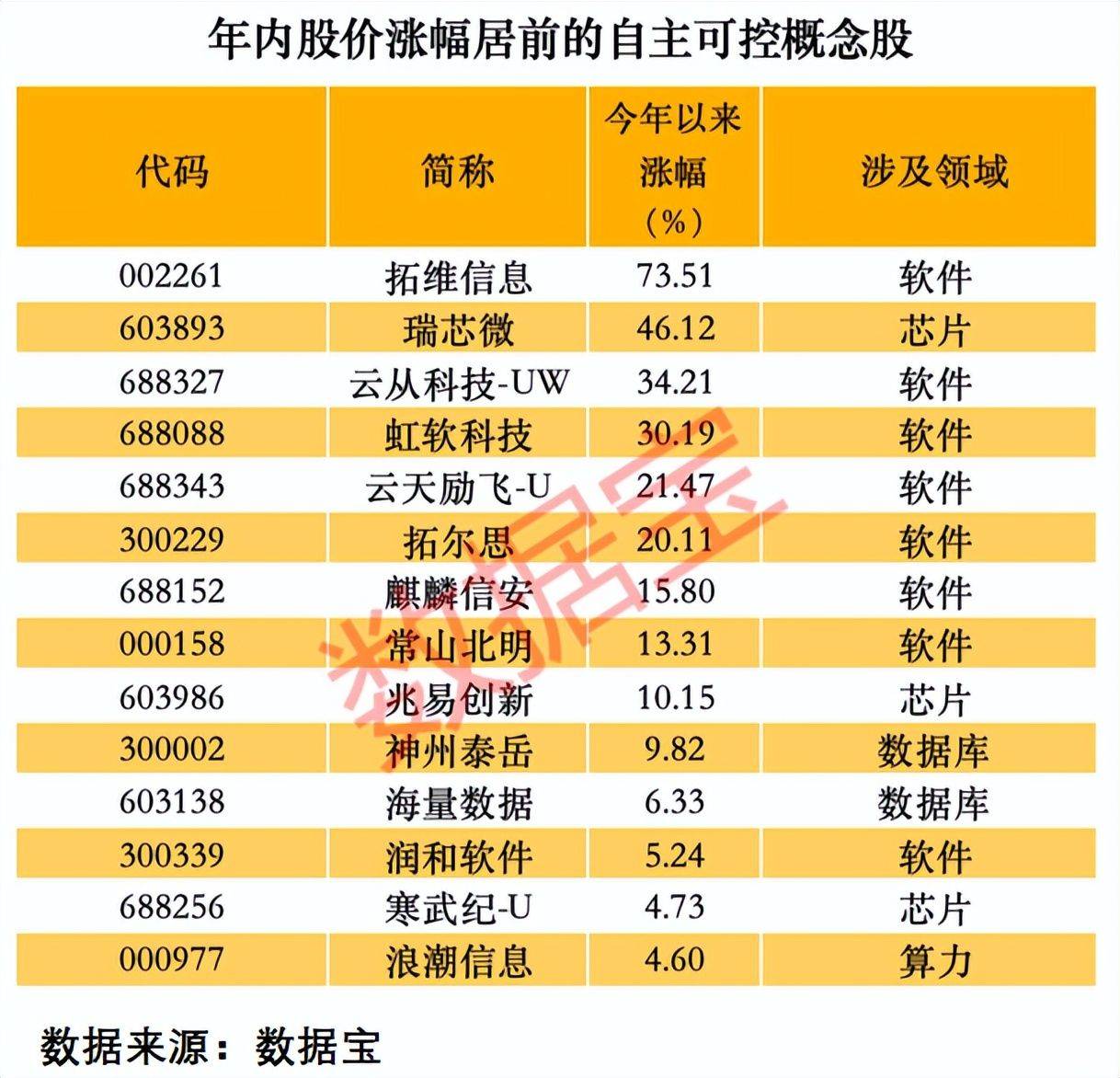
Group 1: Industry Overview - The artificial intelligence industry in China is projected to grow from 18 billion yuan in 2017 to 600 billion yuan by 2024, and is expected to exceed 1 trillion yuan by 2030 [1] - 40 self-controlled concept stocks have seen an average increase of over 8% this year, with notable performances from companies like 瑞芯微 (190% profit growth) and 云从科技 (34% stock price increase) [1][3] Group 2: Market Dynamics - The perception of market news can vary significantly based on the perspective of different stakeholders, often leading to misleading interpretations for retail investors [5] - Historical patterns indicate that institutional investors often act before major news is released, suggesting a strategic approach to stock trading [8][15] Group 3: Institutional Behavior - The analysis of "institutional inventory" data is crucial, as it reflects the level of institutional participation in stock trading, indicating potential bullish sentiment [7][16] - Active institutional inventory can signal that large funds are positioning themselves for future gains, even if stock prices do not immediately reflect this [15] Group 4: Investment Strategy - Investors are encouraged to look beyond surface-level data and consider which companies possess core technologies versus those merely riding trends [16] - Establishing a quantitative analysis framework and focusing on key indicators like "institutional inventory" can provide deeper insights into market movements [19]


继续爆发,国防军工ETF放量上探2.37%!逾80亿主力资金狂涌,长城军工、建设工业等多股涨停
Xin Lang Ji Jin· 2025-08-04 05:32
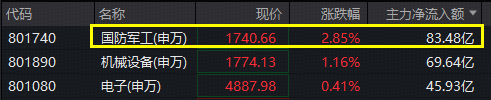
8月4日午后,国防军工板块继续上攻,行业涨幅、主力净流入均高居全行业断层首位! | 代码 | 名称 | 现价 | 涨跌幅 | 主力净流入额 ▼ | | --- | --- | --- | --- | --- | | 801740 | 国防空工(申万) | 1740.66 | 2.85% | 83.48 Z | | 801890 | 机械设备(申万) | 1774.13 | 1.16% | 69.647 | | 801080 | 电子(申万) | 4887.98 | 0.41% | 45.93 Z | 代码有"八一"的国防军工ETF(512810)放量上探2.37%,盘中一举收复5日、10日均线,成交额突破 9000万元。值得关注的是,上周逾1.44亿元资金成功埋伏。 | 分时 · | | | F9 盘前盘后 登加 九转 画线 工具 @ 2 >> | | | | | | 国防军工ETF O | | | | --- | --- | --- | --- | --- | --- | --- | --- | --- | --- | --- | --- | | 0.69 | | 512810[国防室工ETF] 13:21 ...

“慢牛”行情趋势不变,新一轮行情随时可能启动
天天基金网· 2025-08-04 05:32
Group 1 - The core viewpoint emphasizes that market trends dictate the behavior of dominant funds, which in turn influences the structure and patterns of rising industries. Historically, liquidity-driven markets tend to favor concentrated sectors rather than rotation strategies [1] - Recent market performance indicates a shift towards trend-based sectors, particularly in AI, innovative pharmaceuticals, resources, and technology innovation boards, as liquidity growth shows signs of slowing down [1] - The high dividend yield sectors are currently underperforming due to the weight of the banking sector, but some stable and potential high dividend stocks are beginning to show value as they have fallen to attractive yield levels [2] Group 2 - The market is experiencing a short-term adjustment after a previous rally, with the need to refocus on main lines as the rotation and recovery phase has reached a saturation point. The upcoming economic growth expectations and policy adjustments are key factors to watch [3] - There is a belief that the core logic supporting the current market trend remains intact, with potential catalysts such as the release of GPT-5 and upcoming significant political events likely to boost market confidence [4] - The market is expected to maintain a strong performance in August, with a focus on structural opportunities, particularly in technology and advanced manufacturing sectors driven by the "anti-involution" theme [3][4] Group 3 - The market is anticipated to experience a rotation of hotspots, with a focus on sectors like machinery, power equipment, and consumer technology, as well as high-quality dividend stocks that have recently corrected [7][10] - The potential for A-shares to reach new highs in August is supported by improving cash flow among listed companies and the influx of incremental capital, despite short-term adjustments [8] - The "anti-involution" policy is expected to remain a central theme in market dynamics, with technology growth sectors likely to exhibit high levels of activity due to the ongoing AI revolution and emerging industry trends [11]

全球科技(计算机)行业周报:FigmaIPO首日上涨250%,FigmaMake重构定义-20250804
Huaan Securities· 2025-08-04 05:18
Investment Rating - The industry investment rating is "Overweight" [1] Core Insights - Figma's IPO on July 31, 2025, saw its stock price surge by 250%, closing at $115.5 per share, with a market capitalization of approximately $56.302 billion and a price-to-sales ratio exceeding 75x, marking it as the largest IPO in the U.S. for 2025 [3][12] - Figma is a cloud-based collaborative interface design tool that disrupts traditional design tools by emphasizing real-time collaboration and cross-platform compatibility, catering to designers, developers, and product managers [3][12] - The long-term growth logic for Figma includes a comprehensive product matrix covering the entire front-end workflow, significant user penetration potential, rapid growth among top-paying enterprises, and international market expansion as a key growth driver [4][12] Summary by Sections 1. Computer Industry Insights - Figma's successful market entry and high market recognition are expected to boost the rise of domestic design software and strengthen the demand for "self-controllable" solutions, catalyzing growth in the AIGC industry chain [5][12] - Figma Make, a core product, integrates seamlessly with Figma's workflow, allowing front-end engineers to quickly generate basic code directories from design drafts, enhancing efficiency [5][13] 2. Market Performance Review - The computer industry index decreased by 0.20% this week, outperforming the Shanghai Composite Index by 0.74% and the ChiNext Index by 0.54% [15][18] - Year-to-date, the computer industry index has increased by 13.76%, ranking 7th among 31 industry indices [15][18] 3. Technology Software Industry News - The report highlights various sectors including EDA, industrial internet, automotive intelligence, fintech, smart healthcare, and artificial intelligence, indicating ongoing developments and regulatory measures in these areas [24][25][26][29][31][32]
午评:沪指低开高走涨0.2% 军工板块集体走强
Xin Hua Cai Jing· 2025-08-04 04:16
Market Overview - A-shares showed mixed performance on August 4, with the Shanghai Composite Index rising by 0.2% to 3567.02 points, while the Shenzhen Component Index and ChiNext Index fell by 0.28% and 0.49% respectively [1] - The trading volume for the Shanghai Composite was 398.4 billion, Shenzhen Component was 522.4 billion, and ChiNext was 263.2 billion [1] Sector Performance - Strong performance was noted in military industry stocks, AI intelligent agents, and robotics, with multiple stocks hitting the daily limit [1][2] - Conversely, the consumer sector and innovative pharmaceuticals faced corrections, with stocks like Dalian Friendship and Sinovac Biotech dropping significantly [1][2] Institutional Insights - Huatai Securities indicated that A-shares may enter a period of increased volatility, with active local hotspots primarily in AI, capacity clearance, and self-control sectors [3] - CICC highlighted that the recent surge in capital expenditure by overseas companies in the AI sector is expected to continue, with a projected 40% year-on-year growth in power transformer exports in the first half of 2025 [3] - CITIC Securities noted that companies with inherent growth potential in the consumer sector are outperforming, while those closely tied to macroeconomic cycles remain undervalued [3] Industry Developments - The penetration rate of new energy vehicles reached a historical high of 44.3% in the first half of the year [4] - The China Machinery Industry Federation plans to issue growth stabilization plans for machinery, automotive, and electrical equipment sectors to enhance supply capabilities and optimize industry environments [5] - Hainan province is working to optimize its duty-free policies and expand the list of goods available for immediate purchase and delivery, aiming for significant growth in medical tourism and digital economy sectors by 2027 [6]
港股异动|芯片股涨幅居前 H20安全风险引发监管关注 AI算力芯片国产化进程有望加速
Jin Rong Jie· 2025-08-04 03:08
Core Viewpoint - The recent security issues surrounding Nvidia's H20 computing chip highlight the ongoing tech rivalry between China and the U.S., which may impact domestic capital expenditures in the short term but could ultimately drive the development of a self-sufficient AI ecosystem in China [1]. Group 1: Stock Performance - Chip stocks have shown significant gains, with Huahong Semiconductor rising by 5.2% to HKD 41.5, Shanghai Fudan increasing by 3.94% to HKD 32.48, SMIC up by 3.1% to HKD 51.6, and China Electric Power Technology gaining 2.11% to HKD 1.45 [1]. Group 2: Regulatory Developments - The National Internet Information Office of China has summoned Nvidia to explain the security risks associated with the H20 chip sold to China, in accordance with the Cybersecurity Law, Data Security Law, and Personal Information Protection Law, with a deadline for submission of relevant materials set for July 31, 2025 [1]. Group 3: Industry Implications - Open Source Securities suggests that the incident reflects the broader U.S.-China tech competition, which may suppress short-term capital investments by domestic internet firms but could lead to a more stable and healthy development of China's AI industry in the long run [1]. - Huaxi Securities believes that the combination of the U.S. chip security legislation and the H20 incident may accelerate the domestic production of AI computing chips, such as Huawei's Ascend and Cambricon, clarifying the long-term growth trajectory for the industry [1].

港股异动 | 芯片股涨幅居前 H20安全风险引发监管关注 AI算力芯片国产化进程有望加速
智通财经网· 2025-08-04 02:06
Core Viewpoint - The recent security issues surrounding Nvidia's H20 computing chip highlight the ongoing tech rivalry between China and the U.S., which may impact domestic capital expenditure in the short term but could lead to a more stable and self-sufficient AI industry in China in the long run [1]. Group 1: Stock Performance - Semiconductor stocks are experiencing significant gains, with Huahong Semiconductor up 5.2% to HKD 41.5, Shanghai Fudan up 3.94% to HKD 32.48, SMIC up 3.1% to HKD 51.6, and China Electric Power Technology up 2.11% to HKD 1.45 [1]. Group 2: Regulatory Actions - The National Internet Information Office of China has summoned Nvidia to explain the security risks associated with the H20 chip sold to China, in accordance with the Cybersecurity Law, Data Security Law, and Personal Information Protection Law, with a deadline for submission of relevant materials set for July 31, 2025 [1]. Group 3: Industry Implications - According to Open Source Securities, the incident reflects the broader context of U.S.-China tech competition, which may suppress domestic internet companies' capital expenditures in the short term but will ultimately drive the development of a self-controlled "technology-security-ecosystem" in China's AI industry [1]. - Huaxi Securities suggests that the U.S. chip security legislation and the H20 incident may accelerate the domestic production of AI computing chips, such as Huawei's Ascend and Cambricon, indicating a clearer long-term growth trajectory for these companies [1].