人民币国际化

Search documents
打破美元霸权:中国方案崛起——国际智能供应链控股集团有限公司的全球新路径
Sou Hu Cai Jing· 2025-10-31 08:37
Core Viewpoint - The article discusses how China, through the International Smart Supply Chain Holding Group, is proposing a new solution to challenge the dominance of the US dollar in global trade and finance, aiming for a more equitable global economic order [1][2]. Group 1: The Shift from Dollar Dominance to China's Response - The past global economy was characterized by a "one-way cycle" under dollar control, while the future is envisioned as a "shared prosperity cycle" driven by smart supply chains [3]. - The core strategy of the International Smart Supply Chain is to counter the dollar's "threefold harvesting" with a "threefold counterattack" using Chinese technological power and supply chain systems [4][5][6]. Group 2: The Smart Supply Chain System - The "Smart Supply Chain System" proposed by the International Smart Supply Chain is a global intelligent economic ecosystem, integrating smart manufacturing, Chinese warehousing, overseas delivery, and local services, with digital RMB as the core of settlement [9]. - This system allows for the free flow of global resources, products, technologies, and funds through a digital, transparent, and intelligent "trade highway" [10]. Group 3: The Role of Digital RMB - Digital RMB is a crucial foundation of the International Smart Supply Chain, serving not only as a payment tool but also as a "trustworthy settlement mechanism" [15][16]. - Cross-border settlements using digital RMB can be completed in minutes, significantly faster than traditional dollar systems, with every transaction being traceable and verifiable [17][18]. Group 4: Vision for Shared Prosperity - The vision of the International Smart Supply Chain is to ensure that ordinary people benefit from technological advancements, allowing participants to become not just consumers but also stakeholders through mechanisms like "Smart Chain Points" and "equity dividends" [21][22]. - The system is expected to create a vast employment chain across various sectors, providing opportunities for both rural and urban populations [23][24]. Group 5: China's Role in Globalization - With the rise of the International Smart Supply Chain, China is transitioning from being a participant in globalization to becoming a shaper of global economic order [26]. - This shift represents a movement from "financial hegemony" to "technological co-governance," emphasizing value creation and shared benefits [27].

王文涛最新发文:详解全面落实扩大高水平对外开放四大主要任务
证券时报· 2025-10-31 08:30
Core Viewpoint - The article emphasizes the importance of expanding high-level opening-up in China, focusing on self-initiated openness, trade innovation, bilateral investment cooperation, and high-quality construction of the "Belt and Road" initiative [1]. Group 1: Expanding Self-Initiated Openness - The Ministry of Commerce aims to align with international high-standard economic and trade rules while expanding market access, particularly in the service sector [2]. - Plans include expanding pilot projects in value-added telecommunications, biotechnology, and foreign-funded hospitals, as well as enhancing openness in education and culture [2]. - The government will implement zero-tariff treatment for all least developed countries with diplomatic relations and accelerate regional and bilateral trade investment agreements [2]. - The strategy includes optimizing the layout of regional openness and enhancing the internationalization of the Renminbi [2]. Group 2: Promoting Trade Innovation Development - The focus is on improving the quality and efficiency of foreign trade, with an emphasis on optimizing goods trade and expanding green and digital trade [3]. - There is a push for increased imports and the establishment of national import trade innovation demonstration zones [3]. - The article highlights the importance of developing service trade and encouraging the export of knowledge-intensive services [3]. - It also mentions the need for improved export control and trade remedy systems [3]. Group 3: Expanding Bilateral Investment Cooperation - The initiative aims to create a strong "Invest in China" brand and enhance international cooperation in industrial and supply chains [4]. - The government plans to reduce the negative list for foreign investment and improve the service guarantee system for foreign enterprises [4]. - There is a focus on promoting a transparent and stable institutional environment for foreign investment [4]. Group 4: High-Quality Construction of the "Belt and Road" - The article stresses the importance of strengthening mutual trust and benefit with countries involved in the "Belt and Road" initiative [5]. - It calls for enhanced strategic alignment and the development of a comprehensive connectivity network [5]. - The government aims to expand cooperation in green development, artificial intelligence, digital economy, and other emerging fields [5]. - There is a focus on protecting overseas interests and providing legal support for enterprises investing abroad [5].

专访东盟与中日韩宏观经济研究办公室(AMRO)首席经济学家何东:国际货币体系存在较大网络效应 数字货币兴起带来显著机遇
Zheng Quan Shi Bao Wang· 2025-10-31 06:58
Group 1: International Monetary System Changes - The diversification of non-US dollar currencies is becoming a trend, with emerging technologies like blockchain rapidly applied in digital currency development [1][4] - The ongoing "de-dollarization" process is still under observation, but the evolution of the international monetary system presents development opportunities for currencies like the RMB [1][5] - The weakening of the US dollar is attributed to multiple factors, including its overvaluation and concerns about the US fiscal situation, leading to a 10% depreciation compared to early 2025 [4][5] Group 2: Economic Outlook and Trade - The international economic and trade situation is influenced by US tariff policies and the rapid development of artificial intelligence, with a more positive outlook for the Asia-Pacific region than initially expected [2][3] - Despite external uncertainties, China's foreign trade is expected to remain stable, showcasing resilience and vitality [2][3] Group 3: ASEAN and Regional Cooperation - The ASEAN economies have experienced a slowdown this year but are expected to maintain stability, with discussions on enhancing resilience against external challenges [3] - The "ASEAN+3" region (ASEAN plus China, Japan, and South Korea) is identified as the fastest-growing economic area globally, with significant potential for investment and trade growth [3] Group 4: Digital Currency and Financial Opportunities - The rise of digital currencies presents significant opportunities in inclusive finance and cross-border payments, potentially reducing costs through a unified blockchain network [5][6] - The challenge of maintaining financial stability and preventing illegal activities in the context of digital currencies is a pressing issue for countries [6] Group 5: Central Bank Digital Currencies (CBDCs) - Central bank digital currencies are in an exploratory phase, with developed countries focusing on wholesale CBDCs while emerging markets aim to support digital payments [8] - The development of CBDCs varies by country, with a cautious and steady approach observed in their research and application [8] Group 6: RMB Internationalization - The internationalization of the RMB is influenced by China's high-level openness, stable economic growth, and deepening financial markets [9] - The gradual process of RMB internationalization is affected by the inertia of the international monetary system and external factors, such as US policy changes [9][10]
宝城期货资讯早班车-20251031
Bao Cheng Qi Huo· 2025-10-31 02:59
1. Report Industry Investment Rating - No information about the report industry investment rating is provided in the given content. 2. Core Viewpoints of the Report - The report presents a comprehensive overview of macro - economic data, commodity investment trends, financial news, and stock market information. It shows that the global economic situation is complex, with various factors influencing different markets. For example, the Sino - US economic and trade consultations have reached a series of consensus, which will have an impact on trade and related industries; the gold market is in a high - frequency volatile stage, and the demand and price trends are affected by multiple factors; the bond market has different trends at home and abroad, and the currency and exchange markets also show certain fluctuations [1][2][25] 3. Summary by Relevant Catalogs 3.1 Macro Data - In September 2025, GDP growth rate decreased to 4.8% from 5.2% in the previous quarter, but was higher than 4.6% in the same period last year. Manufacturing PMI rose to 49.8% from 49.4% in the previous month, and non - manufacturing PMI decreased to 50.0% from 50.3%. Social financing scale, M0, M1, M2, and other indicators also showed different trends. CPI was - 0.3% year - on - year, and PPI was - 2.3% year - on - year. Fixed - asset investment decreased by 0.5% year - on - year, while social consumer goods retail sales increased by 4.46% year - on - year. Exports and imports increased by 8.3% and 7.4% respectively year - on - year [1] 3.2 Commodity Investment 3.2.1 Comprehensive - The Sino - US economic and trade consultations in Kuala Lumpur reached a series of consensus, including the cancellation of 10% "fentanyl tariff" on Chinese goods by the US, the suspension of some export control and investigation measures, and the expansion of agricultural product trade. The Ministry of Commerce issued an implementation plan for expanding green trade, promoting the greening of foreign trade transportation and the use of clean energy. On October 30, 39 domestic commodity varieties had positive basis, and 28 had negative basis. The Hong Kong Monetary Authority lowered the benchmark interest rate by 25 basis points to 4.25% [2][3][4] 3.2.2 Metals - The Ministry of Commerce formulated the application conditions and procedures for tungsten, antimony, and silver export state - owned trading enterprises from 2026 - 2027. Gold entered a high - frequency volatile stage, and many banks adjusted the purchase rules of gold accumulation products. In the third quarter of 2025, global central banks increased their gold purchases, with a net purchase of 220 tons, an increase of 28% from the second quarter and 10% year - on - year. China's retail gold investment and consumption demand reached 152 tons in the third quarter, a 7% year - on - year decrease, but the amount reached 120.4 billion yuan, a 29% year - on - year increase. The target price range of gold at the end of 2026 was raised by Wells Fargo. The inventories of some metals such as tin, zinc, and aluminum decreased [6][7] 3.2.3 Coal, Coke, Steel, and Minerals - Henan Province issued an action plan for the quality improvement and upgrading of the steel and coal industries, aiming to promote enterprise restructuring and integration, and improve the level of clean development and intelligent construction [8] 3.2.4 Energy and Chemicals - The World Bank predicted that global commodity prices may decline for the fourth consecutive year in 2026. The US Treasury Secretary mentioned issues such as the integration of the shipbuilding industry, Japan's energy dependence, and potential investment. The US Energy Secretary said that the US could supply natural gas and oil to South Korea. Ukraine will resume importing natural gas through the Trans - Balkan route in November, and Nigeria approved a 15% import tariff on gasoline and diesel [9][10][12] 3.2.5 Agricultural Products - As of October 30, 113 A - share food and beverage listed companies' Q3 2025 reports showed that the total revenue was 630.845 billion yuan, a year - on - year increase of 1.99%, and the net profit was 137.676 billion yuan, a year - on - year decrease of 0.26%. India will impose a 30% import tariff on yellow peas from November 1. The EU Commission adjusted the forecast of ordinary wheat production and maintained the forecasts of other indicators [14][15] 3.3 Financial News 3.3.1 Open Market - On October 30, the central bank conducted 342.6 billion yuan of 7 - day reverse repurchase operations, with an operating interest rate of 1.40%, and the net investment was 130.1 billion yuan [16][17] 3.3.2 Important News - The leaders of China and the US held a meeting, and the economic and trade teams reached a consensus on resolving issues. The Sino - US economic and trade consultations in Kuala Lumpur achieved multiple consensus results. Five departments jointly issued a document to improve the duty - free shop policy from November 1. 500 billion yuan of new policy - based financial instruments have been fully invested, which is expected to drive the total project investment to exceed 7 trillion yuan. The central bank released the 2025 RMB internationalization report. The weighted average interest rate of newly issued commercial personal housing loans in Q3 2025 was 3.07%. The pilot area of pension wealth management products was expanded to the whole country. The Ministry of Housing and Urban - Rural Development proposed to build a new real estate development model. 21 troubled real estate enterprises completed debt restructuring, with a total debt resolution scale of about 1.2 trillion yuan. The Hong Kong Monetary Authority lowered the benchmark interest rate by 25 basis points. The US federal government shutdown may cause economic losses. The US Treasury Secretary mentioned the selection of the Fed Chairman. The central banks of Japan and Europe maintained their benchmark interest rates unchanged. Meta Platforms' corporate bond issuance received a large - scale subscription. Some companies had bond - related major events, and overseas credit ratings of some companies were adjusted [18][19][22] 3.3.3 Bond Market Summary - The sentiment in the inter - bank bond market was warm, with bond yields falling, and most Treasury bond futures rising. The money market interest rates mostly declined. The yields of some financial bonds of policy - based banks were determined. The yields of European and US bonds rose [25][28][29] 3.3.4 Foreign Exchange Market - The on - shore RMB against the US dollar closed at 7.1107, down 116 points from the previous trading day. The US dollar index rose, and most non - US currencies fell [30] 3.3.5 Research Report Highlights - CITIC Securities believed that the bond market had insufficient odds and winning rates in 2025, and a defensive strategy was more advantageous. It also expected the Fed to cut interest rates by 25 bps in December. Huatai Fixed Income thought that Hong Kong - style urban investment institutions had investment value [31][32][33] 3.4 Stock Market - A - shares declined with heavy trading volume, with technology - related stocks falling and the lithium - battery industry chain rising. The Shanghai Composite Index fell 0.73%, the Shenzhen Component Index fell 1.16%, and the ChiNext Index fell 1.84%. The total trading volume was 2.46 trillion yuan. Hong Kong stocks also declined, with the Hang Seng Index falling 0.24%. Southbound funds had a net purchase of 13.641 billion Hong Kong dollars. The margin trading balance of A - shares exceeded 2.5 trillion yuan, and the semiconductor industry received significant net purchases from margin funds [34][35]
股指期货将震荡整理,黄金、白银、焦煤、玻璃、碳酸锂期货将偏强震荡,铜、PVC期货将偏弱震荡
Guo Tai Jun An Qi Huo· 2025-10-31 02:52
Report Industry Investment Rating No relevant content provided. Core Viewpoints of the Report - Through macro - fundamental and technical analysis, the report predicts the trend of today's futures main contracts. Index futures will fluctuate and consolidate; gold, silver, coking coal, glass, and lithium carbonate futures will oscillate strongly; copper and PVC futures will oscillate weakly [1][2][3][4][5]. Summary by Related Catalogs Futures Market Outlook - **Index Futures**: On October 31, index futures will fluctuate and consolidate. IF2512 has resistance levels at 4723 and 4741 points, and support levels at 4678 and 4653 points; IH2512 has resistance levels at 3065 and 3080 points, and support levels at 3030 and 3023 points; IC2512 has resistance levels at 7395 and 7470 points, and support levels at 7262 and 7200 points; IM2512 has resistance levels at 7450 and 7519 points, and support levels at 7319 and 7257 points [2][20]. - **Treasury Bond Futures**: On October 31, the 10 - year Treasury bond futures main contract T2512 will likely oscillate strongly, with resistance levels at 108.78 and 108.85 yuan, and support levels at 108.53 and 108.43 yuan. The 30 - year Treasury bond futures main contract TL2512 will likely oscillate strongly, with resistance levels at 116.5 and 116.8 yuan, and support levels at 115.6 and 115.4 yuan [2][38][43]. - **Precious Metal Futures**: On October 31, the gold futures main contract AU2512 will likely oscillate strongly and attack resistance levels at 923.6 and 928.6 yuan/gram, with support levels at 906.0 and 900.4 yuan/gram. The silver futures main contract AG2512 will likely oscillate strongly and attack resistance levels at 11483 and 11575 yuan/kg, with support levels at 11210 and 11122 yuan/kg [2][3][44][51]. - **Base Metal Futures**: On October 31, the copper futures main contract CU2512 will likely oscillate weakly and test support levels at 86600 and 86000 yuan/ton, with resistance levels at 87600 and 88000 yuan/ton. The aluminum futures main contract AL2512 will likely fluctuate and consolidate, with resistance levels at 21300 and 21370 yuan/ton, and support levels at 21140 and 21090 yuan/ton. The alumina futures main contract AO2601 will likely fluctuate and consolidate, with support levels at 2803 and 2790 yuan/ton, and resistance levels at 2836 and 2860 yuan/ton [3][52][61]. - **Energy and Chemical Futures**: On October 31, the lithium carbonate futures main contract LC2601 will likely oscillate strongly, with resistance levels at 85000 and 85700 yuan/ton, and support levels at 82200 and 81700 yuan/ton. The rebar futures main contract RB2601 will likely fluctuate and consolidate, with resistance levels at 3111 and 3133 yuan/ton, and support levels at 3090 and 3083 yuan/ton. The hot - rolled coil futures main contract HC2601 will likely fluctuate and consolidate, with resistance levels at 3333 and 3355 yuan/ton, and support levels at 3306 and 3280 yuan/ton. The iron ore futures main contract I2601 will likely oscillate weakly and test support levels at 790 and 787 yuan/ton, with resistance levels at 803 and 806 yuan/ton. The coking coal futures main contract JM2601 will likely oscillate strongly and attack resistance levels at 1316 and 1328 yuan/ton, with support levels at 1280 and 1263 yuan/ton. The glass futures main contract FG601 will likely oscillate strongly and attack resistance levels at 112 and 1127 yuan/ton, with support levels at 1083 and 1072 yuan/ton. The soda ash futures main contract SA601 will likely oscillate widely, with support levels at 1224 and 1215 yuan/ton, and resistance levels at 1248 and 1260 yuan/ton. The crude oil futures main contract SC2512 will likely oscillate strongly and attack resistance levels at 463 and 467 yuan/barrel, with support levels at 455 and 453 yuan/barrel. The PTA futures main contract TA601 will likely fluctuate and consolidate, with resistance levels at 4590 and 4624 yuan/ton, and support levels at 4556 and 4530 yuan/ton. The PVC futures main contract V2601 will likely oscillate weakly and test support levels at 4731 and 4710 yuan/ton, with resistance levels at 4778 and 4817 yuan/ton [3][4][5][72][79][81]. - **Agricultural Futures**: On October 31, the soybean meal futures main contract M2601 will likely fluctuate and consolidate, with resistance levels at 3020 and 3035 yuan/ton, and support levels at 2980 and 2965 yuan/ton. The natural rubber futures main contract RU2601 will likely fluctuate and consolidate, with support levels at 15340 and 15210 yuan/ton, and resistance levels at 15500 and 15630 yuan/ton [7][108][110]. Macro News and Trading Tips - China - US leaders held a meeting, and the two countries' economic and trade teams reached a consensus on important economic and trade issues. The US will cancel the 10% so - called "fentanyl tariff" on Chinese goods, and the 24% reciprocal tariff will be suspended for another year. The US will suspend the implementation of the 50% penetrative export control rule and the Section 301 investigation on China's maritime, logistics, and shipbuilding industries for one year [8]. - The World Bank predicts that global commodity prices may decline for the fourth consecutive year in 2026, reaching the lowest level in six years. Energy prices are expected to drop by 12% in 2025 and a further 10% in 2026. Gold prices are expected to rise by 42% in 2025 and a further 5% in 2026 [10]. Futures Market Analysis and Outlook - **Index Futures**: On October 30, index futures generally declined. The short - term upward momentum weakened, and the downward pressure increased [14][15][16]. - **Treasury Bond Futures**: On October 30, Treasury bond futures mostly rose. The short - term and medium - short - term upward space of the 10 - year and 30 - year Treasury bond futures main contracts further opened [36][41]. - **Precious Metal Futures**: On October 30, the gold futures main contract AU2512 rose slightly, and the short - term continued to rebound weakly. The silver futures main contract AG2512 declined slightly, and the short - term rebound momentum weakened [43][51]. - **Base Metal Futures**: On October 30, the copper futures main contract CU2512 declined slightly, and the short - term upward momentum weakened. The aluminum futures main contract AL2512 declined slightly, and the short - term upward momentum weakened. The alumina futures main contract AO2601 declined significantly, and the short - term downward pressure increased [52][61][64]. - **Energy and Chemical Futures**: On October 30, the lithium carbonate futures main contract LC2601 rose, and the short - term continued to rise. The rebar futures main contract RB2601 declined, and the short - term rebound momentum weakened. The hot - rolled coil futures main contract HC2601 declined, and the short - term rebound momentum weakened. The iron ore futures main contract I2601 rose slightly, and the short - term upward space further opened. The coking coal futures main contract JM2601 rose, and the short - term upward space further opened. The glass futures main contract FG601 declined significantly, and the short - term downward pressure increased. The soda ash futures main contract SA601 declined, and the short - term downward pressure increased. The crude oil futures main contract SC2512 declined slightly, and the short - term downward pressure increased. The PTA futures main contract TA601 declined, and the short - term upward momentum weakened. The PVC futures main contract V2601 rose slightly, and the short - term rebound momentum weakened [69][72][79]. - **Agricultural Futures**: On October 30, the soybean meal futures main contract M2601 rose, and the short - term stopped falling and rose. The natural rubber futures main contract RU2601 declined, and the short - term downward pressure increased [108][110].
冠通期货资讯早间报-20251031
Guan Tong Qi Huo· 2025-10-31 02:04
Report Overview - The report provides a comprehensive overview of overnight futures market trends, important macro and industry news, and financial market developments as of October 31, 2025 [3] Overnight Futures Market Trends International Futures - International precious metal futures generally rose, with COMEX gold futures up 0.94% at $4038.30 per ounce and COMEX silver futures up 1.71% at $48.73 per ounce [4] - U.S. crude oil and Brent crude oil futures fell, with U.S. crude down 0.31% at $60.29 per barrel and Brent crude down 0.45% at $64.03 per barrel [5] - London base metals all declined, with LME copper down 2.27% at $10930.00 per ton, LME tin down 1.28% at $35720.00 per ton, etc. [5] - U.S. agricultural products showed mixed performance, with soybeans up 1.14%, corn down 1.04%, etc. [6] Domestic Futures - As of 23:00, domestic futures contracts mostly fell, with low-sulfur fuel oil (LU) up over 1%, and ethylene glycol (EG), methanol, etc. down over 1% [8] Important News Macroeconomic News - China and the U.S. will suspend relevant export control measures for one year, and the U.S. will also suspend 301 investigation measures on China's maritime, logistics, and shipbuilding industries [10] - A total of 500 billion yuan in new policy-based financial instruments have been fully invested, expected to drive project investment of over 7 trillion yuan [10] - The Fed may end balance sheet reduction on December 1 and become a net buyer next year [12] Energy and Chemical Futures - Singapore's fuel oil inventory rose, while middle distillates and light distillates inventories declined [16] - China's domestic soda ash inventory slightly decreased, and production increased [16] - China's national float glass inventory decreased, and inventory days decreased [16] Metal Futures - The auction of spodumene concentrate ended at a price of 7058 yuan per ton [19] - Goldman Sachs believes that copper prices may not sustain above $11,000 per ton, and the market will be slightly oversupplied in 2026 [21] - Indonesia will issue a 400,000-ton copper concentrate export quota to Amman Mineral [21] - Global gold demand in Q3 2025 reached a record high [21] Black Futures - Manganese ore production in Gabon decreased in Q3 2025 [27] - China's rebar production increased, and inventories decreased [27] - Henan Province issued an action plan for the steel industry [27] Agricultural Futures - As of October 27, Xinjiang's cotton picking progress was 82.8%, and it is expected to end around November 15 [29] - The physical inventory of red dates increased [30] - Canada's rapeseed crushing volume increased in September [32] - Brazil's sugarcane crushing and sugar production increased in October [32] Financial Markets Stocks - A-shares fell, with technology stocks leading the decline, and the lithium battery industry chain strengthened [34] - Hong Kong stocks declined, with southbound funds net buying HK$13.641 billion [34] - A-share margin trading balance exceeded 2.5 trillion yuan, and semiconductor stocks were popular among margin traders [34] Industry - The weighted average interest rate of new commercial personal housing loans in Q3 2025 was 3.07% [37] - 21 troubled real estate companies have approved or completed debt restructuring, with a total debt resolution of about 1.2 trillion yuan [37] - The pilot area for pension wealth management products will be expanded to the whole country [37] Overseas Markets - The Fed may select a new chairman before Christmas [40] - The European Central Bank maintained the benchmark interest rate at 2% [40] - Eurozone Q3 GDP grew better than expected, but member states' performance was divergent [40] - The Bank of Japan maintained the benchmark interest rate at 0.5% [40] International Stocks - U.S. stocks fell, with concerns about the economic outlook intensifying [42] - European stocks showed mixed performance, with different factors affecting each country's market [42] - Apple's Q4 revenue and earnings exceeded expectations, and it announced a cash dividend [43] - Amazon's Q3 earnings and revenue exceeded expectations, and it provided positive Q4 guidance [43] Commodities - The World Bank predicts that global commodity prices will decline in 2026 [44] - Hong Kong is accelerating the construction of an international gold trading center [45] - Global gold demand reached a record high in Q3 [45] Bonds - The interbank bond market was bullish, and Meta's bond issuance received strong demand [48] - U.S. Treasury yields rose, and the market lowered its interest rate cut expectations [49] Foreign Exchange - The central bank plans to develop the RMB foreign exchange derivatives market and promote RMB internationalization [50] - The onshore RMB depreciated against the U.S. dollar [50]
国际金融市场早知道:10月31日
Xin Hua Cai Jing· 2025-10-30 23:57
Group 1: Currency and Financial Markets - The People's Bank of China is advancing the internationalization of the Renminbi and researching foreign exchange futures, aiming to develop a Renminbi foreign exchange derivatives market and promote Renminbi trading with more neighboring and Belt and Road countries [1] - The Hong Kong government is inviting the Shanghai Gold Exchange to participate in establishing a central clearing system for gold, with a goal to surpass 2000 tons in gold trading within three years [1] - The World Gold Council reported that global gold demand reached 1313 tons in Q3, marking a record high for a single quarter, with investment demand increasing by 47% year-on-year [1] Group 2: Commodity Prices and Economic Outlook - The World Bank's Commodity Market Outlook indicates that global commodity prices may decline for the fourth consecutive year, reaching a six-year low by 2026, with energy prices expected to drop by 12% in 2025 and further by 10% in 2026 [2] - Gold prices are projected to rise by 42% in 2025 and an additional 5% in 2026 [2] Group 3: Economic Performance - The Eurozone's Q3 GDP preliminary value showed a year-on-year increase of 1.3% and a quarter-on-quarter increase of 0.2%, both exceeding market expectations [5] - France's Q3 GDP grew by 0.5% quarter-on-quarter, marking the fastest growth rate in 2023 [6] - Germany's Q3 GDP remained flat quarter-on-quarter, continuing a trend of low performance for 14 consecutive quarters [7]
中行提供人民币贷款支持土航发展
Xin Hua She· 2025-10-30 18:28
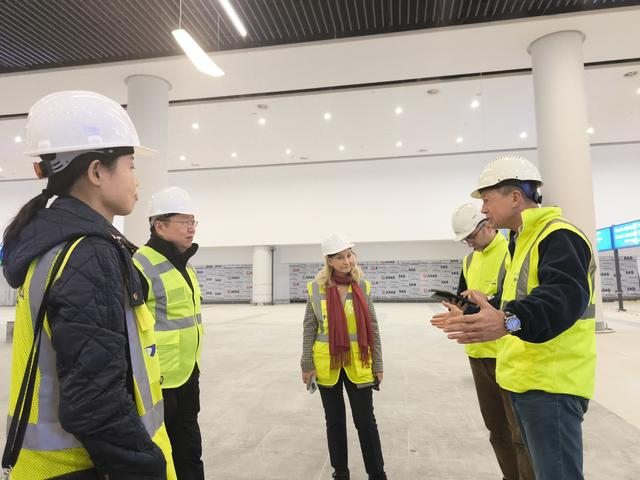
Core Viewpoint - China Bank (Turkey) Co., Ltd. has provided a 5-year loan of 2.9 billion RMB to Turkish Airlines to support fleet expansion, cargo business enhancement, and simulator training center construction [1] Group 1: Financial Cooperation - The loan represents an important practice of financial cooperation between China and Turkey, with China Bank aiming to deepen collaboration in key areas and contribute to the high-quality development of the Belt and Road Initiative [1] Group 2: Strategic Importance - Turkish Airlines emphasizes the growing significance of the Renminbi and the Chinese market, indicating that the choice of Renminbi financing reflects confidence in the internationalization of the currency and aligns with the airline's strategic plans to expand in the Chinese market [3] - Turkish Airlines, as the national airline of Turkey, currently operates a fleet of 485 aircraft [3]
前三季浙江对东盟跨境人民币结算量同比增长27.2%
Zheng Quan Shi Bao Wang· 2025-10-30 14:28
人民财讯10月30日电,在10月30日举行的金融支持浙江外贸新闻发布会上,央行浙江省分行透露,在落 实人民币国际化工作方面,着力优化跨境人民币政策供给,指导金融机构创新产品和服务,重点扩大周 边重点国家和地区跨境人民币使用。今年前三季度,浙江省对东盟地区跨境人民币结算量同比增速达到 27.2%。 ...
离岸观澜 | 巴克莱将“入局”熊猫债 2025年熊猫债净融资规模同比增长近两成
Xin Hua Cai Jing· 2025-10-30 13:54
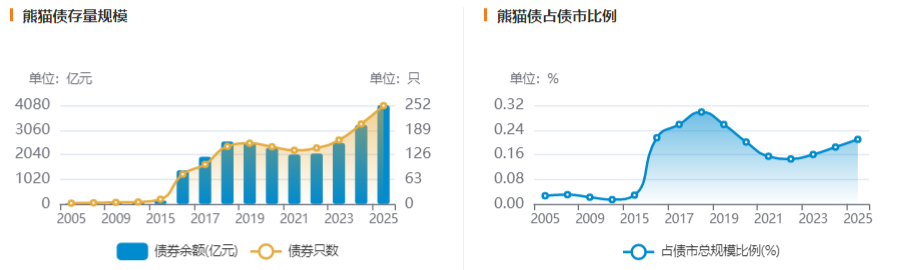
Core Viewpoint - The issuance of "Panda Bonds" is gaining momentum, with Barclays Bank planning to issue its first Panda Bond in the Chinese interbank bond market, indicating a growing interest from foreign institutions in the Chinese bond market [1][2]. Group 1: Panda Bond Market Overview - As of October 30, 2023, the net financing scale of Panda Bonds has surpassed 800 billion RMB, reflecting a year-on-year growth of nearly 20% [1][3]. - The Panda Bond market has seen significant activity in October, with various foreign issuers, including the UAE and Morgan Stanley, successfully issuing bonds totaling 40 billion RMB and 20 billion RMB, respectively [3]. - The total issuance volume of Panda Bonds in 2023 has reached 1,569.50 billion RMB, with a net financing scale of 821.50 billion RMB, marking an 18.7% increase compared to the previous year [3][7]. Group 2: Funding Utilization and Market Dynamics - Barclays Bank's bond proceeds will primarily be used to meet the demand for RMB-denominated assets, enhance liquidity in the offshore RMB market, and optimize the overall financing structure of the group [2]. - The average issuance interest rate of Panda Bonds has decreased significantly, providing a financing cost advantage compared to USD-denominated bonds, attracting foreign issuers [7]. Group 3: Investor and Issuer Landscape - The diversity of issuers in the Panda Bond market is increasing, with a notable rise in foreign issuers, including major banks and corporations, indicating a shift towards a "sovereign + industry" dual-driven development model [8][9]. - The holder structure of Panda Bonds is evolving, with non-legal person products accounting for 38.03% of holdings, followed by state-owned commercial banks at 19.55% and foreign institutions at 17.43% [9]. - The participation of international rating agencies and improved disclosure standards from foreign issuers are enhancing cross-border credit research, thereby enriching the funding sources for RMB bonds [9]. Group 4: Future Outlook - The Panda Bond market is expected to continue thriving due to the dual drivers of interest rate differentials and supportive policies, with projections indicating that the stock of Panda Bonds may exceed 600 billion RMB by the end of 2025 [9]. - The entry of Barclays Bank into the Panda Bond market signifies confidence in China's financial openness and the long-term potential of RMB assets, suggesting a shift towards "local currency-driven" financing strategies for foreign institutions [9].