
关税战

Search documents
粤开宏观:博弈视角看“关税战”:特朗普的意图与各经济体的不同反应
Yuekai Securities· 2025-04-27 14:23
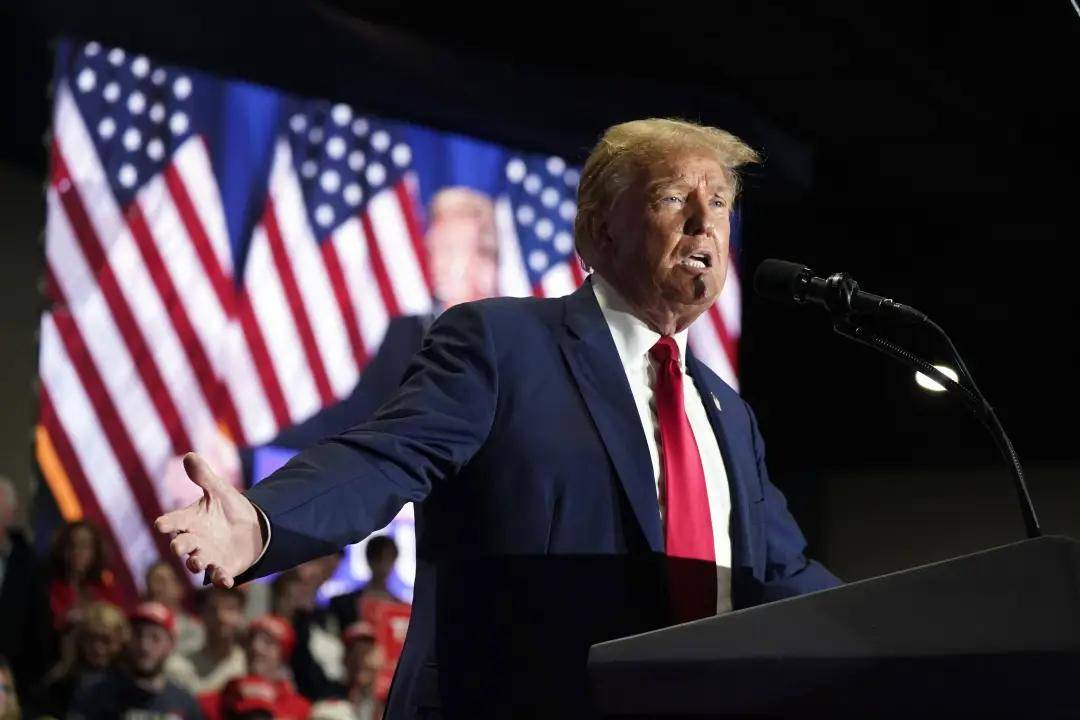
Group 1 - The report analyzes Trump's "tariff war" as a strategic maneuver that significantly impacts the global economic landscape, particularly affecting China and the U.S. economy [1][16] - Trump's psychological bottom line includes a 10% baseline tariff on global imports, protective tariffs on key industries like automobiles, and a focus on curbing China's rise while integrating North America [3][20] - The report highlights that Trump's unpredictable behavior serves as a strategy to maintain negotiation leverage, creating uncertainty for other economies [4][22] Group 2 - Different economies respond variably to the U.S. tariff war, categorized into resistance and concession, with China and Canada showing strong resistance while others like Mexico and Vietnam are forced to concede [6][26] - China is identified as the most resolute in its countermeasures against U.S. tariffs, demonstrating both capability and determination to retaliate effectively [27][28] - The report suggests that Canada has effectively countered U.S. tariffs due to its economic ties with the U.S., while Mexico's response has been more subdued due to its dependent economic status [35][36] Group 3 - The report emphasizes the need for China to build alliances and expand its market presence to enhance its negotiating power against the U.S. [10][30] - It discusses the potential for China to fill the market void left by the U.S. as it adopts a more isolationist trade policy, positioning itself as a global consumer market leader [10][31] - The analysis concludes that the ongoing tariff situation is unsustainable for the U.S., with potential adjustments in tariff rates likely as negotiations progress [31][32]
美国承认发生战略性误判,我们对此深表遗憾但再也回不去了!
Sou Hu Cai Jing· 2025-04-27 09:06
Group 1 - The article discusses the strategic misjudgment by the U.S. regarding China, highlighting that the U.S. underestimated China's determination and response to tariffs [1][3] - It mentions that the U.S. has faced significant challenges in its trade war with China, with American retailers warning about the consequences of ongoing tariffs [1][5] - The article indicates that China has successfully shifted its orders from the U.S. to other countries, making it difficult for the U.S. to revert to previous trade conditions even if it softens its stance [7] Group 2 - The article points out that the U.S. is struggling with internal economic pressures, including the Federal Reserve's decision not to lower interest rates amidst a challenging trade environment [5] - It emphasizes that the U.S. has not secured any new trade agreements with other countries, which complicates its position in the ongoing trade conflict [7] - The article suggests that the timeline for significant changes in U.S. trade policy is limited, as the upcoming midterm elections may restrict the administration's ability to enact substantial reforms [5]

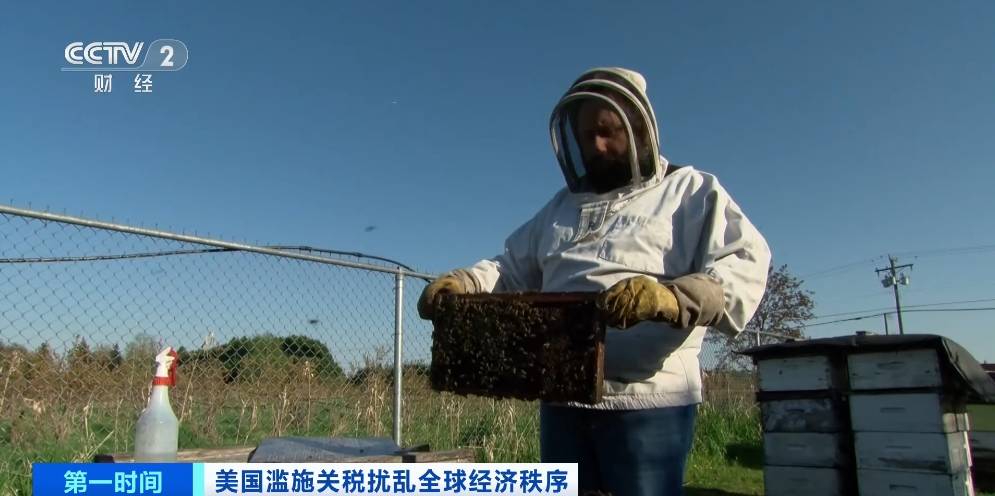
美关税威胁导致加拿大养蜂业举步维艰,企业积极开拓其他市场
Sou Hu Cai Jing· 2025-04-27 08:38
Core Viewpoint - The Canadian honey industry is facing significant challenges due to potential 25% tariffs on agricultural products imposed by the U.S., prompting Canadian beekeeping companies to seek alternative markets outside the U.S. [1][3] Group 1: Impact of Tariffs - The threat of a 25% tariff on Canadian agricultural products, including honey, is making the already low-margin beekeeping industry more difficult to sustain [3] - If the tariffs are implemented, Canadian honey companies may need to raise prices by nearly 30%, leading to an increase of $3 to $4 per bottle for U.S. consumers [5] - The uncertainty surrounding tariffs is causing Canadian beekeepers to actively explore markets beyond the U.S. [7] Group 2: Market Dynamics - Canada produces approximately 34 million kilograms of honey annually, with about 50% allocated for export, and the U.S. market accounts for 80% to 90% of these exports [7] - Canadian beekeepers are concerned that retaliatory measures from Canada could also lead to high tariffs on imported queen bees, which are primarily sourced from the U.S. [7] - Companies are planning to breed their own queen bees and are identifying potential buyers in Asian markets such as Japan and South Korea, as well as in the Middle East [9]
美方一再造势,中方再亮立场
Zhong Guo Xin Wen Wang· 2025-04-27 05:05
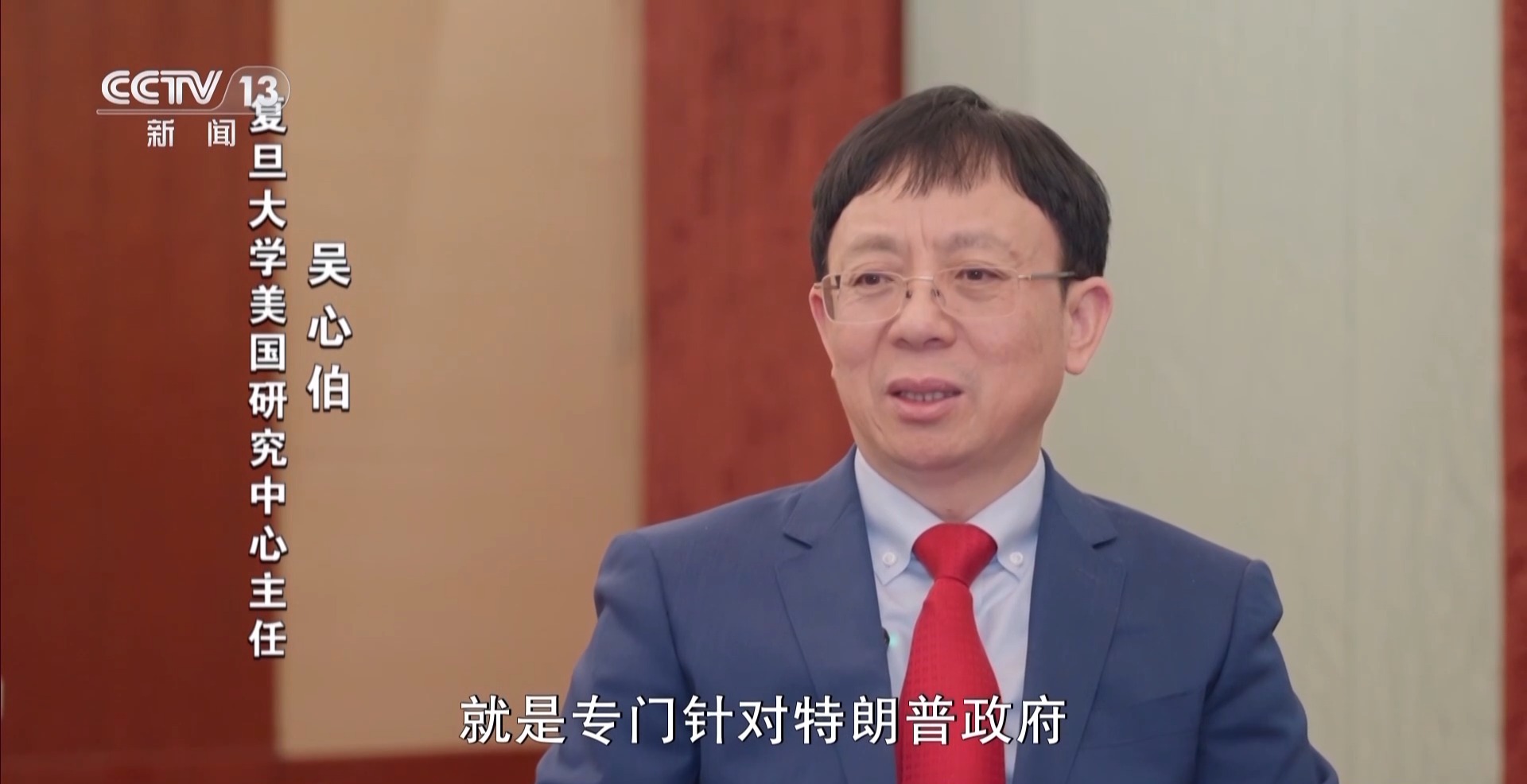
当地时间4月25日,美国总统特朗普表示,除非中国做出实质性让步,否则不会取消对华加征的关税。 对于美方在对华关税问题上不断释放混乱甚至相互矛盾的信号,中国驻美国使馆发言人25日晚强调,如 果美方真的想通过对话谈判解决问题,就应该纠正错误,停止威胁讹诈,彻底取消所有对华单边关税措 施。一边说要同中方达成协议,一边不断搞极限施压,这不是同中方打交道的正确方式,也是行不通 的。 "贸易战、关税战没有赢家""中国主张通过平等对话协商解决贸易和关税争议,也将坚定维护自身正当 权益"。 近日,中国财政部部长蓝佛安和央行行长潘功胜在华盛顿出席多个国际性会议,亦就美国滥施关税再次 亮明中方立场。 本周以来,美国政府多次表示正与中国进行谈判,并期望达成一项"公平的协议"。这令美股连日上涨, 更让舆论猜测,中美官员是否会在近期会晤。 但对于美方言论,中方以"假消息"定性美方说辞。 作为对外经贸关系的主管部门,中国商务部24日强调,目前中美之间未进行任何经贸谈判,任何关于中 美经贸谈判进展的说法都是捕风捉影,没有事实依据。 中国外交部也连续两日在记者会上表示中美双方并没有就关税问题进行磋商或谈判,奉劝"美方不要混 淆视听"。 为何 ...
波兰经济学家:美国滥施关税影响全球经济
news flash· 2025-04-27 02:58
波兰经济学家:美国滥施关税影响全球经济 智通财经4月27日电,美国政府滥施关税加剧全球贸易紧张局势,严重干扰世界经济和贸易秩序,美方 单边主义、保护主义做法持续遭到国际社会强烈反对和批评。近日,记者专访了波兰经济学家奥尔沃夫 斯基,他指出,美国滥施关税不仅给自身,也给全球经济带来消极影响。维斯瓦大学经济学教授 奥尔 沃夫斯基:毫无疑问,各国经济增速都会随着加征关税而放缓,其中也包括发起关税战的国家。我们看 到国际货币基金组织已经下调了对美国等国2025年全球经济增长的预测。因为经济学家非常清楚,如果 你发动关税战,那么首先惩罚的是自己的消费者,因为他们要支付更高的价格。其次,其他国家通常也 会用高关税来反击,最后你什么也得不到。只是每个人都受到了惩罚,经济增长速度都在减缓。 (央视 新闻) ...
一周展望:超级数据周来袭!暴涨暴跌后黄金“牛”还在吗?
Jin Shi Shu Ju· 2025-04-27 01:13
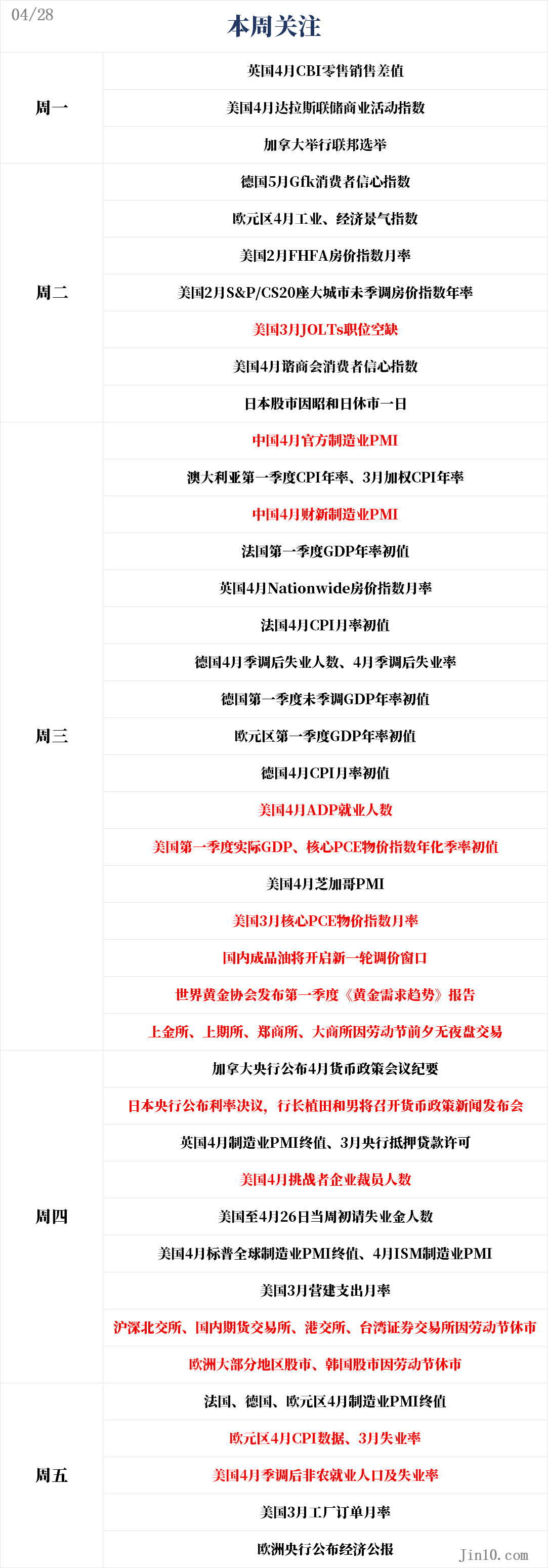
周五,美国股市基本表现平淡,市场参与者继续等待更多关于关税战的信息。在美国总统特朗普表示,如果一年内对外进口关税达到50%,他将视为"彻底 胜利"后,市场情绪仍有些不安。 不过,市场整体情绪依然谨慎,因为经济前景恶化,关税也损害企业盈利。标普500指数仍低于4月2日"解放日"前的水平,且较其2月的创纪录收盘价下跌超 过10%。 随着本周初围绕美联储独立性以及持续的贸易摩擦的担忧消散,本周可以被视为积极的一周。美国总统特朗普和财长贝森特缓和了言论,显示他们正在考虑 尽快与中国达成协议。 双方的言论在恢复市场信心方面发挥了重要作用,这使得市场情绪出现了显著转变。风险资产在本周大部分时间里稳步上涨,而避险资产则受挫。 | 04/28 | 本周关注 | | --- | --- | | | 英国4月CBI零售销售差值 | | 周一 | 美国4月达拉斯联储商业活动指数 | | | 加拿大举行联邦选举 | | | 德国5月Gfk消费者信心指数 | | | 欧元区4月工业、经济景气指数 | | | 美国2月FHFA房价指数月率 | | 周二 | 美国2月S&P/CS20座大城市未季调房价指数年率 | | | 美国3月JOLT ...
陆家嘴财经早餐2025年4月27日星期日
Wind万得· 2025-04-26 22:26
// 热点聚焦 // 1、中共中央政治局就加强人工智能发展和监管进行第二十次集体学习。 中共中央总书记习近平在主持学习时强调,面对新一代人工智能技术快速演 进的新形势,要充分发挥新型举国体制优势,坚持自立自强,突出应用导向,推动我国人工智能朝着有益、安全、公平方向健康有序发展。习近平 强调,人工智能作为新技术新领域,政策支持很重要。要综合运用知识产权、财政税收、政府采购、设施开放等政策,做好科技金融文章。推进人 工智能全学段教育和全社会通识教育,源源不断培养高素质人才。 2、中国央行行长潘功胜在国际货币与金融委员会(IMFC)会议上表示,当前全球经济增长动能偏弱,下行风险突出。近期美国滥施关税,严重侵犯各国 正当权益,严重损害以规则为基础的多边治理体制,严重冲击全球经济秩序,破坏全球经济长期稳定增长;同时也引发全球金融市场剧烈波动,发达经济 体尤为严重。这对全球金融稳定造成威胁,对新兴市场经济体和发展中国家构成严峻挑战。 潘功胜强调,中国愿进一步深化与国际货币基金组织的合 作,支持基金组织在维护全球经济金融稳定方面发挥更大的作用。 3、 国务院新闻办公室将于4月27日(星期日)下午3时举行新闻发布会, 请商务 ...
关税战 特朗普政府的“败相”
Yang Shi Xin Wen Ke Hu Duan· 2025-04-26 17:55
Group 1 - The informal meeting convened by China at the UN Security Council aimed to discuss the impact of the US's unilateral tariff policies on the global economy and to foster a consensus among member states against such actions [1][2][6] - The meeting highlighted the need for international cooperation to counter unilateralism and promote multilateralism, with over 80 countries participating and nearly 30 countries voicing their opinions [8][10] - The discussions underscored the significant economic challenges posed by the US's tariff war, which not only affects global supply chains but also has repercussions on international political and economic relations [8][17] Group 2 - The IMF has revised its global economic growth forecast for 2025 down to 2.8%, indicating a potential recession, while the UN report suggests a drop to 2.3%, highlighting the widespread impact of the tariff war [10] - The meeting served as a platform for emerging and developing countries to express their concerns regarding the adverse effects of the US tariff policies, emphasizing the need for a fair and predictable multilateral trade order [10][12] - The presence of US representatives at the meeting reflects the challenges the US faces in maintaining its stance amid growing international criticism of its unilateral actions [12][14] Group 3 - The ongoing tariff war has led to significant domestic backlash in the US, with economists and former presidents openly criticizing the policies, and multiple states filing lawsuits against the federal government [21][24] - The US's fluctuating stance on tariffs, including recent indications of a potential reduction, raises questions about the long-term sustainability of its trade policies [17][23] - China's response to the tariff war includes a commitment to high-level openness and the promotion of domestic demand, which may serve as a counterbalance to external pressures [29][34]
很多人没注意到,美国对中国发动关税战,本质上是一场全新的战争
Sou Hu Cai Jing· 2025-04-26 10:46
2025年4月,美国政府以"对等关税"为名,对中国商品加征34%至104%的惩罚性关税,全球贸易体系随之剧烈震荡。这场 看似经济领域的博弈,实则是一场裹挟着战略遏制、政治操弄与地缘争夺的"新时代战争"。它不仅关乎中美两国的未来, 更可能重塑全球秩序。而这场战争的本质与影响,远超普通人的想象。 关税战是"战争"的三大核心逻辑:一 战略意图:遏制中国崛起,重塑全球霸权。 美国将中国视为"系统性挑战",关税战是 其遏制中国发展的关键手段。通过抬高贸易壁垒,美国试图削弱中国在全球产业链中的核心地位,同时推动制造业回流以 填补国内产业空心化。正如特朗普政府的经济纲领文件《重构全球贸易体系用户指南》所述,其目标是通过关税"削弱中 国竞争力",并迫使盟友在中美之间选边站队,以巩固美国主导的"安全—贸易联盟"。中国稀土出口管制、对美实体清单 扩容等精准反制措施,则暴露了这场博弈的军事与科技对抗底色。 二、经济逻辑:转嫁债务危机,收割全球财富。美国深陷"特里芬难题"——既要维持美元霸权(需贸易逆差输出美元), 又要恢复制造业(需贸易顺差)。当前美国国债规模已突破36万亿美元,年利息支出逼近1万亿美元,债务驱动的经济模 式濒临崩 ...
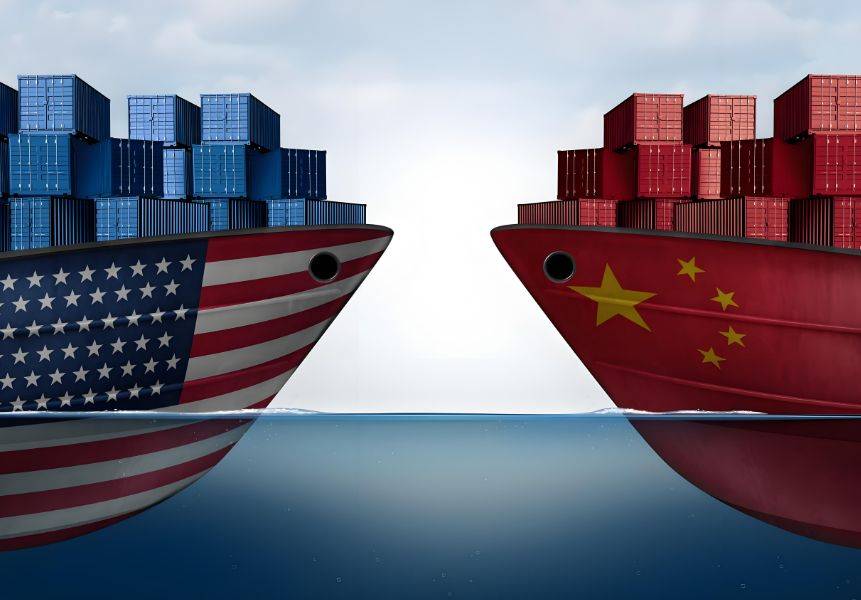
第一个关税战的赢家,已经出现?
格隆汇APP· 2025-04-26 07:53
作者 | 深鹏 数据支持 | 勾股大数 据(www.gogudata.com) 每一次大的剧变,总会产生一些新赢家。 一战是美国,二战是美国、苏联,冷战前期是西德、日韩,后期是我们。 现在,世界似乎又走到类似的时间关口。 目前的高峰,是懂王牵起的贸易战,激进、强硬、神经质。 不过,这并不是我们此次重点讨论的议题。 我们更关心,这一轮剧变中,新的赢家会有谁?以及有什么投资机会? 阿三? 01 贸易战风声鹤唳之际,美国副总统访问了印度。 一天之后,传出美国和印度达成了贸易框架协议。 虽然说这个贸易框架,并不是最终可以执行的细节,大概等于一个意向,后面才会不断往里面填东西,但至少也是一个开始,对于两个国家而 言,都算得上一个利好。 实际上,印度和美国,包括西方发达国家达成经济层面的战略合作,有很多利好条件。 首先,是 人口红利与劳动力成本 。 印度是全球人口最多的国家( 14.3 亿, 2024 年),且劳动年龄人口( 15-64 岁)占比高达 67% (约 9.5 亿人),平均年龄仅 28 岁 (中国为 38 岁,美国为 39 岁) ; 印度制造业工人月均工资约为 15,000-25,000 卢比(约 180-3 ...