
新型政策性金融工具

Search documents
【财经早报】白酒龙头,拟分红超100亿元
Zhong Guo Zheng Quan Bao· 2025-10-30 23:30
Group 1: Financial Tools and Investment - A new policy financial tool of 500 billion yuan has been fully deployed, expected to drive total project investment exceeding 7 trillion yuan [2] - The 500 billion yuan financial tool is aimed at supplementing project capital, addressing the capital shortage bottleneck for major projects, and enhancing financing capabilities [2] - The tool is projected to support 1054 projects with an estimated total investment of 3.85 trillion yuan, among others [2] Group 2: Company Earnings Reports - Shilan Microelectronics reported a Q3 revenue of 3.377 billion yuan, up 16.88% YoY, and a net profit of 84.27 million yuan, up 56.62% YoY, with a significant increase in profit attributed to its integrated strategy [4] - Zhongji Xuchuang achieved Q3 revenue of 10.216 billion yuan, a 56.83% YoY increase, and a net profit of 3.137 billion yuan, up 124.98% YoY, driven by growth in high-end optical module sales [5] - Lixun Precision reported Q3 revenue of 96.411 billion yuan, a 31.03% YoY increase, and a net profit of 4.874 billion yuan, up 32.49% YoY, with growth attributed to improved operational efficiency [6] - Guotai Junan reported Q3 revenue of 22.019 billion yuan, a 136% YoY increase, and a net profit of 6.337 billion yuan, up 40.6% YoY, with total assets exceeding 2 trillion yuan [7] - China Life announced a 2 billion yuan investment in a fund focused on semiconductor and digital energy sectors [9] Group 3: Policy Changes and Market Impact - The Ministry of Housing and Urban-Rural Development is accelerating the construction of a new real estate development model to meet housing needs for urban workers and families [2] - The Ministry of Finance and other departments announced improvements to duty-free shop policies to boost consumption and attract foreign spending [3]

5000亿元新型政策性金融工具完成投放
Sou Hu Cai Jing· 2025-10-30 23:13
Core Insights - The newly established policy financial tools are expected to drive total project investments exceeding 7 trillion yuan [1][2] - A total of 500 billion yuan in new policy financial tools has been fully deployed, effectively supporting key projects in various sectors [1] Group 1: Financial Tool Deployment - The deployment of 500 billion yuan in new policy financial tools has been completed, with a focus on rapid and efficient implementation [1] - The tools were established following a directive from the Central Committee of the Communist Party in April, with active promotion by the National Development and Reform Commission [1] - The three main financial tools have allocated funds as follows: 250 billion yuan from the National Development Bank, 100 billion yuan from the Export-Import Bank, and 150 billion yuan from the Agricultural Development Bank [1] Group 2: Investment Focus Areas - Key areas supported by these financial tools include technological innovation, consumption expansion, and stabilizing foreign trade [1] - Specific projects include a 6 billion yuan investment in a new energy battery industry base in Henan and a logistics project for agricultural products in Zhejiang [1] Group 3: Regional Support - The financial tools have significantly supported major economic provinces, with 690 projects funded in 12 provinces totaling 1,949.5 billion yuan, accounting for 78% of the National Development Bank's tool [1] - The Agricultural Development Bank supported 667 projects in these provinces with a total of 108.7 billion yuan [1] - The Export-Import Bank facilitated over 240 projects in major economic provinces, with nearly 80% of the loan amounts allocated [1] Group 4: Private Investment Engagement - The tools have increased support for private investment projects, with the National Development Bank backing 128 projects totaling 685.9 billion yuan, representing 27.4% of its total support [2] - The Agricultural Development Bank supported 52 private investment projects with 155.33 billion yuan [2] - The Export-Import Bank has also promoted over 100 private investment projects, with loan amounts exceeding 30% of its total [2] Group 5: Expected Impact - The newly deployed financial tools are anticipated to convert project reserves into actual construction activities from October to December, thereby enhancing effective investment and promoting stable economic growth [2] - The National Development Bank, Export-Import Bank, and Agricultural Development Bank are expected to drive total project investments of approximately 3.85 trillion yuan, over 1.3 trillion yuan, and over 1.93 trillion yuan, respectively [2]
新型政策性金融工具完成投放 预计拉动项目总投资超7万亿 时报数说
Zheng Quan Shi Bao· 2025-10-30 19:23
Core Viewpoint - The article discusses significant developments in the financial sector, highlighting trends and potential impacts on investment opportunities and risks [2] Group 1: Financial Sector Developments - Recent trends indicate a shift in investment strategies among major financial institutions, focusing on sustainable and responsible investing [2] - The report emphasizes the increasing importance of technology in financial services, particularly in enhancing operational efficiency and customer engagement [2] Group 2: Market Implications - Analysts predict that the ongoing changes in the financial landscape could lead to a reallocation of capital towards more innovative and environmentally friendly projects [2] - The article notes that regulatory changes are likely to influence market dynamics, affecting both traditional and emerging financial players [2]


预计拉动项目总投资超7万亿元!
第一财经· 2025-10-30 09:21
Core Viewpoint - The newly established policy financial tools amounting to 500 billion yuan have been fully deployed, significantly supporting key projects and expected to drive total project investment exceeding 7 trillion yuan [1]. Group 1: Deployment and Impact - The rapid and efficient establishment and deployment of these financial tools are highlighted as key characteristics [4]. - The National Development and Reform Commission announced the completion of the deployment of 500 billion yuan in new policy financial tools, with specific allocations of 250 billion yuan, 100 billion yuan, and 150 billion yuan from different banks [4]. - The focus areas for these tools include technological innovation, expanding consumption, and stabilizing foreign trade [4]. Group 2: Regional Focus - The tools have strengthened support for major economic provinces, with significant project investments in 12 key provinces [4]. - The new policy financial tools have supported 690 projects with an investment of 194.95 billion yuan in major economic provinces, accounting for 78% of the total [4]. - The agricultural development financial tool has supported 667 projects in major economic provinces, amounting to 108.723 billion yuan [4]. Group 3: Private Investment - The tools have increased support for private investment projects, with 128 projects receiving 68.59 billion yuan from the national development financial tool, representing 27.4% of the total [5]. - The agricultural development financial tool has supported 52 private investment projects with an amount of 15.533 billion yuan [5]. - The new policy financial tools have facilitated over 100 private investment projects, with more than 30% of the loan amounts allocated to these initiatives [5]. Group 4: Capital Supplementation - The 500 billion yuan in new policy financial tools is entirely allocated to supplement project capital, addressing the capital shortage issues faced by major projects [5]. - The national development, export-import, and agricultural development financial tools are expected to drive total project investments of 3.85 trillion yuan, over 1.3 trillion yuan, and over 1.93 trillion yuan, respectively [5]. Group 5: Future Expectations - Experts anticipate that the projects supported by the new policy financial tools will be rapidly implemented from October to December, converting previously reserved projects into actual construction [6]. - This transition is expected to enhance effective investment and promote stable economic development [6].

预计拉动项目总投资超7万亿元!5000亿元新型政策性金融工具完成投放
Xin Hua She· 2025-10-30 08:49
(文章来源:新华社) 目前,5000亿元新型政策性金融工具已全部完成投放,有力支持了一批重点领域和薄弱环节项目建设, 预计将拉动项目总投资超7万亿元。 ...
新华鲜报丨预计拉动项目总投资超7万亿元!5000亿元新型政策性金融工具完成投放
Xin Hua Wang· 2025-10-30 08:47
Core Viewpoint - The newly established policy financial tools amounting to 500 billion yuan have been fully deployed, significantly supporting key sectors and projects, and are expected to drive total project investments exceeding 7 trillion yuan [1][7]. Group 1: Financial Tool Deployment - The deployment of the 500 billion yuan new policy financial tools has been completed swiftly and efficiently, with the China Development Bank, Export-Import Bank of China, and Agricultural Development Bank of China each contributing 250 billion yuan, 100 billion yuan, and 150 billion yuan respectively [4][5]. - The tools are designed to address funding shortages in major projects, particularly in terms of capital, thereby enhancing financing capabilities and leveraging bank loans and social capital to create a multiplier effect [7]. Group 2: Focus Areas and Regional Support - Key support areas for the financial tools include technological innovation, expanding consumption, and stabilizing foreign trade, with specific projects such as the support for the new energy battery industry in Henan and agricultural logistics in Zhejiang [6]. - The tools have a strong focus on supporting major economic provinces, with significant investments directed towards 12 key provinces, accounting for a substantial portion of the total funding [6]. Group 3: Impact on Investment - The financial tools are expected to support a total of 2,295 projects across various sectors, with projected total investments of approximately 3.85 trillion yuan, over 1.3 trillion yuan, and over 1.93 trillion yuan from the respective banks [7]. - Historical precedents indicate that similar policy financial tools established in 2022 effectively boosted infrastructure investments, suggesting that the current tools may also lead to increased project initiation and tangible economic activity in the fourth quarter [8].

四川雅化实业集团股份有限公司2025年第三季度报告
Shang Hai Zheng Quan Bao· 2025-10-29 21:53
Core Viewpoint - The company reported significant developments in its lithium and civil explosives businesses, with a notable recovery in lithium sales and ongoing efforts in product innovation and financing support for expansion projects [5][6][9]. Financial Performance - The company confirmed that its quarterly report is accurate and complete, with no need for restatement of previous financial data [2][3]. - The third-quarter financial report was not audited, and the company has not identified any non-recurring gains or losses [3][14]. Business Operations - Lithium Business: In the third quarter of 2025, lithium prices rebounded due to production adjustments in certain mines, leading to a substantial increase in sales volume, achieving a record high for the quarter. The company is focusing on optimizing its customer base and production operations, which positively impacted its performance compared to the same period last year [5][6]. - Civil Explosives Business: The civil explosives segment faced challenges due to increased market competition and declining prices, resulting in a decrease in overall production and sales value. However, the company successfully expanded its sales channels and saw growth in its blasting services and exports [6]. Product Development - The company is advancing its research in solid-state battery materials, achieving significant progress in the synthesis of lithium sulfide, which meets high-performance requirements for solid electrolytes. The new synthesis process has shown advantages in cost, purity, and controllability [7][8]. Financing and Investment - The company secured a policy-based financial tool amounting to 188.04 million yuan from the National Development Bank to support its lithium production line construction, reflecting its achievements in the lithium industry [9]. - The company is also in the process of a non-public offering to raise up to 1.5 billion yuan for the construction of lithium hydroxide and lithium chloride production projects, with plans to adjust the use of raised funds for additional production capacity [10][12].

全线上涨!双焦创2个月新高!中美将举行会晤!钢价要继续涨?
Sou Hu Cai Jing· 2025-10-29 11:39
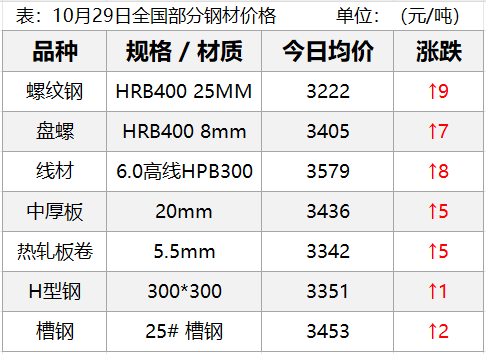
10月29日,钢材现货市场小幅上涨,期货市场主要品种主力全部上涨,其中螺纹、热卷涨1%左右,铁 矿、焦炭涨2%左右,焦煤涨3.5%。今日双焦午后强势拉涨,创两个半月高位,国内"十五五"规划建议 发布,美储联降息在即,明日钢价... 一、多空因素分析 1."十五五"规划建议发布 10月28日,《中共中央关于制定国民经济和社会发展第十五个五年规划的建议》全文公布,该规划聚焦 从一般制造业向科技产业的第二次转型,强调反内卷、统一大市场等。同时,提出 5 万亿地下管网改造 等基建项目,将为钢材需求提供一定支撑。总体来看,"十五五" 规划建议长期将通过基建托底需求和 产业升级优化供需结构,短期则受政策落地节奏影响,钢价有望在震荡中逐步走强,利好钢材价格走 势。 2.国开行2500亿元新型政策性金融工具完成投放 支持项目超千个 国家开发银行已完成新型政策性金融工具2500亿元投放任务,共支持项目1054个,预计可拉动项目总投 资3.85万亿元。从投向领域看,支持数字经济、人工智能、消费领域项目317个,投放980.2亿元,占比 39.2%。目前看,新型政策性金融工具将持续发力,有利于提振市场信心,利好钢材价格走势。 3. ...
农发行重庆市云阳支行投放农发新型政策性金融工具12.2亿元
Sou Hu Cai Jing· 2025-10-29 11:30
Core Insights - The Agricultural Development Bank of China (ADBC) Chongqing Yunyang Branch has invested 1.22 billion yuan in new policy-based financial instruments to support the construction of the Chongqing Yunyang Jianquan Pumped Storage Power Station and the Xiangyang Reservoir project, aiming to invigorate major water conservancy projects through policy-driven financial support [1][2] Group 1: Financial Support and Project Details - The Chongqing Yunyang Jianquan Pumped Storage Power Station is a key project under the "14th Five-Year Plan" with significant economic and social benefits, expected to improve local water infrastructure, stimulate related industries, and create numerous job opportunities [2] - The Xiangyang Reservoir, recognized as one of the 150 major water conservancy projects in the country, focuses on urban and rural water supply and agricultural irrigation, while also addressing flood control and power generation [2] - The ADBC Chongqing Yunyang Branch has implemented a proactive approach by conducting thorough project assessments and providing tailored financial services to local governments and key enterprises [2] Group 2: Policy Impact and Future Plans - The new policy-based financial instruments, set to be launched in 2025, aim to broaden project financing channels and reduce financing costs through targeted efforts by policy-based financial institutions [1] - The ADBC Chongqing Yunyang Branch plans to continue fulfilling its role as a policy bank by effectively implementing national strategic directives and providing point-to-point services to enhance local development [2]
国开行完成新型政策性金融工具2500亿元投放任务 共支持项目1054个
Zheng Quan Shi Bao Wang· 2025-10-29 03:32
Core Insights - The National Development Bank (NDB) has successfully completed a task of investing 250 billion yuan in new policy-based financial instruments from September 29 to October 28, supporting 1,054 projects and expected to drive a total investment of 3.85 trillion yuan [1][2] Group 1: Investment Overview - The NDB's new policy-based financial instruments have focused on supporting major economic provinces, with 690 projects in 12 provinces, including Guangdong, Zhejiang, and Sichuan, accounting for 78% of the total investment of 1,949.5 billion yuan [1] - The NDB has supported 128 projects involving private investment, with a total investment of 68.59 billion yuan, representing 27.4% of the total [1] - Investments in the digital economy, artificial intelligence, and consumer sectors include 317 projects with 98.02 billion yuan, making up 39.2% of the total [1] Group 2: Sector-Specific Investments - The NDB has supported 190 projects in the digital economy, including a 6.5 billion yuan investment in the first phase of the TCL Huaxing 8.6-generation printed OLED production line in Guangdong [2] - Investments in artificial intelligence projects include 43 projects, with notable investments such as 600 million yuan for the Henan Zhongzhou Times new energy battery industry base [2] - The NDB has also invested 1.92 billion yuan in 38 elderly care projects, enhancing smart elderly care services across various regions [2] Group 3: Future Plans - The NDB plans to strengthen the operation and post-investment management of the new policy-based financial instruments, focusing on accelerating project construction and ensuring effective fund utilization [3]