
通胀对冲

Search documents
白银暴涨14年新高!普通人如何用“黄金+白银”对冲通胀?
Sou Hu Cai Jing· 2025-09-02 19:17
Group 1 - The core viewpoint of the article highlights the rising popularity of silver and gold as asset allocation options for ordinary people amid global inflation pressures, driven by supply-demand imbalances, safe-haven demand, and industrial revolution benefits [2][3][4][5][6]. Group 2 - The global silver market has experienced a continuous supply-demand imbalance for five years, with a projected shortfall of 5,000 tons in 2024 and 3,660 tons in 2025, driven by weak mining output and surging demand from the photovoltaic and electric vehicle industries [3]. - Increased geopolitical tensions and trade frictions have led to a surge in safe-haven investments, with silver becoming a new target for funds due to its lower price and greater elasticity compared to gold [4]. - The gold-silver ratio reached as high as 105:1, prompting market participants to view silver as undervalued, leading to increased investments in silver to align its price closer to gold [5]. - Gold is viewed as a "safe-haven" asset due to its monetary properties and stability, with central banks globally purchasing record amounts of gold, reinforcing its long-term value [6]. - Silver's industrial properties make it more sensitive to economic recovery, with demand driven by factors such as accelerated photovoltaic installations and manufacturing PMI rebounds, allowing it to hedge against inflation while capturing growth opportunities [8]. Group 3 - Data comparisons show that in March 2025, when U.S. CPI exceeded expectations, gold rose by 1.8% while silver only increased by 0.7%, indicating gold's dominant safe-haven role; conversely, in June, when manufacturing PMI improved, silver rose by 1.1% while gold only increased by 0.3%, highlighting silver's industrial strength [10]. - Recommendations for ordinary investors include diversifying their portfolios with a mix of gold and silver based on risk preferences, such as conservative (70% gold, 30% silver) or balanced (50% gold, 50% silver) allocations [10]. - Suggested investment tools include physical assets like gold and silver bars, ETFs for liquidity, and account trading for convenience, while cautioning against common pitfalls such as chasing high prices, ignoring storage costs, and making single-asset bets [10].


大类资产周报:资产配置与金融工程A股领涨全球权益,股债负相关性达高位-20250825
Guoyuan Securities· 2025-08-25 11:44
Market Performance - A-shares led global equity markets with the Shanghai Composite Index rising by 3.49% and the ChiNext Index increasing by 5.85%[4] - The implied volatility of the 50ETF rose to 19.78%, indicating increased market uncertainty[4] - The Dow Jones reached a new high with a gain of 1.53%, while the Nasdaq experienced a slight decline of 0.58%[4] Bond Market Insights - The 30-year government bond futures fell by 1.43%, reflecting significant adjustments in the domestic bond market[4] - The negative correlation between stocks and bonds reached a historical high, highlighting the "see-saw effect" in market dynamics[4] Commodity Trends - International commodities showed strength, with Brent crude oil up by 2.14% and COMEX gold rising by 1.02%, driven by geopolitical risks and inflation hedging[4] - Domestic commodity prices generally declined, with the South China Commodity Index down by 0.44%[4] Currency Movements - The US dollar index decreased by 0.13%, while the offshore RMB appreciated by 0.24%[4] Asset Allocation Recommendations - For bonds, focus on high-grade credit bonds and adjust duration flexibly in a low-risk environment[5] - In overseas equities, consider opportunities in interest-sensitive sectors due to limited short-term rebound potential for the dollar[5] - For A-shares, maintain an overweight position in technology growth sectors, particularly electronics and AI hardware[5] Risk Factors - Key risks include policy adjustments, market volatility, geopolitical shocks, economic data validation risks, and liquidity transmission risks[6]
从门店热销到投资升温 贵金属价格为何持续走高
Sou Hu Cai Jing· 2025-08-04 22:35
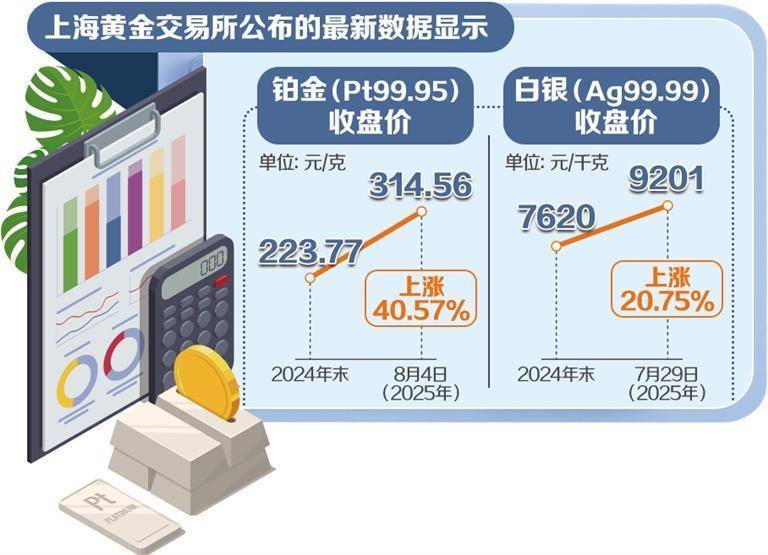
从宏观层面看,地缘政治风险上升显著推高了白银和铂金的避险溢价。俄罗斯是铂族金属的重要出口国,俄 乌战争持续影响俄罗斯铂族金属的出口,同时中东局势动荡威胁霍尔木兹海峡等关键矿产运输通道,叠加美 欧对关键矿产的出口管制,限制了白银、铂金等战略资源流通。中国银行研究院研究员吴丹表示,地缘政治 冲突以及全球经济不确定性加剧了市场避险情绪,同时,特朗普频繁施压导致美联储降息预期升温、美元走 势承压,加剧了市场对供给中断的担忧,并触发囤货行为,进一步推高贵金属价格。 记者在北京多家贵金属交易场所探访了解到,近期贵金属价格出现了大幅上涨,销售也十分火热。北京天雅 珠宝城一家铂金专卖店的销售人员说,"今年以来铂金价格上涨明显,吸引了大量消费者来店里选购,线上直 播间也咨询不断"。此外,一些主营黄金饰品的店铺也在醒目位置开设了铂金专柜。现场观察显示,铂金硬度 高、不易氧化,颜色属于银灰色,制成的饰品以镶嵌钻石、彩宝的戒指为主,款式简约时尚,吸引了许多年 轻消费者。除了增售铂金产品,一些店铺还在展台里增加了500克和1000克规格的投资银条,并提供回收服 务。 贵金属零售市场火热的背后是铂金、白银的价格涨幅显著。上海黄金交易所公 ...
领峰贵金属周年庆,$10000赠金助您布局黄金市场!
Sou Hu Cai Jing· 2025-08-04 02:30
Group 1 - The current gold market is at a critical juncture influenced by the ongoing conflict between Trump and Fed Chairman Powell regarding interest rate cuts, as well as the upcoming US CPI data, which adds uncertainty to gold price trends [1][3] - Trump has been pressuring the Federal Reserve to lower interest rates to stimulate economic growth, emphasizing the necessity of low rates for enhancing export competitiveness, while Powell maintains the Fed's independence and resists political pressure [3] - High inflation is expected to persist, with the upcoming August CPI data anticipated to exceed previous levels, potentially approaching or surpassing 3%, which typically supports gold prices as it is viewed as a hedge against inflation [4] Group 2 - The volatility in the gold market is expected to increase, presenting investment opportunities for investors, as evidenced by the 26% rise in gold prices in the first half of 2025, reflecting sustained demand for gold as an inflation hedge [4] - To celebrate its anniversary, the company is offering up to $10,000 in bonuses to investors, along with a maximum rebate of $26 per lot on trading spreads, aimed at reducing trading costs and facilitating easier entry into the gold market [5] - The company's website serves as a valuable resource for investors, providing access to financial news and market insights to enhance investment skills and enjoyment in trading [5]

黄金:全球变局下的战略避险资产
智通财经网· 2025-07-24 07:58
Group 1 - The importance of gold has been highlighted due to increasing geopolitical tensions, persistent inflation uncertainty, and adjustments in central bank strategies, making it a key strategic choice for asset diversification [1] - The world is gradually dividing into competing economic entities, and gold is re-establishing its position as a preferred neutral asset, trusted across nations and unaffected by sovereign risks [1] - Historical demand drivers for gold include its lack of credit risk, high liquidity, and physical characteristics, making it a reliable asset during market pressures [2] Group 2 - Gold's supply is relatively inelastic, with new production taking 7 to 20 years to develop, which enhances its scarcity premium during periods of rising demand [2] - Empirical data shows that gold often appreciates or at least maintains its value during macroeconomic shocks, serving as an effective hedge against tail risks and systemic events [2] - As of mid-2023, expectations of a pause in central bank interest rate hikes have led to a noticeable increase in gold prices, driven by high inflation and central bank reserve accumulation [2] Group 3 - Gold prices tend to exhibit strong upward trends during financial shocks, often maintaining high levels even after market conditions stabilize [5] - Historical data indicates significant cumulative returns for gold during inflationary periods, with peak returns reaching as high as 302% during the 1972-1976 inflation surge [6][7] - The current cycle (2020-2025) has seen gold prices rise approximately 90% from baseline levels, reinforcing its role as a tactical hedge asset [7] Group 4 - Economic policy uncertainty has a clear relationship with gold prices, as rising uncertainty typically leads to increased gold prices, reflecting its role as a safe-haven asset [8] - Retail demand for gold is significantly influenced by cultural factors, particularly in India and China, which together account for over 60% of global jewelry demand [13] - Central banks have significantly increased gold purchases since late 2021, driven by concerns over asset seizure and geopolitical conflicts, indicating a shift in reserve management strategies [14][15] Group 5 - The increase in gold reserves among central banks reflects a broader strategy to diversify reserves and enhance balance sheet resilience in a fragmented geopolitical landscape [18] - Gold's share in central bank balance sheets has risen from approximately 9% at the end of 2020 to 13.5% by 2024, indicating its growing importance as a reserve asset [18] - Notably, China and India have significantly increased their gold reserves by 17% and 38% respectively, while European central banks have maintained stable reserves [21][23] Group 6 - The technology sector is also driving gold demand, with a 7% increase in gold usage in North America and Asia due to growth in AI and semiconductor manufacturing [25] - Gold's strategic value as an industrial raw material is being recognized, particularly in the context of automation and AI investments in aging economies [25] - Traditional investment flows and central bank accumulation highlight gold's strategic appeal during systemic pressure periods, especially amid rising tariffs and conflicts [26] Group 7 - Gold maintains low correlation with other major asset classes, providing significant diversification benefits in multi-asset portfolios, particularly during periods of simultaneous downturns in traditional assets [29][30] - The 60/20/20 portfolio strategy, which includes 20% allocation to gold, has outperformed the traditional 60/40 portfolio, especially during market downturns [36][39] - Gold's role as a dynamic strategic tool in multi-asset investment environments is increasingly recognized, enhancing risk-adjusted returns amid macroeconomic uncertainty [40][42]

跌跌不休,“买入”不止:能源股成华尔街“倔强之选”
智通财经网· 2025-07-22 11:42
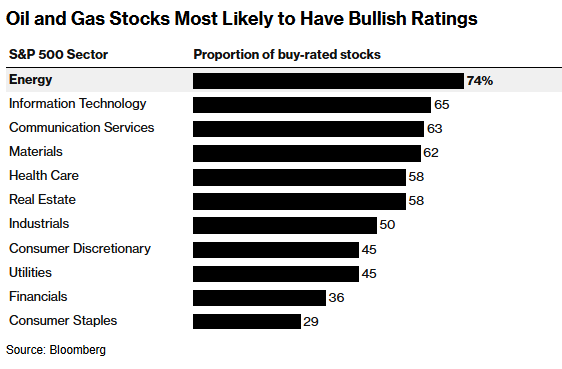
Core Viewpoint - Wall Street analysts are optimistic about oil and gas stocks due to low valuations and strong support from Trump for the struggling energy sector, with a significant portion of energy stocks receiving "buy" ratings [1][4]. Group 1: Market Sentiment and Performance - Approximately 75% of energy sector stocks in the S&P 500 have received "buy" recommendations, compared to about 50% for the overall market [1]. - Analysts expect energy stocks to rise by about 16% over the next 12 months, second only to the healthcare sector, and this growth is projected to be twice that of the overall index [1]. - Despite being one of the three declining sectors in the S&P 500 this year, energy stocks are considered to have potential for upward movement due to their low price-to-earnings ratios [1][4]. Group 2: Future Outlook and Challenges - The energy sector is projected to achieve the highest profit growth by 2026, according to Bloomberg Intelligence [4]. - Concerns exist regarding the impact of Trump's trade war and OPEC+ actions, which have contributed to a 7% decline in U.S. crude oil prices this year [4]. - Analysts predict a 30% decline in earnings for U.S. energy producers in Q2 compared to the first three months of the year, with cash flow expected to decrease by 15% due to weaker oil prices [4]. Group 3: Investment Considerations - Energy stocks have historically provided protection for investors during periods of rising inflation, as seen in 2022 when the energy sector was the best-performing sector amid soaring consumer prices [5]. - Trump's spending bill has removed subsidies for renewable energy, benefiting oil and gas producers, although this has not yet led to a significant increase in energy stock prices [7]. - Analysts may be awaiting further actions from the White House, as Trump is perceived as a supporter of U.S. energy producers [7].
瑞达期货贵金属产业日报-20250721
Rui Da Qi Huo· 2025-07-21 10:06
1. Report Industry Investment Rating - No relevant content provided 2. Core Viewpoints of the Report - The precious metals market may continue to fluctuate within a range in the short - term. The increase in tariffs by Trump has raised corporate costs, and if the tariff scope expands or negotiations fail, it will accelerate inflation and strengthen the inflation - hedging property of gold. Although the market focuses on the September interest rate cut expectation, the core inflation has not continuously heated up, and the real interest rate is difficult to decline, so the gold price may be trapped in a range - bound oscillation in the short - term. In the long - term, the transmission of tariffs to the end - user will increase inflation stickiness, and the recovery of easing expectations will be beneficial to the gold price. The expansion of the US fiscal and trade double deficits and the protracted frictions will weaken the US dollar's credit and support the central bank's gold - buying demand. It is recommended to buy gold on dips and be cautious about the correction risk of silver [2] 3. Summary by Relevant Catalogs 3.1 Futures Market - The closing price of the Shanghai gold main contract is 781.7 yuan/gram, with a month - on - month increase of 4.68; the closing price of the Shanghai silver main contract is 9271 yuan/kg, with a month - on - month decrease of 2. The main contract positions of Shanghai gold are 211,239 lots, with a month - on - month increase of 8952; the main contract positions of Shanghai silver are 467,534 lots, with a month - on - month decrease of 12,142. The net positions of the top 20 in the Shanghai gold main contract are 147,538 lots, with a month - on - month increase of 4931; the net positions of the top 20 in the Shanghai silver main contract are 135,033 lots, with a month - on - month decrease of 8235. The warehouse receipt quantity of gold is 28,857 kg, with no change; the warehouse receipt quantity of silver is 1,204,466 kg, with a month - on - month decrease of 6610 [2] 3.2 Spot Market - The spot price of gold on the Shanghai Non - ferrous Metals Network is 775.7 yuan/gram, with a month - on - month increase of 4; the spot price of silver is 9200 yuan/kg, with a month - on - month increase of 31. The basis of the Shanghai gold main contract is - 6 yuan/gram, with a month - on - month decrease of 0.68; the basis of the Shanghai silver main contract is - 71 yuan/kg, with a month - on - month increase of 33 [2] 3.3 Supply and Demand Situation - The gold ETF holdings are 948.5 tons, with a month - on - month decrease of 2.29; the silver ETF holdings are 14,694.95 tons, with a month - on - month decrease of 124.34. The non - commercial net positions of gold in CFTC are 202,968 contracts, with a week - on - week increase of 988; the non - commercial net positions of silver in CTFC are 58,521 contracts, with a week - on - week decrease of 4879. The total supply of gold in the quarter is 1313.01 tons, with an increase of 54.84; the total annual supply of silver is 987.8 million troy ounces, with a decrease of 21.4. The total demand for gold in the quarter is 1313.01 tons, with an increase of 54.83; the global total annual demand for silver is 1195 million ounces, with a decrease of 47.4 [2] 3.4 Option Market - The 20 - day historical volatility of gold is 11.25%, with a month - on - month increase of 0.14; the 40 - day historical volatility of gold is 11.21%, with a month - on - month increase of 0.11. The implied volatility of at - the - money call options for gold is 19.24%, with a month - on - month decrease of 1.26; the implied volatility of at - the - money put options for gold is 19.24%, with a month - on - month decrease of 1.28 [2] 3.5 Industry News - An informed source said that US Treasury Secretary Bessent privately advised President Trump not to try to fire Federal Reserve Chairman Powell. Bessent believes that apart from the overall economic factors, Fed officials have signaled that they may cut interest rates twice by the end of the year. The US House of Representatives passed the 2026 fiscal year defense appropriation bill with 221 votes in favor and 209 against, with a total amount of about $832 billion. President Trump posted on social media that three Iranian nuclear facilities had been "completely destroyed". US Treasury Secretary Bessent, who is visiting Japan, said that the two countries could reach a "good" trade agreement, but hinted that the process might take more time. The probability that the Fed will keep interest rates unchanged in July is 95.3%, and the probability of a 25 - basis - point rate cut is 4.7%. The probability that the Fed will keep interest rates unchanged in September is 39.3%, the probability of a cumulative 25 - basis - point rate cut is 58%, and the probability of a cumulative 50 - basis - point rate cut is 2.7% [2]
白银TD走势冲高回落 美国通胀数据温和
Jin Tou Wang· 2025-07-18 02:51
Group 1 - The core viewpoint of the articles highlights that the US June PPI recorded a month-on-month change of 0%, which is below the market expectation of 0.2%, providing support for silver prices [1][2] - The year-on-year PPI for June was reported at 2.3%, also lower than the expected 2.5%, indicating some inflationary pressure remains despite the stable month-on-month figures [2] - The Federal Reserve's Beige Book revealed that tariffs are causing cost pressures for businesses, leading to price increases, which could support silver as a hedge against inflation [2] Group 2 - The silver T+D price closed at 9115 yuan per kilogram, with a daily increase of 0.16%, and the trading range for the day was between 9050 and 9147 yuan per kilogram [1][3] - The technical analysis suggests that silver T+D is expected to continue its upward trend after a period of consolidation, with resistance levels identified at 9200-9300 yuan and support levels at 8900-9000 yuan [3]
金荣中国:现货黄金继续震荡于本周区间内展开争夺
Sou Hu Cai Jing· 2025-07-17 07:57
Core Viewpoint - The recent fluctuations in gold prices are significantly influenced by market reactions to U.S. President Trump's comments regarding Federal Reserve Chairman Jerome Powell, alongside economic indicators such as the Producer Price Index (PPI) and the overall monetary policy outlook [1][2][4][5]. Fundamental Analysis - Gold prices experienced dramatic volatility, initially dropping to $3319.58 per ounce due to a strong dollar, before surging over $50 to reach a three-week high of $3377.17 following news of Trump's potential dismissal of Powell [1][2]. - Trump's subsequent denial of the dismissal plan led to a narrowing of gold's gains, closing at $3347.38, up 0.68% [2]. - The U.S. dollar index fell by 0.25% to 98.34, influenced by Trump's comments, which alleviated concerns over the dollar's credibility [1]. - The U.S. bond market reacted similarly, with the 30-year Treasury yield peaking at 5.08% before settling at 5.014%, while the 10-year yield fell to 4.466% [1]. - The June PPI data showed no month-over-month increase, contrasting with a 0.3% rise in May, indicating subdued inflationary pressures that support gold prices [4]. - Year-over-year, the PPI increased by 2.3%, suggesting ongoing inflation concerns, particularly due to tariffs [4]. - The Federal Reserve's monetary policy remains a critical factor for gold prices, with expectations of potential interest rate cuts influenced by inflation forecasts and economic growth projections [5]. Technical Analysis - Gold prices are currently oscillating within a key trading range of $3300 to $3360, indicating ongoing market contention [7]. - Short-term movements have seen gold test lower levels before rebounding, suggesting a potential for further volatility as traders await a breakout direction [7].

东方汇理:债券配置关键是从美国市场分散至欧洲及新兴市场
Zhi Tong Cai Jing· 2025-07-17 06:39
Core Viewpoint - The global economy is undergoing a transformation, prompting investors and policymakers to act cautiously amid uncertain policies and market volatility. Despite these challenges, major economies remain resilient, and central bank interest rate cuts are expected to create opportunities in global equities [1]. Group 1: Economic Outlook - The U.S. real GDP growth is projected to slow from nearly 3% in 2023-2024 to 1.6% in 2025, primarily due to weakening private demand and the impact of tariffs on prices and consumer confidence [2]. - Average tariffs of approximately 15% are expected to cause economic losses and a temporary rise in inflation, with the Federal Reserve anticipated to cut interest rates three times in the latter half of 2025 [2]. Group 2: Geopolitical Risks - The rising geopolitical tensions, exacerbated by U.S. tariffs and reduced commitments to European security, may lead to increased unity in Europe as countries seek new trade agreements and recognize the advantages of collective negotiation [3]. Group 3: Asset Allocation - Despite a bleak growth outlook, corporate performance is expected to remain strong, supporting a slightly aggressive asset allocation and inflation-hedging strategies. The focus will be on global equities, commodities, gold, and infrastructure investments for stable cash flows [4]. - The changing correlation between the dollar, stocks, and bonds highlights the importance of diversifying currency allocations [4]. Group 4: Bond Market Insights - Investors are likely to demand higher premiums on U.S. Treasuries due to unclear trade policies and rising public debt. The central bank's interest rate cuts will support short-term bonds, benefiting European and emerging market bonds [5]. Group 5: Stock Market Considerations - Stocks may record low single-digit returns in the latter half of the year, with industry selection becoming crucial. The attractiveness of the European market is expected to benefit small-cap stocks, with a focus on domestic-driven sectors to mitigate tariff risks [6]. Group 6: Emerging Markets Opportunities - Emerging market stocks are anticipated to gain traction in the latter half of 2025, with India and ASEAN becoming key beneficiaries of global supply chain shifts. The "Make in India" initiative is attracting multinational companies, particularly in defense and IT sectors [7]. Group 7: Alternative Investments - The challenging geopolitical environment is prompting investors to diversify into private and alternative assets, with private debt and infrastructure expected to remain attractive due to strong direct lending and fundraising [8].