反内卷政策

Search documents
煤炭中报“寒意浓”!25家上市煤企利润集体滑坡
Hua Xia Shi Bao· 2025-09-04 01:54
Core Viewpoint - The coal industry is experiencing significant profit declines, with 23 out of 25 listed coal companies reporting revenue drops and all 25 showing negative net profit growth in the first half of 2025, indicating a severe contraction in industry profitability [1][2]. Financial Performance - In the first half of 2025, the total net profit of 25 coal companies was 554.72 billion yuan, down nearly 250 billion yuan from 808.11 billion yuan in the same period last year, and a decrease of almost 500 billion yuan compared to 1,057.54 billion yuan in 2023 [1][2]. - The top four coal companies, including China Shenhua, China Coal Energy, Shaanxi Coal and Electricity, and Yanzhou Coal Mining, collectively earned over 100 billion yuan less than in the first half of 2024 [1]. - China Shenhua maintained the highest revenue at 1,381.09 billion yuan, down 18.34% year-on-year, with a net profit of 246.41 billion yuan, a decrease of 12.03% [2]. Price Decline Factors - The decline in coal prices is attributed to a combination of factors, including a 10.9% drop in sales volume and a 12.9% decrease in average selling prices for coal, leading to a significant reduction in sales revenue [3]. - The average selling price of coal for Shaanxi Coal was 439.67 yuan/ton, down 23.81% year-on-year, while China Coal Energy reported a drop of 114 yuan/ton in its comprehensive sales price [3]. Supply and Demand Dynamics - The coal supply remains high, with a production increase of 5.4% year-on-year, while demand is weak, leading to a surplus in the market [4]. - The price of thermal coal has seen significant declines, with the NCEI index showing a 24 yuan/ton decrease in long-term contract prices compared to the end of the previous year [4]. Profitability Trends - The number of coal companies with profits exceeding 10 billion yuan has halved, dropping from 15 to 8, with several companies experiencing profit declines exceeding 80% [5]. - The number of loss-making companies increased from 1 to 5, with the most significant loss reported by Anyuan Coal at 290 million yuan [5]. Market Outlook - Despite short-term pressures, there are optimistic forecasts for coal prices in the latter half of the year, with expectations of improved demand during seasonal peaks [7][8]. - Analysts suggest that while the supply side may see marginal contractions, the demand side remains resilient, potentially alleviating downward pressure on coal prices [8].




市场降温 黑色系期货多品种价格回落
Zheng Quan Shi Bao· 2025-09-03 23:43
Group 1 - The commodity market has cooled down significantly after a surge, with various products experiencing substantial corrections, indicating a shift from emotional speculation back to fundamentals [1][4] - On September 3, Tangshan's average profit margin for steel mills turned negative for the first time in six months, with an average loss of 21 yuan/ton, as rebar prices fell from 3400 yuan/ton to 3100 yuan/ton [1][2] - The decline in lithium carbonate prices is attributed to insufficient destocking, with prices dropping from a peak of 90,000 yuan/ton to 72,000 yuan/ton within two weeks [4][5] Group 2 - The black series futures have seen a rapid price decline due to increasing supply and weak demand, with rebar prices dropping over 300 yuan/ton from their July 30 high of 3439 yuan/ton [2][3] - The average cost of steel billets in Tangshan increased by 8 yuan/ton week-on-week, while the current ex-factory price is 2950 yuan/ton, leading to a loss for steel mills [2][3] - The lithium carbonate production in August reached a record high of over 85,000 tons, marking a 5% month-on-month increase and a 39% year-on-year increase, driven mainly by spodumene [4][5] Group 3 - The market sentiment has deteriorated, with expectations for destocking during the "golden September and silver October" period not meeting prior expectations, leading to short-term price corrections [5] - The overall supply capacity in the lithium industry has improved, although some flexible production lines have shifted to lithium carbonate production, contributing to increased output [4][5] - Future market dynamics may find a balance between policy expectations and fundamental constraints, with potential short-term recovery in market sentiment [5]
市场降温,黑色系期货多品种价格回落
券商中国· 2025-09-03 23:28
Core Viewpoint - The commodity market has recently cooled down after a surge, with various products experiencing significant corrections as the market shifts from emotional speculation back to fundamentals [1] Group 1: Black Metal Futures - On September 3, Tangshan's average profit for steel mills turned negative for the first time in six months, with an average loss of 21 yuan/ton [2][4] - Rebar prices fell from 3,400 yuan/ton to 3,100 yuan/ton, while coke prices dropped from around 1,850 yuan/ton to approximately 1,560 yuan/ton [4] - The steel market remains weak, with Tangshan's steel billet price decreasing by 60 yuan to 2,950 yuan/ton, indicating insufficient terminal demand [4] Group 2: Supply and Demand Dynamics - The black metal market has seen a rapid price decline due to increasing supply and weak demand, with the cost of steel production rising while prices fall [4] - Despite the weak demand for rebar, there are expectations of marginal improvement in demand during September, although overall steel inventory is increasing [5] - The coking coal market is also experiencing inventory accumulation, with a significant drop in auction prices and a high flow rate of unsold products [5] Group 3: Lithium Market Trends - The lithium carbonate futures market has seen a significant decline, with prices dropping from 90,000 yuan/ton to 72,000 yuan/ton in just two weeks [7] - The production of lithium carbonate reached a new high of over 85,000 tons in August, driven by increased output from spodumene sources [8] - Market sentiment remains poor, with expectations for inventory reduction during the "golden September and silver October" period not meeting prior expectations, leading to continued price corrections [8]


昊华能源20250903
2025-09-03 14:46
Summary of Haohua Energy Conference Call Company Overview - **Company**: Haohua Energy - **Industry**: Coal Industry Key Points Financial Performance - Haohua Energy's performance declined due to falling coal prices and safety production pressures, with a loss of over 200 million yuan from the Hongdunzi mining area [2][4] - The company's net profit attributable to shareholders decreased by approximately 47% year-on-year [4] - The average selling price of coal dropped by about 106 yuan year-on-year, significantly impacting overall performance [4] Production and Operations - Despite challenges, overall coal production remained stable, supported by increased output from the Gaoyaliang and Hongqiliang coal mines [4] - The company plans to increase coal production capacity to 40-50 million tons and is actively pursuing internal capacity expansion [2][8] Cost Control Measures - Haohua Energy implemented several cost control measures, including bundled bidding and optimizing pricing mechanisms [5] - The logistics business saw a 7% year-on-year revenue increase, contributing positively to overall profits [6] Strategic Planning - The company is focusing on expanding and refining its coal industry core, with attention on resources in Xinjiang and other regions [7][8] - Haohua Energy is also preparing for internal capacity increases at the Hongqingliang and Hongqiliang coal mines [7] Market Adaptation - In response to market changes, the company plans to adjust its sales structure, increase the supply of high-priced coal, and develop end-user clients [10][13] - The proportion of long-term contract sales decreased significantly due to price inversions between long-term and market coal [15] Future Development Goals - The company aims to enhance its market competitiveness and risk resistance through strategic acquisitions and internal capacity increases [8] - Haohua Energy is also exploring opportunities in the Xinjiang Santanghu Shandong mining area, which has over 3.2 billion tons of resources [20] Safety and Regulatory Challenges - Increased safety production pressures and complex geological conditions have impacted production levels, particularly in the Ningxia mines [11] - The company is committed to maintaining safety standards while managing production [11] Logistics and Transportation - The construction of the Hongqingliang railway line is in the preliminary stages and is expected to improve transportation conditions, although it may not significantly reduce costs [3][20] Dividend Expectations - Despite profit declines, Haohua Energy aims to maintain a stable dividend distribution ratio, contingent on capital expenditure levels [21] Coal Procurement for Methanol Production - Approximately 60-70% of the coal required for methanol production is sourced from the Hongxingliang coal mine, with a total procurement of about 1 million tons [22] Cost Structure - The production cost per ton of coal varies across mines, with the highest costs reported at over 300 yuan for the Hongdunzi mine [18] Conclusion - Haohua Energy is navigating a challenging market environment with strategic adjustments in production, cost management, and market adaptation while focusing on long-term growth and safety compliance [2][4][8]

策略 25年中报业绩分析
2025-09-03 14:46
Summary of Key Points from the Conference Call Industry Overview - The overall profitability of A-shares has turned positive for the first time after years of negative growth, with a net profit growth of 11% in Q1 2025, but a decline in Q2 [1][2] - The Sci-Tech Innovation Board, financial, oil, and petrochemical sectors have negatively impacted overall profitability, while the ChiNext Board has played a positive role [2] Financial Performance - Non-financial and non-oil A-shares showed a slight improvement in operating cash flow year-on-year, but the absolute scale remains low compared to the past three years, indicating unstable cash generation capabilities [1][5] - Capital expenditure has been negative for five consecutive quarters, but the decline has narrowed, with contract liabilities showing a year-on-year growth rate decline, reflecting insufficient recovery in terminal demand [1][6] Leverage and Financial Ratios - The ratio of interest-bearing debt to shareholder equity has slowly increased to a new high since 2022, while financial expenses as a percentage of total revenue have reached a historical low, indicating effective transmission of monetary easing policies to enterprises [1][7] - The return on equity (ROE) for non-financial and non-oil A-shares was 6.44% in Q2, showing signs of stabilization, but total asset turnover has declined, indicating weakened ability to convert assets into revenue [1][8] Sector Performance - Industries with better year-on-year profit changes include agriculture, forestry, animal husbandry, steel, building materials, electronics, and computers [3][9] - The TMT sector, including electronics and computers, performed relatively well on a quarter-on-quarter basis, while cyclical sectors experienced fluctuations due to the transition of old and new driving forces [3][10] Emerging Sectors - The AI sector has shown the best performance among new tracks, with high growth rates in optical modules and copper-clad laminates, while semiconductor equipment has seen negative growth [11] - In the pharmaceutical sector, innovative drugs and medical services have improved significantly, but medical device revenues and profits have declined [12] Investment Opportunities and Risks - The financial sector shows a stable overall performance, with city commercial banks and rural commercial banks leading the growth with 6.7% and 4.4% respectively, making them more attractive compared to large state-owned banks [18][19] - The insurance industry has shown stable performance with double growth in revenue and profit, indicating a positive outlook [20] Cash Flow and Capital Expenditure - Industries with good cash flow and stable growth include education publishing, kitchen appliances, and construction, while sectors like pre-processed food and liquor need to be monitored for cash flow deterioration [21] - The current capital expenditure remains in negative growth, but the decline is narrowing, indicating potential recovery in the future [14] Market Dynamics - Large and mid-cap stocks have performed better than small-cap stocks, with mid-cap stocks showing stronger growth in both revenue and profit [22] - Different scales of enterprises show significant performance disparities, with large enterprises generally outperforming small ones in technology and manufacturing sectors [23][24] This summary encapsulates the key insights from the conference call, highlighting the performance of various sectors, financial metrics, and potential investment opportunities and risks.
汇添富红利增长混合A:2025年上半年末换手率达615.52%
Sou Hu Cai Jing· 2025-09-03 14:45
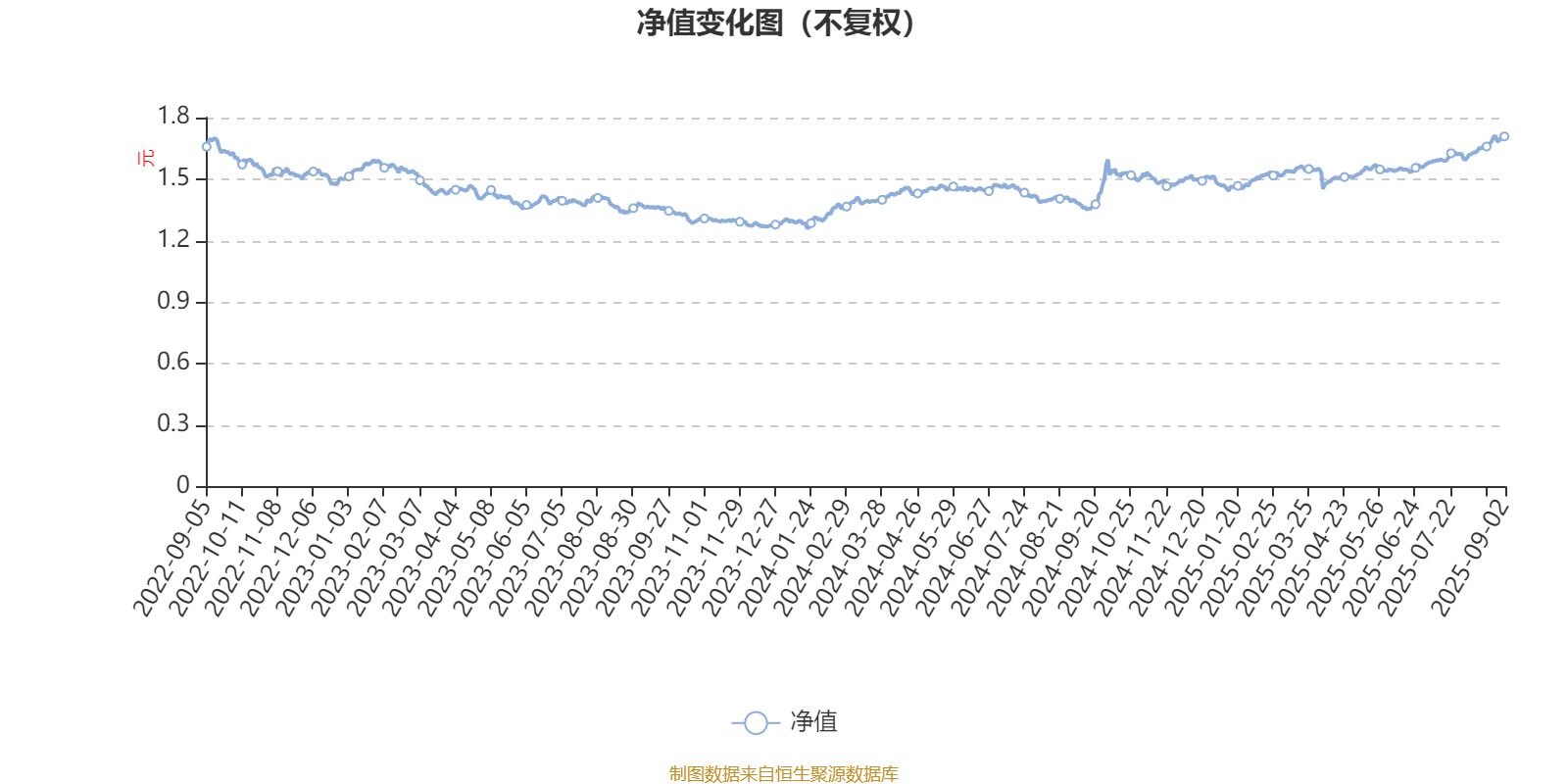
Core Viewpoint - The report of AI Fund Huatai Fuhua Dividend Growth Mixed A (006259) indicates a profit of 26.9963 million yuan for the first half of 2025, with a weighted average profit per fund share of 0.0506 yuan. The fund's net value growth rate is 3.2%, and the fund size is 735 million yuan as of the end of the first half of the year [3]. Fund Performance - As of September 2, the fund's unit net value is 1.708 yuan. The fund manager, Lao Jienan and Huang Yaofeng, manage two funds with positive returns over the past year. The highest net value growth rate among comparable funds is 22.64%, while the lowest for this fund is 22.19% [3][6]. - The fund's recent performance includes a net value growth rate of 10.99% over the past three months, 12.74% over the past six months, and 22.19% over the past year, ranking 216/256, 198/256, and 229/256 respectively among comparable funds [6]. Valuation Metrics - As of June 30, 2025, the fund's weighted price-to-earnings ratio (TTM) is approximately 4.94 times, significantly lower than the industry average of 26.16 times. The weighted price-to-book ratio (LF) is about 0.51 times, compared to the average of 2.38 times, and the weighted price-to-sales ratio (TTM) is around 0.62 times, against an average of 2.05 times [11]. Growth Indicators - For the first half of 2025, the fund's weighted revenue growth rate (TTM) is 0.04%, and the weighted net profit growth rate (TTM) is 0.14%. The weighted annualized return on equity is 0.1% [18]. Risk and Return Metrics - The fund's three-year Sharpe ratio is -0.1277, ranking 160/240 among comparable funds. The maximum drawdown over the past three years is 25.85%, with the largest single-quarter drawdown occurring in Q1 2021 at 20.81% [26][28]. Fund Composition - As of June 30, 2025, the fund's total assets amount to 735 million yuan, with 36,700 holders collectively owning 472 million shares. Institutional investors hold 14.53% of the shares, while individual investors account for 85.47% [32][36]. - The fund's top ten holdings include Zijin Mining, China Shenhua, Agricultural Bank of China, Tencent Holdings, Shanghai Pudong Development Bank, Shanghai Bank, Beijing Bank, Yangtze Power, Bank of China, and China Pacific Insurance [42].
煤炭中报“寒意浓”!25家上市煤企利润集体滑坡,中国神华等头部四企同比少赚100多亿
Hua Xia Shi Bao· 2025-09-03 14:08
Core Viewpoint - The coal industry is experiencing significant profit declines, with 23 out of 25 listed coal companies reporting revenue drops and all 25 showing negative net profit growth in the first half of 2025, indicating a severe contraction in industry profitability [1][2][4]. Group 1: Financial Performance - In the first half of 2025, the total net profit of 25 coal companies was 554.72 billion yuan, a decrease of nearly 250 billion yuan from 808.11 billion yuan in the same period last year, and down nearly 500 billion yuan from 1,057.54 billion yuan two years ago [1][2]. - The top four coal companies, including China Shenhua, China Coal Energy, Shaanxi Coal and Yanzhou Coal, collectively earned over 100 billion yuan less compared to the first half of 2024 [1][2]. - China Shenhua maintained the highest revenue at 1,381.09 billion yuan, down 18.34% year-on-year, with a net profit of 246.41 billion yuan, down 12.03% [2][3]. Group 2: Price and Demand Factors - The decline in coal prices is attributed to a weak supply-demand relationship, with average sales prices for thermal coal dropping by over 20% across major markets [1][4]. - China Shenhua reported a 10.9% decrease in coal sales volume and a 12.9% drop in average sales price, leading to a significant reduction in sales revenue [3][4]. - The average selling price of coal for Shaanxi Coal was 439.67 yuan/ton, down 23.81% year-on-year, while China Coal Energy's price fell by 114 yuan/ton [3][4]. Group 3: Industry Outlook - Despite the current downturn, there are expectations for a potential recovery in coal prices during the second half of 2025, driven by seasonal demand increases and policy support [7][9]. - Analysts suggest that while short-term pressures remain, the coal market may stabilize as supply constraints and seasonal demand factors come into play [8][9]. - The overall sentiment among several coal companies indicates a cautious optimism for the second half of 2025, with expectations of improved demand due to seasonal factors and economic recovery policies [9].
ETF日报:交易层面,我们看到黄金也于近日突破了前期的阻力位置,体现市场对其的信心,可关注黄金基金ETF
Xin Lang Ji Jin· 2025-09-03 14:05
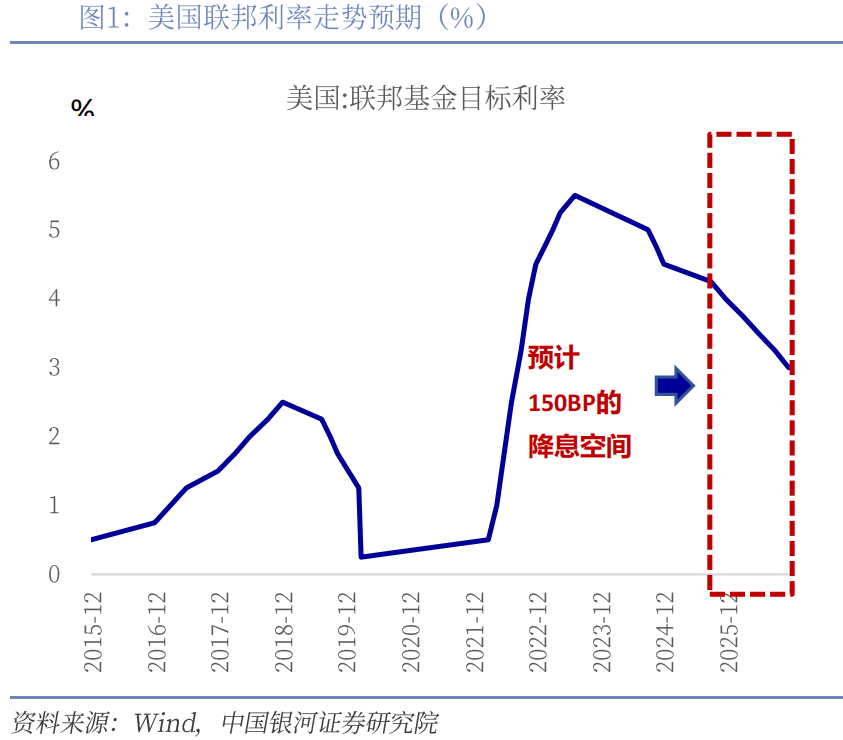
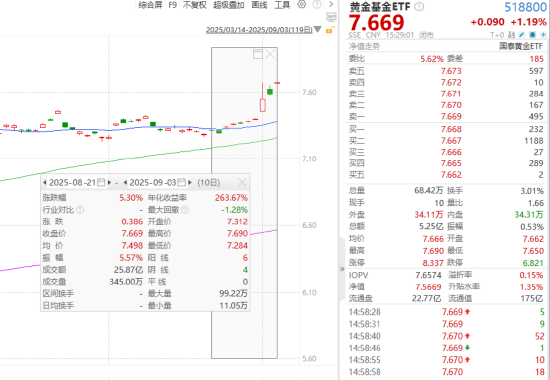
Market Overview - The A-share market experienced an overall decline today, with the Shanghai Composite Index down 1.16% to 3813.56 points, and the Shenzhen Component Index down 0.65%. The ChiNext Index rose by 0.95%, while the Sci-Tech Innovation Index fell by 1.06% [1] - The trading volume in the Shanghai and Shenzhen markets was approximately 23640.86 billion yuan, a decrease of about 5109.05 billion yuan compared to the previous trading day [1] - In terms of sector performance, photovoltaic and communication sectors led the gains, while military, securities, and chip sectors faced significant declines [1] Investment Strategy - The company maintains a bullish outlook on gold, citing strong support for gold prices due to threats to the independence of the Federal Reserve and expectations of a rate cut in the U.S. in September. Investors are encouraged to pay attention to gold ETFs (518800) [1][2] - The A-share market may face short-term adjustments, primarily due to profit-taking pressures in previously high-performing sectors like technology and military. The recommendation is to switch to lower volatility cyclical and dividend stocks [1] - The bond market showed stability today, with the Shanghai 10-year government bond index slightly up by 0.02%. The company holds a view of "top-down, bottom-up" fluctuations in the bond market, suggesting investors look for low-positioning opportunities [1] Gold Market Insights - The long-term value of gold is supported by the ongoing decline of the dollar credit system, reinforced by recent events involving the Federal Reserve [4] - The dismissal of a Federal Reserve governor by Trump without judicial process poses a challenge to the political norms and the independence of the Federal Reserve [4][5] - The potential appointment of like-minded individuals to the Federal Reserve Board could significantly influence future monetary policy, further challenging the Fed's independence [5] Photovoltaic Industry Analysis - The photovoltaic sector is showing signs of recovery, with the Photovoltaic 50 ETF (159864) rising by 2.26%. The industry is benefiting from policies aimed at reducing internal competition and improving price stability [7] - The core companies in the photovoltaic sector reported a year-on-year revenue decline of 9.7% in the first half of 2025, but there was a sequential improvement in operating rates and revenue in the second quarter [9] - The industry is expected to undergo consolidation through mergers and acquisitions to manage excess capacity and debt, with a focus on price recovery [11]
摩根士丹利:中国 “反内卷” 政策的市场影响、行业机遇与未来展望(附22只核心受益个股)
Zhi Tong Cai Jing· 2025-09-03 13:17
Group 1 - The core logic of the "anti-involution" policy is to shift from short-term stimulus to long-term sustainable growth, focusing on reducing excessive competition and restoring industry pricing power [3][33] - The current economic environment is more complex, facing local debt issues, demographic changes, and fragmented export markets, which necessitates a more market-oriented and gradual approach to reforms [6][33] - The "anti-involution" initiative aims to address systemic issues such as local government financing platforms and overcapacity in emerging sectors like solar energy and batteries, where private enterprises dominate [4][6] Group 2 - Morgan Stanley has developed three scenarios for the MSCI China index's return on equity (ROE) based on the effectiveness of the "anti-involution" policy and demand stimulation [7][9] - In the base case scenario, the MSCI China ROE is projected to recover from 11.1% in 2025 to 13.3% by 2030, with a compound annual growth rate (CAGR) of 8.9% from 2025 to 2030 [9][10] - The optimistic scenario anticipates a faster recovery, with the MSCI China ROE reaching 16.3% by 2030, driven by improved pricing power and capacity integration [12][14] Group 3 - High-potential industries identified include electric vehicle (EV) batteries, steel, and cement, which are expected to benefit from clear policy support and effective capacity control [20][22][33] - The aviation industry is also highlighted as having potential for profitability recovery through pricing improvements and capacity optimization, although policy progress is currently slow [23][33] - Medium-potential industries such as coal and float glass are characterized by lower reform urgency but have state-owned enterprises leading the market, making integration easier [24][25] Group 4 - The report identifies 22 key stocks across various sectors, including automobiles, consumer services, energy, and materials, that are expected to benefit from the "anti-involution" theme [29][31] - Representative stocks include Geely Automobile, Li Auto, and Contemporary Amperex Technology, which are positioned to gain from battery integration and improved pricing discipline [31][33] - The energy sector is represented by companies like PetroChina and China Shenhua Energy, which are expected to benefit from the elimination of outdated refining capacity [31][33] Group 5 - The "anti-involution" policy has already initiated several measures, with short-term actions focusing on upstream industries like coal, steel, and cement to implement moderate production cuts [32][33] - Medium-term reforms will target structural changes outlined in the 15th Five-Year Plan, including shifts in fiscal policy and social welfare enhancements [32][33] - Long-term strategies will involve market-oriented mergers and efficiency upgrades to optimize the landscape of overcapacity industries [32][33]
【中国银河宏观】金融和经济继续分化,亮点来自PPI——2025年8月经济数据预测
Sou Hu Cai Jing· 2025-09-03 10:23
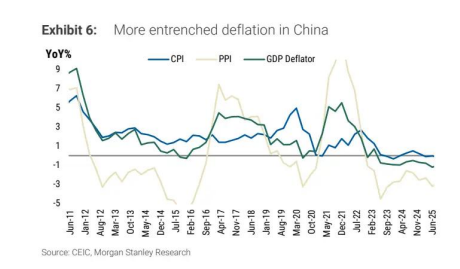
Group 1 - The market is currently influenced by three main lines: overseas monetary easing, domestic financial improvement, and the expectation of PPI recovery [1][3][4] - The RMB is expected to appreciate slowly, potentially reaching 7.05 against the USD by the end of the year, influenced by global monetary conditions and domestic capital market performance [4][5] - M1 and M2 are on the rise, indicating a better financial environment, although new loans remain relatively low [5][19] Group 2 - PPI is anticipated to rise, which would indicate an increase in corporate profits; however, the recovery of PPI may depend on government policies and investment [2][17] - The overall economic performance remains weak, with investment and consumption continuing to decline, while exports show resilience, particularly in the electronic chip sector [3][16] - Industrial production is expected to increase, with an estimated year-on-year growth of 5.8% in August, supported by strong export demand [18] Group 3 - The financial sector continues to show signs of improvement, with social financing and M1 growth expected to persist, driven by government bond financing and corporate direct financing [19][20] - The economic outlook for the second half of the year suggests a nominal growth rate slightly lower than the first half, with real GDP growth projected between 4.5% and 4.8% [17][18] - The consumer price index (CPI) is expected to show slight increases, but overall inflation remains weak, with PPI showing signs of recovery due to policy measures [17][19]