
贸易战

Search documents
欧盟希望与美国达成“原则性协议” ,未来贸易谈判有哪些难点?
第一财经· 2025-07-04 14:40
Core Viewpoint - The European Union (EU) is prepared to reach a principle agreement with the United States regarding tariffs, but will take countermeasures to protect the European economy if negotiations fail [1][11]. Group 1: Negotiation Status - The trade volume between the EU and the US is the largest globally, amounting to €1.5 trillion annually [2]. - A 90-day negotiation period is deemed insufficient for a detailed agreement, with the goal being a principle agreement to avoid escalating into a trade war [2][7]. - EU Trade Commissioner Maroš Šefčovič is in Washington to meet with key US officials to reach an agreement by July 9 [3]. Group 2: Current Tariffs and Potential Outcomes - The US currently imposes a 50% tariff on EU steel and aluminum products, a 25% tariff on automobiles, and a 10% baseline tariff on nearly all other goods [4]. - If negotiations do not yield results by July 9, President Trump has threatened to impose a 50% tariff on EU goods [4]. - The EU estimates that US tariffs cover approximately €380 billion worth of products, accounting for 70% of its total exports to the US [4]. Group 3: Challenges in Reaching an Agreement - Experts suggest that while a principle framework agreement may be achievable, detailed negotiations will take significantly longer due to differing economic structures and interests among EU member states [8][9]. - The EU's internal diversity complicates reaching a unified stance on trade terms with the US, especially given varying levels of dependence on US trade among member countries [9]. Group 4: EU's Countermeasures - The EU has prepared a toolbox of countermeasures, including a decision to impose tariffs on €21 billion worth of US imports, with a potential increase to 50% [12]. - A draft proposal for tariffs on €95 billion worth of US goods, including Boeing aircraft and American automobiles, is also in progress [12]. - The EU may utilize its "Anti-Coercion Instrument" to respond to perceived economic coercion from the US, allowing for measures such as restricting US companies' participation in EU public procurement [13].

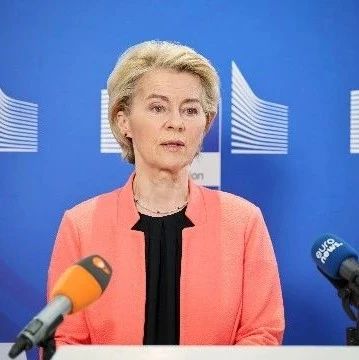
美欧关税谈判进入倒计时:特朗普50%关税威胁之下贸易战风险加剧
智通财经网· 2025-07-04 12:52
Core Points - The global trade focus is on the critical negotiations between the US and EU, with a deadline approaching for potential tariffs on EU goods [1][2] - If no agreement is reached by July 9, EU exports to the US could face tariffs up to 50%, while previously suspended retaliatory measures from the EU may also be activated [1] - The US-EU trade relationship is significant, accounting for 30% of global goods trade, with a projected total trade of €1.68 trillion (approximately $1.98 trillion) in 2024 [1] Trade Balance - The EU maintains a trade surplus of €198 billion in goods but faces a service trade deficit of €148 billion, resulting in an overall net surplus of approximately €50 billion [1] - The Trump administration has criticized the trade relationship as "unfair," claiming that the EU benefits at the expense of the US [1] Negotiation Dynamics - Current negotiations are cautious, with EU Commission President von der Leyen stating that a detailed agreement is unlikely within the 90-day grace period, aiming instead for a "principle agreement" [2] - US Treasury Secretary Mnuchin has a more conservative outlook on reaching an agreement before the deadline, indicating a wait-and-see approach [2] - Experts believe the likelihood of a comprehensive agreement in the short term is low, with potential outcomes resembling the US-UK trade agreement, focusing on basic terms rather than extensive details [2] Future Considerations - The EU's retaliatory measures will closely follow US actions, with analysts suggesting that unless comprehensive tariffs are implemented by Trump, the EU will refrain from countermeasures [2] - Even if a broad framework agreement is reached, there may still be risks of policy reversals from the US, indicating that negotiations will remain contentious [2]
冠通每日交易策略-20250704
Guan Tong Qi Huo· 2025-07-04 12:47
地址:北京市朝阳区朝阳门外大街甲 6 号万通中心 D 座 20 层(100020) 总机:010-8535 6666 冠通每日交易策略 制作日期:2025 年 7 月 04 日 热点品种 热卷: 今日热卷收盘报 3201 元/吨,早盘受螺纹限产传闻带动冲高,午盘因现货疲软回 落,午后窄幅震荡,较前一交易日涨 8 元/吨,涨幅 0.25%,呈现"高开低走后企 稳" 走势。日内成交量 62.37 万手,持仓量 158 万手,资金活跃度弱于螺纹钢。 供应端,钢厂复产提速,供应压力渐显。本周热卷钢厂开工率环比提升 0.3%至 82.5%,鞍钢、本钢检修计划集中在 6 月末收尾,7 月产量预计延续增长。需求 端,制造业淡季深化,终端采购谨慎。7 月进入车企"去库存季",经销商库存 系数升至 1.8,警戒线为 1.5,叠加新能源车补贴退坡传闻,热卷板材采购量环 比降 12%。受房地产新开工低迷拖累,工程机械订单同比降 8.6%,中厚板类热卷 需求持续萎缩,仅空调、冰箱等因"以旧换新"有少量补库,但实际规模有限。 现货方面,全国热卷现货均价 3213 元/吨,多地日内仅有 10-20 元小涨,终端 "买涨不买跌"特征弱化, ...
特朗普加税威胁冲击市场 美股期货应声下挫 全球股市承压
智通财经网· 2025-07-04 12:39
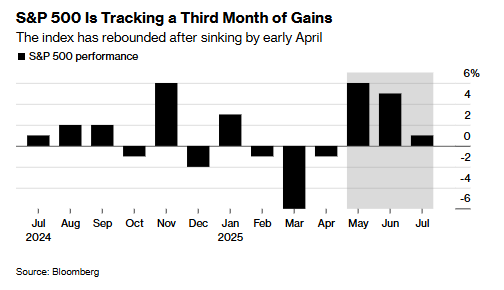
在就业数据印证经济韧性的背景下,美国基准股指本周虽以历史新高收官,但期货合约仍下跌约 0.6%。周四收盘后,特朗普再度升级贸易紧张局势,警告称可能自即日起单方面对贸易伙伴征收最高 70%的关税。 欧洲斯托克600指数下跌0.7%,对贸易敏感的矿业和汽车板块领跌。亚洲股市普遍收低,避险情绪推动 黄金上涨0.3%,美元小幅走软。适逢美国独立日假期,美股及国债市场休市。 智通财经APP获悉,美国股指期货周五全线走低,特朗普政府最新关税威胁给标普500指数创纪录的涨 势蒙上阴影。 自4月关税引发的市场波动以来,全球股市已显著反弹。但鉴于贸易战不确定性及其对美国经济与企业 盈利的潜在影响持续存在,部分投资者仍持谨慎态度。"市场疑虑正在悄然滋生,特别是本周冲高之 后,"盛宝英国首席投资策略师尼尔·威尔逊表示,"当前适合适度降低风险敞口,但市场基调尚未发生 根本性转变。" 策略师Mark Cudmore表示:"除非出现极端贸易冲突,否则近期积极的基本面因素仍将主导市场。值得 注意的是,机构投资者的看涨情绪已因持续威胁而趋于理性,使其在历史高位的市场中仍保持相对谨慎 持仓。" 美国银行的Michael Hartnett此前表 ...
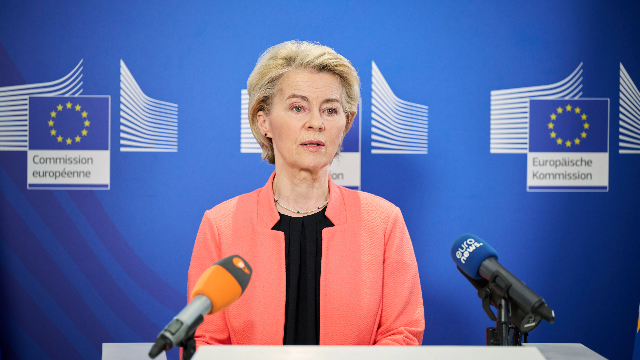
欧盟希望与美国达成“原则性协议” ,未来贸易谈判有哪些难点?
Di Yi Cai Jing· 2025-07-04 12:04
Group 1: Core Views - Experts believe there is a high likelihood of reaching a principle framework agreement between the US and EU in the short term, but detailed negotiations and implementation will take more time [1][5] - EU Commission President Ursula von der Leyen stated that the EU is ready to reach a principle agreement on tariffs with the US, but will take countermeasures to protect the European economy if negotiations fail [1][6] - The trade volume between the US and EU is the largest globally, amounting to €1.5 trillion annually [1] Group 2: Current Negotiation Status - EU Trade Commissioner Maroš Šefčovič is in Washington to meet with US officials, aiming to reach an agreement by July 9 [3] - The US currently imposes a 50% tariff on EU steel and aluminum products, a 25% tariff on automobiles, and a 10% baseline tariff on nearly all other goods [3] - The EU estimates that US tariffs cover approximately €380 billion worth of products, accounting for 70% of its total exports to the US [3] Group 3: Challenges in Reaching an Agreement - Experts indicate that while a principle agreement may be easily reached, detailed negotiations will likely take several months due to deeper underlying conflicts [5] - The economic complementarity between the US and EU is low, making it difficult to find balanced trade solutions [5] - Different EU member states have varying trade structures and interests, complicating the negotiation process [5] Group 4: EU's Contingency Plans - The EU is preparing for the possibility of not reaching a satisfactory agreement and is considering all necessary measures to defend European interests [6][7] - The EU has previously decided to impose tariffs on €21 billion worth of US imports as a response to US tariffs, with a potential plan for an additional €95 billion in tariffs on products like Boeing aircraft and American cars [7] - The EU has tools such as the Anti-Coercion Instrument (ACI) to respond to perceived economic coercion from the US, allowing for measures like restricting US companies' participation in EU public procurement [7]
法国工业部长Ferracci:必须找到缓和贸易战的方法。美国对欧盟征收10%的关税不是一笔好交易。必须在与美贸易谈判中保持强硬立场。
news flash· 2025-07-04 09:18
美国对欧盟征收10%的关税不是一笔好交易。 必须在与美贸易谈判中保持强硬立场。 法国工业部长Ferracci:必须找到缓和贸易战的方法。 ...
五矿期货农产品早报-20250704
Wu Kuang Qi Huo· 2025-07-04 03:02
1. Report Industry Investment Rating No relevant content provided. 2. Core View of the Report - The soybean and protein supply is generally in surplus, and the soybean meal market presents a situation of mixed long and short factors. It is recommended to try long positions at the lower end of the cost range and pay attention to crushing margins and supply pressure at the upper end [2][4]. - The draft of the US biodiesel policy supports the central level of the oil market, but the upward space is restricted by factors such as annual - level production increase expectations, undetermined RVO rules, and weak edible demand in major consuming countries. The oil market is expected to fluctuate [4][10]. - The sugar price may continue to decline due to weak real - world demand, a chaotic monthly spread structure, and high profit margins for out - of - quota imports [13]. - In the short term, the cotton price may continue to fluctuate, and attention should be paid to the outcome of Sino - US negotiations [16]. - For eggs, the mid - term strategy is to wait for a rebound to go short, while in the short term, it is advisable to reduce short positions at low prices or remain on the sidelines [19]. - For pork, it is recommended to go short at high prices for contracts in the second half of the year, and consider short - term long positions at low prices for near - term contracts before delivery [22]. 3. Summary According to Relevant Catalogs 3.1 Soybean/Meal 3.1.1 Market Situation - US soybeans rose first and then fell on Thursday, and the market was closed on Friday. The good weather and global bumper harvest put pressure on US soybeans, but the valuation was slightly low, maintaining a range - bound trend. The domestic soybean meal spot price rose about 10 yuan on Thursday, with the East China price at 2830 yuan/ton. The oil mill's开机率 remained high, and the soybean meal sales were average, with far - month sales increasing. The inventory of domestic port soybeans and oil mill soybean meal continued to accumulate [2]. - The cost range of far - month soybean meal such as 09 is 2850 - 3020 yuan/ton. The current oil mill's crushing volume is at a record high in the same period, the downstream purchasing enthusiasm has declined, the inventory accumulation rhythm has accelerated, and the domestic soybean meal valuation has been suppressed [4]. 3.1.2 Trading Strategy - In the soybean meal market, it is recommended to try long positions at the lower end of the cost range and pay attention to crushing margins and supply pressure at the upper end [4]. 3.2 Oil 3.2.1 Market Situation - On Thursday, the domestic oil market fluctuated. The US Senate's version 45Z bill stipulates that tax credits are only applicable to North American raw materials, which is beneficial to US soybean oil and drives the oil market. The EPA policy is favorable, but the palm oil production in Southeast Asia has recovered significantly year - on - year, and there are still negative factors in the oil market. The domestic spot basis is stable at a low level [9]. 3.2.2 Trading Strategy - The oil market is expected to fluctuate. Although the draft of the US biodiesel policy supports the central level of the oil market, the upward space is restricted [10]. 3.3 Sugar 3.3.1 Market Situation - On Thursday, the Zhengzhou sugar futures price fluctuated strongly. The closing price of the September contract was 5767 yuan/ton, up 1 yuan/ton or 0.02% from the previous trading day. The spot prices of sugar in different regions showed different trends. As of the end of June 2024/25, the cumulative sugar sales in Guangxi increased year - on - year, the sales rate increased, and the industrial inventory decreased year - on - year [12]. 3.3.2 Trading Strategy - The sugar price may continue to decline due to weak real - world demand, a chaotic monthly spread structure, and high profit margins for out - of - quota imports [13]. 3.4 Cotton 3.4.1 Market Situation - On Thursday, the Zhengzhou cotton futures price fluctuated narrowly. The closing price of the September contract was 13785 yuan/ton, down 20 yuan/ton or 0.14% from the previous trading day. The US 2025 cotton planting area is expected to be higher than market expectations, and the cotton good - quality rate has increased [15]. 3.4.2 Trading Strategy - In the short term, the cotton price may continue to fluctuate, and attention should be paid to the outcome of Sino - US negotiations [16]. 3.5 Eggs 3.5.1 Market Situation - The national egg price was generally stable. The supply was relatively sufficient, the downstream demand was diverse, and the egg price in the sales area was generally slow. It is expected that the egg price will be stable in most areas and may fluctuate slightly in some areas [18]. 3.5.2 Trading Strategy - The mid - term strategy is to wait for a rebound to go short, while in the short term, it is advisable to reduce short positions at low prices or remain on the sidelines [19]. 3.6 Pork 3.6.1 Market Situation - The domestic pork price mainly rose on the previous day, with some areas slightly falling. The purchasing enthusiasm of the downstream decreased, and it is expected that the supply from farmers will increase and the downstream will have more room to lower prices. The pork price may fall in the north and remain stable in the south [21]. 3.6.2 Trading Strategy - It is recommended to go short at high prices for contracts in the second half of the year, and consider short - term long positions at low prices for near - term contracts before delivery [22]. 3.7 Important Information - Malaysia's palm oil export volume increased in June, while the production showed a mixed trend, and the full - month production decreased by 0.65% month - on - month. Canada's rapeseed export volume increased week - on - week, and the cumulative export volume from August 1, 2024, to June 29, 2025, increased by 50.91% year - on - year [5]. - It is estimated that Malaysia's palm oil inventory in June 2025 will decrease by 0.24% month - on - month, production will decrease by 4.04% month - on - month, and exports will increase by 4.16% month - on - month [6].
美国宣布与越南达成贸易协议
Huan Qiu Shi Bao· 2025-07-03 23:07
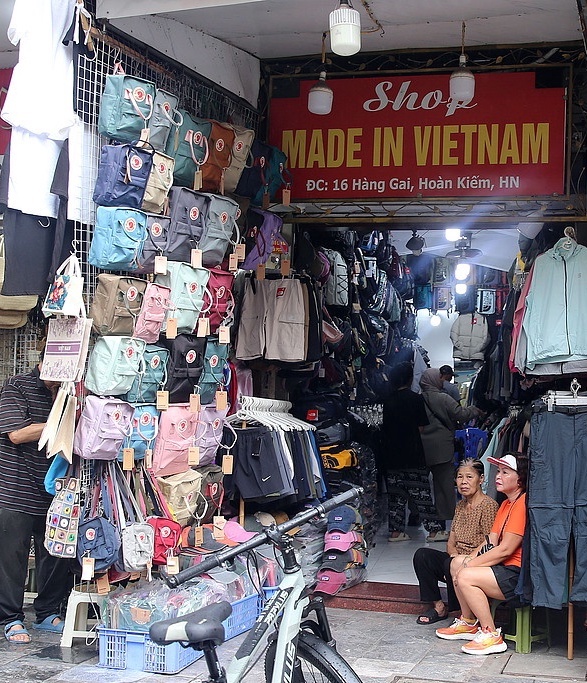
【环球时报驻美国特约记者 冯亚仁 环球时报特约记者 文远】美国总统特朗普2日在社交媒体上表示, 他已与越南方面达成贸易协议,美国将对越南出口到美国的商品征收20%的关税,并对任何被视为经越 南转运到美国的商品征收40%的关税。此外,特朗普还表示,越南已同意取消对美国进口商品的所有关 税。西方媒体称,美越达成的税率低于特朗普4月宣布的计划对越南商品征收的46%关税,有助于缓和 美国与越南的经贸关系紧张,但与5月美国与英国达成的协议一样,美越协议更像是一个框架,而非最 终确定的贸易协议。与此同时,距7月9日"对等关税"90天暂缓期结束越来越近之际,美国与日本、欧盟 等重要贸易伙伴的谈判仍在继续。荷兰国际集团认为,尽管可能会达成一些贸易协议,但贸易战和国际 贸易重新洗牌远未结束。 商家对 20% 关税仍不满 "我刚刚与越南达成一项贸易协议。"特朗普2日在"真实社交"网站上写道,"协议条款是,对运往美国境 内的所有货物,越南将向美国支付20%的关税,并对任何转运货物支付40%的关税。"特朗普还写道, 越南还将"向美国开放市场",允许美国以零关税向越南销售美国商品。他认为,在美国市场表现良好的 SUV,将"很好补充"越 ...
对美强硬是幌子?关键时刻,加拿大一通操作,转头对特朗普服软
Sou Hu Cai Jing· 2025-07-03 08:58
Group 1: Digital Services Tax in Canada - Canada introduced a digital services tax aimed at global companies with annual revenues exceeding €750 million and Canadian digital service revenues over CAD 20 million, imposing a 3% tax on applicable revenues retroactive to 2022, projected to generate CAD 7.2 billion over five years [3] - The tax primarily targets major US tech companies such as Amazon, Google, and Meta, which are expected to be significantly impacted by this legislation [3] - Following pressure from the US, Canada announced the cancellation of the digital services tax just hours before it was set to take effect, indicating a willingness to negotiate with the US [3][4] Group 2: Hikvision's Operations in Canada - The Canadian government ordered Hikvision to cease operations, citing national security concerns based on a review under the Investment Canada Act, claiming that continued operations would harm national security [4] - Hikvision expressed strong opposition to the Canadian government's decision, arguing that the accusations lacked evidence and were influenced by geopolitical tensions rather than genuine security assessments [7] - The Canadian government's contrasting approaches towards the US and China reflect complex motivations, with economic dependence on the US influencing its decisions, while the actions against Hikvision align with US foreign policy towards China [9] Group 3: Economic and Political Implications - Canada’s economy is heavily reliant on the US market, with imports from the US totaling USD 349 billion and exports amounting to USD 413 billion, making it difficult for Canada to maintain a hardline stance against US trade threats [9] - The Canadian government may have initially sought to demonstrate strength through the digital services tax but ultimately chose to compromise to preserve overall relations with the US, which holds significant influence over Canada [9] - The differing responses to the US and China highlight the contradictions and challenges in Canada's foreign policy, raising questions about its ability to balance national interests with international relations [9]

贵金属数据日报-20250703
Guo Mao Qi Huo· 2025-07-03 08:08
Report Summary 1. Report Industry Investment Rating No information provided. 2. Core Viewpoints - Short - term: Gold prices are expected to continue to fluctuate, with the center of gravity gradually rising. Uncertainty about tariff policies boosts safe - haven demand, and the tax and spending bill increases US debt, which is beneficial for gold in the long - term. However, the Fed Chair's stance on July rate cuts and the possible rebound of the US dollar index may suppress precious metals. Silver is expected to follow gold's rise but may face limitations due to the slowdown of related metals and its own demand [4]. - Medium - to - long - term: Against the backdrop of the trade war, the Fed still has a certain probability of cutting rates this year. With global geopolitical uncertainties, intensified great - power competition, and the wave of de - dollarization, central banks' gold purchases continue, strengthening gold's monetary attribute. The long - term upward trend remains unchanged, and the strategy is to buy on dips [4]. 3. Summary by Related Catalogs 3.1 Price Tracking of Precious Metals - **Precious Metal Prices**: On July 2, 2025, London gold spot was $3331.81/ounce, London silver spot was $35.95/ounce. Compared with July 1, gold prices were mostly flat, while silver prices declined, with London silver spot down 0.8% [3]. - **Price Differences and Ratios**: The price difference between gold TD and SHFE active contract decreased by 25.7%, and the price difference between silver TD and SHFE active contract decreased by 50.0%. The ratio of SHFE gold and silver main contracts increased by 0.7%, and the ratio of COMEX gold and silver main contracts increased by 1.0% [3]. 3.2 Position and Inventory Data - **Position Data**: As of July 1, 2025, the gold ETF - SPDR was 948.23 tons, down 0.45% from June 30. COMEX gold non - commercial net long positions decreased by 2.81%, and COMEX silver non - commercial net long positions decreased by 6.29% [3]. - **Inventory Data**: On July 2, 2025, SHFE gold inventory was 18456.00 kg, up 0.02% from July 1, and SHFE silver inventory was 1338659.00 kg, down 0.01%. COMEX gold inventory remained unchanged, and COMEX silver inventory increased by 0.30% [3]. 3.3 Macroeconomic Data - **US Economic Data**: As of July 2, 2025, the US dollar index was 96.65, up 0.02% from July 1. The 2 - year US Treasury yield increased by 1.61%, and the 10 - year US Treasury yield increased by 0.60% [4]. - **Other Market Data**: The S&P 500 index increased by 0.47%, and NYMEX crude oil decreased by 0.11% [4]. 3.4 Market News and Analysis - **Fed's Stance**: Fed Chair Powell said most Fed members expect rate cuts later this year, and it's uncertain whether a July rate cut is too early. He also mentioned that the Trump tariff policy has affected the Fed's decision - making [4]. - **US Economic Indicators**: The US June ISM manufacturing PMI was 49, better than expected. The May JOLTs job openings were 776.9 million, higher than expected [4]. - **Policy News**: On July 1, the US Senate passed a comprehensive tax - cut and spending bill, which was submitted to the House of Representatives for a vote on July 2 [4]. - **Geopolitical News**: Iran's President approved the suspension of cooperation with the IAEA, and Trump said he would not extend the July 9 deadline for trade negotiations [4].