人工智能(AI)

Search documents
本周,这只小盘股将跻身标普500
Guo Ji Jin Rong Bao· 2025-11-25 12:27
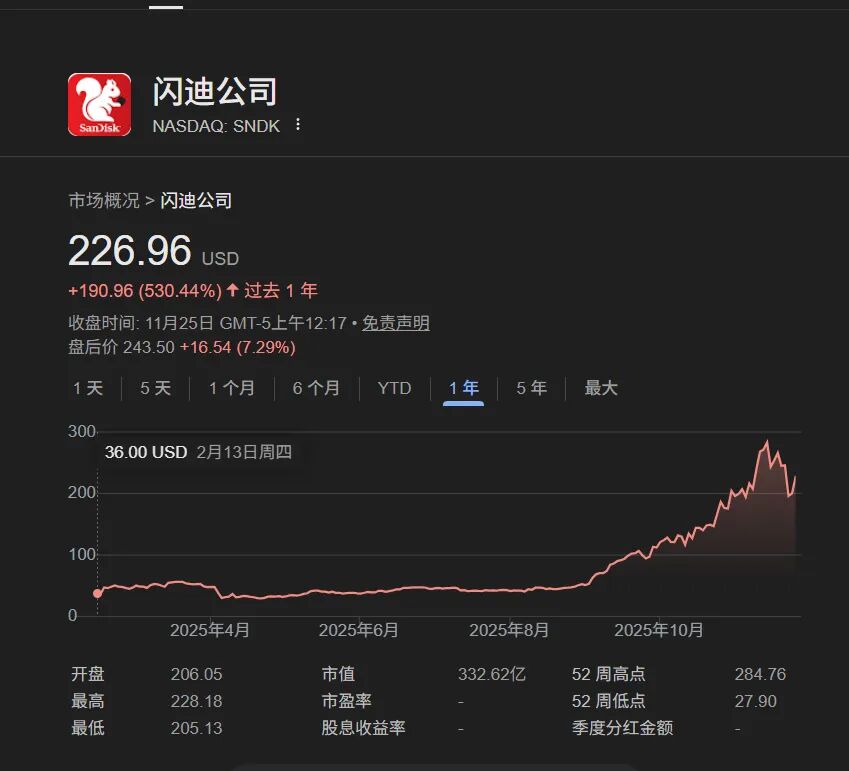
Core Viewpoint - Sandisk will join the S&P 500 index on November 28, 2023, following a significant rise in its stock price and market capitalization, marking a notable transition from the S&P SmallCap 600 index [1][6]. Group 1: Company Performance - Sandisk's stock price surged by 13.3% after the announcement and increased by an additional 9.4% in after-hours trading, reaching $248.39, with a current market capitalization of approximately $33 billion [1]. - The company has seen its stock price increase over four times since the split from Western Digital in February 2023, with a nearly 400% rise in the last three months [1][5]. - In the first quarter of fiscal year 2026, Sandisk reported revenues of $2.308 billion, a 23% increase year-over-year, and expects second-quarter revenues between $2.55 billion and $2.65 billion, with diluted earnings per share projected between $3.00 and $3.40 [5]. Group 2: Market Dynamics - The NAND market outlook has turned highly optimistic, driven by increased investments in AI and data center infrastructure, which has positively impacted Sandisk's high-capacity, energy-efficient SSD business [5][6]. - Analysts have raised Sandisk's target prices due to anticipated benefits from AI-driven storage demand, with Jefferies increasing its target from $60 to $180 and maintaining a "Buy" rating, while Mizuho raised its target from $180 to $215, citing ongoing supply constraints in the NAND market [6]. Group 3: Industry Context - Sandisk will replace Interpublic Group of Companies in the S&P 500 index, highlighting a trend where the index increasingly favors companies from the internet, software, and semiconductor sectors [1][6]. - The NAND flash memory market, which Sandisk operates in, is characterized by non-volatile storage solutions that are essential for SSDs, USB drives, and smartphones, indicating a robust demand environment [5].

第二次青藏科考:青藏高原还能再养活1307万人
Guan Cha Zhe Wang· 2025-11-25 11:40
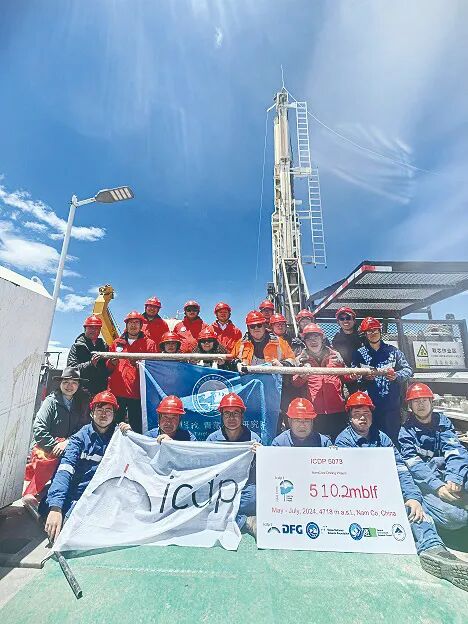
Core Insights - The second comprehensive assessment of the Qinghai-Tibet Plateau indicates a potential carrying capacity of approximately 26.2 million residents, allowing for an increase of about 13.07 million from the current population of 13.13 million, highlighting significant development potential [1] - The research focuses on addressing major national strategic needs and has produced over 140 decision-making reports to support sustainable development in the region [1][2] Group 1: Research Achievements - The second Qinghai-Tibet scientific expedition has established a comprehensive observation network covering 19 key areas, integrating "air-space-ground" monitoring to facilitate a closed-loop transformation from science to policy to practice [2] - The urbanization rate of the Qinghai-Tibet Plateau is approximately 48%, with a potential increase of 9.67%, leading to a proposed urban development model based on "small gathering and large dispersal" [4] - The expedition has identified 10 differentiated green development models to support unique urbanization in the plateau [4] Group 2: Disaster Prevention and Ecological Protection - A multi-dimensional technological support system has been established, successfully issuing six warnings for ice avalanche disasters and optimizing transportation routes to avoid over 97% of mountain hazards [5] - The expedition has assessed the carbon sink capacity of the Qinghai-Tibet Plateau, estimating an annual carbon sink of 120 to 140 million tons, significantly exceeding local carbon emissions of about 55 million tons [5] Group 3: Biodiversity and Resource Exploration - The expedition has published over 3,000 new species, including 388 plants and 205 animals, and has created the largest glacier virus and bacteria gene collection globally [6] - In resource exploration, the expedition has identified 40 solid mineral prospecting areas and 110 brine lithium prospecting areas, alleviating reliance on foreign resources [7][8] Group 4: Environmental Transformation and Future Directions - The Qinghai-Tibet Plateau is undergoing a "third environmental transformation," characterized by global warming and human activities, with an increase in temperature at a rate of 0.37 degrees Celsius every decade, double the global average [9][10] - Future research will focus on green and livable development under the new environmental transformation, addressing water-carbon-health interactions and ensuring the safety of strategic mineral and biological resources [11][13]
11.25犀牛财经晚报:充电宝新规将落地万科2027年到期美元债跌幅势创纪录
Xi Niu Cai Jing· 2025-11-25 10:35
Group 1: Gold Jewelry Price Increase - Multiple domestic gold jewelry brands have raised their gold jewelry prices, with Chow Sang Sang and Lao Feng Xiang both quoting 1315 CNY per gram, while Chow Tai Fook quoted 1312 CNY per gram [1] Group 2: Fund Risk Level Adjustment - China Construction Bank has announced an increase in the risk levels of 87 public fund products, with 32 products moving from "medium-low risk" to "medium risk" and 55 products from "medium risk" to "medium-high risk" [1] Group 3: Charging Battery Regulations - The new national standard for mobile power supplies is expected to increase industry costs by 20%-30%, primarily due to higher quality battery procurement and hardware upgrades [2] - The overall GPU shipments for data centers surged by 145% quarter-on-quarter in Q3, while PC GPU shipments saw a modest increase of 2.5% quarter-on-quarter and 4% year-on-year [2] Group 4: Nvidia Short Selling - Notable short-seller Michael Burry has reiterated his bearish stance on Nvidia, labeling the current AI hype as a "magnificent absurdity" and suggesting that Nvidia is a key indicator of a potential bubble in the AI sector [4] Group 5: Novartis China Team Restructuring - Novartis has announced a change in its operational model for county-level business in China, stating that it will continue to support county-level healthcare despite the restructuring [5] Group 6: Vanke Bond Performance - Vanke's 2027 dollar bond has experienced a record drop, with a decrease of 12 cents to 43.5 cents per dollar, marking the largest single-day decline since its issuance in 2017 [6] Group 7: Regulatory Actions - Hengbang Co. received an administrative regulatory decision from the Shandong Securities Regulatory Bureau due to non-compliance with independent director replacement rules [7] - Coris received a regulatory decision from the Guangdong Securities Regulatory Bureau for violations related to accounts receivable, related party transactions, and insider information management [11] Group 8: Stock Market Performance - The ChiNext Index saw a nearly 2% rebound, with significant trading volume and numerous stocks hitting the daily limit up, particularly in AI application and computing hardware sectors [17]



美光科技:AI 狂潮下的存储巨头,是黄金赛道还是高危赌注?
美股研究社· 2025-11-25 10:22
Core Viewpoint - Micron Technology (MU) is positioned as a key player in the AI and data center infrastructure expansion, with a significant shift in its revenue focus towards data center products, particularly in AI-related storage solutions, which now account for over 50% of its revenue [2][4]. Group 1: Company Overview - Micron is one of the three major memory chip manufacturers globally, alongside Samsung and SK Hynix, with its main products including NAND flash memory, DRAM, and high bandwidth memory (HBM) [1]. - DRAM has historically been Micron's core profit driver, but the company has recently shifted its focus towards data center products, particularly in the context of AI [2]. Group 2: Financial Projections - Micron is expected to see strong growth in FY2026, with projected earnings per share (EPS) of $17.13, representing a 106.61% year-over-year increase, and sales expected to reach $55.11 billion, a 47.43% increase [5]. - The company anticipates a recovery in gross margins, which had previously fallen into negative territory, now expected to stabilize around 30% [4]. Group 3: Growth Drivers - Key growth drivers for Micron include a rebound in DRAM contract prices, a tightening NAND market after a period of oversupply, and a strategic position in the expanding AI industry [7]. - The HBM3E products are sold out, and there is significant demand for the next generation HBM4 products, which could substantially boost profit margins [9]. - The adoption of DDR5 memory and increasing automotive storage demand are also contributing to Micron's growth prospects [12]. Group 4: Bullish Logic - The bullish outlook for Micron is primarily centered around the expansion of AI infrastructure, with expectations of a 50% or higher growth in HBM business revenue by 2026 due to increased AI server deployments by cloud service providers [10]. - Micron's manufacturing presence in the U.S. may provide a competitive advantage as hyperscalers diversify their supply chains [12]. Group 5: Bearish Logic - Bearish concerns include potential supply increases from competitors like Samsung and SK Hynix, which could exert downward pressure on prices if supply growth outpaces demand [14]. - Execution risks related to HBM manufacturing complexities and the need for timely product certifications from major clients like NVIDIA and AMD are also highlighted [14]. - Broader macroeconomic factors, such as potential capital expenditure slowdowns due to economic conditions, could negatively impact HBM sales and DRAM prices [14]. Group 6: Valuation Analysis - Micron's price-to-book (P/B) ratio has decreased from 4.3 to approximately 3.6, although it remains above the five-year average [15]. - The enterprise value to EBITDA ratio is also below typical mid-cycle levels, indicating a recovery in EBITDA following industry downturns [15]. Group 7: Conclusion - Micron is strategically positioned to benefit from ongoing investments in AI and data center infrastructure, with sustainable profit margin recovery expected [17]. - Despite the current high valuation, it remains reasonable given Micron's market position and growth potential, with no immediate signs of a pullback in investment [17].


股市:逻辑变了!
Xin Lang Cai Jing· 2025-11-25 10:21
来源:市场投研资讯 (来源:小白读财经) 这么巨大的需求说明目前的Al热不仅没有泡沫化,而且有进一步升温之势。而相较美股科技股,中国科 技股未来的空间明显更大。 受这个消息影响,美股中以科技股为主的纳指周一大幅上涨。美国政府有关人士说:美国政府与英伟 达、戴尔科技、慧与以及超威半导体(AMD)等私营企业的合作将增强国家实验室的超级计算资源。 这说明这个国家战略主阵地是企业,而企业主要集中在上市公司。这说明股市的逻辑真变了!这个变是 越来越追求科技含量,特别是Al含量。 目前美国科技巨头占标普500指数总市值的比例约为40%。中国证监会主席吴清之前提到:A股科技板 块市值占比超过1/4。 可见,无论是美国还是中国,提高股市的科技含量成为重要一环。接一下两国对科技的投入肯定会越来 越大。 最近,摩根大通策略师团队重要报告提到:未来五年AI数据中心的建设热潮至少需要5万亿美元,甚至 可能高达7万亿美元的资金。 据央视新闻,美国宣布将启动一项旨在利用人工智能(AI)变革科学研究方式、加速科学发现的全新 国家计划"创世纪计划"。 针对这个计划,美国政府相关人士说道:即将到来的人工智能竞赛与"曼哈顿计划"或太空竞赛同等重 ...
A股收评:三大指数齐涨!创业板指劲升1.77%,CPO概念爆发
Ge Long Hui· 2025-11-25 07:38
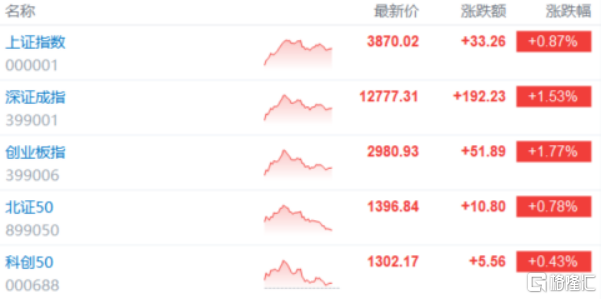
Market Overview - The A-share market saw all three major indices rise, with the Shanghai Composite Index up 0.87% to 3870 points, the Shenzhen Component Index up 1.53%, and the ChiNext Index up 1.77% [1][2] - The total market turnover reached 1.83 trillion yuan, an increase of 85.8 billion yuan compared to the previous trading day, with 4300 stocks rising [1] Sector Performance - The CPO concept and optical communication module sectors experienced significant gains, with stocks like Dekeli and Yongding shares hitting the daily limit [4] - The F5G concept also surged, with stocks like TeFa Information reaching the daily limit [4] - The flu concept stocks were active, with stocks like TeYi Pharmaceutical hitting the daily limit, and others like Kangzhi Pharmaceutical rising over 13% [4][11] - The gaming sector saw a rise, with stocks like Giant Network hitting the daily limit and FuChun shares increasing over 14% [10] - Conversely, the shipbuilding sector declined, with Jianglong Shipbuilding dropping nearly 10%, and the aquaculture sector also fell, with stocks like ZhongShui Fishery hitting the daily limit [4][13] Notable Stocks - Dekeli's stock price rose to 142.56 yuan, up 20.00%, while Guangku Technology also hit the daily limit at 147.00 yuan [5] - The gold sector saw gains, with Western Gold rising over 5% and several other gold-related stocks also increasing [8] - In the gaming sector, Giant Network's stock price reached 40.61 yuan, up 9.99% [10] - Flu-related stocks like TeYi Pharmaceutical and Kangzhi Pharmaceutical saw significant increases, with TeYi hitting the daily limit [12] Economic Indicators - The Federal Reserve officials signaled a dovish stance, supporting a potential rate cut in December, with an 82.9% probability of a 25 basis point cut [7]

四天狂揽12艘!造船巨头集装箱船接单创新高
Sou Hu Cai Jing· 2025-11-25 07:15
Core Insights - HD Hyundai Heavy Industries has secured two batches of new ship orders totaling 12 vessels, with a contract value exceeding 13.8 billion yuan, achieving approximately 90% of its annual order target for the year [2][4] Group 1: Recent Orders - On November 21, HD Hyundai Heavy Industries announced a contract with European shipowners for the construction of 4 Very Large Crude Carriers (VLCCs) valued at 762.7 billion KRW (approximately 5.17 million USD or 36.8 billion RMB), with a per-vessel cost of 129 million USD [2] - On November 24, the company signed a contract with HMM for 8 LNG dual-fuel 13,400 TEU container ships, totaling 21.3 billion KRW (approximately 14.33 million USD or 101.7 billion RMB), with a per-vessel cost of 182 million USD [2][3] Group 2: Market Context - The current price for a new VLCC is approximately 129.5 million USD, showing a slight decrease from 129.5 million USD a year ago [2] - The price for a new LNG dual-fuel container ship is around 173 million USD, down 5% from 182.75 million USD a year ago [2][3] Group 3: Performance Metrics - With the latest orders, HD Hyundai Heavy Industries has achieved a total of 116 vessels and 16.22 billion USD in orders this year, reaching about 89.9% of its annual target of 18.05 billion USD [4] - The company has set a target of 18.05 billion USD for 2025, which is 33.7% higher than the 2024 target of 13.5 billion USD, indicating a strategy to maintain a stable workload through increased order intake [5] Group 4: Technological Advancements - The company is implementing an AI-based autonomous navigation system, "HiNAS Control," which has demonstrated a 15% reduction in carbon emissions and a 15% improvement in fuel efficiency [4] - HD Hyundai Heavy Industries emphasizes its commitment to environmentally friendly and efficient vessels as a competitive advantage in the global market [4]

习近平同美国总统特朗普通电话;美国将所谓委内瑞拉“太阳集团”列为“外国恐怖组织”
Sou Hu Cai Jing· 2025-11-25 04:21
Market Overview - US stock market continued its upward trend, with the Dow Jones rising by 202.86 points (0.44%) to 46,448.27, the Nasdaq increasing by 2.69% to 22,872.01, and the S&P 500 gaining 1.55% to 6,705.12, driven by expectations of a Federal Reserve rate cut in December [2] - The Nasdaq China Golden Dragon Index rose by 2.8%, with Baidu increasing by 7.4% after JPMorgan upgraded its rating from "neutral" to "overweight," citing growth in Baidu's cloud and AI business [3] - Economic data indicated a contraction in manufacturing activity, with the Dallas Fed's manufacturing index dropping from -5.0 in October to -10.4 in November, suggesting a worsening factory activity [4] Company Performance - Tesla shares surged by 6.8%, Amazon by 2.5%, and Alphabet (Google's parent company) by 6.3%, nearing a market capitalization of $4 trillion due to optimism surrounding its AI advancements [2] - Broadcom's stock rose by 11%, becoming the largest gainer among S&P 500 and Nasdaq components, following an upgrade in target price by HSBC from $400 to $535 [2] - Novo Nordisk's shares fell by 5.6% after its Alzheimer's clinical trial using semaglutide failed to show efficacy in slowing disease progression [2] Economic Indicators - The market anticipates a 80.9% probability of a 25 basis point rate cut by the Federal Reserve in December, up from 71% the previous week [4] - The US Commerce Department announced it would not release the delayed preliminary GDP estimate for Q3, shifting to a future update report [5] - The holiday shopping season is set to begin, with the National Retail Federation forecasting holiday sales to exceed $1 trillion for the first time, despite concerns over consumer spending amid rising layoffs [6] Investment Trends - Amazon announced a plan to invest up to $500 billion to expand AI and supercomputing capabilities for its government clients, with construction of new data centers expected to begin in 2026 [18] - Industrial Fulian, a key supplier to Nvidia, saw its stock price drop by 30.77% from October 30 to November 24, raising concerns about its fourth-quarter performance amid rumors of lowered shipment expectations [17]




银河期货每日早盘观察-20251125
Yin He Qi Huo· 2025-11-25 03:39
1. Report Industry Investment Ratings No industry investment ratings are provided in the given report. 2. Core Views of the Report - The overall market shows a mixed trend, with different sectors having their own characteristics and influencing factors. Some sectors are affected by supply - demand relationships, while others are influenced by macro - economic policies, geopolitical factors, and cost - related elements [5][9][11]. - In the financial derivatives market, the stock index futures market is expected to rebound, but the performance is differentiated. The bond market lacks driving forces and is expected to be volatile in the short term [18][21][22]. - In the agricultural products market, most varieties are in a state of supply - demand balance or slight imbalance, with prices showing different trends such as oscillation, strength, or weakness [24][27][31]. - In the black metal market, steel prices are oscillating within a range, and the double - coking market is paying attention to the switching of trading logic. Iron ore is considered from a bearish perspective, and ferroalloys are oscillating at the bottom [57][59][62]. - In the non - ferrous metal market, precious metals are oscillating and waiting for data guidance. Copper prices are supported by the expectation of US interest rate cuts. Other non - ferrous metals also have their own price trends based on supply - demand and cost factors [67][71][79]. 3. Summary by Relevant Catalogs Financial Derivatives Stock Index Futures - Market is expected to rebound, with the strength depending on large - scale technology companies. The performance of different contracts is differentiated, and the trading volume and positions of most contracts have decreased [18][19][20]. - Trading strategies include going long on dips, conducting IM/IC long 2512 + short ETF cash - and - carry arbitrage, and using bull spreads [21]. Bond Futures - The bond market lacks driving forces and is expected to be volatile in the short term. The trading volume of treasury bond futures has increased slightly, and the yield of spot bonds has fluctuated slightly [22][23]. - Trading strategies include going long on dips with a small position in the T contract and being cautious about chasing up, and paying attention to the potential cash - and - carry arbitrage opportunities of the TF contract [23]. Agricultural Products Protein Meal - Supply still has pressure, and prices are oscillating. The international soybean market has a pattern of abundant production, and the domestic supply pressure is relatively large [24][26]. - Trading strategies include short - selling a small amount of far - month rapeseed meal contracts, waiting and seeing for arbitrage, and using the strategy of selling wide - straddle options [27]. Sugar - International sugar prices have risen slightly, and domestic sugar prices are slightly stronger. The global main producing areas are increasing production, but the production in Brazil and India may be lower than expected. The domestic market is affected by factors such as imports and production costs [27][30]. - Trading strategies include going long on dips in the short term, conducting long January and short May arbitrage, and selling put options at low levels [30][31]. Oilseeds and Oils - The market continues to oscillate. The palm oil market has a high inventory and weak exports, but the production is expected to decrease in the future. The soybean oil market follows the overall trend, and the rapeseed oil market is expected to continue to destock [31][34]. - Trading strategies include short - term long - short operations and waiting and seeing for arbitrage and options [34][35]. Corn/Corn Starch - Spot prices are strong, and the futures market is oscillating at a high level. The US corn market is affected by factors such as supply and demand, and the domestic corn market is affected by factors such as production areas and price differentials [35][37]. - Trading strategies include short - term long - short operations, conducting cash - and - carry arbitrage on the spread between January corn and starch, and waiting and seeing for options [38]. Live Pigs - The pressure of live pig slaughter continues to increase, and prices continue to decline. The overall inventory of live pigs is relatively high, and the supply pressure still exists [38][39]. - Trading strategies include waiting and seeing, and using the strategy of selling wide - straddle options [41]. Peanuts - Peanut spot prices are stable, and the short - term market is oscillating at the bottom. The price of imported peanuts is stable, and the price of peanut meal is stable. The oil mill has adjusted the purchase price [41][43]. - Trading strategies include short - selling January peanuts on rallies, waiting and seeing for May peanuts, conducting reverse arbitrage on January - May peanuts, and selling pk601 - P - 7600 options [43]. Eggs - Demand is average, and egg prices are stable with a slight decline. The inventory of laying hens is relatively high, and the supply pressure is gradually easing. The price is expected to oscillate within a range [45][48]. - Trading strategies include going long on the January contract on dips, waiting and seeing for arbitrage, and waiting and seeing for options [49]. Apples - Demand is average, and apple prices are mainly stable. The cold - storage inventory of apples is increasing, and the sales in the consumer market are in the off - season. The market is affected by factors such as imports and exports [50][53]. - Trading strategies include waiting and seeing for single - side trading, arbitrage, and options [53]. Cotton - Cotton Yarn - The fundamental contradiction is not significant, and cotton prices are mainly oscillating. The supply of new cotton is increasing, and the demand is in the off - season. The price is expected to oscillate in the short term [54][56]. - Trading strategies include waiting and seeing for single - side trading, arbitrage, and options [56]. Black Metals Steel - Steel prices are oscillating within a range, and there is still room for reducing hot metal. The supply - demand relationship of steel is improving, and the cost is supported. The hot - rolled coil performs better than the rebar [57][58]. - Trading strategies include maintaining an oscillating and slightly strong trend, conducting long - spread trading on the spread between hot - rolled coil and rebar, and waiting and seeing for options [59]. Double - Coking - The risk of price decline has been released, and attention should be paid to the switching of trading logic. The coking coal market is affected by factors such as supply - demand and policy, and the price is expected to oscillate in the short term [59][61]. - Trading strategies include gradually closing short positions, going long on dips after the market stabilizes, conducting reverse arbitrage on January/May coking coal, and waiting and seeing for options [61][62]. Iron Ore - A bearish approach is recommended. The supply of iron ore is relatively loose in the fourth quarter, and the demand for domestic terminal steel is expected to remain low. The price is expected to be weak at a high level [62][63]. - Trading strategies include short - side trading, waiting and seeing for arbitrage, and waiting and seeing for options [64]. Ferroalloys - Ferroalloys are oscillating at the bottom under the trend of production reduction. The supply and demand of silicon - iron and manganese - silicon are both decreasing, and the cost is supported. The price is expected to oscillate at the bottom [64][65]. - Trading strategies include waiting and seeing for single - side trading, arbitrage, and using the strategy of selling out - of - the - money straddle option combinations [66]. Non - Ferrous Metals Precious Metals - Precious metals are oscillating and waiting for data guidance. The expectation of US interest rate cuts has increased, and the prices of gold and silver have risen slightly. The market is waiting for economic data to provide more clear directions [67][68][69]. - Trading strategies include holding long positions cautiously based on the 20 - day moving average, waiting and seeing for arbitrage, and waiting and seeing for options [70]. Copper - Copper prices are supported by the expectation of US interest rate cuts. The supply of copper is expected to decrease, and the demand is improving. The price is expected to oscillate at a high level [71][73]. - Trading strategies include holding long positions below 86,000 yuan/ton in the short term, maintaining a long - term bullish trend, and waiting and seeing for arbitrage and options [74]. Alumina - Substantial production reduction has not been realized, and attention should be paid to the transfer of warehouse receipts. The supply of alumina is relatively stable, and the market is affected by factors such as long - term contracts and new production capacity [75][77]. - Trading strategies include waiting and seeing for single - side trading and arbitrage [78]. Electrolytic Aluminum - The expectation of US interest rate cuts is strengthening, and the price of Shanghai aluminum is stabilizing and rebounding. The supply - demand relationship of aluminum is relatively balanced, and the cost is supported. The price is expected to be strong in the medium term [79][80]. - Trading strategies include going long on dips in the short term, paying attention to the narrowing of the price difference between East China and Central China in the spot market, and waiting and seeing for options [80]. Cast Aluminum Alloy - The macro - expectation has improved, and the price of aluminum alloy has rebounded with the price of aluminum. The cost of raw materials has decreased, and the supply is tight. The price has certain support [81][84]. - Trading strategies include waiting and seeing for single - side trading, arbitrage, and options [84]. Zinc - Zinc prices are oscillating widely. The processing fee of zinc concentrate is decreasing, and the supply of refined zinc is expected to be lower than expected. The demand is in the off - season. The price is expected to be supported in the short term [84][86]. - Trading strategies include going long on dips with a small position, waiting and seeing for arbitrage, and waiting and seeing for options [87]. Lead - Lead prices are oscillating weakly within a range. The supply of lead ingots is increasing, and the demand for lead - acid batteries is decreasing. The price is expected to be weak [90][91]. - Trading strategies include waiting and seeing for single - side trading, arbitrage, and options [91]. Nickel - Production reduction stimulates the rebound of nickel prices, but inventory suppresses the upward space. The supply of nickel is affected by factors such as production reduction in Indonesia, and the demand is in the off - season. The price is expected to be volatile [91][94]. - Trading strategies include waiting and seeing for single - side trading, arbitrage, and options [94]. Stainless Steel - The supply and demand are both weak, and the price rebounds following the raw materials. The terminal demand is in the off - season, and the cost is decreasing. The price is expected to be weak [95][99]. - Trading strategies include short - term rebound trading, waiting and seeing for arbitrage, and selling out - of - the - money call options [98]. Industrial Silicon - Short - term buying on dips is recommended. The supply of industrial silicon is expected to decrease in the dry season, and the demand is relatively stable. The price is expected to be strong [100][101]. - Trading strategies include holding existing long positions and buying on dips [101]. Polysilicon - Attention should be paid to the establishment of platform companies. The market is affected by factors such as policy and demand. The price is expected to be volatile [100][102]. - Trading strategies include short - side trading and waiting and seeing for arbitrage [103].
中美“稳定”叙事,谷歌链持续走强
傅里叶的猫· 2025-11-25 03:39
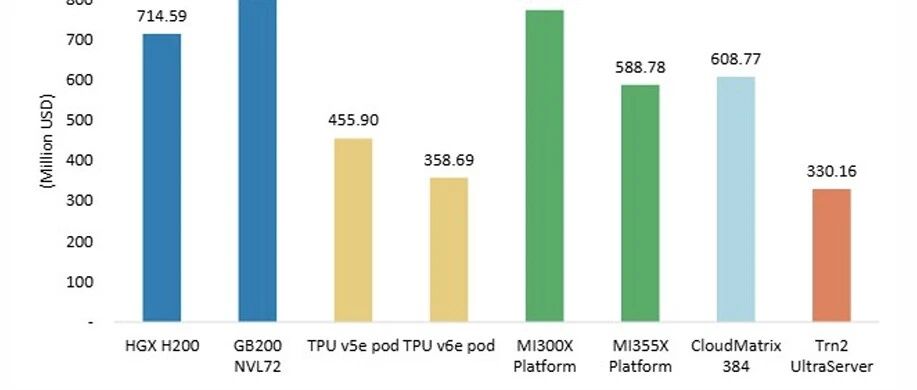
Group 1 - The core message of the article highlights the positive implications of a recent phone call between the leaders of two countries, with Trump agreeing to visit Beijing in April and inviting Chinese leaders for a state visit next year, which is seen as a stabilizing factor for domestic companies looking to expand overseas [1][2] Group 2 - The article discusses the increasing popularity of Google's TPU (Tensor Processing Unit), which was developed to address the growing demand for data center capacity due to the rise of AI applications. The first TPU was launched in 2016, and the latest version, TPU v7, is set to be released in April 2025, featuring significant upgrades in memory, bandwidth, and interconnect systems [3][4] - TPU v7 offers a memory capacity of 192 GB HBM and a bandwidth of 7370 GB/s, which is a substantial improvement over its predecessor, TPU v5p, which had 96 GB memory and 2765 GB/s bandwidth [3] - The TPU architecture utilizes a "Systolic Array" design to minimize memory access and enhance performance in AI inference tasks, making it more efficient compared to traditional CPU and GPU solutions [4] - The cost of training using TPU v7 is reported to be only half that of NVIDIA's B200, indicating a significant cost advantage for users [5][6] Group 3 - The article provides an overview of the domestic Google supply chain, detailing various companies involved, their products, market share, and expected orders for 2026. For instance, 光库科技 has a market share of 27% in OCS manufacturing, while 德科立 and 膀景科技 are also key players in the supply chain [8] - The supply chain analysis includes information on product profitability, with 光库科技 having a gross margin of 200,000 and an optimistic order expectation for 2026 [8]