红利风格

Search documents
可转债周报:转债供给再审视-20250609
SINOLINK SECURITIES· 2025-06-09 15:23
核心观点 转债供给再审视。早在年初市场对浦发、以及高平价杭银/南银转债退出的预期较为充分,然而年内银行板块累计涨 幅接近 10%、更多银行转债的转股预期得以提升,当前齐鲁/常银/重银/上银平价都已达到 115 以上,如果以上银行转 债年内也完成转股,则年内单银行转债的转股&到期、就会导致转债规模减少超 1200 亿,也意味着转债有效供给的等 量减少;除银行转债以外,其余转债年内到期规模 134 亿;年初至今强赎退市转债已经超过 600 亿,预计下半年仍然 有不少强赎退出规模;待发层面当前证监会核准+发审委通过+交易所受理三个环节总共 420 亿元、即使下半年全部发 行规模也有限,且银行标的仅有个别。综合到期&退出以及潜在发行规模,下半年转债规模将持续收缩趋势,预计到 年底转债规模将减少至 6000 亿上下。转债供给(尤其是银行类转债)的减少会对需求造成何种影响?首先是 ETF 类 产品的再平衡需求,会挤出增量资金至其他标的;其次其他公募基金/保险/年金等的溢出配置,这部分虽无法精确测 算、但也有部分转移配置。总体而言,在转债规模持续收缩的背景下、需求还是会有一定溢出效应,尤其是在当前低 利率水平的背景下、资产 ...




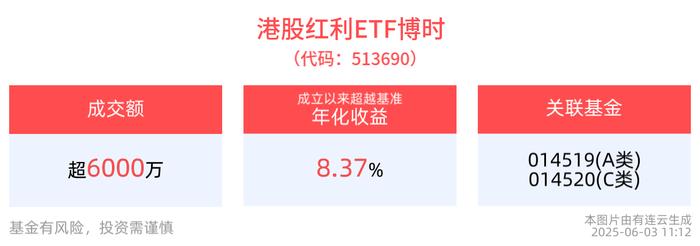
机构:6月份前半段时间红利相对占优,港股红利ETF博时(513690)涨近1%,中信银行涨超4%
Xin Lang Cai Jing· 2025-06-03 03:28
Group 1 - The Hang Seng High Dividend Yield Index (HSSCHKY) has shown a strong increase of 1.54% as of June 3, 2025, with notable gains in stocks such as China CITIC Bank (00998) up 4.88%, Swire Properties (01972) up 3.94%, and Agricultural Bank of China (01288) up 3.41% [2] - The Bosera Hang Seng High Dividend ETF (513690) has risen by 0.72%, with a latest price of 0.99 yuan and a trading volume of 61.74 million yuan [2] - The Bosera Hang Seng High Dividend ETF has a recent scale of 4.005 billion yuan and has seen a net financing amount of 1.201 million yuan in the previous trading day [3] Group 2 - The Bosera Hang Seng High Dividend ETF has achieved a net value increase of 32.41% over the past two years, ranking 120 out of 2187 in the index stock fund category [4] - The ETF has a maximum monthly return of 24.18% since inception, with an average monthly return of 4.99% [4] - The ETF's management fee is 0.50% and the custody fee is 0.10%, with a tracking error of 0.055% over the past six months [4] Group 3 - As of June 2, 2025, the top ten weighted stocks in the Hang Seng High Dividend Yield Index account for 28.55% of the index, including Yanzhou Coal Mining Company (01171) and Cheung Kong Infrastructure Holdings (00008) [5][7] - The weight of the top stock, Yanzhou Coal Mining Company, is 4.39%, while the second, Cheung Kong Infrastructure Holdings, has a weight of 2.66% [7]




权益ETF系列:持续震荡,关注红利和成长风格的转折点
Soochow Securities· 2025-05-31 15:22
Investment Rating - The report maintains an "Overweight" rating for the industry [1] Core Insights - The industry is experiencing continuous fluctuations, with a focus on the turning points of dividend and growth styles [19][20] - The macro model indicates that the market may face adjustment pressure in the near term, with a potential for a slight rebound later in June [19][24] - The report highlights the importance of monitoring event-driven impacts, particularly regarding U.S. tariff policies [20] Market Overview (May 26 - May 30, 2025) - Major broad-based indices showed varied performance, with the top three being North Securities 50 (up 2.82%), Wind Micro-Equity Daily Equal Weight Index (up 2.65%), and CSI 2000 (up 1.09%). The bottom three were ChiNext Index (down 1.40%), Shanghai 50 (down 1.22%), and CSI 300 (down 1.08%) [9][10] - Style indices also varied, with small-cap value (up 0.56%) and large-cap growth (down 2.71%) showing significant differences [10][13] - Among the Shenwan first-level industry indices, Environmental Protection (up 3.42%) and Pharmaceutical Biology (up 2.21%) performed well, while Automotive (down 4.11%) and Electric Equipment (down 2.44%) lagged [14][15] Market Outlook (June 3 - June 6, 2025) - The market is expected to remain volatile, with a focus on the transition between dividend and growth styles [19] - The macro model for June indicates a score of 0, suggesting a generally flat performance for the month, with potential for a slight increase after initial adjustments [24] - The report anticipates that the dividend style may face headwinds while the growth style could perform better in the latter half of June [19][20] Fund Allocation Recommendations - The report suggests a balanced allocation strategy for ETFs, anticipating a period of market adjustment [20]
北水动向|北水成交净买入96.47亿 北水抢筹美团(03690)超19亿港元 再度抛售盈富基金(02800)
智通财经网· 2025-05-30 10:17
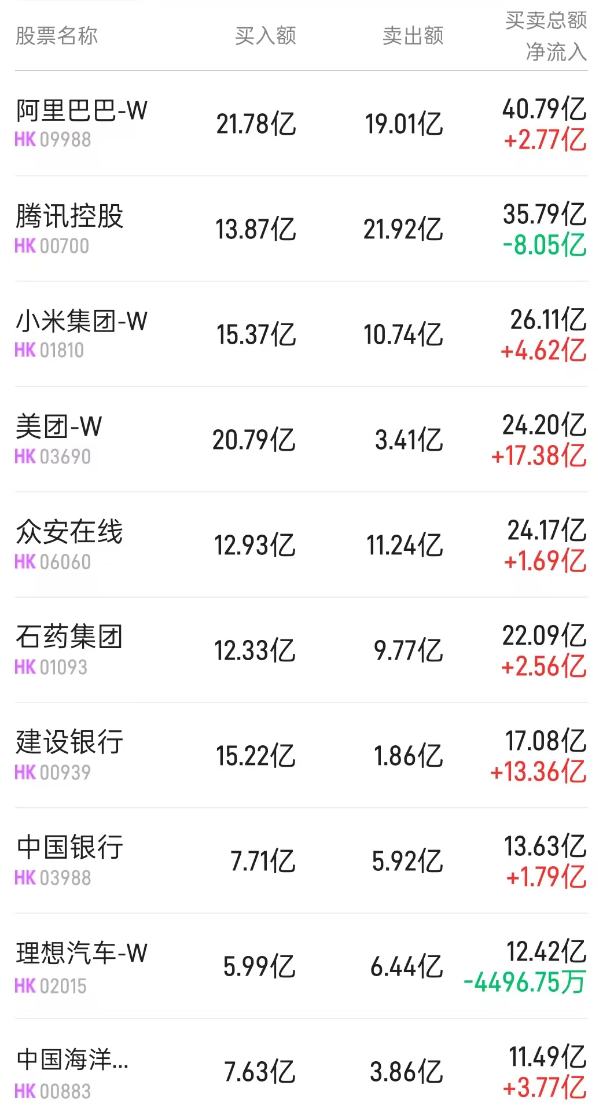
Group 1: Market Overview - Northbound trading recorded a net buy of HKD 96.47 billion, with HK Stock Connect (Shanghai) contributing HKD 81.67 billion and HK Stock Connect (Shenzhen) contributing HKD 14.79 billion [1] - The most bought stocks included Meituan-W (03690), China Construction Bank (00939), and Xiaomi Group-W (01810) [1] - The most sold stocks were the Tracker Fund of Hong Kong (02800), Tencent (00700), and SMIC (00981) [1] Group 2: Stock Performance - Alibaba-W (09988) saw a net inflow of HKD 2.77 billion, with buy and sell amounts of HKD 21.78 billion and HKD 19.01 billion respectively [2] - Meituan-W (03690) received a net buy of HKD 19.21 billion, with significant growth in sales during the "Meituan 618" promotion, achieving a year-on-year increase of twofold [6] - Xiaomi Group-W (01810) had a net buy of HKD 6.35 billion, benefiting from strong growth in major appliances and AIoT revenue, which increased by 59% year-on-year [7] Group 3: Sector Insights - China Construction Bank (00939) and Bank of China (03988) received net buys of HKD 13.36 billion and HKD 1.79 billion respectively, indicating a continued interest in domestic bank stocks [6] - The pharmaceutical sector saw Stone Pharmaceutical Group (01093) with a net buy of HKD 6.25 billion, as it engages in potential transactions that could total around USD 5 billion [7] - Ideal Auto-W (02015) received a net buy of HKD 3.55 billion, with expectations of increased production capacity and upcoming model launches [8] Group 4: Notable Sell-offs - SMIC (00981) faced a net sell of HKD 1.44 billion, with guidance indicating a revenue decline of 4%-6% quarter-on-quarter for Q2 2025 [9] - The Tracker Fund of Hong Kong (02800) experienced a net sell of HKD 8.85 billion, attributed to a lack of catalysts in market sentiment and economic conditions [9] - Tencent (00700) saw a net sell of HKD 8.65 billion, reflecting ongoing market challenges [9]



中金:红利风格怎么配?
中金点睛· 2025-05-11 23:45
中金研究 红利风格作为过去3年A股和港股市场持续性较好的主线之一,从去年"924"之后至今年3月,相对收益一度下降。4月初随着美国关税政策带来外部不确 定性,A股整体企业盈利景气行业预期受到影响,投资者对业绩稳定性和确定性的要求上升,红利风格关注度阶段回升。近期2024年年报披露结束, 2024年A股上市公司提升分红意愿进一步提升,在上市企业盈利增速同比有所下降的情况下,分红总额同比增长5%左右,成为高股息投资的重要支 撑。本报告结合2024年年报,重点梳理当前A股市场分红特征的变化情况,并对相关红利选股模型进行进一步优化与更新。 点击小程序查看报告原文 2024年A股上市公司的分红特征 A股上市公司现金分红总额创历史新高,约九成盈利企业进行现金分红。 2024年4月"新国九条"出台以来,监管层持续强化对现金分红的鼓励和支持力 度,叠加A股上市公司自由现金流改善,A股整体现金分红水平进一步提高。具体来看:1)2024年A股上市公司累计现金分红金额2.3万亿元,同比增速 5%;现金分红公司数量占比69.1%,剔除亏损上市公司后2024年分红公司数量占比89.3%。2)A股整体分红比例(现金分红/净利润)提升2. ...

市场周观察05月第2期:再论红利的必要性和终点
NORTHEAST SECURITIES· 2025-05-11 13:15
Group 1 - The core viewpoint of the report emphasizes the narrowing of dividend opportunities, with the top four sectors being banks, highlighting the importance of stable earnings per share (EPS) and dividend yields above 2% compared to the 10-year government bond yield [2][12] - The report identifies key sectors for dividend investment, including state-owned large banks, rural commercial banks, city commercial banks, and joint-stock banks, as well as consumer staples like kitchen and bathroom appliances, liquor, and white goods [2][12] - The report notes that the previously strong coal sector is no longer included in the dividend focus, indicating a shift in market dynamics [2][12] Group 2 - The report discusses the preference for stable assets in a high real interest rate environment, suggesting that the traditional view of dividend superiority due to declining risk-free rates may no longer apply [3][4] - It introduces the concept of actual interest rates, defined as the risk-free rate minus the Producer Price Index (PPI), which has shown a strong correlation with asset prices since 2016 [3][4][14] - The report indicates that the divergence between dividend stocks and government bonds observed since 2022 suggests a change in the pricing model for dividend stocks [3][15] Group 3 - The report predicts that the end of the dividend trend will occur when real interest rates decline and the gap between dividend yields and GDP growth converges [4][21] - It highlights that the current government bond yield is around 1.65%, limiting the downward potential for risk-free rates, while rising PPI could impact supply-demand dynamics [4][21] - The report emphasizes the need to consider the impact of exports on GDP, particularly in the context of tariff implementations expected in mid-2025 [4][21] Group 4 - The report notes a significant shift in market sentiment, with a clear inverse relationship between dividend and small-cap styles since 2022, indicating a defensive versus offensive market mentality [26] - It suggests that liquidity conditions affect small-cap performance, with trading volumes around 1-1.1 trillion indicating a reversal between dividend and small-cap styles [26][30] - The report identifies that financing amounts reflect leverage willingness and are indicative of small-cap style trends [26][30] Group 5 - The report highlights that historical patterns show banks typically experience adjustments after the annual report season, with the best investment period identified as August [33][40] - It suggests that banks may be positioned for early investment due to the narrowing dividend focus, with a stable inflow of funds into dividend assets [40][41] - The report indicates that Hong Kong stocks offer more attractive dividend yields compared to A-shares, with consistent inflows from southbound capital [40][41]
ETF日报:当前美元资产不确定性上升,亚洲资产吸引力提升,可关注红利国企ETF
Xin Lang Ji Jin· 2025-05-09 10:58
Market Overview - A-shares experienced a correction today, with the Shanghai Composite Index down 0.3% to 3342 points, the Shenzhen Component Index down 0.69%, and the ChiNext Index down 0.87% [1] - The trading volume in A-shares was 1.22 trillion yuan, slightly lower than the previous day [1] Trade Data - In April, China's total goods trade value reached 3.84 trillion yuan, an increase of 5.6%, with exports growing by 9.3% year-on-year (previously 13.5%) and imports increasing by 0.8% (previously down 3.5%), resulting in a trade surplus of 689.9 billion yuan [1] - For the first four months of 2025, China's total goods trade value was 14.14 trillion yuan, a year-on-year increase of 2.4%, with exports at 8.39 trillion yuan (up 7.5%) and imports at 5.75 trillion yuan (down 4.2%) [1] - The growth rate of imports turned positive in April, indicating strong resilience in the economy [1] Trade Partners - ASEAN remains China's largest trading partner, with trade totaling 2.38 trillion yuan (up 9.2%), accounting for 16.8% of total foreign trade [1] - Trade with the EU reached 1.78 trillion yuan (up 1.1%), making up 12.6% of total trade [1] - Trade with the US totaled 1.44 trillion yuan, down 2.1%, accounting for 10.2% [1] Private Enterprises - The share of private enterprises in imports and exports has increased, with their total trade reaching 8.05 trillion yuan (up 6.8%), accounting for 56.9% of total foreign trade, an increase of 2.3 percentage points year-on-year [2] High-Tech Products - High-tech products showed strong performance, with a total trade value of 1.52 trillion yuan (up 7.4%) in the first four months [2] - Mechanical and electrical products accounted for 60.1% of total exports, with significant growth in exports of automatic data processing equipment, integrated circuits, and automobiles [2] Market Sentiment - The recent trade data exceeded market expectations, reflecting a continuous recovery trend in the economy, with previous policy effects becoming evident [2] - If the US-China tariff conflict eases and economic data continues to show resilience, market sentiment may improve [2] Investment Opportunities - In the current market environment, attention can be given to dividend and cash flow products, as certain ETFs showed resilience despite market declines [2] - The dividend yield for the Red Chip ETF (510720) is approximately 6.91%, while the Hong Kong Dividend ETF (159331) has a yield of about 8.96%, providing investment appeal [5] - The focus on "large and medium-sized enterprises + central state-owned enterprises + abundant cash flow" is expected to be a key investment theme for the year [5]
港股收盘(05.09) | 恒指收涨0.4% 加密货币ETF集体走高 中芯华虹绩后下挫
智通财经网· 2025-05-09 08:52
Market Overview - The Hong Kong stock market showed mixed performance with the Hang Seng Index rising by 0.4% to close at 22,867.74 points, while the Hang Seng Tech Index fell by 0.93% to 5,180.25 points. The total trading volume for the day was 161.63 billion HKD [1] - For the week, the Hang Seng Index increased by 1.61%, while the Hang Seng Tech Index decreased by 1.22% [1] Blue Chip Performance - Henderson Land Development (00012) led the blue-chip stocks, rising by 6.18% to 24.05 HKD, contributing 3.38 points to the Hang Seng Index. The stock's dividend yield of 7.9% is attractive compared to the average of 5.4% for Hong Kong developers [2] - Other notable blue-chip performers included Sun Hung Kai Properties (00016) up 5.05%, Geely Automobile (00175) up 4.79%, while Semiconductor Manufacturing International Corporation (00981) fell by 4.76% [2] Sector Highlights - Large tech stocks generally weakened, with Tencent down 0.68% and Alibaba up 1.73%. Cryptocurrency-related stocks surged as Bitcoin surpassed 100,000 USD for the first time in three months [3][4] - Consumer stocks performed well, with Miniso (09896) rising over 7% and Pop Mart (09992) up over 6%. The Chinese government is focusing on boosting domestic consumption, which may benefit these companies [4] Banking Sector - Most banking stocks saw gains, with Chongqing Rural Commercial Bank (03618) up 4% and Agricultural Bank of China (01288) up 2.11%. The People's Bank of China announced a series of financial policy measures aimed at stabilizing the economy [5] - The establishment of financial asset investment companies by major banks is expected to enhance their ability to support technology enterprises [6] Semiconductor Sector - Semiconductor stocks faced significant declines, with Huahong Semiconductor (01347) down 7.94% and SMIC (00981) down 4.76%. SMIC reported a 29.4% year-on-year increase in revenue for Q1, but expects a sequential decline in Q2 [6][7] Real Estate Sector - Real estate stocks generally fell, with major developers like R&F Properties (03301) and Greentown China (03900) experiencing declines. The market showed signs of weakness, with a 4% year-on-year drop in subscription area in 19 key cities during the recent holiday [7] Notable Stock Movements - Andeli Juice (02218) surged by 23.96% to 17.8 HKD, marking a significant increase over the week [8] - Uni-President China (00220) rose by 9.58% after reporting a 31.8% increase in net profit for Q1 [9] - SF Intra-city (09699) saw a notable increase of 7.98%, driven by a significant rise in delivery volumes during the holiday period [10] - Geely Automobile (00175) continued its upward trend, rising 4.79% as it plans to fully acquire Zeekr [11] - Shandong Molong (00568) experienced a sharp decline of 18.53% following a significant share reduction by a major shareholder [12][13]


港股收评:恒指7连涨,科技股表现低迷,半导体、军工下跌
Ge Long Hui· 2025-05-09 08:32
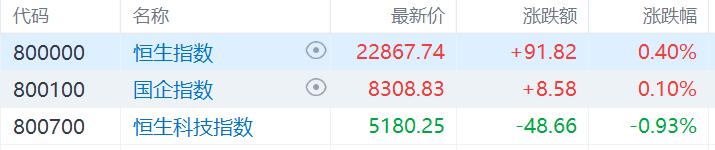
Market Overview - The Hong Kong stock market showed mixed performance with the Hang Seng Index rising by 0.4% to 22,867.74, marking its seventh consecutive gain, while the Hang Seng Tech Index fell by 0.93% to below 5,200 points [1][2]. Major Indices Performance - The Hang Seng Index closed at 22,867.74, up by 91.82 points or 0.40% [2]. - The Hang Seng China Enterprises Index increased slightly by 0.1% to 8,308.83 [2]. - The Hang Seng Tech Index dropped to 5,180.25, down by 48.66 points or 0.93% [2]. Sector Performance - Large tech stocks mostly underperformed, with Kuaishou down 2.35%, NetEase down over 1%, while Alibaba rose approximately 2% and Xiaomi increased by 1% [2]. - Semiconductor stocks experienced significant declines, with SMIC and Hua Hong Semiconductor falling by 4.76% and 7.94% respectively [3][13]. - Defense stocks saw a collective pullback, with AVIC down over 5% and China Shipbuilding down over 4% [4][14]. - Retail stocks led gains, with Prada up nearly 5% and Chow Tai Fook up nearly 4% [5][6]. - Food stocks also performed well, with Uni-President China rising over 9% [7]. - Wind power stocks continued their upward trend, with Goldwind Technology up over 4% [8]. - Port transportation stocks saw increases, with China Merchants Port up over 4% [9]. - Consumer electronics stocks were active, with TCL Electronics rising over 5% [10]. - Oil stocks increased, with China Petroleum and CNOOC both rising over 1% [11]. - Banking stocks also saw gains, with Chongqing Rural Commercial Bank up over 4% [12]. Capital Flows - Southbound funds recorded a net inflow of HKD 4.044 billion, with the Shanghai-Hong Kong Stock Connect contributing HKD 3.246 billion and the Shenzhen-Hong Kong Stock Connect contributing HKD 798 million [16]. Future Outlook - Guotai Junan Hong Kong suggests that after the recent recovery, the Hong Kong stock market may maintain a sideways consolidation in the short term, with international trade negotiations expected to be complex and uncertain [18]. - The investment strategy recommends a focus on dividend styles as a base, with a gradual shift towards sectors supported by domestic policies, including semiconductors, electronics, and innovative pharmaceuticals [18].
煤炭行业七问七答:煤炭红利:不确定性中确定性
Changjiang Securities· 2025-05-08 11:16
Investment Rating - The report maintains a "Positive" investment rating for the coal industry [3]. Core Viewpoints - The coal industry is experiencing a paradigm shift from performance-driven growth to valuation-driven growth, influenced by supply constraints and stable coal prices [10][16]. - The long-term contracts in the coal sector are enhancing the stability of earnings, providing a buffer against market volatility [24][28]. - The report highlights that despite recent price declines, the coal sector's defensive attributes may offer unique advantages in uncertain market conditions [60][66]. Summary by Sections 1. What to Invest in the Coal Industry? - The focus is on long-term contracts and stable coal prices as key investment areas [8]. 2. Why Shift from Performance to Valuation? - Supply elasticity is decreasing, leading to enhanced stability in return on equity (ROE) [18][21]. - The increase in capital expenditures since 2021 has been significant, with new coal mine approvals becoming more complex and costly [19][20]. - The long-term contract mechanism is crucial for stabilizing earnings expectations in the coal sector [24][27]. 3. Why Has the Coal Sector Seen Significant Corrections Since H2 2024? - The fundamental issue stems from strong supply and weak demand, leading to a surplus in coal supply [39][41]. - The decline in electricity prices has pressured profit margins across the coal-electricity supply chain [39][41]. 4. Can the Sector Still Rise Despite Weak Demand? - Concerns about demand are driven by a slowdown in electricity consumption growth and the increasing substitution of coal by renewable energy sources [48][53]. - The report suggests that even with demand concerns, coal's defensive characteristics may still provide stability in performance [60][66]. 5. Long-term Outlook for Thermal Coal - The report anticipates a marginal improvement in coal supply-demand dynamics by late May 2025, with potential support for coal prices [66][67].