
美国经济衰退

Search documents
银河期货棉花、棉纱日报-20250618
Yin He Qi Huo· 2025-06-18 14:10
大宗商品研究所 农产品研发报告 农产品日报 2024 年 06 月 18 日 研究员:刘倩楠 期货从业证号: F3013727 投资咨询证号: Z0014425 联系方式: :liuqiannan_qh@chinas tock.com.cn 棉花、棉纱日报 第一部分 市场信息 | 期货盘面 | 收盘 | 涨跌幅 | 成交量(手) | 增减幅 | 空盘量 | 增减量 | | --- | --- | --- | --- | --- | --- | --- | | CF01合约 | 13545 | 15 | 23,412 | -3475 | 151,537 | 3618 | | CF05合约 | 13540 | 5 | 1,897 | 1318 | 4,409 | 779 | | CF09合约 | 13540 | 15 | 124,617 | -21025 | 533,428 | -118 | | CY01合约 | 19810 | 19810 | 2 | 2 | 37 | -1 | | CY05合约 | 0 | 0 | 0 | 0 | 0 | 0 | | CY09合约 | 19840 | 65 | 7430 | 1 ...
宋雪涛:美国发生衰退的速率和潜在深度正在上升
雪涛宏观笔记· 2025-06-17 05:12
Group 1 - The core viewpoint is that the U.S. economy is likely to experience a systematic and gradual weakening rather than a clear segmentation of inflation followed by stagnation, with increasing risks of non-farm payroll declines [1][8][37] - Recent economic data changes in the U.S. are not keeping pace with asset price fluctuations and macro narratives, indicating a divergence between hard and soft data [3][5] - The negative impacts of various non-tariff policies are becoming increasingly evident, contributing to the suppression of U.S. economic growth [5][8] Group 2 - The rate and potential magnitude of inflation are declining, with the U.S. CPI readings falling short of expectations for four consecutive months [9][11] - There is no significant inflation in tariff-sensitive sectors, and the demand-side weakness is likely to impose stronger price constraints [11][13] - Concerns about stagnation are rising as labor market data shows signs of weakening, despite stable non-farm employment figures [16][21] Group 3 - Service consumption is expected to be the first to reflect the weakening of the U.S. economy, with signs of declining consumer willingness [27][28] - The structure of disposable income growth is unhealthy, with a significant portion coming from government welfare rather than labor income [29][33] - The overall consumption willingness is decreasing, which will further suppress service consumption levels [37]

美国6月纽约联储制造业指数进一步恶化
Sou Hu Cai Jing· 2025-06-16 13:11
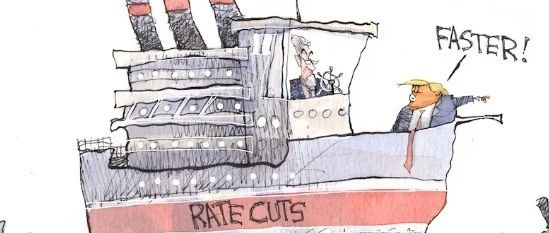
Group 1 - The core viewpoint indicates that the manufacturing sector in the U.S. is showing further signs of deterioration, with the New York Fed manufacturing index dropping from -9.2 to -16 in June, reflecting a lack of recovery [2] - The New York Fed's new orders index also fell significantly from 7 to -14.2, indicating a deepening contraction in the manufacturing sector [2] - The ongoing trade war initiated by President Trump aimed to bring manufacturing back to the U.S., but it has disrupted supply chains, exacerbating the decline in manufacturing [2] Group 2 - The U.S. economy is currently experiencing widespread turmoil, with increased uncertainty overshadowing economic prospects [2] - The upcoming Federal Reserve meeting is anticipated to focus on monetary policy direction, with expectations that the Fed may maintain current interest rates due to Chairman Powell's cautious stance on easing [2] - There is a belief that the Fed should lower interest rates promptly given the economic challenges, but various factors are causing delays in such actions, potentially increasing downward pressure on the economy [2] Group 3 - The potential for "black swan" events could lead to a crisis for the U.S. economy, further undermining the dollar and American hegemony [3]

宏观经济点评报告:美国衰退观察Ⅱ,胀与滞的距离
SINOLINK SECURITIES· 2025-06-16 09:43
Economic Overview - Recent economic data in the U.S. shows marginal changes that do not match the volatility in asset prices and macro narratives, indicating a potential economic slowdown[3] - Tariff inflation has not materialized as expected, and the divergence between hard and soft data is beginning to correct, but this does not imply a weakening economy[3] Inflation and Tariff Impact - The probability of tariff inflation being lower than expected is increasing, with oil prices becoming a highly volatile variable affecting this outlook[3] - The U.S. effective tariff rate has significantly increased, but the transmission mechanism to the real economy remains unclear[12] Employment and Consumption Trends - The baseline scenario suggests a systematic weakening of the U.S. economy rather than a clear fracture in any specific sector, with service consumption and employment showing signs of caution[4] - Non-farm payroll risks are increasing, with potential monthly growth dropping to around 50,000 or even negative levels[4] Risks and Uncertainties - Increased uncertainty in the Middle East could significantly raise oil prices, leading to higher inflation in the U.S.[5] - Trump's domestic policies face greater resistance, which may lead to increased fiscal stimulus and unexpected monetary easing from the Federal Reserve[5] Labor Market Dynamics - The U.S. labor market is showing signs of decoupling, with rising unemployment rates despite stable non-farm payroll data, indicating a potential shift in labor supply dynamics[27] - Permanent unemployment numbers are approaching 2 million, reflecting a concerning upward trend in the labor market[35] Consumer Behavior - Consumer sentiment is declining, as evidenced by a significant drop in auto sales and rising savings rates, indicating a cautious approach to spending[44] - The contribution of government social benefits to disposable income growth is concerning, as it suggests increased reliance on social safety nets rather than labor income[46]
特朗普政策摇摆不定!外媒警告:美国经济夏季或陷入衰退?
Sou Hu Cai Jing· 2025-06-09 05:01
王爷说财经讯:6月9日消息,虽说现在美国劳动市场表面上还算稳定,但特朗普那反复无常的贸易政策,可把商界折腾惨了。 这政策变来变去,企业们根本没法为未来制定投资计划呀! 而且美联储(Fed)也很头疼。因为担心关税措施会让通货膨胀抬头,所以即便经济形势不太妙,也不敢轻易降息。 这下可好,外界都在担心美国经济在今年夏天会变得更加艰难,甚至有可能陷入衰退! 另外,美国民众的消费需求也变得犹豫不决,不敢大手大脚花钱了。 对此,《华尔街日报》分析报道说,美国经济今年夏天不好过,这和安联经济顾问——伊尔艾朗 (Mohamed El-Erian)一周前预测的Fed将进入 「艰难的夏天」不谋而合。 更早之前,阿波罗全球管理公司首席经济师——史洛克(Torsten Slok)就预测经济要陷入衰退了。 实际上,王爷说财经注意到,好多专家和机构都把这经济问题的"锅"甩给特朗普的关税政策。 例如:研究顾问公司Beacon Economics创办合伙人之一桑博格(Christopher Thornberg)就分析评论称,美国经济走向全看特朗普怎么决策,可关 键是特朗普自己都不知道下一步要干啥,外界就更没法预测啦! 现在大部分经济学家都觉 ...

“狼”真的会来?“新美联储通讯社”:美国经济真走向“艰难的夏天”
Hua Er Jie Jian Wen· 2025-06-09 00:35
Core Viewpoint - The article discusses the potential challenges facing the U.S. economy as it navigates through uncertain trade policies and a fragile labor market, which could lead to significant economic disruptions [1][2]. Group 1: Economic Indicators - In May, the U.S. added 139,000 jobs, with the unemployment rate remaining stable between 4% and 4.2% over the past year, indicating a seemingly healthy labor market [1]. - However, there are underlying issues, such as a slowdown in job growth and a cooling real estate market, which raise concerns about future economic stability [1]. Group 2: Risks to the Economy - The article identifies three major risks that could lead to severe economic consequences: a fragile labor market, potential declines in consumer spending, and financial market shocks [3][4][5]. - The labor market is described as being in an unstable equilibrium, where companies are hesitant to lay off employees but are also not hiring, which could lead to a sudden spike in unemployment if demand weakens [4]. - Consumer debt delinquency rates have been rising, raising concerns that low-income borrowers may cut back on spending, which could further slow economic growth [5]. Group 3: Federal Reserve Challenges - The Federal Reserve is facing four significant challenges: unpredictable tariff policies, uncertainty in government fiscal policies, discrepancies in economic data, and the unpredictable impact of innovations like AI [2]. - The Fed has paused interest rate cuts due to concerns over new inflation risks stemming from tariffs, which could lead to increased borrowing costs and affect corporate profitability [6]. Group 4: Corporate Strategies - Companies are adopting various strategies to cope with the current economic challenges, with some choosing to wait and see while others adjust their supply chains [7]. - There is a consensus among economists that the key to avoiding a recession lies in the health of the U.S. consumer, with many believing the likelihood of a recession has increased compared to earlier in the year [7][8].
威尔鑫点金:风险偏好回升贵金属强劲补涨 但金价明显滞涨
Sou Hu Cai Jing· 2025-06-08 15:47
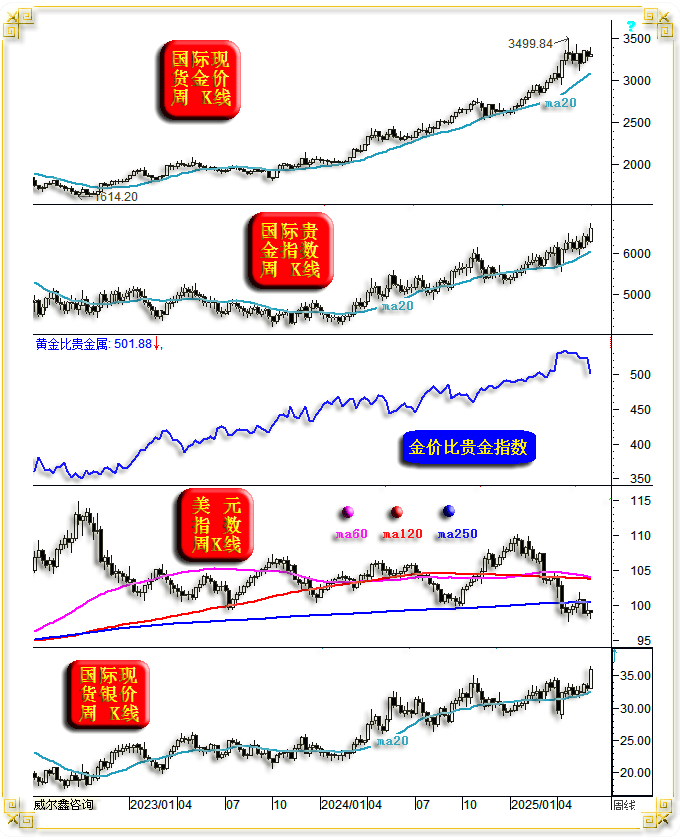
Group 1 - The international spot gold price opened at $3289.05, reached a high of $3403.14, and closed at $3308.83, with an increase of $20.14 or 0.61% [1] - The US dollar index opened at 99.42 points, closed at 99.19 points, and decreased by 0.23% [3] - The Wellxin precious metals index (gold, silver, palladium, platinum) opened at 6281.00 points, closed at 6592.81 points, with an increase of 4.98% [3] Group 2 - Silver price increased by 8.93% and closed at $35.91 [4] - Platinum price rose by 10.68% and closed at $1170.60 [5] - Palladium price increased by 7.64% and closed at $1046.25 [5] Group 3 - NYMEX crude oil price rose by 6.55% and closed at $64.77 [7] - The Dow Jones index increased by 1.17% and closed at 42762.87 points [7] - The S&P 500 index rose by 1.50% and closed at 5802.82 points [7] Group 4 - The US ISM manufacturing index fell to 49.9, indicating a slight recession [12][14] - The US non-farm payroll data showed an increase of 13.9 million, but previous months' data were revised down significantly [16][17] - The US unemployment rate remained at 4.2%, indicating a potential upward trend in unemployment [20] Group 5 - The People's Bank of China increased its gold reserves for the seventh consecutive month, but the monthly net purchase decreased to 1.86621 tons [31][33] - The average hourly wage in the US was $31.16, with a year-on-year increase of 4.01%, indicating persistent inflationary pressures [22][24]
非农数据高于预期,美联储或更偏观望——2025年5月美国非农数据点评兼光大宏观周报
EBSCN· 2025-06-07 13:15
Employment Data - In May 2025, the U.S. added 139,000 non-farm jobs, exceeding the market expectation of 130,000 jobs and slightly down from the revised previous value of 147,000 jobs[1][13][15] - The unemployment rate remained stable at 4.2%, matching both the forecast and the previous month's rate[1][13][15] - Average hourly earnings increased by 3.9% year-on-year, surpassing the expected 3.7% and matching the previous value[1][13][15] Sector Performance - The leisure and hospitality sector saw a significant increase, adding 48,000 jobs, up from 29,000 in the previous month, contributing to the stability of the overall employment data[2][24] - Manufacturing jobs decreased by 5,000, a decline from the previous increase of 14,000, indicating pressure from tariff disruptions[3][23] - Financial activities added 13,000 jobs, up from 3,000 previously, showing a recovery in this sector[3][24] Labor Market Dynamics - The labor force participation rate fell by 0.2 percentage points to 62.4%, with notable declines in youth employment willingness[4][29] - The U3 unemployment rate remained at 4.2%, with a slight increase of 71,000 in the number of unemployed individuals[4][35] - The U6 unemployment rate, which includes those working part-time for economic reasons, held steady at 7.8%[4][35] Federal Reserve Outlook - The robust non-farm data reinforces the Federal Reserve's wait-and-see approach, with a near 100% probability that interest rates will remain unchanged in June 2025[5][19] - Market expectations indicate two rate cuts in 2025, with the first anticipated in September, having a probability of approximately 50%[5][19][22]
美国5月非农就业数据点评:美国就业市场仍有隐忧
KAIYUAN SECURITIES· 2025-06-07 08:31
Employment Data Overview - In May, the U.S. added 139,000 non-farm jobs, exceeding market expectations of 126,000[4] - The unemployment rate remained stable at 4.2%, aligning with market forecasts[3] - Average hourly earnings increased by 3.9% year-on-year, surpassing expectations[3] Employment Trends - The three-month average for new jobs is 135,300, showing a significant decline compared to the end of 2024[4] - The labor force participation rate fell to approximately 62.4%, with a notable decrease in the labor force population by 625,000[20] - The number of unemployed individuals rose by 71,000, indicating a slight upward trend in unemployment[20] Sector Contributions - Private services accounted for all new jobs in May, with significant increases in transportation, warehousing, and leisure and hospitality sectors[4] - Government employment recorded a decrease of 2,000 jobs, highlighting a negative trend in public sector employment[15] Labor Market Dynamics - Job openings rose to 7.391 million in April, with a vacancy rate of 4.4%, indicating a tightening labor market[6] - The ratio of job seekers to job openings is approximately 1.02, suggesting increased competition for available positions[6] Economic Outlook - Despite the positive May employment data, there are concerns about potential downward revisions of previous months' data, indicating underlying weaknesses in the labor market[4] - The ISM manufacturing and services PMI for May fell below the neutral 50% mark, raising concerns about economic recession risks[42] Federal Reserve Implications - The stable employment data may lead the Federal Reserve to maintain its current interest rates during the June FOMC meeting[45] - The Fed is expected to consider potential rate cuts in Q4, with a possibility of 1-2 cuts throughout the year, potentially exceeding 25 basis points[45]