
关税

Search documents
欧洲央行调查:关税在2025年和2026年对通胀将产生0.06%的下行影响,到2027年总体影响大致中性。
news flash· 2025-07-25 08:07
欧洲央行调查:关税在2025年和2026年对通胀将产生0.06%的下行影响,到2027年总体影响大致中性。 ...
大众汽车CEO:如果达成类似日本的协议,征收15%的关税,我们最终将大致处于我们指引的中间水平。
news flash· 2025-07-25 07:41
大众汽车CEO:如果达成类似日本的协议,征收15%的关税,我们最终将大致处于我们指引的中间水 平。 ...
大众汽车CFO:关税很可能会成为持续性负担,须加倍努力以抵消其影响。
news flash· 2025-07-25 07:24
大众汽车CFO:关税很可能会成为持续性负担,须加倍努力以抵消其影响。 ...
全球宏观展望与策略-全球利率、大宗商品、货币及新兴市场-Global Macro Outlook and Strategy presentation
2025-07-25 07:15
Summary of Key Points from the Conference Call Industry Overview - **Global Macro Outlook**: The call discusses the macroeconomic environment, focusing on US rates, international rates, commodities, currencies, and emerging markets. Key Points on US Rates - **Value at Front-End**: There is a continued belief in value at the front-end of the yield curve, with 1Y1Y OIS rates appearing high on a medium-term basis. The expectation is for the Fed to ease later this year [3][11][16]. - **Treasury Issuance**: A projection of $629 billion in net T-bill issuance for the current quarter is made, as the Treasury aims to rebuild the TGA following the passage of the OBBBA [3][29]. International Rates - **Tariff Impact**: The announcement of a 30% tariff on EU goods has had little market reaction, with a focus on potential negotiations. The ECB is expected to keep rates on hold [4][42]. Commodities - **Oil Market Dynamics**: President Trump has issued a 50-day ultimatum to Russia regarding oil exports, threatening 100% secondary tariffs. This could lead to a significant supply shock in oil markets due to the scale of Russian exports and limited OPEC spare capacity [8][95]. - **Copper Tariffs**: The impending 50% US copper tariff could result in a 4% drag on refined copper demand growth in the US next year, although US copper demand only accounts for 6% of global demand [99][101]. Currencies - **USD Outlook**: A bearish outlook on the USD is maintained, with expectations of further weakness due to cyclical and structural factors. Recent data has shown mixed signals, but the overall medium-term view remains bearish [67][63]. - **EUR/USD Forecast**: The EUR/USD is expected to strengthen, with a target of 1.19 for Q3 and 1.22 for the next year, driven by US moderation and currency hedges rebalancing [78][80]. Emerging Markets - **Investment Strategy**: The recommendation is to stay underweight (UW) on EM sovereigns while maintaining a market weight (MW) stance on EM FX, local rates, and corporates. The outlook is cautious due to overvalued EM credit and overbought EM FX markets [8][5]. Additional Insights - **Treasury Funding Needs**: The Treasury is well-funded through FY25, but a significant funding gap is expected to emerge in FY26, necessitating coupon size increases starting in February 2026 [17][19]. - **Market Reactions**: The muted market reaction to tariff news indicates a focus on potential negotiations rather than immediate impacts [39][42]. This summary encapsulates the critical insights and projections discussed during the conference call, providing a comprehensive overview of the current macroeconomic landscape and its implications for various sectors.
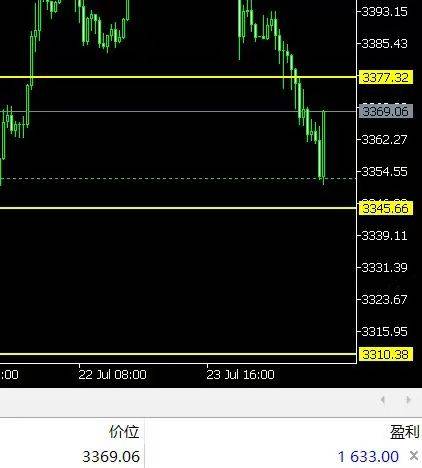
7.25黄金狂泄40美金 深V回望3400
Sou Hu Cai Jing· 2025-07-25 06:56
黄金跳水后,再度续跌,3400下方跌超40美金,吞没本周所有涨幅后。上演快涨逆袭,深V反转,或再 看3400,不过整体看承压调整为主。 昨天3352附近,再次做多收获。 当然了,今天跌穿了3345的位置,延续大空走势,持续看向3310的位置。 黄金连涨4个月,到本月迎来了连续3个月调整,整体围绕3300大范围内多空争夺。整体横盘,到本月再 次上演过山车,强势拉升后跳水,大起大落,整体调整上看3400的位置,下方再次回调,持续看向3300 的关口。 今天的走势 昨天跌一天,跌至3350。 再上演快涨逆袭,大涨近40美金。 强势逆转,有望持续反弹。 上看3377的位置,也是重要的阻力区域。 今天再破,上方持续看向3400的阻力。 不过,处在3377下方,持续调整,下方再新低,看向3345的位置。 有望收回本周所有的涨幅,再探3345的支撑。 操作方面,黄金跳水大跌,昨天延续回调,整体看承压和回调的机会,关注3400和3377做空的机会。此 外,黄金下方面临关键支撑,关注3345和3310做多的机会。 昨天主要因素: 一方面,美日达成协议,对于关税的影响持续,而且美释放15%的基本关税,诱惑力很大,或给到了很 多经 ...

方正中期期货有色金属日度策略-20250725
Fang Zheng Zhong Qi Qi Huo· 2025-07-25 05:32
Group 1: Report Investment Rating - There is no information about the industry investment rating in the provided content. Group 2: Core Viewpoints - The non - ferrous metals sector generally rebounded last weekend and strengthened. The impact of trade negotiations and tariffs has temporarily eased, and the market is now focusing on changes in interest - rate cut expectations. China's anti - involution policies and expected major infrastructure projects are boosting the demand for industrial products, driving the non - ferrous metals sector to follow the upward trend, but the sustainability is average. The current rebound is regarded as a phased one, with short - term cautious bullish operations recommended, while avoiding over - chasing the rise [12][13]. Group 3: Summary by Section Part 1: Non - ferrous Metals Operation Logic and Investment Advice - **Macro Logic**: The non - ferrous metals sector rebounded, influenced by trade negotiations, interest - rate cut expectations, China's anti - involution policies, and large - scale infrastructure projects. The market is cautiously bullish in the short term, and attention should be paid to specific policies, individual supply - demand drivers, and leading varieties [12][13]. - **Weekly Focus**: Powell's speech, ECB interest - rate decision, European and US economic data, and China's LPR are the key points to watch this week [14]. - **Variety Strategies** - **Copper**: Social inventory is decreasing, supply is expected to tighten, and demand is likely to increase. It is expected to rebound, with a recommended strategy of buying on dips [3][15]. - **Zinc**: It is showing a phased upward trend, with increasing supply and moderate demand. Short - term bullish, medium - term bearish on rallies [4][15]. - **Aluminum Industry Chain**: Aluminum is in a volatile consolidation, alumina has a wide - range fluctuation, and cast aluminum alloy is also in consolidation. It is recommended to reduce long positions and wait and see [5][17]. - **Tin**: Fundamentals are weak, but it is rising due to external factors. Short - term bullish thinking, with attention to the mining end and macro factors [6][17]. - **Lead**: Supply is expected to increase, demand is recovering slowly, and it is in a volatile and weak state. A bearish - on - volatility strategy is recommended [7][18]. - **Nickel**: There is a phased rebound, but the long - term supply - demand situation is bearish. Short - term bullish, medium - term bearish on rallies [9][18]. - **Stainless Steel**: It is in a range - bound and relatively strong state, with a recommended high - selling and low - buying strategy [9][18]. Part 2: Non - ferrous Metals Market Review - **Futures Closing Prices**: Copper closed at 79,890 yuan/ton with a 0.38% increase; zinc at 23,015 yuan/ton with a 0.17% increase; aluminum at 20,760 yuan/ton with a 0.14% decrease; alumina at 3,427 yuan/ton with a 2.15% increase; tin at 273,950 yuan/ton with a 2.01% increase; lead at 16,890 yuan/ton with a 0.24% increase; nickel at 124,360 yuan/ton with a 0.80% increase; stainless steel at 12,935 yuan/ton with a 0.27% increase; and cast aluminum alloy at 20,135 yuan/ton with a 0.10% decrease [19]. Part 3: Non - ferrous Metals Position Analysis - Different non - ferrous metal futures contracts show varying net long - short positions and changes, affected by non - main - force funds or main - force position adjustments [21]. Part 4: Non - ferrous Metals Spot Market - **Copper Spot**: Yangtze River spot price is 79,900 yuan/ton with a 0.04% decrease; Wumaomao 1 average price is 79,755 yuan/ton with a 0.15% decrease [22]. - **Zinc Spot**: Yangtze River 0 zinc average price is 22,860 yuan/ton with a 0.13% increase; Yangtze River 1 zinc is 22,760 yuan/ton with a 0.13% increase [22]. - **Aluminum Spot**: Yangtze River average price is 20,720 yuan/ton with a 0.67% decrease; Nanchu Foshan A00 aluminum ingot average price is 20,710 yuan/ton with a 0.53% decrease [22]. - **Alumina Spot**: Antai Ke national average price is 3,255 yuan/ton with a 0.31% increase; hydrated bauxite in Henan is 550 yuan/ton with no change [22]. Part 5: Non - ferrous Metals Industry Chain - The report provides various charts related to the industry chain of copper, zinc, aluminum, alumina, tin, lead, nickel, and stainless steel, including inventory changes, processing fees, and price trends [25][30][32]. Part 6: Non - ferrous Metals Arbitrage - The report presents multiple charts for different non - ferrous metals, such as copper, zinc, aluminum, alumina, tin, lead, nickel, and stainless steel, to analyze their arbitrage opportunities, including ratio changes, basis, and spread trends [56][60][62]. Part 7: Non - ferrous Metals Options - The report includes charts on option historical volatility, weighted implied volatility, trading volume, and position changes for copper, zinc, and aluminum, providing references for option trading [76][78][81].
铜冠金源期货商品日报20250725-20250725
Tong Guan Jin Yuan Qi Huo· 2025-07-25 05:16
Report Industry Investment Rating No relevant content provided. Core Viewpoints of the Report - Overseas, the US economy shows a mixed picture with manufacturing in contraction and inflation pressure rising, while the EU and the US are in trade negotiations and the ECB maintains interest rates. Domestically, the stock and commodity markets are positive, the bond market is under pressure, and various commodities show different trends affected by multiple factors such as trade policies, supply - demand fundamentals, and market sentiment [2][3] - The prices of precious metals are in回调 due to the expected easing of trade tensions; copper prices are expected to remain high - level volatile; aluminum prices are likely to oscillate; alumina prices will stay in a short - term oscillation; zinc prices will adjust at a high level; lead prices will move horizontally; tin prices will oscillate at a high level; industrial silicon prices will be strongly oscillating; lithium carbonate prices will have a wide - range oscillation; nickel prices may oscillate strongly; crude oil prices will have their center of gravity lifted; steel prices will oscillate; iron ore prices will oscillate; and the prices of bean and rapeseed meal will have a wide - range oscillation, while palm oil prices may oscillate strongly [4][6][8][10][11][13][15][16][18][20][22][24][25][26][28] Summaries According to Related Catalogs Macroeconomy - Overseas: The US 7 - month Markit manufacturing PMI is 49.5 (in contraction), the service PMI is 55.2 (a new high for the year), inflation pressure rises, and business confidence drops. The EU and the US are close to a trade deal, but the EU has approved a 930 - billion - euro anti - tariff measure on US products. The ECB maintains interest rates, and the market's expectation of further rate cuts weakens [2] - Domestic: The A - share market breaks through 3600 points, with a trading volume of about 1.9 trillion yuan. The bond market is under pressure, and the 10Y and 30Y treasury bond rates rise to 1.74% and 1.95% respectively [3] Precious Metals - COMEX gold futures fall 0.77% to $3371.3 per ounce, and COMEX silver futures fall 0.55% to $39.285 per ounce. The expected easing of global trade tensions weakens the demand for hedging, putting pressure on precious metals [4] Copper - The main contract of Shanghai copper slightly falls. The US manufacturing contraction and the approaching tariff deadline make the overseas capital market cautious. Freeport's second - quarter copper production is 43.7 million tons, a year - on - year decrease of 7.1%. Copper prices are expected to remain high - level volatile [6][7] Aluminum - The main contract of Shanghai aluminum closes at 20760 yuan/ton, a decrease of 0.41%. The increase in the US dollar index and the weak US manufacturing PMI increase the pressure on aluminum prices. The inventory of aluminum ingots accumulates, while the inventory of aluminum rods decreases. Aluminum prices are expected to oscillate [8][9] Alumina - The main contract of alumina futures closes at 3355 yuan/ton, a decrease of 2.81%. The low - level warehouse receipt inventory provides support for alumina prices, and it is expected to oscillate in the short term [10] Zinc - The main contract of Shanghai zinc has an intraday volatile and strong trend. The decrease in the position of an LME seat, the slight increase in LME inventory, and the slight discount of LME0 - 3 spot ease the squeeze - out concern. Zinc prices are expected to adjust at a high level [11][12] Lead - The main contract of Shanghai lead moves horizontally. The high inventory pressure is not relieved, and the consumption improvement is insufficient. Lead prices are expected to move horizontally in the short term, and attention should be paid to consumption variables [13][14] Tin - The main contract of Shanghai tin oscillates at a high level. The decrease in the position of an LME seat eases the squeeze - out concern, but the rainy season in Southeast Asia may affect the transportation of tin ore in Myanmar. Tin prices are expected to oscillate at a high level [15] Industrial Silicon - The main contract of industrial silicon is strongly oscillating. The supply side is in a passive contraction state, and the demand side shows different trends. Supported by policies, the prices are expected to be strongly oscillating, but the risk of high - level decline should be guarded against [16][17] Lithium Carbonate - The futures price of lithium carbonate runs strongly, and the spot price slightly rises. The market is affected by various news, and the price amplitude increases. The spot market is cold, and lithium prices will have a wide - range oscillation in the short term [18][19] Nickel - Nickel prices oscillate weakly. The supply of nickel ore is becoming more abundant, and the cost pressure of nickel iron still exists. The introduction of the price draft may make nickel prices oscillate strongly [20][21] Crude Oil - Crude oil prices oscillate. The short - term geopolitical risk cools down, the EIA crude oil inventory decreases more than expected, and the macro - sentiment is strengthening, pushing up the center of gravity of crude oil prices [22][23] Steel (Screw and Coil) - Steel futures oscillate. Multiple departments are promoting anti - involution competition rectification. The supply and demand of steel are in a weak balance. Steel prices are expected to oscillate [24] Iron Ore - Iron ore futures oscillate at a high level. The supply of iron ore is sufficient, and the cost increase due to the rise of coke prices suppresses the bargaining space of iron ore. The demand remains resilient. Iron ore prices are expected to oscillate [25] Bean and Rapeseed Meal - The prices of bean and rapeseed meal fall. The water - heat conditions in the US soybean - producing areas are good, and the export sales of new - crop soybeans are slow. Affected by the protein - reduction policy, the long - position funds reduce their positions, and the prices are expected to have a wide - range oscillation [26][27] Palm Oil - Palm oil prices may oscillate strongly. The production of Malaysian palm oil is in an increasing cycle, and the potential demand from countries like India provides support. The market expects future supply to tighten [28][29]
国泰君安期货商品研究晨报:能源化工-20250725
Guo Tai Jun An Qi Huo· 2025-07-25 02:44
Report Industry Investment Ratings No specific industry investment ratings are provided in the report. Core Views - The overall commodity market is affected by various factors, including geopolitical tensions, policy expectations, and supply - demand dynamics. Different commodities show different trends such as being strong, weak, or in a range - bound state [4][14]. - Geopolitical tensions in Russia and Ukraine have increased concerns about energy supply disruptions, which has an impact on the prices of commodities such as PX and crude oil [8]. - The "anti - involution" policy and supply - side optimization expectations drive the overall strength of commodities, but external risks such as the potential intensification of the trade war in August also need attention [38][46]. Summary by Commodity PX, PTA, MEG - **PX**: Supply - demand remains tight, with a recommendation of rolling long on spreads. The start - up rate of domestic plants has decreased, and the upcoming production of new PTA plants will increase demand [14]. - **PTA**: The raw material trend is strong as polyester inventory decreases, and there is a suggestion to focus on the spread of long PTA and short PF [4][14]. - **MEG**: The unilateral trend is strong, driven by the continuous rise in coal prices [4][14]. Rubber - Rubber is expected to oscillate. Although there are some changes in futures prices and trading volume, the overall market lacks a clear trend [15][16]. Synthetic Rubber - The price center of synthetic rubber is moving up. Short - term factors such as policy expectations, the strength of the rubber sector, and improved fundamentals support the price increase, but medium - term supply pressure may limit the upside [20][22]. Asphalt - Asphalt will fluctuate repeatedly. The production and inventory of asphalt have decreased, and the market is affected by oil prices and supply - demand relationships [23][24][36]. LLDPE - LLDPE will move in a range. The supply pressure is increasing, while the demand support is weak, and the market is also affected by macro - factors [37][38]. PP - PP's spot price will oscillate with light trading. The futures market has limited impact on the spot, and downstream demand is insufficient [41][42]. Caustic Soda - The rebound of caustic soda is difficult to sustain. Although there is short - term positive sentiment, the supply pressure will increase, and it is currently in the off - season of demand [44][46]. Pulp - Pulp will oscillate. The supply - demand fundamentals are in a stalemate, with high inventory on the supply side and weak demand on the downstream side [49][51][53]. Glass - The price of glass raw sheets is stable. The futures price has declined, and the spot market is relatively active due to the influence of the futures and price increase notices [55][56]. Methanol - Methanol is expected to run strongly. The spot price is rising, and short - term fundamentals are neutral, with support from rigid demand and supply contraction [58][61]. Urea - Urea will move in a range. The inventory of urea enterprises is decreasing, but the demand is weak, and it is also affected by policy expectations [63][65][66]. Styrene - Styrene is recommended as a short - position allocation. It is in a situation of high production, high profit, and high inventory, and the port inventory is accelerating the accumulation [67][68]. Soda Ash - The spot market of soda ash changes little. The supply is at a high level, and the downstream demand is stable, with the market expected to be stable and oscillating [69][71]. LPG - The external support for LPG is strengthening, and there is still room for the domestic market to recover. The prices of futures contracts are rising, and the operating rates of related industries are increasing [73]. PVC - The rebound of PVC is difficult to sustain. Although there is short - term market strength, the high - production and high - inventory structure is difficult to change, and the fundamentals are weak [83][84]. Fuel Oil and Low - Sulfur Fuel Oil - The decline of fuel oil has slowed down, and it rebounded slightly at night. Low - sulfur fuel oil is weakly oscillating, and the price spread between high - and low - sulfur fuels in the external market is temporarily stable [88]. Container Shipping Index (European Line) - Hold the reverse spreads of 10 - 12 and 10 - 02. The futures prices of relevant contracts are changing, and different shipping price indices show different trends [90].
对二甲苯:供需仍偏紧,滚动正套,PTA:聚酯库存下降,原料趋势偏强,MEG:单边趋势偏强
Guo Tai Jun An Qi Huo· 2025-07-25 02:19
Report Summary 1. Report Industry Investment Rating - No specific industry investment rating is provided in the report. 2. Core Views of the Report - PX: The supply - demand situation remains tight. It is expected to be in a state of unilateral shock and strengthening, and the monthly spread is recommended to be rolled for long positions [8]. - PTA: The raw material trend is strong, with a unilateral upward trend. Attention should be paid to the spread between going long on PTA and shorting PF [8]. - MEG: The unilateral trend turns strong [8]. 3. Summary by Related Catalogs Market Overview - **PX**: The price of naphtha rose at the end of the session. The price of PX increased today, with a September Asian spot deal at 859. Geopolitical tensions drove up crude oil prices, providing additional support for PX. The new PTA factory of Sanfangxiang is expected to start production, boosting the market sentiment in the PX field. However, new tariffs will take effect on August 1st, bringing uncertainty to the PX price [3][5]. - **PTA**: There were no significant changes in PTA devices in the Chinese mainland this week. As of Thursday, the PTA load was 79.7%, and the calculated operating rate was around 85.8%. The PTA production capacity base in the Chinese mainland has been adjusted to 8851.5 million tons since July 1, 2025 [6]. - **MEG**: As of July 24, the overall operating load of ethylene glycol in the Chinese mainland was 68.35% (a 2.14% increase from the previous period). A 300,000 - ton/year syngas - to - ethylene glycol device in Shanxi plans to shut down for maintenance around August 7th. Two MEG devices in Saudi Arabia with capacities of 450,000 and 700,000 tons/year have resumed operation [7]. - **Polyester**: The operating load of large - scale domestic polyester industrial yarn manufacturers remained stable this week. As of Thursday, the overall theoretical operating load of domestic polyester industrial yarn was around 74%. The sales of direct - spun polyester staple fibers improved moderately today, while the sales of polyester yarn in Jiangsu and Zhejiang weakened overall [7][8]. Trend Intensity - The trend intensity of p - xylene, PTA, and MEG is all 1, indicating a moderately strong trend [8]. Views and Suggestions - **PX**: Unilateral shock and strengthening, with a strategy of rolling long on the monthly spread. The supply - demand is tight due to factors such as the maintenance of Tianjin Petrochemical and the planned production of Sanfangxiang's PTA factory [8]. - **PTA**: Unilateral strengthening. Pay attention to the spread strategy of going long on PTA and shorting PF. The inventory pressure of polyester factories has been greatly relieved, and the overall operating rate is expected to continue to rise [8]. - **MEG**: The unilateral trend turns strong, benefiting from the continuous rise in coal prices [8].