
地缘政治

Search documents
陈茂波:地缘政治发展正在提升香港国际金融中心地位
Zhi Tong Cai Jing· 2025-11-18 06:07
Core Insights - The geopolitical developments are enhancing, rather than diminishing, Hong Kong's status as an international financial center, while also positioning it as a leading global innovation technology hub [1] - Recent shifts in U.S. policy have introduced new uncertainties globally, prompting investors to reassess risks and seek jurisdictions with transparent, consistent, and stable policy environments, which Hong Kong provides [1] - The Hong Kong stock market has seen significant growth, with the Hang Seng Index rising approximately 30% this year, driven by increased awareness among global investors regarding underexposure to the Chinese market [1] Financial Market Performance - The valuation of Hong Kong stocks was around 12 times earnings at the beginning of the year, attracting substantial capital inflow as investors recognized the potential in the Chinese market [1] - Daily trading volume has more than doubled compared to last year, with IPO fundraising reaching approximately $28 billion and post-listing financing totaling $61 billion [1] - The asset and wealth management sector has also experienced robust growth, with registered funds in Hong Kong recording a net inflow of $45 billion in the first eight months of the year [1] Banking Sector Developments - Bank deposits in Hong Kong have increased by 10% to over $2.4 trillion, indicating strong liquidity and confidence in the financial system [1] Regional Economic Cooperation - The reshaping of the geopolitical economic landscape is accelerating regional economic cooperation, promoting trade and investment between China, ASEAN, and the Middle East, with Hong Kong playing a crucial role in connecting markets and facilitating capital flows [1]
中国期货每日简报-20251118
Zhong Xin Qi Huo· 2025-11-18 01:47
1. Report Industry Investment Rating No information provided in the report. 2. Core Views - On November 17th, equity index futures declined while CGB futures rose; lithium carbonate hit the daily limit up, with precious metals leading the decline [2][9][12]. - For lithium carbonate, the market remains tight in Nov - Dec; potential easing in Dec if Jianxiawo resumes production soon. Long - term demand is positive, and a bullish bias is recommended with buying on dips after corrections [18][19]. - For gold, short - term price is expected to consolidate within a range due to Fed's uncertainty. Long - term, gold price center is expected to shift upward as it hedges against dollar credit risks [25][26][27]. - For silver, short - term price is projected to consolidate within a range, supported by tight overseas spot supply. Long - term, it benefits from dollar credit contraction and global economic recovery [34][35]. 3. Summary by Relevant Catalogs 3.1 China Futures 3.1.1 Overview - Financial futures: IH and IF fell approximately 1%, while TL gained 0.3% [9][12]. - Commodity futures: Top three gainers were lithium carbonate (9.0% rise, 8.9% position increase m - o - m), SCFIS(Europe) (6.7% rise, 2.2% position increase m - o - m), and iron ore (1.8% rise, 0.2% position increase m - o - m). Top three decliners were silver (4.1% drop, 1.1% position decrease m - o - m), gold (3.1% drop, 10.5% position decrease m - o - m), and polysilicon (2.9% drop, 6.2% position decrease m - o - m) [10][11][12]. 3.1.2 Daily Raise - Lithium Carbonate: Rose 9.0% to 95,200 yuan/ton on Nov 17th. Supply is restricted by ore shortage, demand is currently robust, and social inventories are destocking. A bullish bias is recommended with buying on dips [16][17][19]. 3.1.3 Daily Drop - Gold: Fell 3.1% to 929.46 yuan/gram on Nov 17th. Short - term price may consolidate due to Fed's uncertainty, while long - term price center is expected to rise [24][25][27]. - Silver: Fell 4.1% to 11,933 yuan/kilogram on Nov 17th. Short - term price is expected to consolidate with support from tight overseas supply, and long - term it benefits from economic recovery [33][34][35]. 3.2 China News 3.2.1 Macro News - The 22nd issue of Qiushi Journal on November 16 published an important article by Xi Jinping titled "Develop New Quality Productive Forces According to Local Conditions" [39]. - China's Foreign Ministry stated that Premier Li Qiang has no arrangements to meet with Japanese leaders during the G20 summit [39]. 3.2.2 Industry News - CSRC Chairman Wu Qing emphasized efforts to make the capital market more resilient, with more inclusive systems, higher - quality listed companies, more effective regulation, and deeper opening - up [40].
有色金属日报-20251118
Wu Kuang Qi Huo· 2025-11-18 01:38
有色金属日报 2025-11-18 五矿期货早报 | 有色金属 铜 【行情资讯】 有色金属小组 吴坤金 从业资格号:F3036210 交易咨询号:Z0015924 0755-23375135 wukj1@wkqh.cn 曾宇轲 从业资格号:F03121027 交易咨询号:Z0023147 0755-23375139 zengyuke@wkqh.cn 张世骄 从业资格号:F03120988 交易咨询号:Z0023261 0755-23375122 zhangsj3@wkqh.cn 王梓铧 从业资格号:F03130785 0755-23375132 wangzh7@wkqh.cn 刘显杰 从业资格号:F03130746 0755-23375125 liuxianjie@wkqh.cn 陈逸 从业资格号:F03137504 0755-23375125 cheny40@wkqh.cn 隔夜美股下跌,铜价震荡回调,昨日伦铜 3M 合约收跌 0.73%至 10766 美元/吨,沪铜主力合约收至 86320 元/吨。LME 铜库存增加 325 至 136050 吨,注销仓单比例下滑,Cash/3M 升贴水下调。国内电 解铜 ...
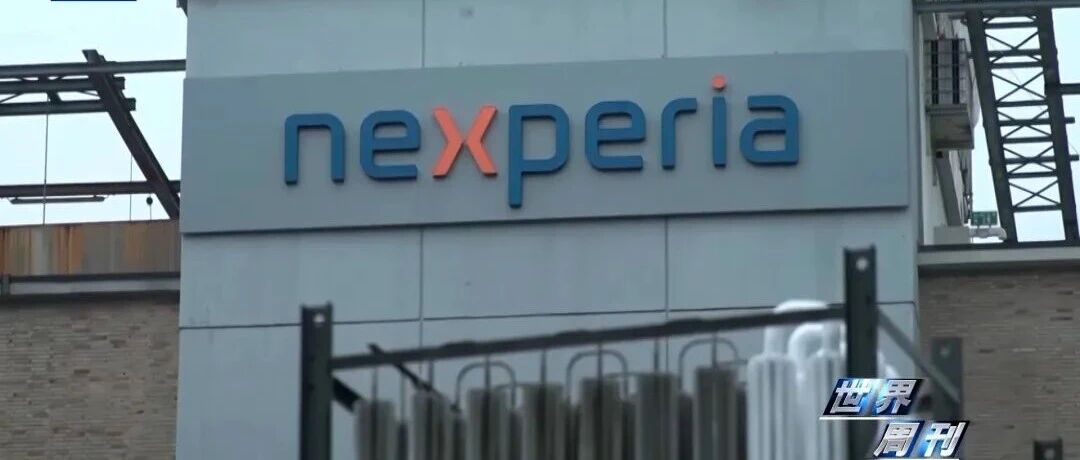
“安世大劫案”的复杂远超你的想象
是说芯语· 2025-11-17 23:03
Core Viewpoint - The article discusses the recent developments surrounding the Dutch government's attempt to seize control of the Chinese-controlled company, Nexperia, highlighting the geopolitical implications and the impact on the global semiconductor supply chain [1][2][4]. Group 1: Background of the Incident - On September 30, the Dutch Ministry of Economic Affairs issued a ministerial order to freeze global operations of Nexperia, citing "national security" concerns [10][16]. - Nexperia, a major semiconductor manufacturer, was acquired by Chinese company Wingtech Technology in 2019 and has since contributed significantly to the Dutch economy [12][31]. - The Dutch government's actions have been characterized as a blatant attempt to seize control, with the legal basis being the "Goods Availability Act," which had never been used in such a context before [18][19]. Group 2: Reactions and Consequences - The Dutch government's decision has led to significant unrest in the European automotive industry, with calls for dialogue with China [7][9]. - Following the initial actions, China responded with export restrictions on Nexperia, which could severely disrupt the global semiconductor supply chain, affecting major automotive manufacturers [49][50]. - The situation escalated to a point where Nexperia's European clients sought alternative methods to procure semiconductors, indicating a growing sense of insecurity among European businesses [56][57]. Group 3: Geopolitical Implications - The incident reflects broader geopolitical tensions, particularly the influence of the U.S. on European policies regarding Chinese investments in technology [39][46]. - Analysts suggest that the Dutch government's actions may be a test case for U.S. strategies to exert control over Chinese technology firms through allied nations [47][48]. - The article emphasizes the need for Europe to achieve "strategic autonomy" in its decision-making processes, rather than being influenced by U.S. pressures [78][79].

香港第一金:美联储“变脸”,黄金牛市还能走多远?
Sou Hu Cai Jing· 2025-11-17 09:10
当前趋势主要以短期震荡偏弱:金价在上周五大跌后,本周一处于调整状态。上方受到美联储鹰派言论导致的降息预期降温压制,下方则受到美元走软以及 地缘政治等因素带来的避险需求支撑。 关键阻力位 4110美元、4140美元 关键支撑位 4060美元、4030美元 震荡思路,高抛低吸为主。 对于短线交易,当前市场更偏向于在区间内进行高抛低吸的震荡操作。 如果金价反弹至4110美元至4140美元的阻力区域并出现上涨乏力迹象(比如出现特定的看跌K线形态),可以考虑轻仓试空。止损设置:参考放在4140美元 上方。目标位:可看向4060-4045-4030美元附近。 回调做多机会 如果金价回调至4030美元至4060美元的支撑区域并出现企稳信号(比如小级别图表的看涨K线组合),可以考虑轻仓试多。止损设置:参考放在4030美元下 方。目标位:可看向4100-4110-4030美元上方 今日黄金市场主要呈现震荡格局,短期走势偏弱但中长期上涨基础依然存在。 未来一周,以下事件和数据可能会引起金价较大波动,请密切关注: 反弹做空机会 关键经济数据发布: 9月非农就业报告:将于本周四(11月20日) 公布。这是本周的重中之重,数据结果将显 ...
韩企豪掷5500亿美元本土投资 地缘政治压力下的战略平衡术
智通财经网· 2025-11-17 07:07
Group 1 - South Korea's largest conglomerates have committed to invest over $550 billion domestically, despite deepening economic ties with the U.S. [1] - Major companies like Samsung and Hyundai announced investment plans focused on artificial intelligence, semiconductors, and clean energy after meeting with President Yoon Suk-yeol [1] - Samsung's subsidiaries plan to invest 450 trillion won (approximately $309.5 billion), while Hyundai has committed to 125.2 trillion won [1] Group 2 - The investment commitments represent nearly 30% of South Korea's GDP of approximately $1.8 trillion, although many of these plans were already in earlier spending schedules [2] - Geopolitical factors are increasingly influencing capital allocation among Asian companies, with pressure from the U.S. for closer alignment in semiconductors and green technology [2] - Unlike previous investment cycles, current commitments are heavily influenced by political factors, limiting corporate flexibility and potentially reducing domestic capacity expansion [2] Group 3 - The investment wave provides immediate political benefits for President Yoon's administration, showcasing unity with the industrial sector amid U.S. trade agreement negotiations [3] - There is skepticism regarding the actual implementation of the $550 billion investment, with concerns about whether South Korea can maintain growth while investing heavily both domestically and abroad [3] - Historically, large investment commitments made at the beginning of a government term often do not fully materialize by the end of the term [3]
金价盘中跳水,黄金相关ETF普跌逾2%
Sou Hu Cai Jing· 2025-11-17 05:57
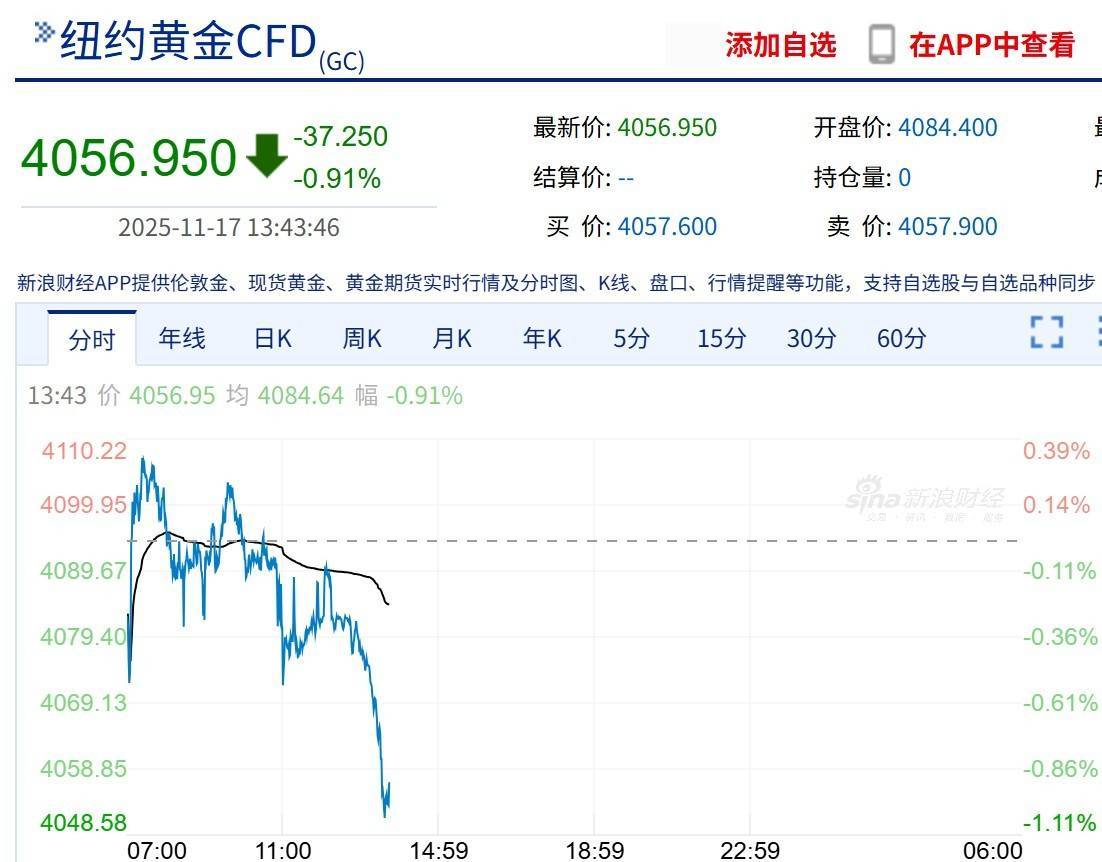
Core Viewpoint - Gold prices experienced a significant drop, with New York gold CFD falling nearly 1%, leading to a decline of over 2% in related gold ETFs. Analysts suggest that increasing internal divisions within the Federal Reserve create substantial uncertainty regarding the interest rate cuts in December and beyond, limiting the sustainable bullish momentum for gold. Coupled with geopolitical considerations, gold prices may struggle to escape high-level fluctuations or even face a weaker trend in the future [1]. Group 1: Market Performance - Gold-related ETFs saw a decline of over 2%, reflecting the negative impact of falling gold prices [1]. - Specific ETFs reported the following price changes: - Gold stock ETF (Code: 159562) decreased by 3.18% to 2.071 - Gold stock ETF (Code: 159321) decreased by 2.87% to 1.456 - Shanghai Gold ETF (Code: 159831) decreased by 2.81% to 8.932 - Shanghai Gold ETF (Code: 518600) decreased by 2.79% to 9.222 - Other ETFs also reported declines ranging from 2.67% to 2.75% [3].
一文读懂荷兰“半导体劫案”
Zhong Guo Jing Ji Wang· 2025-11-17 03:31
Group 1 - The Dutch government attempted to seize control of the Chinese-controlled company Nexperia, causing global supply chain disruptions [1][5][6] - After a series of escalations, the Netherlands announced it would abandon its takeover plans and send a high-level delegation to China for discussions [1][2][24] - The incident reflects a broader geopolitical struggle involving the US and Europe against China, particularly in the semiconductor industry [1][12][46] Group 2 - Nexperia, a major semiconductor manufacturer, was previously part of NXP Semiconductors and was acquired by Chinese company Wingtech Technology in 2019 [5][28] - The company is crucial for the automotive and consumer electronics sectors, supplying over 1 trillion chips annually [28][29] - The Dutch government's actions were justified under the guise of national security, citing the need to prevent sensitive technology from leaking to China [7][10][45] Group 3 - The Dutch Minister of Economic Affairs, Karremans, expressed no regret over the decision, despite international backlash and criticism from the Chinese government [2][12] - The incident has raised concerns within the European automotive industry, with potential production disruptions reported by major manufacturers like BMW and Volkswagen [27][30] - The geopolitical implications of the event highlight the fragility of global supply chains and the risks of politicizing economic relations [20][49][50] Group 4 - China's swift countermeasures included halting exports from Nexperia, which significantly impacted the global semiconductor supply chain [20][21][22] - The situation has led to a reduction in Nexperia's global chip supply by 60%, affecting various industries worldwide [21][31] - The incident underscores the importance of Nexperia in the European automotive supply chain, with potential ramifications for millions of vehicles and electronic devices [29][31] Group 5 - The event has sparked discussions about the need for Europe to achieve "strategic autonomy" in technology and supply chains, moving away from reliance on external powers [46][50] - The Dutch government's actions have been criticized as undermining the principles of commercial credibility and contract enforcement, which have historically been a strength of the Dutch economy [32][40] - The ongoing negotiations and potential resolutions will determine the future of Nexperia and its role in the global semiconductor landscape [51]
大越期货沪铜周报-20251117
Da Yue Qi Huo· 2025-11-17 03:24
Report Summary 1. Report Industry Investment Rating No relevant information provided. 2. Core View of the Report Last week, Shanghai copper fluctuated and adjusted. The main contract of Shanghai copper rose 1.12% to close at 86,900 yuan/ton. Geopolitical factors and US tariffs affected copper prices, while the force majeure incident at an Indonesian copper mine and the sharp rise in precious metals supported copper prices. Domestically, it is the consumption off - season with general downstream consumption willingness. In the industrial sector, domestic spot trading is mainly for rigid demand. The LME copper inventory was 135,725 tons last week with a slight decrease, and the SHFE copper inventory decreased by 5,628 tons to 109,407 tons compared with the previous week. The copper market is expected to be in tight balance in 2024 and in surplus in 2025 [4]. 3. Summary by Relevant Catalogs 3.1 Market Review - Last week, the main contract of Shanghai copper rose 1.12% to close at 86,900 yuan/ton. Geopolitical factors and US tariffs affected copper prices, while the force majeure incident at an Indonesian copper mine and the sharp rise in precious metals supported copper prices. Domestically, it is the consumption off - season with general downstream consumption willingness. In the industrial sector, domestic spot trading is mainly for rigid demand. The LME copper inventory was 135,725 tons last week with a slight decrease, and the SHFE copper inventory decreased by 5,628 tons to 109,407 tons compared with the previous week [4]. 3.2 Fundamentals - **PMI**: No detailed information provided [10]. - **Supply - demand balance**: The copper market is expected to be in tight balance in 2024 and in surplus in 2025. The Chinese annual supply - demand balance table shows different supply - demand situations from 2018 - 2024, with a supply surplus of 110,000 tons in 2024 [12][15]. - **Inventory**: The LME copper inventory was 135,725 tons last week with a slight decrease, and the SHFE copper inventory decreased by 5,628 tons to 109,407 tons compared with the previous week. The bonded - area inventory remained at a low level [4][19]. 3.3 Market Structure - **Processing fees**: Processing fees are at a low level [22]. - **CFTC positions**: Non - commercial net long positions in CFTC flowed out [24]. - **Futures - spot price difference**: No detailed information provided [27]. - **Import profit**: No detailed information provided [30]. - **Warehouse receipts**: No detailed information provided.
中辉能化观点-20251117
Zhong Hui Qi Huo· 2025-11-17 03:03
Report Industry Investment Ratings - Crude Oil: Cautiously bearish [2] - LPG: Cautiously bullish [2] - L: Bearish rebound [2] - PP: Bearish rebound [2] - PVC: Bearish consolidation [2] - PTA: Cautiously bullish [4] - Ethylene Glycol (MEG): Cautiously bearish [4] - Methanol: Cautiously bearish [4] - Urea: Bearish on rallies [4] - Natural Gas (LNG): Cautiously bullish [7] - Asphalt: Cautiously bearish [7] - Glass: Bearish consolidation [7] - Soda Ash: Bearish consolidation [7] Core Views - The oil market is facing supply - demand imbalances with OPEC+ expansion and the approaching consumption off - season, leading to downward pressure on oil prices. Other energy - chemical products are affected by factors such as cost, supply - demand, and inventory, showing different trends [2][11][17] Summary by Variety Crude Oil - **Market Performance**: On November 14, WTI rose 2.15%, Brent rose 2.19%, and SC rose 0.31%. The latest prices of WTI, Brent, and SC were $59.95/barrel, $64.39/barrel, and $458.9/barrel respectively [9][10] - **Basic Logic**: The off - season leads to supply surplus and accelerated global crude oil inventory accumulation, pressuring oil prices. Geopolitical factors such as the restart of Russia's Novorossiysk port and the uncertainty in South America also impact the market. OPEC and IEA predict an increase in global oil supply in the future, while demand growth is relatively limited. As of the week of November 7, US commercial crude oil inventory increased by 6.4 million barrels [11][12] - **Strategy**: Partially close previous short positions. Focus on the range of SC [450 - 470] [13] LPG - **Market Performance**: On November 14, the PG main contract closed at 4376 yuan/ton, up 1.70% [16] - **Basic Logic**: The price is anchored to the cost - end crude oil. Recently, due to geopolitical disturbances, crude oil has rebounded, but its upward space is limited. The supply of LPG has decreased, and the demand side shows certain resilience. The inventory of ports and factories has been decreasing [17] - **Strategy**: Buy put options. Focus on the range of PG [4300 - 4400] [18] L - **Market Performance**: The closing price of the L2601 contract was 6818 yuan/ton (+30) [21] - **Basic Logic**: The basis has been repaired, and the market has stabilized and rebounded. However, the supply at home and abroad remains loose, and the demand side lacks the motivation to replenish inventory. The medium - term decline risk of oil prices weakens the cost support [22] - **Strategy**: Reduce short positions in the short - term. Wait for rallies to go short in the long - term. Focus on the range of L [6800 - 6950] [22] PP - **Market Performance**: The closing price of the PP2601 contract was 6429 yuan/ton (-51) [25] - **Basic Logic**: The fundamentals are weak, following the cost - end. The upper - middle stream inventory is at a high level, and the demand support is insufficient. OPEC+ is still in the production - increasing cycle, and oil prices may continue to fall in the medium - term [26] - **Strategy**: Reduce short positions in the short - term. Wait for rallies to go short in the long - term. Focus on the range of PP [6350 - 6500] [26] PVC - **Market Performance**: The closing price of the V2601 contract was 4586 yuan/ton (+5) [29] - **Basic Logic**: The market is in a premium structure, and the warehouse receipts have reached a new high. The short - term macro - policy window period has passed, and the market has returned to weak fundamentals. Although the low valuation provides support, the downward space is limited [30] - **Strategy**: The industry should hedge at high prices. Be cautious about short - selling. Focus on the range of V [4500 - 4650] [30] PTA - **Market Performance**: The prices of TA05, TA11, and TA01 were 4762 yuan/ton, 4644 yuan/ton, and 4700 yuan/ton respectively [31] - **Basic Logic**: The processing fee is generally low. Some new device startups and increased maintenance efforts have alleviated the supply pressure. The downstream demand is relatively good but has a weakening trend. The cost - end PX has reduced its load both at home and abroad. There is an inventory accumulation expectation in November - December [32] - **Strategy**: Focus on the opportunity to expand the processing fee (long PTA, short PX). Focus on the range of TA [4680 - 4760] [33] MEG - **Market Performance**: The prices of EG05, EG11, and EG01 were 3922 yuan/ton, 3832 yuan/ton, and 4013 yuan/ton respectively [34] - **Basic Logic**: Domestic coal - based device maintenance has increased, and the start - up load has decreased. Overseas devices have slightly increased their loads. The downstream demand is relatively good but may weaken. The social inventory has slightly increased. The cost - end crude oil is under pressure, while coal prices are expected to rise [35] - **Strategy**: Look for opportunities to short on rallies. Focus on the range of EG [3880 - 3950] [36] Methanol - **Market Performance**: Not specifically mentioned [37] - **Basic Logic**: High inventory suppresses the rebound of spot prices. The supply pressure is large, and the demand performance is average. The cost support is weak and stable [39] - **Strategy**: Hold short positions carefully. Pay attention to the MA1 - 5 reverse spread [39] Urea - **Market Performance**: The prices of UR05, UR09, and UR01 were 1727 yuan/ton, 1748 yuan/ton, and 1652 yuan/ton respectively [42] - **Basic Logic**: The supply pressure is expected to increase, and the demand has slightly weakened. The domestic inventory is still at a high level, but the export has maintained a high growth rate since July. There are upper and lower limits for urea prices under the "export quota system" and "supply - guarantee and price - stability" background [43] - **Strategy**: Be vigilant against the risk of the market falling after rising. Look for opportunities to short on rallies. Focus on the range of UR [1635 - 1665] [44] LNG - **Market Performance**: On November 14, the NG main contract closed at $4.843/million British thermal units, up 2.09% [46] - **Basic Logic**: As the global temperature drops, the demand for natural gas for combustion and heating has increased, supporting gas prices. The domestic LNG retail profit has increased. The supply in some regions has increased, while the overall demand has slightly decreased. The US natural gas inventory has increased [47] - **Strategy**: Although gas prices are likely to rise, the upward space is limited. Focus on the range of NG [4.393 - 4.583] [48] Asphalt - **Market Performance**: On November 14, the BU main contract closed at 3037 yuan/ton, up 0.26% [50] - **Basic Logic**: The price is mainly anchored to the cost - end crude oil. As the geopolitical risk is released, the oil price has回调, reducing the cost support. The supply is expected to be relatively sufficient, and the demand has entered the off - season [51] - **Strategy**: Continue to hold short positions. Focus on the range of BU [2980 - 3080] [52] Glass - **Market Performance**: The closing price of the FG2601 contract was 1053 yuan/ton (-16) [55] - **Basic Logic**: The fundamentals are weak, and the market is looking for support downward. The daily melting volume remains stable, and the coal - based process is still profitable, so the supply is unlikely to decline further. The factory inventory is at a high level, and the demand support is insufficient [56] - **Strategy**: In the short - term, cold - repair provides support. In the long - term, the real estate demand is weak, and the market is likely to be short on rallies. Focus on the range of FG [1030 - 1080] [56] Soda Ash - **Market Performance**: The closing price of the SA2601 contract was 1239 yuan/ton (+25) [59] - **Basic Logic**: The increase in the daily melting volume of photovoltaic and device maintenance has led to a decline in the high - level warehouse receipts, and the market has stabilized and rebounded in the short - term. The factory inventory has slightly decreased but is still at a high level. The demand is mostly rigid, and the supply will remain loose in the long - term [60] - **Strategy**: The industry should sell and hedge at high prices. In the short - term, the technical aspect is bullish, and in the long - term, short on rallies. Focus on the range of SA [1180 - 1230] [60]