价值竞争

Search documents
中国上市公司协会刘翠兰:中国企业出海逻辑迎深度转变 凤凰之星评选为出海企业树标杆
Feng Huang Wang Cai Jing· 2025-09-23 11:50
Core Insights - The forum "Phoenix Bay Area Finance Forum 2025" focuses on the theme "New Pattern, New Path" and gathers global elites from politics, business, and academia to explore development opportunities amid changing global economic dynamics [1] Group 1: Chinese Companies Going Global - The logic of Chinese companies going global has shifted from "single product breakthroughs" to "industrial chain ecological layout," emphasizing technological innovation and brand value over mere cost advantages [1][3] - In the first half of 2025, Chinese listed companies demonstrated resilience under external pressures, achieving overseas revenue of 4.9 trillion yuan, a year-on-year increase of 4.5%, marking a continuous rise in overseas revenue share for three consecutive years [4] - Chinese investors have established over 50,000 overseas enterprises in more than 190 countries, with nearly 20,000 in Belt and Road Initiative countries, and 70% of these overseas enterprises are either profitable or break-even [4] Group 2: Innovation and R&D Investment - A-share listed companies invested over 810 billion yuan in R&D in the first half of 2025, a year-on-year growth of 3.27%, with 113 companies investing over 1 billion yuan [4] - The focus on "new and green" characteristics in overseas expansion is evident, with advancements in artificial intelligence, biomedicine, and other fields, transitioning from "follower" to "runner" and even "leader" in technology [4] Group 3: Future Directions and Recommendations - The emergence of new productive forces, such as artificial intelligence and quantum technology, is leading to an upgrade in global layout, necessitating companies to strengthen their foundational skills [5] - The "Phoenix Star Listed Company Awards" aims to identify benchmark companies in areas like market value management and global contribution, providing models for other companies looking to expand internationally [5] - Companies are encouraged to maintain compliance, embrace innovation, and adopt a symbiotic approach to broaden their global outreach [5]


告别“补贴内卷”的外卖市场 “三分天下”背后是用户需求的转向
Jiang Nan Shi Bao· 2025-09-23 05:19
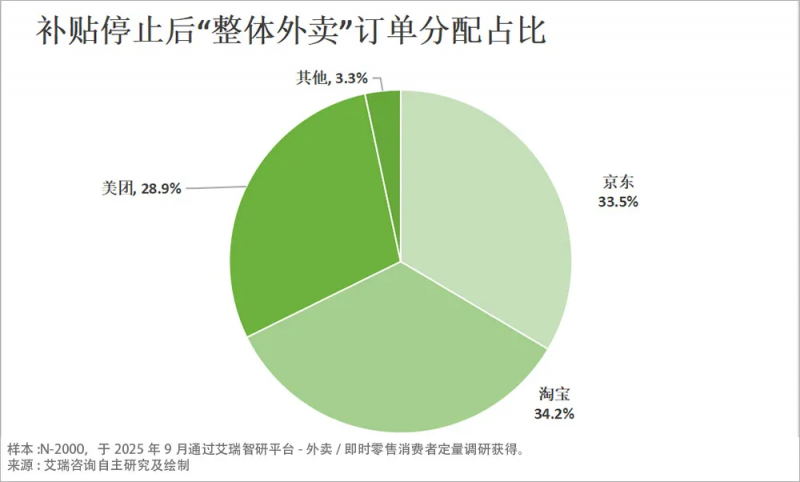
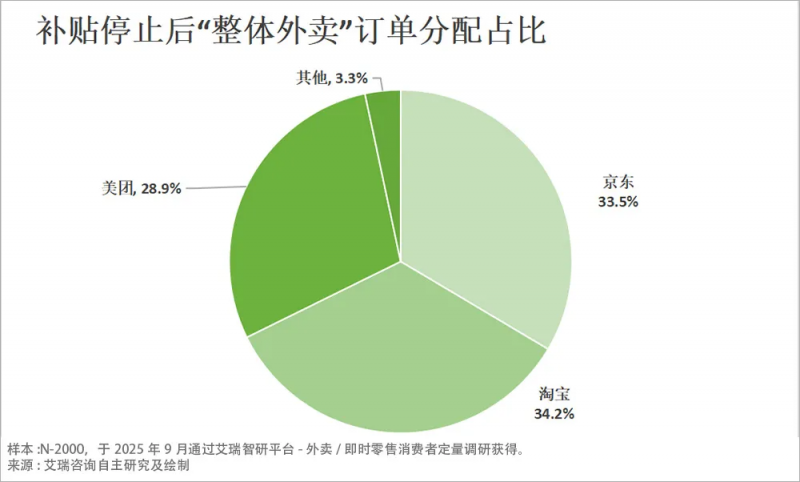
Core Insights - The "subsidy war" in the food delivery industry is losing momentum, leading to a more rational consumer choice and a shift in market competition logic [1][6] - The market is now characterized by a "three-way split," with 34.2% of consumers choosing Taobao Shanguo, 33.5% opting for JD Delivery, and 28.9% selecting Meituan, indicating a balanced market structure [1][3] Market Dynamics - Historically, the food delivery market exhibited a "strong vs. weak" competition, with Meituan dominating due to early user accumulation, while Ele.me struggled to close the market share gap [3] - The end of the subsidy war has shifted competition from "price wars" to "value competition," providing opportunities for new entrants like JD Delivery to establish a foothold [3][6] - JD Delivery has focused on "differentiated competition," leading the quality food delivery segment with a 35.6% future order expectation share, appealing to 26.8% of "value-driven users" who prioritize delivery efficiency and food quality [3][8] Consumer Preferences - Consumer demands for "quality food delivery" have evolved beyond taste to include safety, compliance, and transparency, with trust in merchants becoming a key differentiator [4][6] - Key factors distinguishing "quality food delivery" from regular options include "physical store assurance" (12.5%), "complete qualifications" (11.8%), and "regular hygiene checks" (10.9%) [4] Industry Trends - As consumer expectations for quality rise, the food delivery industry is transitioning from "extensive growth" to "high-quality development," focusing on service upgrades and food safety [6][14] - The shift in consumer behavior due to the subsidy war has led to increased app usage, with Meituan's daily app usage growth at 16.66% in April, followed by JD's 23.87% in May, indicating a reshuffling of market dynamics [10][12] Competitive Landscape - The competition is now defined by the platforms' comprehensive capabilities, with JD and Taobao showing stronger cross-category purchasing tendencies compared to Meituan [12][14] - The cycle of "ordering-cross-buying-retention" reinforces high-frequency consumption and creates synergies with other product categories, marking a shift from "subsidy internal competition" to "value competition" [14]


外卖江湖风云突变 “三分天下” 局势既定
Zhong Guo Shi Pin Wang· 2025-09-22 06:53
Core Insights - The "subsidy war" in the food delivery industry is losing momentum, leading to a more rational consumer choice and a shift in market competition logic [1][6] - The overall food delivery market has reached a "three-way split" with 34.2% of consumers choosing Taobao Shanguo, 33.5% opting for JD Delivery, and 28.9% selecting Meituan, indicating a balanced market structure [1][3] Market Dynamics - Historically, the food delivery market exhibited a "strong vs. weak" competitive landscape, with Meituan dominating early on while Ele.me struggled to close the gap [3] - The end of the subsidy war has shifted competition from "price wars" to "value competition," providing opportunities for new entrants like JD Delivery to establish a foothold [3][6] - JD Delivery has focused on "differentiated competition," leading to a 35.6% expected share in the quality delivery segment, making it the preferred platform for 26.8% of "value-driven users" [3][8] Consumer Preferences - Consumers' demands for "quality delivery" have evolved beyond taste to include safety, compliance, and transparency, with trust in merchants becoming a key differentiator [4][6] - The top three factors distinguishing "quality delivery" from "ordinary delivery" are merchant trust systems, including "physical store guarantees" (12.5%), "complete qualifications" (11.8%), and "regular health inspections" (10.9%) [4] Industry Trends - As consumer expectations for quality rise, the food delivery industry is transitioning from "extensive growth" to "high-quality development," focusing on service upgrades and safety assurances [6][12] - The competition will increasingly center on who can effectively address consumer demands for safety, transparency, and reliability [6][14] Platform Performance - In terms of app usage, Meituan saw a 16.66% increase in daily usage in April, while JD led the industry with a 23.87% growth in May, indicating a shift in consumer behavior [10][12] - Consumers are more likely to engage in cross-category purchases on platforms, with JD and Taobao showing stronger capabilities in retaining users for additional product categories compared to Meituan [12][14] Conclusion - The transition from "subsidy competition" to "value competition" reflects a fundamental shift in consumer needs, emphasizing quality, trust, and service as the new battlegrounds for market players [14]
《2025/9/15-2025/9/19》家电周报:九部门联合印发扩大消费政策措施,美联储宣布降息 25 个基点-20250920
Shenwan Hongyuan Securities· 2025-09-20 15:14
Investment Rating - The report indicates a positive investment outlook for the home appliance sector, with the sector outperforming the Shanghai and Shenzhen 300 Index by rising 1.6% while the index fell by 0.4% [2][3]. Core Insights - The report highlights the joint issuance of policies by nine departments aimed at expanding service consumption, which includes 19 specific measures to promote service consumption [9][63]. - The Federal Reserve's decision to cut interest rates by 25 basis points is expected to provide greater operational space for China's monetary policy, potentially alleviating depreciation pressure on the RMB [10]. - The report notes a rise in average prices for major home appliances, with air conditioners, refrigerators, and washing machines showing varying trends in sales volume and revenue [29][31][33][35]. Summary by Sections Industry Dynamics - The joint policy measures aim to enhance service consumption through promotional activities and improved access to cultural and recreational venues [9][63]. - The Federal Reserve's interest rate cut signals potential further reductions, which could impact foreign investment flows into RMB assets [10]. Data Observations - In August, the average retail price of air conditioners increased by 0.32% year-on-year, with retail volume up by 2.2% and retail revenue up by 2.9% [29]. - Refrigerator sales volume decreased by 0.4% year-on-year, but revenue increased by 3.8%, with the average price rising by 2.4% to 6438 RMB [31]. - Washing machine sales volume and revenue both declined by 0.4% and 7.4% respectively, while the average price increased by 5.5% to 4364 RMB [33]. Investment Highlights - The report identifies three main investment themes: 1. White goods sector benefiting from favorable real estate policies and potential for price and volume growth [29]. 2. Export opportunities driven by large customer orders and stable profitability for companies like Ousheng Electric and Dechang Shares [29]. 3. Core components demand exceeding expectations due to the white goods sector's performance, recommending companies like Huaxiang and Shun'an Environment for their competitive advantages [29].




美妆线上大盘双月下滑,详拆五个“逆增长”品牌案例
FBeauty未来迹· 2025-09-20 09:02
Core Viewpoint - The online beauty market in 2025 is experiencing a downturn, with significant declines in July and August, while some brands are achieving remarkable growth despite the overall market pressure [2][4][6]. Market Performance - The overall online beauty market from January to August 2025 recorded a total transaction value of 411.99 billion yuan, a year-on-year increase of 5.7%, with a transaction volume of 5.653 billion items, up 6.46% [5]. - Monthly performance shows a declining trend, with July and August being the only months with both transaction value and volume decreasing [5][6]. High-Growth Brands - Brands like Han Shu, Bai Que Ling, Helena, ELL, and Canban have shown exceptional growth in August, with Han Shu nearing 1 billion yuan in transaction value, up 51.37% year-on-year, and Bai Que Ling achieving a growth rate of 108.77% [4][11]. - The growth of these brands occurred without major promotional events, indicating innovative strategies that could provide insights for the beauty industry [4][6]. Platform Performance - Douyin has emerged as a key growth engine, with several brands achieving over 50% growth in transaction value on the platform [11][12]. - Brands like Han Shu and Bai Que Ling have successfully utilized a multi-platform strategy, achieving significant growth on platforms like JD and Kuaishou as well [11][12]. Brand Strategies - Han Shu focuses on a matrix of self-broadcasting and product bundling to create a self-sustaining growth engine, with multiple flagship stores catering to different product categories [13][14]. - Bai Que Ling employs a dual strategy of self-broadcasting and influencer marketing, with live streaming accounting for 83% of its sales [16][17]. - Helena capitalizes on high-end gifting opportunities, particularly around promotional events like Qixi Festival, maintaining a premium brand positioning [19][20][21]. Unique Market Entries - ELL, a white-label brand, has successfully navigated the market with a low-price strategy and celebrity endorsements, achieving a transaction value of 2.35 billion yuan in August [25][26]. - Canban stands out in the oral care segment, achieving over 100% growth in both transaction value and volume, despite the overall category facing challenges [27][28][29]. Conclusion - The online beauty market in August reflects a duality of challenges and opportunities, with brands adapting to a shift from price competition to value-driven strategies [32]. - The success of these brands highlights the importance of understanding user needs and enhancing operational efficiency to navigate market fluctuations [32].

安徽快递协会:坚决抵制恶性价格竞争,维护市场秩序
Jing Ji Guan Cha Bao· 2025-09-15 11:15
Core Viewpoint - The Anhui Express Association emphasizes the need to resist "involution" competition and promote high-quality development within the industry, advocating for compliance with regulations and fair market practices [1][2] Group 1: Compliance and Market Order - The association calls for strengthening compliance operations and adhering to the "safety first" principle, implementing the "Express Market Management Measures" to combat illegal practices such as unauthorized charges and data breaches [1] - It stresses the importance of resisting malicious price competition and maintaining market order by adhering to laws like the "Anti-Unfair Competition Law" and the "Price Law" [1] - The industry is urged to shift from "price competition" to "value competition," enhancing service quality and user experience while establishing a reasonable pricing system [1] Group 2: Employee Rights and Working Conditions - The association highlights the need to protect the rights of workers by optimizing the working environment and strictly enforcing labor laws, ensuring basic rights such as rest, social insurance, and fair compensation [2] - It advocates for a scientific and reasonable compensation mechanism to align delivery prices with labor intensity, improving working conditions and enhancing the dignity of workers [2] - The association opposes cost-shifting practices that undermine the earnings of grassroots outlets and couriers, ensuring reasonable profits for all involved [2] Group 3: Service Quality and Innovation - The focus is on enhancing core competitiveness by leveraging advanced technologies like big data and artificial intelligence to empower express operations [2] - The association encourages the construction of differentiated competitive advantages by accurately targeting market needs and providing customized delivery solutions [2] - It promotes sustainable development through green packaging and the application of new energy, while optimizing delivery networks and improving service stability [2]
阿维塔07 2026款:开启一场打破行业“潜规则”的价值革命
汽车商业评论· 2025-09-13 23:07
Core Viewpoint - The article emphasizes the shift in the automotive industry from a price-driven strategy to a value-driven approach, exemplified by the Avita 07 2026 model, which offers full configurations at the entry level, challenging the traditional low-spec model strategy [3][21]. Industry Practices: The "Price Trap" of Low-Spec Models - In the mid-size SUV market, the default practice is to offer low-spec models to lower the entry price, attracting consumers while maximizing profits through optional upgrades [5]. - Over 70% of mid-size SUV consumers ultimately choose mid to high-spec versions, indicating that low-spec models often fail to meet basic needs, particularly in safety features [5]. Value Reconstruction: The "Full Configuration Philosophy" of Avita 07 - The Avita 07 2026 model introduces a new product philosophy of "entry-level is fully equipped," focusing on core user needs rather than merely adding features [8]. - Key standard features include the Huawei QianKun ADS 4 driver assistance system, nine airbags, CATL batteries, zero-gravity front seats, a British audio system, and electric doors, which are essential for safety, comfort, and experience [8][9]. Market Positioning: Differentiated Competition from a New State-Owned Enterprise Background - Avita, backed by the "New State-Owned Enterprise New Changan" strategy, opts for a sustainable value competition approach amidst a fierce price war [12]. - Compared to competitors like the AITO M5 and Tesla Model Y, the Avita 07 2026 model showcases significant advantages in configuration, representing a new product definition that provides complete solutions rather than forcing consumer choices [12]. Industry Impact: A Turning Point from Price Wars to Value Wars - The launch of the Avita 07 2026 model may signify a turning point in the industry, as it diverges from the trend of reducing configurations to engage in price wars [15]. - As the electric vehicle market matures, consumers are increasingly prioritizing overall user experience and value perception over mere specifications like range and acceleration [15]. Brand Strategy: Avita's Path to Upward Development - The introduction of the Avita 07 2026 model reflects the brand's commitment to upward development, with initial sales exceeding 10,000 units in the first month [18]. - The model's success indicates market recognition and reinforces Avita's competitive position in the segment, showcasing its technological strength and brand philosophy of winning the future through value rather than price [18]. Final Thoughts - The emergence of the Avita 07 2026 model compels competitors to rethink their product strategies, as consumers may prefer the "entry-level is fully equipped" approach over traditional models requiring multiple choices [21]. - This shift in thinking is deemed more crucial than any single technological breakthrough in the ongoing transition to electrification, positioning Avita as a market-defining player rather than a follower in the price war [21].

沪农商行2025年上半年高分红延续,三大维度筑牢服务型银行根基
Zhong Guo Ji Jin Bao· 2025-09-12 02:51
Core Viewpoint - Shanghai Rural Commercial Bank demonstrates resilience in its operations by focusing on "stabilizing scale, improving efficiency, and controlling risks" in its 2025 interim report, showcasing its commitment to high-quality development while serving the real economy [1][2]. Group 1: Financial Performance - As of June 30, 2025, the bank's total assets reached 15,494.19 billion, a 4.14% increase from the end of the previous year, with loans and advances totaling 7,741.64 billion, up 2.51% [2][3]. - The bank's net profit attributable to shareholders was 70.13 billion, reflecting a 6.69% year-on-year growth after excluding non-recurring items, while operating income was 134.44 billion, up 0.38% [2][3]. - The average deposit interest rate decreased to 1.57%, down 26 basis points year-on-year, surpassing the reduction level of the previous year [3]. Group 2: Asset Quality - The non-performing loan ratio stood at 0.97%, consistently maintained below 1% since its listing, positioning the bank among the top in the industry [3][4]. - The provision coverage ratio reached 336.55%, significantly exceeding the regulatory benchmark of 250% [3]. Group 3: Strategic Initiatives - The bank aims to create value through a three-dimensional service system focusing on functional, exclusive, and emotional values, enhancing its service offerings [4][5]. - In the inclusive finance sector, the bank reported a balance of 913.47 billion in inclusive small and micro loans, a 5.47% increase, and 650.68 billion in agricultural loans, maintaining industry leadership [5][6]. - The bank has developed a "1+N" platform service model for technology enterprises, providing comprehensive support throughout their lifecycle, with technology enterprise loans exceeding 1,200 billion [5][6]. Group 4: Shareholder Returns - The bank announced a mid-year cash dividend of 2.41 yuan per 10 shares, totaling 23.24 billion, with a dividend payout ratio of 33.14%, reflecting a 7 basis point increase from the previous year [7]. - Since its listing in 2021, the bank has maintained a cash dividend ratio of over 30% of its net profit, indicating strong profitability and commitment to shareholder returns [7]. Group 5: Future Outlook - The bank plans to continue its strategy of becoming a service-oriented bank that creates value for customers, aiming to enhance its contributions to the real economy and deepen its specialized operations [8].
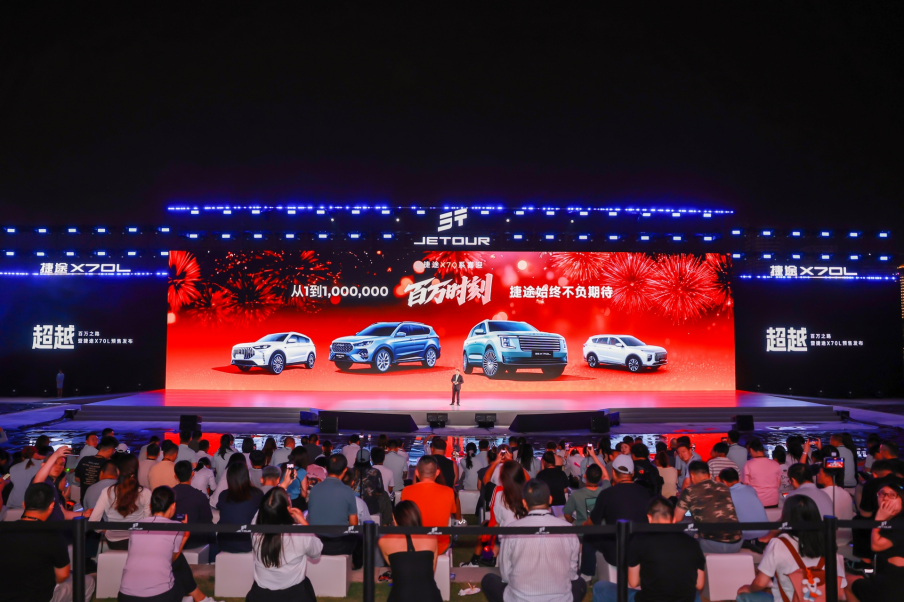
百万销冠再进化!捷途 X70L 预售限时权益价 10.99 万元起
Yang Zi Wan Bao Wang· 2025-09-10 14:58
Core Insights - The launch of the Jietu X70L marks a significant milestone in the Chinese family SUV market, emphasizing the brand's commitment to quality and innovation with a starting price of 109,900 yuan [1][19] - The Jietu X70 series has achieved remarkable sales, with nearly one million units sold, highlighting its dominance in the segment and the effectiveness of its market positioning [2][5] Group 1: Market Performance - The Jietu X70 series has sold over 450,000 units, making it the best-selling model in its segment, with over 230,000 units exported to countries like Kazakhstan and Ecuador [5][6] - Sales growth has been exponential, increasing from 180,000 units in 2022 to over 568,000 units projected for 2024, significantly outpacing industry averages [5][6] Group 2: Product Features - The Jietu X70L is positioned as a "maglev luxury electric seven-seater SUV," offering performance comparable to vehicles in the 300,000 to 500,000 yuan range, thus breaking price barriers in the luxury SUV market [7][19] - It features advanced technology such as a cloud platform chassis and CDC electromagnetic suspension, providing a smooth ride and addressing common family travel pain points [9][13] Group 3: Safety and Comfort - The vehicle's body is constructed with 86% high-strength steel, providing exceptional torsional rigidity, and it includes a mother-and-baby-grade healthy cabin with air purification systems [13][19] - The spacious interior boasts a 2820mm wheelbase and 32 seating configurations, catering to various family needs, from camping to daily commuting [11][19] Group 4: Brand Evolution - The term "exceeding" was emphasized during the launch event, reflecting the brand's evolution from a follower to a leader in the market, with a focus on technology and value rather than just price competition [15][19] - The pre-sale event included attractive offers such as a smart car control watch and lifetime warranty, showcasing the brand's appreciation for its million users [17][19]
全新问界M7爆单,余承东紧急“辟谣”
Di Yi Cai Jing Zi Xun· 2025-09-07 04:17
Core Insights - The new AITO M7 has officially started pre-orders with a starting price of 288,000 yuan, achieving over 100,000 orders in just 43 minutes, surpassing expectations [2][4][6] - The significant success of the AITO M7 is attributed to its comprehensive redesign, which redefines the industry's perception of product updates from minor adjustments to substantial innovations [4][5] - The AITO M7 aims to break the low-quality price competition in the new energy SUV market by offering high-value and high-experience products, thus reshaping the profitability logic of luxury cars [5][10] Industry Context - The domestic SUV market is entering a phase of stock optimization by 2025, with smart technology becoming the core competitive arena [4] - Traditional luxury car brands are facing pressure, with sales and profits declining, leading to increased promotional efforts, with discounts reaching 27.2% in July [8] - The retail market share of domestic brands reached 64.2% in June, indicating a shift in consumer preferences away from traditional luxury brands [8] Competitive Dynamics - The AITO M7's pricing strategy, which eliminates lower-end models and starts with high configurations, allows for profit margins while encouraging competitors to focus on technology and user experience rather than price wars [6][10] - The net promoter score (NPS) for AITO is significantly high at 74.8, indicating strong consumer endorsement and brand value growth [9] - The AITO M7's high resale value of 71.5% challenges the previously held belief that foreign luxury brands have superior resale value [10][14] Technological Innovations - The AITO M7 features an industry-first cabin laser vision system that enhances safety and driving experience by integrating laser radar and visual cameras [13] - The vehicle is built on the iDVP electronic architecture, allowing for over-the-air (OTA) updates and establishing it as a "software-defined car" [13] - The introduction of advanced technologies in the AITO M7 is expected to stimulate competitors to increase their technological investments, moving the industry away from low-quality competition [14]