
市场情绪

Search documents
双融日报-20251226
Huaxin Securities· 2025-12-26 01:35
Core Insights - The report indicates that the current market sentiment score is 82, categorizing it as "overheated," suggesting a high level of investor optimism and potential market risks [5][8][20] - Key themes identified include liquid cooling technology, banking stocks, and brokerage firms, each showing distinct investment opportunities [5] Market Sentiment - The market sentiment temperature indicator shows a score of 82, indicating an "overheated" market, which may lead to resistance as historical trends suggest that scores above 70 can create market pressure [5][8] - A cautious approach is recommended as the market enters a consolidation phase, with support expected when sentiment drops below 30 [8] Sector Analysis Liquid Cooling Theme - Liquid cooling technology is gaining traction due to its efficiency and lower Power Usage Effectiveness (PUE), becoming a mainstream solution for data centers [5] - Major AI companies, including NVIDIA and Google, are adopting this technology, with Google increasing its TPU chip shipment target by 50% to 6 million units by 2026 [5] - Related stocks include Invec (002837) and Feilong Co., Ltd. (002536) [5] Banking Sector - Banking stocks are highlighted for their high dividend yields, with the China Securities Banking Index yielding 6.02%, significantly above the 10-year government bond yield [5] - In a slowing economy with increased market volatility, banking stocks are seen as stable investment options for long-term funds [5] - Key banking stocks include Agricultural Bank of China (601288) and Ningbo Bank (002142) [5] Brokerage Sector - The report discusses regulatory changes proposed by the China Securities Regulatory Commission aimed at enhancing the quality of development in the brokerage sector [5] - The focus is shifting from scale and speed to quality, with an emphasis on risk management and capital efficiency [5] - Notable brokerage firms mentioned include CITIC Securities (600030) and Guotai Junan Securities (601211) [5]
市场情绪走向平稳 预计工业硅期价将小幅反弹
Jin Tou Wang· 2025-12-25 07:11
Group 1 - The industrial silicon futures market is experiencing a volatile upward trend, with the main contract opening at 8820.0 CNY/ton and reaching a high of 8865.0 CNY, reflecting a price increase of approximately 0.45% [1] - Supply expectations for industrial silicon are around 360,000 tons per month, with production in the southwestern region expected to hit a low point, while northern regions maintain stable operations [2] - Demand from organic silicon enterprises shows a rebound in weekly operating rates, but significant production cuts have not shown sustainability [2] Group 2 - The overall supply of industrial silicon is tightening, with Xinjiang's operating rate at a relatively high 88%, while southwestern regions are weaker due to the dry season [3] - Social inventory of industrial silicon has decreased to 553,000 tons, indicating a stabilization in the market due to the rebound in futures prices [3] - The sentiment in the industrial products market is stabilizing, with expectations for a slight rebound in futures prices in the short term [3]
贵金属缘何连创新高?
Xin Lang Cai Jing· 2025-12-24 17:46
Core Insights - The price of gold has reached a historic high, surpassing $4500 per ounce for the first time, driven by international market trends and increasing industrial demand for precious metals [2] - Silver, platinum, and palladium have seen even greater price increases recently, with silver prices rising nearly 50% in Q4 and surpassing $70 per ounce [2][4] - The strong performance of precious metals has exceeded many institutions' expectations, with gold prices hitting record highs over 40 times this year alone [2] Group 1: Factors Driving Precious Metal Prices - The significant rise in gold and other precious metals is attributed to multiple factors, including concerns over the creditworthiness of the US dollar and market sentiment, rather than just traditional safe-haven and anti-inflation motives [2][3] - The expansion of US debt has made gold and other precious metals appear as safer assets, contributing to their rising prices [3] Group 2: Industrial Demand and Market Dynamics - The industrial demand for silver and platinum has been a key driver of their price increases, with silver being essential for the transition to a green economy, particularly in solar and electric vehicle sectors [4] - Platinum's future is also promising due to its use in catalysts, with new opportunities arising from the hydrogen energy sector [4] Group 3: Market Sentiment and Future Outlook - The sustainability of the current bullish trend in precious metals will depend on the continued resonance between market demand and investor sentiment [4] - Analysts caution that the volatility of precious metal prices may lead to rapid profit-taking by investors, potentially resulting in price corrections [4]


金银铂钯齐涨 贵金属缘何连创新高?
Xin Hua Wang· 2025-12-24 09:50
Core Viewpoint - The precious metals market, particularly gold, silver, platinum, and palladium, has experienced significant price increases driven by multiple factors including market sentiment, concerns over the U.S. dollar's credibility, and rising industrial demand for silver and platinum [1][2]. Group 1: Gold Market Performance - On December 24, gold prices reached a historic high, surpassing $4,500 per ounce for the first time [1]. - In China, the price of gold hit 1,017 yuan per gram, with gold jewelry prices rising to 1,410 yuan per gram [1]. - The gold market has seen over 40 record highs this year, with prices increasing by more than 70% year-to-date [2]. Group 2: Silver and Other Precious Metals - Silver prices have surged nearly 50% in Q4, breaking the $70 per ounce mark and continuing to rise above $72 [1]. - Year-to-date, silver and platinum prices have increased by over 140%, while palladium has risen by more than 100% [1]. - The industrial demand for silver, particularly in sectors like photovoltaics and electric vehicles, is a key driver of its price increase [2]. Group 3: Market Dynamics and Investor Sentiment - The rise in precious metal prices is attributed to a combination of factors, including concerns over U.S. dollar credit and sovereign debt, as well as geopolitical tensions [2]. - The demand for precious metals has led to increased inflows into ETFs, with significant increases in holdings reported on December 23 [3]. - Analysts suggest that the sustainability of the current bullish trend in precious metals will depend on ongoing market demand and investor sentiment [3].
金银铂钯齐涨,贵金属缘何连创新高?
Xin Hua Wang· 2025-12-24 09:44
Core Viewpoint - The precious metals market, particularly gold, silver, platinum, and palladium, has experienced significant price increases, driven by multiple factors including market sentiment and concerns over the U.S. dollar's credibility [1][2]. Group 1: Gold Market Performance - On December 24, gold prices reached a historic high, surpassing $4,500 per ounce for the first time [1]. - In China, the price of gold hit 1,017 yuan per gram, with gold jewelry prices rising to 1,410 yuan per gram [1]. - Gold prices have set new records over 40 times this year, exceeding the total highs of the previous year [2]. Group 2: Silver and Other Precious Metals - Silver prices have surged nearly 50% in Q4, breaking the $70 per ounce mark and continuing to rise above $72 [1]. - Year-to-date, silver and platinum prices have increased by over 140%, while palladium has risen by over 100% [1]. - The industrial demand for silver, driven by sectors like photovoltaics and electric vehicles, has significantly supported its price increase [2]. Group 3: Market Drivers - The rise in precious metal prices is attributed to concerns over U.S. dollar credit and sovereign debt, alongside traditional factors like inflation and geopolitical tensions [2]. - Analysts suggest that the expansion of U.S. debt has made precious metals more attractive as safe-haven assets [2]. - The demand for platinum is also expected to grow due to its use in catalysts and the emerging hydrogen energy sector [2]. Group 4: Investment Trends - On December 23, global ETF holdings for gold and silver increased by approximately 12 tons and 533 tons, respectively, indicating heightened investor interest [3]. - The sustainability of the current bullish trend in precious metals will depend on ongoing market demand and investor sentiment [3].
招商证券:岁末年初市场风格特征如何?
智通财经网· 2025-12-23 22:29
Group 1: Market Trends and Investor Behavior - The market style tends to exhibit defensive characteristics at the end of the year, with large-cap value stocks outperforming, while the small-cap style represented by the CSI 1000 faces pressure [1] - Institutional investors are likely to adopt a conservative investment approach due to year-end performance assessments, leading to a decrease in risk appetite [1] - As the market enters the dense disclosure period for annual earnings forecasts in January, earnings uncertainty becomes a key concern, prompting funds to flow towards more stable large-cap blue-chip stocks [1] Group 2: Monetary Policy and Market Liquidity - The central bank's net injection in the open market was 219 billion yuan last week, with upcoming maturities including 4.575 billion yuan in reverse repos and 3 billion yuan in MLF [2] - Money market rates are declining, with short and long-term government bond yields also decreasing, while the issuance scale of interbank certificates of deposit has expanded [2] - The net inflow of funds in the secondary market has increased, with a rise in financing balances and net purchases of financing funds amounting to 3.42 billion yuan [2] Group 3: Sector Preferences and Fund Flows - High net inflows were observed in the electronics, communications, and power equipment sectors, with significant net subscriptions for the A500 ETF [3] - The information technology ETF saw substantial net subscriptions, while the military industry ETF experienced notable redemptions [3] - The highest net subscription was for the Huatai-PB CSI A500 ETF, while the highest net redemption was for the Fuguo CSI Military Leaders ETF [3] Group 4: Overseas Economic Indicators - In the U.S., the November non-farm payroll and CPI significantly fell below expectations, with the overall CPI rising 2.74% year-on-year, lower than the expected 3.06% [3] - The core CPI also rose 2.63% year-on-year, below the consensus expectation of 3.03%, indicating inflation is nearing the Federal Reserve's target level [3] - The unemployment rate in the U.S. rose to 4.6% in November, the highest level since October 2021 [3]

2025/12/23:市场主流观点汇总-20251223
Guo Tou Qi Huo· 2025-12-23 10:08
1. Report Industry Investment Rating There is no information provided regarding the report's industry investment rating in the given content. 2. Core Viewpoints - The report aims to objectively reflect the research views of futures and securities companies on various commodity varieties, track hot - spot varieties, analyze market investment sentiment, and summarize investment driving logics [1]. - It presents the closing prices and weekly price changes of different asset classes including commodities, A - shares, overseas stocks, bonds, and foreign exchange as of December 19, 2025. - It summarizes the mainstream strategy views and investment logics of institutions for different commodity sectors, including both bullish and bearish factors [3][4][5][6]. 3. Summary by Relevant Catalogs 3.1 Market Data - **Commodities**: From December 15 to December 19, 2025, commodities like coking coal, PTA, and polysilicon had significant price increases, with coking coal rising 9.00% to 1108.00, PTA rising 5.81% to 4882.00, and polysilicon rising 5.34% to 60245.00. While some commodities such as copper, soybean meal, and corn had price drops, with copper dropping 1.05% to 93180.00, soybean meal dropping 1.26% to 2735.00, and corn dropping 1.84% to 2192.00 [2]. - **A - shares**: The Shanghai - Shenzhen 300 index dropped 0.28% to 4568.18, while the SSE 50 index rose 0.32% to 3004.34, and the CSI 500 index remained unchanged at 7169.55 [2]. - **Overseas Stocks**: The FTSE 100 index rose 2.57% to 9897.42, the French CAC40 index rose 1.03% to 8151.38, while the Hang Seng Index dropped 1.10% to 25690.53, and the Nikkei 225 index dropped 2.61% to 49507.21 [2]. - **Bonds**: The 2 - year Chinese government bond yield increased by 0.38bp to 1.39, the 5 - year yield increased by 0.24bp to 1.61, and the 10 - year yield decreased by 0.44bp to 1.83 [2]. - **Foreign Exchange**: The US dollar index rose 0.32% to 98.71, the US dollar central parity rate dropped 0.12% to 7.06, and the euro - US dollar exchange rate dropped 0.28% to 1.17 [2]. 3.2 Commodity Views 3.2.1 Macro - financial - **Stock Index Futures**: Among 7 institutions' views, 0 are bullish, 0 are bearish, and 7 are neutral. Bullish factors include overseas central bank policies, increased long - term capital allocation after index correction, market attention on tech stocks, and expected policy dividends in 2026. Bearish factors are the decline in M1 growth rate, weakening policy motivation, weak economic momentum, and time - consuming policy implementation [3]. - **Treasury Bond Futures**: Among 7 institutions' views, 3 are bullish, 0 are bearish, and 4 are neutral. Bullish factors are weak fundamentals, central bank liquidity injection, attractive 30 - year bond yields, and potential market repair. Bearish factors are low probability of short - term interest rate cuts, increased influence of trading desks, and concerns about ultra - long bond supply and demand [3]. 3.2.2 Energy - **Crude Oil**: Among 8 institutions' views, 0 are bullish, 5 are bearish, and 3 are neutral. Bullish factors are supply disruptions in Venezuela, decreased US crude and Cushing inventories, increased refinery capacity utilization in China and the US, and strong local refined oil demand. Bearish factors are limited impact of Venezuelan supply disruptions, increasing non - OPEC production, rising floating storage, and expected slowdown in major economies' demand [4]. 3.2.3 Agriculture - **Soybean Meal**: Among 7 institutions' views, 0 are bullish, 3 are bearish, and 4 are neutral. Bullish factors are high US soybean import costs, pre - holiday stocking demand, increased trader restocking, and signs of short - position reduction in futures. Bearish factors are the expected high - yield in South American soybeans, poor performance of domestic soybean auctions, high oil - mill soybean meal inventories, and weak feed - enterprise purchasing [4]. 3.2.4 Non - ferrous Metals - **Copper**: Among 8 institutions' views, 4 are bullish, 0 are bearish, and 4 are neutral. Bullish factors are zero long - term processing fees in 2026, low spot refining fees, rising copper foil production rates, decreased domestic copper concentrate port inventories, and high market attention. Bearish factors are year - end capital shortages, increased social inventories, weak terminal demand in the off - season, and low copper rod production rates [5]. 3.2.5 Chemicals - **Glass**: Among 7 institutions' views, 0 are bullish, 0 are bearish, and 7 are neutral. Bullish factors are potential cold - repair plans in late December, low near - month valuations and high positions, and expected real - estate policy support. Bearish factors are decreased deep - processing order days, slow sales in North and East China, high inventories, and off - season pressure [5]. 3.2.6 Precious Metals - **Gold**: Among 7 institutions' views, 3 are bullish, 0 are bearish, and 4 are neutral. Bullish factors are the rising US unemployment rate in November, lower - than - expected US CPI in November, increased non - commercial net long positions in gold futures, and long - term central - bank gold purchases. Bearish factors are the rapid adjustment of the gold - silver ratio, approaching key resistance levels, and market divergence on the Fed's interest - rate cut schedule [6]. 3.2.7 Black Metals - **Coking Coal**: Among 8 institutions' views, 3 are bullish, 0 are bearish, and 5 are neutral. Bullish factors are the release of supply - side pressure, low valuations, production cuts by some coal mines, increased steel - mill winter - stocking demand, and improved spot - market trading. Bearish factors are high imports from Ganqimaodu Port, decreased steel - mill iron - water production, lower demand from coking plants, and increased total coking - coal inventories [6].
市场情绪有所好转,板块整体震荡回升
Hua Tai Qi Huo· 2025-12-23 02:56
农产品日报 | 2025-12-23 棉花观点 市场要闻与重要数据 期货方面,昨日收盘棉花2605合约14070元/吨,较前一日变动+55元/吨,幅度+0.39%。现货方面,3128B棉新疆到 厂价14986元/吨,较前一日变动+7元/吨,现货基差CF05+916,较前一日变动-48;3128B棉全国均价15154元/吨, 较前一日变动+9元/吨,现货基差CF05+1084,较前一日变动-46。 近期市场资讯,据美国农业部(USDA)报告,12月12日至12月18日,美国2025/26年度棉花分级检验19.93万吨, 83.7%的皮棉达到ICE期棉交割要求。其中陆地棉检验量为19.34万吨,皮马棉为0.59万吨。至同期,累计分级检验 242.43万吨,82.7%的皮棉达到ICE期棉交割要求。其中陆地棉检验量为236.65万吨,皮马棉为5.78万吨。 市场分析 市场情绪有所好转,板块整体震荡回升 昨日郑棉期价震荡上涨。国际方面,本月USDA对于全球棉花供需数据调整不大,25/26年度全球棉花产需双减, 期末库存微幅增加。美棉产量继续小幅调增,经过两个月的调整后美棉累库压力明显加大。当前北半球新棉集中 上市,阶段 ...
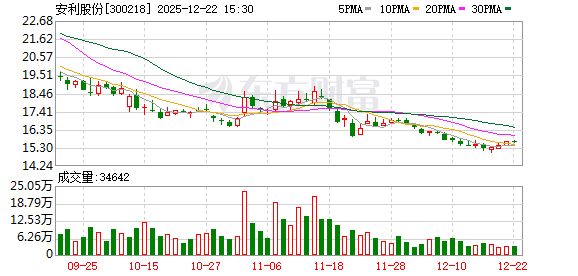
安利股份:公司市值受宏观经济、市场情绪等多重因素综合影响
Zheng Quan Ri Bao· 2025-12-22 13:56
Core Viewpoint - The company's market value is influenced by multiple factors including macroeconomic conditions and market sentiment, rather than solely by the company's subjective evaluations [2] Group 1: Company Strategy - The company will continue to focus on deepening and expanding its core business [2] - There is an ongoing effort to enhance core competitiveness and operational quality [2] - The company aims to create sustainable and stable long-term value for investors [2]

第三次突破60日线,这次能行吗?
Jin Rong Jie· 2025-12-22 11:19
Group 1 - The A-share market has shown a strong performance with four consecutive days of gains, indicating potential for continued strength after this period [1] - The short positions have decreased significantly, suggesting that the recent bullish trend has a strong impact, and the strength of the market surpasses previous instances when it crossed the 60-day moving average [1] - Despite the index rising by 26 points, market sentiment remains weak, with over 2,100 stocks declining, indicating a divergence between index performance and individual stock movements [1] Group 2 - Two main sectors are highlighted: one is the commercial aerospace, consumer, and technology sectors, which are showing signs of weak divergence, suggesting caution in re-entering these markets until clearer trends emerge [2] - The technology sector experienced a broad recovery, particularly in light modules, liquid cooling, and chips, although the overall strength remains low [2] - The Hainan sector saw significant gains driven by news, with 25 stocks hitting the daily limit, indicating a potential for further divergence in the near term [2]