AI商业化

Search documents
关注港股科技ETF(513020)投资机会,AI商业化与游戏修复成焦点
Mei Ri Jing Ji Xin Wen· 2025-11-17 06:07
Core Insights - The technology sector in Hong Kong's stock market is shifting focus from capital expenditure to investment return rates, particularly in the AI field, with domestic AI listings accelerating and AI animation becoming a rapidly commercialized scenario [1] - Cloud computing businesses and internet companies with rich application scenarios are gaining attention due to quick revenue realization and high valuation cost-effectiveness [1] - The gaming sector is experiencing fundamental improvements, with an increase in license approvals not leading to intensified competition, as companies differentiate through user and category competition, and AI technology enhances game production and innovation [1] - Music platforms need to focus on the monetization capabilities of mid- and long-tail content and community cultivation, with free models relying on improved advertising ROI [1] - Some companies in the education publishing industry are showing signs of operational turning points [1] - Overall, the technology sector is concentrating on the practical application of AI, the recovery of gaming fundamentals, and the enhancement of content platform monetization efficiency [1] Index and ETF Information - The Hong Kong Technology ETF (513020) tracks the Hong Kong Stock Connect Technology Index (931573), which selects listed companies focusing on technology themes from the Hong Kong Stock Connect range, covering sectors such as information technology, electronic components, and interactive media and services [1]
计算机行业深度:2026年策略:AI化比数字更重要
NORTHEAST SECURITIES· 2025-11-16 14:55
Group 1 - The core viewpoint of the report emphasizes that the commercialization of AI is more important than digital transformation, with the computer industry expected to undergo a revaluation due to the recovery of fundamentals and the acceleration of AI commercialization by 2026 [2][3]. - The report highlights that the overall revenue of the computer sector reached 11,533.72 billion yuan in the first three quarters, representing a year-on-year increase of 6.93%, while the net profit attributable to the parent company increased by 18.45% to 203.14 billion yuan [2][3]. - The report identifies key segments to watch in 2026, including domestic computing power, overseas storage and computing power, cloud computing, IDC, and application chains, particularly focusing on AI applications in various industries [3][4]. Group 2 - Domestic computing power is accelerating, with leading companies like Huawei, Cambricon, and Haiguang Information driving development, supported by increased demand from major clients such as Alibaba and ByteDance [3][4]. - The overseas computing and storage market is evolving towards commercial application, with significant capital expenditures expected to drive performance in 2026, particularly in the CCL upstream sector [3][4]. - The cloud computing sector is witnessing a surge in demand, exemplified by OpenAI's partnership with Amazon, which involves a $38 billion AI cloud computing deal over seven years, indicating a growing need for underlying computing power [3][4]. Group 3 - The IDC sector is expected to see accelerated order releases as major domestic companies continue to invest, with orders anticipated to gradually materialize in 2026 [3][4]. - The application chain, particularly in AI, is projected to experience a dual recovery in valuation and fundamentals, with significant advancements expected in AI applications across healthcare, education, finance, and office scenarios [3][4]. - The report notes that the AI-driven demand for high-bandwidth memory (HBM) and other advanced storage solutions is reshaping the supply-demand structure and industry value [3][4].





美股科技行业周报:GPT-5.1版本正式发布,关注英伟达财报对算力景气度验证-20251116
Minsheng Securities· 2025-11-16 09:26
Investment Rating - The report maintains a positive outlook on the technology sector, particularly on companies involved in AI infrastructure and applications, suggesting a focus on NVIDIA, Broadcom, SanDisk, Micron, and Lumentum [4][19]. Core Insights - The report highlights that recent fluctuations in the US technology sector are more related to valuation corrections and liquidity tightening rather than fundamental changes. Revenue growth rates for leading tech companies are in line with expectations, and the return on investment (ROI) for AI continues to accelerate [4][19]. - NVIDIA is expected to report a revenue of $55.1 billion for FY26Q3, reflecting a year-on-year increase of 57%, with data center revenue projected at $49.1 billion. The company is seen as maintaining high demand and growth potential in the AI infrastructure cycle [2][11]. Summary by Sections Section 1: Key US Technology Company Dynamics - CoreWeave reported a Q3 revenue of $1.4 billion, a 134% year-on-year increase, driven by strong demand for AI training and inference. The company’s order backlog reached $55.6 billion, nearly doubling from Q2, with a record RPO of $50 billion [6][8]. - Nebius achieved a Q3 revenue of $14.6 million, a 355% year-on-year increase, primarily driven by contracts with Microsoft and Meta. The company has adjusted its 2025 revenue guidance to $500-550 million [6][9]. - OKLO experienced an expanded Q3 operating loss of $36.3 million, despite receiving approval for new fuel facilities. The company continues to expand its commercial pipeline with significant customer reserves [6][10]. Section 2: Key Earnings Forecasts - NVIDIA's upcoming earnings report is anticipated to show strong performance, with a projected gross margin of 73.7%. The company’s CEO has indicated confidence in achieving $500 billion in cumulative data center revenue by 2025-2026 [2][11]. Section 3: International Technology Industry Dynamics - OpenAI has launched the upgraded GPT-5.1, focusing on enhancing emotional value and interaction experience. The new model includes features that improve response times and understanding, catering to both paid and free users [3][12]. Section 4: Weekly Perspective - The report emphasizes the ongoing strength in the AI sector, with expectations for continued penetration of AI applications driven by model iterations. Companies like Google, AppLovin, and Roblox are highlighted as potential investment opportunities [4][19].
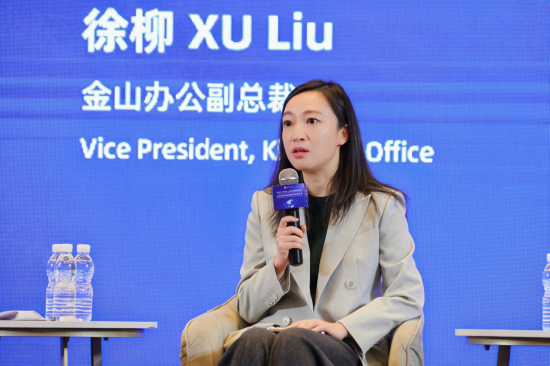
金山办公徐柳:AI变现之道在于“产品差异化”,WPS 365志在成为企业“智慧大脑”
Xin Lang Cai Jing· 2025-11-13 09:16
Core Viewpoint - The core challenge of AI commercialization lies in balancing user satisfaction and shareholder expectations, with a focus on product quality as the solution [1] Group 1: AI Commercialization Strategy - The strategy for AI commercialization at Kingsoft Office is based on deep integration rather than isolated features, addressing deeper user needs in practical office scenarios [3] - Product differentiation is emphasized through three key aspects: unique integration, exclusive data assets, and comprehensive intelligent collaboration for enterprises [3] Group 2: Competitive Advantages - Kingsoft Office's approach involves a "dual transformation" of AI and office software, allowing both to adapt to each other, enhancing usability and understanding of user intent [4] - The company boasts an impressive data asset of over 260 billion cloud documents, which can be leveraged to activate dormant knowledge and transform it into new productivity [4] Group 3: Strategic Vision - The WPS 365 platform aims to transition enterprises from "digital office" to "intelligent collaboration," focusing on three essential capabilities: understanding data, organizations, and business [5] - The ultimate goal is for AI to evolve from a content generation tool to a participant in business operations and decision-making, enhancing its role in analyzing customer documents and market conditions [5]


阿里首款自研夸克AI眼镜即将发布,恒生科技指数ETF(159742)连续10天获资金净流入,合计“吸金”近5000万元
Xin Lang Cai Jing· 2025-11-13 06:12
Group 1 - The Hang Seng Tech Index decreased by 0.63% as of November 13, 2025, with mixed performance among constituent stocks, including BYD leading with a 1.69% increase and Tencent Music falling by 11.28% [1] - The Hang Seng Tech Index ETF (159742) dropped by 0.24%, with a latest price of 0.82 HKD, while it saw a cumulative increase of 1.11% over the past week as of November 12, 2025 [1] - The liquidity of the Hang Seng Tech Index ETF showed a turnover of 3.02% with a transaction volume of 139 million HKD, and an average daily transaction volume of 438 million HKD over the past month [1] Group 2 - Quark announced the launch event for its AI glasses, scheduled for November 27, 2025, with the pre-sale of the Quark AI Glasses S1 ranking first in sales during the "Double 11" shopping festival [1] - The Quark AI Glasses S1 integrates Alibaba's Qwen closed-source model and offers various functionalities, including deep integration with core applications like Alipay and Taobao, covering high-frequency use cases such as payment and navigation [1] Group 3 - The upcoming earnings disclosure window for the Hong Kong stock market is significant, with major companies like Tencent, JD.com, and Bilibili set to report their Q3 results, focusing on AI commercialization progress [2] - There has been a net outflow of 3.4 billion HKD from Alibaba as investors avoid potential risks related to its performance amid competition in the food delivery sector [2] - Despite recent market fluctuations, institutions believe the current market trend is not a short-term rebound, with expectations of a steady recovery driven by economic signals and improved global liquidity [2] Group 4 - The latest size of the Hang Seng Tech Index ETF reached 4.513 billion HKD [3] - The ETF's share count reached 5.614 billion, marking a one-year high, with continuous net inflows over the past ten days totaling approximately 49.35 million HKD [4] - The top ten weighted stocks in the Hang Seng Tech Index account for 68.89% of the index, including Alibaba, SMIC, and Tencent [4]
收评:沪指微跌0.07%险守4000点 保险板块逆势走强
Xin Hua Cai Jing· 2025-11-12 07:31
Market Overview - The A-share market experienced fluctuations, with the Shanghai Composite Index closing at 4000.14 points, down 0.07%, and total trading volume at 840.5 billion yuan [1] - The Shenzhen Component Index closed at 13240.62 points, down 0.36%, with a trading volume of 1104.6 billion yuan, while the ChiNext Index closed at 3122.03 points, down 0.39%, with a trading volume of 492.9 billion yuan [1] - The total trading volume of the Shanghai and Shenzhen markets was below 2 trillion yuan, showing a slight decrease compared to the previous trading day [1] Sector Performance - The insurance, mining, pharmaceutical retail, medical devices, and beauty care sectors showed the highest gains, while sectors such as photovoltaic equipment, non-metallic materials, wind power equipment, power equipment, grid equipment, and electronic chemicals experienced the largest declines [1] - The oil and gas sector saw significant gains, with companies like PetroChina and Zhenhua Oil reaching their daily limit [2] - The pharmaceutical sector continued to rise, led by cell immunotherapy concepts, with stocks like Kaineng Health and Jimin Health hitting their daily limit [2] Individual Stock Movement - Overall, more stocks declined than rose, with over 1700 stocks increasing in value and nearly 80 stocks hitting their daily limit [3] Institutional Insights - According to Jifeng Investment Advisory, the market showed signs of recovery, particularly in the oil and gas extraction sector, with the China Securities Regulatory Commission emphasizing the need for stability in the capital market [4] - Morgan Stanley believes that the long-term profitability of A-share listed companies will steadily improve, driven by China's manufacturing advantages [4] - CITIC Securities highlights three main investment themes: the pricing power of Chinese manufacturing, the deepening of enterprises going abroad, and the continuation of the technology market [5] Regulatory Developments - The Vice Chairman of the China Securities Regulatory Commission, Li Ming, stated the importance of enhancing the inherent stability of the capital market and preventing extreme market fluctuations [6] - The Shanghai Stock Exchange's International Investor Conference emphasized the need for comprehensive reforms in investment and financing to support the stable operation of the capital market [6]
中信证券最新研判:A股迈向“低波动慢牛” 2026年聚焦三主线
Zhong Guo Jing Ying Bao· 2025-11-12 07:10
Group 1: Market Transition and Outlook - A-share listed companies are transitioning from domestic-focused enterprises to global multinational corporations, indicating a shift in China's capital market from emerging to mature status [1][4] - During the "14th Five-Year Plan" period, Chinese companies are expected to enhance their position in the global value chain, converting share advantages into pricing power, which forms the basis for a low-volatility slow bull market in A-shares [1][4] Group 2: Economic Growth Projections - China's economy is anticipated to continue a recovery trend, with growth projected at around 5% in 2025 and 4.9% in 2026, potentially showing a pattern of lower growth in the first half and higher growth in the latter half of 2026 [2] - Fiscal policy in 2026 is expected to be more proactive, maintaining a deficit ratio around 4%, with an increase in special bond quotas directed towards project construction [2] Group 3: Investment Strategy and Focus Areas - The investment strategy for 2026 should focus on three main lines: 1. The re-evaluation of pricing power in China's manufacturing sector, with an emphasis on industries like non-ferrous metals, chemicals, and new energy [6] 2. The deepening of enterprises' international expansion, particularly in sectors such as machinery, innovative pharmaceuticals, and military equipment [6] 3. The continuation of the technology market, with a focus on breakthroughs in AI commercialization and related hardware and applications [6] Group 4: Market Liquidity and Asset Allocation - The capital market is expected to see a continued influx of absolute return funds, contributing to a long-term downward trend in the volatility of broad-based A-share indices [6] - In terms of asset allocation, the global macro environment is generally accommodative, with expectations of a mild appreciation of the RMB and ongoing attractiveness of gold as a long-term investment asset [7]

中信证券首席A股策略师裘翔:A股是全球的A股 聚焦制造业升级、中企出海、AI商业化
Xin Lang Zheng Quan· 2025-11-11 07:40
Core Viewpoint - The 2026 Capital Market Conference hosted by CITIC Securities emphasizes the transformation of A-share companies from local to global players, highlighting the importance of global market positioning over domestic economic reliance [1] Group 1: Market Trends - A-share companies are increasingly becoming multinational, with sectors like new energy, resources, and culture gaining competitiveness from global market positions [1] - The current A-share market structure shows a shift towards absolute return-focused funds, which demand high risk and low elasticity, contrasting with traditional subjective long positions [1] - The diversification of information in the self-media era has reduced the influence of traditional channels on market sentiment, reflecting the adaptation of the A-share ecosystem to contemporary developments [1] Group 2: Industry Allocation - The first focus area is the quality upgrade of resource and traditional manufacturing industries, where Chinese manufacturing can leverage technology and R&D investments to enhance pricing power and profits [2] - The second focus is on Chinese companies' globalization, with initial investment opportunities in automotive and machinery sectors, now shifting towards consumer goods, energy-related, and TMT sectors during the accelerated overseas penetration phase [2] - The third focus is on the demand growth driven by new AI application scenarios, where the technology sector faces challenges of concentrated holdings and commercialization uncertainties, but future systemic trends will depend on new application developments [2]
国内最大AI数字人公司申请上市,两年收入增长187%,却讲出了AI应用最难解的现实
3 6 Ke· 2025-11-06 00:16
Core Insights - Silicon-based Intelligence has submitted its prospectus to the Hong Kong Stock Exchange, aiming for an IPO as a leading player in the AI sector in China, with a revenue of 655 million yuan in 2024, capturing 32.2% of the domestic digital human market [2][4]. Group 1: Company Overview - Silicon-based Intelligence is the largest digital human company in China and ranks second globally, having delivered over 80,000 "Silicon-based labor forces" across various industries including telecommunications, finance, healthcare, education, and public services [4]. - The company’s revenue has grown significantly from 228 million yuan in 2022 to 655 million yuan in 2024, marking a 187% increase over two years [5]. Group 2: Revenue Sources - A substantial portion of the revenue growth is attributed to a single major client, China Unicom, which accounted for 90% of the revenue increase from 2022 to 2024, with its contribution rising from 36.9 million yuan in 2022 to 422 million yuan in 2024 [6][7]. - By the end of 2024, China Unicom is expected to represent 64.4% of Silicon-based Intelligence's total revenue [7]. Group 3: Client Strategy and Challenges - The company initially attempted to expand its client base by introducing a distribution model, increasing the number of distributors from 2 to 251 in 2023, but later reduced this number to 157 by the end of 2024 due to low retention rates among small clients [8][10]. - The average revenue per client, excluding China Unicom, was approximately 350,000 yuan, while the customer acquisition cost was 184,000 yuan, indicating a challenging profitability scenario [10][12]. Group 4: Market Dynamics - The company faces structural challenges in the AI B2B market, where small enterprises lack budgets for AI products, and large enterprises demand extensive customization, leading to compressed profit margins [17][18]. - The reliance on a few large clients limits pricing power and creates vulnerability in revenue streams, as evidenced by the declining gross margin from 45.8% in 2023 to 31.6% in the first half of 2025 [15][14]. Group 5: Broader Industry Implications - The situation of Silicon-based Intelligence reflects broader issues in the AI industry, where companies struggle to balance between serving small clients with high acquisition costs and large clients with demanding customization needs [18][19]. - The challenges faced by Silicon-based Intelligence highlight the difficulties in achieving sustainable profitability in the rapidly evolving AI landscape, despite being positioned in a high-growth sector [16][19].


300亿独角兽,补齐上市前的关键一环
投中网· 2025-11-04 07:04
Core Viewpoint - The article discusses the resurgence of the large model sector in China, highlighting the competitive landscape where companies like MiniMax and Zhipu are making significant strides towards IPOs while others struggle for survival [2][10]. Group 1: Company Developments - MiniMax has recently launched its MiniMax-M2 model, which has quickly gained traction, ranking among the top five globally and first in open-source models on the Artificial Analysis (AA) leaderboard [4][5]. - Zhipu released its flagship GLM-4.6 model, which is positioned as a leading coding model, aligning with MiniMax's focus on coding and agent functionalities [2][6]. - MiniMax's M2 model has achieved impressive metrics, including being the third most called model on the OpenRouter platform within just five days of launch [5][13]. Group 2: Market Dynamics - The competitive landscape is characterized by rapid technological iterations, with major players like Alibaba and OpenAI pushing for faster updates, compressing the performance advantage window from six months to three [9][11]. - The article notes that the commercial viability of models is becoming increasingly important, as demonstrated by Anthropic's market share growth from 12% to 32% in the code generation sector [11][18]. Group 3: Pricing and Performance - MiniMax's M2 model offers competitive pricing at $0.3 per million tokens for input and $1.2 for output, significantly lower than its competitors, while also providing faster inference speeds [6][12]. - The founder of MiniMax emphasizes the need for a balance between performance, price, and inference speed, aiming to make high-quality models accessible to a broader audience [12][15]. Group 4: Investment and Valuation - MiniMax has attracted significant investment from major firms, leading to a valuation increase that positions it as a frontrunner among China's large model companies [15][18]. - The article highlights the importance of commercial success in sustaining valuation, with MiniMax's approach focusing on practical applications and API accessibility for businesses [15][19].