
货币政策

Search documents
欧元区去年12月通胀率降至2%
Xin Hua Wang· 2026-01-07 12:51
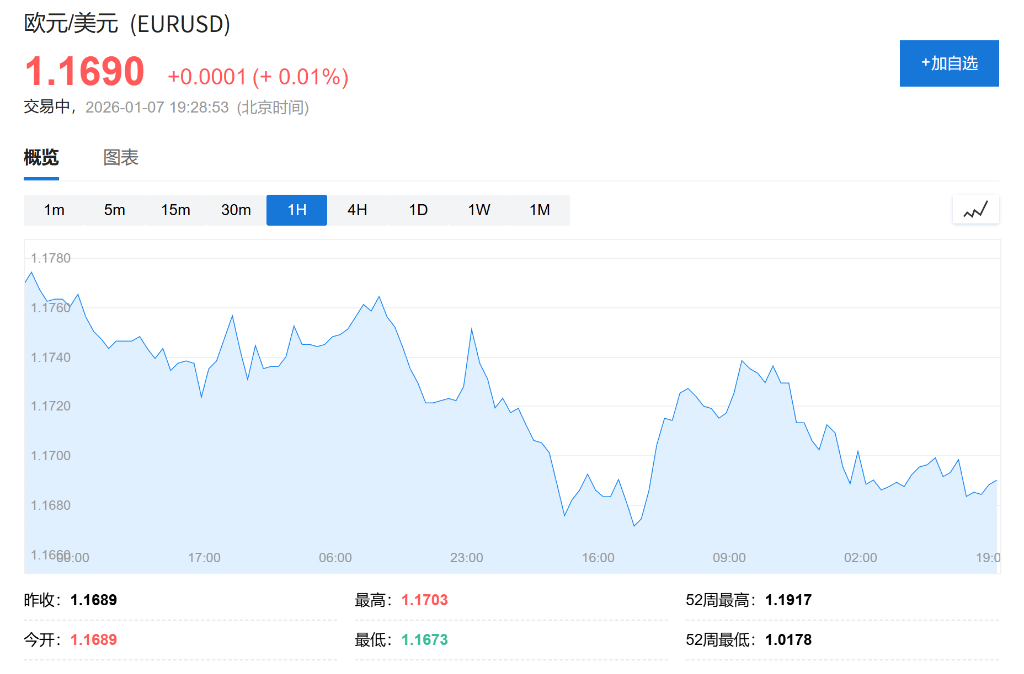
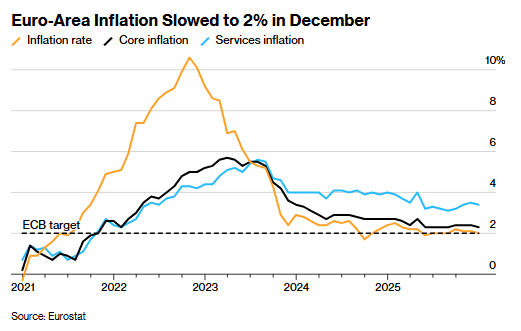
欧洲央行去年12月决定维持欧元区三大关键利率不变,这是其自去年7月以来连续第四次维持利率 不变。市场人士认为,当前地缘政治紧张、能源价格波动以及全球贸易环境变化等多重不确定因素交 织,欧洲经济和通胀前景仍面临较大不确定性。 【纠错】 【责任编辑:王雪】 新华社布鲁塞尔1月7日电(记者康逸)欧盟统计局7日公布的初步统计数据显示,欧元区去年12月 通胀率按年率计算为2.0%,低于11月的2.1%,达到欧洲央行设定的目标水平。 数据显示,欧元区去年12月食品和烟酒价格上涨2.6%,服务价格上涨3.4%,非能源类工业产品价 格上涨0.4%,能源价格下降1.9%。当月,剔除能源、食品和烟酒价格的核心通胀率为2.3%。 从国别来看,欧元区主要经济体德国、法国、意大利和西班牙去年12月通胀率分别为2.0%、 0.7%、1.2%和3.0%。 分析人士指出,欧洲央行认为通胀处于可控状态,但由于全球经济仍存在不确定性,对于未来货币 政策走向仍持谨慎态度。 ...
欧元区12月CPI放缓至2%,市场预期欧央行将长期“按兵不动”
Hua Er Jie Jian Wen· 2026-01-07 12:41
Core Insights - Eurozone inflation has returned to the European Central Bank's (ECB) target level of 2%, reinforcing the decision-makers' stance to maintain current interest rates unless significant changes in the economic outlook occur [1] - The December Consumer Price Index (CPI) rose by 2% year-on-year, down from 2.1% previously, aligning with economists' expectations [1] - Core inflation, excluding volatile food and energy prices, decreased from 2.4% in November to 2.3% in December, while service sector inflation also fell from 3.5% to 3.4% [1] Market Reaction - Following the data release, market reactions were relatively muted, with the euro holding steady against the dollar around 1.169 and the Stoxx 600 index showing no significant fluctuations [2] Interest Rate Outlook - Despite the return to target inflation potentially providing grounds for future rate cuts, traders have only slightly increased bets on monetary easing, with a 20% probability of a 25 basis point cut by September [5] - The ECB has maintained borrowing costs unchanged since the last rate cut in June, with the key deposit facility rate currently at 2% [5] - Economists and investors generally expect no further policy actions from the ECB in the foreseeable future [5] Inflation Disparities and Wage Pressures - While overall inflation slowdown meets expectations, there are significant disparities in price growth across the Eurozone, with Spain at 3%, Germany at 2%, and France at 0.7% [6] - Service sector inflation remains a primary concern for the ECB, with wage growth indicators in Q3 holding steady at 4%, above levels considered consistent with price stability [6] - ECB President Christine Lagarde indicated that while wage growth has largely caught up post-pandemic, the central bank needs to "carefully observe related trends" [6] Decision-Maker Stance and Market Projections - Most decision-makers believe inflation is under control but remain cautious due to persistent global economic uncertainties [7] - Analysts from Nordea maintain a long-term view that the ECB will keep rates unchanged until 2026, with short-term risks leaning towards rate cuts and long-term risks towards hikes [7] - The ECB's forecast suggests that inflation will be slightly below target in 2025, with an average inflation rate of 1.9% expected in 2026, followed by a rise to 2% in 2028 [7] External Factors and Risks - Several external factors could lead to inflation deviating from the target, including the delayed effects of U.S. tariff policies, a strong euro, and potential fiscal expansion policies in Germany [8] - ECB officials have indicated that the easing cycle is nearing its end, emphasizing a data-dependent decision-making approach [8]

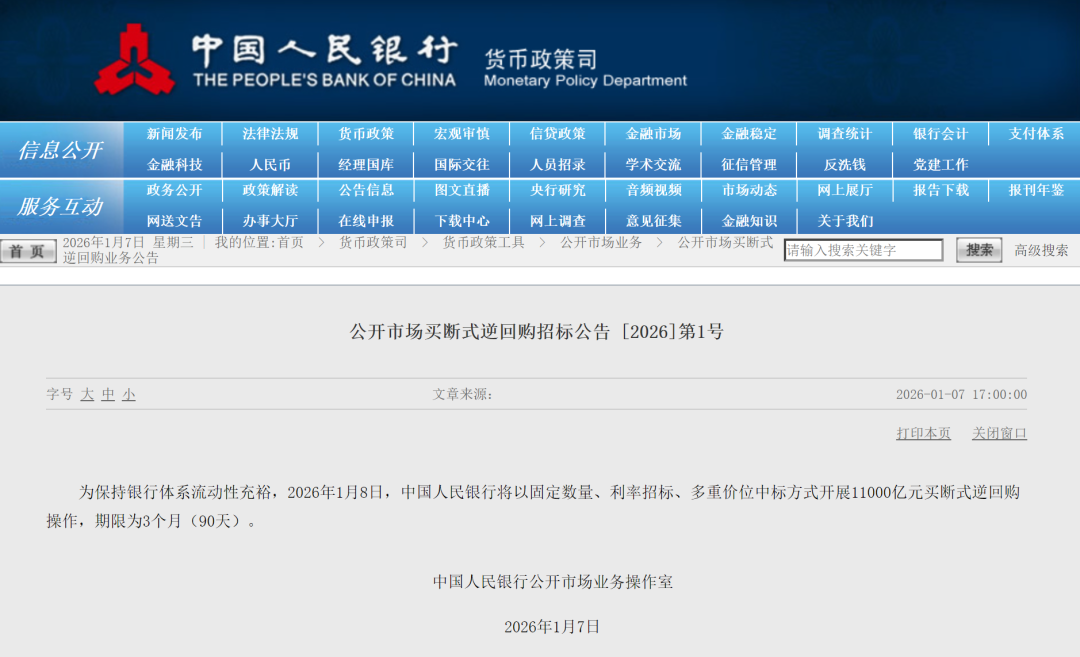
央行预告开展11000亿元买断式逆回购
Feng Huang Wang· 2026-01-07 12:31
Group 1 - The central bank announced a 1.1 trillion yuan reverse repurchase operation on January 8 to maintain ample liquidity in the banking system, marking the third consecutive month of equal-scale operations [1] - The upcoming maturity of 1.1 trillion yuan in 3-month reverse repos on January 8 indicates a continuation of the policy tool without increasing the scale, reflecting the central bank's strategy to manage liquidity [1] - Market analysts expect the central bank to conduct another 6-month reverse repurchase operation in January, with a likelihood of increasing the scale due to the upcoming maturity of 600 billion yuan [1][4] Group 2 - Factors affecting the funding environment in January include credit demand, tax payments, government bond repayments, and cash withdrawals for the Spring Festival, which may tighten liquidity [2][3] - The anticipated issuance of local government bonds in January, following the early allocation of the 2026 debt limit, is expected to contribute to a tighter funding situation [4] - The first month of the year typically sees higher tax payments, which will further impact the liquidity landscape, as companies confirm and declare their previous year's income tax [4] Group 3 - Analysts predict that the central bank may increase its purchases of government bonds in January, with a possibility of a reserve requirement ratio (RRR) cut before the Spring Festival [6] - The overall expectation for the first quarter of 2026 includes potential interest rate cuts and reserve requirement reductions, with liquidity easing being a significant factor [5][6] - The central bank's approach in January is expected to be less aggressive in tightening liquidity compared to previous years, indicating a potential increase in government bond transactions and a higher likelihood of RRR cuts [6]
11000亿元!央行公布将开展买断式逆回购操作
Jin Rong Shi Bao· 2026-01-07 12:29
Core Viewpoint - The People's Bank of China (PBOC) will conduct a 1.1 trillion yuan reverse repurchase operation on January 8, 2026, to maintain ample liquidity in the banking system, marking the third consecutive month of this policy tool being implemented at the same amount [1][6]. Group 1: Reverse Repo Operations - On January 8, 2026, the PBOC will carry out a fixed quantity, interest rate tender, multi-price bidding reverse repurchase operation amounting to 1.1 trillion yuan, with a term of three months (90 days) [1]. - The operation on January 8 will coincide with the maturity of another 1.1 trillion yuan three-month reverse repurchase, indicating a continuation of the same amount for the third month in a row [6]. - The decision not to increase the amount of the three-month reverse repurchase may relate to the funding demand structure of financial institutions, and does not indicate a reduction in liquidity provision by the PBOC [6]. Group 2: Liquidity Management Tools - The PBOC has established a comprehensive set of liquidity management tools to effectively respond to short-term fluctuations in fiscal revenue, government bond issuance, and maintain overall stability in the monetary market [6]. - Recent innovations in liquidity management include incorporating government bond trading into the monetary policy toolbox and creating two new monetary policy tools to support the capital market, which will enhance the effectiveness of liquidity management [6]. - The liquidity tool system in China aligns with international practices, covering a range of tools that support daily liquidity supply and temporary liquidity needs, reflecting a professional and effective monetary policy adjustment [7].
欧元区通胀精准达标2% 欧央行利率维稳逻辑再夯实
智通财经网· 2026-01-07 12:16
智通财经APP获悉,最新数据显示,欧元区通胀率已回落至欧洲央行设定的目标区间,这印证了政策制 定者的观点——只要经济前景不出现显著变化,基准利率就可以维持当前水平。 在2025年最后一次货币政策会议上,欧洲央行预计,今年通胀率仅会小幅低于目标水平,较此前预测有 所上调,反映出服务业成本的放缓速度低于预期。 此前公布的多项数据显示,欧元区各成员国物价涨幅均出现回落,但回落节奏存在差异。其中,西班牙 通胀率降至3%,法国放缓至0.7%,德国则回落至2%的目标水平。 交易员则加大了对货币宽松政策的押注,市场定价显示,今年9月前降息幅度或达5个基点,这相当于出 现25个基点降息的概率为20%。受此影响,欧元兑美元汇率扭转早盘跌势,在1.169附近持平。 欧元区高级经济学家David Powell表示:"欧元区12月通胀放缓对欧洲央行而言是利好消息,但这一变化 或许与货币政策关联不大——本次通胀下行由能源成本走低驱动,航空票价等波动性商品价格的回落或 许也是原因之一。" 目前,欧洲央行多数政策制定者认同通胀已处于可控范围,但他们对下一步政策走向仍持谨慎态度,强 调全球经济尚存的不确定性风险。 Nordea分析师Ande ...
一财首席经济学家调研:2025年经济运行稳中有进,顺利收官
Di Yi Cai Jing· 2026-01-07 11:52
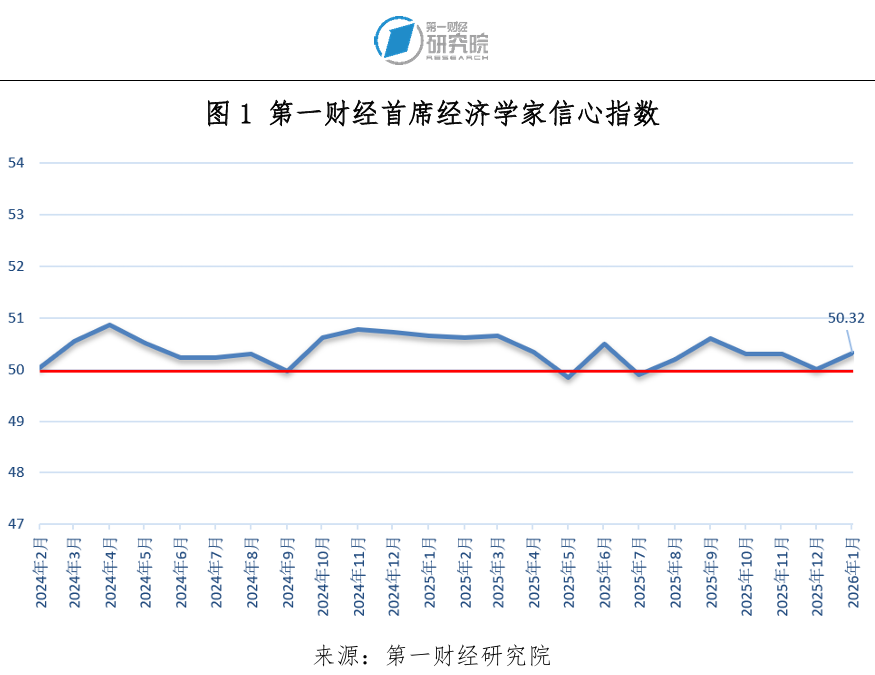
Core Viewpoint - Economists expect future policies to maintain continuity, stability, and flexibility, with a focus on promoting high-quality economic development and reasonable price recovery [1][24][26]. Economic Indicators - The Chief Economist Confidence Index for January 2026 is reported at 50.32, indicating a recovery and maintaining a prosperous state [5]. - Predictions for December 2025 include a CPI year-on-year growth rate of 0.8%, a PPI year-on-year decline of 2%, and an industrial added value growth rate of 4.9% [1][7][10]. - Fixed asset investment is expected to decline by 2.2%, while social retail sales are projected to grow by 1.8% [1][9][11]. - The trade surplus is forecasted at $1113.5 billion, with new loans expected to reach 7182.5 billion yuan [1][15][18]. - M2 money supply is predicted to grow by 8% year-on-year [21][22]. Policy Outlook - The People's Bank of China emphasizes the use of various monetary policy tools, including potential interest rate cuts and reserve requirement ratio reductions, to support economic growth [1][24][25]. - Fiscal policy is expected to be more proactive, with an increase in central budget investments and a focus on optimizing expenditure structures [5][24][26]. Sector-Specific Insights - The real estate market continues to face challenges, with a predicted decline in real estate development investment of 15.8% [12][14]. - Consumer spending is under pressure, with retail sales growth expected to slow due to seasonal effects and high base comparisons from the previous year [9][10]. - Manufacturing investment remains stable, supported by exports and production, despite a decline in foreign investment impacting private sector investment [6][10].
11000亿元等量续作! 专家:预计月内买断式操作将加量续作
Sou Hu Cai Jing· 2026-01-07 11:32
Group 1 - The People's Bank of China (PBOC) will conduct a 1.1 trillion yuan reverse repurchase operation on January 8, 2026, to maintain ample liquidity in the banking system, marking the third consecutive month of the same amount of operation [1] - The 1.1 trillion yuan reverse repurchase operation on January 8 corresponds to the maturity of the same amount of 3-month reverse repos, indicating a continuation of liquidity support [1] - Analysts suggest that the lack of an increase in the 3-month reverse repurchase operation may relate to the funding needs of financial institutions, and does not indicate a reduction in liquidity provision by the PBOC [1] Group 2 - The early issuance of the 2026 local government debt limit aims to support funding needs for major projects and bolster economic recovery, leading to a significant scale of government bond issuance in January [2] - The completion of 500 billion yuan in new policy financial tools in October 2025 is expected to drive rapid growth in loans in January, enhancing the "opening red" effect of credit [2] - The PBOC is likely to inject medium-term liquidity through reverse repos to counter potential tightening of liquidity, while also signaling continued supportive monetary policy [2]
张斌:货币政策如何扩大内需
3 6 Ke· 2026-01-07 11:10
Group 1: Monetary Policy and Demand Expansion - Monetary policy can expand domestic demand by changing the interaction behaviors of countless micro-individuals, encouraging businesses to invest and residents to buy homes and consume [1][7] - The key to achieving these changes lies in the central bank's firm stance on inflation targets and significantly lowering policy interest rates [1][14] - Fiscal policy complements monetary policy by increasing government spending and leveraging its multiplier effect to expand domestic demand [1] Group 2: Historical Context and Examples - Since the 1990s, central banks have been the main force behind policies to expand domestic demand, often relying solely on monetary policy [1] - During the 2008 financial crisis, the Federal Reserve, under Bernanke, lowered the federal funds rate from 5.25% to 0.25%, a reduction of 500 basis points, which led to a significant rebound in the S&P 500 index [3] - Japan's central bank, under Kuroda, adopted aggressive monetary policies, including quantitative easing and negative interest rates, which resulted in a substantial increase in the Nikkei 225 index and a recovery in housing prices [5][6] Group 3: Current Economic Challenges in China - China's economy is currently facing challenges of insufficient demand, with private fixed asset investment experiencing negative growth for the first time since 2005, at -0.4% in 2023 [12][13] - Consumer confidence remains low despite some recovery in capital markets and a slight improvement in expectations following proactive counter-cyclical policies [12] - The attractiveness of private investment is low, with the difference between return on assets (ROA) and long-term financing rates at only 0.2% in 2024, the worst level in 20 years [13] Group 4: Mechanisms for Stimulating Investment and Consumption - To stimulate investment and consumption, the central bank must clearly communicate future inflation targets and further reduce policy interest rates, making investments and home purchases more attractive [14] - The relationship between interest rates and housing prices is significant; even a small decrease in interest rates can create substantial upward pressure on housing prices [10][11] - For businesses, lower interest rates reduce financing costs, while for residents, they influence the decision to buy or rent, impacting overall demand [9][10]
焦炭日报:短期延续反弹-20260107
Guan Tong Qi Huo· 2026-01-07 11:10
Report Industry Investment Rating - Not provided Core View of the Report - The coking coal supply and demand pattern is directly affected by upstream coking coal costs, downstream steel demand, and macro - policy orientation. With the coking coal comprehensive inventory at a moderately high level and overall weak supply and demand, the short - term demand is boosted by the seasonal inventory build - up of downstream steel mills, a slight increase in hot metal production, and on - demand restocking. Macro - level interest rate cut expectations from the domestic central bank and the Fed greatly boost market confidence, and the short - term market trading logic shifts to strong macro - expectations. It is expected that coking coal will continue to rebound in the short term, and a low - buying strategy is recommended [1][2] Summary by Related Catalogs Market Analysis - **Coke Inventory**: As of December 31, the inventory of independent coking enterprises decreased 0.69% month - on - month to 91.6 million tons, steel mill inventory increased 0.28% to 643.99 million tons, port inventory slightly decreased to 243.09 million tons, and the comprehensive inventory slightly increased 0.04 million tons to 978.68 million tons, with the year - on - year increase narrowing to 2.93% [1] - **Profit**: The average profit per ton of 30 independent coking plants nationwide was - 14 yuan/ton. The average profit of Shandong quasi - first - grade coke increased slightly to 1 yuan/ton (also mentioned as 34 yuan/ton, possible error in the report), Inner Mongolia second - grade coke decreased slightly to - 67 yuan/ton, and Hebei quasi - first - grade coke was 43 yuan/ton [1] - **Downstream Demand**: Steel prices fluctuated in the short term, with apparent demand in a seasonal contraction phase. The profitability rate of 247 steel mills rose to 38.1%, and the daily hot metal output increased 0.85 million tons week - on - week to 227.43 million tons, 2.23 million tons more than last year [1] - **Upstream Coking Coal Inventory**: Coal mine coking coal inventory increased 3.68% to 293.3 million tons, port inventory increased 4.17% to 539.48 million tons. Independent coking enterprises' inventory slightly increased to 1052.5 million tons, and steel mill inventory decreased 0.55% to 802.27 million tons. The comprehensive inventory increased 40.31 million tons to 2687.55 million tons, with a year - on - year decrease of nearly 14% [2] - **News**: The central bank's working conference from January 5 - 6 continued to implement a moderately loose monetary policy. Fed Governor Milan said the Fed needs to cut interest rates by more than one percentage point in 2026 [2] Futures and Spot Market - **Futures**: The 05 - contract coke opened at 1650, closed at 1773, hitting the daily limit, with an increase of 1679 lots. It is expected to continue the short - term rebound, and attention should be paid to the support of the 20/40 - day moving averages and the pressure near the previous high [4] - **Spot**: The spot prices of quasi - first - grade (wet - quenched) coke, quasi - first - grade (dry - quenched) coke, and first - grade (wet - quenched) coke were 1440 yuan/ton, 1640 yuan/ton, and 1540 yuan/ton respectively [5]
国债期货震荡小幅调整
Bao Cheng Qi Huo· 2026-01-07 11:04
期货研究报告 投资咨询业务资格:证监许可【2011】1778 号 国债期货 | 日报 2026 年 1 月 7 日 国债期货 专业研究·创造价值 国债期货震荡小幅调整 核心观点 今日国债期货均震荡小幅回调。央行表示 2026 年要继续实施好适度宽 松的货币政策,具体方面的表述是"灵活高效运用降准降息等多种货币政策 工具",这说明降息的条件会根据外部货币环境以及国内经济基本面综合考 虑。考虑到短期内宏观数据表现较强韧性,货币政策宽松的紧迫性下降,叠 加一季度国债密集发行带来的供给端压力,国债期货价格承压。当然中长期 来看内需有效需求不足的问题仍需偏宽松的货币信用环境,未来仍存降息 可能性,国债期货支撑力量仍存。总的来说,预计短期内震荡整理为主。 (仅供参考,不构成任何投资建议) 姓名:龙奥明 宝城期货投资咨询部 从业资格证号:F3035632 投资咨询证号:Z0014648 电话:0571-87006873 邮箱:longaoming@bcqhgs.com 作者声明:本人具有中国期货 业协会授予的期货从业资格证 书,期货投资咨询资格证书, 本人承诺以勤勉的职业态度, 独立、客观地出具本报告。本 报告清晰准确地反 ...