自有品牌

Search documents
Revolve(RVLV) - 2025 Q2 - Earnings Call Transcript
2025-08-05 21:30
Financial Data and Key Metrics Changes - Net sales increased by 9% year over year, reaching $309 million for the first time in quarterly revenue [29][30] - Adjusted EBITDA rose by 12% year over year, with an adjusted EBITDA margin of 7.4%, the highest in three years [35] - Free cash flow for the first six months of 2025 was $52 million, nearly three times the full-year free cash flow achieved in 2024 [5][36] - Cash and cash equivalents grew to an all-time high of $311 million, a 27% increase year over year [10][37] Business Line Data and Key Metrics Changes - Revolve segment net sales increased by 9% year over year, while FORWARD segment net sales increased by 10% [30] - Domestic net sales grew by 7%, and international net sales increased by 17% year over year [30] - The return rate decreased by more than 1.5 points year over year, contributing to improved profitability [9] Market Data and Key Metrics Changes - International markets showed strong growth, particularly in China, where sales more than doubled over the past two years [12] - The company reported a 17% increase in international net sales, with nearly all regions experiencing double-digit growth [11][30] - The luxury market overall declined year over year, but the company gained market share [7] Company Strategy and Development Direction - The company is focused on expanding brand awareness, growing the customer base, and enhancing connections with the next generation of consumers [10] - Continued investment in owned brands is a priority, as they generate higher margins compared to third-party brands [24] - The company is exploring physical retail opportunities, with plans to open a new store in Los Angeles by the fourth quarter [26] Management's Comments on Operating Environment and Future Outlook - Management expressed confidence in navigating the current volatile environment, citing strong cash flow and a solid balance sheet [44] - The company anticipates that tariff mitigation efforts will improve gross margins over the long term [39] - Management noted that while the tariff landscape remains uncertain, recent improvements in tariff mitigation have been promising [39] Other Important Information - The company has successfully implemented AI-driven enhancements to improve the shopping experience and operational efficiency [14][15] - Marketing investments represented 15.2% of net sales, remaining flat year over year [32] - The effective tax rate increased to 33.7% due to certain discrete tax items [34] Q&A Session Summary Question: Can you elaborate on the tariff mitigation efforts and their long-term benefits? - Management indicated that partnerships with brands have been strengthened due to tariff pressures, which should yield long-term benefits [46][47] Question: How should pricing be adjusted in response to tariffs? - Price increases are expected to be mid-single digits in Q3, with adjustments made in line with market trends [49][50] Question: What are the trends in U.S. versus international sales? - International sales showed strong double-digit growth, particularly in China, while U.S. sales increased by 7% [53][57] Question: What is the impact of tariffs on gross margin? - Tariffs had a negative impact in Q2, but this was offset by improvements in markdown margins and owned brand sales [65][66] Question: What progress has been made in reducing return rates? - Management is optimistic about reducing return rates further, although tougher comparisons are expected in the second half of the year [68][69] Question: What advancements have been made in AI initiatives? - The company has made significant progress in AI enhancements, including improvements in search algorithms and customer service technologies [70][72]

从东哥同款啤酒到风油精软糖,京东七鲜如何打造爆款自有品牌商品矩阵?
Sou Hu Cai Jing· 2025-08-04 11:26
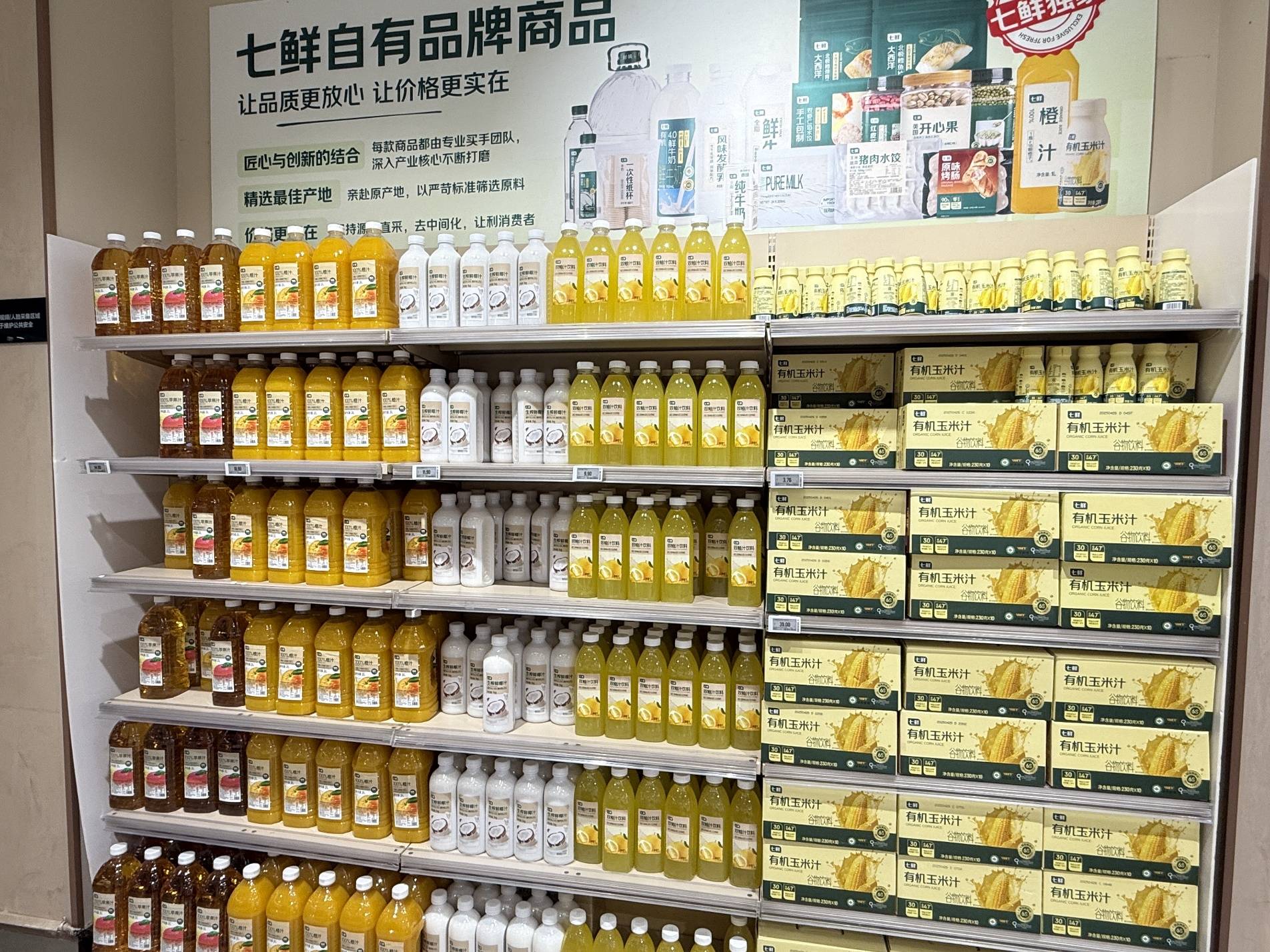
Core Insights - JD Qixian's private label products are gaining popularity among consumers due to their quality and affordability, supported by JD's robust supply chain [1][5] - The product range includes dairy, beverages, grains, snacks, and more, with several items quickly becoming social media hits, indicating strong consumer recognition [3][5] - The success of products like the "wind oil candy" reflects a deep understanding of Gen Z consumers' needs for novelty and functionality [5][7] Product Offerings - JD Qixian offers a variety of private label products, including 100% coconut water, organic milk, and Pilsner beer, all priced competitively [1][3] - Unique items such as the "wind oil candy" and "whole lychee cocktail" have become popular among young consumers, showcasing innovative flavors and concepts [3][5] Consumer Engagement - The company has effectively tapped into the curiosity and social attributes of Gen Z, leading to viral trends and increased product visibility [5][7] - The focus on product repurchase rates and user feedback highlights the company's commitment to quality and customer satisfaction [5] Industry Trends - The rise of private label brands in instant retail is becoming a trend, with companies needing to prioritize product innovation and quality control to stand out in a competitive market [7]


战略调整+政策红利双驱动 汇通达网络(09878)获花旗看好 维持“买入”评级、目标价23港元
智通财经网· 2025-08-01 02:01
Core Viewpoint - Citibank has updated its research report on HuTongDa Network (09878), highlighting a clear path for profit improvement following the company's strategic adjustments and benefiting from policy incentives such as "national subsidies" [1] Business Segments - The company efficiently assists member stores in completing national subsidy qualification applications, which will boost revenue scale [1] - High-margin proprietary brand products are expected to significantly enhance overall profitability [1] - In terms of service, the company integrates mainstream large language models (LLM) to launch AI+SaaS tools, improving product usability and customer penetration, while exploring new growth engines for profit conversion based on increased user stickiness [1] News Highlights - Since July, HuTongDa Network's Wind ESG rating has been upgraded from BBB to AA [1] - The company ranked eighth in the "Top 100 Online Retailers in China 2025" list published by CCFA and Deloitte China [1] - Strategic agreements have been signed with leading hearing aid brands and national high-tech enterprise BoYin Hearing [1] - The second phase of the intelligent manufacturing factory for air conditioning in Jiangxi Gongqingcheng, in which the company holds shares, has been successfully completed and is in production, with products targeting both domestic and overseas markets [1]
丽人丽妆股价微涨0.10% 实控人股权纠纷仍在执行中
Jin Rong Jie· 2025-07-30 17:23
Group 1 - The stock price of Liren Lizhuang on July 30 was 9.80 yuan, an increase of 0.01 yuan, representing a 0.10% rise [1] - The trading volume for the day was 138,145 hands, with a transaction amount of 1.35 billion yuan [1] - Liren Lizhuang's main business includes e-commerce retail of cosmetics and brand marketing services, primarily operating official flagship stores on platforms like Tmall [1] Group 2 - The company operates multiple international beauty brands while also developing its own brand business [1] - Recent announcements indicate that the actual controller, Huang Tao, needs to split approximately 16.7475 million shares with his ex-wife, accounting for 4.18% of the company's total share capital [1] - The company expects a net profit loss attributable to the parent company of 30 million to 42.5 million yuan in the first half of 2025, mainly due to a decline in operating income and investments in its own brand strategy [1]

热搜爆了!胖东来,酝酿大动作
Jing Ji Wang· 2025-07-24 08:10
Core Viewpoint - The founder of Pang Donglai, Yu Donglai, announced on Douyin that the company is accelerating its layout in the milk powder and dairy products business, focusing on livelihood supply and food safety [1] Company Summary - Pang Donglai has not yet disclosed specific product details, partner brands, or a timeline for the launch of its self-operated milk powder [4] - The company's self-operated brand has shown remarkable growth, with sales increasing from 75 million yuan in 2022 to 250 million yuan in 2023, and projected to reach 2 billion yuan in 2024, with a target of 6 billion yuan by 2025 [4] - The successful launch of self-operated products, such as the collaboration with the well-known liquor company Jiugui Liquor, has boosted Pang Donglai's confidence to enter other high-demand categories [5] Industry Summary - Consumer demand for milk powder quality and safety in China has reached unprecedented levels, aligning well with Pang Donglai's established brand image of "quality and trust" [6] - The Chinese milk powder industry is currently undergoing a deep adjustment period, with market size expanding but growth rates slowing due to factors such as declining birth rates and increased market competition [6] - According to AC Nielsen, the sales of infant formula milk powder are expected to decline by 7.4% in 2024, while adult milk powder continues to grow steadily with a year-on-year increase of 3.3% [6]

胖东来计划做奶粉,自营产品版图再扩张
Xin Lang Cai Jing· 2025-07-24 01:38
Group 1 - The core viewpoint is that Pang Donglai is expanding its product range to include milk powder and dairy products, aiming to enhance food supply and safety for consumers [1] - Pang Donglai, founded in 1995, has grown into a significant retail enterprise with 13 stores, over 10,000 employees, and an annual revenue of 10.7 billion yuan [1] - The company's self-owned brand sales have surged from 75 million yuan in 2022 to 250 million yuan in 2023, and are projected to reach 2 billion yuan in 2024, indicating a rapid growth trend [1] Group 2 - The Chinese milk powder industry is currently undergoing a deep adjustment period, with market expansion slowing due to declining birth rates and intensified competition [2] - In 2024, the sales of infant formula milk powder are expected to decline by 7.4%, while adult milk powder is projected to grow by 3.3% year-on-year [2] - The high-end milk powder segment is gaining market share, with products priced above 300 yuan driving a gross margin of 71.3% [2] Group 3 - The competitive landscape is shifting towards a "dual-super-multiple-strong" structure, with the top brands, Feihe and Yili, controlling about one-third of the market [2][3] - Other brands like Lebao, Ausnutria, and Mead Johnson form the second tier, with market shares ranging from 5% to 8% [3] - Pang Donglai's entry into the milk powder market could invigorate the sector, but it faces significant challenges due to strict regulations and established competitors [4]
叮咚买菜设10个独立事业部,强化供应链和自有品牌
Jing Ji Guan Cha Wang· 2025-07-23 03:14
Core Insights - The company is shifting from a traffic and platform-centric approach to a product and ecosystem mindset, focusing on fresh produce and food supply chain [1] - An organizational restructuring has been initiated to enhance product quality and differentiation, creating 10 independent divisions based on major product categories [1] - The company has developed several proprietary brands and is exploring further expansion into self-owned brands [1][2] Company Strategy - The restructuring involves 10 independent divisions that encompass product development, operations, and quality control, each led by a core executive [1] - The company aims to enhance its self-owned brand strategy, having already launched various brands across different categories [1] - The company is also expanding its sales channels beyond its own platform to include major online platforms and offline retail channels [2] Financial Performance - In Q1 of this year, the company's GMV reached 5.96 billion yuan, a year-on-year increase of 7.9%, while revenue was 5.48 billion yuan, up 9.1% [3] - The net profit under GAAP standards was 8.017 million yuan, with a net profit margin of 0.1% [3] - The improvement in business metrics is attributed to strategic adjustments and organizational changes [3]

RUI快报:中国消费者对自有品牌的接受度正在提升
Sou Hu Cai Jing· 2025-07-23 03:05
Group 1: Beer Export Growth - In June, China's beer export volume reached 8,877 million liters, representing a year-on-year increase of 56.5% [5] - The export value for June was 46,328 million yuan, showing a significant growth of 64.3% compared to the previous year [5] - For the first half of the year, cumulative beer export volume was 40,122 million liters, up 24.1%, while the cumulative export value reached 201,545 million yuan, an increase of 27.7% [5] Group 2: Market Dynamics and Trends - Major brands like Tsingtao and Snow Beer are strengthening their domestic presence while actively exploring emerging markets in Southeast Asia, Europe, and Africa [3] - High-value products, such as craft beer, are driving export growth and contributing to a steady increase in export prices [3] - The development of cross-border e-commerce platforms is providing new channels for small and medium-sized breweries to reach overseas consumers [3] Group 3: Consumer Behavior and Brand Perception - A Nielsen IQ global survey indicates that 56% of Chinese consumers are willing to increase their purchases of private label brands, which is above the global average [6] - Nearly 70% of consumers believe private label brands offer outstanding value for money, and 62% see them as potential substitutes for branded products [6] - The sales growth of private label brands has significantly outpaced that of manufacturer brands, although their average price remains 16% lower than that of manufacturer brands [8] Group 4: Industry Innovations and Future Outlook - The Chinese beer industry is transitioning from scale expansion to value creation, becoming a global leader in innovation [3] - Companies that integrate Chinese cultural elements, modern brewing technology, and sustainable development concepts are expected to gain a unique competitive advantage in the global market [3] - The ongoing construction of the Fenjiu 2030 technical transformation project, with a total investment of 9.1 billion yuan, aims to achieve an annual production capacity of 51,000 tons of raw liquor [9]

匠心家居(301061):25Q2业绩超预期,市场布局持续优化
Huaan Securities· 2025-07-20 09:41
Investment Rating - The report maintains a "Buy" rating for the company [4] Core Viewpoints - The company reported a strong performance in H1 2025, with a net profit attributable to shareholders expected to be between 410-460 million yuan, representing a year-on-year growth of 43.70%-61.23% [3] - The growth in performance is attributed to continuous optimization of market layout, product structure upgrades, improved internal operational efficiency, and effective control of period expenses [3] - 78% of the company's products are exported to the US via Vietnam, indicating limited impact from reciprocal tariffs [3] - The company is positioned as a significant ODM supplier in the global smart electric sofa and bed industry, with a robust overseas capacity layout and an integrated supply chain [4] Financial Projections - Revenue projections for 2025-2027 are 3.379 billion, 4.141 billion, and 4.785 billion yuan, with year-on-year growth rates of 32.6%, 22.5%, and 15.6% respectively [4] - Net profit attributable to shareholders is projected to be 902 million, 1.094 billion, and 1.268 billion yuan for the same period, with year-on-year growth rates of 32.0%, 21.3%, and 15.9% respectively [4] - The expected EPS for 2025-2027 is 4.14, 5.03, and 5.83 yuan, with corresponding P/E ratios of 22, 18, and 15 [4]
奥乐齐双店同开,重资产降维打击
Sou Hu Cai Jing· 2025-07-20 06:05
Core Viewpoint - Aldi is expanding its presence in East China with the opening of new stores in Suzhou and Wuxi, aiming to reach a total of 76 stores nationwide by July 2025, with a strong performance in these new locations compared to existing stores in Shanghai [2][3]. Expansion Strategy - Aldi's new stores in Suzhou and Wuxi are strategically located in high-traffic areas, indicating a focused approach to site selection as it expands beyond Shanghai [3]. - The company has experienced significant sales performance in its new stores, with early results placing them among the top three in sales within Aldi's existing store network [3]. Market Factors Supporting Growth - The competitive landscape in East China is less intense compared to Shanghai, allowing Aldi to operate with lower rental and labor costs, which is beneficial for its community-focused business model [5][6][8]. - Aldi's unique business model, which includes a focus on high-quality, low-priced products, is relatively rare in the Chinese market, providing a competitive edge as it enters less saturated markets [8][10]. Brand Influence - Aldi's brand recognition, built through its successful operations in Shanghai, is expected to facilitate its expansion into East China, leveraging established supply chains and consumer familiarity [12][13][14]. - The company has achieved a significant market penetration in Shanghai, with a reported 38% year-on-year growth in fresh food sales and nearly 25% of Shanghai households purchasing fresh food from Aldi [12]. Supply Chain Efficiency - Aldi has localized its supply chain, with over 80% of its suppliers being domestic, which enhances its operational efficiency in the East China market [15]. - The company has established a logistics network centered around Shanghai, ensuring efficient supply chain management for its new stores in Jiangsu [16]. Development Strategy - Aldi's approach in China is characterized by a "heavy asset" strategy, focusing on substantial investments in logistics and store infrastructure rather than a light asset model [18][19]. - The company continues to prioritize high-traffic and convenient locations for its stores, which aligns with its operational model and market strategy [21][22]. Differentiation Strategy - Aldi emphasizes differentiation through various strategies, including no membership fees, small packaging options, a focus on a limited number of high-quality SKUs, and a strong presence of private label products [27][28][29]. - The company aims to enhance customer experience through self-checkout systems, positioning itself as a leader in automation within the community retail sector [25].