
通胀风险

Search documents
欧央行7月会议纪要:通胀风险大致平衡,按兵不动是稳健之举
Hua Er Jie Jian Wen· 2025-08-28 17:00
Core Viewpoint - The European Central Bank (ECB) decided to maintain interest rates unchanged during the July monetary policy meeting, citing balanced inflation risks and resilience in the Eurozone economy despite external challenges [1][2]. Group 1: Interest Rate Decisions - The ECB officials believe that the current interest rate level is appropriate as inflation is close to the 2% target, and the decision to keep rates steady is seen as a "prudent move" [1][2]. - The current deposit rate stands at 2%, which is considered to be in the "neutral range" following eight consecutive rate cuts since the end of last year [2]. Group 2: Inflation Outlook - The ECB expects overall inflation to remain around current levels for the remainder of 2025, with a projected decline to approximately 1.5% by the first quarter of 2026 [3]. - Core inflation is currently at 2.3%, the lowest in three years, with expectations of a further drop to 2% by early next year [3]. Group 3: Communication Strategy - The ECB emphasizes the need for cautious and neutral communication regarding future rate decisions, avoiding overly explicit signals [2]. - The committee maintains a flexible approach to respond swiftly to necessary changes based on evolving data and uncertainties [3].
特朗普掀罢免潮?前美联储副主席:多位地区联储主席或遭撤换
Feng Huang Wang· 2025-08-27 03:57
Core Viewpoint - Former Federal Reserve Vice Chair Lael Brainard warns that multiple regional Fed presidents may be dismissed next year due to politically motivated actions by President Trump, which could disrupt the Fed's independence and monetary policy [1][5] Group 1: Federal Reserve Leadership Changes - Trump's recent dismissal of Fed Governor Cook opens the door for potential changes in the leadership of the Federal Reserve, allowing Trump to gain a majority on the seven-member Board of Governors [2] - Currently, there are two known dovish members on the Fed Board, Bowman and Waller, and Trump has nominated Stephen Miran to fill a vacant seat [2] Group 2: Terms and Voting Procedures - According to the Federal Reserve Act, regional Fed presidents serve five-year terms, with renewals subject to board votes and approval from the Fed Board [2] - The Fed Board plans to vote on the reappointment of the 12 regional Fed presidents in February 2026, with five regional presidents having voting rights on interest rates each year [2] Group 3: Inflation Risks - Trump has criticized Fed Chair Powell and his colleagues for not lowering interest rates this year, citing concerns that Trump's tariff policies could reignite inflation [3] Group 4: Pressure on Federal Reserve Independence - Brainard views Trump's attack on Cook as part of a broader effort to exert pressure on the Federal Reserve, which she describes as an unprecedented attack on the Fed's independence [4][5] - She warns that attempts to alter the voting majority of the Federal Open Market Committee could lead to higher inflation, decreased credibility, and potentially higher long-term interest rates, which would be detrimental to the economy [5]
多数行业估值水平仍低于历史中位数 ——港股牛市观察
2025-08-26 15:02
Summary of Key Points from the Conference Call Industry Overview - The conference call primarily discusses the Hong Kong stock market (港股) and its performance in 2025, with a focus on various sectors including healthcare, non-essential consumer goods, and financial services [1][2][3]. Core Insights and Arguments - **Federal Reserve's Interest Rate Policy**: There is a strong expectation that the Federal Reserve will lower interest rates in September, with a probability exceeding 80% for two or more rate cuts by the end of the year. This is anticipated to lower the U.S. risk-free rate, attracting foreign capital into the Hong Kong market, thus providing liquidity support [1][2][5][6]. - **Sector Performance**: - The healthcare and non-essential consumer sectors have seen significant increases in trading activity in 2025, with healthcare nearly doubling in performance [3][9]. - The financial sector experienced a peak in trading volume in July but saw a decline in August. Despite this, it is the closest to breaking historical highs, with only a 3% gap remaining [3][13][14]. - Most sectors are still valued below the historical 50th percentile, indicating potential investment opportunities [3][11][12]. - **Market Valuation**: The overall valuation of the Hong Kong stock market remains attractive, with high dividend yields providing a safety net for investors. Most sectors have a PE ratio below the 50th percentile, except for real estate, construction, and telecommunications, which are above this threshold [3][11][12]. - **Future Market Outlook**: The expectation is that the Hong Kong stock market will perform better over the next decade compared to the past ten years, with economic growth correlating positively with stock market returns. The market is anticipated to rebound ahead of the real estate sector during downturns [3][8][16]. Other Important but Potentially Overlooked Content - **Inflation Risks**: The Federal Reserve views the impact of tariffs as likely temporary, but there are concerns about rising wages and consumer inflation expectations that could pose long-term inflation risks. Current data suggests these risks are low [7]. - **Real Estate Sector Challenges**: The real estate and construction sectors are currently the furthest from historical highs and face challenges despite recent policy support aimed at stabilizing the market [15]. - **Investment Preferences**: There is a noted preference among large funds, such as insurance companies, for high dividend yield assets in a low-interest-rate environment, which enhances the attractiveness of these investments [12]. This summary encapsulates the key points discussed in the conference call, providing insights into the current state and future outlook of the Hong Kong stock market and its various sectors.
海外宏观周报:美联储降息预期升温-20250826
China Post Securities· 2025-08-26 12:48
Group 1: Federal Reserve Insights - Jerome Powell indicated a shift towards dovish policies, emphasizing rising employment risks and a potential interest rate cut in September with a probability of about 90%[2][9] - The Federal Reserve has abandoned the average inflation target established in 2020, reverting to a 2% inflation target while maintaining a focus on employment risks[2][22] - The labor market is showing signs of weakness, with a decrease in hiring rates and a widening gap between non-farm employment and ADP employment figures, indicating potential downward revisions in future data[3][21] Group 2: Economic Indicators - The NAHB housing market index fell to 32 in August, nearing a ten-year low, reflecting ongoing weakness in the housing market[10] - Initial jobless claims and continuing claims have shown a slight upward trend, supporting concerns about the labor market[10][14] - The U.S. economy's second-quarter GDP growth was revised to an annualized rate of 3%, indicating resilience despite rising inflation risks[20] Group 3: Risks and Considerations - A significant improvement in employment data or a substantial pass-through of tariff costs to consumers could disrupt the Fed's rate-cutting plans[4][31] - The ongoing trade tensions and tariff adjustments may continue to impact consumer purchasing power and overall economic stability[21][24]
美联储预防式降息将至,美元资产会怎么走?
Xin Lang Cai Jing· 2025-08-26 10:01
Group 1 - Federal Reserve Chairman Jerome Powell signaled a dovish stance at the Jackson Hole conference, indicating an openness to interest rate cuts, which led to a significant market reaction with the Dow Jones rising by 2% to a new historical high [1] - The U.S. economy is showing signs of slowing, with new job additions averaging only 35,000 per month over the past three months, significantly below the expected 168,000 for 2024 [1] - Powell highlighted that inflation risks are currently tilted upwards while employment risks are leaning downwards, suggesting a cautious approach to policy adjustments [1] Group 2 - Analysts expect the Federal Reserve to cut rates by 25 basis points in September, primarily as a preventive measure against future economic uncertainties, with a total of up to two rate cuts anticipated within the year [4] - The stock market typically benefits from rate cuts due to improved liquidity and lower financing costs, which can enhance risk appetite [2][4] - The technology sector remains resilient and independent of traditional economic cycles, contributing to the recent highs in the stock market [5] Group 3 - The anticipated rate cuts are expected to address weaknesses in traditional demand, particularly in manufacturing and real estate, which have been adversely affected by high financing costs [6] - Market reactions to rate cuts often lead to upward adjustments in stock indices, with the S&P 500 potentially reaching around 6,400 to 6,700 points [4][6] - The long-term outlook for U.S. Treasury yields and the dollar may not necessarily decline significantly following rate cuts, as historical patterns suggest a rebound in yields and dollar strength post-cut [7]

DLS MARKETS:鲍威尔释放鸽派政策指引,美元兑印度卢比仍走高
Sou Hu Cai Jing· 2025-08-25 11:33
Group 1 - The Indian Rupee (INR) has weakened against the US Dollar (USD), reaching around 87.60, despite a general dollar sell-off following dovish signals from the Federal Reserve Chairman Jerome Powell [2][3] - Powell indicated that the current economic conditions may warrant adjustments to monetary policy, citing increasing downside risks in the labor market [2][3] - The ongoing trade tensions between the US and India are negatively impacting the performance of the Indian Rupee, preventing it from capitalizing on the dollar's weakness [2][3] Group 2 - The US is expected to increase tariffs on Indian goods to 50%, the highest rate among all trade partners, which could reduce the competitiveness of Indian products in global markets [4] - The Indian government is implementing tax cuts to mitigate the impact of global trade risks and boost domestic consumption, with new Goods and Services Tax (GST) reforms anticipated before the Diwali festival [4] - Foreign Institutional Investors (FIIs) have been withdrawing from the Indian stock market, with a total divestment of ₹257.51 billion in August, contributing to the pressure on the Indian Rupee [4] Group 3 - The Indian stock market initially rose due to the dovish stance of the Federal Reserve, but the Nifty50 index is struggling to maintain a critical support level of 24,900 points [4] - The upcoming release of the second-quarter GDP data is expected to be a key catalyst for the Indian Rupee's performance, with the first quarter showing an annualized growth rate of 7.4% [4] Group 4 - Technical analysis indicates that the USD/INR pair remains above the 20-day Exponential Moving Average (EMA) at approximately 87.35, suggesting a bullish short-term trend [5] - The Relative Strength Index (RSI) has rebounded from the 50.00 level, and a breakthrough above 60.00 could generate new bullish momentum [6] - Key support for the currency pair is at the July 28 low of 86.55, while resistance is noted at the August 5 high of 88.25 [6]
2025年杰克逊霍尔会议鲍威尔讲话解读:强调就业降温、释放鸽派信号,为9月降息打开空间
Dong Fang Jin Cheng· 2025-08-25 03:52
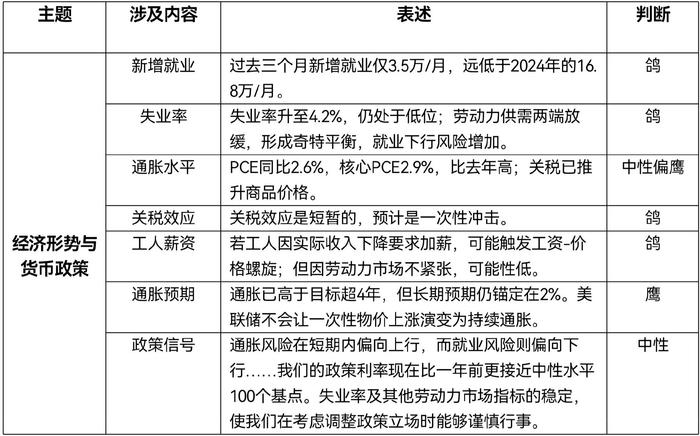
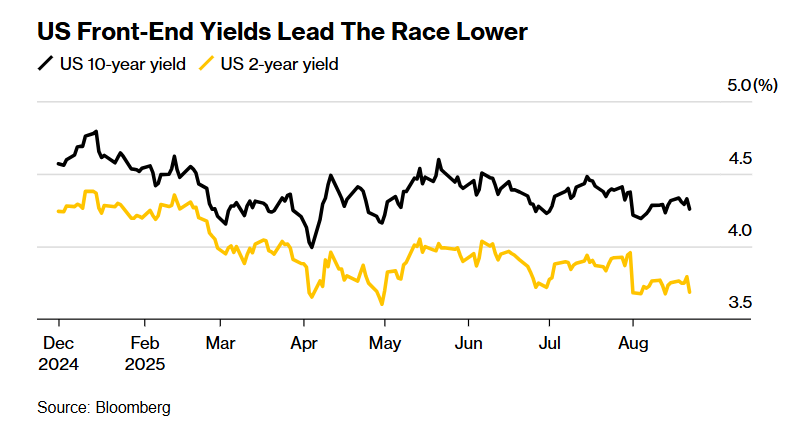
Employment and Economic Outlook - Powell's speech indicates rising downside risks in the labor market, suggesting a potential need for interest rate cuts[2] - July non-farm payrolls increased by only 73,000, significantly below the expected 115,000, with prior values revised down by 258,000[4] - The current labor market is described as a "peculiar balance," where both supply and demand have slowed, leading to increased unemployment risks[4] Inflation and Monetary Policy - Powell shifts to a "short-term shock" view on inflation, deeming tariff impacts as one-time increases rather than persistent inflation drivers[5] - The Federal Reserve's new policy framework removes previous commitments to an average inflation target of 2% and the quantitative assessment of full employment[6] - This framework adjustment allows the Fed to prioritize employment over inflation when conflicts arise, facilitating potential rate cuts[6] Market Reactions and Future Projections - Following Powell's remarks, the probability of a 25 basis point rate cut in September surged from approximately 75% to 91.3%[6] - The dollar index fell by 0.78% to 97.88, while the two-year Treasury yield rose by 8 basis points to 3.69%, and the S&P 500 index increased by 1.6%[8] - If the core PCE price index drops below 2.8% in October, further rate cuts may occur in November and December, totaling 50-75 basis points for the year[8]
鲍威尔“鸽声”提振下美债上涨 经济数据与通胀风险仍是美联储决策拦路虎
智通财经网· 2025-08-24 23:21
Group 1 - Federal Reserve Chairman Powell indicated an increased downside risk in the U.S. labor market, suggesting a potential policy adjustment, with the earliest rate cut expected in September [1] - Market reactions to Powell's dovish signals include expectations of two rate cuts by the end of the year, each by 25 basis points, with a low probability for a third cut [1][2] - The U.S. Treasury market responded with rising bond prices and an expansion of the yield curve, reaching the widest gap in four years [1] Group 2 - Investors are cautious about the extent of rate cuts and the potential for further increases in Treasury yields, depending on upcoming economic data [2] - The upcoming core PCE price index, a favored inflation measure by the Fed, is expected to show persistent price pressures [2] - Concerns exist regarding the balance the Fed must maintain between a weak labor market and rising inflation risks due to tariffs [2][3] Group 3 - Short-term Treasuries are favored by investors due to expected rebounds if the Fed resumes easing, while long-term Treasuries face risks from future inflation and federal deficits [2][3] - Market expectations for easing policies are seen as appropriate, but any expectations exceeding two and a half rate cuts before employment data is considered overly aggressive [2][3] Group 4 - The potential for rate cuts in a high inflation environment may limit the decline in long-term Treasury yields, as seen in past instances where cuts did not lead to lower yields [4] - If the Fed cuts rates while inflation remains below target, it may signal rising inflation expectations and instability in the market [4] - Strong economic or inflation data could lead to another round of selling pressure on Treasury bonds [4]
大转向,鲍威尔暗示9月降息
HUAXI Securities· 2025-08-23 15:36
Economic Outlook - Powell indicated a potential interest rate cut in September, with market expectations rising from below 80% to around 90% following his speech[1] - U.S. economic growth slowed from 2.5% last year to 1.2% in the first half of this year, primarily due to weakened consumer spending[2] - The average job creation in the private sector has dropped to 52,000 over the last three months, significantly lower than the 148,000 average during the last rate cut cycle in 2019[1] Labor Market Dynamics - The unemployment rate remains low at approximately 4.2%, but job creation has significantly declined, reflecting a shrinking labor market[1] - Factors contributing to reduced consumer spending include depleted excess savings, immigration policy impacts, and declining consumer confidence due to tariff uncertainties[2] Federal Reserve's Policy Adjustments - Powell's policy framework is shifting back to a flexible inflation target, moving away from the average inflation targeting introduced in 2020, which is deemed unsuitable in the current inflationary environment[3] - The independence of the Federal Reserve may be compromised, with significant political pressure from the White House influencing upcoming decisions[3] Market Reactions and Predictions - The market anticipates that the rate cut expectations may continue to rise until November, but the path to rate cuts may not be straightforward due to potential inflationary pressures[4] - The short-term U.S. Treasury yields are expected to decline, while the long-term yields face pressure from fiscal policies and international monetary conditions[4] Risks and Considerations - There are risks associated with unexpected movements in the U.S. economy, employment, and inflation trends, as well as potential surprises from fiscal and tariff policies[5]
鲍威尔放鸽!为9月降息谨慎铺路,称劳动力市场下行风险加大
Di Yi Cai Jing· 2025-08-23 00:25
Core Viewpoint - Federal Reserve Chairman Jerome Powell indicated that the U.S. labor market is experiencing an "unusual balance," with both supply and demand slowing, which poses downside risks to employment [1][2] Group 1: Labor Market Insights - Powell highlighted that the July employment data was revised down, showing an increase of only 73,000 non-farm jobs, significantly below the market expectation of 115,000 [2] - The revisions for May and June showed a downward adjustment of 258,000 jobs, indicating rising risks in the labor market [2] - Powell warned that if these risks materialize, they could lead to a surge in layoffs and an increase in the unemployment rate [2] Group 2: Monetary Policy Implications - The market interpreted Powell's stance as more dovish than expected, with a significant increase in bets for a 25 basis point rate cut in September, rising to 89% from 75% the previous day [1][3] - Powell emphasized the need for cautious policy adjustments, balancing inflation and employment goals [2][3] - The Fed's updated policy framework allows for more flexibility, indicating that employment levels may exceed real-time assessments without necessarily threatening price stability [4] Group 3: Market Reactions - Analysts noted that Powell's comments downplayed inflation risks while highlighting the urgency of addressing labor market weaknesses [3] - Financial institutions expect that unless the employment report is unexpectedly strong, a rate cut in September is almost certain [3] - Powell's cautious tone comes amid political pressure from President Trump for immediate rate cuts and calls for the resignation of Fed officials [4]