供应链安全

Search documents
当AI数据中心扩张,撞上锂电出口管制
高工锂电· 2025-10-22 10:48
Core Viewpoint - The article discusses the implications of China's export controls on lithium batteries and related materials, highlighting the potential for increased supply chain friction and financial pressure on companies in the lithium battery industry. It emphasizes the evolving geopolitical landscape and its impact on global supply chains, particularly in the context of AI-driven demand for energy storage solutions. Group 1: Export Controls and Supply Chain Impact - In October 2025, the Ministry of Commerce announced export controls on lithium batteries exceeding 300Wh/kg and related materials, introducing an uncertain administrative review process that could last up to 45 working days [2][3] - The 45-day potential delay poses significant risks for buyers, threatening production line continuity and forcing them to pay premiums for delivery certainty or seek alternative suppliers [4] - For sellers, the delay creates cash flow pressures, as the capital-intensive lithium battery industry faces challenges in revenue recognition and cash flow synchronization [5][6] Group 2: Policy Evolution and Strategic Control - The new regulations represent a deeper enforcement of previous controls on natural graphite, now including synthetic graphite, indicating a strategic shift towards controlling the entire supply chain of anode materials [7][8] - This evolution reflects a mature strategic thinking from reactive measures to proactive construction of a systematic control framework for critical materials [9] Group 3: AI Demand and Lithium Battery Market - The article highlights the intersection of AI demand and lithium battery needs, noting that AI's growth will require substantial investments in hardware, including energy storage solutions [20][21] - The demand for data center energy storage is projected to grow significantly, with estimates indicating a rise from 10GWh in 2024 to 300GWh by 2030, representing a compound annual growth rate of 76.3% [23][24] Group 4: Financial Risks and Market Dynamics - The article raises concerns about the financial risks associated with the AI investment boom, particularly the reliance on debt financing and the uncertainty of returns on capital expenditures [27][29] - It discusses the potential for an "AI bubble" and its implications for the lithium battery sector, emphasizing that any disruption in AI investment could adversely affect the demand for lithium batteries [37][63] Group 5: Geopolitical Tensions and Supply Chain Reconfiguration - The article notes a shift in major global companies towards "de-risking" their supply chains, moving away from reliance on Chinese manufacturing for critical components [41][42] - This reconfiguration is driven by geopolitical risks and reflects a broader trend of companies reassessing their supply chain strategies in light of increasing tensions [49][50] Group 6: Investment Trends and Market Shifts - Investment flows are changing, with a notable decline in new electric vehicle projects in Europe, while investments are shifting towards Southeast Asia, which presents both opportunities and risks [58][60] - The article suggests that the fragmentation of trade and investment strategies is reshaping the landscape for companies in the lithium battery and electric vehicle sectors [61][62]



当西方将目光投向蒙古草原:一场关键矿产的“迂回战”正在打响
Sou Hu Cai Jing· 2025-10-21 14:11
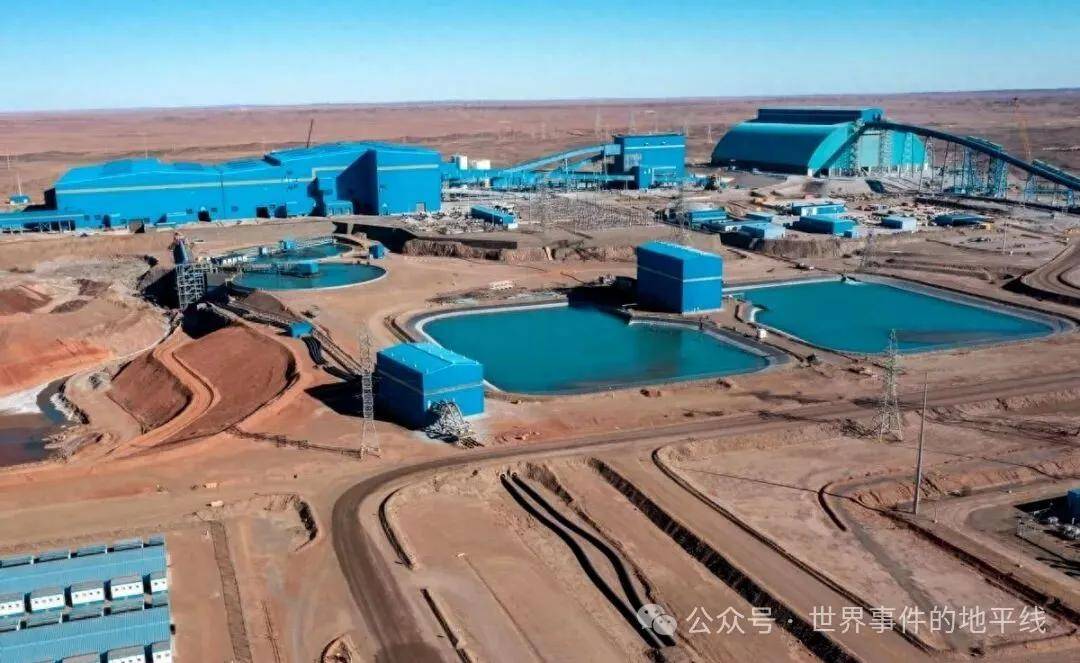
Core Viewpoint - The increasing interest of Western countries in Mongolia is driven by the need for supply chain security and reducing dependence on China for critical minerals like copper and rare earth elements [1][4]. Group 1: Western Mining Activities in Mongolia - Rio Tinto, a major mining company, has reached a settlement of $138.5 million regarding a lawsuit tied to the Oyu Tolgoi copper mine, which has faced delays and cost overruns [2]. - Canadian Troy Resources plans to initiate a silica project in Mongolia by early 2026, indicating a trend of Western capital flowing into Mongolia to establish alternative mineral supply chains [2]. Group 2: U.S. and India’s Resource Strategies - The U.S. has signed a memorandum with Mongolia to increase investments in mining and metallurgy, aiming to make Mongolia a substitute source for critical minerals [4]. - India has also engaged with Mongolia to explore geological surveys and mineral development, planning a logistics route through Russia to transport Mongolian coal to India [4][6]. Group 3: Challenges in Mongolia - Mongolia faces significant infrastructure challenges, with 80% of its land being grassland and desert, making transportation of minerals difficult [6][8]. - The political instability and corruption in Mongolia pose additional risks for Western companies looking to invest in mining operations [8]. Group 4: China's Dominance in Rare Earth Processing - China controls over 90% of the global processing capacity for heavy rare earth elements, making it difficult for Western countries to bypass Chinese supply chains [9]. - The U.S. has domestic rare earth mines, but 80% of the raw ore still needs to be processed in China due to a lack of separation technology and skilled workforce [10]. Group 5: Long-term Strategic Considerations - The competition for critical minerals is not just about finding new mines but about transforming resources into industrial competitiveness, which China has developed over decades [10][11]. - The Western approach to establishing a new supply chain in Mongolia may underestimate the complexities of geography, infrastructure, and governance, as well as China's established industrial advantages [10].
储能企业致命困局:有企业停产,3GWh订单成定时炸弹
经济观察报· 2025-10-21 11:13
Core Viewpoint - The current shortage of battery cells is the most critical issue facing the energy storage industry, leading to various operational challenges and financial pressures for companies [2][4][19]. Group 1: Supply Chain Challenges - Battery cell shortages have forced many energy storage companies to operate at reduced capacity, with some only able to maintain two-thirds of their production lines [3][4]. - The average delivery time for energy storage battery cells has increased from 30 days to 75 days, with 38.7% of small and medium-sized energy storage companies forced to cut production due to shortages [3][4]. - Companies are experiencing a shift from a buyer's market to a seller's market, with increasing prepayment requirements and longer lead times for battery cell orders [8][12]. Group 2: Financial Implications - The inability to secure battery cells has led to significant financial losses, with companies facing daily penalties due to delayed orders and unfulfilled contracts [14][19]. - The average asset-liability ratio for listed companies in the energy storage sector reached 65.3% in the first half of 2025, indicating rising financial pressure [30]. Group 3: Market Dynamics - The energy storage industry is experiencing a price war, with lithium battery storage system prices dropping nearly 80% over the past three years, leading to widespread losses across the sector [6][22]. - The emergence of a secondary market for battery cells has grown rapidly, with an estimated 5GWh of battery cells expected to flow through this market by September 2025, representing over 15% of total demand [27]. Group 4: Strategic Responses - Companies are adopting strategies such as splitting orders among multiple suppliers to mitigate supply risks, although this increases management and logistics costs [11][21]. - Some firms are exploring vertical integration by investing in battery cell production to secure supply chains, while others are focusing on higher-margin projects to ensure survival [32][33]. Group 5: Future Outlook - Industry experts predict that the battery cell shortage will persist for at least 6 to 12 months, with potential improvements expected post-2026 as new capacities come online and alternative technologies mature [34]. - The ongoing competition and supply chain challenges are prompting companies to innovate and adapt, with a focus on both technological advancements and market strategies to ensure long-term viability [36].

英伟达、台积电在美开花!岛内学者曝“黄仁勋发言藏警讯”
Xin Lang Cai Jing· 2025-10-21 03:51
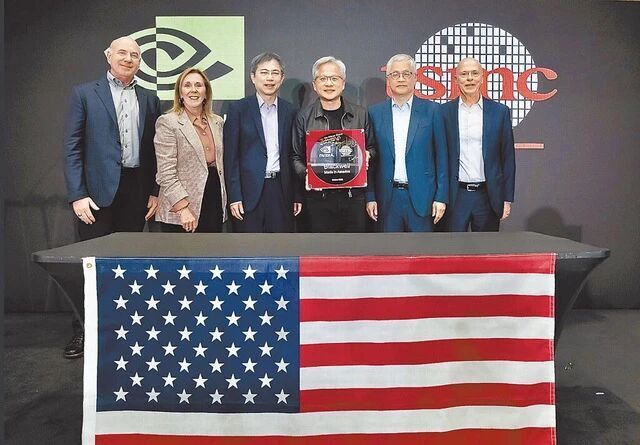
Core Viewpoint - The collaboration between TSMC and NVIDIA highlights the importance of semiconductor manufacturing in the U.S., but it raises concerns about Taiwan's strategic position in the global semiconductor supply chain [1][3]. Group 1: TSMC's Global Position - TSMC's ability to manufacture AI chips in the U.S. showcases its technological strength and global competitiveness, but this does not necessarily translate to a stronger Taiwan without a comprehensive strategy [3][4]. - As TSMC's core manufacturing and investments shift to the U.S., Japan, and Europe, Taiwan's dominant position in the semiconductor industry is gradually being diluted [3][4]. - The statement by NVIDIA's CEO that "the most important chips will be made in America" suggests that the U.S. may no longer rely on Taiwan for critical production lines, reflecting a significant geopolitical shift [3][4]. Group 2: Economic Implications for Taiwan - The establishment of TSMC's factory in Phoenix will create high-paying jobs and stimulate the local supply chain in the U.S., but these benefits will not extend to Taiwan [4][6]. - The transfer of technology, talent development, and key suppliers will likely move away from Taiwan, indicating a trend of "de-Taiwanization" despite the gradual nature of this process [4][6]. - While Taiwanese investors can still benefit from TSMC's success in the financial markets, the glory of TSMC's achievements will be shared globally, leading to a relative decline in Taiwan's strategic position [6].


重点关注四中全会及中美进展
Xin Da Qi Huo· 2025-10-20 01:54
Report Industry Investment Rating No relevant content provided. Core Viewpoints - The effect of anti-involution is minimal, and the year-on-year growth rates of PPI and M1 are rising due to low bases. The economic data in October is crucial. Exports maintained resilience in September, but the growth rate is expected to decline significantly in Q4. The central government has allocated 500 billion yuan to local governments, and the economic growth rate is expected to pick up in Q4 [1]. - The Fourth Plenary Session is expected to focus on emerging technology, supply chain security, and economic restructuring. The "15th Five-Year Plan" will provide specific policy measures. Sino-US relations are at a critical juncture, and the market may be hit if the leaders do not meet in late October or early November [2]. - The sales area of new homes in 30 large and medium-sized cities has seasonally rebounded but is still far below the historical level. The housing market remains pessimistic. The bond market is expected to be volatile and bullish, with the stock market being the main risk [3]. Summary by Directory 1. Next Week's Key Focus: The Fourth Plenary Session and Sino-US Relations (1) Anti-involution Effect is Minimal, and the Domestic Economy Remains Sluggish - Exports grew by 8.3% year-on-year in September, continuing to show resilience. However, the growth rate is expected to decline in Q4 due to the high base. High-frequency data shows that exports in October may be lower than in September [12]. - The effect of anti-involution is minimal, as shown by the PPI. The year-on-year growth rate of PPI has been rising for five months, mainly due to the low base. The economic data in October is crucial [14]. - The year-on-year growth rate of M1 is also affected by the low base. The domestic economy remains weak, as shown by the social financing and credit data. The government has allocated 500 billion yuan to local governments, and the economic growth rate is expected to pick up in Q4 [17]. (2) The 15th Five-Year Plan and Sino-US Relations - The Fourth Plenary Session is expected to focus on emerging technology, supply chain security, and economic restructuring. The "15th Five-Year Plan" will provide specific policy measures [21]. - Sino-US relations are at a critical juncture, with the leaders expected to meet during the APEC Summit in late October or early November. The market may be hit if the leaders do not meet and the US imposes 100% tariffs. China will implement new rare earth export control measures on December 1 [21]. 2. Real Estate Market Tracking: New Home Sales are Far Below the Seasonal Level - The sales area of new homes in 30 large and medium-sized cities has seasonally rebounded but is still far below the historical level. First-tier cities are weak, second-tier cities are similar to last year, and third-tier cities are higher than in 2023 [3]. - The listing price index of second-hand homes has continued to decline, with the decline accelerating in second- and third-tier cities. The overall trend of the real estate market remains pessimistic [3]. 3. Treasury Bonds: Continue to Run Strongly - The bond market has been volatile this week, with the Sino-US confrontation increasing market risk aversion and benefiting the bond market. The bond market is expected to be volatile and bullish, with the stock market being the main risk [34].
美联储十月降息重大转折!10月19日,今日凌晨的四大消息正式来袭!
Sou Hu Cai Jing· 2025-10-18 18:30
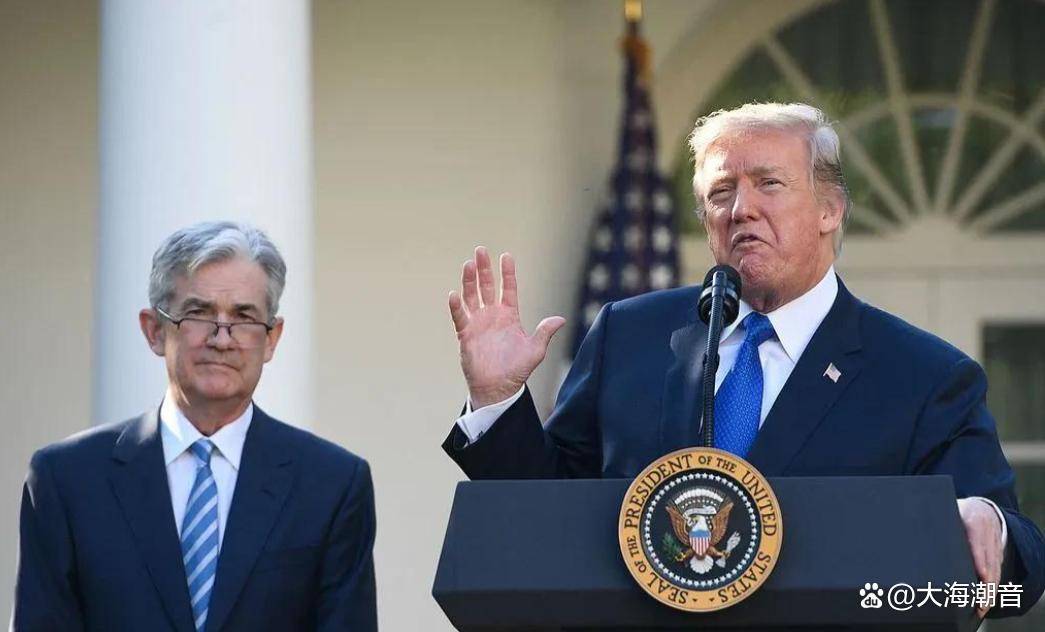
Group 1: Impact of Trump's H-1B Visa Policy - The new H-1B visa regulation increases application fees for high-skilled foreign workers to $100,000 from a few thousand dollars, significantly raising employment costs for companies, particularly small businesses and startups [1] - The policy contradicts the goal of boosting U.S. manufacturing, which requires more high-skilled workers, thus potentially leading to a talent drain to competing countries [1] Group 2: U.S. Defense Department's Cobalt Procurement Cancellation - The U.S. Defense Department canceled a $500 million cobalt procurement tender, which was intended to secure over 7,000 tons of alloy-grade cobalt for strategic reserves, marking the largest scale since the 1990s [3] - The cancellation highlights vulnerabilities in the U.S. supply chain for critical resources, as the country relies heavily on overseas suppliers, particularly from the Democratic Republic of Congo [3] Group 3: Federal Reserve's Interest Rate Decision - Ahead of the October 28-29 meeting, Federal Reserve officials are discussing potential interest rate cuts, with a consensus leaning towards a 25 basis point reduction, while some suggest a more aggressive 50 basis point cut [4] - The possibility of halting balance sheet reduction could signal increased liquidity in the market, positively impacting risk assets [4] Group 4: Overall Market Implications - The combination of these three developments suggests a reassessment of investment strategies in technology and resource sectors, as investors may reposition their portfolios in response to the changing landscape [4] - The uncertainty in U.S. policies and resource procurement may accelerate competition among global economies for talent and resources, potentially reshaping global supply chains [4]
中国实施稀土管制仅5天,美国便急购3000吨“战争金属”!
Sou Hu Cai Jing· 2025-10-18 12:35
Core Insights - The U.S. Department of Defense has announced an emergency investment of $1 billion to purchase critical minerals, including $245 million specifically for 3,000 tons of antimony, a strategic material essential for military ammunition and weaponry [1][4] - China's Ministry of Commerce has introduced new export regulations on rare earths, implementing "minimum percentage" and "direct product" rules, which has prompted the U.S. to expedite its procurement efforts [3][4] Group 1 - The urgency of the U.S. procurement reflects strategic anxiety regarding critical mineral resources, particularly antimony, which is crucial for manufacturing armor-piercing shells, nuclear weapons, and night vision devices [4] - The U.S. relies heavily on imports for antimony, with over 80% of its demand met through foreign sources, primarily from China, highlighting vulnerabilities in the U.S. supply chain [4] - Analysts believe that the Pentagon's goal of acquiring 3,000 tons of antimony in the short term is nearly impossible, as the procurement volume exceeds U.S. annual production and import levels [4] Group 2 - China controls approximately 70% of global rare earth mining and 90% of separation and processing, with a significant share of antimony production and smelting capacity [4] - The U.S. strategy to build a "de-China" supply chain in collaboration with allies faces challenges, as establishing a new antimony mine can take 3 to 5 years, while China's industrial advantages have been built over decades [4] - The competition for critical minerals has evolved beyond a typical trade dispute, with China redefining the rules of the game in the global resource landscape [4]
商务部、外交部发声反对荷兰干预安世!欧美汽车协会警告断供危机
Zheng Quan Shi Bao Wang· 2025-10-17 13:02
Core Viewpoint - The Chinese government strongly opposes the Netherlands' intervention in the operations of Nexperia, a subsidiary of Wingtech Technology, emphasizing the need to maintain global supply chains and protect legitimate rights of Chinese investors [1][2][3]. Group 1: Government Response - The Chinese Ministry of Foreign Affairs reiterated its stance against discriminatory practices targeting specific national enterprises, urging the Netherlands to correct its actions and uphold market principles [2][3]. - The Chinese Ministry of Commerce condemned the Netherlands for broadening the concept of national security and interfering in corporate affairs, which could harm the business environment in the Netherlands [2][3]. - The Chinese government highlighted that the U.S. had previously communicated demands to the Netherlands regarding changes in Nexperia's management structure to avoid sanctions, indicating a broader geopolitical influence on corporate governance [2]. Group 2: Industry Impact - The European Automobile Manufacturers Association (ACEA) warned that the control over Nexperia could lead to severe disruptions in the automotive supply chain, potentially halting production due to a lack of necessary chips [4]. - Reports indicate that some materials from Nexperia are experiencing shortages, price increases, and supply chain disruptions, reflecting the urgency of the situation [5]. - Nexperia is a leading global manufacturer of discrete and power semiconductors, with a significant product portfolio that includes over 16,000 product types, crucial for the automotive industry [5][6]. Group 3: Company Developments - Despite the challenges posed by the loss of control over Nexperia, Wingtech Technology is proceeding with its employee stock ownership plan and aims to stabilize its domestic production capacity, which constitutes 80% of its overall capacity [6]. - Wingtech Technology's stock experienced volatility, initially dropping significantly before recovering with a 4.28% increase on October 17, closing at 38.5 yuan per share [1][6].

特朗普又急了,威胁中国再不恢复购买美国大豆,就下令终止一件事
Sou Hu Cai Jing· 2025-10-17 05:11
Group 1 - Trump's recent threats against China regarding soybean purchases highlight his strategy of using strong rhetoric to pressure China into concessions [1][5] - The soybean dispute reflects China's increasing assertiveness in supply chain security, as it is not the only major soybean importer, and alternatives exist in the market [3] - The U.S. agricultural sector, particularly soybean farmers, heavily relies on the Chinese market, and losing this channel could lead to significant sales difficulties [3] Group 2 - Trump's intention appears to be to force China to resume soybean purchases, as previous attempts to subsidize farmers and find alternative buyers have not been successful [5] - The actual trade dynamics in edible oils show that the U.S. imports a significant amount of waste cooking oil from China, which is crucial for the U.S. biofuel industry [7] - The volume of waste cooking oil imported from China has increased from less than 90,000 tons in 2020 to 1.36 million tons in 2023, indicating China's importance in this sector [7] Group 3 - Overall, Trump's threats seem more like a political maneuver rather than a genuine diplomatic strategy, potentially causing more issues for the U.S. rather than achieving desired outcomes [9] - China is expected to continue advancing its strategic goals regardless of U.S. threats, indicating a stable approach to its trade policies [9]

欧盟拟强制中企“技术转让”
DT新材料· 2025-10-16 16:05
【DT新材料】 获悉,彭博社报道, 欧盟方面正探讨为中国在欧投资设置一系列前置条件,其中包括技术与知识产权的移交,同时确保中国投资能为欧 盟带来新的就业岗位。 根据最新规定,境外销售任何原产自中国、或使用了中国稀土冶炼分离技术的产品,都必须获得中国商务部的出口许可证。 外国公司出口含有哪怕是微量中国稀土材料的产品,都需事先获得批准。这是中国首次将其出口管制措施的效力延伸至海外。 其核心目标是"保护欧洲的工业,特别是汽车产业"。若该政策落地,将彻底改变欧盟处理对华投资的方式。 中国外交部发言人林剑表示,中方反对强制技术转让,以及"以提升竞争力为名搞保护主义、歧视性做法"。 欧盟近几个月来对华立场逐步强硬化。 上周,欧盟委员会提议对超出配额的进口钢铁征收50%的关税,以应对由中国主导的全球产能过剩问题。 荷兰政府更是罕见地动用了已有70年历史的法律, 强制接管了中资控股的芯片制造商安世半导体,其图在于确保欧洲对关键芯片的"不受限制的访问 权"。 点击阅读 : 突发!闻泰科技:荷兰子公司安世半导体遭冻结,控制权暂时受限 这些行动的背后,是欧洲在地缘政治风险下对供应链安全的深层焦虑。 欧盟官员尤其担心,中国最新稀土出 ...