供需失衡

Search documents
CF40研究院:反内卷≠去产能,治理供需失衡的重点仍在于扩内需
Sou Hu Cai Jing· 2025-07-17 07:15
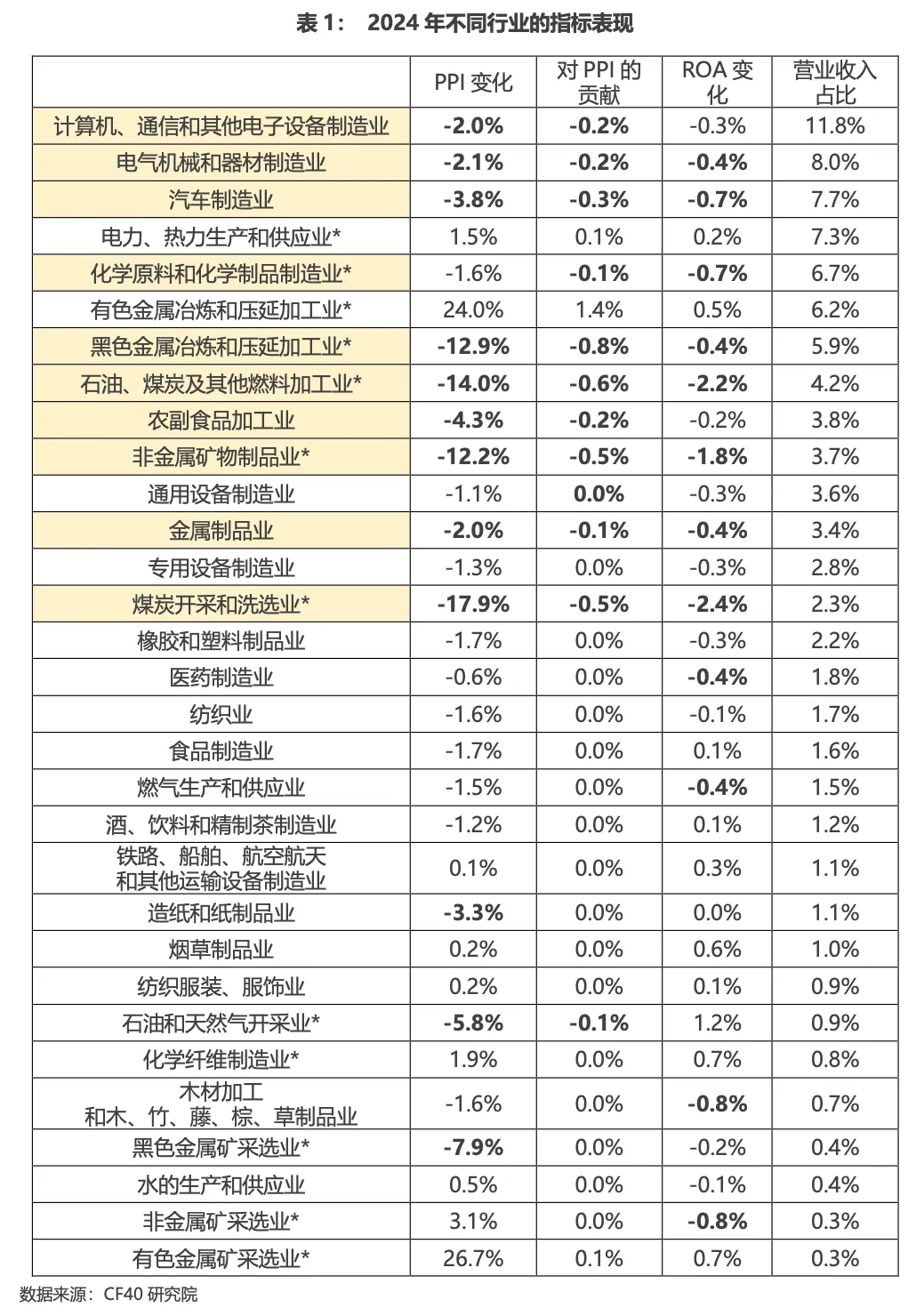
Core Viewpoint - The recent "anti-involution" policy in China is not equivalent to "capacity reduction" but aims to correct market failures and establish fair competition, thereby stimulating innovation and promoting high-quality economic development [1][2][3] Industry Overview - The "anti-involution" initiative has been initiated in industries such as photovoltaic, steel, automotive, and cement, with a focus on enhancing product quality and orderly exit of outdated capacity [1][2] - The current supply-demand imbalance is primarily due to insufficient demand rather than significant capacity expansion in most industries [2][3] Policy Implications - The CF40 research suggests that the focus should remain on expanding effective domestic demand rather than solely on capacity reduction [1][3] - Future policy directions should shift from subsidizing industries to subsidizing consumption [1][2] Industry Performance Analysis - The analysis indicates that the "new three types" of industries, including electric machinery, automotive manufacturing, and computer communications, have significantly higher revenue shares compared to previous capacity reduction industries [8][9] - In 2023, the capital expenditure growth rate for the "new three types" industries was 21.0%, contributing 2.78 percentage points to the overall manufacturing capital expenditure growth rate [8][9] Potential Capacity Reduction Industries - Based on the decision tree model, seven industries are identified as potentially facing capacity reduction, including coal mining, petroleum and coal processing, and automotive manufacturing [4][5] - The cumulative PPI change, contribution to PPI growth, and ROA are critical dimensions for assessing potential capacity reduction [4][5] Demand and Supply Dynamics - The automotive industry faces a core issue of unmet potential demand rather than absolute capacity overcapacity, with potential annual sales estimated at 43.26 million vehicles by 2030 [18][19] - The actual depreciation scale of vehicles has been significantly lower than potential levels, indicating suppressed demand [18][19] Conclusion on New Industries - The "new three types" industries are characterized by high capital and technology intensity, and their capacity should be analyzed on a case-by-case basis rather than assuming a general overcapacity [9][19]

工业品交易淡季预期负反馈,全球利率大动荡
2025-07-16 06:13
Summary of Key Points from Conference Call Records Industry Overview - The basic metals sector is under pressure, with tin and lead prices dropping by 3.15% and 2.10% respectively, indicating weak performance in the black series commodities, where coking coal and coke fell by 2.20% and 1.91% respectively [1] - The agricultural products market showed mixed results, with major indices experiencing slight declines, such as the Shanghai Composite Index down by 0.02% to 3339.93 points [1] Real Estate Market Insights - A report from Goldman Sachs highlighted that the real estate market in the 21st domestic state is stabilizing, with notable performance in export-dependent cities. The transaction volume for new and second-hand homes increased by 9% and 3% respectively on a month-over-month basis [2][3] - The central government has launched a city renewal plan, including old community renovations and fiscal support, aimed at boosting market confidence. Despite a slight decrease of 1% in new home sales area, first-tier and mid-west cities continue to lead in performance [2] Construction Sector Challenges - Predictions indicate a year-over-year decline of approximately 20% and 10% in new construction and completion areas, reflecting ongoing supply-side pressures in the industry [3] - The report emphasizes the structural advantages of export-oriented cities and the long-term impact of policy support, although the market still faces challenges in supply-demand adjustments [3] Global Economic Context - The Reserve Bank of New Zealand has lowered its benchmark interest rate by 25 basis points to 3.25%, marking the sixth consecutive cut since August 2024, with a cumulative reduction of 225 basis points [3] - The RBNZ forecasts a further decline in cash rates to 2.92% by Q4 2025 and 2.85% by Q1 2026, indicating a deeper easing cycle amid growing concerns over economic prospects [3] U.S. Treasury Market Dynamics - The U.S. Treasury market is experiencing increased risk perception, with the 20-year Treasury bond auction on May 21 facing weak demand, resulting in a high yield of 5.047%, the second-highest on record [4] - Moody's downgrade of the U.S. sovereign rating signifies a loss of the highest credit rating by all three major rating agencies, amplifying market risk expectations [4] Investor Sentiment and Market Reactions - Despite declines in U.S. equities and bonds, a report from Japan suggesting a potential reduction in long-term bond issuance has alleviated some market anxiety, potentially benefiting U.S. Treasury markets [5] - The global bond market is undergoing significant changes, with increased risks associated with traditionally safe U.S. Treasuries, leading investors to consider assets in other countries [6] Geopolitical Factors - The geopolitical landscape remains tense, with the EU condemning Israeli military actions in Gaza, and discussions around defense systems involving Canada and the U.S. [6]
光伏制造业:供需共治破解“内卷式”竞争
Zhong Guo Hua Gong Bao· 2025-07-15 02:13
Core Viewpoint - The Chinese photovoltaic manufacturing industry is experiencing a phase of supply-demand imbalance and "involutionary" competition, necessitating a balanced approach to restore equilibrium while learning from past experiences in managing overcapacity in other sectors [1][2]. Industry Overview - In 2023, the revenue of China's photovoltaic equipment industry was approximately 1.75 trillion yuan, with profits exceeding 130 billion yuan. However, in 2024, revenue is projected to drop to about 1.25 trillion yuan, leading to losses exceeding 100 billion yuan across the entire industry chain [2]. - The production of polysilicon, silicon wafers, battery cells, and photovoltaic modules in the first ten months of 2024 saw year-on-year growth exceeding 20%, with nominal capacities surpassing 1,000 GW, double the actual market demand [2]. - The price declines for these products were significant, with reductions exceeding 35% for polysilicon, 45% for silicon wafers, and 25% for both battery cells and modules [2]. Market Dynamics - The photovoltaic manufacturing sector is facing "involutionary" competition, which has also spread to international markets, as evidenced by a 34.5% year-on-year decline in total export value of photovoltaic products despite increases in export volumes for batteries and modules [2][3]. - The industry has entered a new phase of significant downturn, with the current cycle expected to be deeper than previous downturns [2]. Factors Contributing to Supply-Demand Imbalance - The rapid expansion of production capacity by leading companies and the influx of non-industry players have contributed to the oversupply situation [4]. - Local government policies aimed at attracting investment have accelerated capacity release, often accompanied by incentives such as land and tax benefits [4]. - International trade tensions, particularly with the U.S. and EU, have further complicated the market landscape, with increased tariffs and local manufacturing mandates impacting exports [5]. Long-Term Outlook - Despite current challenges, there remains substantial long-term demand for photovoltaic products, driven by global climate change initiatives and domestic energy strategies [3]. - The industry is expected to maintain a growth trajectory during the 14th and 15th Five-Year Plans, supported by technological advancements and expanding application scenarios [3]. Recommendations for Industry Improvement - To address the "involution" issue, the industry should enhance development planning, reform market structures, and establish a unified electricity market to better accommodate renewable energy [7][8]. - Regulatory measures should be implemented to ensure fair competition, including investigations into monopolistic practices and the establishment of quality standards [8]. - Companies should be encouraged to expand into non-core segments of the supply chain internationally, particularly in response to changing global trade dynamics [9].
高地集团:白银在疯涨创下14年新高,现在是上车的时机吗?
Sou Hu Cai Jing· 2025-07-15 02:11
未来涨势仍有空间,但"上车"需理性 展望未来,白银价格仍存在进一步上涨的动力,短期来看,地缘政治的不确定性与美联储货币政策的调整节 奏,将成为影响银价波动的核心因素,如果国际局势持续紧张,或美国加息节奏出现转向,白银价格可能进一 步受到提振,中长期来看,新能源尤其是光伏与电动车产业将成为白银需求的主要增长引擎,2025年光伏装 机规模有望再创新高,白银作为核心导电材料,需求增长可期,同时若全球央行继续增加贵金属储备,白银的 金融价值将进一步被放大。 现在是上车白银的好时机吗? 高地集团认为:白银当前正站在一个历史性机遇的窗口,一方面,避险情绪推动贵金属整体上涨;另一方面, 工业需求与供需缺口支撑其中长期上涨逻辑,但是否"现在就上车",仍需结合自身风险承受能力与投资经 验来判断,对于普通投资者来说,与其追逐短期涨幅,不如通过更稳健的方式参与,比如小额分批建仓或购买 与白银相关的基金产品,同时密切关注美联储政策、国际局势变化以及白银的供应状况,将有助于更好地 把握入场时机,市场从不缺机会,但理性和耐心,才是穿越波动的关键。 在近期的国际金融市场中,白银成为耀眼的资产之一继黄金价格不断刷新历史高位之后,白银价格也大 ...
市场情绪较为悲观 投资者抛售长期日债
Xin Hua Cai Jing· 2025-07-14 14:55

Group 1 - The core viewpoint of the articles indicates a significant sell-off in Japanese government bonds, particularly long-term bonds, leading to a rise in yields, reflecting a pessimistic market sentiment among investors [1][6] - The yield on 10-year Japanese government bonds increased by 9.2 basis points to 1.591%, while the 30-year bonds rose by 12.6 basis points to 3.172%, indicating a broader trend of rising yields across various maturities [1] - The Japanese Ministry of Finance announced a reduction in the issuance of ultra-long bonds by 3.2 trillion yen, aiming to address concerns over fiscal deficits and alleviate pressure on long-term bond yields [3] Group 2 - The Bank of Japan plans to slow down its balance sheet reduction starting in 2026, contrasting with other central banks' aggressive tightening, which may help stabilize market confidence [3] - The upcoming 30-year bond auction on July 23 is seen as a critical test for market demand, with the previous auction showing a bid-to-cover ratio of 3.14, suggesting moderate interest but cautious sentiment towards longer-term bonds [3] - Despite the Ministry of Finance's supply reduction and the Bank of Japan's supportive stance, long-term bond yields have not stabilized, leading to continued investor sell-offs [6]
银价涨至近14年高位!现货市场供需失衡加剧,贸易战推升避险需求
Hua Er Jie Jian Wen· 2025-07-14 13:31
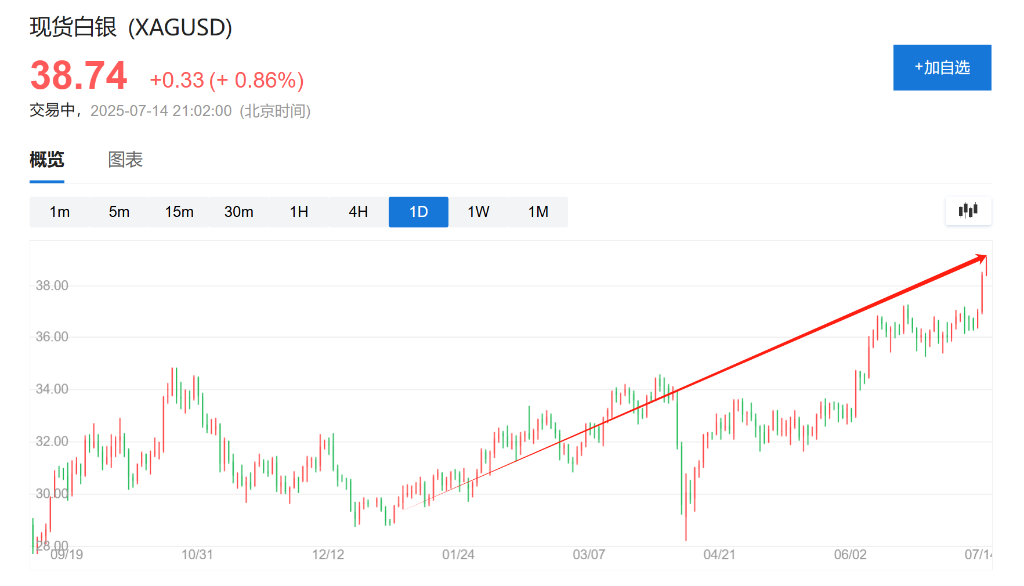
银价上涨的背后是现货市场供应紧张和借贷成本激增。一个月期银价借贷的隐含年化成本已跳升至6%以上,远高于通常接近零的水平。 美国贸易政策担忧也进一步推高了银价,墨西哥作为最大的银生产国和美国市场的关键供应商,面临高达30%的关税威胁。此外,作为避险资产 和工业用金属,银价受益于地缘政治冲突、贸易紧张局势以及太阳能板等工业需求的推动。 现货市场供需失衡加剧 银价攀升至近十四年高位,投资者在金价接近历史纪录的背景下寻求替代性贵金属投资。 周一,现货白银延续了上周4%的涨势,日内一度上涨1.9%,突破每盎司39美元至近十四年高位,今年以来累计涨35%,超过黄金28%的涨幅。 银价需求目前受益于贸易战威胁,以及黄金价格对许多投资者来说过于昂贵。 墨西哥面临的关税威胁尤其引人关注。据央视新闻,当地时间7月12日,美国总统特朗普宣布自2025年8月1日起,美国将对来自墨西哥和欧盟的输 美产品征收30%的关税。 作为全球最大的银生产国,墨西哥是美国市场的关键供应商。尽管《美墨加协定》暂时将银价排除在关税清单之外,但市场担心这一豁免可能不 会持续。 伦敦现货价格与纽约9月期货合约之间的价差异常宽泛,类似于年初特朗普激进贸易政策 ...
贵金属板块强势上涨,后续行情与投资价值解析
Sou Hu Cai Jing· 2025-07-14 09:28
再看供需关系,在供给端,全球金矿品位下降,开采难度增加,同时环保限产等政策因素也限制了产能 扩张 。而需求端,除了传统的首饰需求外,工业领域对贵金属的需求不断增长。例如,新能源、半导 体等行业的快速发展,使得白银等贵金属的用量大幅增加 。供需失衡对价格形成有力支撑。 近期,贵金属市场热度非凡,黄金、白银价格持续攀升,相关股票也集体走强,引发投资者广泛关注。 7 月 14 日,国内期市贵金属板块集体飘红,沪金主力合约报 778.30 元 / 克,涨幅 0.66%;沪银主力合 约报 9198.00 元 / 千克,涨幅 2.01% 。当日,贵金属板块指数收盘上涨 2.94%,主力资金净流入 3.6819 亿元 。这一轮贵金属板块的大涨,有着深刻的底层逻辑。 从宏观经济与地缘政治层面来看,全球经济增长面临诸多不确定性,地缘政治冲突时有发生。比如近期 中东地区局势紧张,以色列空袭伊朗引发地缘危机持续发酵 。在这种不稳定的大环境下,投资者避险 情绪急剧升温。黄金、白银等贵金属因其悠久历史所赋予的 "硬通货" 特性,成为资金寻求避险的重要 港湾。当局势动荡时,投资者往往抛售风险资产,转而持有贵金属,推动其价格上涨。 货币政 ...
轩锋—黄金如期上破,原油短期跟随思路不改!
Sou Hu Cai Jing· 2025-07-14 04:19
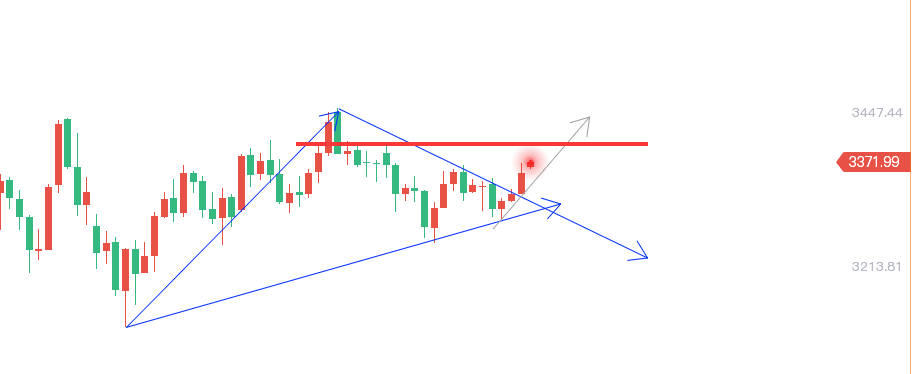
Group 1 - The market's risk aversion has increased due to Trump's new tariff policies and expectations of interest rate cuts from Federal Reserve officials, which has positively impacted gold prices [2] - Gold prices broke through the resistance level around 3330 and reached a high of 3373, with a focus on the pressure levels around 3390/95 and support around 3345/50 [2] - Caution is advised as any successful negotiations before the August 1 deadline could lead to a rapid decline in gold prices [2] Group 2 - The ongoing conflict between Russia and Ukraine has led to new sanctions from the U.S. against Russia, creating short-term trading opportunities in the oil market [4] - After a drop to 66.3, oil prices rebounded but have not yet broken through the strong resistance at 69, indicating uncertainty in price continuation [4] - High U.S. oil inventories and stable global supply are expected to lead to a continued imbalance in supply and demand, suggesting a bearish outlook for oil prices [4] Group 3 - For gold, a buying strategy is suggested around 3349 with a stop loss at 3342 and a target of 3365/70, while a selling strategy is recommended around 3388 with a stop loss at 3396 [5] - For oil, a selling strategy is advised around 68.8 with a stop loss at 69.6 and a target of 67/66 [5]
有色金属:连涨7天!5天线不破,拿稳了!别让震荡骗你下车
Sou Hu Cai Jing· 2025-07-03 23:40
Group 1: Core Insights - A historic metal bull market is driven by supply-demand imbalances, policy catalysts, and capital inflows, with the dollar index falling below 100 and expectations of Federal Reserve rate cuts rising [1] - Copper prices have surged, with London copper exceeding $9,967 and Shanghai copper surpassing ¥80,820, due to a complete supply disruption and soaring demand from infrastructure and electric vehicle sectors [1] - Aluminum profits are robust, with operating rates at 97.65% and a projected supply bottleneck, as demand from solar and electric vehicle industries continues to rise [3] Group 2: Market Dynamics - The copper market is experiencing a significant supply crunch, with major mining companies reducing output and Chinese smelters preparing for production cuts, while demand from the State Grid and electric vehicle charging infrastructure is booming [1] - The aluminum sector is facing a supply constraint, with limited new capacity expected by 2025, yet demand remains strong, particularly from the photovoltaic and automotive sectors [3] - The small metals sector is witnessing explosive growth driven by policy changes, with tungsten prices soaring due to reduced export quotas and strong demand from military and nuclear fusion applications [5] Group 3: Gold Market Trends - Gold prices have surged by 29% in the first half of the year, with central banks globally increasing their gold reserves, indicating a strong bullish sentiment in the gold market [6] - Major gold mining companies are seeing significant inflows, with institutional holdings rising sharply, reflecting increased investor confidence in gold as a safe haven [6] Group 4: Investment Strategies - Key moving averages, such as the 5-day and 20-day, are critical for investment decisions, with specific stocks like Northern Copper and Yun Aluminum being monitored closely for potential buy signals [7] - Investors are advised to remain calm during market fluctuations, as inventory levels for copper and aluminum are lower than in 2016, and policy support is strengthening [7]

深圳楼市上半年强势复苏:成交暴涨近五成
Sou Hu Cai Jing· 2025-07-01 04:21
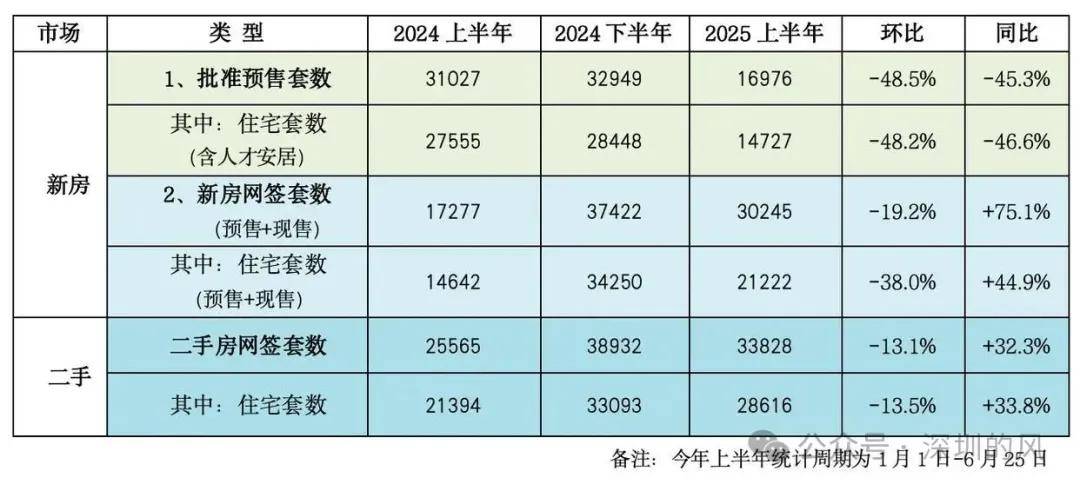
Core Viewpoint - The Shenzhen real estate market has shown significant improvement in the first half of 2025, with a notable increase in both new and second-hand housing transactions, indicating a new phase of market activity and confidence among young buyers [1][3]. New Housing Market - In the first half of 2025, the total transaction of new homes reached 30,245 units, a year-on-year increase of 75.1%, with residential transactions at 21,222 units, up 44.9% [4]. - The supply of new residential properties has decreased, with available units dropping to 25,731, resulting in a sales cycle of 7.4 months, the lowest in nearly four years [4]. - High-demand projects are being rapidly sold out, exemplified by the Zhongjian Pengchen Yunzhu project, which sold 95 out of 153 units within an hour of launch [4]. Second-Hand Housing Market - The second-hand housing market is characterized by a "price for volume" strategy, with significant changes in transaction structure [5]. - Properties priced below 40,000 yuan per square meter accounted for 40.8% of transactions, an increase of 9 percentage points year-on-year, while properties priced below 3 million yuan made up 41.5%, up 6.1 percentage points [7]. - The average bargaining rate for second-hand homes reached 7.6%, the highest since 2020, indicating increased negotiation space for buyers [7]. Market Outlook - Despite a slight decrease in viewing volume due to adverse weather conditions, the overall market remains stable [8]. - Analysts predict that with a reduction in listings and the upcoming traditional peak seasons, market activity is expected to rise further in the latter half of the year [8]. - The introduction of new popular projects in July is anticipated to boost market enthusiasm, leading to a healthier and more balanced development phase for the Shenzhen real estate market [8].