美国就业市场

Search documents
旧金山联储主席:今年可能降息多于两次
Sou Hu Cai Jing· 2025-08-05 00:11
Core Viewpoint - The President of the San Francisco Federal Reserve, Daly, indicates that there are increasing signs of a softening U.S. labor market, and there is no evidence that tariff-induced price increases are broadly permeating inflation data [1] Group 1: Interest Rate Outlook - The timing for interest rate cuts is gradually approaching, with Daly expressing discomfort over repeatedly making the same policy decisions [1] - The Federal Reserve's forecast of two rate cuts this year (each by 0.25 percentage points) remains appropriate, emphasizing that the key issue is whether to cut rates rather than when to do so, with the possibility of more than two cuts [1] - If inflation rebounds or the labor market strengthens, the number of rate cuts may be fewer than two, but it is more likely that more than two cuts will be necessary [1] Group 2: Employment Market Analysis - Non-farm payroll data does not necessarily indicate an extremely weak labor market, but a comprehensive view of multiple employment indicators shows a clear softening compared to last year [1] - Daly warns that if the Federal Reserve waits too long to confirm that inflation will not have a transmission effect, it may be too late [1]
2025年7月美国就业数据点评:美国就业放缓趋势将更加显著
Orient Securities· 2025-08-04 13:24
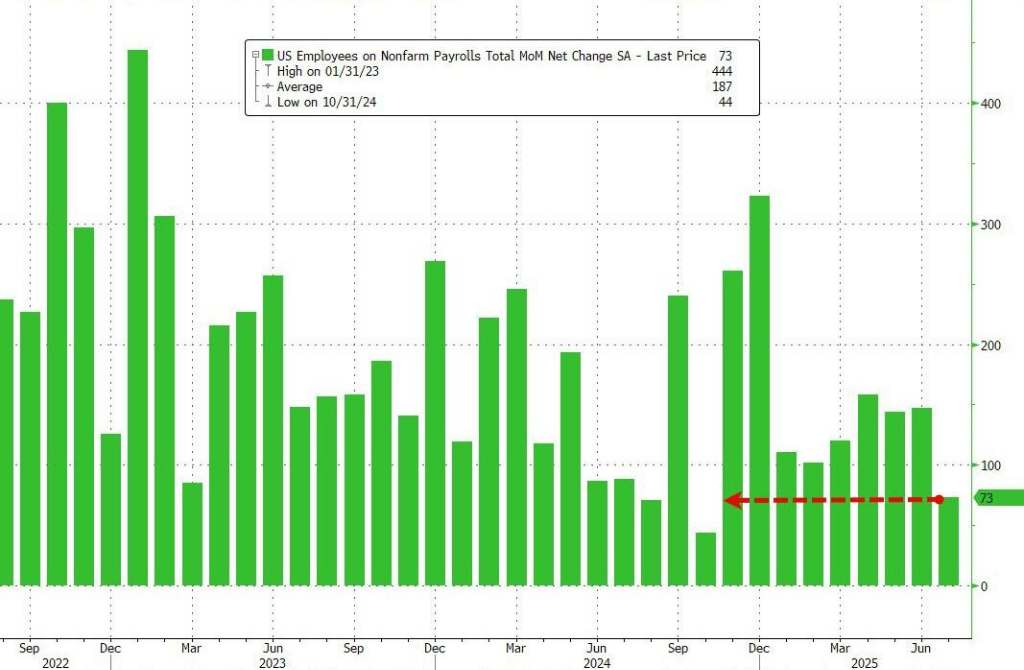
Employment Data Summary - In July 2025, the U.S. added 73,000 non-farm jobs, significantly below the expected 110,000[6] - The unemployment rate rose to 4.2%, up from 4.1% in June 2025[6] - The labor force participation rate decreased to 62.2%, down from 62.3%[6] Employment Sector Analysis - The service sector contributed the most to job growth, adding 96,000 jobs, primarily in education and healthcare[6] - The leisure and hospitality sector saw a minimal increase of 5,000 jobs, while professional and business services experienced a decline of 14,000 jobs[8] - Goods-producing industries continued to struggle, with a loss of 13,000 jobs, marking three consecutive months of decline[8] Data Revisions and Trends - Job data for May and June were significantly revised downwards, with May's figures adjusted from 144,000 to 19,000 and June's from 147,000 to 14,000, totaling a downward revision of 258,000 jobs[6] - The three-month moving average for new jobs has fallen to 35,000, the lowest level since the pandemic began in 2020[6] Market Implications - Following the disappointing employment data, the market reacted negatively, but this is viewed as a short-term trend[6] - The probability of a 25 basis point rate cut by the Federal Reserve in September 2025 is now approximately 80%[6] - By the end of 2025, the market is pricing in a total rate cut of about 60 basis points[6] Risks and Considerations - There are risks of persistent discrepancies in employment data expectations[3] - The potential for the U.S. economy to enter a recession remains a concern[3] - There is also a risk of inflation rising above expectations[3]
“7月就业爆雷,9月降息50个基点”——去年夏天正在重演?
Hua Er Jie Jian Wen· 2025-08-04 07:55
值得注意的是,今年美国经济面临与去年不同的挑战。尽管就业数据疲软,但特朗普政府的关税政策引发了通胀担忧,这是去年所没有的。美联储需判断 经济放缓是暂时现象还是长期趋势。花旗认为,在需求和劳动力市场疲软下,通胀风险小。9月前,更多就业和通胀数据将决定美联储是否果断行动。 当时,美联储在7月会议上选择按兵不动,但随后公布的疲软就业报告迅速扭转了局面,促使官员们在9月会议上采取了激进的50个基点降息"补救"措施。 如今,类似的剧本似乎正在上演,市场正密切关注美联储是否会"故技重施"。 目前市场对大幅降息的预期正在升温。据追风交易台消息,花旗在8月1日的研报中预计美联储将在9月降息25个基点,但如果8月就业数据同样疲软,50个 基点降息的可能性显著增加。 美国就业市场的突然降温,正让华尔街的交易员和经济学家们回想起去年夏天美联储的政策路径。 就业数据全面恶化,经济放缓信号明确 最新的7月非农就业数据显示,美国劳动力市场正在以惊人的速度降温,远低于市场预期。新增就业人数仅为73000人,更令人担忧的是,5月和6月的就业 数据合计被大幅下修了258000人。其中,私营部门在6月仅新增3000个工作岗位,7月也仅增加830 ...

非农就业数据拉响警报,美国金融市场面临大考
2 1 Shi Ji Jing Ji Bao Dao· 2025-08-04 06:33
Group 1: Employment Market Conditions - The U.S. labor market is deteriorating, with the unemployment rate rising by 0.1 percentage points to 4.2% in July, and non-farm payrolls adding only 73,000 jobs, significantly below the expected 110,000 [1][2] - The average monthly job growth over the past three months is only 33,500, far below the average of 93,700 jobs per month since the beginning of the century, indicating a potential recession [4][9] - The quality of job growth is low, with most new jobs concentrated in low-income sectors, while higher-paying industries like manufacturing and retail are losing jobs [8][9] Group 2: Economic Impact of Tariff Policies - The new tariff policies implemented by the Trump administration are disrupting economic order and increasing inflationary pressures, negatively impacting the manufacturing sector [10][11] - The manufacturing sector has seen job losses of 16,000, 15,000, and 11,000 in May, June, and July respectively, indicating the adverse effects of the tariffs [10] - The unpredictability of the new tariff policies poses a significant risk to the U.S. economy, with potential implications for interest rate decisions by the Federal Reserve [11] Group 3: Market Reactions - Despite strong earnings reports from major companies like META, Microsoft, and Apple, U.S. stock indices experienced significant declines, indicating investor concerns about market valuations [2] - The Dow Jones Industrial Average fell by 2.92%, the S&P 500 by 2.36%, and the Nasdaq by 2.17%, reflecting a broader market correction [2] - The dollar index closed at 98.47, down 1.28%, while gold futures rose by $51, indicating a flight to safety among investors [1]
美国就业加速恶化了?——7月美国非农数据点评
一瑜中的· 2025-08-03 14:23
Core Viewpoint - The July non-farm payroll data showed disappointing results, with job additions falling below expectations and significant downward revisions to previous months' data, raising concerns about the U.S. labor market and potential recession risks [2][9][21]. Group 1: July Non-Farm Payroll Overview - The July non-farm payroll added 73,000 jobs, below the expected 104,000, marking the lowest three-month average since October 2010, excluding the pandemic impact [2][21]. - The revisions for May and June were substantial, with May's job additions revised down from 144,000 to 19,000 and June's from 147,000 to 14,000, totaling a downward revision of 258,000 jobs [2][21]. - Employment growth was concentrated in three sectors: education and health services (+79,000), retail (+15,700), and financial activities (+15,000), with education and health services contributing 108% of the new jobs [2][23]. Group 2: Unemployment Rate and Labor Participation - The unemployment rate rose slightly to 4.2%, up from 4.1%, aligning with market expectations, while the labor participation rate decreased from 62.3% to 62.2% [25][26]. - The decline in labor participation contributed approximately 0.1 percentage points to the unemployment rate, suggesting that if labor supply had not decreased, the unemployment rate would be around 4.3% [25][26]. - The youth unemployment rate (ages 16-19) increased significantly, with a total decrease in the labor force population and an increase in unemployment among this demographic [25][26]. Group 3: Wage Growth and Working Hours - Hourly wage growth met expectations, with a month-on-month increase of 0.3% and a year-on-year increase of 3.9%, indicating stable wage growth [32]. - Average weekly hours worked rose from 34.2 to 34.3, which is beneficial for household income, with weekly earnings increasing by 0.6% [32]. Group 4: Market Reactions and Interest Rate Expectations - Following the non-farm report, market expectations for interest rate cuts surged, with the probability of a September rate cut rising from 47.4% to 87.2% [3][35]. - The market reacted negatively to the report, with significant declines in U.S. stock indices and a drop in long-term Treasury yields, indicating a shift towards recession pricing rather than a "bad news is good news" sentiment [3][35].

A股走势如期变盘的几个核心因素,适度减仓
鲁明量化全视角· 2025-08-03 05:12
Group 1 - The core viewpoint indicates that the A-share market is experiencing a significant shift, with a recommendation to moderately reduce positions due to anticipated volatility and risks [3][5]. - The market saw a decline in major indices, with the CSI 300 index down by 1.75%, the Shanghai Composite Index down by 0.94%, and the CSI 500 index down by 1.37% [3]. - The fundamental factors affecting the market include unexpected challenges in the US-China economic relations and a slight decline in China's official PMI data, leading to a cautious outlook for the Chinese economy in the second half of the year [3][5]. Group 2 - Institutional caution is increasing, as indicated by weakening fund flow indicators, suggesting a potential continuation of market adjustments [4][5]. - The recent non-farm payroll data from the US has shown significant weakness over the past three months, reinforcing concerns about the US economic outlook [3][5]. - The recommendation for the main board is to reduce positions to a medium level in response to the market's changing signals, while the small-cap sector should also follow suit due to its high beta characteristics [7]. Group 3 - There is a notable correlation between the market's significant adjustment and the timing of a new product subscription window for a quantitative private equity fund, although the actual impact on the market was limited [8].

兴业证券7月美国非农点评:美国就业崩了吗?
智通财经网· 2025-08-02 23:21
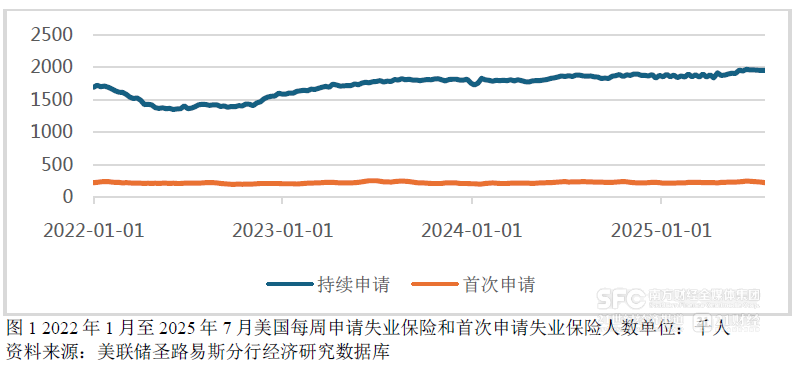
Core Viewpoint - The recent non-farm payroll data indicates a decline in employment market resilience, suggesting a potential for the Federal Reserve to lower interest rates in September if inflation does not exceed expectations in the coming months [1][5]. Employment Data Analysis - The significant downward revisions of employment numbers for May and June were attributed to seasonal adjustments and new feedback from surveyed companies, with May's employment revised down by 125,000 to 19,000 and June's by 133,000 to 14,000, marking the largest revision since the pandemic [1][2]. - The employment growth is primarily supported by the education and healthcare sectors, with July adding 79,000 jobs in these areas, while other sectors showed negative growth, particularly in leisure, hospitality, and manufacturing, which lost 11,000 jobs [3][4]. Labor Market Dynamics - The duration of unemployment has increased, with a notable rise in the number of individuals receiving unemployment benefits and those unemployed for over 27 weeks since 2025, indicating a growing challenge in job recovery [3][4]. - The labor force participation rate has declined due to reduced immigration, contributing to a lower unemployment rate despite weak job growth, as the labor supply has tightened [4]. Wage Growth and Economic Outlook - Wage growth remains resilient, with average hourly earnings in the private sector increasing both year-on-year and month-on-month in July, alongside a 0.9% rise in the labor cost index for Q2 [4]. - The weak employment data enhances the feasibility of interest rate cuts, with market expectations for rate reductions increasing to approximately 2.7 times within the year, influenced by the recent employment figures and manufacturing PMI [5].

让特朗普不满的就业数据,究竟有多差?
Sou Hu Cai Jing· 2025-08-02 12:09
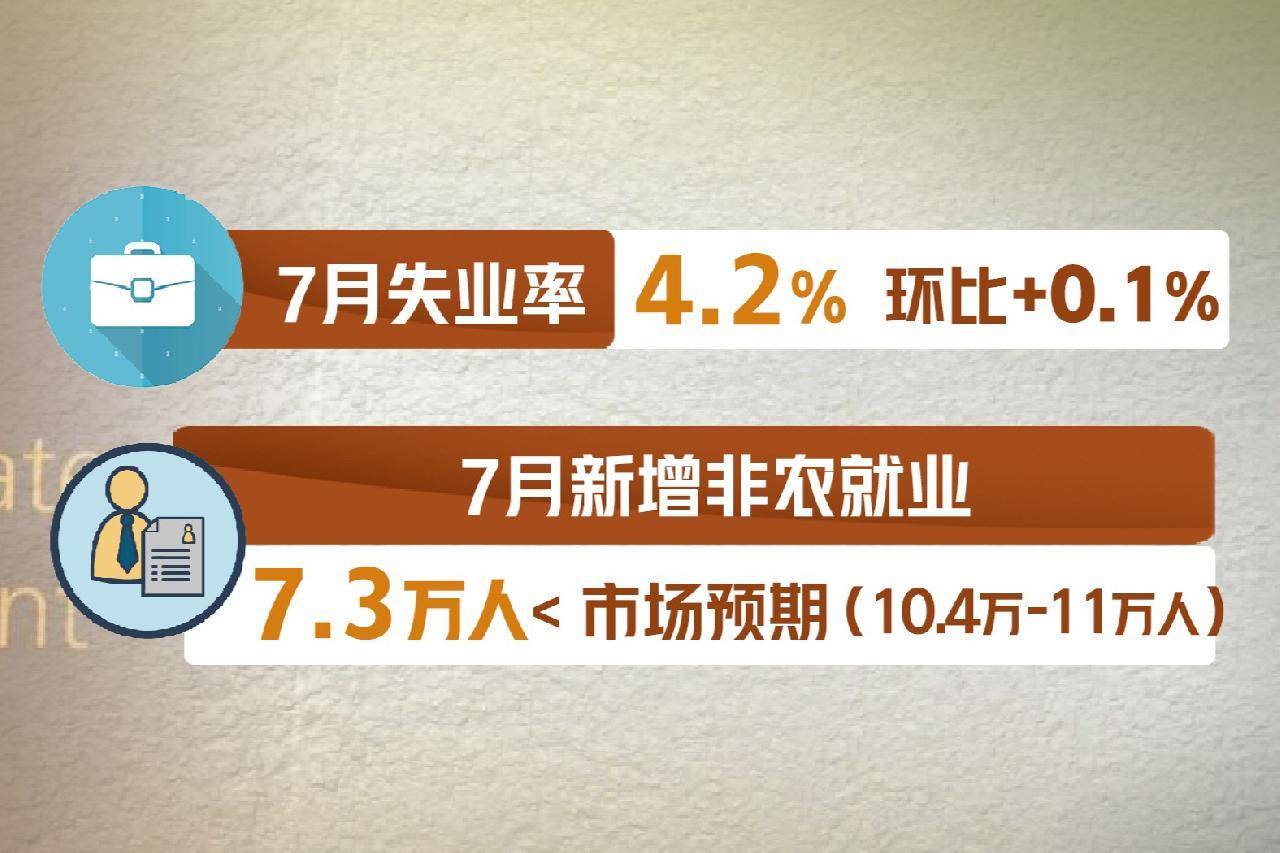
Group 1 - The latest employment data released by the U.S. Department of Labor shows a 0.1 percentage point increase in the unemployment rate to 4.2% in July, with only 73,000 new non-farm jobs added, significantly below the expected range of 104,000 to 110,000 [1] - The revisions for May and June non-farm employment figures were substantial, with May's data revised down from 144,000 to 19,000 and June's from 147,000 to 14,000, resulting in a total reduction of 258,000 jobs over these two months [3] - Concerns regarding the U.S. economy and employment situation have led to market volatility, with the dollar index dropping over 1%, the 10-year U.S. Treasury yield falling by more than 10 basis points, and all three major U.S. stock indices declining by over 1% [9] Group 2 - The market's expectations for a Federal Reserve interest rate cut have increased significantly, with the probability of a 25 basis point cut in September rising from 37.7% to 80.3% [11]
政府就业被高估——7月美国非农数据解读【陈兴团队•财通宏观】
陈兴宏观研究· 2025-08-02 05:56
Core Viewpoint - The July non-farm employment data shows a significant downward revision in previous months, indicating an overestimation of employment levels, particularly in government sectors. The overall labor market is cooling down, with rising unemployment rates and declining labor participation rates [2][3][5]. Employment Data Revision - The July non-farm employment recorded an increase of 73,000 jobs, but previous months' data were heavily revised downwards. June's employment was adjusted from 147,000 to 14,000, and May's from 144,000 to 19,000, totaling a downward revision of 258,000 jobs [3][2]. Unemployment Rate Trends - The unemployment rate rose slightly by 0.1 percentage points to 4.2% in July, while the U6 unemployment rate increased by 0.2 percentage points to 7.9%. This indicates a broad cooling of the job market, with a decrease in labor participation rate to 62.2%, the lowest since the beginning of 2023 [5][6]. Sector-Specific Employment Changes - Job growth in July was concentrated in the education and healthcare sectors, with retail, education, and financial activities seeing the most significant increases. However, government employment decreased by 10,000 jobs, marking the third negative month this year, with substantial downward revisions in previous months [6][2]. Labor Market Supply and Demand - As of June, job vacancies in the U.S. fell to 7.44 million, with a vacancy rate of 4.4%. The labor supply-demand gap recorded 422,000, indicating a return to pre-pandemic levels and suggesting a balance in the labor market [8]. Wage Growth Trends - Average hourly earnings in July increased by 0.3% month-over-month, with a year-over-year growth of 3.9%. However, long-term trends show a slowdown in wage growth since November 2024 [9][10]. Real Wage Growth - The real wage growth, adjusted for inflation, showed a year-over-year increase of 1% in June, down by 0.4 percentage points from the previous month. This indicates stable wage income growth [10]. Sectoral Wage Changes - In July, the highest year-over-year wage growth was observed in the retail and business services sectors, at 5.2% and 5.1%, respectively. Conversely, the slowest growth was in public utilities and construction, with declines of approximately 0.7 and 0.2 percentage points [12]. Interest Rate Expectations - Following the release of weak employment data, expectations for interest rate cuts in September have increased, with the probability rising from 40% to 80%. The anticipated number of rate cuts for the year has also increased from 1.3 to 2.2 [16].

"7月不降息、9月大幅降息”?市场热议:美联储是否“去年再现”
美股IPO· 2025-08-02 05:28
Core Viewpoint - The sudden cooling of the U.S. labor market is prompting discussions about whether the Federal Reserve will repeat last summer's policy trajectory, where a weak employment report led to a significant interest rate cut shortly after a meeting where rates were held steady [1][3][7]. Group 1: Employment Data and Market Reactions - A surprisingly weak employment report has led to speculation about a repeat of last year's scenario, where the Fed maintained rates in July but cut them significantly in September following a disappointing jobs report [3][7]. - The July non-farm payroll data revealed a rapid cooling of the labor market, with numbers falling well below expectations and previous months' figures being significantly revised downwards, indicating potential economic weakness [3][4]. - Following the weak report, the probability of a rate cut in September surged from under 40% to nearly 90%, reflecting market expectations for a policy adjustment [4][6]. Group 2: Fed's Potential Actions - Rick Rieder, Chief Investment Officer at BlackRock, stated that the employment report provides evidence for the Fed to adjust rates in September, raising questions about the magnitude of the cut [4][11]. - The probability of a 25 basis point cut in September is estimated at 89.6%, while the likelihood of a more aggressive 50 basis point cut is considered to be negligible according to current futures market pricing [6][11]. - The upcoming employment report and two months of inflation data before the September meeting will be crucial in determining whether the Fed will adopt a cautious approach or respond decisively to the changing economic outlook [12]. Group 3: Economic Context and Concerns - Notably, the current economic context differs from last year, as inflation is a concern due to tariffs imposed by the Trump administration, which may complicate the Fed's decision-making process [10]. - Timiraos highlighted that the key issue for the Fed is whether the economic fundamentals are genuinely deteriorating or if the recent slowdown is merely a temporary effect of policy changes [10].