
贸易顺差

Search documents
瑞士9月贸易顺差收窄至四个月新低 进口激增抵消出口增长
Xin Hua Cai Jing· 2025-10-21 07:55
Core Insights - Switzerland's trade surplus narrowed to 2.8 billion Swiss francs in September, marking the lowest level since May of this year [1] Import Analysis - Imports surged by 9.4% month-on-month, reaching 19.9 billion Swiss francs, driven primarily by a 34.2% increase in pharmaceutical and chemical products and a 19.5% rise in clothing and jewelry [1] - Notably, imports from Russia skyrocketed by 491.9% year-on-year, while imports from South Korea increased by 245%. In contrast, overall imports from non-Eurozone countries plummeted by 21.4%, indicating a significant shift in import sources [1] Export Analysis - Total exports in September amounted to 22.8 billion Swiss francs, with a month-on-month growth rate slowing to 3.4%. The growth was mainly fueled by vehicle exports (+21.8%), clothing and jewelry (+17.3%), and paper and printing products (+11.4%) [1] - Exports to the United States saw a substantial increase of 44.8%, highlighting strong demand for Swiss high-end manufacturing and luxury goods despite tariff barriers. However, exports to several European and North American markets experienced significant declines: exports to Slovenia fell by 29.6%, to Poland by 24.1%, and to Canada by 18.1% [1]
中国7~9月GDP增速放缓至4.8%
日经中文网· 2025-10-20 03:22
Group 1 - The actual GDP growth rate for July to September 2025 is 4.8%, which is a slowdown from 5.2% in April to June, primarily due to weak real estate affecting domestic demand [2][4] - Fixed asset investment decreased by 0.5% in the first three quarters, indicating negative growth, while infrastructure investment grew by 1.1% [4] - The retail sales of consumer goods increased by 4.5% in the first three quarters, a decline from 5.0% in the first half of the year, with restaurant revenue growing by 3.3% [4] Group 2 - Industrial added value for large-scale industries grew by 6.2% in the first three quarters, but the growth rate slowed from 6.4% in the first half [4] - Exports (in USD) increased by 6.6% in July to September, with a trade surplus growing by 12% year-on-year, despite a decrease in exports to the US [5]


今年前9个月巴西贸易总额超4700亿美元
Shang Wu Bu Wang Zhan· 2025-10-17 17:29
Core Insights - Brazil's total trade volume exceeded $470 billion in the first nine months of the year, indicating a significant level of international trade activity [1] Trade Performance - In September, Brazil's exports reached $30.5 billion, imports were $27.5 billion, and total trade amounted to $58.1 billion, with year-on-year growth rates of 7.2%, 17.7%, and 12% respectively [1] - For the period from January to September, Brazil's exports totaled $257.8 billion, imports $212.3 billion, and total trade $470.1 billion, reflecting year-on-year growth of 1.1%, 8.2%, and 4.2% respectively [1] - The trade surplus for September was $3 billion, which represents a decline of 41.2%, while the surplus for the first nine months was $45.5 billion, down 22.5% [1]
2025年9月进出口数据点评:韧性强化的外贸与市场
Tebon Securities· 2025-10-14 09:34
Export Growth - In September 2025, China's export value (in USD) increased by 8.3% year-on-year, marking the highest growth rate since April 2025[4] - Exports to major economies outside the US showed significant recovery, with double-digit growth recorded for most regions[4] - Key export categories with notable growth included machinery and high-tech products, with year-to-date growth rates of 9.6% and 8.0% respectively[4] Import Dynamics - September 2025 saw a 7.4% year-on-year increase in imports, the highest since May 2024, indicating a recovery in domestic demand[5] - Major contributors to import growth included Hong Kong (304.2%), Brazil (24.1%), and Japan (20.9%) among others[5] - High-tech and machinery imports also grew significantly, with increases of 10.3% and 5.8% respectively[5] Trade Balance and Market Resilience - The trade surplus in September 2025 was 645.47 billion RMB and 90.45 billion USD, reflecting a stable trade environment[7] - The report highlights that the ongoing US-China trade tensions have led to a decline in bilateral trade, while trade with other regions has diversified, enhancing resilience[6] - The overall trade data suggests a strengthening of China's position in the global market amidst geopolitical challenges[6]
为何9月出口增速超预期?:——2025年9月进出口数据点评
EBSCN· 2025-10-14 06:15
Export Performance - In September 2025, China's exports reached $328.57 billion, a year-on-year increase of 8.3%, exceeding the expected 5.7%[2] - The export growth rate increased by 3.9 percentage points compared to the previous month, driven by strong demand from non-US economies and a low base effect from last year[3] - Major contributors to export growth included high-tech products and machinery, with high-tech product exports growing by 11.5%[15] Import Trends - Imports in September 2025 totaled $238.12 billion, with a year-on-year growth of 7.4%, significantly higher than the expected 1.4%[2] - The increase in imports was supported by domestic demand recovery and easing trade uncertainties with the US[17] - High-end manufacturing products, such as integrated circuits and large aircraft, saw substantial import growth rates of 14.1% and 201.3%, respectively[17] Trade Balance - The trade surplus for September 2025 was $90.45 billion, down from $102.33 billion in the previous month[2] - The decline in trade surplus reflects the stronger growth in imports compared to exports, indicating a shift in trade dynamics[2] Regional Trade Dynamics - In September 2025, the share of exports to Africa and Latin America reached record highs, with year-on-year growth rates of 56.4% and 15.2%, respectively[6] - The combined export share to the US, EU, and ASEAN decreased to 41.4%, while the share to emerging markets increased, highlighting the effectiveness of trade diversification strategies[6] Future Outlook - Continued support for exports is expected from non-US economies, with ongoing recovery in consumer demand and manufacturing activity in regions like the EU and Africa[21] - Potential "export rush" may occur in October due to uncertainties surrounding US tariff policies and the upcoming holiday season[21]
国债期货:避险情绪降温,现券利率回升
Jin Tou Wang· 2025-10-14 02:06
Market Performance - Government bond futures opened high but closed higher across the board, with the 30-year main contract rising by 0.37%, initially up by 0.70%. The 10-year main contract increased by 0.10%, initially up by 0.25%. The 5-year main contract rose by 0.03%, and the 2-year main contract increased by 0.02% [1] - Major interest rate bonds in the interbank market saw a rebound in yields, with the 10-year policy bank bond "25 Guokai 15" yield rising by 1.7 basis points to 1.9430%, the 10-year government bond "25 Fuxi Guojia 11" yield up by 1.6 basis points to 1.7590%, and the 30-year government bond "25 Super Long Special Government Bond 02" yield increasing by 3 basis points to 2.1140% [1] Funding Conditions - The central bank announced a 137.8 billion yuan 7-day reverse repurchase operation on October 13, with a fixed rate of 1.40% and a full bid amount of 137.8 billion yuan. There were no reverse repos maturing that day, resulting in a net injection of 137.8 billion yuan [2] - The interbank market maintained a loose funding condition, with overnight repo rates for deposit institutions hovering around 1.30%. Non-bank institutions borrowed overnight using credit bonds as collateral, with rates dropping to the 1.46%-1.48% range [2] - There is a certain demand for one-year interbank certificates of deposit at 1.66% from national and major joint-stock banks, with the latest transaction rates in the secondary market for the same term at 1.655%-1.66%, slightly down from the previous day [2] News Developments - According to customs data, China's exports in September (in RMB terms) grew by 8.4% year-on-year, up from a previous increase of 4.8%. Imports rose by 7.5%, compared to a prior increase of 1.7%. The trade surplus was 645.47 billion yuan, down from 732.68 billion yuan [3] - In USD terms, China's September exports increased by 8.3%, up from 4.4% previously, while imports grew by 7.4%, compared to a prior increase of 1.3% [3] - U.S. President Trump hinted at the possibility of canceling new tariffs on China, leading to a rise in U.S. stock index futures. Trump stated on social media not to worry about China, indicating that everything would be fine [3] Operational Recommendations - Recent signals from both China and the U.S. have been relatively mild, leading to a correction in the risk-averse sentiment previously caused by tariff conflicts, which in turn weakened the bond market [4] - The bond market outlook is complex, with attention needed on the implementation of new fund redemption fee regulations, changes in market risk appetite, and potential fluctuations in U.S.-China relations. However, the current loose funding conditions and the normalization of the yield curve limit the extent of long bond declines [4] - If the 10-year government bond yield rises above 1.8%, there may be a recovery in allocation value. Short-term treasury bonds are expected to continue fluctuating within a range, with T2512 likely maintaining a range of 107.4-108.3, suggesting a wait-and-see approach for potential adjustments [4]
国泰海通|宏观:战略相持期的出口如何表现——2025年9月贸易数据点评
国泰海通证券研究· 2025-10-13 14:03
Core Viewpoint - The short-term evolution of imports and exports is characterized by a slight decline in export momentum and a significant drop in year-on-year growth due to elevated baselines, alongside a rebound in import growth, which compresses trade surplus and highlights the importance of domestic demand [1][2]. Group 1: Export Dynamics - The current critical issue is how China's exports will perform during the strategic stalemate phase of Sino-U.S. economic and trade relations, especially after effectively countering U.S. trade barriers through tariffs and export controls [2]. - The impact of traditional U.S. trade barriers on China's exports is decreasing, while China's export controls have a minimal direct impact on its own exports but significantly affect other countries' industries [2][6]. - In September 2025, China's export growth rate in dollar terms was 8.3%, up from 4.4% previously, while import growth was 7.4%, up from 1.3% [6]. Group 2: Import Trends - The import growth rate has shown a significant seasonal rebound, indicating a potential impact on trade surplus in Q4 due to the recovery of import growth since July [2][6]. - The trade surplus has decreased, and the decline in growth rates for exports to ASEAN may be attributed to re-export regulations or a normal cooling off after a technical surge in August [6]. Group 3: Structural Changes - The long-term trend of "de-Americanization" in China's exports continues, with a sustained decline in export growth to the U.S. and re-export destinations, while maintaining high growth rates to other regions [6]. - The current export resilience is strong, with previously rushed orders being gradually digested, indicating that the impressive export performance has already accounted for the negative impacts of tariffs and order front-loading [6].

9月外贸数据解读:贸易摩擦再起,如何影响出口?
CAITONG SECURITIES· 2025-10-13 12:38
Export Performance - In September, China's export year-on-year growth rate recorded 8.3%, an increase of 3.9 percentage points from the previous month, but the two-year average growth rate has declined[4] - Exports to emerging markets such as Latin America and Africa improved significantly, while direct exports to the U.S. rebounded[4] - Consumer electronics and general machinery saw notable increases in export volumes[4] Import Performance - China's import year-on-year growth rate in September was 7.4%, up 6.1 percentage points from August, significantly higher than the average of the past five years[12] - The increase in imports was primarily driven by rising demand for production raw materials and energy, with notable recovery in imports from resource countries and the EU[12] - Among major trading partners, imports from the EU rose by 9.5%, while imports from the U.S. decreased by 16.1%[12] Trade Balance - The trade surplus in September was $90.45 billion, a slight contraction from the previous month, but net exports continue to support the economy[16] - The outlook for exports in the fourth quarter is stable but expected to decline slightly due to elevated export bases and a weakening U.S. economy[16] Sector Insights - Significant improvements were noted in mobile phones and general machinery exports, with mobile phone exports increasing by over 15 percentage points year-on-year[9] - In the transportation sector, shipbuilding saw a growth rate of 43%, while automotive exports declined by 10.8%[9] Risks - Risks include potential underperformance of domestic economic recovery, unexpected declines in demand from developed countries, and changes in import-export policies[18][20]
中国对美出口9月减少27%,连续6个月负增长
日经中文网· 2025-10-13 08:00
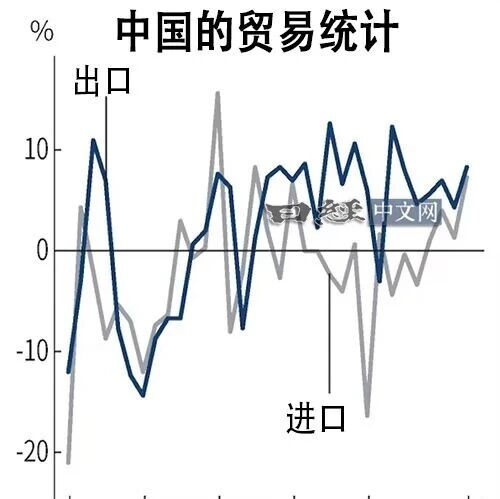
Group 1 - China's overall export value has increased for seven consecutive months, with a year-on-year growth of 8.3% in September, reaching 328.5 billion USD [2][4] - The growth rate of exports has expanded compared to August's 4.4%, while imports grew by 7.4%, totaling 238.1 billion USD, marking four months of consecutive growth [4] - The trade surplus, calculated as exports minus imports, stands at 90.4 billion USD, with the surplus expanding year-on-year due to faster export growth compared to imports [4] Group 2 - By export categories, the export of electric vehicles (EVs) grew by 11%, and rare earth exports also exceeded the same month last year, while exports of smartphones, toys, and clothing declined [5] - Regionally, exports to the United States decreased by 27%, marking six consecutive months of negative growth, while exports to ASEAN increased by 16% and to the EU by 14%, with exports to Japan also surpassing the previous year [5]
越工贸部分析前三季度外贸形势,有信心推动全年进出口额突破9000亿美元大关
Shang Wu Bu Wang Zhan· 2025-10-09 16:55
Core Insights - Vietnam's foreign trade turnover reached $680.6 billion in the first three quarters of the year, marking a 17.3% year-on-year increase, with expectations to exceed $900 billion by year-end, setting a historical record [1][2] Export Summary - Exports totaled $348.74 billion, up 16% year-on-year, significantly surpassing the annual target of 12% [1] - Domestic enterprises exported $85.41 billion (24.5% of total exports), while foreign-invested enterprises exported $263.33 billion (75.5% of total exports), reflecting a growth of 21.4% [1] - 32 categories of goods exceeded $1 billion in exports, accounting for 93.1% of total exports, with 7 categories surpassing $10 billion, representing 67.9% [1] - The manufacturing sector drove export growth, contributing $297.2 billion (85.2% of total exports) with a 16.7% increase [1] - Key export products included mobile phones, computers, textiles, and footwear, while agricultural exports reached approximately $33.2 billion, growing 15.2% [1] Import Summary - Imports amounted to $332 billion, reflecting an 18.8% year-on-year increase [2] - Domestic enterprises imported $105.67 billion (4.6% growth), while foreign-invested enterprises imported $226.25 billion (26.8% growth) [2] - China remained the largest source of imports at $134.4 billion (27.9% growth), followed by South Korea ($44.4 billion, 7% growth), ASEAN ($39.1 billion, 14.5% growth), Japan ($18.2 billion, 13.2% growth), and the USA ($13.7 billion, 23.6% growth) [2] - Raw materials and equipment accounted for 89% of total imports, indicating a strong recovery in domestic industrial production with a 19.5% increase [2] Trade Balance - Vietnam maintained a trade surplus of approximately $16.8 billion in the first three quarters, contributing to macroeconomic stability and foreign exchange reserves [2] - Domestic enterprises recorded a trade deficit of $20.26 billion, while foreign-invested enterprises achieved a surplus of $37.08 billion [2] - The Ministry of Industry and Trade expressed confidence in achieving the target of surpassing $900 billion in total foreign trade turnover by the end of the year, barring any significant fluctuations [2]