AI基建

Search documents
建滔积层板盘中涨超6% 覆铜板厂商陆续宣布涨价 AI基建拉动行业需求
Zhi Tong Cai Jing· 2025-11-27 03:43
Core Viewpoint - The stock of Kinsus Interconnect Technology Corp (01888) has seen a price increase, attributed to rising prices in the copper and fiberglass sectors, as well as the introduction of price hikes by competitors in the industry [1] Price Movements - Kinsus Interconnect Technology Corp's stock rose over 6% during trading, currently up 2.2% at HKD 11.61, with a trading volume of HKD 188 million [1] Industry Price Trends - Nanya Technology recently announced an 8% price increase for its entire series of CCL and PP, effective from November 20, driven by rising copper prices, copper foil processing fees, and fiberglass cloth costs [1] - Other manufacturers, including Shengyi and Nanya New Materials, initiated price hikes in October, which have been successfully implemented by November [1] Market Growth Projections - According to Industrial Research, AI copper-clad laminates are expected to drive a new wave of growth in the industry, with the market size projected to reach USD 2.2 billion by 2025, reflecting a 100% year-on-year growth [1] - By 2026, the market for AI copper-clad laminates is anticipated to grow to USD 3.4 billion, a 60% increase, driven by the release of ASICs and upgrades to M9 copper-clad laminates from Nvidia's new products [1] - The market is expected to reach USD 5.8 billion by 2028, with a compound annual growth rate (CAGR) of 52% from 2024 to 2028 [1]
港股异动 | 建滔积层板(01888)盘中涨超6% 覆铜板厂商陆续宣布涨价 AI基建拉动行业需求
智通财经网· 2025-11-27 03:42
Core Viewpoint - The stock of Jiantao Laminates (01888) has seen a price increase, attributed to recent price hikes in CCL and PP by Taiwan's Nanya, effective from November 20, driven by rising costs of copper, copper foil processing fees, and fiberglass cloth [1] Group 1: Company Performance - Jiantao Laminates' stock rose over 6% during trading, currently up 2.2% at HKD 11.61, with a trading volume of HKD 188 million [1] Group 2: Industry Trends - Nanya has announced an 8% price increase for its entire range of CCL and PP, effective from November 20, following similar price hikes by other manufacturers like Shengyi and Nanya New Materials in October [1] - The AI copper-clad laminate (CCL) market is projected to be a key growth driver, with an estimated market size of USD 2.2 billion by 2025, reflecting a 100% year-on-year growth [1] - By 2026, the AI CCL market is expected to reach USD 3.4 billion, a 60% increase, driven by ASIC volume and upgrades to M9 CCL for new Nvidia products [1] - The AI CCL market is forecasted to grow to USD 5.8 billion by 2028, with a compound annual growth rate (CAGR) of 52% from 2024 to 2028 [1]
中国银河证券:机械设备基本面整体稳健 重点关注AI基建、未来产业、周期复苏
智通财经网· 2025-11-27 00:48
Core Insights - The overall mechanical equipment index outperformed the market in 2025, with significant gains in humanoid robots, AI PCB equipment, and lithium battery equipment, particularly in solid-state battery technology [1][2] - The fundamentals of the mechanical equipment sector are showing steady growth, with a recovery in the lithium battery equipment and machine tool segments [1][2] Investment Opportunities for 2026 - Investment opportunities in the mechanical equipment sector for 2026 can be categorized into three main areas: 1. Focus on AI-related technology growth, including AI PCB equipment, gas turbines, and liquid cooling systems [2] 2. Emphasis on future and emerging industries as highlighted in the 14th Five-Year Plan, which includes humanoid robots, controllable nuclear fusion, low-altitude economy, deep-sea economy, and commercial aerospace [2] 3. Selection of high-quality stocks in cyclical industries with upward beta characteristics, such as engineering machinery, wind power equipment, and lithium battery equipment [2] AI Infrastructure and Equipment Demand - The demand for computing power is surging, with a focus on AI PCB equipment, AIDC equipment, and liquid cooling systems: 1. AI PCB equipment is expected to benefit from the AI computing revolution, leading to increased demand and higher value per unit [3] 2. AIDC equipment will see growth driven by the construction of AI data centers, with diverse power supply needs being met by gas turbines and nuclear power [3] 3. Liquid cooling systems are anticipated to become mainstream due to the limitations of traditional air cooling under high power demands, leading to explosive market growth [3] Future and Emerging Industries - Key areas of focus in future and emerging industries include: 1. Humanoid robots, with attention on Tesla's Gen3 release and domestic production ramp-up [4] 2. Controllable nuclear fusion, with significant projects entering critical construction phases [4] 3. Low-altitude economy, which is moving towards commercialization, necessitating investment in low-altitude infrastructure [4] 4. Deep-sea technology, with substantial potential for domestic substitution in equipment and key components [4] 5. Commercial aerospace, which is expected to drive demand for related equipment due to favorable policy directions [4] Industry Performance Expectations - The mechanical equipment sector is expected to perform well, with: 1. Engineering machinery benefiting from stable domestic demand and potential for increased market share for domestic brands [4] 2. Wind power equipment experiencing high growth due to clear domestic targets and accelerated international expansion [4] 3. Lithium battery equipment poised for a new round of expansion, with solid-state battery industrialization trends accelerating [4]

券商晨会精华 | 人形机器人行情整固待催化 产业在0-1的趋势兑现前夕
智通财经网· 2025-11-27 00:48
Group 1 - The market for humanoid robots is in a phase of consolidation, awaiting new catalysts, with significant developments such as Tesla's Optimus mass production orders and Gen3 prototype release supporting market expectations [2] - The overall market performance on November 26 showed a mixed trend, with the Shanghai Composite Index down by 0.15%, while the Shenzhen Component Index and the ChiNext Index increased by 1.02% and 2.14% respectively [1] - The trading volume in the Shanghai and Shenzhen markets was 1.78 trillion, a decrease of 28.8 billion compared to the previous trading day [1] Group 2 - The mechanical industry strategy report from Galaxy Securities highlights that the machinery equipment index outperformed the market in 2025, with strong growth in sectors related to humanoid robots, AI PCB equipment, and lithium battery equipment [3] - Key investment themes for the mechanical equipment sector in 2026 include AI infrastructure, future industries, and cyclical recovery, with a focus on sectors such as humanoid robots and commercial aerospace [3] - The report suggests selecting high-quality stocks with upward beta characteristics in cyclical industries, including engineering machinery and wind power equipment [3]


券商晨会精华:人形机器人行情整固待催化,产业在0-1的趋势兑现前夕
Xin Lang Cai Jing· 2025-11-27 00:29
Group 1: Market Overview - The Shenzhen Composite Index and the ChiNext Index both opened lower but closed higher, with the Shanghai and Shenzhen stock markets recording a total turnover of 1.78 trillion, a decrease of 28.8 billion from the previous trading day [1] - By the end of the trading session, the Shanghai Composite Index fell by 0.15%, while the Shenzhen Composite Index rose by 1.02%, and the ChiNext Index increased by 2.14% [1] Group 2: Bad Asset Market - Huatai Securities indicated that the marketization of bad asset transfers is entering a rapid development cycle, with a significant increase in the marketization of bad consumer loans expected in 2024 [2] - The China Banking Asset Management Association reported that the scale of bad loans traded in the first quarter of 2025 reached 48.3 billion, a year-on-year increase of 139% [2] - The demand for bad asset transfers is driven by rising non-performing loan ratios among retail loans and consumer finance companies, with personal loans accounting for over 70% of total transaction volume in the bad asset transfer market [2] Group 3: Robotics Sector - CITIC Construction Investment stated that the humanoid robot sector is in a phase of consolidation after significant adjustments in October, with key developments such as Tesla's Optimus mass production orders supporting market expectations [3] - The industry is on the verge of realizing its potential, but further catalysts are needed for upward revisions in expectations [3] Group 4: Machinery Sector - Galaxy Securities highlighted that the machinery sector outperformed the market in 2025, with technology-related sectors such as humanoid robots, AI PCB equipment, and lithium battery equipment showing significant gains [4] - The investment strategy for the machinery sector in 2026 focuses on AI infrastructure, future industries, and cyclical recovery, emphasizing the importance of new and emerging industries in China's economic transformation [4]
美股V反,政策宽松,财报利好!三大信号指引价值股布局窗口
Sou Hu Cai Jing· 2025-11-25 11:08
Group 1 - The U.S. stock market experienced a dramatic recovery after an initial drop, with the S&P 500 index falling 2% before rebounding sharply, showcasing a textbook V-shaped recovery [2][4] - The market showed a split performance among sectors, with bank stocks rising by 1.9% and insurance stocks increasing by 1.6%, while major tech stocks collectively fell by 1.1% [4][6] - The Russell 2000 index, representing small-cap stocks, saw significant gains, indicating a shift in market focus from large-cap companies to smaller firms, suggesting a "value treasure hunt" by investors [6] Group 2 - Federal Reserve Chair Jerome Powell hinted at a potential halt in balance sheet reduction and upcoming interest rate cuts, signaling a shift towards a more accommodative monetary policy [7][9] - JPMorgan's earnings report revealed strong consumer spending and stable credit quality, indicating resilience in the economy despite concerns of a recession [9][11] - The VIX index, a measure of market volatility, rose by 9.4% to 20.81, with historical data suggesting that when VIX approaches or exceeds 22.4, market bottoms are often near [12][14] Group 3 - Current market themes include "policy easing," "economic resilience," and "emotional recovery," with a recommended strategy of gradual buying focused on value [16][17] - The banking sector is expected to benefit from policy loosening and valuation recovery, while the AI infrastructure sector presents significant growth opportunities [16] - Consumer sectors remain stable, but inflation risks should be monitored closely [16]


长江策略:恐慌情绪已现,或迎布局时点
Sou Hu Cai Jing· 2025-11-25 05:39
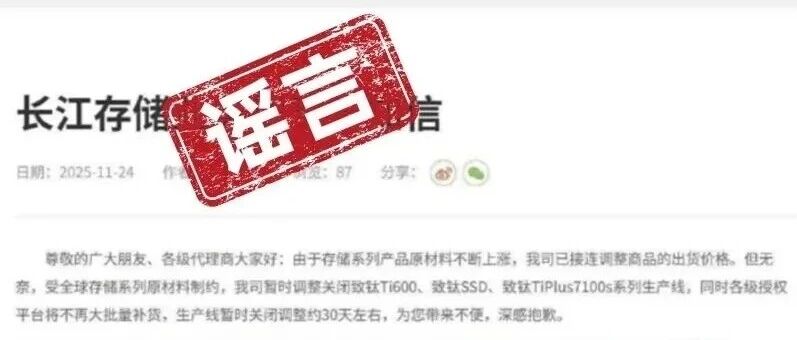
Group 1 - The Hong Kong stock market experienced significant pullbacks last week, with the Hang Seng Technology Index declining by 5.1% and the Hang Seng Index by 7.2% [1][2] - The market's downturn was attributed to mixed signals from the U.S. labor market, where job growth exceeded expectations but the unemployment rate reached a four-year high, creating uncertainty around the Federal Reserve's interest rate decisions [2][3] - The overall sentiment in the market is cautious, particularly in the technology sector, which has been under pressure, as indicated by the low fear and greed indices for both the Hang Seng Technology Index and the Hang Seng Index [2][4] Group 2 - Looking ahead, the macroeconomic environment suggests a potential for a "slow bull" market as the Federal Reserve is expected to enter a rate-cutting phase, leading to increased global liquidity [3][4] - Investment strategies should focus on sectors benefiting from technological advancements, such as AI and robotics, which are currently at a critical commercialization phase [4] - The report highlights the importance of resource scarcity and the transition to energy transformation, suggesting that sectors like metals may experience valuation premiums due to structural supply-demand mismatches [4][5]
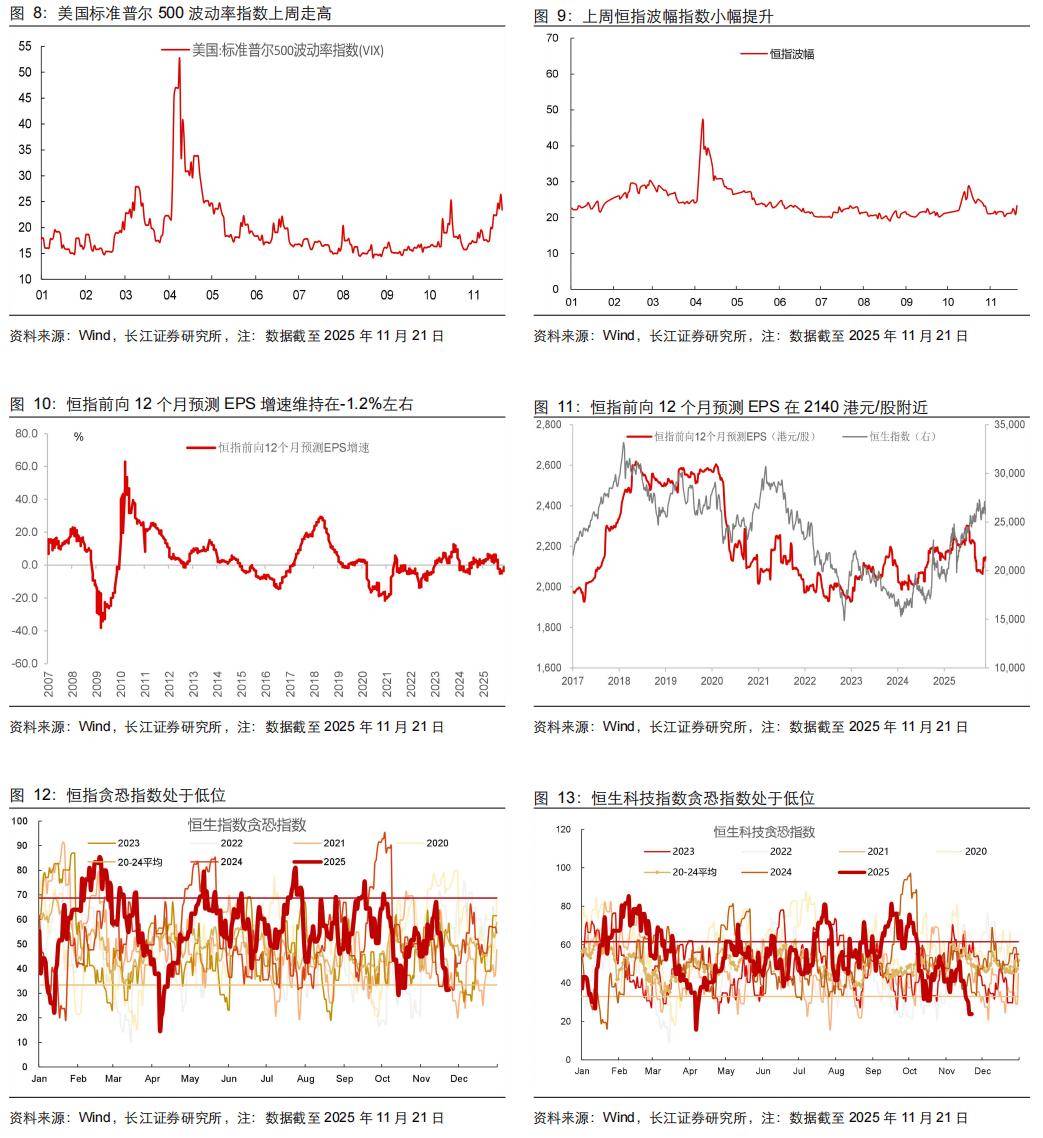
涨幅30%-46%,存储大厂更新合约价丨兆易创新LPDDR发力丨长江存储辟谣
是说芯语· 2025-11-25 00:40
Core Viewpoint - The storage industry is experiencing significant price increases across various products, driven by supply-demand dynamics and the growing demand for DRAM and Flash products, particularly in AI applications [1][4]. Price Updates - DDR4 prices have increased by 20%-46%, with specific products showing the following changes: - 16Gb at $18, up 20% - 8Gb at $8.1, up 11% - 4Gb at $3.7, up 19% - LPDDR4/4x at $1.1/Gb, up 46.7% - LPDDR5/5x at $0.62/Gb, up 29.2% - V-NAND prices have also risen: - 128GB at $11.4, up 30% - 64GB at $7.2, up 33% - 32GB v6 at $6.5, up 39% - eMMC prices increased as follows: - 64GB at $13.2, up 20% - 32GB at $7.2, up 20% - 16GB at $6.2, up 29% - 8GB at $4.55, up 38% - 4GB at $4.45, up 39% [1]. Company Performance - In Q3, the company reported a revenue increase of 31.4% year-on-year to 2.68 billion yuan, and a net profit increase of 61.1% to 508 million yuan [2]. - The gross margin improved by 3.7 percentage points to 40.72% due to rising storage product prices [2]. - The company anticipates that its DRAM products will surpass MCU business to become the second-largest product line [2]. Product Development - The company plans to mass-produce its self-developed LPDDR4X series products in 2025 and is also working on LPDDR5 small-capacity products [2][3]. - The company has successfully captured market share with its new DDR4 8Gb product, which has achieved sales comparable to the DDR4 4Gb product [2]. Customer Relationships - The company is focusing on building long-term strategic partnerships with quality customers across various sectors, including TV, industrial applications, and AI-related fields [3]. - The company is not currently planning DDR5 products, despite competitors launching their DDR5 series [3]. Market Outlook - The company expects the price increase trend to continue for the next two quarters, supported by strong demand in the DRAM market, particularly for niche DRAM products [4]. - The NOR Flash segment is also benefiting from a price increase due to rising demand driven by AI developments [4]. - The company is optimistic about the potential of customized storage solutions in AI applications, with projects entering trial production stages [5][6].

市场策略|点评报告:海外策略:恐慌情绪已现,或迎布局时点
Changjiang Securities· 2025-11-24 23:30
Core Insights - The report indicates that the recent decline in Hong Kong stocks, particularly the Hang Seng Technology Index, which fell by 5.1% and the Hang Seng Index by 7.2%, reflects a state of market panic, suggesting a potential opportunity for investment [2][6][7] - The Fear and Greed Index for both the Hang Seng Technology Index and the Hang Seng Index is currently at historical lows, indicating a possible short-term recovery in market sentiment [7][8] Market Analysis - The decline in the Hong Kong market is attributed to several factors: 1. Unexpected growth in U.S. employment numbers alongside a rise in the unemployment rate to a four-year high, leading to uncertainty regarding the Federal Reserve's interest rate decisions [7] 2. Concerns over high asset prices potentially leading to market corrections, which has dampened trading sentiment in the Asia-Pacific region [7] - The report notes that the technology sector has been particularly hard hit, with the Hang Seng Technology Index underperforming compared to other indices [7] Future Outlook - The report anticipates a "slow bull" market trend due to: 1. The onset of a Federal Reserve rate-cutting cycle, which may lead to a more accommodative global liquidity environment [8] 2. Continuous support for the domestic technology sector through policy initiatives, which could attract long-term capital and enhance market activity [8] - Investment strategies suggested include: 1. Focusing on emerging technology sectors such as AI and robotics, which are at a critical commercialization phase [8] 2. Identifying scarce resources that may benefit from valuation premiums due to shifts in energy transition and geopolitical factors [8] 3. Monitoring sectors like insurance and brokerage, which may see increased activity as low-interest rates encourage more equity investments [8]
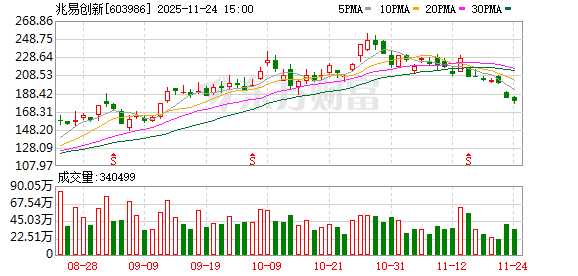
兆易创新:存储周期更趋乐观 利基型DRAM市场将持续供不应求
Zheng Quan Shi Bao Wang· 2025-11-24 09:44
Core Viewpoint - The company, Zhaoyi Innovation, has experienced significant growth in Q3 2023, driven by strong demand for storage products and an improved storage cycle, with a year-on-year profit increase of approximately 60% [2] Financial Performance - In Q3 2023, the company's revenue increased by 31.4% year-on-year to 2.68 billion yuan, while net profit attributable to shareholders rose by 61.1% to 508 million yuan, with a quarter-on-quarter growth of 49% [2] - The gross margin for Q3 improved by 3.7 percentage points to 40.72% due to price increases in storage products [2] Product Line Developments - The niche DRAM market is experiencing a clear supply-demand imbalance, with expectations for price increases to continue over the next two quarters and maintain relatively high levels in subsequent quarters [2][4] - The company's niche DRAM products are expected to surpass MCU business to become the second-largest product line, with significant revenue growth anticipated in the second half of the year [3] - NOR Flash is in a mild price increase cycle, and SLC NAND products are also beginning to see price increases [3] Market Outlook - The company is optimistic about the storage cycle, with expectations for continued demand driven by AI infrastructure and computing power growth from major tech companies [4] - The company anticipates that the niche DRAM market will remain tight over the next two years, with prices expected to rise further in Q4 and maintain good levels in the following year [4] Strategic Partnerships - The company has invested a total of 2.3 billion yuan in Changxin Technology, which provides good capacity support for its niche DRAM products [4] - The company plans to mass-produce its self-developed LPDDR4X series products next year and is also working on the development of LPDDR5X small-capacity products [4] Product Portfolio - The company's current product offerings include standard interface storage products such as niche DRAM (DDR3L 2Gb/4Gb, DDR4 4Gb/8Gb, LPDDR4 small-capacity products), NOR Flash, and SLC NAND Flash [5] - The company aims to leverage changes in the industry supply landscape to develop higher-density products in the 2D NAND space, but has no plans for 3D NAND or DDR5 products [5]