AI科技

Search documents
港股收评:恒指涨0.42%、科指涨0.48%,科网股及贵金属股多数走高,内房股午后拉升,万科涨超13%
Jin Rong Jie· 2025-12-10 08:34
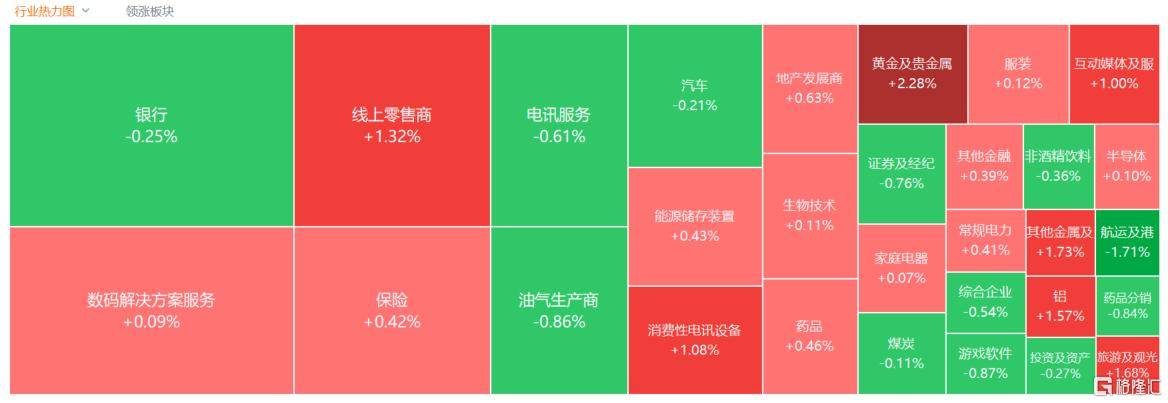
12月10日,港股低开低走,午后震荡回升集体翻红,截止收盘,恒生指数上涨0.42%报25540.78点,恒 生科技指数上涨0.48%报5581.10点,国企指数涨0.20%报8954.69点。 龙湖集团(00960.HK):前11个月实现总合同销售金额593.9亿元。 旭辉控股集团(00884.HK):前11个月累计合同销售金额约151.0亿元。 中国人寿(02628.HK):截至2025年11月30日,公司总保费超过人民币7000亿元。 柠萌影视(09857.HK):拟根据购回授权购回股份,不超已发行股份的10%。 盘面上,科网股涨多跌少,美团涨超2%,百度、阿里巴巴、小米涨超1%,哔哩哔哩跌超1%;贵金属股 强势,灵宝黄金涨超9%,潼关黄金、中国白银涨超7%;内房股走高,万科企业一马当先,大幅收涨超 13%,融创中国、中国金茂涨超8%,世茂集团、雅居乐集团涨幅明显;消费电子概念股走低,权重思 摩尔国际跌超7%刷新阶段新低;海运股大幅下跌,太平洋航运跌幅最大,光伏股、影视娱乐股、石油 股、航空股、中资券商股大部分表现低迷。石药集团、李宁涨超3%,东方海外国际跌5.9%,招商银行 跌超3%。今日两只新股上市, ...

港股收评:恒指涨0.42%,内房股午后拉升明显,黄金股全天活跃
Sou Hu Cai Jing· 2025-12-10 08:31
Market Overview - The Hong Kong stock market saw a rebound in the afternoon, with the Hang Seng Index and the Hang Seng China Enterprises Index rising by 0.42% and 0.2% respectively, ending a two-day decline [1] - The Hang Seng Tech Index increased by 0.48%, indicating a recovery in market sentiment [1] Sector Performance - Major technology stocks mostly rose, with notable gains from Horizon Robotics (up over 3%) and Meituan (up over 2%) [3] - Real estate stocks surged, led by Vanke Enterprises, which rose over 13%, while other developers like Sunac China and China Jinmao also saw significant increases [6] - Precious metals performed strongly, with silver reaching a historical high and gold stocks being active throughout the day [1][5] - Consumer electronics stocks declined, with major player Semtech Corporation falling over 7% to a new low [1] - Shipping stocks experienced significant declines, with Pacific Basin Shipping dropping over 6% [11] Notable Stock Movements - Vanke Enterprises rose by 13.17% to HKD 3.780, while Sunac China and China Jinmao increased by 8.87% and 8.55% respectively [7] - Silver stocks like Lingbao Gold surged over 9%, with other gold-related companies also showing strong performance [5] - The restaurant sector saw gains, with Haidilao and Baifu Holdings rising over 3% [9] - Agricultural stocks, particularly in the pork sector, showed strong performance with WH Group rising over 10% [8] New Listings - Two new stocks were listed today, with Baoji Pharmaceutical-B increasing by 138.82% on its first day and Tudatong rising by 33% [1] Capital Flows - Southbound funds recorded a net sell of HKD 1.018 billion, with the Shanghai-Hong Kong Stock Connect seeing a net sell of HKD 3.221 billion [18] Future Outlook - According to research from CMB International, the global economy is expected to show resilience in 2025, with ongoing AI technology cycles and coherent policies supporting investment opportunities [20] - The Hong Kong market is anticipated to maintain a slow bull trend, with reasonable valuations and improving liquidity conditions [20]







交银国际料明年港股延续 “慢牛”
Ge Long Hui A P P· 2025-12-10 04:19
Core Viewpoint - The report from CMB International indicates that global economic resilience in 2025 is expected to exceed initial forecasts, with the AI technology cycle continuing and policies remaining consistent [1] Economic Outlook - The groundwork laid in 2025 is anticipated to facilitate advancements in 2026, supported by ongoing monetary policy easing, proactive fiscal measures, and strategic industrial policies [1] - The external environment is expected to return to order, enhancing certainty and increasing risk appetite, leading to a shift in asset allocation logic towards a balanced approach [1] Hong Kong Stock Market - CMB International projects promising earnings for Hong Kong stocks, with a continuation of a slow bull market [1] - Valuations are deemed reasonable, offering significant cost-effectiveness; the liquidity environment is improving with inflows from southbound and overseas funds [1] - Structural highlights of the Chinese economy include advancements in AI technology, a reduction in excessive competition, and a recovery in domestic demand, which are expected to start reflecting in earnings [1]
交银国际:明年港股盈利可期 预计“慢牛”延续
智通财经网· 2025-12-10 02:17
Group 1 - The global economy is expected to show resilience beyond initial forecasts for 2025, with the AI technology cycle continuing and policies remaining consistent [1] - By 2026, the macroeconomic environment is anticipated to return to an orderly state, with economic growth exhibiting a degree of resilience and interest rates likely to remain at restrictive levels [1] - The core logic of asset allocation is shifting towards a balance between offensive and defensive strategies in an environment characterized by high growth resilience, inflation, and interest rates [1] Group 2 - Hong Kong stocks are expected to maintain profitability, with a "slow bull" market continuing; valuations are in a reasonable range, offering strong cost-effectiveness [2] - The liquidity environment is improving, with southbound and overseas capital returning; structural highlights of the Chinese economy, such as AI technology and domestic demand recovery, are expected to start reflecting in profitability [2] - In the US stock market, the "bubble" is difficult to disprove in the short term, and a style shift is anticipated; tech giants benefiting from the AI revolution and capital expenditure expansion still have valuation support due to strong earnings growth and technological barriers, but caution is advised regarding investment slowdown and credit risks [2] - The yield curve for US Treasury bonds is expected to remain in a "hard to lower" pattern, with long-term rates under pressure due to inflation, fiscal, and policy uncertainties, leading to a potential steepening of the yield curve [2]
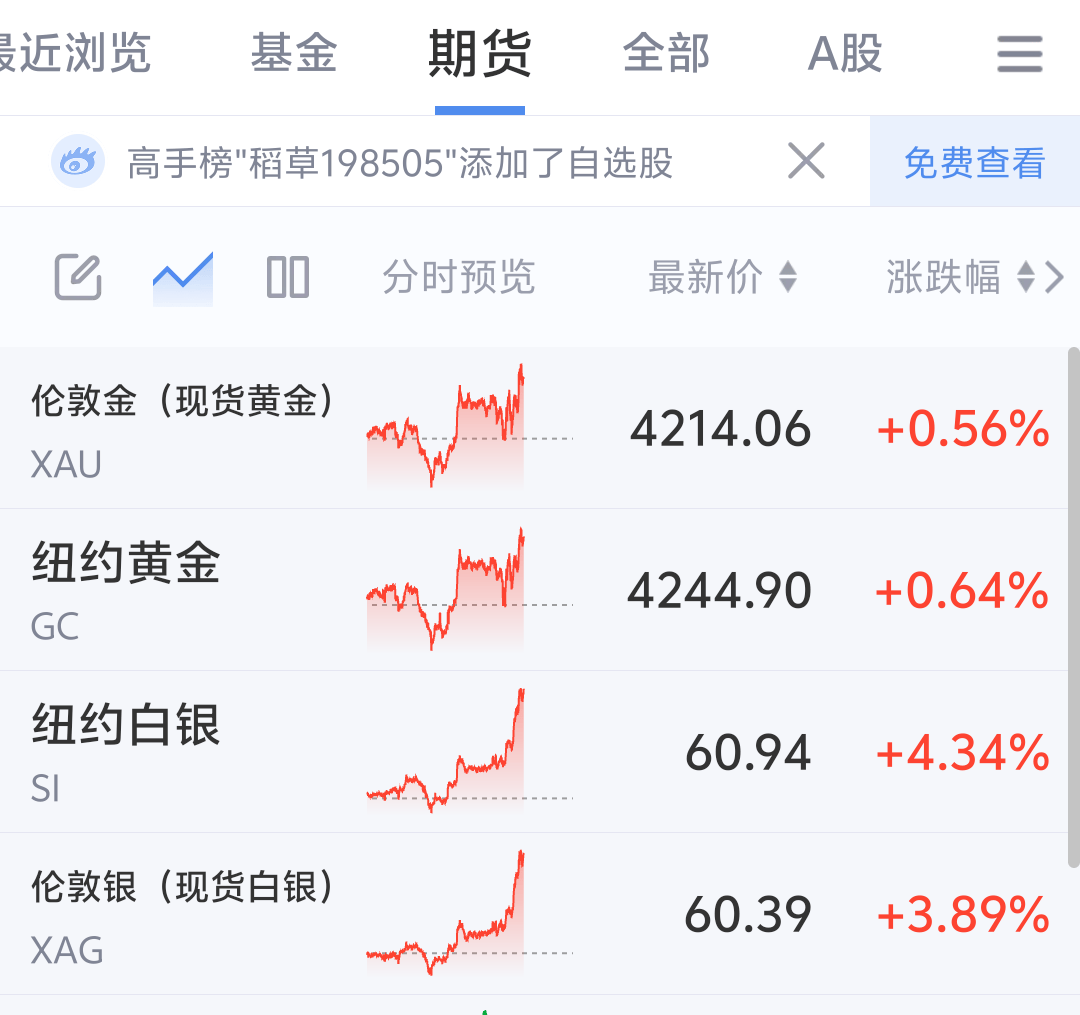
纽约白银继续吊打空头,白银LOF基金溢价率依然坚挺,套利不要停!
Sou Hu Cai Jing· 2025-12-09 17:24
Group 1 - The core viewpoint of the article highlights the strong performance of silver in the market, with significant price increases and a stable premium for silver LOF, indicating ongoing arbitrage opportunities [1][3][10] - The recent announcement by former President Trump allowing NVIDIA to sell AI chips to China is seen as a positive development for the domestic AI industry, potentially boosting market sentiment [6][11] - The upcoming Federal Reserve meeting is a focal point for market participants, with expectations leaning towards a hawkish rate cut, which could influence market dynamics [7][8][9] Group 2 - The article discusses the current high premium of silver LOF, which has remained around 10%, providing consistent arbitrage opportunities for investors [3][10] - The demand for silver is driven by both its safe-haven appeal amid market uncertainties and its industrial applications, particularly in the context of the growing AI and renewable energy sectors [11][12] - The article suggests that if the U.S. stock market experiences a pullback post-Fed meeting, it may present a better entry point for silver LOF investments [12] Group 3 - The article outlines four key factors influencing the Hong Kong stock market, including expectations from the Central Economic Work Conference and the valuation advantages of the Hang Seng Tech Index [19][20][22] - The potential risk of a Bank of Japan interest rate hike is highlighted as a factor that could impact the Hong Kong market, particularly through carry trade dynamics [23] - The article emphasizes the importance of long-term investment strategies in the Hong Kong market, suggesting a diversified approach through ETFs [24] Group 4 - The U.S. stock market is experiencing a "Christmas rally" with technology stocks leading the gains, despite mixed economic signals [25][26] - The article notes that market volatility is expected to increase around the Fed's interest rate decision, with potential implications for both hawkish and dovish outcomes [27][28] - Long-term trends in the U.S. market remain positive, driven by supportive policies and the ongoing growth of the technology sector [29][30]
财报透视系列(一):上市公司内外需景气度变化与投资机会展望
Ping An Securities· 2025-12-09 11:03
Group 1 - The macroeconomic environment in 2025 shows resilience in external demand while internal demand remains volatile, leading to uncertainty in demand prospects [6][7]. - From January to September 2025, China's export growth maintained a strong resilience with a cumulative year-on-year growth rate of 6.1%, driven by high-value-added products like electromechanical products [6][7]. - A-share core entities' foreign income maintained high growth, with a year-on-year increase of 11.4% in H1 2025, while domestic income saw a reduced decline of -0.1% [12][13]. Group 2 - The TMT and manufacturing sectors are experiencing a recovery in both internal and external demand, with significant support from AI-related applications and domestic supply-demand policies [21][22]. - The TMT sector benefits from strong growth in overseas demand, particularly in the communication and semiconductor industries, with communication equipment's foreign income growing by 33.3% in H1 2025 [27][28]. - The manufacturing sector, particularly in power equipment and defense industries, shows improved domestic income growth, indicating a positive trend supported by policy measures [12][19]. Group 3 - The majority of TMT and manufacturing industries have a high proportion of foreign income, generally exceeding 10%, indicating a reliance on synchronized internal and external demand [18][20]. - The gross profit margins for most TMT and manufacturing sectors are significantly higher for foreign operations compared to domestic ones, with differences often exceeding 10 percentage points [32][33]. - Future opportunities are anticipated in technology manufacturing and domestic market construction, particularly in AI technology and equipment manufacturing, which are expected to benefit from supportive policies [19][21].
港股,突发!黑天鹅,隐现?
券商中国· 2025-12-09 08:41
Core Viewpoint - The Hong Kong stock market has experienced significant declines, with the Hang Seng Index and Hang Seng Tech Index dropping over 1% and 2% respectively, leading to a widespread sell-off in Hang Seng bull certificates [1][3]. Market Performance - On December 9, the Hang Seng Index fell by more than 1%, while the Hang Seng Tech Index saw a decline exceeding 2% [3]. - A variety of Hang Seng bull certificates suffered drastic losses, with some, like the Hang Seng Bank 80 Bull V, dropping over 74% [1][4]. Market Influences - The recent weakness in the Hong Kong stock market is attributed to external factors, particularly the ongoing decline in the global bond market and expectations of a hawkish stance from the Federal Reserve regarding interest rates [1][6]. - The average daily trading volume in the Hong Kong market has decreased to approximately HKD 195.1 billion, down 15.4% from HKD 230.7 billion in November, indicating potential liquidity issues [5]. Sector Performance - New consumption concept stocks in the Hong Kong market have collectively declined, with notable drops in companies like Pop Mart and Blukoo, which fell over 4% [4]. - Semiconductor stocks also faced declines, with Tianyu Semiconductor dropping nearly 5% and other major players like Huahong Semiconductor and SMIC following suit [4]. Future Outlook - Despite the current declines, some analysts believe that the valuation of Hong Kong stocks may be attractive, but a rebound is not expected in the short term [8]. - The market is closely watching the upcoming Federal Reserve meeting and the potential interest rate decisions from the Bank of Japan, which could further influence market dynamics [9].

百亿私募最新业绩榜揭晓!复胜、幻方居前!东方港湾领先近3年!
私募排排网· 2025-12-09 03:34
Core Insights - The A-share market experienced its first adjustment in November after seven months of slow bullish trends, with an average return of -0.77% for 668 products from billion-yuan private equity firms, and only 40.42% of these products achieving positive returns [2][7] Group 1: Billion-yuan Private Equity Overview - As of the end of November, there are 113 billion-yuan private equity firms, maintaining the same number as the end of October, nearing the historical peak of 116 firms in March 2022 [2][3] - Two new firms, Yuankang Private Equity and Liwei Private Equity, have crossed the 100 billion yuan threshold in November, both focusing on bond strategies [2] Group 2: Investment Strategies and Performance - Among the 113 billion-yuan private equity firms, 55 are quantitative, 47 are subjective, and 9 employ a combination of both strategies [3] - In terms of core strategies, 85 firms focus on stock strategies, 12 on multi-asset strategies, 9 on bond strategies, and 2 on futures and derivatives [3] Group 3: Geographic Distribution and Employee Count - Shanghai has the highest number of private equity firms at 53, followed by Beijing with 29, and Shenzhen with 9 [4] - There are 14 firms with over 100 employees, including prominent names like Foreign Trade Trust and Jiukun Investment [4] Group 4: Internationalization Trends - 39 of the billion-yuan private equity firms have obtained the Hong Kong 9 license, an increase of 4 firms since October, indicating a trend towards internationalization [4] Group 5: Performance Metrics - The average return for billion-yuan private equity products from January to November is 29.44%, with quantitative products yielding an average return of 34.42%, outperforming non-quantitative products by over 10% [7] - The top three performing private equity firms from January to November are Lingjun Investment, Yuanxin Investment, and Fusheng Asset, with closely matched returns [7][12] Group 6: Long-term Performance - Over the past three years, the average return for billion-yuan private equity products is 69.72%, with the top firms being Jiuqi Investment, Dongfang Port Bay, and Qianyan Private Equity [12][19] - In the last five years, the average return is 87.07%, with Fusheng Asset leading the performance rankings [19]

给大空间塞入一套增程系统,吉利银河V900出击MPV市场
Jing Ji Guan Cha Bao· 2025-12-09 02:52
Core Insights - Geely's Galaxy brand has launched its first MPV model, the Galaxy V900, featuring advanced range-extending technology and AI capabilities [2][3][4] - The Galaxy V900 boasts impressive specifications, including a 1.5T range extender, a pure electric range of 240 km, and a combined range of 1200 km [2] - The vehicle's design emphasizes spaciousness, offering flexible seating configurations and superior interior dimensions compared to competitors [3][4] Group 1: Product Features - The Galaxy V900 is equipped with a 1.5T range extender, achieving a peak power of 340 kW and a peak torque of 523 N·m [2] - It features a "super AI range extension" system that enhances power efficiency, with an engine thermal efficiency of 47.26% and a fuel-to-electricity conversion rate of 1L fuel generating 3.77 kWh of electricity [2] - The vehicle's dimensions are 5360 mm in length, 1998 mm in width, and 1920 mm in height, with a wheelbase of 3200 mm, making it larger than most MPVs on the market [3] Group 2: Market Positioning - The Galaxy V900 represents Geely's entry into the MPV market, which is competitive but has fewer range-extended models, providing a unique differentiation opportunity [4] - The model is positioned as a key player in Geely's strategy to penetrate the high-end luxury market, leveraging its spaciousness and advanced AI range extension technology [4] - Industry predictions suggest the price range for the Galaxy V900 may be between 300,000 to 500,000 yuan [3]


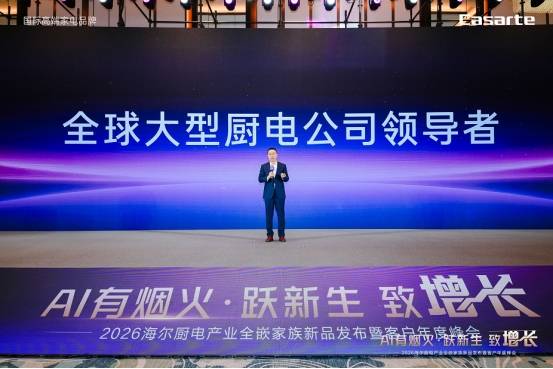
海尔大厨电2025年逆势增长领跑行业
Sou Hu Wang· 2025-12-08 05:05
Core Insights - The global kitchen appliance market is under pressure, yet Haier's kitchen appliances are experiencing growth, achieving a 32% increase in the high-end market compared to an industry decline of 3% in the first ten months of the year [1][2] - Haier's global strategy has established a strong market foundation, with the company being the largest kitchen appliance manufacturer globally, selling over 10 million units annually for three consecutive years from 2022 to 2024 [3] - The "comprehensive ToC transformation" strategy has driven Haier's global market growth, with significant market shares in various regions, including 34% in the US and leading positions in Australia, Italy, Morocco, and notable growth in the Middle East and Southeast Asia [3][4] Company Performance - Haier's kitchen appliances have achieved breakthroughs in the domestic high-end market, with the Casarte brand being the fastest-growing high-end brand in the industry [3] - The Casarte full-embedded range hood has maintained the highest market share in the high-end segment on JD.com for five consecutive months, while the Casarte drawer dishwasher has seen a 130% increase in sales, securing the top market share [3] Innovation and Technology - Haier has introduced AI products and solutions, showcasing its leadership in the industry with the new generation of AI kitchens, which include features like automatic fire adjustment and intelligent cooking capabilities [4] - The integration of AI technology in kitchen appliances reflects Haier's commitment to enhancing user experience and product innovation [4] Strategic Insights - The reverse growth trend is attributed to the company's strategic transformation and market practices, demonstrating a systematic approach to enhancing brand value and resilience in a complex market environment [6] - The 2026 "comprehensive ToC" strategy outlines a clear path for Haier's high-end transformation, providing a practical example of resilience in the home appliance manufacturing sector [6]