
消费升级

Search documents
今天,优质供给从何而来
Xin Hua Wang· 2025-08-12 05:52
Core Insights - The consumer market is experiencing positive changes driven by personalized, quality, and scenario-based consumption upgrades [1] - Quality supply is defined as products and services that resonate with consumers, aligning with trends of intelligence, sustainability, and health [1] - The continuous emergence of quality products is supported by an increasingly robust supply system in China [1] Group 1: Quality Supply and Consumer Trends - Quality supply includes diverse offerings such as immersive concerts, boutique homestays, and innovative smart home devices [1] - In 2024, over 21 million new consumer goods are expected to be introduced, with many quality products becoming consumer favorites [1] - China has 180,000 large-scale consumer goods enterprises, accounting for 38% of all industrial companies [1] Group 2: Innovation and Technology - Quality supply is rooted in technological innovation, exemplified by Haier's washing machine that addresses specific consumer pain points [3] - China leads globally in home appliance patent applications, holding 67.34% of the total [3] - Innovations in electric vehicles position China at the forefront of core technologies like batteries and electric control systems [3] Group 3: Digital Transformation in Industries - The automotive industry showcases rapid production capabilities, with digital collaboration enhancing efficiency [4] - Over 80% of light industry companies utilize digital design tools, with nearly half achieving networked collaboration [4] - The adoption of flexible production and smart logistics is accelerating across various sectors, including automotive and home appliances [4] Group 4: Enhanced Service Experiences - Companies like Pang Dong Lai are innovating with free services, creating a unique consumer experience [5] - E-commerce logistics are improving delivery speed and expanding service areas, enhancing customer satisfaction [5] - The focus on quality service is deepening the connection between businesses and consumers [5] Group 5: Cross-Industry Integration - Collaborations between traditional arts and modern trends are generating new consumer interest, as seen with Pop Mart's Dunhuang-themed blind boxes [6] - The blending of diverse business models is expanding the boundaries of quality supply, leading to innovative products and experiences [6] - Chinese brands are transitioning from quantity to quality, with notable examples in technology and fashion that reflect cultural confidence [6] Group 6: Economic Implications - The shift from demand-side upgrades to supply-side reforms is fostering a positive cycle between effective demand and quality supply [7] - This transformation is expected to create limitless possibilities for Chinese manufacturing in the context of consumption upgrades [7]
上半年,苏州新开100+首店
3 6 Ke· 2025-08-12 02:40
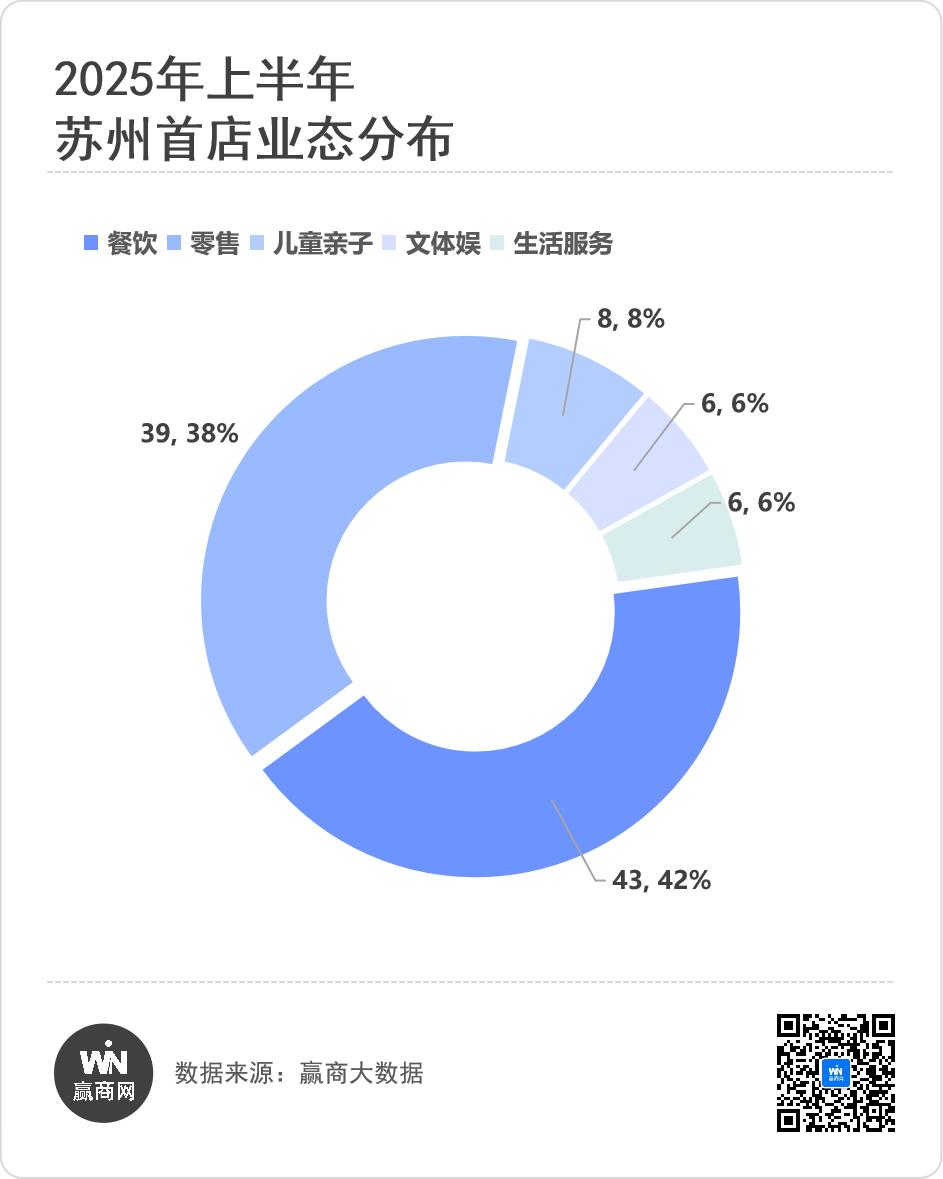
Core Insights - Suzhou has opened a total of 102 new brand flagship stores in the first half of 2025, marking a 34% increase from 76 stores in the same period last year, setting a historical record and indicating a clear trajectory of urban consumption upgrade [1] - The upward trend in flagship store quality and level is a significant characteristic of the first half of the year, with 5 national flagship stores, 2 East China flagship stores, 21 Jiangsu flagship stores, and 74 Suzhou flagship stores [1] Group 1: Industry Overview - Retail and dining continue to dominate the flagship store landscape, with 43 dining stores (42.16%) and 39 retail stores (38.24%) leading the count, alongside 8 children's and family stores, and 6 each in cultural, sports, and service sectors [2] - The dining sector features over 60% of new stores in Chinese and casual dining, while the retail sector spans from luxury to trendy products, with a notable rise in the "two-dimensional" toy market [4] Group 2: Market Dynamics - The growth of flagship stores is supported by strong commercial infrastructure, with 102 new stores distributed across 26 high-energy commercial projects, highlighting the significant "siphon effect" of leading commercial entities [5] - Suzhou Center Mall leads with 27 new flagship stores, achieving over 10% growth in both revenue and foot traffic [7] Group 3: Specific Developments - Dragon Lake Suzhou Xiangcheng Tianjie B building opened with 11 new flagship stores, enhancing the "flagship economy" in Suzhou [9] - The Suzhou Star Joy Plaza contributed 8 new flagship stores, including several in the two-dimensional sector, showcasing a vibrant market for youth-oriented brands [9] - The overall performance of commercial groups is evident, with Longfor Suzhou opening 16 flagship stores across its projects, and Tianhong introducing 13, demonstrating the benefits of resource integration and operational synergy [10]

七月物价数据透出哪些积极信号
Xin Hua She· 2025-08-12 01:14
Group 1 - The Consumer Price Index (CPI) in July showed a month-on-month increase of 0.4%, indicating a shift from decline to growth, with the core CPI (excluding food and energy) rising by 0.8%, the highest increase since March 2024 [1][2] - The rise in service prices by 0.6% in July contributed approximately 0.26 percentage points to the CPI increase, driven by seasonal factors such as summer travel, with significant price hikes in airfare, tourism, and accommodation [1][3] - Various local governments have launched consumption promotion activities, enhancing consumer engagement and boosting demand, which is reflected in the price increases of industrial consumer goods [1][5] Group 2 - The Producer Price Index (PPI) showed a month-on-month decline of 0.2% in July, but the rate of decline has narrowed by 0.2 percentage points compared to the previous month, marking the first contraction in PPI since March [3][4] - The central government's emphasis on regulating low-price competition and improving product quality is expected to optimize market competition, particularly in industries like coal, steel, and lithium batteries, leading to a reduction in price declines [3][4] - The ongoing transformation of traditional industries and the growth of emerging sectors are contributing to price increases in various industries, such as a 3.0% rise in aircraft manufacturing prices and a 1.6% increase in wearable smart device manufacturing prices [5][6] Group 3 - The demand side is shifting towards quality, with consumers increasingly opting for upgraded products, as evidenced by significant sales growth in air conditioning units with advanced features [5][6] - The implementation of consumption-boosting initiatives is fostering a healthy development of the consumer market, which is improving the supply-demand structure in related industries [5][6]
康师傅少卖了11亿元:饮料、方便面都在跌丨消费参考
2 1 Shi Ji Jing Ji Bao Dao· 2025-08-12 00:08
Summary of Key Points Core Viewpoint - 康师傅 is experiencing significant growth pressure, with a decline in revenue despite an increase in net profit, indicating a shift in consumer preferences and market dynamics [1][2]. Revenue Performance - 康师傅 reported a revenue of approximately 400.92 billion yuan for the first half of 2025, a year-on-year decrease of 2.7%, with sales dropping by over 1.1 billion yuan [1]. - The company's net profit attributable to shareholders was 22.71 billion yuan, reflecting a year-on-year increase of 20.5% [1]. Segment Analysis - The sales of 康师傅's main product categories are declining: - Instant noodles sales decreased by 2.5% to 134.65 billion yuan, with container noodles down 1.3% to 67.71 billion yuan, high-priced bag noodles down 7.2% to 50.92 billion yuan, and mid-priced bag noodles up 8.0% to 13.72 billion yuan [2]. - The beverage segment saw a revenue decline of 2.6% to 263.59 billion yuan, with tea drinks down 6.3%, water down 6.0%, and fruit juice down 13.0%, while carbonated and other beverages increased by 6.3% [3]. Market Strategy - 康师傅 is reducing its distribution network in response to market pressures, with the number of marketing agents decreasing from 67,215 to 63,806 and direct retailers from 220,623 to 219,124 [4]. Competitive Landscape - In contrast, the food business of 统一企业 is performing well, with a revenue increase of 8.8% to 53.8 billion yuan, highlighting a trend towards "consumption upgrade" in the market [2][3].
长城快评丨“教育消费者”?百果园哪来的底气
Sou Hu Cai Jing· 2025-08-11 10:53
Group 1 - The core viewpoint of the articles revolves around the high-end market positioning of Baiguoyuan, emphasizing that the company will not lower its prices or quality to cater to lower-end consumers, despite facing criticism for high prices and quality issues [1][2] - Baiguoyuan's chairman, Yu Huiyong, stated that the company aims to educate consumers rather than simply meet their demands, indicating a strategy focused on high-quality products for affluent consumers [1][2] - The company has faced significant consumer complaints regarding food safety, with 1,769 complaints reported on the national consumer complaint platform and 3,091 on the Black Cat complaint platform, highlighting issues with quality control [2] Group 2 - Baiguoyuan's financial performance has deteriorated, with a revenue decline and its first-ever net profit loss in 2024, alongside a reduction of nearly 1,000 stores, suggesting that the market is not responding positively to its high-price strategy [2] - The articles suggest that Baiguoyuan's high pricing must be matched with high-quality products and services; otherwise, the company risks losing consumer trust and market share [2][3] - The relationship between companies and consumers is described as interdependent, where companies must respect market dynamics and understand consumer needs to maintain a competitive edge [3]
以品质筑基,以服务制胜,田野股份打造热带果蔬原料行业标杆
Zhong Guo Shi Pin Wang· 2025-08-11 10:15
Core Insights - The company, Tianye Co., Ltd. (832023.BJ), has emerged as a leading player in the tropical fruit and vegetable raw material processing industry, driven by China's consumption upgrade and rural revitalization strategy [1][2] - The company emphasizes product quality and service innovation, establishing itself as a crucial partner for well-known brands like Nayuki Tea and Nongfu Spring [1][2] Group 1: Quality Management - The company views product quality as its lifeline, implementing a comprehensive quality management system covering raw material procurement, production, and logistics [1] - All four production bases have received international certifications such as ISO9001, HACCP, and BRCGS, ensuring safety and quality from farm to table [1] - The company has established itself as a standard-setter in the industry, contributing to national agricultural standards for non-concentrated fruit and vegetable juice [1] Group 2: Service Innovation - Tianye Co., Ltd. positions itself not just as a raw material supplier but as a value co-creation partner, offering a one-stop solution that includes products, formulas, and services [2] - The company has developed a rapid response mechanism to meet the high-frequency new product launch demands of new tea brands, successfully introducing products like prickly pear juice and oil olive juice [2] - By providing flexible supply models and diverse specifications, the company exceeds traditional supplier roles and integrates deeply into the customer supply chain [2] Group 3: Policy and Industry Strategy - As a key national leading enterprise in agricultural industrialization, the company actively responds to rural revitalization strategies, enhancing farmers' income through a model that integrates enterprises, cooperatives, and farmers [2] - The company leverages policy benefits from initiatives like the Hainan Free Trade Port and the Western Development strategy to optimize production capacity and reduce costs [2] - Initiatives in digital agriculture and the application of IoT technology are being piloted to improve raw material quality and promote sustainable development through resource recycling [2] Group 4: Future Outlook - The company plans to continue deepening its "quality + service" strategy, enhancing raw material traceability to boost consumer trust [3] - By focusing on customer needs and expanding market recognition through customized production and standard leadership, the company aims to inject lasting momentum into the high-quality development of the tropical fruit and vegetable industry [3]
总裁联播+政企双补,红星美凯龙818大促超级直播携9大品牌引爆全域流量
Xin Lang Cai Jing· 2025-08-11 07:35
Core Insights - Red Star Macalline launched a themed live stream event "Peeling Back the Smoke and Fire of Life" on Douyin for the 818 promotion, breaking regional barriers with a "one coupon, one product" strategy to stimulate consumer engagement [1] - The live stream achieved over 6.14 million exposures, a 25% increase compared to the 618 promotion, with peak online viewers exceeding 20,000 and nearly 50,000 new followers gained during the event [1] Group 1: Live Stream Event - The live stream featured executives from major brands such as Gujia, Midea, and Hisense, collaborating with Red Star Macalline's leadership to create an immersive home culture showcase [1] - The event recreated realistic living scenarios, including living rooms and kitchens, integrating featured products from various brands to resonate with the theme [1] Group 2: Marketing Strategy - Red Star Macalline upgraded the "818 Shopping Festival" to "818 Good Goods Festival," emphasizing dual subsidies from government and enterprises, and highlighting integrated marketing strategies [1] - The company implemented a competitive all-category product lineup through a three-dimensional strategy of cost optimization, price assurance, and quality selection, enhancing consumer experience [1] Group 3: Traffic and Engagement - The live stream served as a practical application of Red Star Macalline's all-domain traffic operation, integrating resources from platforms like Douyin and Xiaohongshu to enhance online and offline experiences [1] - To boost consumer participation, the event included universal coupons, brand subsidies, and 800 brand lucky bags for giveaways, along with 10 round-trip flight tickets as grand prizes [1] - The goal of "quantifying user growth" was evident, with nearly 50,000 new followers added during the live stream [1]
“黄金热”中陨落,“国”字号也难再躺着赚钱|黄金冰与火①
Sou Hu Cai Jing· 2025-08-11 06:04
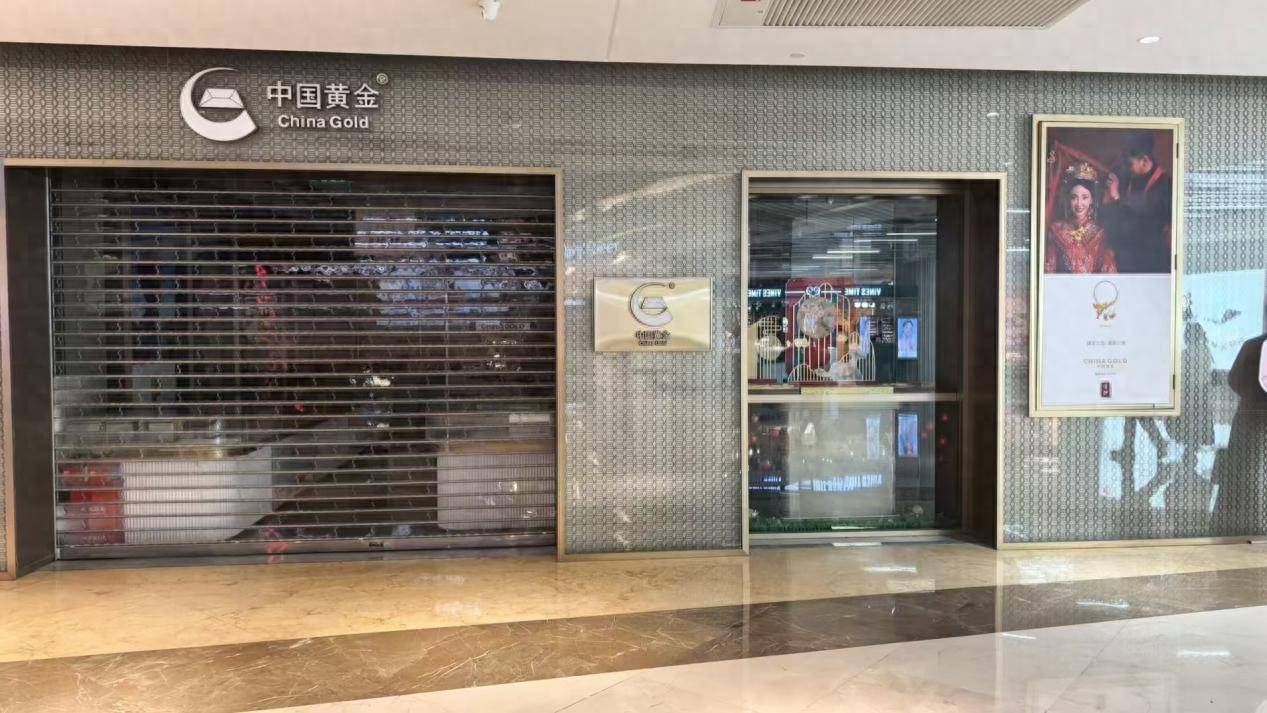
Core Insights - The gold market is experiencing a stark contrast between high investment demand and low consumer interest, with domestic gold prices remaining high while retail sales decline significantly [1][19][21] - China Gold Group, once a market leader, is facing severe challenges including plummeting revenues and profits, alongside negative publicity from various scandals [1][4][6][23] - The traditional business model of China Gold is failing to adapt to changing consumer preferences, particularly among younger generations who prioritize design and cultural value over weight and price [4][13][22] Group 1: Market Performance - International spot gold prices recently peaked at $3399.27 per ounce before retreating, while domestic gold prices remain at 781 yuan per gram [1] - Despite high gold prices, 13 out of 15 listed jewelry companies in China reported declining net profits, with many established brands seeing revenue drops exceeding 15% [1][19] - China Gold's first-quarter 2025 financial report indicated a nearly 40% year-on-year decline in revenue and over 60% drop in net profit [1][6] Group 2: Company Challenges - China Gold has faced multiple crises, including franchisee bankruptcies, executive scandals, and safety incidents, leading to a tarnished brand image [3][4][7][10] - The company's revenue model, which relied heavily on low-cost gold and high-weight products, has become ineffective as consumer preferences shift towards design and brand prestige [4][13] - The franchise model has resulted in a lack of oversight and quality control, with numerous complaints about product quality and service issues [12][22] Group 3: Industry Trends - The gold jewelry market is experiencing a shift, with a 5.96% decline in consumption and a 26.85% drop in gold jewelry sales year-on-year [21] - Younger consumers are increasingly drawn to alternative products and experiences, leading to a decline in interest in traditional gold jewelry [21][22] - Competitors like Chow Tai Fook and Lao Feng Xiang are innovating with culturally rich products, while China Gold struggles to introduce significant new offerings [13][15][22] Group 4: Future Outlook - The gold industry is at a crossroads, where companies must either innovate or face obsolescence, with a focus on brand value and consumer engagement becoming critical [23] - China Gold is attempting to pivot by increasing self-operated stores and launching culturally themed products, but the success of these initiatives remains uncertain [14][15][16] - The ongoing rise in gold prices presents both challenges and opportunities for traditional gold companies, necessitating a reevaluation of their business strategies [18][23]

从百果园到钟薛高:“教育消费者”的傲慢,可能杀死国内高端品牌
Sou Hu Cai Jing· 2025-08-11 04:44
Core Viewpoint - The controversy surrounding Baiguoyuan's chairman Yu Huiyong's comments reflects a disconnect between the brand's high-end positioning and consumer expectations, leading to a significant decline in market trust and financial performance [2][6][10] Group 1: Company Background and Development - Baiguoyuan was established in 2001, initially targeting the mid-to-high-end fruit market, and rapidly expanded due to rising consumer income and demand for quality products [4] - The company went public on the Hong Kong Stock Exchange in 2023, with an initial stock price of 6.98 HKD and a market capitalization of nearly 9.5 billion HKD, but has since seen its stock price drop to 1.75 HKD, representing a 71% decline in market value [4][5] Group 2: Financial Performance - Despite five consecutive years of profitability from 2019 to 2023, Baiguoyuan reported a loss of 391 million CNY in 2024, with a reduction of 966 stores, leaving only 5,127 locations [5] - The decline in performance is attributed to a tightening consumer environment and significant quality control issues, leading to negative customer experiences [5][6] Group 3: Consumer Perception and Brand Trust - Instances of poor product quality, such as moldy fruit and foreign objects in products, have eroded consumer trust, contradicting the brand's promise of high quality [6][8] - The chairman's comments about "educating consumers" have been perceived as condescending, further aggravating the situation and leading to public backlash [2][6][10] Group 4: Market Dynamics and Consumer Behavior - The current market environment features both consumption downgrade and quality upgrade, necessitating companies to listen to consumer needs and optimize their offerings rather than adopting a superior attitude [10] - Consumers are increasingly discerning about value for money, making it essential for brands to align product quality with pricing and marketing claims [8][10]

家电ETF(159996)涨超1.0%,黑电升级与白电出海成焦点
Mei Ri Jing Ji Xin Wen· 2025-08-11 03:23
Group 1 - The black electrical appliance industry is experiencing an "east rising, west falling" trend, with domestic brands targeting the high-end market while Korean brands face declining performance, reflecting an optimization of the upstream landscape among mainland panel manufacturers, structural upgrades in MiniLED televisions, and a shift in global high-end market influence [1] - In the white goods sector, brands leveraging local manufacturing advantages in the U.S. are expected to gain incremental market share and achieve overseas profit margin recovery [1] - In the clean appliance segment, brands are accelerating their international expansion, leading to a performance turnaround as industry competition eases, while the development of intelligent robotics opens up valuation opportunities [1] Group 2 - The expectation of interest rate cuts by the Federal Reserve may stimulate a recovery in the U.S. real estate and home appliance sectors, with U.S. household appliance spending projected to grow by 1.3% and 1.7% year-on-year in Q1 and Q2 of 2025, respectively, benefiting the home appliance export chain [1] - Companies with production capacity in Vietnam are likely to benefit from the resolution of tariff negotiations [1] Group 3 - The home appliance ETF (159996) tracks the home appliance index (930697), which selects securities from companies primarily engaged in the manufacturing and sales of home appliances, covering white goods like refrigerators, air conditioners, washing machines, and kitchen small appliances, reflecting the overall performance of China's home appliance industry [1] - This index is characterized by stable consumer demand and relatively weak industry cyclicality, making it suitable for investors focusing on long-term trends in consumer upgrades [1]