资产配置

Search documents
招商智星FOF-LOF: 招商智星稳健配置混合型基金中基金(FOF-LOF)2025年中期报告
Zheng Quan Zhi Xing· 2025-08-27 11:32
Core Viewpoint - The report provides a comprehensive overview of the performance and management of the招商智星稳健配置混合型基金中基金 (FOF-LOF) for the first half of 2025, highlighting its investment strategies, financial metrics, and market conditions affecting its performance. Fund Overview - Fund Name: 招商智星稳健配置混合型基金中基金 (FOF-LOF) - Fund Manager: 招商基金管理有限公司 - Fund Custodian: 中国银行股份有限公司 - Fund Type: Open-ended mixed fund of funds (FOF-LOF) - Fund Contract Effective Date: June 8, 2022 - Investment Objective: To achieve long-term stable appreciation of fund assets through asset allocation and fund selection while controlling risk [2][3]. Financial Performance - Total realized income for the period: 149,466.59 RMB - Total profit for the period: 269,800.00 RMB - Weighted average net value profit rate: 0.55% - Net asset value at the end of the period: 41,738,549.13 RMB - Fund share net value growth rate: 0.57% - Cumulative net value growth rate: 0.80% [3][4]. Market Conditions - The equity market experienced significant volatility in the first half of 2025, with the Hang Seng Index rising by 20% and the Hang Seng Technology Index increasing by 18.68% [7][10]. - The bond market showed mixed trends, with a notable decline in yields for 10Y and 30Y government bonds by over 25 basis points during the second quarter [9][10]. Investment Strategy - The fund focuses on dynamic asset allocation based on economic cycles and policy changes, aiming to optimize the investment portfolio while maintaining a stable overall risk level [2][3]. - The fund's investment strategies include stock, bond, convertible bond, and asset-backed securities strategies, among others [2][3]. Fund Manager's Report - The fund manager emphasizes adherence to legal regulations and a commitment to managing fund assets with diligence and integrity, ensuring compliance with investment strategies and risk management protocols [4][5][6]. - The fund manager has established a robust research and decision-making process to ensure fair investment opportunities across all portfolios [5][6]. Future Outlook - The fund aims to continue its stable and low-volatility investment philosophy, striving to create sustainable long-term returns for investors [9][10]. - The focus will remain on identifying opportunities in both equity and bond markets while being mindful of external market pressures such as geopolitical risks and inflation [10].


5%资产投向加密货币!亚洲家族办公室加速入局,家族下一代成关键推手
Sou Hu Cai Jing· 2025-08-27 10:23
Core Insights - A new investment trend is emerging in Asia, with family offices increasingly turning their attention to cryptocurrencies, which are becoming a significant part of investment portfolios [1][3]. Group 1: Investment Trends - Family offices are shifting from minimal exposure to cryptocurrencies to more substantial investments, with some planning to allocate around 5% of their portfolios to digital assets [3][12]. - The launch of NextGen Digital Venture's second long-short crypto fund, which raised over $100 million in a few months, exemplifies this trend, following a previous fund that achieved a 375% return in less than two years [3]. Group 2: Evolving Investment Strategies - Investment approaches are evolving from tentative exploration to professionalization, with family offices now engaging in more sophisticated strategies such as basis trading and arbitrage [5][7]. - Family offices are increasingly viewing Bitcoin as a hedge against macroeconomic risks due to its low correlation with stocks and bonds, indicating a shift towards more strategic asset allocation [7]. Group 3: Market Dynamics - The trading environment is reflecting this enthusiasm, with significant increases in user registrations and trading volumes on platforms in Hong Kong and South Korea [8]. - Legislative developments, such as the U.S. GENIUS Act and Hong Kong's stablecoin legislation, are providing clearer legal frameworks, further boosting confidence in the crypto market [10][11]. Group 4: Future Directions - The trend indicates that cryptocurrencies are transitioning from optional to essential assets for family offices, with a clear movement towards direct holdings and upgraded strategies [12][14]. - Future investment directions may include diversification into DeFi yields, structured products, and tokenized physical assets, alongside the deepening of regulatory benefits [14].
被“忽视”的日股上涨,外资正在涌入
Hua Er Jie Jian Wen· 2025-08-27 06:54
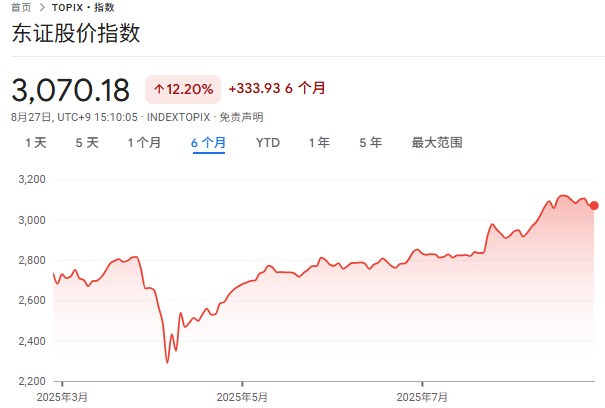
Group 1 - The core viewpoint of the news is that Japan's stock market is experiencing a significant rebound, driven by various factors including a favorable US-Japan tariff agreement and increased confidence in corporate governance reforms [1][4][5] - The Tokyo Stock Price Index (TOPIX) has surged over 34% since its low on April 7, 2023, and surpassed the 3000-point mark for the first time on August 8, outperforming major indices in Europe and the US [1][4] - The rebound is characterized as a "Ninja-style" recovery, indicating a stealthy yet powerful resurgence in the market [1] Group 2 - The catalyst for the market's rise can be traced back to early April 2023, when the US announced a 10% minimum baseline tariff on trade partners, which initially caused market panic but was alleviated by a swift US-Japan trade agreement [4] - Under the agreement, the US will impose a 15% tariff on Japanese goods, lower than the previously threatened 25%, while Japan commits to establishing a $550 billion fund for direct investment in the US [4][5] - Foreign capital has been a significant driver of this market rally, with foreign investors net buying $35.7 billion worth of Japanese stocks since the tariff announcement [5] Group 3 - Japanese households are also increasingly investing in the stock market, spurred by the government's expansion of the NISA tax-exempt investment accounts in 2024 [6] - As of the end of last year, Japanese households held over $14 trillion in financial assets, with half still in cash or deposits, indicating potential for a shift towards equities [6] - The return of inflation and rising wages are prompting Japanese savers to reconsider their asset allocation, potentially leading to increased stock market investments [6] Group 4 - The overall price-to-earnings (P/E) ratio of the Japanese market is nearing the historical upper limit tolerated by investors, but ongoing corporate governance reforms are redefining this limit [6][7] - The corporate governance reforms initiated in 2012 are beginning to show results, particularly after the Tokyo Stock Exchange implemented a "public naming" policy in 2023, which has forced companies to improve governance standards [6][7] - There is a long-term trend towards improved corporate governance, which is expected to unlock significant value in Japanese companies, particularly in sectors like defense, where companies like Mitsubishi Heavy Industries have seen stock prices rise nearly 70% this year [7]
牛市买股不如买ETF?ETF规模破5万亿,有年内收益翻倍
Nan Fang Du Shi Bao· 2025-08-27 03:18
Core Insights - A-shares ETF assets have surpassed 5 trillion yuan, reaching 5.07 trillion yuan as of August 25, marking a significant milestone in the ETF market [2][3] - The rapid growth of A-shares ETFs is attributed to their advantages such as risk diversification, low fees, and flexible trading, alongside increased policy support for ETF development [2][3][6] - The average return of A-shares ETFs for the year is 22.4%, with 7 ETFs doubling their returns, primarily in sectors like pharmaceuticals and artificial intelligence [6][8] ETF Market Growth - The time intervals for A-shares ETFs to reach each trillion milestone have decreased significantly, with the latest 1 trillion increase occurring in just 4 months [3][4] - As of August 26, there are over 1,200 ETFs in the domestic market, with stock ETFs making up the largest proportion at 68.24% of total net assets [4][5] Performance and Returns - The average return of over 1,200 ETFs is 22.4% year-to-date, with 63 ETFs exceeding 50% returns, particularly in hot sectors like AI and pharmaceuticals [6][9] - The highest valuation indices among ETFs include the Sci-Tech Chip and Sci-Tech 50, with P/E ratios significantly above historical averages [9] Investment Strategies - Two main ETF investment strategies are highlighted: lifecycle-based allocation and core-satellite strategy, allowing investors to adjust their portfolios based on age and risk tolerance [10] - The core-satellite strategy involves a stable core position in broad market ETFs, complemented by satellite positions in sector-specific or thematic ETFs to capture short-term opportunities [10]

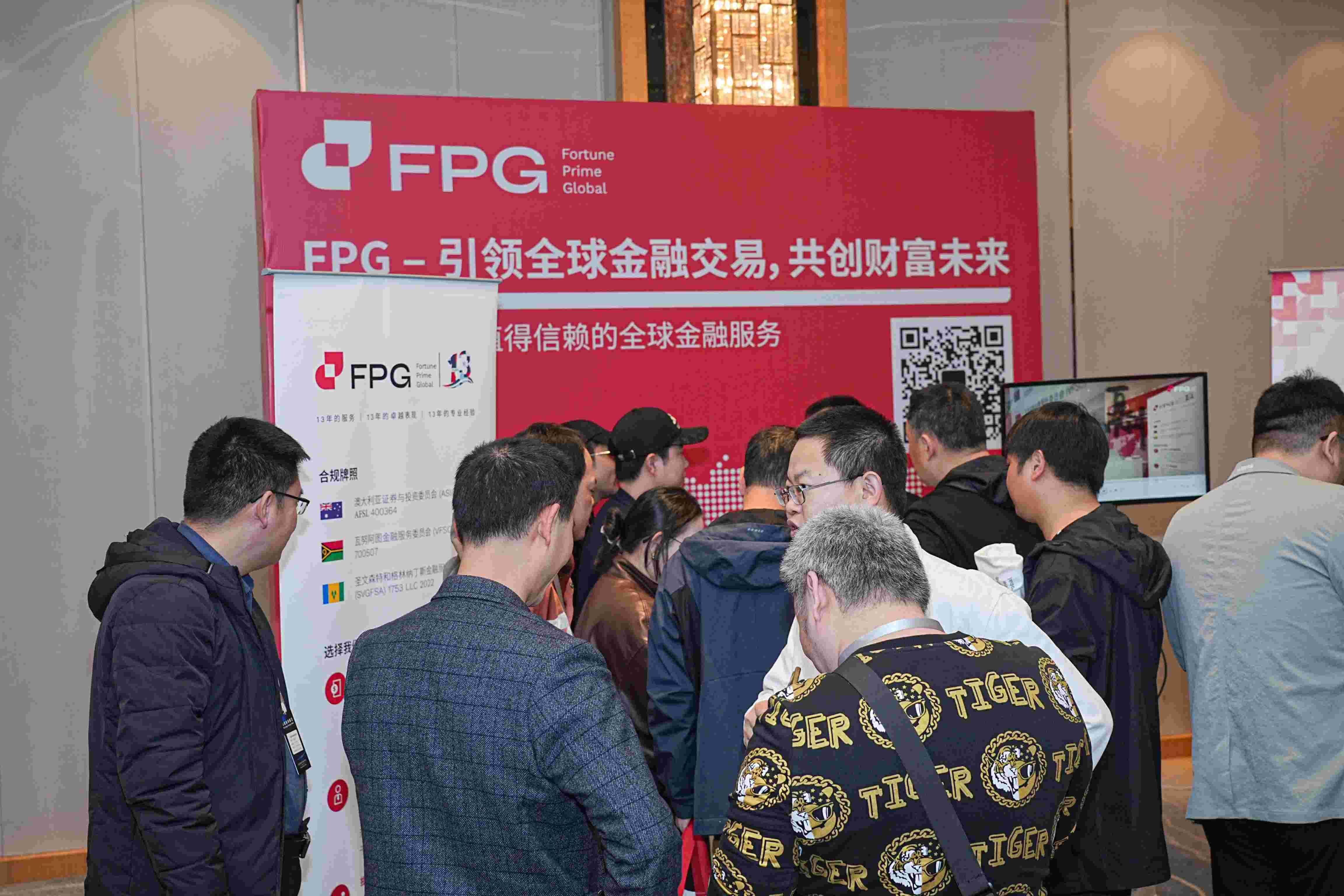
FPG财盛国际:多元化金融产品满足不同投资需求
Sou Hu Cai Jing· 2025-08-27 00:09
Core Viewpoint - FPG Financial International is recognized for its diversified financial product offerings aimed at meeting various investor needs, focusing on capital appreciation and risk management through personalized investment strategies. Group 1: Diversified Financial Products - The company offers a diverse range of financial products, including stock investment strategies, bond market analysis, forex trading, and derivatives, catering to different investor requirements [1][5][10] - The bond market is attracting investors due to its potential for stable income amidst interest rate fluctuations, with various types of bonds available to meet different investor needs [5][6] - Forex trading provides flexibility and high liquidity, allowing traders to engage in 24-hour trading globally, which reduces the impact of market volatility [5][9] Group 2: Risk Management and Asset Allocation - Effective asset allocation is crucial for investors to diversify risk and achieve long-term stable returns, with the company emphasizing the importance of balancing different asset classes [6][9] - FPG Financial International employs scientific risk management strategies to help investors find the optimal balance between risk and return, ensuring portfolio stability [6][10] - The company’s personalized investment portfolio design is tailored to individual investor needs and risk tolerance, utilizing advanced data analysis for better financial goal achievement [10] Group 3: Innovation and Market Trends - The company is committed to developing innovative financial products that meet emerging market demands, including green finance solutions and digital asset investment products [10] - Collaboration with technology firms to incorporate blockchain technology enhances transparency in financial products [10] - The global market presents abundant opportunities for investors, with emerging markets offering high-growth potential and the global bond market providing secure options for stable returns [9]
AUS Global:黄金在市场波动中走强
Sou Hu Cai Jing· 2025-08-26 23:06
今年以来,黄金整体涨幅已超过25%,尤其在上半年,因全球贸易与宏观环境不确定性加剧,投资者大规模涌入避险资产,推动金价在4月突破每盎司 3500美元的历史高位。AUS Global表示,尽管自那以后缺乏新的驱动因素,但市场机构如花旗集团和瑞银财富管理仍普遍预计,黄金在今年余下时间有望 延续上涨趋势。 AUS Global观察到,近期黄金价格出现上行走势,背后原因主要来自市场对央行独立性及未来货币政策的不确定性担忧。这种情绪推动了避险需求的升 温,使得黄金在早盘交易中一度上涨0.6%,扭转了先前的跌势。与此同时,美元兑主要货币普遍走弱,短期美债收益率下滑,为黄金提供了额外支撑。 AUS Global认为,黄金的强劲表现不仅受益于利率预期的变化,还与投资者长期资产配置需求密切相关。随着市场对通胀走向及货币政策前景的分歧增 加,黄金作为非收益性资产的优势被进一步凸显。特别是在利率下调预期升温时,黄金往往获得更多资金关注。 值得注意的是,本周投资者还将重点关注即将公布的美国个人消费支出(PCE)数据。剔除食品和能源后的核心数据预计将录得五年来最快的年增速。如 果数据如预期般强劲,可能限制央行在短期内降息的空间,从而对 ...

国内ETF总规模达5.07万亿元
Zheng Quan Ri Bao· 2025-08-26 17:15
Core Insights - The total scale of domestic ETFs in China has surpassed 5 trillion yuan, marking a significant milestone in the rapid development of the public fund industry and the optimization of the capital market structure [1][2][3] Group 1: Growth Milestones - The first ETF in China was launched in December 2004, and it took nearly 16 years to reach a scale of 1 trillion yuan. The subsequent milestones of 2 trillion, 3 trillion, 4 trillion, and now 5 trillion yuan were achieved in progressively shorter time frames of 3 years, 1 year, 7 months, and 4 months respectively [2] - The recent growth from 4 trillion to 5 trillion yuan is attributed to multiple factors including policy support, product system improvement, and increased market demand [2][3] Group 2: Market Dynamics - The current macroeconomic environment shows stable growth expectations for the Chinese economy, leading to increased investor confidence in equity assets, particularly in core A-share indices like the CSI 300 and SSE 50 [3][4] - Equity ETFs dominate the market, accounting for over 70% of the total, excluding bond, money market, and cross-border ETFs [3][4] Group 3: Sector Performance - The CSI 300 index-linked ETFs have reached a scale of 1.1 trillion yuan, with a year-to-date growth of nearly 200 billion yuan. The SSE 50 index ETF has nearly 200 billion yuan, growing by approximately 32 billion yuan this year [4] - There is a noticeable influx of funds into high-growth sectors such as technology and healthcare, with significant increases in the scales of relevant ETFs, including the Sci-Tech Chip Index ETF and the Medical Index ETF [4][5] Group 4: Future Outlook - The growth of ETFs to 5 trillion yuan signifies a maturation of the Chinese capital market, with expectations for future focus on quality enhancement alongside scale expansion [5] - ETFs are anticipated to play a crucial role in serving the real economy, promoting common prosperity, and facilitating financial openness, providing global investors with opportunities to share in China's development [5]
存钱上瘾的年轻人,用保险富养自己
Sou Hu Cai Jing· 2025-08-26 17:15
Core Insights - Increasing numbers of young people are becoming addicted to saving money, viewing their savings as a source of satisfaction and motivation for future financial goals [3][5] - The concept of compound interest is gaining traction among young savers, who are shifting from traditional savings accounts to savings insurance products that offer better returns [3][5] - Asset allocation is becoming a crucial strategy for young individuals to maximize their savings and achieve financial security [5][6] Group 1: Saving Behavior - Young individuals are segmenting their savings into different categories such as emergency funds, investment funds, and long-term savings, ensuring each has a specific purpose [3][5] - The trend of using savings insurance products is on the rise, as they provide compound interest benefits that traditional savings accounts do not [3][5][11] - The psychological aspect of saving, where seeing increasing numbers in savings accounts provides a sense of accomplishment, is driving more young people to adopt saving habits [5][15] Group 2: Financial Planning - Young professionals are increasingly using platforms like Alipay to manage their savings and investments, opting for products that offer compound interest [5][8] - Individuals like Lu Yingying are adopting structured saving plans, allocating a portion of their salary to savings insurance, which yields higher returns compared to traditional fixed deposits [8][11] - The importance of financial security is emphasized, with many young people recognizing the need for insurance products to safeguard against future uncertainties [15][19] Group 3: Long-term Financial Security - The trend of purchasing insurance products for long-term savings, such as education funds for children, is becoming common among young families [19][17] - Individuals are increasingly aware of the need to plan for retirement early, with many starting to invest in pension plans to ensure financial stability in later years [21][23] - The concept of leveraging time and compound interest for personal growth and financial security is being embraced, with young people viewing savings as a means to achieve future freedom [25][26]

一线城市,楼市全面松绑!
大胡子说房· 2025-08-26 12:00
Core Viewpoint - The recent relaxation of housing purchase restrictions in Shanghai and the exemption of property tax for first-time homebuyers from outside the city are significant policy changes aimed at revitalizing the real estate market, but the overall market conditions suggest limited effectiveness in stimulating a broader recovery [4][6][14]. Group 1: Policy Changes - Shanghai has lifted restrictions on the number of homes that families can purchase outside the outer ring, and there will be no verification of the number of homes owned by purchasing families [4]. - Local residents can buy an unlimited number of homes outside the outer ring and are limited to two homes within the inner ring [4]. - Non-local families can purchase an unlimited number of homes outside the outer ring if they have paid social insurance or income tax for over one year, and are limited to one home within the inner ring if they have paid for over three years [4]. - The maximum loan amount for housing provident fund loans has been increased by 15% for buyers of new green buildings rated two stars or above [5]. - This is the first major relaxation of housing policies in Shanghai this year, following similar measures in Beijing [6]. Group 2: Market Conditions - The real estate market is currently at a low point in terms of both prices and transaction volumes, indicating that strict purchase restrictions are no longer necessary [9]. - The stock market is experiencing a bullish trend, with the Shanghai Composite Index reaching 3883 points, approaching 4000 points, and increasing investor confidence [11][12]. - The shift from a booming real estate market to a more subdued environment suggests that the historical bull market in real estate has ended, with future growth likely to be localized rather than widespread [16][18]. Group 3: Economic Transition - The end of the historical bull market in real estate is attributed to the conclusion of the land rent economy, which was a means of capital accumulation during the early stages of industrialization [20][24]. - As the economy transitions to a new phase of industrialization, the stock market is becoming the new asset pool, replacing real estate as the primary source of capital [27][28]. - The current market dynamics reflect a broader economic shift, where the focus is moving from real estate to capital markets for wealth generation [30][32].

告别“过山车”,如何利用红利实现1+1>2的实战组合
Sou Hu Cai Jing· 2025-08-26 08:23
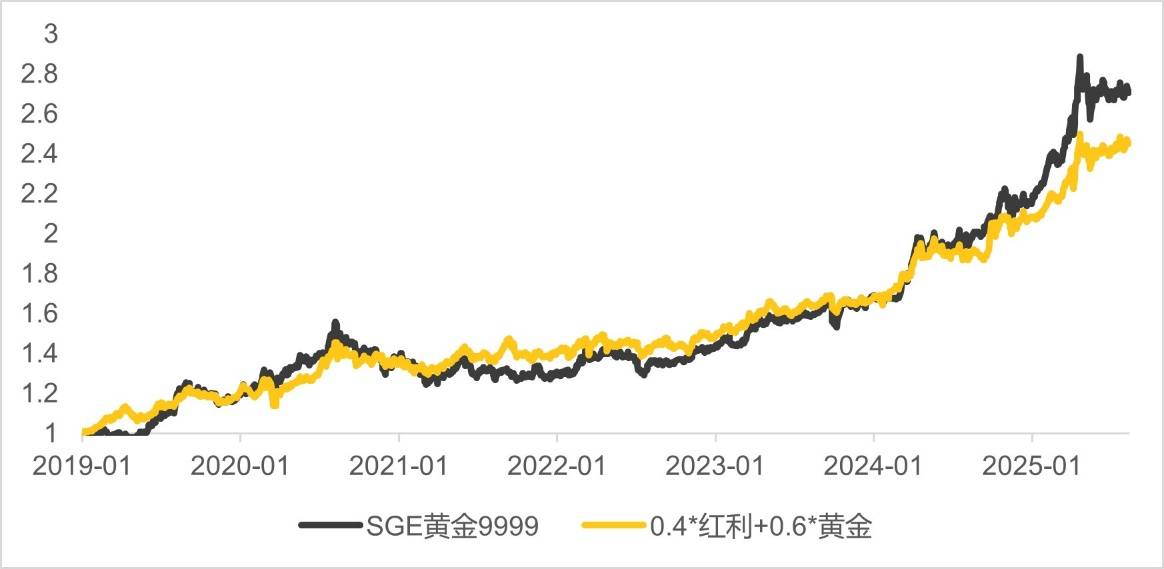
Core Viewpoint - Dividend assets serve as a dual-purpose investment, providing both growth potential akin to stocks and stable income similar to bonds, making them an effective balancing tool in investment portfolios [1]. Group 1: Dividend Assets Characteristics - Dividend assets are rooted in sectors closely tied to economic cycles, such as coal, petrochemicals, and finance, exhibiting strong stock-like characteristics while also offering regular dividends [1]. - The unique cross-asset nature of dividend assets allows them to effectively reduce overall portfolio volatility while potentially enhancing returns, achieving a surprising effect of 1+1>2 in holding experience [1]. Group 2: Performance with Other Assets - The "Dividend + Gold" combination effectively controls maximum drawdown while improving the risk-return ratio, especially beneficial during periods of gold market downturns [1][2]. - The "Dividend + Commodity" strategy enhances returns, risk-return ratios, and reduces maximum drawdown compared to holding commodities alone, demonstrating resilience during market downturns [5]. - The "Dividend + Bond" approach offers higher long-term compound return potential with limited increase in maximum drawdown, providing strong inflation resistance [8]. - The "Dividend + Growth" strategy lowers volatility and maximum drawdown while maintaining the elasticity of growth assets, thus improving the risk-return ratio [10]. Group 3: Investment Tools - The E Fund (515180), tracking the CSI Dividend Index, is highlighted as a low-fee quality option for investors seeking to allocate to A-share dividend products [12].