
全国统一大市场建设

Search documents
国家发改委:多措并举扩大“两新”政策拉动效益
Yang Shi Xin Wen Ke Hu Duan· 2026-01-20 03:28
Group 1 - The core viewpoint of the article is the announcement of the "Two New Policies" by the National Development and Reform Commission, which aims to optimize support scope, subsidy standards, and implementation mechanisms for consumer goods replacement programs [1][3]. - A total of 625 billion yuan in ultra-long-term special bonds will be allocated to support the "old for new" consumption program [1]. - The government plans to lower investment thresholds for project applications and increase support for small and medium-sized enterprises, thereby expanding the policy's reach [3]. Group 2 - The funding distribution for the "old for new" consumer goods program will be optimized, taking into account consumption potential and policy execution [5]. - A unified subsidy standard will be implemented nationwide for the replacement of scrapped vehicles, six categories of home appliances, and four categories of digital and smart products [5]. - The government will ensure balanced use of funds and guide local governments in orderly spending of subsidy funds on a quarterly basis [5].

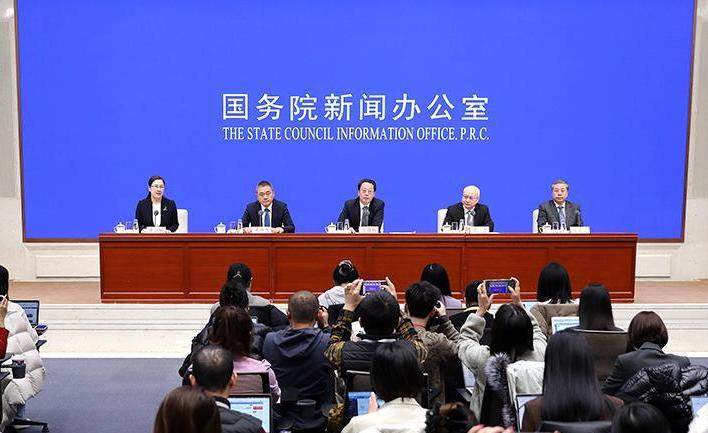
我国将研究制定2026—2030年扩大内需战略实施方案
Zhong Guo Jing Ji Wang· 2026-01-20 03:26
一是要坚持把宏观政策的发力点放在做强国内大循环上,全方位扩大国内需求。要适应需求升级的趋 势,结合新一轮科技革命和产业变革的需要,研究制定出台2026—2030年扩大内需战略实施方案,为以 新需求引领新供给、以新供给创造新需求提供强有力的创新举措和要素保障,努力实现供需互促、循环 升级。 二是坚持把发展经济的着力点放在实体经济上,加快构建现代化产业体系。坚持智能化、绿色化、融合 化方向,推动重点产业提质升级,大力培育壮大新兴产业和未来产业,深入开展"人工智能+"行动。要 发挥好国家创业投资基金行业标杆作用,研究设立国家级并购基金,加强政府投资基金布局规划和投向 指导,促进创新创业创造,加快培育和发展新质生产力。 中国经济网1月20日讯 1月20日,国新办举行新闻发布会,介绍落实中央经济工作会议精神、推动"十五 五"时期经济社会发展实现良好开局有关情况。国家发展改革委副主任王昌林在会上表示,我国将研究 制定并出台2026—2030年扩大内需战略实施方案,聚焦供需两端发力,推动经济实现高质量发展。 王昌林指出,当前我国经济发展中需求不足问题较为突出,同时存在供给不充分的短板。"我国供给体 系已进入从'有没有'向' ...
发改委重磅发声:正在研究制定居民增收计划
Wind万得· 2026-01-20 03:12
Group 1 - The core viewpoint emphasizes the importance of promoting price recovery as a key consideration in monetary policy, with a focus on implementing more proactive fiscal policies and moderately easing monetary policies to foster a positive interaction between economic growth and price recovery [4] - The National Development and Reform Commission (NDRC) plans to develop a strategy for expanding domestic demand from 2026 to 2030, aiming to strengthen the domestic circulation and adapt to the upgrading trend of demand structure [5] - A plan for increasing residents' income is under development, which aims to enhance consumer capacity and optimize consumption upgrades, with a focus on supporting the high-quality development of the service industry [6] Group 2 - The NDRC will address low-price disorderly competition among enterprises by refining local investment attraction and strengthening price regulation in key industries, promoting a market order of quality and price competition [7] - There will be efforts to standardize local economic promotion behaviors and enhance market dynamics by addressing "involution" competition, shifting from "price competition" to "value competition" [8] - The NDRC has announced the allocation of 625 billion yuan in special long-term bonds to optimize the support scope and implementation mechanisms of the "Two New" policies, aiming to lower investment thresholds for project applications and increase support for small and medium-sized enterprises [9][10] Group 3 - In the area of consumer goods, a program for "old-for-new" exchanges will be optimized, with a focus on establishing uniform subsidy standards nationwide for various categories of products [12] - The NDRC will develop regulations for the construction of a unified national market, ensuring legal protection and clarifying what local governments can and cannot do in promoting economic development [14]

国家发改委:将降低申报项目投资门槛,加大对中小企业支持力度
Bei Jing Shang Bao· 2026-01-20 02:49
Core Viewpoint - The National Development and Reform Commission has announced the 2026 "Two New Policies" aimed at optimizing support scope, subsidy standards, and implementation mechanisms, with an initial allocation of 62.5 billion yuan in special long-term bonds [1] Group 1: Policy Implementation - The new policies will lower investment thresholds for project applications and increase support for small and medium-sized enterprises, expanding the reach of the policies [1] - There will be a focus on improving project review quality by refining project conditions and audit standards, as well as standardizing equipment depreciation and disposal to prevent resource waste [1] Group 2: Regulatory Measures - Enhanced supervision will be implemented, including a closed-loop management system for equipment renewal projects, ensuring accountability and increasing efficiency in fund usage [1] - The distribution of funds for consumer goods "trade-in" programs will be optimized, taking into account consumption potential and policy execution to determine funding scales for different regions [1] Group 3: Funding Management - Funds will be allocated in a balanced manner, with a quarterly phased approach to disburse central funds, guiding local governments in orderly expenditure of subsidy funds [1]
发改委:将强化市场优胜劣汰机制,理顺价格关系
Zheng Quan Shi Bao Wang· 2026-01-20 02:43
Core Viewpoint - The Chinese government aims to promote a reasonable recovery of prices as a key objective of macroeconomic regulation, with a focus on implementing policies that support economic growth and price recovery [1] Group 1: Economic Policy Measures - The National Development and Reform Commission emphasizes the need for a more proactive fiscal policy and moderately loose monetary policy to facilitate price recovery [1] - Structural adjustments will be made to address "involution" competition and establish a unified national market construction regulation [1] - The government plans to enhance the market mechanism for survival of the fittest, ensuring efficient resource allocation and stable supply [1] Group 2: Future Directions - The government will focus on dual supply and demand efforts to create a positive interaction between economic growth and price recovery [1] - There will be a concerted effort to streamline the exit of inefficient production capacities and improve price relationships [1]
核心CPI涨幅扩大
Jing Ji Ri Bao· 2026-01-19 22:15
Group 1: Consumer Price Trends - The overall consumer price index (CPI) is stable and gradually improving, with a year-on-year increase of 0.7% for 2025, which is an increase of 0.2 percentage points compared to the previous year [2][3] - CPI experienced significant monthly fluctuations in January and February due to the Spring Festival, with January rising by 0.5% and February falling by 0.7%. From March to July, CPI remained stable with fluctuations between -0.1% and 0.1% [2] - Food prices decreased by 1.5% for the year, contributing approximately 0.27 percentage points to the CPI decline, while energy prices fell by 3.3%, impacting CPI by about 0.25 percentage points [2] Group 2: Core CPI and Industrial Prices - The core CPI has been rising since March 2025, maintaining a year-on-year increase of over 1% for four consecutive months from September to December, with December seeing a rise of 1.2% [3] - The Producer Price Index (PPI) decreased by 2.6% for the year, but the decline narrowed in the second half, with a reduction of only 1.9% in December, the smallest since September 2024 [4] - Prices in the coal mining and processing sectors turned upward after nine months of decline, with December prices rising by 1.3% and 0.8% respectively, contributing to the narrowing of the PPI decline [4] Group 3: Industrial Development and Price Increases - The high-quality development and transformation of industries have led to price increases in certain sectors, with significant growth in manufacturing driven by advancements in artificial intelligence and green technologies [5] - Prices for integrated circuit packaging and testing, external storage devices, and wearable smart devices increased by 2.0%, 0.7%, and 0.1% respectively, reflecting the impact of new production capabilities [5]
新华时评丨从“140万亿元”读懂中国经济发展大势
Xin Hua Wang· 2026-01-19 13:45
Core Insights - China's economy has crossed the "140 trillion yuan" threshold, achieving a growth rate of 5.0% amidst challenging external and domestic conditions, positioning it among the top economies globally [1][2] - The report highlights the resilience and high-quality development of the Chinese economy, emphasizing the importance of maintaining stability and solid foundations [1][3] Group 1: Economic Performance - The GDP has reached a new milestone of 140 trillion yuan, with record high goods trade and stable grain production at 1.4 trillion jin for two consecutive years [1] - Manufacturing value added has maintained the world's top position for 16 years, showcasing the strength of China's industrial base [1] Group 2: Reform and Innovation - The construction of a unified national market is advancing, with the implementation of the Private Economy Promotion Law and effective measures against "involution" competition [2] - The Hainan Free Trade Port has begun full island closure operations, and the negative list for foreign investment access continues to shrink, enhancing openness [2] - China has entered the global top ten in innovation index rankings, with significant scientific research achievements emerging [2] Group 3: Trade and Global Positioning - China has become a major trading partner for over 150 countries and regions, with a diversified foreign trade pattern accelerating [2] - High-tech and high-value-added products are driving export growth, reflecting the adaptability and resilience of the Chinese economy in a volatile global environment [2]
统计局最新发声,2026年支撑消费增长的积极因素依然较多
Xin Lang Cai Jing· 2026-01-19 05:48
康义首先提到,我国有14亿多人口,有庞大的中等收入群体,是具有全球影响力的超大规模市场。当 前,居民消费向优转变,个性化、多样化、品质化的消费偏好日益凸显,这里面就蕴藏着巨大潜力。 二是促消费政策继续显效。康义表示,今年将深入实施提振消费专项行动,制定实施城乡居民增收计 划。2026年以旧换新政策继续实施,并且在不断优化,第一批625亿元超长期特别国债资金已提前下 达,清理消费领域不合理限制措施逐步推进,政策落地将对消费增长形成支撑。 国家发改委此前撰文指出,实施城乡居民增收计划,提高居民收入在国民收入分配中的比重,提高劳动 报酬在初次分配中的比重,努力实现居民收入和经济增长同步、劳动报酬提高和劳动生产率提高同步。 加大直达消费者的普惠政策力度,增加政府资金用于民生保障支出。 记者 辛圆 除上述两个方面,康义提到,全国统一大市场建设有利于持续优化消费环境,新技术、新科技应用将会 增加更多的高品质消费供给,沉浸式、体验式消费场景也在不断培育,消费者权益保护持续加强,这些 都有助于释放更大的消费潜力。 国家统计局局长康义在周一的国新办新闻发布会上表示,展望2026年,尽管面临压力和挑战,但支撑消 费继续增长的积极 ...
王有捐:2025年CPI总体平稳 PPI低位回升
Guo Jia Tong Ji Ju· 2026-01-19 03:35
Group 1: Consumer Price Index (CPI) Trends - The overall consumer market in 2025 is stable and gradually improving, with CPI showing monthly fluctuations and a year-on-year increase of 0.8% in December, the highest since March 2023 [2] - Food prices decreased by 1.5% for the year, impacting CPI by approximately 0.27 percentage points, with significant declines in pork and egg prices [3] - Core CPI has been rising since March 2025, maintaining a year-on-year increase of over 1% for four consecutive months, reaching 1.2% in December [4] Group 2: Producer Price Index (PPI) Trends - The PPI for 2025 decreased by 2.6%, but the decline narrowed in the second half of the year, with a year-on-year decrease of only 1.9% in December [5] - The optimization of market competition and capacity management in key industries has led to a recovery in prices, particularly in coal and new energy sectors [6] - External factors, such as rising international metal prices, have contributed to price increases in related domestic industries, with non-ferrous metal mining prices up by 17.2% [7]
感悟发展中的“无障碍”(评论员观察)
Ren Min Ri Bao· 2026-01-18 23:47
Group 1 - The concept of "barrier-free" is a development philosophy that emphasizes dignity and innovation, enhancing life and stimulating the economy while removing both physical and mental barriers [1][2] - The construction of barrier-free environments is not only about the rights of disabled individuals but also addresses the needs of 310 million elderly people and over 400 million chronic disease patients in China, highlighting the universal significance of such initiatives [1][2] - The transformation of urban infrastructure, such as the renovation of public toilets in Wuhan and the promotion of a 15-minute barrier-free living circle in Hangzhou, reflects a refined approach to urban development that caters to diverse community needs [2] Group 2 - The ongoing construction of barrier-free environments in China signifies a profound change from isolated efforts to a comprehensive approach, indicating social progress through each improvement made [3] - A truly civilized society balances basic service guarantees with humanistic care, ensuring that economic development aligns with community experiences and technological advancements benefit everyone [3]