
量化宽松

Search documents
黄金再创历史新高
第一财经· 2025-12-23 11:07
2025.12. 23 本文字数:2793,阅读时长大约4分钟 "由于股价短期涨幅较快,估值也有较为明显提升,交易拥挤度快速提升,市场资金对资源股应对成 本等压力,未来盈利兑现相对谨慎。长期看,黄金股股价走势跟金价走势具备趋同性,但是黄金矿业 股的走势,不仅受到金价的影响,还与黄金矿业公司的业绩以及股市流动性变化强相关,因此波动性 更大一些。"他认为,对一般投资者来说,投资黄金ETF更适合纯金价敞口的表达,这也更适合把握 政策与利率节奏。 光大证券国际策略师伍礼贤表示,A股主要金矿股较10月初高位仍有差距,相对国际金价表现滞后, 估值修复空间尚存,预计2026年伦敦现货金价或升至每盎司4950美元,黄金矿业股中长期配置价值 凸显,相较于紧贴现货走势的黄金ETF,金矿股具备企业杠杆与业绩弹性,在金价上行阶段通常有超 额收益;而黄金ETF波动较低,更适合追求稳健、不愿承担个股风险的投资者。 作者 | 第一财经 李隽 12月23日,现货黄金价格再创历史新高,引发金矿股集体上涨。 山东黄金(600547.SH)涨幅领先,上涨近7%。招金矿业(01818.HK)上涨2.79%。灵宝黄金 (03330.HK)上涨0.53 ...

金价彻底爆了!外地顾客来不及放下行李箱,赶到金店“抢促销”
Mei Ri Jing Ji Xin Wen· 2025-12-23 10:02
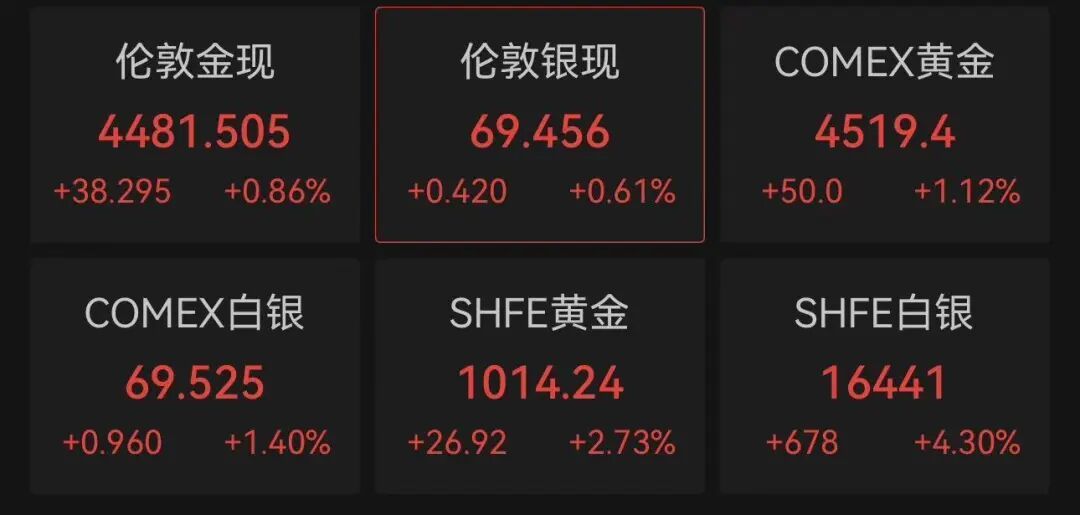
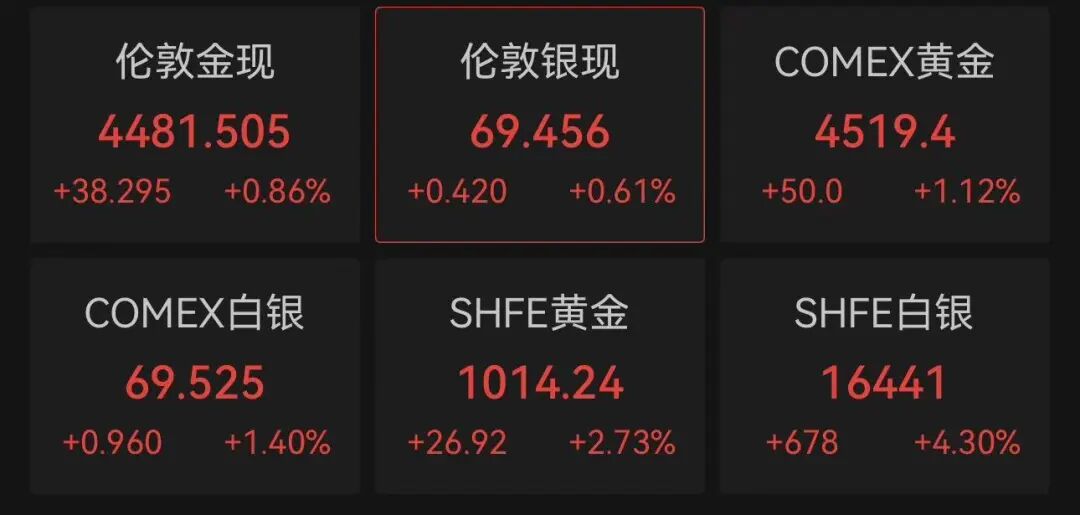
当地时间周一,市场对美联储明年多次降息的预期升温,叠加美国和委内瑞拉局势引发避险交易活跃,国际金价显著上涨,突破每盎司4400美元整数关 口,创盘中和收盘历史新高。与此同时,受美联储降息、供应紧缺、投资需求和工业需求显著增加等因素综合影响,白银期价也延续强劲涨势,周一收盘 再创历史新高。 12月23日,COMEX黄金一度升破4530美元/盎司,现货黄金也一度升破4497美元/盎司,均创历史新高。 受国际金价影响,以人民币计价的黄金价格再创新高。12月23日,多个品牌足金饰品报价首次冲上每克1400元。周生生足金饰品标价1403元/克,较前一 日1367元/克的价格上涨36元/克;周大福、周大生足金饰品标价1403元/克,较前一日1368元/克的价格上涨35元/克;老凤祥足金饰品标价1399元/克,较前 一日1365元/克的价格上涨34元/克;老庙黄金足金饰品标价1402元/克,较前一日1367元/克的价格上涨35元/克。 | 1589 .00 | | UNITON | | --- | --- | --- | | 是金价格 1399.00 | 金条价格 1357.00 | 1025.60 零售价 | | → 城 ...
金价彻底爆了!外地顾客来不及放下行李箱,赶到金店“抢促销”!周生生金饰报1403元/克,网友:再也回不到3位数了
Mei Ri Jing Ji Xin Wen· 2025-12-23 09:47
Group 1 - The market anticipates multiple interest rate cuts by the Federal Reserve next year, leading to a significant rise in international gold prices, which surpassed $4,400 per ounce, setting new historical highs [1] - On December 23, COMEX gold briefly exceeded $4,530 per ounce, while spot gold also surpassed $4,497 per ounce, both marking historical peaks [1] - The price of gold in RMB reached new highs, with various brands of gold jewelry priced above 1,400 RMB per gram for the first time [3] Group 2 - The price of silver continued its strong upward trend, with a notable increase in demand driven by factors such as supply shortages and rising industrial needs [1] - Silver prices in Shenzhen's market rose from 15 RMB per gram to 19.5 RMB per gram within a month, reflecting a 30% increase [12] - Platinum prices also surged, with recent quotes showing a rise from 300 RMB per gram to over 500 RMB, indicating a significant increase in the precious metals market [12] Group 3 - Retail promotions for gold jewelry have sparked a buying frenzy, with sales exceeding 10 million RMB in a single day at a Wuhan shopping mall, driven by attractive discounts and promotional offers [8] - UBS Wealth Management forecasts that gold may achieve its best annual performance since 1979, supported by continued demand from central banks and a weak dollar [10] - The overall increase in precious metal prices is attributed to investor expectations of Federal Reserve rate cuts, geopolitical uncertainties, and persistent inflation in the U.S. [15]





博时基金王祥:黄金市场延续攀升,美货币政策宽松预期提振
Xin Lang Cai Jing· 2025-12-23 02:40
Group 1: Gold Market Dynamics - On December 22, London spot gold surpassed the $4,400 per ounce mark, continuing its upward trend and approaching historical highs [1][13] - The recent U.S. economic data has largely underperformed expectations, reinforcing the certainty of future monetary easing [1][13] - The non-farm payroll report indicated a cooling job market, with government employment decreasing by 150,000 in October and November, contributing to a rise in the unemployment rate to 4.6% [1][13] - The November CPI year-on-year fell to 2.7%, below the expected 3.1%, suggesting near-zero growth in rental costs during October and November [1][13] - The Michigan Consumer Sentiment Index and existing home sales data also fell short of expectations, while the Bank of Japan raised interest rates by 25 basis points to 0.75% [1][13] Group 2: Federal Reserve Leadership and Economic Indicators - Kevin Warsh has gained traction in the market as a potential candidate for the Federal Reserve Chair, with increased betting on his victory [2][14] - The U.S. unemployment rate unexpectedly surged in November, rising from 4.4% to 4.6%, the highest since September 2021 [2][14] - The November non-farm payrolls increased by 64,000, exceeding the expected 50,000, and showing improvement from a decrease of 105,000 in October [2][14] - The November CPI significantly dropped, with nominal CPI year-on-year falling from 3% in September to 2.7%, and core CPI decreasing from 3% to 2.6% [2][14] Group 3: New Gold Resource Discovery - A giant underwater gold mine has been discovered in the northern waters of San Shan Island, Yantai, which is the largest in Asia and the only one of its kind in China [3][15] - The total proven gold resource reserves in the city exceed 3,900 tons, accounting for approximately 26% of the national total, with both reserves and production ranking first in the country [3][15]
半两财经|又创新高!黄金期货站上4500美元关口
Sou Hu Cai Jing· 2025-12-23 01:12
Group 1 - The core viewpoint of the articles highlights the significant rise in gold and silver prices, with COMEX gold futures reaching a new high of $4503 per ounce and silver prices also hitting a record of $69.45 per ounce, driven by factors such as the Federal Reserve's interest rate cuts, global central bank gold purchases, heightened geopolitical risks, and a weakening dollar [1][2]. - Gold prices have increased by over 67% year-to-date, with analysts from JPMorgan, Bank of America, and Metals Focus predicting that gold could reach $5000 per ounce by 2026, while domestic analysts expect short-term fluctuations around the $4400 per ounce mark [1]. - The recent surge in silver prices is attributed to the Federal Reserve's continued accommodative policies, signaling a potential restart of quantitative easing (QE), alongside tight supply conditions in the silver market [2]. Group 2 - The Shanghai Futures Exchange announced new regulations for silver futures trading, limiting the maximum number of contracts for non-futures company members and certain foreign participants to 10,000 contracts per day starting December 24, 2025 [3]. - Transaction fees for silver futures have been adjusted, with the fee for the AG2602 contract set at 0.025% of the transaction amount for day trades starting December 24, 2025 [4]. - The fee for the AG2604 contract has been set at 0.005% of the transaction amount for day trades, effective from the same date [5].
海外流动性风险尚未解除,新一轮量化宽松有望重启
Xin Ji Yuan Qi Huo· 2025-12-22 11:07
2026 年度中国期货市场投资报告 海外流动性风险尚未解除,新一轮量化宽松有望重启 宏观经济/资产配置 内容提要: 程 伟 宏观分析师 从业资格证:F3012252 投资咨询证:Z0012892 TEL:0516-83831160 E-MAIL:chengwei @neweraqh.com.cn 近期报告回顾: 美联储降息周期重启,全球 经济及大类资产展望(季 报)20250930 全球贸易摩擦及地缘局势 缓和背景下,大类资产配置 (半年报)20250630 国际环境复杂多变,超常规 政 策 依 然 可 期 ( 年 报 ) 20250101 投资有风险 理财请匹配 进入 2026 年,美国减税政策对经济的刺激作用将开始显现,关税政策对物价的影 响可能在下半年消退,美联储进一步降息的门槛明显升高,利率点阵图维持对年 内降息一次的预测;欧元区经济复苏乏力,通胀稳定在 2%的目标附近,欧洲央行 货币政策在进行 8 次降息后进入观察期;日本经济保持温和复苏,央行维持缓慢 加息的节奏,逐步实现利率政策正常化,可能引发海外日元套利资金回流,加剧 金融市场波动。 中央经济工作会议要求继续实施更加积极的财政政策,保持必要的财 ...
报告下载 | 美国利率 2026年展望:牛陡启动?
彭博Bloomberg· 2025-12-22 06:05
Core Viewpoint - The Federal Reserve may have further rate cuts in 2026, with risks of rates dropping below current market expectations, potentially leading to a steepening yield curve if the economy avoids a full recession [2][6]. Economic and Monetary Policy - Despite a lack of recent government economic reports, there is substantial data indicating economic weakness without entering a recession. The market generally expects real growth in 2026 to be slightly below 2%, with consumer prices rising by 2.9%, partly due to tariff transmission effects [6]. - Bloomberg's economic research aligns with market inflation expectations but is more optimistic about growth. If actual growth is slightly lower than expected, nominal GDP growth could be around 4.8%, close to the 30-year average of 4.7%, suggesting long-term rates may struggle to stay below 4% if economic growth and/or inflation slow more than anticipated [6]. Yield Curve and Interest Rates - The current pricing of the U.S. Treasury yield curve indicates a mild steepening over the next year, but the potential for a more pronounced steepening exists, with the 2-year/10-year spread possibly widening to over 100 basis points by the end of 2026. The Federal Reserve is expected to lower the benchmark rate below 3% [8][10]. - The "slow easing" camp is likely to become mainstream, with the median dot plot from the Federal Reserve potentially indicating R* close to 84 basis points [10]. Market Dynamics - The volatility in the overnight financing market tools may be more pronounced than in the past 15 years due to the disappearance of the "excess reserves" mechanism. This tightening of financing market funds is not unexpected for those who participated in these markets before the 2007-2009 financial crisis [12].

美银Hartnett:市场聚焦美股大涨“迎新”可能性,唯一风险是“市场过于乐观”
华尔街见闻· 2025-12-21 11:47
Core Viewpoint - The market is beginning to position itself for strong economic growth in 2026, with expectations of interest rate cuts, tax reductions, and tariff cuts driving corporate earnings acceleration [1] Group 1: Market Sentiment and Fund Flows - The Bank of America’s bull-bear sentiment indicator has risen to 8.5, signaling an extreme level of optimism in the market, which may lead to adjustment risks [2][12] - Global stock inflows reached $98.2 billion in a single week, with U.S. stocks attracting $77.9 billion, marking the second-largest weekly inflow on record [5][4] - There was a significant outflow of $43.9 billion from cash assets, the largest since April of this year, indicating a notable increase in market risk appetite [7] Group 2: Investment Strategy - The strategist recommends positioning for a declining inflation trend by going long on zero-coupon bonds, mid-cap stocks, and emerging market equities, rather than simply chasing the current bullish consensus on risk assets [3] Group 3: Macro Outlook and Risks - In an optimistic scenario, if CPI falls to 2% and the 10-year U.S. Treasury yield drops to around 3.5%, risk assets could receive substantial support [8] - Potential risks include global liquidity nearing its peak, the possibility that the Federal Reserve's rate cuts may be less than the market's current expectation of 150 basis points, and the chance of the Bank of Japan raising its policy rate to the highest level since 1995 [9] Group 4: Structural Risks - While overall market positioning does not show overheating, structural risks are accumulating, including high margin debt growth outpacing market gains and elevated hedge fund leverage [17] - The concentration of investor holdings in AI and technology sectors raises concerns reminiscent of market structures in 2000 and 2007 [17] - Global long-term yields are on the rise, posing a risk that could increase bond market volatility and materially threaten the stock market, even if the Federal Reserve continues to cut rates [17]


今日期货市场重要快讯汇总|2025年12月20日
Sou Hu Cai Jing· 2025-12-20 00:08
Group 1: Precious Metals Futures - Spot gold has surpassed $4,350 per ounce, with a daily increase of 0.41%; it previously broke $4,340 per ounce, rising by 0.17% [1] - New York futures gold has exceeded $4,380 per ounce, with a daily rise of 0.36%, having earlier touched $4,370 per ounce, increasing by 0.14% [3][4] - Spot silver has first broken $67 per ounce, with a daily increase of 2.41%, while New York futures silver also surpassed $67 per ounce, rising by 2.74% [5][6] - In the domestic market, the main silver futures contract has increased by 3% to 15,747.00 yuan, having previously risen by 2% to 15,590.00 yuan [7][8] Group 2: Macro and Market Impact - The Director of the White House National Economic Council, Hassett, stated that the core inflation rate is essentially at or below target levels, indicating that the Federal Reserve has ample room for interest rate cuts [10] - Federal Reserve Governor Milan mentioned that the Fed has not initiated a new round of quantitative easing [11] - The University of Michigan survey indicates that short-term and long-term inflation expectations have reached an 11-month low [12] Group 3: Stock Market Performance - The U.S. stock market saw all three major indices close higher, with the Dow Jones up by 0.38%, the Nasdaq rising by 1.31%, and the S&P 500 increasing by 0.89%; major tech stocks such as Micron Technology, Oracle, and AMD rose over 6% [13]


