
国产替代

Search documents
【招商电子】PCB 行业2026年投资策略:AI算力依旧是主旋律,把握产业链技术迭代和供求缺口
招商电子· 2025-12-25 23:47
Group 1 - The PCB sector has achieved significant excess returns driven by AI demand and technological upgrades from major companies like Nvidia, Amazon, and Google, with a year-to-date increase of 150%, leading the electronic sub-sector [3][22] - In 2026, AI demand for PCB is expected to continue growing rapidly, with supply tightness persisting, particularly in high-end HDI and multilayer boards, as well as in domestic high-end substrate breakthroughs [3][6] - The overall PCB market is projected to grow from $849 billion in 2025 to between $940 billion and $980 billion in 2026, reflecting a robust growth trajectory [6][12] Group 2 - The PCB industry is currently in an expansion phase, with strong downstream AI computing demand, despite anticipated weakness in mobile and automotive sectors in 2026 [5][12] - Inventory levels in Taiwan and mainland China have shown an upward trend, indicating increased stocking by downstream manufacturers due to strong AI demand [5][6] - The overall capacity utilization rate for PCB manufacturers in the second half of 2025 is between 93% and 97%, with optimistic order visibility extending beyond three months for leading manufacturers [6][12] Group 3 - The demand for high-end HDI and multilayer boards is rapidly increasing, with supply constraints and accelerated capacity expansion expected to benefit manufacturers with advanced technology [7][12] - The AI-driven trend is pushing for upgrades in PCB specifications, particularly in consumer electronics and automotive sectors, with a focus on innovations from companies like Apple and OpenAI [8][12] - The market for high-speed CCL is anticipated to grow significantly, with projections of around $8 billion in 2026 and a CAGR of 40% from 2024 to 2027 [9][12] Group 4 - The upstream materials for CCL, including copper foil, resin, and fiberglass cloth, are experiencing significant upgrades and supply tightness, driven by AI demand [10][12] - The equipment sector is expected to benefit from the expansion of PCB production, with high demand for advanced equipment driving rapid growth for domestic manufacturers [11][12] - The overall investment strategy for 2026 suggests focusing on sectors like computing boards, CCL, upstream materials, and domestic equipment manufacturers, as the AI-driven innovation cycle is expected to last longer and create broader market demand [12][12]






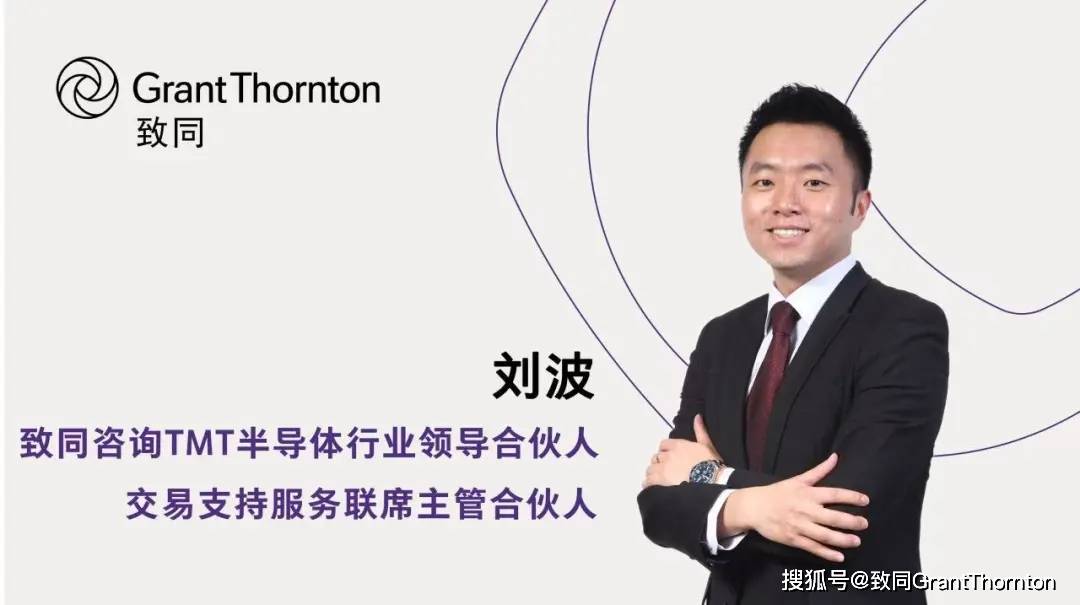
【致同咨询行业洞察】算力芯片:从产业竞争走向安全定价的中国GPU逻辑
Sou Hu Cai Jing· 2025-12-25 18:41
Core Viewpoint - The domestic GPU company Moore Threads debuted on the Shanghai Stock Exchange's Sci-Tech Innovation Board, opening with a 468.78% increase, reaching a market value of over 300 billion yuan, despite reporting approximately 800 million yuan in revenue and remaining in a loss position for the first three quarters of 2025. This valuation reflects market expectations for long-term growth and strategic value beyond traditional profitability metrics [1]. Group 1: Macro Background - In October 2025, the Central Committee of the Communist Party of China published a proposal emphasizing the principle of balancing development and security, marking a shift in economic operation logic towards a dual focus on development and security [3]. - Concurrently, the U.S. released its latest National Security Strategy report, defining U.S.-China relations as "near-peer" and indicating a transition to a long-term structural competition, with technology and industrial security as core battlegrounds [3]. Group 2: Industry Landscape - Since October 7, 2022, the U.S. Department of Commerce has implemented export controls on high-end GPUs to China, effectively limiting external supply flexibility in advanced computing for China and creating unprecedented market opportunities for domestic GPU startups [3]. - The perception of computing resources has shifted from being merely efficiency tools to being viewed as security resources, making domestic GPU alternatives a necessary option at the national level [3]. Group 3: Development Paths and Financial Performance of Domestic GPU Companies - The ongoing national push for computing infrastructure, combined with massive demand for large model training and AI applications, has created a strong resonance between the domestic GPU market and capital, although this resonance is time-sensitive due to factors like technological iteration speed and geopolitical developments [4]. - Domestic GPU companies are challenging Nvidia's pricing through a strategy of "usable performance + significant price advantage," which is gradually eroding existing market structures despite performance gaps [4]. - The ecosystem is a crucial variable, as the flexibility and migratory nature of GPU ecosystems present a lower difficulty in transitioning to mainstream options compared to the long-established CPU software ecosystem [4]. Group 4: Implications for the Market and Industry - Domestic GPUs are transitioning from a high-risk, high-investment technology sector to a critical infrastructure under the new security paradigm, necessitating a re-evaluation of traditional valuation methods [5]. - This period represents both an opportunity and a pressure test for the industry, with domestic computing chip companies expected to gradually realize their long-term growth potential driven by technological evolution, ecosystem expansion, and industrial competition [5].
站在硬科技的十字路口 企业如何锚定长期价值
2 1 Shi Ji Jing Ji Bao Dao· 2025-12-25 17:50
2025年12月,安永企业家奖20周年特别访谈现场,云知声智能科技股份有限公司创始人兼首席执行官黄 伟博士下了这个定义。坐在他身旁的东芯半导体股份有限公司董事长蒋学明表示认可,他创业的时间比 20年长了一倍。 黄伟在2012年创立云知声,带着科学家背景闯入人工智能领域,他的公司率先将深度学习应用于产业化 实践。而蒋学明自上世纪80年代起就投身实业,从纺织、水泥再到半导体,他的轨迹几乎是中国产业变 迁的缩影。 两人代表着不同代际的中国硬科技企业家:黄伟是新一代科技创业者,在技术快速迭代中寻找颠覆式创 新的机会;蒋学明是传统产业转型代表,凭借对产业趋势的敏锐洞察不断跨界重生。 而他们也同时身处一个重要的时间节点。2025年,人工智能大模型已从实验室走向产业落地,全球半导 体产业链在地缘政治的撕扯中加速重构。技术热潮如潮水般涌来,也裹挟着泡沫、焦虑与不确定性。 在安永企业家奖20周年的特别访谈中,我们试图厘清几个关键问题:在技术爆炸与市场重构的今天,企 业如何判断趋势与泡沫?出海成为必选项的背景下,如何应对日益复杂的地缘风险?而穿越多个周期的 企业家,又如何理解"坚守"与"变革"之间的平衡? "20年对一个企业来讲 ...
七连阳!沪指剑指4000点,春季躁动提前点燃?
Guo Ji Jin Rong Bao· 2025-12-25 15:11
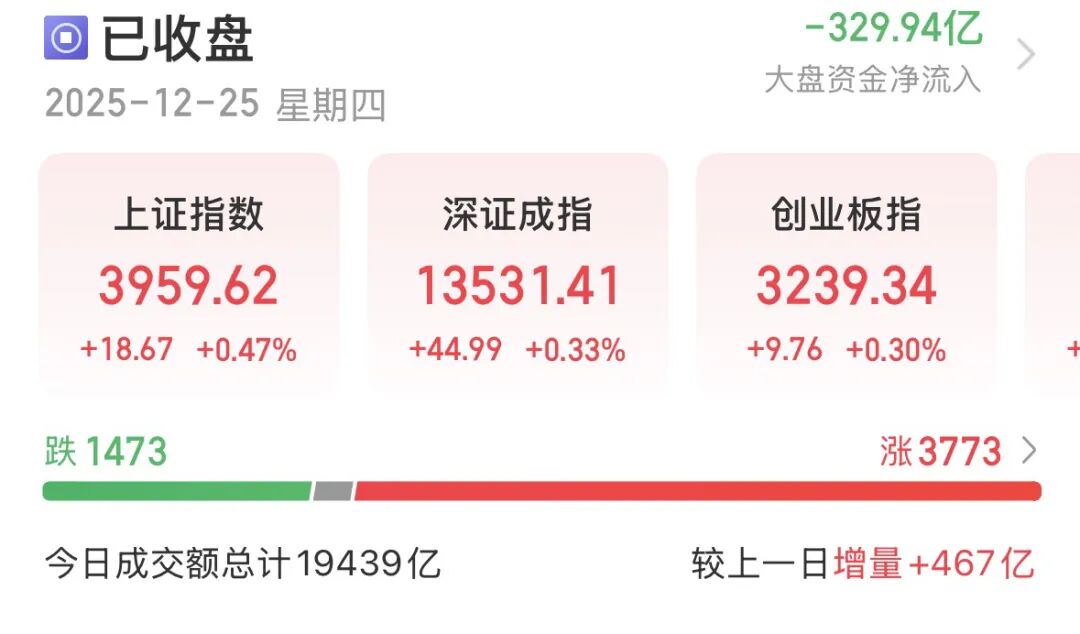
Market Overview - The current market shows significant divergence and unclear main trends, but a transaction volume of 1.94 trillion yuan indicates optimistic sentiment, suggesting an early start to the "spring excitement" market [3][4] - The Shanghai Composite Index rose by 0.47% to 3959.62 points, while the ChiNext Index increased by 0.3% to 3239.34 points, and the Shenzhen Component Index rose by 0.33% [4] Sector Performance - The defense and military sector experienced a surge, with a 2.91% increase and 10 stocks hitting the daily limit up, including companies like Boyun New Materials and Shenglu Communication [6][7] - Other sectors such as light industry manufacturing, mechanical equipment, and automotive also saw gains, with increases of 1.59%, 1.51%, and 1.46% respectively [6][9] - In contrast, sectors like gold concepts, lithium mining, and banking faced declines [5] Investment Insights - Analysts suggest a balanced allocation strategy, focusing on sectors driven by both policy and economic prosperity, as well as defensive sectors [3][16] - The military and high-end manufacturing sectors are benefiting from domestic substitution and infrastructure policies, while the automotive and mechanical equipment sectors align with the central economic work conference's focus on expanding domestic demand and stabilizing manufacturing [10][16] - The non-bank financial sector is seeing increased activity due to a rise in margin trading balances, which reached 2.54 trillion yuan [4][10] Future Outlook - The market is expected to remain volatile, with the Shanghai Composite Index likely oscillating between 3850 and 3950 points in the short term [15] - Analysts maintain a positive outlook for the A-share market, anticipating a potential breakthrough above 4000 points in early 2024, driven by technology stocks and strong fundamentals [15][16] - Key sectors to watch include AI computing, commercial aerospace, and renewable energy, with recommendations for investments in both growth and defensive stocks [16][17]
【公告臻选】锂电池+钠离子+固态电池+新材料+储能!这家行业龙头季度内第三次斩获电解液溶剂大单
第一财经· 2025-12-25 14:40
Group 1 - The article emphasizes the importance of efficiently filtering key announcements to aid investment decisions, highlighting the service "Announcement Selection" that provides deep insights into complex terms and reveals investment opportunities [1] Group 2 - On December 22, the article noted that Tongyu Communication's satellite communication products achieved small-scale applications in low-orbit satellites, leading to a significant stock price increase of 6.31% on December 24 and reaching a historical high by December 25 [2] - The article reported that Jiufeng Energy signed an agreement with China Long March Rocket Co., resulting in a stock price surge, with a cumulative increase of nearly 15% over two trading days [2] - The article mentioned Taiji Co., which saw a stock price increase of 2.95% after a change in actual control to Hubei State-owned Assets Supervision and Administration Commission [2] Group 3 - A company engaged in specialized equipment and digital twin technology secured a 1.5 billion yuan domestic computing power procurement project [3] - An industry-leading company in lithium batteries received a significant order for electrolyte solvents, marking the third major order since the fourth quarter [3] - A company in the semiconductor sector formed a joint venture with CATL to establish an automotive domain control chip company [3]


兆易创新深度报告:存储+MCU国内龙头,端侧AI与国产替代共驱增长
Tai Ping Yang Zheng Quan· 2025-12-25 13:15
Investment Rating - The report maintains a "Buy" rating for the company [5] Core Insights - The company is a leading global Fabless chip supplier, expanding its product lines in storage, MCU, niche DRAM, sensors, and analog chips, benefiting from a recovery in downstream demand and opportunities arising from the exit of overseas competitors from niche markets [2][3] - The NOR Flash market is expanding due to AI-driven demand, with the company achieving a market share of 18.5%, ranking second globally and first in mainland China [3][26] - The exit of major overseas manufacturers from the DDR3 market has created significant opportunities for domestic manufacturers in the niche DRAM sector, with the company poised to capture market share [4][45] Summary by Sections I. Global Leading Fabless Chip Supplier - The company has a diversified layout in "sensing, storage, computing, control, and connectivity," continuously deepening its product offerings since its establishment in 2005 and listing in 2016 [7][9] II. AI-Driven Expansion of NOR Flash Market - The global NOR Flash market is projected to grow from $2.8 billion in 2024 to $4.2 billion by 2029, driven by AI applications in consumer electronics and automotive sectors [23][26] - The company has achieved a significant market share in NOR Flash, benefiting from the exit of major competitors and the increasing demand for AI-enabled devices [3][26] III. Optimized Supply Landscape for Niche DRAM - The company is well-positioned in the niche DRAM market, with a product line that includes DDR4 and LPDDR4, expected to see significant growth due to the exit of major players from the DDR3 market [4][45] - The global niche DRAM market is anticipated to grow from $8.5 billion in 2024 to $13.2 billion by 2029, driven by demand from industrial control, AI applications, and automotive electronics [43][45] IV. Profit Forecast and Investment Recommendations - Revenue projections for 2025-2027 are estimated at 94.23 billion, 119.46 billion, and 149.62 billion yuan, with corresponding net profits of 17.76 billion, 25.29 billion, and 31.68 billion yuan, reflecting strong growth rates [5][11]
龙头股年内涨近2倍 制药装备迎来高景气
Xin Lang Cai Jing· 2025-12-25 12:40
Core Viewpoint - The pharmaceutical equipment industry is experiencing a recovery, with many listed companies showing a turning point in performance due to a resurgence in demand as the pharmaceutical sector enters an expansion phase [1][2][10]. Industry Recovery - The pharmaceutical equipment sector was previously in a downturn due to the global biopharmaceutical industry's cyclical decline, but by Q3 2025, most related companies have shown signs of recovery [2][12]. - The global capacity is entering an expansion phase, which is expected to significantly benefit the pharmaceutical equipment industry [1][15]. Company Performance - In Q3 2025, Chutian Technology reported revenues of 1.479 billion yuan and a net profit of 96.77 million yuan, with year-on-year growth of 10.17% in revenue and 192.50% in net profit [3][12]. - Dongfulong achieved revenues of 1.275 billion yuan and a net profit of 85.66 million yuan in Q3 2025, marking a significant improvement compared to the previous quarter [3][13]. - Despite a decline in revenue and net profit in the first half of 2025, Sensong International's new orders reached a historical high, driven by a surge in pharmaceutical contracts [4][14]. Contract Liabilities - Both Chutian Technology and Dongfulong have seen a continuous increase in contract liabilities, indicating a growing backlog of orders [4][13]. Capacity Expansion Plans - Major domestic companies like WuXi Biologics and Kangfang Biologics are set to initiate new capacity expansions in 2024, with significant increases in production capabilities [5][15]. - Internationally, multinational pharmaceutical companies are also advancing their global capacity layouts to enhance supply chain resilience, with substantial investments planned in the U.S. [5][16]. International Market Opportunities - The global pharmaceutical equipment market is projected to grow significantly, with domestic companies having substantial opportunities for international expansion [7][17]. - Domestic brands are increasingly competitive, with a notable shift towards local production capabilities, indicating a strong potential for import substitution [7][17]. Strategic Internationalization - Companies like Sensong International are leveraging their long-term technological expertise to enhance their international presence, aiming to capture new orders amid the ongoing industry transition [8][18]. - Dongfulong and Chutian Technology are actively expanding their overseas operations, with Dongfulong already achieving significant sales in international markets [9][19].


国产GPU“四小龙”扎堆IPO,它们能平替英伟达吗?
Sou Hu Cai Jing· 2025-12-25 11:25
Core Viewpoint - The domestic GPU industry is experiencing a capital frenzy as several companies prepare for IPOs, with significant market valuations and investor enthusiasm, despite the underlying financial challenges and losses faced by these companies [2][3][10]. Group 1: IPO and Market Performance - Moer Technology became the first domestic GPU stock on the Sci-Tech Innovation Board, opening at 650 CNY per share, a 468.78% increase from its issue price of 114.28 CNY, with a market cap exceeding 300 billion CNY [2]. - Muxi Co. also listed on the Sci-Tech Innovation Board, seeing an opening surge of over 568%, with its market cap quickly surpassing 300 billion CNY [2]. - On the same day as Muxi's listing, Birun Technology passed the Hong Kong Stock Exchange hearing, positioning itself to become the first GPU stock in Hong Kong [2]. Group 2: Financial Performance and Challenges - Moer Technology, Muxi Co., and Birun Technology are currently operating at a loss, with Moer reporting a loss of 724 million CNY in the first three quarters of 2025, Muxi at 346 million CNY, and Birun at 1.601 billion CNY in the first half of the year [3]. - In comparison, Nvidia's revenue for a single quarter in 2025 exceeded 30 billion USD, while domestic GPU companies' revenues are only in the range of several hundred million to a few billion CNY [3]. Group 3: Market Drivers and Trends - The IPO wave of domestic GPU companies is driven by a growing demand for computing power, a need for domestic alternatives, and a shift in capital investment logic [3][6]. - The demand for computing power has surged since the global AI model boom initiated by ChatGPT in 2023, with predictions indicating that China's total computing power will reach 3442.89 EFLOPs by 2029, growing at a compound annual growth rate of 40% [5]. Group 4: Competitive Landscape and Differentiation - The four leading domestic GPU companies, referred to as the "Four Little Dragons," are pursuing differentiated paths in technology, product positioning, and application scenarios [7]. - Moer Technology focuses on a full-featured GPU similar to Nvidia, while Muxi Co. specializes in AI computing GPUs, and Birun Technology emphasizes extreme computing power with its BR100 chip [8][9]. Group 5: Future Outlook - The domestic GPU industry is expected to face challenges in competing with Nvidia's established ecosystem, but there are structural opportunities for growth supported by national policies and a rich landscape of AI application scenarios in China [10][11]. - The future of domestic GPUs will depend on their ability to develop core technologies, production capabilities, and clear commercialization paths, with a focus on ecosystem service and scenario adaptation [12][13].

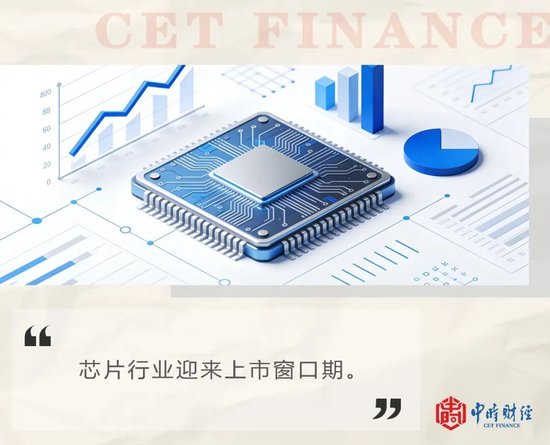
芯片行业掀起“上市潮”,谁是最大赢家?
Xin Lang Cai Jing· 2025-12-25 11:14
Core Viewpoint - The rise of domestic chip companies in China has led to a wave of IPOs, creating a number of billionaires in the tech sector, with companies like Shanghai Birun Technology starting their IPO process in Hong Kong [2][14][15]. Group 1: Capital Market Entry - Domestic chip industry leaders are rapidly entering the capital market, creating a sense of excitement and competition [16]. - Companies like Moer Technology and Muxi Co., Ltd. have seen significant stock price increases upon their IPOs, with market capitalizations exceeding 300 billion yuan [3][15]. - Birun Technology plans to issue approximately 248 million H-shares at a price range of 17 to 19.6 HKD per share, aiming to raise between 4.21 billion and 4.85 billion HKD [3][17]. Group 2: Winners in the Market - The success of companies like Moer Technology and Muxi Co., Ltd. has led to substantial wealth creation for early investors, with Moer Technology's stock price soaring by 468.8% on its debut [5][20]. - The mysterious investment firm "Peixian Qianyao" achieved remarkable returns from its investment in Moer Technology, highlighting the potential for significant profits in this sector [5][19]. - Founders of companies like Muxi Co., Ltd. have seen their net worth increase dramatically, with Muxi's founder reaching a valuation of 47 billion yuan shortly after the IPO [20]. Group 3: Challenges and Risks - Despite the excitement, industry experts warn of a crowded market with potential bubbles, as many companies struggle to achieve profitability [22]. - The semiconductor industry faces challenges such as overcapacity risks and intense competition from international giants like NVIDIA and TSMC [22]. - Analysts suggest that while some segments of the chip industry are promising, many companies may not survive the competitive landscape, with nearly 6,000 chip companies having closed in 2022 alone [22].
汽车与零部件行业周报:工信部发文许可深蓝和极狐两款L3级自动驾驶车型产品,一汽2027年量产固态电池首搭红旗旗舰车型-20251225
Shanghai Securities· 2025-12-25 11:10
Investment Rating - The industry investment rating is "Hold" [2] Core Insights - The automotive sector experienced a slight decline of -0.10% in the past week, with the automotive services sub-sector performing the best at +3.73% [5] - In November, the retail sales of passenger vehicles decreased by 7% year-on-year, while Tesla launched a budget version of Model 3 in Europe [5] - The Ministry of Industry and Information Technology approved two L3 level autonomous driving models, indicating advancements in smart vehicle technology [6] - China FAW plans to mass-produce solid-state batteries by 2027, which will be used in high-end Red Flag models [6] - The automotive market is currently adjusting due to the expiration of several consumer stimulus policies, with a projected retail market of approximately 2.3 million units in December [6] - The EU has proposed to relax the 2035 ban on new fuel vehicle sales, allowing for a 90% reduction in emissions compared to 2021 levels [7] Summary by Sections Market Review - The automotive sector's performance was ranked 21st among 31 first-level industries, with notable companies like Zhejiang Shibao and Weidi Co. showing significant gains [5] - The overall market sentiment reflects a mixed performance, with some companies experiencing substantial growth while others faced declines [5] Sales Data - From December 1 to 14, retail sales of passenger vehicles reached 764,000 units, a year-on-year decrease of 24% [6] - The wholesale volume for the same period was 734,000 units, down 31% year-on-year [6] - The new energy vehicle market showed resilience with retail sales of 476,000 units, only a 4% decline year-on-year [6] Investment Recommendations - Focus on companies involved in smart vehicle technology and those with potential for overseas sales [7] - Consider component manufacturers that can benefit from domestic substitution effects [7]