以旧换新政策

Search documents
中信证券:家电板块后续修复机会已经显现 预计2026年国补政策延续托底需求
Zhi Tong Cai Jing· 2025-12-31 00:51
Core Viewpoint - The report from CITIC Securities indicates that the home appliance sector is expected to underperform the market in 2025, with fund holdings at historically low levels, but recovery opportunities are emerging [1][2]. Group 1: 2025 Industry Review - The home appliance sector has underperformed the CSI 300 index since 2025, primarily due to domestic demand being affected by the reduction of national subsidies, high base effects, fluctuating tariffs, and weakening emerging markets in Q3 [2]. - The proportion of fund holdings in the home appliance sector has decreased to 1.93% from Q1 to Q3, with reductions in white goods, black goods, and small appliances, while components have seen a slight recovery [2]. - Currently, institutional holdings in the home appliance sector are at historically low levels, suggesting potential for recovery if domestic policies are implemented and external disturbances ease [2]. Group 2: Focus Areas for 2026 - The "old-for-new" policy is likely to continue, stabilizing domestic sales of home appliances. In 2025, the national subsidy program is expected to expand, with over 128 million units of 12 categories of appliances exchanged, utilizing more than 80 billion yuan of funds [3]. - Tariff impacts are gradually diminishing, with Chinese appliance exports to the U.S. recovering as trade relations stabilize. Companies are accelerating overseas production to mitigate future tariff uncertainties, particularly in emerging markets where penetration rates are low [3]. - The Mini LED television market is experiencing accelerated penetration driven by cost reductions and new product launches from leading manufacturers, with Chinese brands holding significant market shares [4]. - The commercial cold chain sector is expected to rebound in 2026, with leading companies seeing stabilization in frozen business and growth in new segments like smart cabinets [5]. - Component manufacturers are transitioning towards liquid cooling technologies, which are becoming essential in high-density data centers, leveraging existing expertise in thermal management and fluid control [5]. Group 3: Material Price Fluctuations - The impact of raw material price fluctuations is relatively limited, with copper and aluminum prices increasing by 17% and 5% respectively since Q4 2025, while prices for ABS, PP, and PS have decreased significantly [6][7]. - The overall cost index for white goods has shown mixed results, with air conditioners seeing a 3% increase in costs, while refrigerators and washing machines have experienced slight declines [7]. Group 4: Investment Strategy - In 2026, focus on companies that will benefit from continued national subsidies, particularly leading white goods manufacturers [9]. - Attention should be given to overseas companies with manufacturing and brand advantages, as they can effectively navigate trade risks and capitalize on emerging market growth [9]. - The Mini LED market is rapidly expanding, with Chinese leaders positioned to benefit from this trend [9]. - Commercial cold chain leaders are expected to see growth in new business segments driven by increased market share among key clients [9]. - Component companies are encouraged to pursue upgrades, particularly in liquid cooling technologies for AI data centers [9].

8点1氪丨特斯拉“车顶维权”女车主被限高,申请人为特斯拉;多家品牌足金首饰价格大幅下跌;蔡磊渐冻症病情接近终末期
3 6 Ke· 2025-12-31 00:09
Group 1 - Old Buddha Department Store denies rumors of withdrawal from Shenzhen, stating that the reduction of some brand counters is part of normal brand updates [2][3] - Multiple brands of gold jewelry have seen significant price drops, with one store reporting a decrease of 42 yuan in a single day, which is described as unprecedented [3] - Tesla's global production reaches 9 million electric vehicles, with the latest unit rolling off the production line at the Shanghai Gigafactory [7][25] Group 2 - Dong Yuhui's live-streaming event achieved a record sales figure of 3.56 billion yuan, with a single sofa from Kuka Home exceeding 100 million yuan in sales [5][6] - Manus announces its acquisition by Meta, indicating that it will continue to operate independently while enhancing its product offerings [4] - SoftBank completes a total investment commitment of $40 billion in OpenAI, with the final tranche of $22-25 billion recently disbursed [6] Group 3 - Ningde Times enters the hydropower station business by partnering with State Power Investment Corporation and Sichuan Tieneng Electric Power to develop a hydropower project [8] - iMoutai is set to launch a new product priced at 1499 yuan per bottle starting January 2026, confirming the authenticity of the news [9] - Kuaishou's Vice President Zhou Guorui is reported to be leaving the company, with no official response from Kuaishou yet [11][12]



2026年国补方案正式发布 智能眼镜首次纳入
Zheng Quan Shi Bao Wang· 2025-12-30 15:07
Group 1 - The "National Subsidy" policy will expand to the consumer electronics sector in 2025, allowing personal purchases of smartphones, tablets, smartwatches, and other devices to receive subsidies, with smart glasses included in 2026 [1] - The new policy supports the replacement of old appliances and encourages the purchase of energy-efficient products, offering a 15% subsidy on the sales price for certain categories, with a maximum subsidy of 1,500 yuan for home appliances and 500 yuan for digital products [1] - The policy aims to enhance the subsidy coverage for key consumer goods, including AR glasses, to accelerate the adoption of AI and other innovative products in daily life [2] Group 2 - The inclusion of smart glasses in the subsidy program is driven by three considerations: promoting product innovation, cultivating high-growth markets, and enriching the concept of old-for-new exchanges [2] - The expected sales of AR devices, including AR glasses, in China is projected to reach 452,000 units in 2025, representing a nearly 70% year-on-year increase, while AI glasses are anticipated to see a 215.7% growth with sales of 1.37 million units [2] - The government has allocated 62.5 billion yuan in special bonds to support the old-for-new consumption policy, ensuring a smooth implementation and addressing seasonal consumer demand [3]
A股晚间热点 | 2026年以旧换新政策出炉!涉及汽车、智能眼镜等
智通财经网· 2025-12-30 14:24
Group 1 - The State Council of China has announced the implementation of the Value-Added Tax Law, effective from January 1, 2026, detailing taxpayer scope, tax rates, tax calculation methods, tax incentives, and management measures [1] - The National Development and Reform Commission and the Ministry of Finance have released a policy for a large-scale replacement and recycling program for consumer goods, effective in 2026, covering categories such as automobiles, home appliances, and digital products [2] - Starting January 1, 2026, individuals selling residential properties purchased for more than two years will be exempt from value-added tax, while those selling properties purchased for less than two years will be subject to a 3% tax rate [3] Group 2 - The Ministry of Industry and Information Technology has issued a plan for the digital transformation of the automotive industry, aiming for significant improvements in smart manufacturing capabilities by 2027, including a 10% increase in labor productivity and a 20% reduction in product development cycles [4] - The i-Moutai platform will adjust its product offerings in 2026, including the introduction of various Moutai products, while denying rumors of a daily supply of 100 tons [5][6] - The National Investment Fund has issued a warning regarding the risks of investing in high-premium fund shares, highlighting significant price fluctuations in the market [7] Group 3 - The South Korean President will visit China from January 4 to 7, 2026, marking his first state visit since taking office, with expectations for enhanced strategic cooperation between the two countries [8] - Tianpu Co. has seen its stock price increase by 718.39% from August 22 to December 30, 2025, leading to a suspension of trading for verification due to significant deviations from the company's fundamentals [9] - The Ministry of Education plans to introduce policies in 2026 to promote artificial intelligence in education, with a focus on developing high-quality talent for the future [11]






国补“拿下”的它随时为技能“充电”
Xin Lang Cai Jing· 2025-12-28 20:28
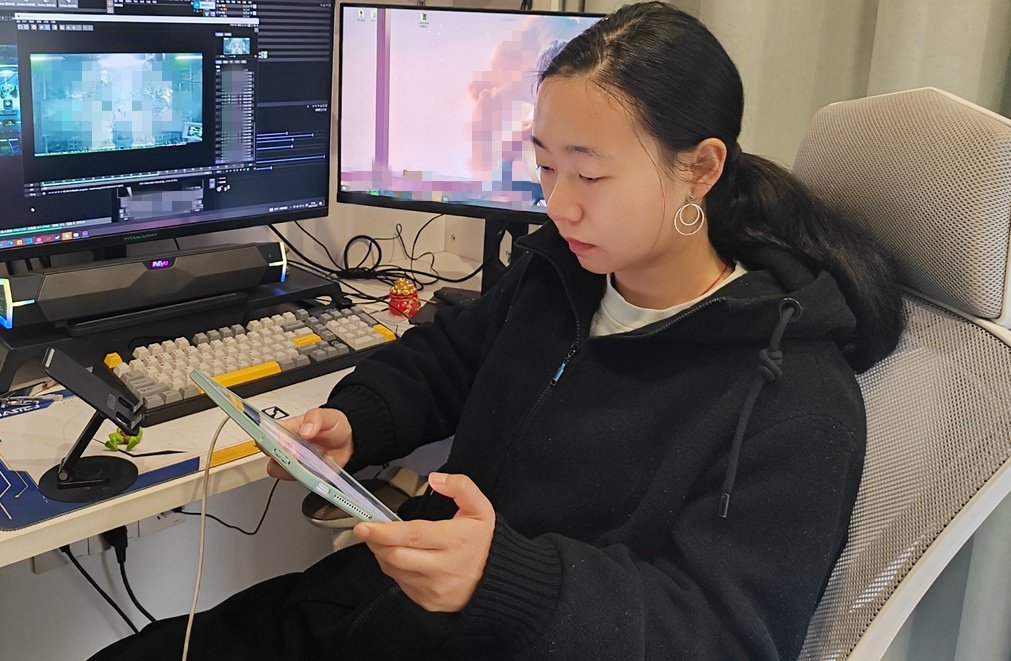
Group 1 - The design industry requires continuous learning and adaptation to new software and design concepts, leading to significant income disparities between newcomers and experienced professionals [1] - The implementation of a trade-in policy in Sichuan has made purchasing new digital products more affordable, with a specific example of a tablet being purchased for approximately 500 yuan less due to subsidies [1] - The trade-in policy has resulted in over 13.4 million applications for old product exchanges in Sichuan, driving consumption by over 161.6 billion yuan and involving more than 26,000 businesses [3] Group 2 - The use of a tablet allows for more efficient online learning and multitasking, contributing to skill enhancement and increased income for professionals in the design field [2] - The purchase of an air fryer at a reduced price due to national subsidies highlights the effectiveness of the trade-in policy in providing value to consumers [2] - There is an expectation for the trade-in policy to expand in scope, potentially including more product categories to further benefit consumers [2]
平面设计师许文娟:国补“拿下”平板电脑,随时为技能“充电”丨2025我的日历
Xin Lang Cai Jing· 2025-12-28 10:11
Group 1 - The article highlights the importance of continuous learning and skill enhancement in the graphic design industry, emphasizing the need for professionals to adapt to evolving design concepts and software applications [3][5] - The purchase of a tablet computer has significantly improved the efficiency of learning and practical application for graphic designers, allowing for better multitasking between online courses and software usage [5][6] - The implementation of the "old for new" policy in Sichuan has led to a substantial increase in consumer spending, with over 1.3 million units of various products being replaced, generating over 1.6 billion yuan in consumption [8] Group 2 - The Sichuan government's proactive macro policies aim to convert policy effectiveness into tangible development, focusing on the implementation of national projects and stimulating internal demand [7] - The "old for new" policy has resulted in a notable increase in the replacement of consumer goods, with significant participation from over 26,000 businesses, indicating a robust market response [8]
家电行业专题研究:拥抱龙头,重视出海
Xin Lang Cai Jing· 2025-12-26 12:24
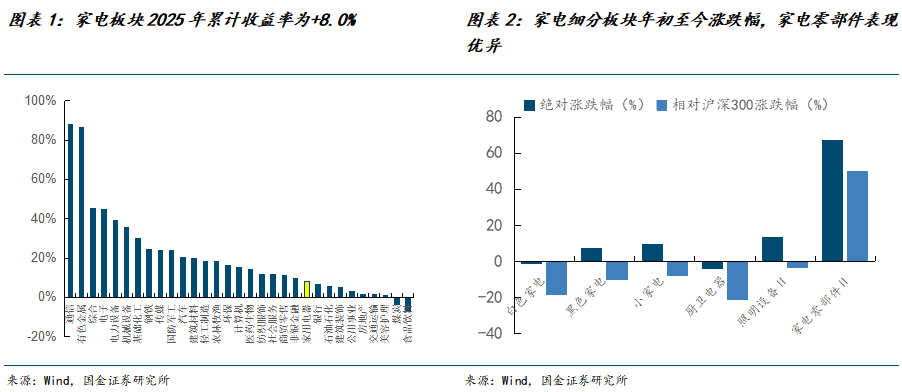
Group 1: Domestic Demand and Market Outlook - The home appliance sector is expected to show a "high first half and stable second half" trend in 2025, driven by policy continuation and consumption peaks [1] - In the first three quarters of 2025, air conditioner shipments increased by 8.4%, refrigerators by 2.4%, and washing machines by 4.1% year-on-year [1][13] - For 2026, the continuation of subsidies is anticipated to mitigate the impact of high base effects and demand pull-forward, with projected declines in overall appliance sales of -4% to -7.3% under various subsidy scenarios [1][16][19] Group 2: Export Performance and Global Market Trends - Home appliance exports have slowed down due to tariff policies and global supply chain adjustments, but still show resilience and structural highlights [2] - In 2025, the export growth rate for air conditioners is expected to be weaker than that of washing machines and refrigerators, primarily due to adverse weather conditions affecting overseas demand [2][39] - The U.S. market is projected to benefit from a rate cut, which may enhance demand for home appliances, while the European market is expected to maintain a slow recovery [42][44][50] Group 3: Investment Themes - The narrative in the black appliance sector is shifting from "market share chasing" to "profit and pricing power," with Chinese brands like Hisense and TCL expected to convert market share into higher profits [3][55] - White appliances are seen as having strong growth potential due to their historical resilience through cycles, with leading brands like Midea and Haier expected to maintain stable growth and generous dividends [3][83] - The global competition in new consumer products, particularly in smart imaging and robotic vacuum cleaners, is expected to favor Chinese brands, highlighting their competitive advantages [3] Group 4: Financial Metrics and Valuation - As of December 22, 2025, the home appliance sector's PE TTM is 16.27 times, remaining below the 10-year average of 32.8% [7] - The white appliance segment's current PE is 11.22, while black appliances stand at 25.94, indicating varying levels of market valuation [9] - The home appliance sector has seen a decline in public fund holdings, with a heavy allocation of only 2.46% in Q3 2025, reflecting concerns over demand in 2026 [9]



刚刚,集体爆发!三大重磅,突然来袭!
券商中国· 2025-12-26 04:08
Core Viewpoint - The recent surge in the lithium battery sector, driven by market speculation about a new vehicle trade-in policy and rising lithium carbonate prices, indicates a potential recovery and growth in the industry. Group 1: Market Dynamics - On December 26, the lithium battery sector saw significant gains, with stocks like Fengyuan Co. and Tianji Co. hitting the daily limit, and BYD rising over 6% [1] - The market anticipates a new vehicle trade-in policy with a cap of 13,000 yuan, exceeding previous expectations of 10,000 yuan [1] - The lithium carbonate market is experiencing intensified competition, with reports of production halts from companies like Hunan Youneng and Wanrun New Energy due to price discrepancies between long-term contracts and spot prices [1][4] Group 2: Industry Trends - The lithium carbonate main contract price has surged past 130,000 yuan, marking an 8% increase and reaching a new high since November 2023 [4] - Several companies in the lithium battery materials sector are adjusting their pricing strategies, with some opting to abandon SMM pricing due to perceived unfairness [4][5] - The demand for energy storage in China is robust, with projections indicating that the domestic project pool will exceed 800 GWh, supporting significant market growth over the next few years [7] Group 3: Future Outlook - The lithium battery industry is entering a mild inflation cycle, with price increases and demand feedback expected to create a dynamic balance in the market [7] - Forecasts suggest that the production of lithium batteries in China will reach approximately 210 GWh in January 2026, reflecting a seasonal adjustment and inventory clearing [7]


长江有色:宏观面暖意及年底刚需备货提振 26日铅价或小涨
Xin Lang Cai Jing· 2025-12-26 03:38
Group 1 - The lead market is experiencing multiple macroeconomic benefits, with expectations of a weaker US dollar due to ongoing interest rate cut predictions from the Federal Reserve, which could open up upward space for non-ferrous metals priced in dollars [2] - The central bank's signals for continued moderate monetary policy easing into 2026 and potential rate cuts before the Spring Festival are boosting market confidence in lead consumption recovery [2] - Domestic policies such as "old-for-new" exchanges and consumption promotion measures are expected to enhance demand in downstream sectors like lead-acid batteries [2] Group 2 - Environmental controls have been upgraded in response to heavy pollution, leading to expectations of supply contraction, which is a short-term macro catalyst for lead prices [2] - The lead price is anticipated to rise slightly today, supported by favorable macro liquidity expectations and a stronger yuan reducing import costs [2] - The industry is facing a supply-demand imbalance, with traditional automotive battery demand remaining strong while electric bicycle sectors show weakness, impacting downstream purchasing enthusiasm [2]

靖远县“以旧换新”政策成效亮眼 撬动消费9400余万元
Sou Hu Cai Jing· 2025-12-24 23:05
Core Insights - The "old-for-new" policy during the 14th Five-Year Plan period is a significant initiative for expanding domestic demand and promoting green transformation in China [1] - The implementation of this policy in Jingyuan County has stimulated consumer spending across various sectors, enhancing market vitality [1] Group 1: Policy Implementation and Impact - Jingyuan County has fully promoted the "old-for-new" policy this year, covering essential household appliances, automobiles, and digital products, leading to increased consumer satisfaction and market activity [1] - The introduction of the "old-for-new" policy has resulted in a notable increase in store foot traffic and a significant rise in sales for home appliances, particularly in air conditioners, televisions, refrigerators, and washing machines [3] - The county has adopted a "policy synergy" approach by combining the "old-for-new" initiative with promotional events, effectively amplifying the impact of the 14th Five-Year Plan policies [5] Group 2: Financial Metrics and Consumer Engagement - As of now, Jingyuan County has provided subsidies for 18,575 transactions under the "old-for-new" policy, distributing over 16.7 million yuan in subsidies and generating sales exceeding 94 million yuan [7] - The county's financial allocation of 2 million yuan for special consumption activities during key festivals aims to further incentivize consumer spending through promotional offers [7] - The ongoing implementation of the "old-for-new" policy has effectively released consumer potential and fostered new economic growth points, contributing to high-quality development in the county [9]