
规模效应

Search documents
兴证国际:维持顺丰同城(09699)“增持”评级 利润端仍具增长空间
智通财经网· 2025-09-11 02:11
Group 1 - The core viewpoint of the report maintains a "buy" rating for SF Express, with expectations for continued revenue growth driven by deepening in key accounts, expansion in mid-tier markets, and penetration in lower-tier markets [1] - The company is projected to achieve revenue growth of 33.6%/23.6%/17.7% for the years 2025-2027, with adjusted net profit growth of 88.4%/71.9%/51.2% during the same period [1] Group 2 - In the first half of 2025, the company achieved operating revenue of 10.24 billion yuan, a year-on-year increase of 49%, with revenue from B-end and C-end same-city delivery services reaching 4.5 billion and 1.3 billion yuan respectively, showing growth rates of 55% and 13% [2] - The number of active merchants on the B-end platform reached 850,000, a year-on-year increase of 55%, with significant growth in non-food categories such as tea, supermarkets, pharmaceuticals, and maternal and infant products [2] Group 3 - The last-mile delivery business generated revenue of 4.5 billion yuan in the first half of 2025, reflecting a year-on-year growth of 57%, driven by deep collaboration with SF Group's trunk network and increased demand during peak periods [3] - Daily average order volume in the collection segment increased by 150% year-on-year, supported by the rise in e-commerce parcel delivery and various local logistics scenarios [3] Group 4 - The company reported a gross margin of 6.7% and a net profit of 137 million yuan in the first half of 2025, representing a year-on-year increase of 120%, with a net profit margin of 1.3%, up 0.4 percentage points [4] - Profitability improvements are attributed to scale effects from increased order volume, enhanced network density, and cost reductions from refined management practices [4]
微软云Azure:被忽视的商业“金矿”,藏着怎样的投资密码?
Sou Hu Cai Jing· 2025-09-10 12:42
Core Insights - The true growth engine of Microsoft is Azure, generating $80 billion in annual revenue, rather than its traditional products like Windows and Office [2] - Azure has penetrated critical industries globally, supporting various sectors from Fortune 500 companies to NASA, highlighting its importance in the digital economy [2] Group 1: Azure's Evolution - Azure was conceptualized in 2008, during the early stages of cloud computing, as a response to competitors like AWS and Google Cloud, focusing on enterprise-level customer needs [3] - The unique positioning of Azure targets high-value verticals such as finance, healthcare, and aviation, addressing specific regulatory and operational requirements [4] Group 2: Business Model and Financial Performance - Azure's "pay-as-you-go" model significantly reduces upfront costs for enterprises, enhancing cash flow and operational efficiency, with a reported 70% reduction in initial capital expenditure [4] - In FY2023, Azure's revenue surpassed $75 billion, contributing to 45% of Microsoft's total revenue, with a gross margin of 68%, outperforming traditional business lines [6] Group 3: Market Trends and Competitive Advantages - The global enterprise cloud services market is projected to exceed $1.2 trillion by 2025, with Azure holding significant potential for market share growth [7] - Azure's integration with Microsoft products like Office 365 enhances customer retention and positions it as a comprehensive solution provider [7] - Compliance capabilities are crucial for Azure's success, having obtained over 90 industry certifications, allowing access to high-margin sectors like finance and healthcare [7] Group 4: Strategic Implications for Investors - Azure represents a shift in investment focus towards foundational infrastructure, akin to historical investments in railroads and electricity, emphasizing the importance of cloud computing in the modern economy [8] - The demand for computing infrastructure will continue to rise with advancements in AI, the metaverse, and industrial internet, making Azure a key player in future investment opportunities [8]



茶饮“五剑客”,半年狂揽316亿
创业邦· 2025-09-10 10:31
Core Viewpoint - The article discusses the significant revenue growth of five major tea beverage brands in China, collectively referred to as the "Five Swordsmen," driven by the ongoing competition in the food delivery market, resulting in increased sales and profits for these companies in the first half of 2025 [5][8]. Revenue Growth - The five tea beverage companies, including Nai Xue's Tea, Mi Xue Ice City, Gu Ming, Ba Wang Tea Ji, and Cha Bai Dao, achieved a total revenue of approximately 316 billion yuan, an increase of 73 billion yuan compared to the previous year, representing a year-on-year growth of 30.12% [5][8]. - Mi Xue Ice City remains the largest player with a revenue of 148.75 billion yuan, growing by 39.3% year-on-year, while Gu Ming experienced the fastest growth at 41.2%, reaching 56.63 billion yuan [8][10]. Profitability - The five brands collectively recorded a net profit of 55.6 billion yuan, an increase of 13.76 billion yuan from the previous year, marking a year-on-year growth of 32.89% [15][18]. - Mi Xue Ice City reported the highest profit of 26.93 billion yuan, with a year-on-year increase of 42.9%, while Gu Ming's profit surged by 121.5% to 16.25 billion yuan [15][18]. Market Dynamics - The article highlights that the tea beverage sector is particularly well-suited for the food delivery model due to stable output and competitive pricing, which encourages impulsive purchases [10][11]. - The growth in revenue is attributed to both increased sales of materials and the opening of new stores, with Mi Xue Ice City and Gu Ming exemplifying this dual approach [11][18]. Future Strategies - As the food delivery competition is expected to normalize, companies are focusing on improving operational efficiency at individual stores and exploring opportunities in both overseas and lower-tier markets [22][26]. - Ba Wang Tea Ji is looking to expand internationally, having recently entered the Philippine market, while Mi Xue Ice City is increasing its presence in lower-tier cities, with 57.6% of its stores located in these areas [23][26].

华厦眼科(301267):新术式助力公司屈光业务领衔增长
Guolian Minsheng Securities· 2025-09-10 07:48
Investment Rating - The investment rating for the company is "Buy" (maintained) [6] Core Insights - The company reported a revenue of 2.139 billion yuan for H1 2025, representing a year-over-year increase of 4.31%, and a net profit attributable to shareholders of 282 million yuan, up 6.20% year-over-year [4][10] - The introduction of new surgical techniques has significantly boosted the company's refractive business, leading to a revenue of 789 million yuan in H1 2025, which is a 13.75% increase year-over-year [12] - The company has established a nationwide medical network with 64 specialized eye hospitals and 67 vision centers, enhancing its service coverage across various regions [13] Financial Performance Summary - For H1 2025, the company's gross margin was 45.20%, a slight decrease of 0.64 percentage points year-over-year, but improved in Q2 2025 to 45.44%, reflecting a recovery from previous impacts [11] - The company expects revenues for 2025-2027 to be 4.379 billion, 4.878 billion, and 5.479 billion yuan respectively, with year-over-year growth rates of 8.74%, 11.39%, and 12.32% [14] - The net profit attributable to shareholders is projected to be 570 million, 692 million, and 811 million yuan for the same period, with growth rates of 33.05%, 21.27%, and 17.21% respectively [14]
【盐津铺子(002847.SZ)】单品势能不减,盈利能力提升——2025年中报点评(叶倩瑜/董博文)
光大证券研究· 2025-09-06 00:03
Core Viewpoint - Salted Fish Shop reported a strong performance in H1 2025, with revenue and net profit showing significant year-on-year growth, indicating a positive trend in the company's financial health [3][4]. Financial Performance - In H1 2025, the company achieved revenue of 2.941 billion yuan, a year-on-year increase of 19.58%, and a net profit of 373 million yuan, up 16.70% [3]. - For Q2 2025, revenue reached 1.403 billion yuan, growing by 13.54%, while net profit was 195 million yuan, reflecting a 21.75% increase [3]. Product Performance - The company saw substantial growth in various product categories, with spicy snacks, deep-sea snacks, and egg snacks achieving revenues of 1.32 billion, 363 million, and 309 million yuan respectively, with spicy snacks growing by 47.05% [4]. - The "Big Devil" brand of konjac products generated 791 million yuan in revenue, marking a remarkable 155.10% increase [4]. Channel Strategy - The company adjusted its e-commerce strategy, focusing on core products and eliminating low-margin items, which has led to improved sales performance in the e-commerce channel [4]. - Revenue from direct supermarkets, distribution, and other channels was 63 million, 2.303 billion, and 574 million yuan respectively, with a notable 30.09% increase in distribution channels [4]. Profitability and Cost Management - The gross margin for H1 2025 was 29.66%, with a slight decrease due to rising raw material costs and changes in channel structure [5]. - The net profit margin improved to 12.67% in H1 2025, driven by adjustments in low-margin products and enhanced scale effects from the "Big Devil" brand [5][6].


顺丰同城(09699.HK):盈利高增长 期待成长逻辑持续兑现
Ge Long Hui· 2025-09-05 19:36
Core Viewpoint - SF Express's performance in H1 2025 shows significant growth in revenue and profit, driven by strong demand in the ToB delivery and last-mile logistics sectors, benefiting from the rapid expansion of the food delivery and instant retail industries [1][2][3] Financial Performance - In H1 2025, the company achieved revenue of 10.236 billion yuan, a year-on-year increase of 48.81% - The net profit attributable to shareholders was 137 million yuan, up 120.43% year-on-year - Adjusted net profit reached 160 million yuan, reflecting a 138.97% increase year-on-year [1] Business Segments - The ToB delivery and last-mile business experienced high growth, with same-city delivery order volume increasing by over 50% year-on-year, contributing to a revenue increase of 43.11% to 5.779 billion yuan - ToB delivery revenue was 4.467 billion yuan, up 55.42% year-on-year, with significant growth in the food delivery segment, particularly tea delivery, which saw a 105% increase [1] - ToC delivery revenue was 1.312 billion yuan, a 12.71% increase year-on-year, with "one-to-one exclusive delivery" revenue tripling, indicating rapid growth in lower-tier markets [1] Last-Mile Business - Last-mile business revenue reached 4.457 billion yuan, a year-on-year increase of 56.92% - The volume of collected items increased by over 150% year-on-year, with rapid growth in e-commerce delivery scale [1] Profitability and Cost Management - The company's gross margin was 6.65%, a slight decrease of 0.23 percentage points year-on-year - Overall improvement in expenses led to a decrease in the expense ratio by 0.85 percentage points to 5.41% - The net profit margin attributable to shareholders increased by 0.44 percentage points to 1.34%, with adjusted net profit margin at 1.6%, up 0.60 percentage points year-on-year [2] Market Position and Growth Potential - The company is leveraging its brand strength and neutral positioning to penetrate diverse scenarios in the local life market, with continued expansion of its market share - The integration with the group's network is expected to further boost volume, while technology-driven cost reductions and refined management are anticipated to sustain the release of scale effects [2] Revenue and Profit Forecast - Projected revenues for 2025-2027 are 22.096 billion yuan, 28.475 billion yuan, and 35.542 billion yuan, representing year-on-year growth of 40%, 29%, and 25% respectively - Expected net profits for the same period are 298 million yuan, 515 million yuan, and 900 million yuan, with year-on-year growth of 125%, 73%, and 75% respectively - Corresponding PE ratios are projected at 42.46, 24.53, and 14.06 [3]
盐津铺子(002847):单品势能不减,盈利能力提升
EBSCN· 2025-09-05 07:48
Investment Rating - The report maintains a "Buy" rating for the company [4][6]. Core Views - The company achieved a revenue of 2.941 billion yuan in H1 2025, representing a year-on-year growth of 19.58%, with a net profit attributable to the parent company of 373 million yuan, up 16.70% year-on-year [1]. - The company is experiencing strong growth in its konjac product line, with revenue from konjac products reaching 791 million yuan in H1 2025, a remarkable increase of 155.10% year-on-year [2]. - The company is actively adjusting its e-commerce strategy to focus on high-margin products, which is expected to improve operational quality and profitability [2][3]. Financial Performance Summary - In H1 2025, the company's gross margin was 29.66%, with a slight increase to 30.97% in Q2 2025, despite a year-on-year decline due to rising raw material costs [3]. - The net profit margin for H1 2025 was 12.67%, improving to 13.86% in Q2 2025, indicating enhanced profitability through strategic adjustments [3]. - The company has revised its net profit forecasts for 2025-2027 to 809 million, 994 million, and 1.19 billion yuan respectively, reflecting a downward adjustment of 5.4%, 3.0%, and 2.8% [4]. Revenue and Profitability Forecast - The projected revenue growth rates for 2025-2027 are 19.20%, 20.91%, and 18.56% respectively, with corresponding net profit growth rates of 26.38%, 22.95%, and 19.71% [5]. - The earnings per share (EPS) estimates for 2025-2027 are 2.96, 3.65, and 4.36 yuan, with price-to-earnings (P/E) ratios of 25, 20, and 17 respectively [4][5].
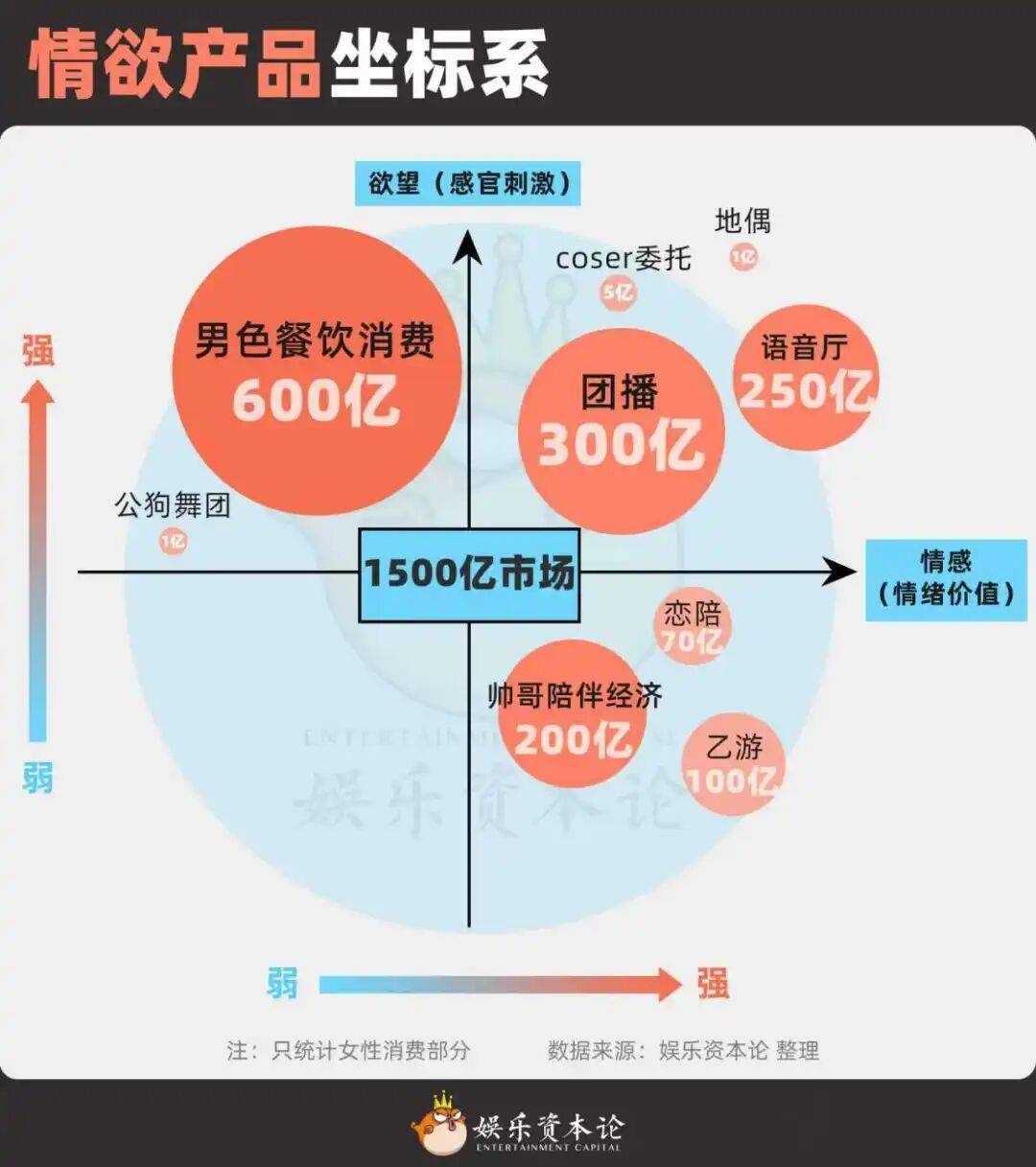
地下偶像,加速进行时
Hu Xiu· 2025-09-05 02:52
Core Insights - The underground idol (地偶) market in Japan is experiencing a significant growth phase, with domestic capital showing interest in entering the market [1] - The domestic underground idol market is estimated to have a market size of approximately 2 billion, with male and female idols each accounting for half [1] - The number of underground idol groups in China has more than doubled since 2023, with 147 groups reported in the first year [1][4] Group 1: Market Dynamics - The underground idol scene in China has seen a rapid increase in the number of groups, with 101 new female groups in 2023 and an additional 188 in 2024 [4] - The male underground idol market is estimated to be around 100 million, with 60 male groups currently active [5][6] - The competition landscape for female underground idols is becoming increasingly difficult, with many groups struggling to attract audiences and generate revenue [10][12] Group 2: Revenue Generation - Both male and female underground idols rely heavily on "special tickets" (特典券) for revenue, which allow fans to interact with idols [23] - Self-managed groups can retain all earnings from special tickets, while those under agencies share revenue [24] - The emotional connection with fans is crucial for revenue, as idols must provide personalized interactions to maintain support [27][29] Group 3: Industry Trends - The entry of capital into the underground idol market is becoming a trend, with many entertainment companies looking to invest [33][36] - The market is characterized by a low barrier to entry, allowing many amateur groups to form with minimal investment [33] - The lack of original content in the underground idol scene is a significant challenge, with many groups relying on Japanese songs rather than creating original Chinese content [37][38]
巨星科技(002444):半年报点评:电动工具快速增长,美国降息有望催化需求
Changjiang Securities· 2025-09-03 10:43
Investment Rating - The investment rating for the company is "Buy" and is maintained [6]. Core Insights - The company reported a revenue of 7.027 billion yuan for the first half of 2025, representing a year-on-year increase of 4.87%, and a net profit attributable to the parent company of 1.273 billion yuan, up 6.63% year-on-year [2][4]. - The electric tools segment showed rapid growth, with revenue reaching 742 million yuan in the first half of 2025, a 56% increase compared to the same period last year, accounting for 10.56% of total revenue [8]. - The company is benefiting from a global capacity layout, with hand tools revenue at 4.62 billion yuan, a 1.64% year-on-year increase, despite challenges from tariffs [8]. - The gross margin for the electric tools business improved to 28.99%, up 2.18 percentage points year-on-year, indicating enhanced profitability [8]. - The company has made significant progress in overseas capacity, with projects in Vietnam and Thailand nearing completion, allowing for dual delivery capabilities [8]. - Investment income for the second quarter of 2025 reached 250 million yuan, showing a slight increase from the previous year [8]. - The operating cash flow for the first half of 2025 was robust at 1.034 billion yuan, a 76.5% increase year-on-year, allowing for a mid-year dividend distribution of 299 million yuan [8]. - The company forecasts net profits attributable to the parent company of 2.651 billion, 3.181 billion, and 3.724 billion yuan for 2025, 2026, and 2027 respectively, corresponding to PE ratios of 15, 12, and 10 [8].

兴业科技(002674):汽车内饰皮革业务保持高增,盈利能力持续提升
Great Wall Securities· 2025-09-03 09:32
Investment Rating - The investment rating for the company is "Buy" with a target of outperforming the industry index by more than 15% over the next six months [4][17]. Core Viewpoints - The automotive interior leather business continues to grow rapidly, with a nearly 30% increase in the first half of the year. The company achieved a revenue of 1.339 billion yuan in the first half of 2025, representing a year-on-year growth of 6.16%, while the net profit attributable to the parent company was 31 million yuan, a decline of 45.32% [1][2]. - The company has established partnerships with several domestic automotive brands, including Li Auto, NIO, Chery, Geely, and Jianghuai, supplying various models [8]. - The company is leveraging opportunities in the new energy vehicle sector, with expectations for rapid growth in its automotive interior leather segment, which is anticipated to become a second growth curve for the company [8]. Financial Summary - Revenue is projected to grow from 2.7 billion yuan in 2023 to 3.738 billion yuan in 2027, with a compound annual growth rate (CAGR) of approximately 10.4% [1]. - The net profit attributable to the parent company is expected to decline from 186 million yuan in 2023 to 216 million yuan in 2027, with a notable drop in 2024 and 2025 [1]. - The company's return on equity (ROE) is forecasted to improve from 8.9% in 2023 to 9.6% in 2027 [1]. - The earnings per share (EPS) is expected to increase from 0.63 yuan in 2023 to 0.73 yuan in 2027 [1]. Margin and Cost Analysis - The gross margin for the company was stable at 20.49% in the first half of 2025, with a slight year-on-year increase of 0.13 percentage points. However, the net profit margin decreased to 4.76%, down 1.61 percentage points year-on-year due to rising expense ratios [2]. - The automotive interior leather segment showed a gross margin of 34.63%, an increase of 3.22 percentage points year-on-year, while the leather for shoes and bags had a gross margin of 15.68%, a decrease of 2.19 percentage points [2]. Production Capacity and Competitive Advantage - The company has a well-established production capacity with multiple manufacturing bases, including subsidiaries and joint ventures, which allows for effective resource integration and cost control [3]. - The diversified product matrix and sales channels enable the company to maintain a competitive edge in the leather industry, ensuring balanced consumption of raw materials and reducing fixed costs [3].
