AI产业链

Search documents
建材行业报告(2025.12.22-2025.12.26):地产政策托底需求,关注反内卷落地情况
China Post Securities· 2025-12-29 03:41
Industry Investment Rating - The investment rating for the construction materials industry is "Outperform the Market" and is maintained [1] Core Insights - The report emphasizes the potential for a dual recovery in both fundamentals and valuations for the construction materials sector in 2026, driven by supportive real estate policies and a gradual stabilization of the industry [4] - Key policies released in December 2025 aim to optimize real estate conditions, which are expected to bolster demand [4] - Major construction material companies have seen a lag in stock performance but are reducing their reliance on real estate, with prices for various materials beginning to recover [4] Summary by Sections Cement - December marks the onset of the off-peak season in northern regions, with national demand continuing to decline. The housing market remains weak, while infrastructure demand shows regional disparities driven by policy [5] - Cement production in November 2025 was 154 million tons, reflecting a year-on-year decline [9] Glass - The glass industry is experiencing a sustained decline in demand due to real estate impacts, with traditional peak season orders showing limited improvement [6] - Supply-side adjustments are expected as several production lines undergo maintenance, but overall supply-demand pressures remain, leading to anticipated price stability at low levels [14] Fiberglass - Demand in sectors like wind power and thermoplastics remains stable, while traditional demand has slowed. The industry is expected to see growth driven by AI-related demand, particularly in low dielectric products [6] Consumer Building Materials - The industry has reached a profitability bottom, with no further price declines expected. Recent anti-competition policies have led to strong price increase demands across various categories, indicating potential for profit recovery in leading companies [6] Market Performance - In the past week (December 22-26), the construction materials index rose by 4.56%, outperforming major indices such as the Shanghai Composite Index and the Shenzhen Component Index [7]
春季躁动初现!周末迎来两大利好
Mei Ri Jing Ji Xin Wen· 2025-12-29 03:07
Market Performance - The market has shown a rebound, with the Shanghai Composite Index achieving an eight-day consecutive rise, matching the record from April [1] - The CSI 500 Index and the ChiNext Index had the highest weekly gains, both exceeding 3.9%, while the micro-cap index had the smallest gain of only 0.7% [1] Market Outlook - The Shanghai Composite Index is close to the upward trend line from September to October, with a potential breakout expected next week [4] - Despite the recent gains, there is a historical pattern of short-term corrections following five consecutive daily gains [4][5] - The current market is characterized as a bull market with a "slow bull" feature, suggesting a positive outlook for long positions [5] Key Investment Themes - Major investment themes include the AI industry chain, solid-state battery industry, energy storage, commercial aerospace, humanoid robots, innovative pharmaceuticals, and non-ferrous metals [5] - The commercial aerospace sector is highlighted as a hot investment theme, with expectations for continued acceleration despite recent declines in U.S. commercial aerospace stocks [6][7] - AI hardware stocks have shown weakness due to concerns over year-end liquidity and performance, but these concerns are expected to ease after the New Year [7] Sector Analysis - The humanoid robot sector has shown a double-bottom pattern since late August, indicating potential for future growth, although it requires patience due to its current state [8] - Lithium battery and energy storage sectors are linked to AI power, with significant market demand and price increases in lithium carbonate indicating strong future potential [9] - The non-ferrous metals sector is gaining attention due to rising international gold and silver prices, as well as historical highs in copper prices, suggesting a bullish outlook for gold, silver, copper, and lithium-cobalt [9][10] Summary and Strategy - The market is showing signs of a spring rally, with a mid-term bullish outlook and a focus on stable sector stocks [10] - Key sectors to monitor include AI hardware, humanoid robots, commercial aerospace, non-ferrous metals, lithium batteries, and energy storage, with an emphasis on core stocks [10]
基金大事件|全市场ETF规模突破6万亿元!白银LOF再度调整限额
Zhong Guo Ji Jin Bao· 2025-12-27 11:24
Group 1 - The Shanghai and Shenzhen Stock Exchanges announced a series of fee reduction measures for 2026, with a total expected reduction of over 19 billion yuan, benefiting investors across various financial products [1] - The Shanghai Stock Exchange will waive listing fees for companies, reduce transaction unit usage fees, and exempt certain bond transaction fees, while also reducing fees for its subsidiaries [1] - The National Venture Capital Guidance Fund has officially launched, with three regional funds established to promote venture capital investment in technology and long-term projects [1] Group 2 - The National Investment UBS Silver Futures Fund announced a limit on regular investment amounts for its A-class fund shares, effective December 29, 2025, due to high premium rates [2] - The China Securities REITs Total Return Index increased by 1.56% from December 22 to 26, with over 80% of products rising, although some experienced significant declines due to accounting treatment concerns [2] - The first water power REIT in Xinjiang successfully concluded its issuance, attracting over 160 billion yuan in subscription funds [3] Group 3 - The total scale of the ETF market reached 6.03 trillion yuan as of December 26, marking a significant growth of nearly 2.3 trillion yuan in 2023, the first time the annual increase surpassed 2 trillion yuan since the inception of ETFs in China [5] - The public fund industry in China reached a record high of 36.96 trillion yuan by the end of October 2023, driven by continuous optimization of the industry ecosystem and increased demand for wealth management [6] - The report from the People's Bank of China indicated that the financial system remains stable, with overall financial risks under control, and highlighted the need for continued reforms and improvements in the financial sector [7] Group 4 - Recent leadership changes occurred in several fund companies, including the appointment of new executives at Xinda Australia Fund and Nord Fund, indicating ongoing shifts in management within the industry [9][10] - The establishment of specialized subsidiaries by fund companies aims to enhance their core public fund business while promoting differentiated development [10] - The investment outlook for 2026 remains positive, with expectations for growth in both A-shares and Hong Kong stocks, particularly in sectors like AI, consumption, and manufacturing [11]

八连阳后央行发话了
Sou Hu Cai Jing· 2025-12-26 16:16
Core Viewpoint - The Shanghai Composite Index (SSE) is approaching the 4000-point mark, with significant market movements influenced by the A500 ETF and regulatory guidance aimed at stabilizing long-term investments [1][4]. Group 1: Market Performance - The SSE reached a high of 3977 points, marking an eight-day consecutive rise [1]. - A500 ETF has seen a net inflow of over 260 billion yuan since December, indicating strong demand for related funds [3]. - The market's trading volume has returned to 2.18 trillion yuan, suggesting increased investor activity [6]. Group 2: Regulatory Environment - Regulatory guidance has been issued to prevent short-term capital inflows, promoting long-term investment strategies [1]. - The People's Bank of China emphasizes the need for a policy environment that supports long-term investments in A-shares [4]. Group 3: Economic Indicators - The appreciation of the Chinese yuan is attracting foreign capital, with a recent 2.3% decline in the US dollar index contributing to this trend [6]. - Historical data shows a positive correlation between the yuan's exchange rate and stock market performance [6]. Group 4: Sector Performance - The rise in commodity prices, including precious metals and industrial materials, is driving a bullish trend in related stocks [7][8]. - The technology sector, particularly AI-related stocks, has shown significant rebounds, with companies like Nvidia experiencing a 13% increase [6].
四点半观市 | 机构:中国股市涨势有望在2026年延续
Shang Hai Zheng Quan Bao· 2025-12-26 12:27
Market Performance - The A-share market continued its upward trend, with the Shanghai Composite Index closing at 3963.68 points, up 0.10%, marking the longest consecutive rise of the year with eight trading days [1] - The CSI Convertible Bond Index fell by 0.04% to 493.25 points, with notable gains in Jia Mei Convertible Bond (up 17.64%) and Meng Sheng Convertible Bond (up 14.80%) [1] Bond Market - The 30-year Treasury futures main contract rose by 0.36%, closing at 112.960 yuan, while the 10-year Treasury futures increased by 0.10% to 108.300 yuan [1] ETF Performance - On December 26, various ETFs showed mixed results, with the Hang Seng ETF (159312) rising by 7.18% and the Mining ETF (561330) increasing by 4.25%, while the Semiconductor Equipment ETF (561980) fell by 1.59% [2] International Markets - Major indices in Japan and South Korea closed higher, with the Nikkei 225 up 0.68% and the KOSPI up 0.51%, reflecting a positive trend in the region [2] Fund Flows - The top ten stocks by net capital inflow included companies like Sunshine Power and BYD, with several firms in the lithium battery sector such as Duo Fluorine and Tianji Shares [3] Institutional Insights - Analysts from GF Fund highlighted that equity assets still offer better expected returns compared to bonds and deposits, with a favorable outlook for sectors like AI and industries benefiting from a recovery [4] - UBS Wealth Management's CIO office expressed optimism for the Chinese stock market in 2026, driven by advanced manufacturing and technology self-reliance, despite potential geopolitical volatility [4]
方正富邦基金吕拙愚:把握转债投资两大主线
Xin Lang Cai Jing· 2025-12-26 09:48
Core Viewpoint - The investment strategy conference held by Fangzheng Fubang Fund on December 26, 2025, focused on the theme of "Change and Innovation," discussing investment opportunities and challenges for the upcoming year 2026 [1][4]. Group 1: Convertible Bond Market Outlook - The convertible bond market in 2025 followed the equity bull market, with significant increases in conversion value driven by sectors like innovative pharmaceuticals, semiconductors, and robotics [1][4]. - The macroeconomic outlook for 2026 suggests stable overall demand, supported by external demand and manufacturing upgrades, with corporate profits expected to continue a slow recovery [1][4]. - The supply-demand balance in the convertible bond market is expected to remain tight, with strong institutional demand but limited new issuance due to many individual bonds being redeemed and delisted [1][4]. Group 2: Investment Strategy Recommendations - Two main investment themes are suggested: 1. Focus on the AI industry chain (e.g., optical chips, power, storage) and new productive forces (e.g., solid-state batteries, humanoid robots, low-altitude economy) [2][5]. 2. Concentrate on high-prosperity industries with improving profitability during the performance verification period, particularly in midstream manufacturing, overseas supply chains, and resource sectors [2][5]. - Attention should also be given to the scarcity of high-rated convertible bonds and structural opportunities arising from market style balance [2][5].
国海富兰克林基金狄星华:美股有望迎“圣诞老人行情”
Sou Hu Cai Jing· 2025-12-26 09:47
不过,强劲的经济增长数据强化了美联储短期内维持利率不变的概率,市场对美联储明年初降息的押注 有所降温。但狄星华认为,更长维度内,明年降息仍是普遍预期。从市场表现来看,强劲的GDP数据所 支撑的经济韧性,给了更多短期做多的乐观理由。因为经济保持韧性将提振企业盈利持续扩张,成长股 和大型科技股相对受益,资金加速流向盈利确定性高的成长型龙头,大型科技龙头股普遍上涨,推动纳 指显著跑赢道指及标普500指数,而对降息更为敏感的小盘股表现明显落后。 临近岁末,美股市场在暖意与审慎交织中稳步上行,标普500指数创下收盘历史新高,三大股指实现连 涨。日前,国海富兰克林基金QDII基金经理狄星华对美股市场进行了解读,她认为在季节性规律与基 本面支撑下,美股有望延续强势,而大型科技股仍将是引领市场的核心力量。 狄星华指出,当前市场的乐观态势得到了宏观经济数据的"良性组合"支撑。"近期公布的数据呈现出'经 济强、通胀弱'的格局,"她分析称。超预期的三季度GDP增速显示了美国经济的韧性,而同期核心个人 消费支出(PCE)物价指数符合预期,叠加11月核心CPI同比增速降至多年低点,共同缓解了市场对通胀 的担忧,为科技股的表现提供了缓冲 ...
ETF收评 | A股放量八连阳,有色板块全线上扬,矿业ETF、有色矿业ETF招商涨4%
Ge Long Hui· 2025-12-26 07:34
Market Performance - The Shanghai Composite Index rose by 0.1%, achieving an eight-day winning streak and approaching the 4000-point mark, with a total trading volume of 2.18 trillion yuan, marking a new monthly high [1] Sector Highlights - The non-ferrous metals sector experienced a significant surge, particularly in the upstream materials for lithium batteries, which saw a wave of stocks hitting the daily limit [1] - The commercial aerospace concept remained active, while the AI industry chain collectively retreated, with photolithography machines, OCS, and CPO concepts experiencing widespread declines [1] ETF Movements - Mini-sized Hong Kong stock ETFs continued to rise, with the GF Fund's Hang Seng ETF through Stock Connect increasing by 7.18%, and the latest premium discount rate standing at 16.96% [1] - The non-ferrous sector ETFs, including the Guotai Fund's Mining ETF, the Non-ferrous Mining ETF from China Merchants, and the Southern Fund's Non-ferrous Metals ETF, rose by 4.25%, 4.16%, and 3.95% respectively [1] - The satellite internet sector saw afternoon gains, with the China Merchants Satellite Industry ETF, E Fund's Satellite ETF, and the Fuguo Fund's Satellite ETF increasing by 3.64%, 3.59%, and 3.49% respectively [1] - The Hong Kong Stock Connect 100 ETF retracted from high premiums, declining by 2% [1] - The semiconductor sector faced declines, with semiconductor equipment ETFs falling by 1.59% and 1.45% respectively, while the CPO sector also retreated, with the communication ETF down by 1.15% [1]
沪指8连阳,商业航天爆发,中国卫星3连板,贵金属期货猛拉,铂金涨近10%
21世纪经济报道· 2025-12-26 07:30
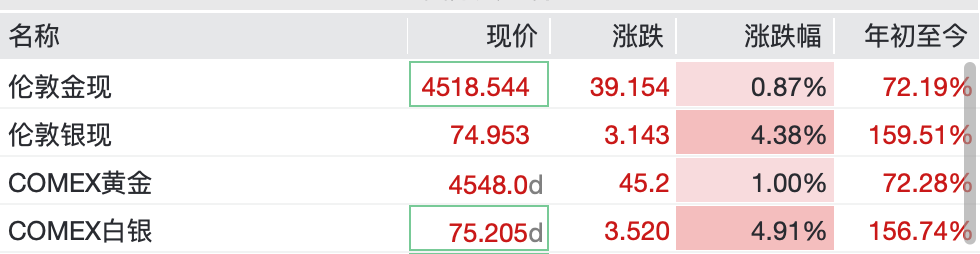
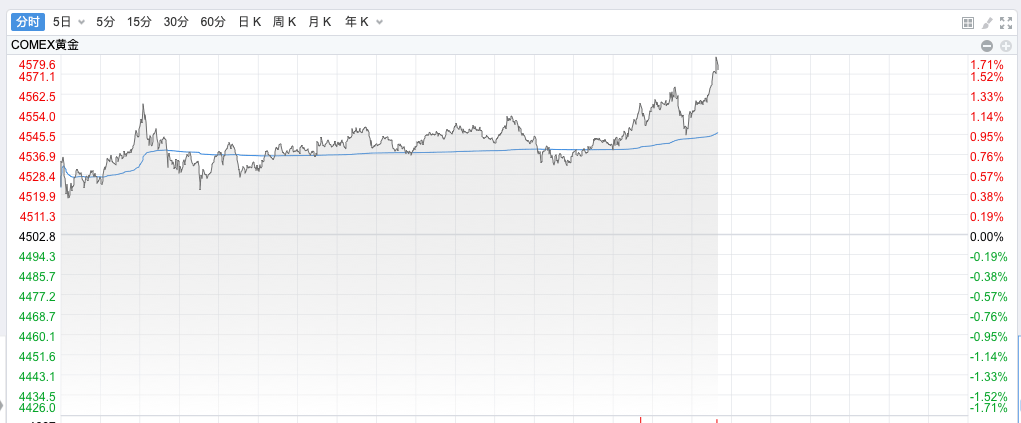
Market Overview - The A-share market saw a collective rise in the three major indices, with the Shanghai Composite Index recording an 8-day winning streak, closing up 0.1% [1] - The total trading volume in the Shanghai and Shenzhen markets reached 2.18 trillion yuan, an increase of 237.2 billion yuan compared to the previous trading day [1] Index Performance - Shanghai Composite Index: 3963.68 (+0.10%) - Shenzhen Component Index: 1463.04 (+0.54%) - ChiNext Index: 3243.88 (+0.14%) - CSI 300 Index: 4657.24 (+0.32%) [2] Sector Performance - The commercial aerospace sector showed strong performance, with China Satellite achieving a three-day consecutive rise, reaching a 10-year high market value of 94.6 billion yuan [2] - The non-ferrous metals sector experienced a surge, with Jiangxi Copper hitting the daily limit, and China Aluminum, Tongling Nonferrous Metals, and Western Mining rising over 7% [4] - The lithium battery supply chain remained strong, with several companies hitting the daily limit, including Tianji Co., which achieved three limit-ups in four days [4] Precious Metals Market - Precious metals futures continued to soar, with platinum futures reaching a daily increase of 9.99%, hitting a new high of 709.85 yuan per gram [7] - International spot platinum also rose nearly 10%, reaching 2445.6 USD per ounce, marking a historical high [7] - Other precious metals, including gold and silver, also saw significant increases, with spot gold fluctuating around 4520 USD per ounce and spot silver rising over 4% [7][8] Investment Insights - Despite the long-term positive outlook for precious metals, short-term price volatility remains high, and investors are advised to be cautious in a high-volatility environment [9]


沪指8连阳,商业航天爆发,中国卫星3连板,贵金属期货猛拉,铂金涨近10%
2 1 Shi Ji Jing Ji Bao Dao· 2025-12-26 07:30
Market Performance - The A-share market saw a collective rise in the three major indices, with the Shanghai Composite Index recording an increase of 0.1%, the Shenzhen Component Index up by 0.54%, and the ChiNext Index rising by 0.14% [1] - The total trading volume in the Shanghai and Shenzhen markets reached 2.18 trillion yuan, an increase of 237.2 billion yuan compared to the previous trading day [1] - Over 3,400 stocks in the market experienced declines [1] Sector Highlights - The commercial aerospace sector showed strong performance, with China Satellite (600118) achieving a three-day consecutive rise, reaching a 10-year high with a total market value of 94.6 billion yuan [1] - The non-ferrous metals industry experienced a significant surge, with Jiangxi Copper (600362) hitting the daily limit, and China Aluminum (601600), Tongling Nonferrous Metals (000630), and Western Mining (601168) rising over 7% [1] - The lithium battery supply chain remained strong throughout the day, with several stocks, including Tianji Co. (002759), hitting the daily limit [1] Precious Metals Market - Precious metals futures continued to soar, with platinum prices increasing nearly 10% [4] - The main platinum futures contract on the Shanghai Futures Exchange reached a daily limit with a rise of 9.99%, priced at 709.85 yuan per gram, marking a new high since its listing [5] - International spot platinum also saw a significant increase, rising nearly 10% to 2,445.6 USD per ounce, setting a historical high [5] Price Movements - Current prices for key precious metals include: - Spot gold at 4,518.544 USD per ounce, up 0.87% year-to-date increase of 72.19% [6] - Spot silver at 74.953 USD per ounce, up 4.38% year-to-date increase of 159.51% [6] - Spot platinum at 2,445.60 USD per ounce, up 9.77% year-to-date increase of 170.53% [6] - The market is experiencing high volatility, with significant price fluctuations observed [7]