
自动驾驶

Search documents
华为乾崑生态大会发布“10分钟智驾生活圈” 携手途虎共拓智能汽车服务生态
Zhi Tong Cai Jing· 2025-11-21 08:27
Core Insights - Huawei's QianKun Intelligent Automotive Solutions announced the launch of multiple cities for high-speed L3 autonomous driving testing and the introduction of the "Intelligent Cabin L3" era with the release of the QianKun APP [1] Group 1: Huawei's Developments - Huawei's Intelligent Automotive Solutions BU CEO Jin Yuzhi announced the commencement of high-speed L3 autonomous driving testing in multiple cities [1] - The QianKun APP was officially launched, aiming to create a "10-minute QianKun intelligent driving lifestyle circle" in collaboration with ecosystem partners [1] Group 2: Partnership with Tuhu - Tuhu Car Maintenance will engage in deep cooperation with QianKun Intelligent Driving to build an intelligent automotive service network [1] - Tuhu's president Hu Xiaodong revealed that the collaboration will enable deep data integration between Tuhu's store system and QianKun's autonomous driving cloud, establishing a real-time collaborative system across vehicle, cloud, and store [1] Group 3: Innovative Service Model - The partnership will initially focus on the automatic car wash scenario, allowing vehicles to autonomously drive to service points for cleaning and return to parking spots without owner intervention [1] - This innovative model showcases the future of intelligent automotive services, enhancing the "worry-free, time-saving, and effort-saving" experience in car maintenance [1]
途虎养车(09690)总裁胡晓东:携手乾崑智驾共同打造智能汽车服务网络
智通财经网· 2025-11-21 07:10
Core Viewpoint - The collaboration between Tuhu Car Maintenance and QianKun Intelligent Driving aims to create an intelligent automotive service network, enhancing user experience through automation and data integration [1] Group 1: Company Initiatives - Tuhu Car Maintenance is partnering with QianKun Intelligent Driving to develop a smart automotive service network [1] - The integration will allow real-time data communication between Tuhu's store system and QianKun's autonomous driving cloud [1] - This partnership is expected to transform the car service experience, allowing vehicles to autonomously visit service locations for tasks like washing [1] Group 2: Industry Impact - The collaboration is positioned to upgrade the automotive service industry towards a "worry-free, time-saving, and effort-saving" experience [1] - Tuhu has already established a service foundation through online booking, intelligent scheduling, and optimized store layouts [1] - The partnership leverages advancements in autonomous driving technology to enhance the intelligent service chain [1]
2025高端座驾市场需求与趋势洞察白皮书
Di Yi Cai Jing· 2025-11-21 05:48
Market Dynamics - The ultra-luxury car market in China is undergoing significant structural changes driven by policy, economic conditions, technological advancements, and cultural shifts[5]. - By 2025, the threshold for identifying high-priced vehicles will drop to 900,000 RMB, impacting traditional luxury brands to adapt through subsidies and flexible pricing strategies[5]. Economic Environment - In 2024, the average disposable income per capita in China is projected to be 41,314 RMB, with a consumption expenditure of 38,230 RMB, both growing at approximately 5%[6]. - The number of high-net-worth families in China has been declining, leading to reduced consumer confidence and pressure on the ultra-luxury car market[6]. Technological Advancements - Breakthroughs in battery technology and AI are enhancing the performance and user experience of electric vehicles, but challenges remain in safety, supply chain stability, and cost control[9]. - The evolution of autonomous driving technology is becoming a competitive battleground among major car manufacturers, shifting consumer perceptions of driving needs[9]. Consumer Behavior - A survey indicates that 44% of consumers prefer brands like Maybach and Rolls-Royce, while 42% are inclined towards personalized versions of ultra-luxury cars[89][102]. - The preference for SUVs is evident, with 40% of consumers favoring this model type, reflecting a balance between luxury and practicality[101]. Brand Value Preferences - Consumers prioritize brand recognition (72%), performance (81%), and unique design (70%) when evaluating ultra-luxury cars, with financial value being less significant[52][63]. - The demand for personalized services, such as one-on-one remote engineering support, is high among ultra-luxury car owners, indicating a desire for exclusive experiences[106]. Market Trends - The shift from a seller's market focused on "incremental expansion" to a buyer's market characterized by "stock competition" is reshaping the competitive landscape[10]. - The emergence of new wealth classes and changing consumer values are driving a transition from ostentatious consumption to a focus on personal satisfaction and unique experiences[49].
小鹏汽车-W(09868.HK)2025年三季报点评:Q3业绩符合预期 AI业务布局持续完善
Ge Long Hui· 2025-11-21 03:57
Core Viewpoint - Xiaopeng Motors reported Q3 2025 earnings that met expectations, with significant revenue growth driven by new model deliveries [1] Financial Performance - Q3 2025 revenue reached 20.38 billion yuan, a year-on-year increase of 101.8% and a quarter-on-quarter increase of 11.5% [1] - Automotive sales revenue was 18.05 billion yuan, up 105.3% year-on-year and 6.9% quarter-on-quarter [1] - Service and other income amounted to 2.33 billion yuan, a year-on-year increase of 78.1% [1] - Q3 2025 net loss narrowed to 380 million yuan from 480 million yuan in Q2 2025, with a non-GAAP net loss of 150 million yuan [1] - Gross margin improved, with a comprehensive gross margin of 20.1%, up 4.9 percentage points year-on-year and 2.8 percentage points quarter-on-quarter [1] - Automotive gross margin was 13.1%, slightly down due to product upgrades [1] Cost Management - R&D expense ratio for Q3 was 11.9%, showing a decrease of 4.2 and 0.2 percentage points year-on-year and quarter-on-quarter, respectively [1] - Selling, administrative, and general expense ratio was 12.2%, with a year-on-year decrease of 3.9 percentage points and a quarter-on-quarter increase of 0.4 percentage points [1] Sales Volume - Q2 2025 wholesale sales reached 116,000 units, representing a year-on-year increase of 149.3% and a quarter-on-quarter increase of 12.4% [1] - The average selling price (ASP) per vehicle was 156,000 yuan [1] AI Business Development - Xiaopeng is advancing its AI business with clear implementation plans across various dimensions, including intelligent driving, Robotaxi, robotics, and flying cars [2] - The second-generation VLA model aims to enhance reasoning efficiency and response speed [2] - A partnership with Gaode for Robotaxi services is established, with plans to launch three models in 2026 [2] - The new generation IRON robot will focus on guide and shopping scenarios, with deployment expected in 2026 [2] - Plans for flying cars include test flights in 2026 and global deliveries in the second half of 2026 [2] Earnings Forecast and Investment Rating - Revenue forecasts for 2025-2027 are adjusted to 78.5 billion, 140.2 billion, and 201 billion yuan, reflecting year-on-year growth of 92%, 79%, and 43% respectively [3] - Net profit forecasts for the same period are revised to -1.4 billion, 5.4 billion, and 9.5 billion yuan [3] - EPS for 2025, 2026, and 2027 are projected at -0.71, 2.81, and 4.99 yuan, with corresponding PE ratios of 26 and 15 for 2026 and 2027 [3] - The company maintains a "buy" rating due to strengthening AI competitiveness [3]
自动驾驶教父:人形机器人被高估也被低估,空中机器人市场空间将远超地面
Hua Er Jie Jian Wen· 2025-11-21 03:15
Core Insights - The discussion at Morgan Stanley's 24th Asia-Pacific Summit highlighted two major pain points in the current market regarding autonomous driving and humanoid robots [1] Group 1: Autonomous Driving - The "Wright Brothers moment" for autonomous vehicles occurred in 2005, and the technology is now rapidly penetrating the market [2] - Approximately one-third of the 500 attendees at the summit have experienced riding in autonomous vehicles, primarily from Waymo [2] - Morgan Stanley predicts that the penetration rate of autonomous driving is on the verge of transitioning to L4/L5 levels [2] - If Elon Musk can demonstrate a safe commercial Robotaxi using a passive optical (camera-only) approach in Austin, it would be a significant achievement, indicating that the debate between multi-sensor fusion and pure vision solutions is ongoing [2][5] Group 2: Humanoid Robots - Humanoid robots are simultaneously overhyped in market potential and underestimated in technical challenges [3] - The market has overly optimistic expectations regarding the total addressable market (TAM) for humanoid robots replacing human labor [3] - The actual engineering challenges of enabling robots to perform open-ended tasks and possess dexterous hands are severely underestimated, indicating a significant technological gap remains [3][5] Group 3: Future of Robotics - Thrun predicts that the number of aerial robots will far exceed that of ground robots, necessitating urgent upgrades to air traffic control systems [6][5] - The technology for fully automated operations in 3D space already exists, but infrastructure limitations are hindering growth in this area [6] - The focus on eVTOL (electric vertical takeoff and landing) and related infrastructure development presents a long-term investment rationale [6][5]


车载摄像头技术加速迭代 欧菲光持续研发创新抢占技术高地
Quan Jing Wang· 2025-11-21 02:46
Industry Overview - The automotive camera market is experiencing unprecedented growth driven by the electrification and intelligence trends in the automotive industry, with the Chinese market expected to reach 15.68 billion yuan in 2024 and an annual compound growth rate of 19.1% from 2020 [1] - By 2025, the Chinese market is projected to exceed 100 million units in shipments and 23.7 billion yuan in market size, while the global market is anticipated to surpass 13.28 billion USD [1] Technological Advancements - The automotive camera technology is advancing in three major directions: performance upgrades through embedded AI chips for real-time environmental perception, integrated innovation via multi-sensor fusion designs, and domestic substitution with local companies like Sunny Optical and OFILM increasing market share [2] - The integration of advanced technologies such as intelligent dynamic exposure adjustment and HDR will significantly enhance imaging quality under extreme conditions [2] Company Profile: OFILM - OFILM has been actively involved in the smart automotive sector since 2015, obtaining supplier qualifications from over 20 domestic automakers and pursuing certifications from international manufacturers [3] - The company categorizes its smart automotive business into three segments: driving domain, body domain, and cockpit domain, focusing on smart driving, body electronics, and intelligent cockpit solutions [3] Product Offerings - OFILM has achieved mass production of various automotive camera products, including 2M and 8M front-view cameras, 3M and 8M side-view cameras, and multiple models of surround-view cameras [3] - The company has developed a comprehensive solution covering both interior and exterior vehicle scenarios, including driver monitoring systems (DMS) and passenger monitoring systems (OMS) [4] Strategic Initiatives - OFILM is committed to enhancing its automotive camera, lens, laser radar, and automatic parking domain controller product lines, aiming to provide advanced sensor and domain controller solutions for higher levels of autonomous driving [5] - The company plans to increase resource allocation across R&D, sales, and production to drive rapid growth in smart automotive-related revenue, leveraging its strong R&D capabilities and automated manufacturing processes [5]

文远知行Robotaxi获得瑞士纯无人牌照,至此已累计获得八国自动驾驶牌照
IPO早知道· 2025-11-21 02:04
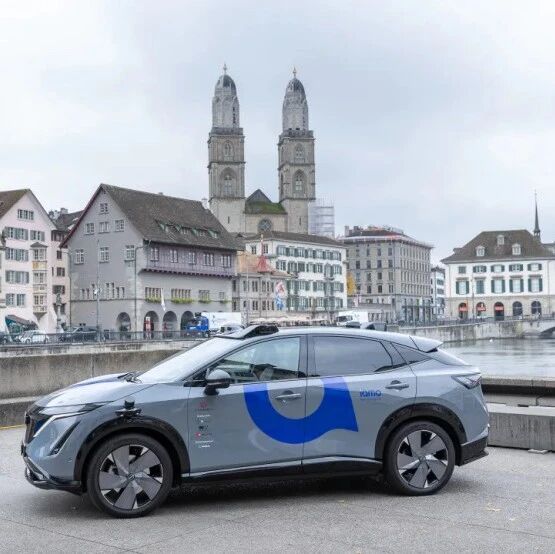
Core Insights - WeRide has received the first fully autonomous Robotaxi license in Switzerland, allowing it to operate on public roads in the Furttal area of Zurich [2][3] - The company is now the only tech firm globally with autonomous driving licenses in eight countries, marking a significant milestone in its globalization strategy [3] Business Development - The Robotaxi will be part of the iamo (Intelligent Automated Mobility) pilot project, aimed at integrating autonomous vehicles into public transport systems to enhance local mobility and promote sustainable transport [3] - The operational area for the project will cover approximately 110 kilometers with around 460 stops, and vehicles can reach speeds of up to 80 km/h [3] Testing and Implementation - WeRide has partnered with a local driving school to conduct autonomous driving tests with safety personnel on board, covering various regions in Furttal [4] - After successful testing with the Swiss Federal Roads Office (FEDRO), the company plans to initiate fully autonomous driving tests monitored remotely by Eurobus, Switzerland's largest private bus operator [6] Future Plans - WeRide aims to officially launch its Robotaxi service to the public in Switzerland by mid-2026, with plans to gradually incorporate Robobus vehicles into its fleet [6] - Starting from June 2025, the Robobus will provide shuttle services for Zurich airport employees, with training for safety personnel and remote operation set to begin in October 2025 [6]


汽车有“魂”,AI如何重塑用车体验?
2 1 Shi Ji Jing Ji Bao Dao· 2025-11-21 00:30
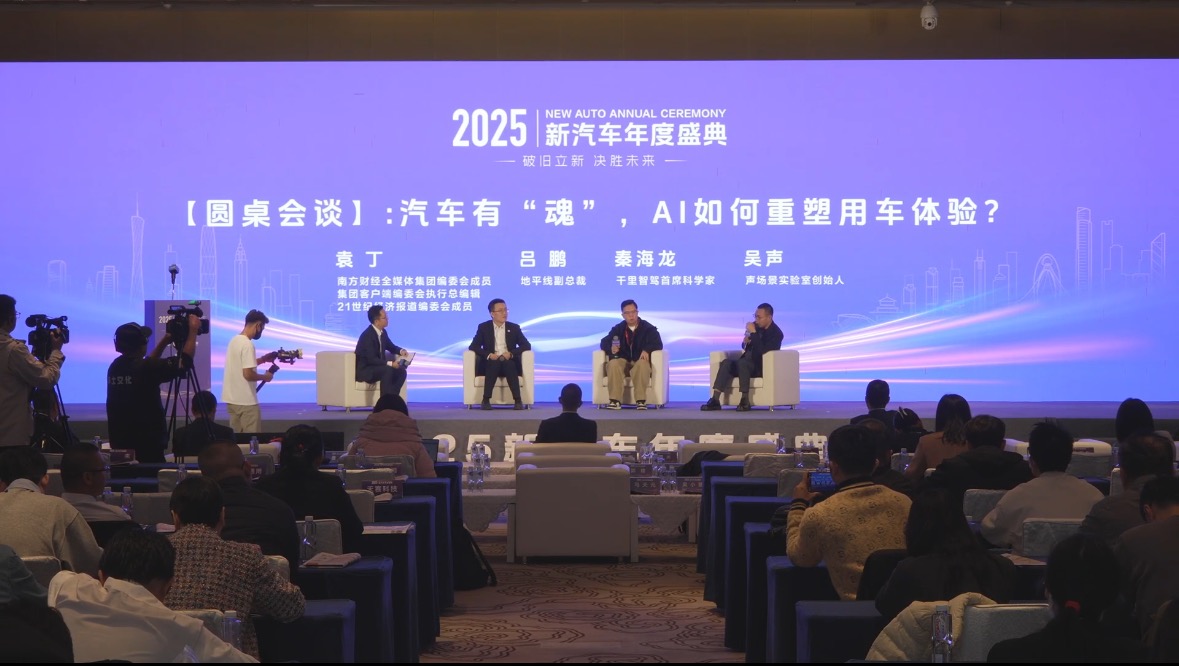
当人工智能的浪潮从虚拟世界涌向物理现实,汽车产业正站在这场变革的最前沿。自动驾驶领域技术路线纷繁复杂,"端到端"、"世界模型"、"VLA"等术语 层出不穷,业界对于何为"最优解"莫衷一是。 在由南方财经全媒体集团指导、21世纪经济报道主办的2025新汽车年度盛典上,南方财经全媒体集团编委会成员、集团客户端编委会执行总编辑、21世纪经 济报道编委会成员袁丁主持题为《汽车有"魂",AI如何重塑用车体验?》的圆桌论坛,邀请到地平线副总裁吕鹏、千里智驾首席科学家秦海龙和场景实验室 创始人吴声三位业界专家,旨在穿透技术路线的迷雾,深入探讨AI如何超越工具属性,为汽车注入可进化、可感知的"灵魂",从而彻底重塑人类的用车体 验。 场景实验室创始人吴声旗帜鲜明地指出,AI驾驶已超越"工具"范畴,正成为一种真实的生活方式,是通向AGI(通用人工智能)的最佳实践。 袁丁:当AI加速渗透物理世界,自动驾驶领域正处在充满分歧的路口。端到端、世界模型、VLA路线,哪条路线是自动驾驶的"最优解"?我们还要等待多久 才能迎来物理AI的曙光?吴声老师曾提出"AI场景革命元年"的概念,在汽车行业,AI场景应如何定义?目前是处于元年,还是已进入 ...
驭势科技 | 规划算法工程师招聘(可直推)
自动驾驶之心· 2025-11-21 00:04
Core Insights - The article discusses the advancements in autonomous driving technology, particularly focusing on the development and implementation of VLA (Vehicle-Language Architecture) by Xiaopeng Motors, highlighting its significance in the industry [14]. Group 1: Company Developments - Xiaopeng Motors has announced the launch of VLA 2.0, which represents a significant step in the evolution of autonomous driving technology, transitioning from perception-based systems to more integrated approaches [14]. - The article reflects on a year of research and development in VLA, indicating a shift in focus from traditional perception methods to VLA, which aims to enhance the vehicle's decision-making capabilities [14]. Group 2: Industry Trends - The article notes a growing trend in the industry towards end-to-end autonomous driving solutions, with VLA being positioned as a potential game-changer in how vehicles interact with their environment [14]. - There is a discussion on the competitive landscape, particularly the debate between world models and VLA routes, suggesting that the industry is at a crossroads in terms of technological direction [14]. Group 3: Research and Academic Contributions - The article mentions recent academic contributions, such as the paper from The Chinese University of Hong Kong (Shenzhen) and Didi, which proposes a new method for dynamic driving scene reconstruction, indicating ongoing research efforts in the field [14].
构建自动驾驶出行新生态
Jing Ji Ri Bao· 2025-11-20 21:58
Core Viewpoint - The automotive industry is transitioning towards a service-oriented ecosystem driven by automation and digital technologies, with the automotive service sector expected to reach a market size of over 8 trillion yuan by 2028, marking it as the "second automotive industry" to be developed [1][2]. Group 1: Automotive Industry Transformation - The automotive industry is evolving from a focus solely on manufacturing to a "new triangle" model that includes manufacturing, digital AI, and service sectors, fundamentally changing competitive dynamics [1][2]. - The integration of AI and digital technologies into the automotive service sector is anticipated to transform traditional services such as maintenance, parts supply, finance, and insurance into more digitalized offerings [2][3]. Group 2: Autonomous Driving and Service Ecosystem - The emergence of autonomous driving is expected to reshape the mobility ecosystem, transitioning vehicles from passive tools to intelligent entities capable of autonomous planning and interaction [3][4]. - The successful implementation of autonomous driving will require a redefinition of parking facilities and charging infrastructures to accommodate vehicle-centric operations rather than human-centric designs [4][5]. Group 3: Collaborative Development of Service Systems - The construction of an autonomous driving ecosystem necessitates cross-industry collaboration, focusing on unified digital standards and mechanisms that integrate vehicles with urban infrastructure [7][8]. - The insurance market for new energy vehicles is experiencing significant growth, with a 41.44% increase in commercial insurance premiums in the first half of 2025, although challenges remain in achieving overall profitability across the industry [7][8].