
美联储降息预期

Search documents
11月资产配置月报:11月大类资产怎么看?-20251109
ZHESHANG SECURITIES· 2025-11-09 13:45
1. Report Industry Investment Rating No relevant content provided. 2. Core Views of the Report - The recommended core allocation order for November is A-shares > US stocks > Gold > Convertible bonds > Chinese bonds > US bonds [1]. - Event shocks are the core clues for global large - scale asset trading. The Sino - US trade friction has temporarily ended, but the game between expected and actual negotiation results may continue. The Fed cut interest rates by 25BP in October, but internal differences among Fed officials on the subsequent monetary policy path exceed market expectations. The lack of economic data due to the US government shutdown and the dilemma of balancing inflation and the labor market pose a decision - making dilemma for the Fed. The market's continuous pre - emptive trading on interest rate cuts since August has led to a divergence in interest rate cut expectations, which may trigger adjustments in interest - rate - sensitive assets such as US bonds and gold, and these adjustments may mean more cost - effective allocation opportunities [1]. 3. Summary by Relevant Catalogs 3.1 Monthly Macro Trading Main Line - **Sino - US Trade Friction Repeated**: The Sino - US trade friction heated up due to disputes over ship charging policies and rare earth export control policies. After a series of confrontations, both sides released signals of easing. The Sino - US leaders' meeting on October 30 led to the suspension of relevant export control and investigation measures for one year, and the cancellation of a 10% fentanyl tariff. The global risk - aversion sentiment first rose and then fell, affecting large - scale asset prices. Understanding market expectations is the key to grasping event - shock market trends [11][12][13]. - **Fed's Interest Rate Cut Expectation Changes**: The Fed cut interest rates by 25BP as expected on October 30, but there was a rare three - way divergence in voting. Powell indicated that a December interest rate cut is not certain. The lack of major economic data due to the US government shutdown makes the Fed's decision - making difficult. The market's relatively consistent expectation of interest rate cuts has begun to show divergence, which is reflected in the reversal of the US bond yield and the adjustment of gold prices. The end time of the US government shutdown is a key factor affecting the December interest rate cut decision, and the divergence may mean better trading opportunities [24][25][28]. 3.2 Monthly Asset Performance Review - **Equity**: In October, Japanese stocks were the strongest, and Hong Kong stocks were the weakest, with the overall performance being Japanese stocks > US stocks > A - shares > Hong Kong stocks. A - shares: The Shanghai Composite Index broke through 4000 points in October but faced difficulties in further short - term breakthroughs. The small - cap stocks performed well, and the market embraced dividend - low - volatility sectors while technology - growth sectors faced pressure. US stocks: They were mixed, but technology stocks showed strong momentum, with a short - term inflection point after the release of technology stocks' third - quarter reports and the Fed's FOMC meeting. Japanese stocks: The Nikkei 225 index rose 16.64% in October, driven by factors such as postponed interest rate hikes, "Takamachi Sanae trading" expectations, and the depreciation of the yen. Hong Kong stocks: They rose and then retreated, and the Hang Seng Technology Index significantly underperformed A - share technology stocks [35][40][43]. - **Bonds**: Except for Japanese bonds, the yields of major national government bonds in the world declined to varying degrees in October. Chinese bonds: The yield fluctuated and strengthened, mainly affected by stock market adjustments, Sino - US tariff games, and the central bank's resumption of buying and selling government bonds. US bonds: The yield first declined and then rose, with the US government's credit crisis, Sino - US friction, and the game on the December interest rate cut expectation as key variables. Japanese bonds: They weakened slightly after the "Takamachi Sanae trading" in October, with the expectations of loose fiscal and monetary policies offsetting each other, and the government bond curve first steepened and then flattened [56][63][73]. - **Commodities**: Precious metals such as gold and silver first rose and then significantly adjusted in October, driven by factors such as cooling sentiment, over - valuation, and the rebound of the US dollar index. The prices of black - series commodities and new - energy materials showed limited upward momentum. Black - series commodities: Rebar prices remained low due to weak real estate and infrastructure, while coking coal and coke rose slightly due to anti - involution policies. New - energy materials: The prices of lithium carbonate and polysilicon fluctuated significantly with changes in expectations of anti - involution policies [75][86]. - **Exchange Rates**: The US dollar index strengthened in October, and the US dollar and US bonds continued to deviate. The strengthening of the US dollar index was mainly due to the weakening of overseas currencies such as the euro and the yen. The RMB continued to appreciate slightly in October, affected by factors such as the narrowing of the Sino - US interest rate spread, better - than - expected export data, and strong stock index performance [89][93]. 3.3 Monthly Macro Events Overview - The Fourth Plenary Session of the 20th Central Committee of the Communist Party of China was successfully held from October 20 to 23, 2025, and the "Proposal of the Central Committee of the Communist Party of China on Formulating the 15th Five - Year Plan for National Economic and Social Development" was officially announced on October 28, providing a direction for future five - year development [101]. - Takamachi Sanae was elected as the Prime Minister of Japan on October 21. The "Takamachi Sanae trading" heated up, driving the Japanese stock market to rise continuously in October, with the Nikkei 225 index rising 16.64% in a single month, while the yen exchange rate was significantly under pressure [102]. - Global major central banks held interest rate meetings in the last week of October. The Fed cut interest rates by 25BP as expected, but there was a large divergence among officials on the December interest rate cut decision. The Bank of Japan maintained the benchmark interest rate at 0.5% for the sixth consecutive time, and two policy committee members opposed it. The European Central Bank also remained on hold for the third consecutive time, maintaining the deposit facility rate, main refinancing rate, and lending facility rate unchanged [104][106][107].
4000美元得而复失!黄金大变盘前夜,这三类人将成最大赢家
Sou Hu Cai Jing· 2025-11-08 16:33
Core Viewpoint - The international gold price experienced significant volatility, briefly surpassing the $4000 per ounce mark before retreating, indicating a potential upcoming market shift [1][3]. Group 1: Market Dynamics - The gold market is influenced by two opposing forces: rising expectations for Federal Reserve interest rate cuts and ongoing geopolitical tensions, which enhance gold's appeal as a safe-haven asset [3]. - Market expectations for a December rate cut have surged to 69%, which would lower the opportunity cost of holding gold and weaken the dollar, thereby increasing gold prices [3]. - Recent U.S. economic data has shown surprising resilience, leading to a "higher for longer" interest rate policy from the Federal Reserve, which keeps real interest rates elevated and constrains gold prices [3]. Group 2: Fund Flows and Demand - Global demand for physical gold reached a record high of 1313 tons in Q3 2025, driven by institutional investors hedging risks and individuals reallocating assets amid inflation concerns [5]. - Central banks continued to purchase gold, with net purchases reaching 634 tons in the first three quarters of 2025, and China's central bank increasing its reserves to a historical high of 2304 tons [5]. - Recent outflows from gold ETFs, totaling $7.5 billion, indicate a shift in institutional strategies, with some investors taking profits while others position for long-term gains [5]. Group 3: Technical Analysis - The $4000 mark serves as a critical psychological and technical resistance level, with significant selling pressure observed at this point [7]. - A breakthrough above the $4020-$4030 range could open up further upside potential towards $4100, while failure to maintain above $3950 may lead to a decline towards $3920 [7]. - Current price movements suggest a "triangle consolidation" pattern, indicating a potential for a significant directional breakout [7]. Group 4: Upcoming Indicators - The Federal Reserve's policy direction will be closely monitored, as any hints regarding interest rate adjustments could lead to substantial gold price fluctuations [9]. - U.S. inflation data will be pivotal for the Fed's decisions; a significant drop in inflation could reinforce rate cut expectations, while persistent inflation may reverse market sentiment [9]. - Geopolitical and fiscal risks, including the ongoing U.S. government shutdown and trade tensions, could further impact market dynamics and gold prices [10]. Group 5: Investment Strategies - Investors are advised to avoid emotional trading and excessive leverage, opting for a phased investment approach to manage costs effectively [12]. - Maintaining a diversified investment strategy is crucial, with gold representing a reasonable portion of an overall asset allocation [12]. - Recent inflows into Chinese gold ETFs suggest a strategic positioning by investors, indicating a potential shift in market sentiment towards gold [12].


降息预期引波动:比特币做多做空策略分歧加剧,XBIT 平台交易活跃
Sou Hu Cai Jing· 2025-11-08 15:32
Core Viewpoint - The Federal Reserve Governor Milan advocates for aggressive interest rate cuts, indicating that the current monetary policy is overly tight and poses increasing risks to the U.S. economy [1][3] Market Reaction - Milan's statements have led to significant volatility in global financial markets, particularly in the cryptocurrency sector, with a noticeable split in bullish and bearish sentiment towards Bitcoin [1][3] - Following Milan's speech, Bitcoin's network transaction volume increased, and institutional investors like Grayscale slightly increased their holdings by 1.2%, indicating a shift towards bullish positions [3][4] Trading Strategies - Long-term investors are adopting Bitcoin bullish strategies based on expectations of a liquidity increase and asset appreciation due to potential rate cuts, with XBIT decentralized exchange seeing a 15% increase in long positions post-speech [3][6] - Short-term traders are more focused on the uncertainty of policy implementation, leading to a 58% increase in the frequency of opening and closing positions in Bitcoin perpetual contracts [4][6] Derivatives Market - The derivatives market reflects a divergence in market sentiment, with a 22% increase in CME Bitcoin options open interest and record high trading volumes for both $40,000 call options and $35,000 put options [4][6] Role of Decentralized Platforms - Decentralized trading platforms like XBIT are becoming crucial for investors, offering transparency and reducing counterparty risk in a volatile market environment [6][8] - XBIT's multi-source liquidity aggregation technology has helped maintain low trading slippage, enhancing its competitive edge in the market [6][8]

【UNFX财经事件】避险需求支撑黄金走强 美股回落反映经济忧虑
Sou Hu Cai Jing· 2025-11-08 03:35
Group 1 - The market is currently under the shadow of a prolonged U.S. government shutdown, leading to weakened economic data and increased risk aversion, with gold prices holding above $4,000 [1][2] - Gold prices rose to $4,002 per ounce, supported by safe-haven buying and a 68% probability of a Federal Reserve rate cut in December, as consumer confidence in the U.S. dropped to its lowest level since mid-2022 [1][2] - The World Gold Council reported a net inflow of 54.9 tons into gold ETFs in October, indicating a significant return of institutional funds [1] Group 2 - The euro gained some strength against the dollar, with the EUR/USD rising to around 1.1560, despite a decrease in Germany's trade surplus to €15.3 billion, reflecting ongoing economic weakness in the Eurozone [2] - The U.S. stock market faced pressure, with the Dow Jones Industrial Average dropping over 200 points, marking a three-week low, as consumer confidence weakened and the AI sector experienced volatility [2] - The ongoing government shutdown, now in its 38th day, has led to the suspension of certain social welfare programs, impacting low-income groups and contributing to cautious investor sentiment [2] Group 3 - The current market is characterized by high uncertainty due to the government shutdown, weakening consumer confidence, and rising corporate layoffs, while expectations for Federal Reserve rate cuts and safe-haven demand are supporting gold prices [3] - Short-term focus will be on the progress of government reopening and upcoming CPI data, which may influence the direction of the dollar and gold [3] - Investors are advised to monitor macro policy signals and data changes that could affect global risk appetite, while maintaining flexible multi-asset allocation and position management strategies [3]
受美国疲软就业数据持续拖累,美元走低
Sou Hu Cai Jing· 2025-11-07 14:29
Core Viewpoint - The US dollar index (DXY) has fallen to a one-week low as investors digest weak private sector employment data from the previous Thursday, reinforcing expectations for a potential interest rate cut by the Federal Reserve in December [1] Group 1: Employment Data - Challenger job cuts data indicates a significant increase in layoffs in October, which has heightened market expectations for a rate cut by the Federal Reserve [1] - The lack of official data during the US government shutdown has led the market to rely more on private sector data [1] Group 2: Market Conditions - Analysts from ING, including Chris Turner, suggest that the decline in the dollar may also reflect an improvement in money market conditions [1] - The borrowing amount for the Federal Reserve's Standing Repo Facility (SRF) has dropped to zero, down from $50 billion a week prior [1]
金价,突然反弹!原因找到了
Sou Hu Cai Jing· 2025-11-07 13:36
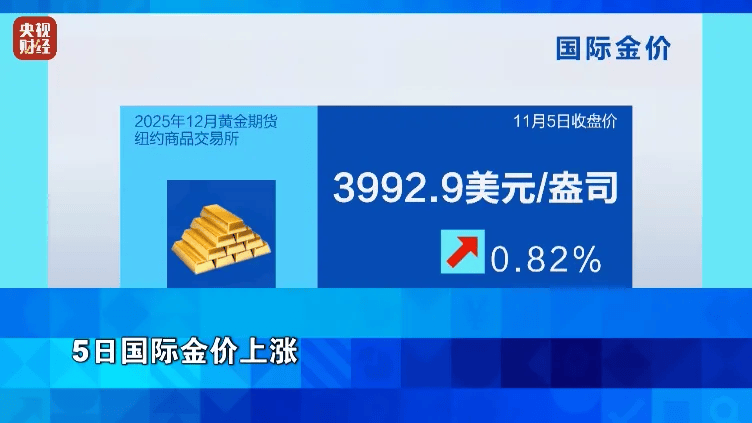
Economic Data - In October, the U.S. private sector added 42,000 jobs, significantly exceeding expectations, alleviating concerns about the potential negative impact of the federal government shutdown on the job market [1] - The ISM services PMI for October reached 52.4, the highest in eight months, indicating a rebound in demand, with the new orders index rising to a one-year high of 56.2 [5] - The payment prices index for October surged to 70, the highest in three years, suggesting a rebound in inflationary pressures [5] Stock Market Performance - Following the release of positive economic data, major U.S. stock indices closed higher, with the Dow Jones up 0.48%, S&P 500 up 0.37%, and Nasdaq up 0.65% [1] - Notable gains were observed in semiconductor stocks, with Micron Technology rising by 8.93%, Applied Materials up 4.6%, and Qualcomm increasing by nearly 4% [1] European Market Reaction - European stock markets rebounded from the tech sell-off, driven by positive earnings reports, with BMW's stock rising 6.85% after meeting analyst expectations despite a decline in several performance metrics [7] - Other automotive stocks also saw gains, with Mercedes-Benz up 3.54% and Volkswagen up 2.43% [7] - The major European indices closed higher, with the UK market up 0.64%, France up 0.08%, and Germany up 0.42% [8] Commodity Prices - Gold prices increased due to concerns over the prolonged U.S. government shutdown and a decline in the dollar index, with December gold futures closing at $1,992.90 per ounce, up 0.82% [3] - In contrast, crude oil prices fell as U.S. commercial crude oil inventories rose by approximately 5.2 million barrels, significantly exceeding expectations, leading to concerns about weak oil demand [10] - December light crude oil futures closed at $59.60 per barrel, down 1.59%, while January 2026 Brent crude futures closed at $63.52 per barrel, down 1.43% [10]
铜产业链周度报告-20251107
Zhong Hang Qi Huo· 2025-11-07 12:10
1. Report Industry Investment Rating There is no information provided regarding the report industry investment rating. 2. Core Viewpoints of the Report - The concerns about tight copper supply continue to provide support for copper prices, but the upward driving force of copper futures prices has weakened. It is recommended to establish long positions around 85,000 after the macro - economy stabilizes [14][16][47]. - The copper market is affected by both bullish and bearish factors. Bullish factors include low inventory and tight supply at the mine end, while bearish factors include weak macro - economic sentiment, insufficient actual demand, and the strengthening of the US dollar [7]. 3. Summary According to the Directory 3.1 Report Summary - The US economic data affects the Fed's interest - rate cut expectations, and the US government shutdown may impact the economy. The copper market has both bullish factors such as tight mine supply and bearish factors like weak demand [9][11][7]. - China's copper imports, production, and demand show different trends. For example, copper concentrate imports have changes, and the production of some copper products is affected by factors such as maintenance and policies [16][21]. 3.2 Multi - empty Focus - **Bullish Factors**: Low inventory and tight operation at the mine end, and the TC of copper concentrate remains at a low level, providing support for copper prices [7][14][17]. - **Bearish Factors**: Weak macro - economic sentiment, insufficient actual demand, and the strengthening of the US dollar due to the cooling of the Fed's interest - rate cut expectations [7][8][11]. 3.3 Data Analysis - **Supply - side Data** - China's September copper concentrate imports were 2.5869 million tons, a month - on - month decrease of 6.24% and a year - on - year increase of 6.43%. The supply from Chile decreased significantly, while that from Peru slightly increased [16]. - As of the week ending October 31, the weekly index of Mysteel standard clean copper concentrate TC was - 42.45 dollars per dry ton, a decrease of 0.79 dollars per dry ton from the previous week [18]. - In September 2025, China's electrolytic copper actual output was 1.1498 million tons, a month - on - month decrease of 3.2% and a year - on - year increase of 14.48%. The output in October continued to decline due to factors such as smelter maintenance [21]. - **Demand - side Data** - China's September scrap copper imports were 184,100 tons, a month - on - month increase of 2.6% and a year - on - year increase of 14.8% [25]. - In September 2025, the domestic copper strip production was 196,200 tons, a month - on - month increase of 2.35%, ending four consecutive months of decline, but still lower than the same period last year [28]. - In September 2025, the domestic refined copper rod production was 849,300 tons, a month - on - month increase of 0.18%, and the recycled copper rod production was 170,800 tons, a month - on - month decrease of 1.04% [31]. - The real estate market is weak, with indicators such as construction area, new construction area, and sales area showing year - on - year declines [36][38]. - The new energy vehicle industry maintains a strong momentum. In September, the production and sales of new energy vehicles were 1.617 million and 1.604 million respectively, with significant year - on - year and month - on - month increases [40]. - **Inventory and Premium Data** - London Metal Exchange copper inventory increased last week, Shanghai Futures Exchange copper inventory increased in the week ending October 31, and domestic electrolytic copper spot inventory decreased from November 3 to 6 [43]. - On November 6, the Shanghai Wumaotrade 1 copper spot changed from a discount to a premium of about 35 yuan per ton, and the LME 0 - 3 spot discount widened to about - 30.96 dollars per ton [45]. 3.4 Market Outlook The upward driving force of copper futures prices has weakened. It is recommended to establish long positions around 85,000 after the macro - economy stabilizes [47].
铝产业链周度报告-20251107
Zhong Hang Qi Huo· 2025-11-07 12:00
Report Industry Investment Rating There is no information provided regarding the report industry investment rating in the given content. Core Viewpoints - The aluminum market presents a complex situation with both bullish and bearish factors. Bullish factors include relatively limited domestic supply increase, tight overseas supply - demand, and certain social inventory of aluminum ingots. Bearish factors are short - term macro concerns, weakening alumina prices, and overall weak downstream consumption due to high aluminum prices [8]. - The supply of domestic bauxite is expected to recover significantly after the end of the rainy season, while the import volume of bauxite may gradually increase as the rainy season in Guinea ends [14][18]. - The supply over - capacity expectation of alumina remains unchanged, and attention should be paid to unexpected disturbances on the supply side. The production of electrolytic aluminum increased in October, and the industry's profit expanded due to cost reduction and a slight increase in aluminum prices. However, high aluminum prices have suppressed downstream consumption, leading to a slight decline in the aluminum processing start - up rate [21][25][28]. - The real estate market is in a weak state with declines in construction area, new - start area, and sales volume. In contrast, the new energy vehicle industry maintains high prosperity, which may drive the demand for aluminum [33][37]. - The inventory situation is mixed, with foreign inventory rising and domestic inventory falling. The social inventory of aluminum ingots is still at a relatively low level, providing some support for aluminum prices [40][44]. - The price of recycled aluminum is expected to be strongly volatile in the short term, and the supply of aluminum alloy is expected to decrease, with the price following the upward trend of aluminum [60][61]. Summary by Directory Report Summary - Bullish factors for aluminum include limited domestic supply increase, social inventory of aluminum ingots, and tight overseas supply - demand. Bearish factors are short - term macro concerns and weakening alumina prices [8]. - Data has dampened the Fed's interest - rate cut expectations, and the US dollar index has rebounded [9]. - The supply of domestic bauxite is currently tight but is expected to recover significantly after the end of the rainy season. The import volume of bauxite decreased in September due to the rainy season in Guinea and may gradually increase later [14][18]. Data Analysis - In September, China's alumina production was 7.746 million tons, a month - on - month decrease of 1.7% and a year - on - year increase of 12.7%. From January to September, the cumulative production was 66.836 million tons, a cumulative year - on - year increase of 9.8% [23]. - In October, the production of domestic electrolytic aluminum increased year - on - year by 1.13% and month - on - month by 3.52%. The proportion of aluminum water in the industry increased by 1.4 percentage points to 77.7% [25]. - In September, the weighted average full cost of China's electrolytic aluminum industry was 15,918 yuan/ton, a month - on - month decrease of 193 yuan/ton. The theoretical profit of the industry reached 4,849 yuan/ton, a month - on - month increase of 301 yuan/ton [28]. - The start - up rate of domestic aluminum downstream processing enterprises was 61.6%, a month - on - month decrease of 0.6 percentage points [30]. - From January to September, the real estate market showed a decline in construction area, new - start area, and sales volume. In contrast, the new energy vehicle industry maintained high prosperity, with production and sales increasing significantly [34][38]. - The inventory of LME aluminum increased to a nearly eight - month high, while the inventory of SHFE aluminum decreased to a two - and - a - half - month low. The social inventory of aluminum ingots decreased during the week and is still at a relatively low level [41][44]. - On November 6, the domestic spot premium and LME aluminum premium both widened [46]. - In September, the production of recycled aluminum alloy increased, but it is expected to decrease slightly in October due to the shortage of scrap aluminum. The start - up rate of the recycled aluminum alloy industry increased in October, but there is significant differentiation within the industry [49][52]. - In September, the import of unforged aluminum alloy decreased year - on - year by 13.2%. The import volume in October is expected to increase slightly but be lower than the same period last year [55]. 后市研判 - The supply of aluminum alloy is expected to decrease, and as the automotive industry is still in the sales - boosting stage, the demand during the peak season is still expected. The price of aluminum alloy will follow the upward trend of aluminum [61].
【UNforex财经事件】中美关系改善与降息预期交织 黄金延续高位震荡
Sou Hu Cai Jing· 2025-11-07 10:41
Group 1 - Recent positive signals in US-China relations, including the suspension of sanctions on China's shipbuilding industry and public consultations on delaying tariffs, have boosted investor risk appetite [1] - The Dow Jones futures rose approximately 0.20%, while S&P 500 and Nasdaq 100 futures increased by 0.25% and 0.33% respectively, indicating a recovery in market sentiment [1] - October's employment data showed a significant increase in layoffs, with over 153,000 job cuts reported, marking the largest monthly increase in over 20 years, which has strengthened expectations for a Federal Reserve rate cut in December [1] Group 2 - The CME FedWatch tool indicates a 67% probability of a Federal Reserve rate cut in December, up from 60% a week prior, supporting stock market risk appetite and maintaining high gold prices [1] - Despite the recovery in market sentiment, safe-haven funds remain resilient due to ongoing government shutdown risks, with independent estimates suggesting a potential 1% to 2% reduction in Q4 GDP if the shutdown continues [1] - The US Supreme Court's hearings on presidential tariff powers have added policy uncertainty, sustaining market demand for safe-haven assets like gold [1] Group 3 - Gold prices have returned above $4,000 but remain below overnight highs, with short-term volatility driven by dollar buying and interest rate cut expectations [2] - Technical analysis suggests that if gold prices break through the $4,020–$4,030 resistance range, they may further test $4,045–$4,050 and potentially $4,100; conversely, a drop below $3,975–$3,965 could see prices retreat to around $3,929 [2] - The market is characterized by a coexistence of policy expectations and safe-haven demand, with gold stability above $4,000 dependent on upcoming data confirming rate cut prospects and dollar performance [2]
【UNFX财经事件】中美缓和推动情绪修复 黄金维持强势整理格局
Sou Hu Cai Jing· 2025-11-07 10:19
Group 1 - Recent positive signals in US-China relations, including the US pausing sanctions on China's shipbuilding industry and initiating a public consultation process to suspend tariff increases for one year, are seen as significant progress in bilateral relations, boosting market confidence [1] - The Dow Jones futures rose approximately 0.20%, while S&P 500 and Nasdaq 100 futures increased by 0.25% and 0.33% respectively, following a period of market pressure due to corrections in the technology and AI sectors [1] - The latest employment data indicates signs of economic cooling, with October layoffs exceeding 153,000, marking the highest level in over 20 years, reinforcing expectations for a Federal Reserve rate cut in December [1] Group 2 - The CME FedWatch tool indicates a 67% probability of a Federal Reserve rate cut in December, up from 60% the previous week, which has contributed to a positive sentiment in the stock market and provided solid support for gold [1] - Despite an increase in risk appetite, safe-haven sentiment has not completely dissipated due to concerns over the ongoing US government shutdown, which has lasted over five weeks, potentially impacting the economy [1] - The US Supreme Court's hearings on the legality of presidential tariff powers have heightened policy uncertainty, leading to a resurgence of safe-haven sentiment that supports gold prices [1] Group 3 - Gold (XAU/USD) stabilized above $4,000 but failed to break the overnight high, with market volatility increasing due to the divergence between the dollar's rebound and rate cut expectations [2] - Technically, if gold prices break through the resistance zone of $4,020–$4,030, they may further test the $4,045–$4,050 range and approach the $4,100 mark; conversely, a drop below the support zone of $3,975–$3,965 could see prices retreat to around $3,929 [2] - The market remains in a pattern of intertwining policy expectations and safe-haven sentiment, with gold supported by both rate cut expectations and safe-haven demand, maintaining its position above $4,000 [2]