供给侧出清

Search documents
视频|李蓓:头部房地产企业已经偷偷地开出了花朵
Xin Lang Cai Jing· 2025-12-02 05:41
Core Insights - The current land market has undergone a significant transformation, with only four to five leading companies now capable of acquiring land, compared to the previous thirty to forty competitors [1][2] - This shift has enhanced the bargaining power of these leading companies in negotiations with local governments, resulting in a transfer of market downward pressure to the local government side [1][2] - The decline in land prices and the improvement in land planning conditions are key indicators of this market change [1][2] - Leading companies can achieve substantial sales within six months of acquiring land, with new project net profit margins reaching over 10% [1][2] - The ongoing supply-side clearance, optimization of competitive landscape, and concentration of market share have allowed leading companies to thrive even during industry downturns [1][2]
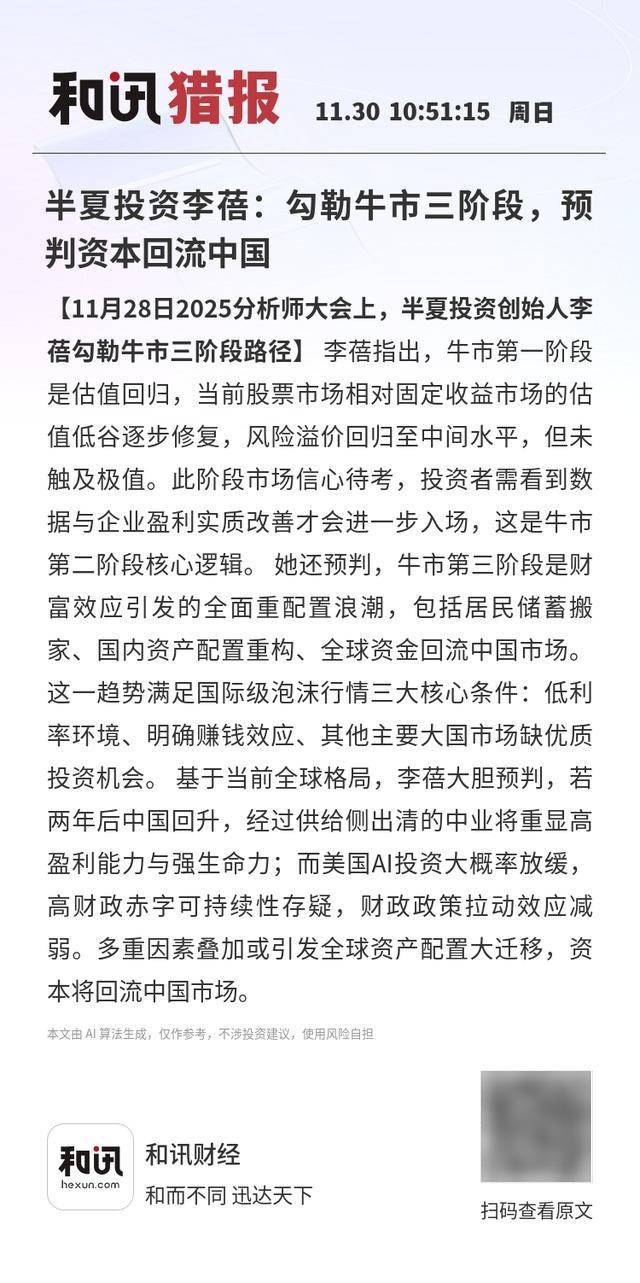
半夏投资李蓓:勾勒牛市三阶段,预判资本回流中国
Sou Hu Cai Jing· 2025-11-30 06:40
Group 1 - The core viewpoint of the article is that the founder of Banxia Investment, Li Bei, outlines a three-stage path for a bull market, starting with valuation recovery and moving towards a comprehensive reallocation of wealth driven by the wealth effect [1] - The first stage of the bull market involves a gradual recovery of stock market valuations relative to fixed income markets, with risk premiums returning to mid-levels but not reaching extremes [1] - The second stage is contingent on investors seeing tangible improvements in data and corporate earnings before further market entry [1] Group 2 - The third stage is characterized by a wave of comprehensive reallocation, including the migration of household savings, restructuring of domestic asset allocations, and the return of global capital to the Chinese market [1] - Li Bei predicts that if China rebounds in two years, the domestic industry will regain high profitability and vitality after supply-side clearing, while AI investments in the U.S. are likely to slow down, raising doubts about the sustainability of high fiscal deficits [1][3] - Multiple factors may trigger a global asset allocation migration, leading to capital flowing back into the Chinese market [1][3]

李蓓:这一轮行情非常可能会泡沫化,达到相当的高度,三大原因
Xin Lang Zheng Quan· 2025-11-30 02:51
Group 1 - The current stage of the Chinese stock market has only completed the first phase of a bull market, which is valuation recovery, with risk premiums still above historical averages [3][25] - The market is entering a critical testing period where confidence, economic data, and corporate earnings will determine the next phase of the market [3][25] - A potential third phase is anticipated, where profit effects will trigger a reallocation of domestic and global capital back into the Chinese market, possibly leading to a bubble [3][25] Group 2 - Historical conditions for forming a significant bubble include a low-interest environment, clear profit effects, and a lack of investment opportunities in other major markets [26][29] - The last major bubble in the A-share market occurred in 2006-2007, driven by the collapse of the US housing market, making China an attractive investment destination [29] - Current global economic conditions suggest that in two years, China's economy may recover, leading to a resurgence in corporate profitability and a potential shift in global asset allocation towards China [29][30] Group 3 - The hidden potential in the market is exemplified by leading companies that can maintain profitability even during economic downturns, as seen in the construction materials and real estate sectors [10][16] - Leading firms in struggling industries are gaining market share and improving profit margins due to the exit of weaker competitors [16][17] - The current wealth accumulation in China, particularly the potential return of overseas assets, combined with significant global institutional capital, serves as fuel for a potential bull market [25][19]

券商晨会精华:通过三季报寻找结构性亮点
Xin Lang Cai Jing· 2025-10-20 00:44
Group 1 - The US banking sector is facing long-term consolidation pressure due to the large number of small banks and rising costs of deposit acquisition, which may lead to higher asset quality risks [2] - The Chinese government has launched a three-year plan to double the number of electric vehicle charging facilities by 2027, aiming to establish 28 million charging points nationwide, which supports future infrastructure development [2] - Investors are advised to focus on structural highlights in Q3 reports, particularly in sectors like gold, AI-driven TMT, and non-bank financials, as well as industries less affected by economic cycles [3] Group 2 - The recent credit risk events in US regional banks have raised market concerns, but overall liquidity in the banking system remains sufficient, keeping credit risk manageable in the short term [2] - The plan for electric vehicle charging infrastructure includes the addition of 1.6 million DC charging guns, with a focus on high-power charging solutions and new business models [2] - Key sectors to watch for recovery include industrial metals, lithium batteries, innovative pharmaceuticals, and transportation equipment, which are expected to benefit from supply-side adjustments [3]



中金:结合三季报业绩关注三条投资主线
Zheng Quan Shi Bao Wang· 2025-10-20 00:15
Core Insights - The article emphasizes three investment themes to focus on during the third quarter earnings reports, highlighting the relatively subdued internal growth expectations and increased external uncertainties due to the escalation of US-China tariffs [1] Group 1: Earnings Highlights - Key areas to watch in the third quarter earnings include sectors such as gold, TMT (Technology, Media, and Telecommunications) benefiting from high AI demand, and non-bank financials [1] - Investors are encouraged to identify structural highlights through the earnings reports, particularly in sectors with low correlation to economic cycles and external risks [1] Group 2: High-Growth Opportunities - High-growth opportunities include the AI industry chain and sectors with significant overseas capacity layout that cater to non-US economic trade, such as white goods, construction machinery, and power grid equipment [1] - The article suggests focusing on industries that have achieved supply-side clearing in a moderately recovering environment, including industrial metals, lithium batteries, innovative pharmaceuticals, commercial vehicles, and rail and road equipment [1]
万联证券:25H1实体药店整体业绩承压 出清和降本增效效果初显
智通财经网· 2025-09-02 08:49
Core Viewpoint - The overall performance of the physical pharmacy industry is under pressure in the first half of 2025 due to declining consumer purchasing power, intensified competition, stricter management of personal medical insurance accounts, and the impact of drug procurement policies [1][2] Group 1: Stock Performance - From the beginning of the year to August 31, 2025, the pharmaceutical and biological sector achieved a 25.50% increase, outperforming the CSI 300 index by 11.22 percentage points, ranking 9th among 31 industries [1] - Most sub-sectors within the pharmaceutical sector experienced positive growth, with the physical pharmacy index rising by 4.86%, although stock performance among listed companies in the physical pharmacy sector showed significant divergence [1] Group 2: Financial Performance - In the first half of 2025, the overall revenue of the physical pharmacy sector grew by 0.10% year-on-year, while net profit attributable to shareholders increased by 0.88%, indicating a slowdown in growth due to various pressures [1] Group 3: Investment Recommendations - Future competitiveness in the pharmacy market will hinge on store optimization and cost reduction, as the outpatient prescription market in China has significant growth potential compared to Japan and the US [2] - The aging population trend is expected to continue expanding the outpatient market, with large chain pharmacies enhancing their capabilities to capture prescription outflows [2] - The industry is currently undergoing a supply-side clearing phase, leading to the closure of inefficient stores and an increase in market share for leading pharmacies, indicating a trend towards higher industry concentration [2] - Emphasis is placed on the importance of compliance, refined management, product selection, and service capabilities for large chain pharmacies in a more regulated and transparent pricing environment [2]
石化化工反内卷稳增长系列之九:“炼化:化纤”:供给出清格局优化,静待行业景气复苏
EBSCN· 2025-07-29 13:00
Investment Rating - The report maintains an "Overweight" rating for the petrochemical and chemical fiber industry [1] Core Insights - The report highlights that the supply-side clearing pattern is improving, and the industry is awaiting a recovery in prosperity [1] - The report emphasizes the ongoing elimination and upgrading of outdated chemical facilities, which is expected to stabilize the supply side of the industry [4] - The polyester filament industry is experiencing a continuous increase in concentration, with leading companies likely to benefit from the recovery in industry prosperity [5][7] Summary by Sections Industry Overview - The chemical industry is undergoing a phase of eliminating outdated facilities, with a focus on safety and efficiency improvements. A plan has been issued for the period from 2024 to 2029 to phase out non-compliant production facilities and upgrade existing ones [4] - The domestic refining capacity is expected to be maintained at around 1 billion tons, with a target utilization rate of over 80% for major products by 2025 [4] Polyester Filament Sector - The domestic polyester filament capacity has grown from 33.28 million tons in 2019 to 43.16 million tons in 2023, with an annual growth rate of 5%. The growth rate is expected to slow down significantly due to high oil prices and weakened supply-demand dynamics [5] - The industry is shifting from extensive expansion to refined operations, with a focus on high-value-added products, which is expected to enhance the market competitiveness of leading companies [5][7] Investment Recommendations - The report suggests focusing on leading companies in the "refining-chemical fiber" sector, including Tongkun Co., Ltd., Xinfengming Group, Hengli Petrochemical, Rongsheng Petrochemical, Hengyi Petrochemical, and Dongfang Shenghong, as they are expected to benefit from the ongoing industry recovery [8]


银龙股份(603969):进击的预应力材料龙头
Changjiang Securities· 2025-07-17 02:23
Investment Rating - The report assigns a "Buy" rating to the company, with an upgrade noted [10]. Core Insights - The company is a leading player in the domestic prestressed materials industry, with stable and increasing downstream demand in sectors such as water conservancy, highway bridges, and high-speed rail construction. The company leverages advanced technology to continuously launch high-performance prestressed products, enhancing the lifespan of downstream products while reducing construction costs, leading to an upgrade in product structure [3][6]. - The overseas market presents significant growth potential, with expectations for the company to achieve greater breakthroughs [3]. Company Overview - The company focuses on prestressed materials and rail transit supporting materials, serving downstream sectors including railways, water conservancy, bridges, and civil applications. Established in 1978 and listed in 2015, the company has shown stable performance with projected revenue of 3.05 billion yuan in 2024, reflecting accelerated growth. The net profit from 2012 to 2023 has remained between 100 million to 200 million yuan, with a forecasted profit of 237 million yuan in 2024, marking a 38% year-on-year increase [6][28]. Prestressed Materials - The demand for prestressed materials remains robust, particularly in traditional infrastructure projects, with structural growth observed in water conservancy investments maintaining over 10% growth annually. The company is positioned to benefit from this demand, especially in providing prestressed steel wires to PCCP enterprises [6][34]. - The industry has undergone a supply-side clearance, with many small enterprises exiting due to inefficiencies, allowing the company to potentially increase its market share, which is currently about 4.6% with a projected sales volume of 250,000 tons in 2024 [7][44]. High-Strength Product Development - The market for high-quality prestressed products is expanding due to increasing safety and quality requirements in construction. New standards have been introduced, raising the strength requirements for materials used in bridges and high-speed rail, which the company is well-positioned to meet with its high-strength prestressed materials [8][52]. - The company has developed high-strength products that are being utilized in major bridge and high-speed rail projects, contributing significantly to its expected performance in 2024 [8][67]. Rail Transit Sector - The demand for rail transit materials is on the rise, with fixed asset investment in railways expected to reach 850.6 billion yuan in 2024, a year-on-year increase of 11.3%. The company anticipates a 31% increase in revenue from rail transit products in 2024, amounting to 400 million yuan [9][73]. - The III-type track slab is gaining traction, with market demand projected to reach 4 billion yuan by 2028, doubling from 2024 levels. The company is a key player in the development of this product [9][78]. Financial Projections - The company is expected to achieve revenues of 350 million yuan and 530 million yuan in 2025 and 2026, respectively, with corresponding price-to-earnings ratios of 18 and 12 [10].

【建筑建材】政策信号扭转预期,重点关注光伏玻璃、浮法玻璃、水泥、碳纤维行业——中央财经委提出“治理反内卷”精神学习(孙伟风)
光大证券研究· 2025-07-04 14:17
Core Viewpoint - The article discusses the recent policy signals from the Chinese government aimed at addressing issues of low-price competition and promoting high-quality development in various industries, particularly focusing on the construction materials sector and the photovoltaic industry [2][3]. Policy Signals and Market Reactions - The meeting chaired by Xi Jinping emphasized the need to advance the construction of a unified national market and to guide enterprises in improving product quality while phasing out outdated production capacity [2]. - Following the meeting, sectors such as steel, coal, and building materials saw significant gains, indicating a reallocation of funds from previously hot sectors to lower-performing cyclical sectors [3]. Focus on Specific Industries - The article highlights the photovoltaic industry as a key area for potential supply-side reforms due to severe overcapacity and widespread losses across the entire industry chain [3]. - In the construction materials sector, the profitability ranking from weakest to strongest is as follows: carbon fiber (significant losses), photovoltaic glass (losses), float glass (large industry losses, with leading companies barely profitable), cement (some companies in loss), and fiberglass (most companies profitable) [4]. Industry-Specific Insights - Photovoltaic glass prices have reached historical lows, with current prices for 2.0mm single-coated glass ranging from 10.5 to 12 RMB per square meter, and the average net profit in the industry is reported at -362 RMB per ton [4]. - The float glass industry is experiencing a majority of production lines operating at a loss, with specific production costs reported for different fuel types, indicating a challenging profitability environment [5]. - The carbon fiber industry has been in a negative profit situation for nearly two years, with an average gross profit of -8,543 RMB per ton as of late June [6]. Conclusion - The article suggests that the government's clear policy direction may lead to a series of supply-side reforms, potentially reversing supply-demand dynamics and improving product prices and corporate profitability in the affected sectors [3].

总会有人抄底地产
远川投资评论· 2025-06-12 07:02
Core Viewpoint - The real estate sector in China is undergoing significant changes, with a shift in investment focus towards property management and a recognition of the sector's long-term importance in the economy [1][15][16]. Group 1: Market Dynamics - The A-share market has seen a resurgence in bank stocks, with the Industrial and Commercial Bank of China doubling its market value since October 2022 [1]. - The Hong Kong market is witnessing a revival in healthcare and consumer sectors, while real estate remains stagnant [1]. - Notable fund managers, such as Yang Dong, are beginning to invest in real estate stocks, indicating a potential shift in market sentiment [2][4]. Group 2: Investment Strategies - Investment strategies have evolved, with a focus on high-quality real estate companies that can withstand market fluctuations [5][6]. - Fund managers like Dong Chengfei have historically favored real estate, viewing it as a safer investment compared to cash [4][5]. - The shift from traditional real estate investments to property management reflects a broader trend towards lower-risk, cash-flow-generating assets [10][12]. Group 3: Structural Changes in the Industry - The real estate industry is transitioning from a growth phase to a more mature stage, with a focus on existing assets rather than new developments [8][15]. - The supply-side adjustments in the real estate market have been more severe than anticipated, leading to a reevaluation of investment opportunities [7][8]. - Property management is emerging as a more stable investment avenue, with companies in this sector benefiting from consistent cash flow and lower leverage [12][13]. Group 4: Historical Context and Future Outlook - Historical examples from Japan's real estate market illustrate the potential for property management companies to thrive in a mature market [13]. - The Chinese real estate sector remains a critical component of the national economy, influencing various related industries [15][16]. - Despite current challenges, the long-term outlook for the real estate sector remains significant, as it continues to be a foundational element of economic stability [16].