
供给扰动

Search documents
外贸数据点评:出口韧性的“来源”?
Shenwan Hongyuan Securities· 2025-12-08 14:40
Group 1: Export Data Overview - November exports increased by 5.9% year-on-year, exceeding the expected 3% and recovering from a previous decline of -1.1% in October[7] - The rise in exports is attributed to the easing of supply disruptions rather than an improvement in external demand[2] - The number of working days in November increased by 2 days compared to the previous year, contributing to the export rebound[2] Group 2: Import Data Overview - November imports rose by 1.9% year-on-year, slightly below the expected 2.9% but up from 1% in October[7] - Processing trade imports surged by 9.2 percentage points to 13.9%, indicating a recovery in trade activity[26] - Major commodities like crude oil saw a rebound in import growth, with an increase of 8.4 percentage points to 8.1%[26] Group 3: Sector-Specific Insights - Consumer electronics exports grew by 5.1 percentage points to 3.3%, with significant contributions from mobile phones and LCD display modules[37] - Capital goods exports showed mixed results, with general machinery and medical instruments increasing, while shipbuilding exports fell significantly[43] - Exports to emerging markets, particularly Africa and Latin America, saw notable increases of 17.1 and 12.8 percentage points, reaching 27.7% and 15% respectively[14] Group 4: Future Outlook - The easing of supply disruptions and ongoing competitive advantages for Chinese exports are expected to support export growth in the coming months[30] - Potential improvements in exports to the U.S. are anticipated due to reduced tariffs and ongoing inventory replenishment needs[30] - Continued industrialization in emerging economies is likely to drive demand for intermediate and capital goods from China[30]
供给扰动叠加宏观情绪偏暖,板块低位反弹
Zhong Xin Qi Huo· 2025-11-25 02:16
Report Industry Investment Rating - The mid - term outlook for the industry is "Oscillation", with specific ratings for each variety as follows: steel - oscillation; iron ore - oscillation with an upward bias; scrap steel - oscillation; coke - oscillation; coking coal - oscillation with an upward bias; glass - oscillation; manganese silicon - oscillation; silicon iron - oscillation; soda ash - oscillation [8][12][15][16][19] Core View of the Report - The fundamentals of steel are improving, and with the upcoming Central Economic Work Conference in December and overseas interest - rate cut expectations, the macro - environment is favorable, leading to a low - level rebound in the futures market. However, as the off - season deepens, demand may weaken, and high inventory levels limit the upside potential. Iron ore prices are strong due to potential restocking demand, while scrap steel prices are expected to oscillate. Coke is expected to follow coking coal in oscillation, and coking coal's far - month contracts may oscillate with an upward bias. Manganese silicon and silicon iron are expected to trade around cost levels. Glass and soda ash face over - supply issues, with glass prices likely to oscillate weakly without more cold repairs, and soda ash prices expected to oscillate in the short term and decline in the long run [2][7][10] Summary by Relevant Catalogs Iron Element - Overseas mines' shipments decreased month - on - month, with a significant increase in arrivals this period after a decrease in the previous two weeks. Port inventories slightly declined, and steel mills' imported ore inventories decreased. Short - term hot metal is expected to be supported, and iron ore restocking demand may be released, so iron ore prices are strong. Scrap steel supply increased while demand remained stable, with limited downside space after price drops, and is expected to oscillate [3] Carbon Element - After profit recovery and environmental relaxation, coke supply stabilized. Short - term steel mill demand remained strong, and total inventory continued to decline, but cost support for spot prices weakened, and the market expected price cuts. Coke futures are expected to follow coking coal in oscillation. Coking coal's fundamentals have not significantly weakened, and downstream winter restocking is expected after spot price corrections. The near - month contracts are affected by delivery and are expected to oscillate, while the far - month contracts are expected to oscillate with an upward bias [3] Alloy - Manganese silicon has strong cost support, but the oversupply situation is difficult to reverse, and prices are expected to trade around cost levels. Silicon iron's cost supports the price bottom, but oversupply restricts the upside, and it is also expected to trade around cost levels [4][7] Glass and Soda Ash - Glass supply may be disrupted, but mid - and downstream inventories are relatively high, and the current supply - demand is oversupplied. Without more cold repairs by the end of the year, high inventories will suppress prices, otherwise, prices may rise. Soda ash prices are near cost, with obvious bottom support, but oversupply restricts price increases. In the short term, it is expected to oscillate, and in the long term, the price center will decline [7][15] Steel - Spot market transactions were good, steel mill profitability decreased, but production enthusiasm remained high, and steel output slightly increased. Steel demand was resilient, and overall inventory continued to decline, but inventory levels were still higher than the same period last year. The fundamentals are improving, and the futures market has the driving force for a low - level rebound, but the upside is limited due to the off - season and high inventory [10] Iron Ore - Global shipments decreased month - on - month, and the arrival rhythm fluctuated greatly. Spot prices mostly rose. From a fundamental perspective, overseas mine shipments decreased, arrivals increased this period, and the hurricane affected the arrival rhythm. Hot metal production slightly decreased, and restocking demand has not been significantly released. Short - term ore prices are expected to oscillate with an upward bias [10] Scrap Steel - This week's arrivals slightly increased, and electric furnace profits significantly recovered after the decline in scrap prices and the rise in finished product prices. The total daily consumption of 255 steel mills slightly decreased, and steel mills slightly replenished their inventories. The supply increased while demand remained stable, with limited downside space after price drops, and it is expected to oscillate [11] Coke - Futures followed coking coal in oscillation. Spot prices declined, and supply slightly increased after the improvement of coking profits and the end of environmental restrictions. Demand was weakening as hot metal production declined slightly. Inventory at coke enterprises slightly increased but remained low. In the off - season, supply and demand are both weak, and the futures market is expected to follow coking coal in oscillation [12][13] Coking Coal - Futures were under pressure and oscillated. Spot prices of some varieties declined. Domestic supply remained low, and the fundamentals have not significantly weakened. There is restocking demand for downstream winter storage after price corrections. The near - month contracts are affected by delivery and are expected to oscillate, while the far - month contracts are expected to oscillate with an upward bias [14] Manganese Silicon - Futures prices rose and then fell. Spot market transactions were average, and manufacturers were under cost pressure. Cost support remained strong, but the oversupply situation was difficult to reverse, and prices are expected to trade around cost levels [17] Silicon Iron - Futures prices rose and then fell. Spot market transactions needed improvement. Cost support was strong, but oversupply restricted the upside, and prices are expected to trade around cost levels [18]
数据点评 | 出口骤降的“隐藏线索”?(申万宏观·赵伟团队)
申万宏源宏观· 2025-11-07 10:20
Core Viewpoints - October export decline is not primarily due to weakening external demand, but rather short-term supply disruptions, which are now dissipating [3][10][65] - The significant drop in exports in October is influenced by a high base effect and a reduction in working days, with a month-on-month decline of 7.1% compared to a seasonal expectation of 3.2% [3][10][65] - Exports to emerging economies, such as ASEAN and Africa, have seen a notable slowdown, while demand from countries like Vietnam and Thailand has shown improvement [3][10][11] Import Analysis - October imports decreased by 6.4% year-on-year to 1%, reflecting supply disruptions, particularly in processing trade, which fell from 12% in September to 4.6% in October [4][23][66] - The surge in port freight volumes in late October indicates that supply disruptions are easing, with exports from countries like Vietnam and South Korea showing significant recovery [4][27][66] Future Outlook - With the easing of US-China trade tensions and the recovery of supply chains, November export growth is expected to rebound [5][67] - The differentiation in export performance to developed economies, particularly a recovery in exports to the US, suggests potential for continued growth in exports [5][67] Regular Tracking - In October, both exports and imports saw declines, with consumer electronics and light industrial products experiencing significant drops in export growth [6][68] - Capital goods exports showed mixed results, with general machinery and medical instruments declining, while shipbuilding exports increased [6][42][68] - Import growth for mechanical and electrical products and bulk commodities also decreased, with notable declines in automatic data processing equipment [6][54][68]


10月外贸数据点评:出口骤降的“隐藏线索”?
Shenwan Hongyuan Securities· 2025-11-07 10:14
Group 1: Export Data Overview - October exports decreased by 1.1% year-on-year, significantly lower than the expected 3.2% and previous value of 8.3%[1] - The month-on-month decline in exports was 7.1%, which is worse than the seasonal average decline of 3.2%[2] - Exports to emerging markets like ASEAN and Africa saw significant drops, with ASEAN exports down 4.7 percentage points to 11% and African exports down 46.1 percentage points to 10.5%[2] Group 2: Import Data Overview - October imports increased by 1% year-on-year, below the expected 4.1% and previous value of 7.4%[1] - The month-on-month decline in imports was 6.4 percentage points, reflecting supply disruptions[3] - Processing trade imports fell from 12% in September to 4.6% in October, indicating significant supply disturbances[3] Group 3: Supply Chain and Economic Factors - The decline in exports is attributed more to short-term supply disruptions rather than weakening external demand[2] - A reduction in working days in October (down 3 days compared to the previous month) exacerbated supply issues, particularly following the National Day holiday[2] - High-frequency export chain production indicators fell to -0.2%, aligning with the overall export decline of -1.1%[2] Group 4: Future Outlook - With easing US-China trade tensions and the expected recovery in supply, November exports are anticipated to rebound[4] - Exports to developed economies are showing a mixed performance, with US exports improving while those to the EU and UK are declining[4] - The ongoing industrialization and urbanization in emerging markets are expected to drive demand for intermediate and capital goods imports from China[4]
降息周期与供给扰动续写金铜长牛
2025-10-09 14:47
Summary of Key Points from Conference Call Records Industry Overview - The records discuss the gold, copper, and cobalt markets, highlighting their current trends and future outlooks. Gold Market Insights - The expectation of interest rate cuts by the Federal Reserve has positively impacted gold prices, which recently surpassed $4,000 per ounce, marking a 50% increase year-to-date [2][10][11] - Factors driving this increase include the Federal Reserve's 25 basis point rate cut, the U.S. government shutdown delaying economic data releases, and the potential for further rate cuts due to the Dodge 2.0 plan, which may lead to layoffs [2][10] - Long-term support for gold prices comes from global tensions, increased central bank gold purchases, and the declining status of the U.S. dollar, particularly with China's push for transactions in yuan for Australian iron ore [1][2] - Companies like Shandong Gold and Chifeng Jilong Gold are highlighted as undervalued with good performance expectations [1][3] Copper Market Insights - Copper prices have stabilized above $10,000, nearing historical highs, driven by its financial attributes in a low-interest-rate environment [1][4] - The copper industry faces supply constraints due to insufficient capital expenditure in recent years, frequent mining accidents, and significant production guidance downgrades from companies like Teck Resources [1][4][14] - Strong demand for copper is noted in traditional infrastructure and renewable energy sectors, suggesting a robust long-term outlook for copper prices [4][16] - Key companies to watch include Zijin Mining and Jiangxi Copper, which are expected to benefit from the supply-demand dynamics [1][4][17] Cobalt Market Insights - The cobalt market has seen price increases due to supply disruptions from the Democratic Republic of Congo (DRC) and quota systems that maintain high prices [5] - Companies less affected by DRC supply issues, such as Liyang New Energy and Huayou Cobalt, are recommended for investment [5] Lithium Market Insights - The lithium market is influenced by the submission of resource evaluation reports in Jiangxi Province, which will determine domestic supply dynamics [6] Solid-State Battery Developments - Recent breakthroughs in solid-state battery cathode materials, particularly in metallic lithium, are expected to significantly increase usage, benefiting companies like Ganfeng Lithium [8] Silver Market Insights - Silver is expected to show higher elasticity compared to gold in the current economic environment, with recommendations to focus on silver-related stocks [12] Investment Recommendations - Investors are advised to focus on leading companies with strong growth potential and profit release capabilities, such as Zijin Mining and Teck Resources, as well as undervalued second-tier stocks like Jiangxi Copper [17]






稀有金属ETF领涨,机构关注金银铜等投资机遇丨ETF基金日报
2 1 Shi Ji Jing Ji Bao Dao· 2025-10-09 02:30
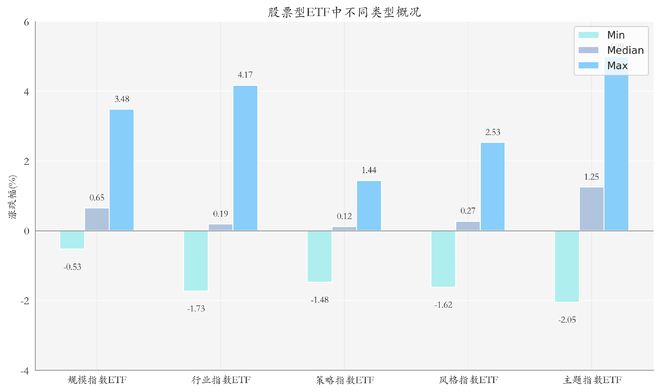
Market Overview - The Shanghai Composite Index rose by 0.52% to close at 3882.78 points on September 30, with a peak of 3887.57 points [1] - The Shenzhen Component Index increased by 0.35% to close at 13526.51 points, reaching a high of 13598.18 points [1] - The ChiNext Index showed minimal fluctuation, closing at 3238.16 points, with a maximum of 3279.02 points [1] ETF Market Performance - The median return for stock ETFs on September 30 was 0.73% [2] - The top-performing scale index ETF was the GF Securities SSE STAR 100 Enhanced Strategy ETF, with a return of 3.48% [2] - The highest return among industry index ETFs was the China Securities Index Subdivision Nonferrous Metals Industry Theme ETF, at 4.17% [2] - The top strategy index ETF was the China Securities Index 500 Free Cash Flow ETF, yielding 1.44% [2] - The leading theme index ETF was the China Securities Index Rare Metals Theme ETF, with a return of 4.99% [2] ETF Performance Rankings - The top three ETFs by return on September 30 were: - Huafu China Securities Rare Metals Theme ETF (4.99%) [4] - GF China Securities Rare Metals Theme ETF (4.38%) [4] - ICBC Credit Suisse China Securities Rare Metals Theme ETF (4.35%) [4] - The three ETFs with the largest declines were: - Guotai Junan China Securities All Index Communication Equipment ETF (-2.05%) [5] - GF China Securities Communication Equipment Theme ETF (-1.82%) [5] - Harvest National Communication ETF (-1.73%) [5] ETF Fund Flows - The top three ETFs by fund inflow on September 30 were: - Southern China Securities A500 ETF (inflow of 1.052 billion yuan) [6] - GF China Securities A500 ETF (inflow of 1.043 billion yuan) [6] - GF National New Energy Vehicle Battery ETF (inflow of 977 million yuan) [6] - The three ETFs with the largest outflows were: - Yinhua China Securities Innovative Drug Industry ETF (outflow of 298 million yuan) [7] - Huabao China Securities Medical ETF (outflow of 246 million yuan) [7] - GF China Securities Military Industry Leader ETF (outflow of 214 million yuan) [7] ETF Margin Trading Overview - The top three ETFs by margin buying amount on September 30 were: - Huaxia SSE STAR 50 Component ETF (740 million yuan) [8] - Guotai Junan China Securities All Index Securities Company ETF (636 million yuan) [8] - E Fund ChiNext ETF (475 million yuan) [8] - The three ETFs with the highest margin selling amounts were: - Guolian An China Securities All Index Semiconductor Products and Equipment ETF (13.75 million yuan) [9] - Huatai Baichuan SSE 300 ETF (11.65 million yuan) [9] - Southern China Securities 500 ETF (6.99 million yuan) [9] Institutional Insights - According to Founder Securities, gold and copper reached new highs, with a favorable environment for continuous interest rate cuts in the U.S. [10] - CITIC Securities suggests focusing on investment opportunities in precious metals and copper, driven by geopolitical uncertainties and expectations of continued rate cuts [11]


供给扰动再起,价格高位整理
Hong Yuan Qi Huo· 2025-09-02 10:04
Report Summary 1. Report Industry Investment Rating No relevant content provided. 2. Core Views - The fundamentals of industrial silicon show both supply and demand increases, but the inventory pressure remains high. In the short - term, affected by macro - sentiment fluctuations and the driving force of polysilicon, the silicon price is expected to remain at a high level, with an operating range of 8,000 - 10,000 yuan/ton [3]. - The fundamentals of polysilicon present a situation of strong supply and weak demand. However, due to anti - involution and supply reform, the quotes of holders are firm, and the bullish sentiment is still strong. In the short - term, the price is expected to maintain a high - level consolidation, with an operating range of 44,000 - 55,000 yuan/ton [3]. 3. Summary by Relevant Catalogs 3.1 Industry Chain Price Review - **Industrial Silicon**: From August 22 to August 29, 2025, most industrial silicon prices showed a downward trend. For example, the industrial silicon futures main - contract closing price decreased by 355 yuan/ton, a decline of 4.06%. The prices of different types of industrial silicon in various regions also decreased to varying degrees [10]. - **Polysilicon**: The prices of N - type dense materials, N - type re - feeding materials, etc. remained unchanged during this period, while the prices of some silicon wafers, battery cells, and components showed small fluctuations [10]. - **Organic Silicon**: The average price of DMC remained unchanged, while the average price of 107 glue decreased by 0.86% and the average price of silicone oil decreased by 0.38% [10]. - **Silicon Aluminum Alloy**: The average price of ADC12 increased by 300 yuan/ton, an increase of 1.47%, while the average price of A356 remained unchanged [10]. 3.2 North - South Increase, Continuous Increment in Supply - **Industrial Silicon Supply**: In the week of August 28, the number of silicon - enterprise furnaces in operation increased by 12 compared with the previous week. The production in Xinjiang, Yunnan, and other regions also increased to varying degrees. For example, Xinjiang's production increased by 1,980 tons, and its operating rate increased from 58.48% to 62.57% [39]. - **Polysilicon Supply**: In July, some polysilicon enterprises increased production, with the monthly output reaching about 110,000 tons. In August, it is expected to increase to about 130,000 tons. Last week, the polysilicon output was 31,000 tons, a week - on - week increase of 1,900 tons [3][68]. 3.3 Improved Transactions, Reduction in Polysilicon Inventory - As of August 28, the total polysilicon inventory decreased to 213,000 tons, a decrease of 36,000 tons. Multiple upstream and downstream enterprises completed procurement and shipments before the end of August, resulting in a significant increase in the trading volume of the polysilicon market and a relatively obvious decline in inventory [3][68]. 3.4 Peak - Season Demand Not Yet Apparent, Weak Organic Silicon Prices - **Supply**: In August, the DMC operating rate was 75.63%, a month - on - month increase of 7.9 percentage points, and the output was 223,100 tons, a month - on - month increase of 23,300 tons. Last week, due to anti - involution in the industry, some local devices reduced their loads for maintenance, resulting in a slight decline in weekly production [97]. - **Demand and Price**: The organic silicon prices weakened. As of August 29, the average DMC price remained unchanged, the average 107 glue price decreased by 0.86%, and the average silicone oil price decreased by 0.38%. Downstream demand was mainly for rigid procurement, and new orders were weak [103]. 3.5 Aluminum Alloy Operating Rate with Minor Fluctuations - **Operating Rate**: In the week of August 28, the operating rate of primary aluminum alloy was 56.4%, a week - on - week decrease of 0.2 percentage points, while the operating rate of recycled aluminum alloy was 53.5%, a week - on - week increase of 0.5 percentage points [111]. - **Price**: The aluminum alloy prices rebounded. As of August 29, the average ADC12 price increased by 1.47%, and the average A356 price remained unchanged [114]. 3.6 High Inventory Pressure - **Industrial Silicon Inventory**: As of August 28, the industrial silicon social inventory (social inventory + delivery warehouse) was 541,000 tons, a week - on - week decrease of 2,000 tons. The total factory inventory in Xinjiang, Yunnan, and Sichuan was 173,500 tons, a week - on - week decrease of 1,600 tons. As of August 29, the exchange - registered warehouse receipts were 50,453 lots, equivalent to 252,300 tons of spot [124]. - **Monthly Supply - Demand Balance**: The industrial silicon supply - demand balance showed different situations in different months. From January 2024 to July 2025, the supply - demand balance fluctuated, with some months having a surplus and some having a deficit [125].
澳矿2025Q2财报梳理分析-降本已达瓶颈期 | 投研报告
Zhong Guo Neng Yuan Wang· 2025-08-26 02:08
Core Viewpoint - The report from Wenkang Securities indicates a significant increase in Australian lithium production, with a projected 12% quarter-on-quarter rise in Q2 2025 to 940,000 tons (equivalent to SC6), and an expected year-on-year increase of 6.4% to 3.888 million tons in FY26 [1][2]. Production Insights - Australian lithium concentrate production is expected to rise by 12% quarter-on-quarter in Q2 2025, reaching 940,000 tons (SC6), driven by the ramp-up of the Pilbara P1000 project and increased production at Wogina [1][2]. - The shipment volume from Greenbushes has significantly increased, with Q2 2025 sales of Australian lithium concentrate rising by 16% quarter-on-quarter [1][2]. - The main mining operations are currently stable, with an anticipated production of 3.888 million tons (SC6) in FY26, reflecting a year-on-year increase of 6.43% [1][2]. Cost Analysis - The report highlights that Australian mining companies have reached a bottleneck in cost reduction, with more nuanced decisions being made regarding cost-cutting strategies in Q2 2025 [3]. - Among high-cost mines, Pilbara and Wogina have seen significant cost reductions, while Marion and Kathleen Valley have experienced increased costs [3]. - Companies are focusing on optimizing existing equipment to improve operational efficiency rather than implementing significant layoffs or reducing equipment [3]. - There is a consensus among companies to lower capital expenditures while ensuring operational flexibility due to cash flow pressures [3]. Financial Performance & Decision-Making - Financial performance in Q2 2025 has not met expectations compared to Q1 2025, leading to more cautious decision-making among companies [4]. - The decline in Australian mineral prices has significantly reduced profits, although companies still maintain some cash flow resilience and have diverse financing channels [4]. - Most Australian mining companies are unable to provide future price guidance, contrasting sharply with the optimistic outlook from 2024 and early 2025 [4]. - The expectation of supply disruptions in China has led to an increase in lithium concentrate prices, providing some relief to Australian mining companies [4][5]. - However, Marion and Kathleen Valley continue to face significant cost pressures amid the transition of mining veins, necessitating close monitoring of their strategic decisions [5].
供应扰动不断,??偏强运
Zhong Xin Qi Huo· 2025-08-12 02:22
Report Industry Investment Rating - The mid - term outlook for the black building materials industry is "oscillation" [7] Core Viewpoints - The black building materials market is currently in a state where supply is subject to continuous disruptions, and prices are generally strong. With stable fundamentals, there is a possibility of further resonance between macro - level positive factors and the industry. In the short term, before new driving factors emerge, the market will mainly oscillate within the current range [1][2] Summary by Category Iron Element - Supply: Overseas mines' shipments decreased slightly month - on - month, and the arrivals at 45 ports dropped to the level of the same period last year, with relatively stable supply and limited increase [2] - Demand: The profitability rate of steel enterprises reached the highest level in the same period of the past three years. Due to routine maintenance, iron - water production decreased slightly but remained at a high level year - on - year. The possibility of production cuts in the short term due to profit reasons is small. Attention should be paid to whether there are production - restriction policies in the second half of the month [2] - Inventory: The total inventory of iron ore in port areas increased due to the concentrated arrival of sea - floating cargoes, but the inventory accumulation was limited [2] - Outlook: With limited negative driving factors in the fundamentals, the price is expected to oscillate in the future [2] Carbon Element - Supply: In the main production areas, some coal mines reduced production due to factors such as changing working faces and over - production inspections. Some coal mines actively stopped or reduced production under the "276 - working - day" system. Although the import of Mongolian coal remained at a high level, the TT mine in Mongolia implemented quantity - limiting measures for some traders, which may affect future customs clearance [3] - Demand: Coke production remained stable, and the rigid demand for coking coal was strong. Downstream enterprises mainly purchased on demand. Some coal mines had started to accumulate inventory, and the spot market became more cautious [3] - Outlook: With supply disruptions, the short - term supply - demand relationship is tight, and the futures market is expected to be more likely to rise than fall in the short term [3] Alloys - Manganese Silicon: With the continuous increase in coke prices, the cost support for manganese silicon has been continuously strengthened. The market is more cautious, but traders are still reluctant to sell at low prices, and port ore prices remain firm. The downstream demand for manganese silicon remains resilient, but as manufacturers' resumption of production progresses, the supply - demand relationship may gradually become looser. In the short term, the price is expected to oscillate following the sector [3] - Ferrosilicon: The production of ferrosilicon is expected to increase rapidly. The downstream steel - making demand remains resilient, and the supply - demand relationship is relatively healthy. In the short term, the price is expected to oscillate following the sector [3] Glass - Demand: In the off - season, demand declined, deep - processing orders decreased month - on - month, and the inventory days of raw glass increased month - on - month, indicating speculative purchases by downstream enterprises. After the futures market declined, the sentiment in the spot market cooled down, and the sales of middle - stream and upstream enterprises decreased significantly [4] - Supply: One production line is still waiting to produce glass, and the overall daily melting volume is expected to remain stable. The upstream inventory decreased slightly, with few internal contradictions but more market - sentiment disturbances [4] - Outlook: Although the cost support has strengthened due to the recent increase in coal prices, the fundamentals are still weak. In the short term, the futures and spot markets are expected to oscillate widely [4] Steel - Core Logic: As the parade date approaches, there are continuous rumors of production restrictions in steel mills. The output of rebar increased, while that of hot - rolled coils decreased. The apparent demand for rebar rebounded, but inventory continued to accumulate. In the off - season, the apparent demand for hot - rolled coils decreased, and inventory also continued to accumulate [9] - Outlook: Although the fundamentals of steel have weakened marginally, the low inventory and potential production - restriction disturbances before the parade still support the short - term futures market. Attention should be paid to the implementation of steel - mill production - restriction policies and terminal demand [9] Iron Ore - Core Logic: Port transactions increased. Overseas mines' shipments decreased slightly month - on - month, and arrivals at 45 ports dropped to the level of the same period last year. The profitability rate of steel enterprises reached the highest level in the same period of the past three years. Iron - water production decreased slightly due to routine maintenance but remained at a high level year - on - year. The total inventory of iron ore in port areas increased due to the concentrated arrival of sea - floating cargoes, but the inventory accumulation was limited [9] - Outlook: With high demand and stable supply, and limited negative driving factors in the fundamentals, the price is expected to oscillate in the future [9] Scrap Steel - Core Logic: The supply of scrap steel decreased as market sentiment improved and the willingness to sell declined. The demand increased as the daily consumption of electric furnaces reached a high level in the same period, and the total daily consumption of scrap steel in both long - and short - process production increased slightly. The inventory in factories decreased slightly, and the available inventory days dropped to a relatively low level [10] - Outlook: With decreasing supply and increasing demand, and optimistic market sentiment, the price is expected to oscillate [10] Coke - Core Logic: In the futures market, coke prices oscillated at a high level following coking coal. In the spot market, prices increased. After five rounds of price increases, coke enterprises' overall profit returned to near the break - even point, and production remained stable. Downstream steel mills had good profits and high production enthusiasm. Although iron - water production decreased slightly, it remained at a high level. The overall inventory of coke enterprises was low, but some downstream steel mills had tight inventory [10] - Outlook: With a relatively healthy fundamental situation and the start of the sixth round of price increases, the futures market still has support in the short term. Attention should be paid to possible production - restriction policies during the parade [10] Coking Coal - Core Logic: In the futures market, prices oscillated at a high level due to supply disruptions. In the spot market, prices increased. In the main production areas, some coal mines reduced production, and some implemented the "276 - working - day" system. Although the import of Mongolian coal remained at a high level, the TT mine in Mongolia implemented quantity - limiting measures for some traders. Coke production remained stable, and the rigid demand for coking coal was strong. Downstream enterprises mainly purchased on demand, and some coal mines had started to accumulate inventory [3][12] - Outlook: Due to supply disruptions, the short - term supply - demand relationship is tight, and the futures market is expected to be more likely to rise than fall in the short term. Attention should be paid to regulatory policies, coal - mine resumption of production, and Mongolian coal imports [3] Glass - Core Logic: The demand in the off - season decreased, deep - processing orders decreased month - on - month, and the inventory days of raw glass increased significantly to the highest level of the year, indicating speculative purchases by downstream enterprises. After the futures market declined, the sentiment in the spot market cooled down, and the sales of middle - stream and upstream enterprises decreased significantly. One production line is still waiting to produce glass, and the overall daily melting volume is expected to remain stable. The upstream inventory decreased slightly, with few internal contradictions but more market - sentiment disturbances. Although the cost support has strengthened due to the recent increase in coal prices, the fundamentals are still weak [13] - Outlook: In the short term, the futures and spot markets are expected to oscillate widely. In the long term, with weak actual demand, strong policy expectations, and relatively high raw - material prices, market - oriented capacity reduction is still needed. If prices return to fundamental - based trading, they are expected to oscillate downward [13] Soda Ash - Core Logic: The supply - surplus situation remains unchanged. After a round of negative feedback, the price dropped rapidly in the short term and is now at a discount to the spot price. The supply capacity has not been cleared, and production remains at a high level. The demand for heavy soda ash is expected to remain at a rigid - demand level, while the demand for light soda ash is weak [14] - Outlook: In the short term, the price is expected to oscillate. In the long term, the price center is expected to decline to promote capacity reduction [14] Manganese Silicon - Core Logic: With the continuous increase in coke prices, the cost support for manganese silicon has been continuously strengthened. The market is more cautious, but traders are still reluctant to sell at low prices, and port ore prices remain firm. The downstream demand for manganese silicon remains resilient, but as manufacturers' resumption of production progresses, the supply - demand relationship may gradually become looser [3][16] - Outlook: With limited inventory pressure in the short term, the price is expected to follow the sector. In the long term, as supply pressure increases, the upward price space may be limited [16] Ferrosilicon - Core Logic: With the continuous increase in coking - coal futures prices, market sentiment remained positive, and ferrosilicon prices oscillated upward. The cost support for the spot market is strong due to the increase in the prices of semi - coke and settlement electricity. The supply is expected to increase as manufacturers' profit improves and the enthusiasm for resuming production increases. The downstream demand for steel - making remains resilient, and the price of magnesium ingots has increased steadily [17] - Outlook: With limited inventory pressure in the short term, the price is expected to follow the sector. In the long term, as the supply - demand gap is expected to narrow, the fundamentals may have hidden concerns, and the upward price space is not optimistic. Attention should be paid to the dynamics of the coal market and the adjustment of electricity costs [17]
中信证券:把握避险与供给主线 关注能源与材料板块逢低布局机遇
news flash· 2025-05-28 01:22
Core Viewpoint - The report from CITIC Securities indicates a divergence in the performance of various indices in the energy and materials sectors since early 2025, with expectations of complex commodity price trends in the second half of 2025 due to anticipated fluctuations in U.S. tariff policies [1] Group 1: Investment Strategy - Focus on "hedging" and "supply disruptions" as the main investment themes, suggesting a sequential allocation in the following order: gold, strategic metals, steel, industrial metals, coal, and oil [1] - Gold remains the preferred investment direction, with attention on companies' production growth and cost optimization prospects [1] - The strategic metals sector should focus on rare earths, tungsten, antimony, and cobalt [1] - The steel sector presents a good opportunity for allocation due to its valuation advantages and profit redistribution expectations [1] - It is recommended to accumulate positions in industrial metals, coal, and crude oil during price dips [1]
