
大盘成长风格

Search documents
量化市场追踪周报(2025W50):配置型基金仓位回落至7月末水平-20251214
Xinda Securities· 2025-12-14 07:04
1. Report Industry Investment Rating No relevant content provided. 2. Core Viewpoints of the Report - This week, the A - share market showed a significant differentiation pattern. The performance of broad - based indices was diverse, with the BeiZheng 50 and ChiNext Index leading the gains, while the Shanghai Composite Index and CSI 300 had slight pullbacks, and the CSI Dividend and China Securities Value Index had relatively large pullbacks. At the industry level, the communication sector was strong, while traditional energy and real - estate industrial chain - related sectors were under pressure. The margin trading balance reached a phased high on Wednesday and then declined, with the latest level on Thursday at 25079.82 billion yuan. [3][11] - Active equity funds' stock positions continued the downward trend, with the position of allocation - type funds falling back to the level around the end of July. In terms of industry allocation, in the short - term, the change in the allocation structure was relatively limited. From a medium - term perspective, the positions in the electronics and new energy industries continued to rise, and the exposure level of active equity funds to the large - cap growth style further increased. [3][11] - In the ETF market, A500 and Hong Kong - stock technology - related indices continued to receive net capital inflows, while indices such as the ChiNext Index, securities firms, CSI Bank, and convertible bonds had varying degrees of net capital outflows. [3][11] - In the context of a marginal increase in risk aversion, it is recommended to focus on structural allocation, moderately pay attention to sectors with mid - term prosperity advantages, maintain a relatively balanced allocation at the index level, and control the overall position. [3][11] 3. Summary According to Relevant Catalogs 3.1 This Week's Market Review - **Broad - based Index Performance**: The A - share broad - based indices showed a differentiated trend this week. The BeiZheng 50 and ChiNext Index led the gains, while the Shanghai Composite Index, CSI 300, CSI Dividend, and China Securities Value Index had pullbacks. As of December 12, 2025, the Shanghai Composite Index closed at 3889.35 points, with a weekly change of about - 0.34%; the Shenzhen Component Index closed at 13258.33 points, with a weekly change of about 0.84%; the ChiNext Index closed at 3194.36 points, with a weekly change of about 2.74%; and the CSI 300 closed at 4580.95 points, with a weekly change of about - 0.08%. [11][12] - **Industry Index Performance**: The performance of primary industries was also significantly differentiated. The communication sector led the gains, while coal and petroleum and petrochemical sectors had relatively large declines. The top - performing industries in terms of weekly change were communication (5.92%), national defense and military industry (3.57%), electronics (2.51%), power equipment and new energy (1.34%), and machinery (1.33%); the bottom - performing industries were coal (- 3.80%), petroleum and petrochemical (- 3.43%), textile and clothing (- 2.68%), real estate (- 2.62%), and steel (- 2.53%). [14] 3.2 Public Funds - **Public Fund Position Calculation**: Active equity funds' stock positions continued to decline, with the position of allocation - type funds falling back to the level at the end of July. As of December 12, 2025, the average position of active equity funds was about 88.41%. Among them, the average position of ordinary stock - type funds was about 91.71% (up 0.10 pct from last week), the average position of partial - stock hybrid funds was about 89.72% (down 0.05 pct from last week), the average position of allocation - type funds was about 85.03% (down 0.49 pct from last week), and the average position of "fixed - income +" funds was about 23.33% (up 0.03 pct from last week). [2][21] - **Style Trends of Active Equity Products**: The exposure to the large - cap growth style has significantly increased compared to three months ago, with little change this week. As of December 12, 2025, the large - cap growth position of active partial - stock funds was 42.77% (down 0.12 pct from last week), the large - cap value position was 6.61% (down 0.23 pct from last week), the mid - cap growth position was 7.67% (up 0.09 pct from last week), the mid - cap value position was 7.44% (up 1.43 pct from last week), the small - cap growth position was 26.82% (down 0.86 pct from last week), and the small - cap value position was 8.69% (down 0.31 pct from last week). [3][29] - **Industry Trends of Active Equity Products**: In the past three months, the positions in electronics and new energy have significantly increased, while the positions in medicine and banking have decreased. This week, the industries with relatively large increases in the allocation ratio of active equity funds were petroleum and petrochemical (about 0.92%, up 0.11 pct from last week), electronics (about 20.79%, up 0.11 pct from last week), real estate (about 0.63%, up 0.09 pct from last week), building materials (about 0.93%, up 0.08 pct from last week), and power equipment and new energy (about 8.57%, up 0.07 pct from last week). The industries with relatively large decreases in the allocation ratio were computer (about 4.51%, down 0.20 pct from last week), steel (about 1.12%, down 0.08 pct from last week), agriculture, forestry, animal husbandry and fishery (about 1.78%, down 0.08 pct from last week), transportation (about 1.21%, down 0.06 pct from last week), and medicine (about 10.20%, down 0.05 pct from last week). [3][32] - **ETF Market Tracking**: This week, equity indices with a net inflow of over 1 billion yuan included A500, Hang Seng Technology, Science and Technology Innovation 50, and Hong Kong Stock Connect Technology. Indices with a net outflow of over 1 billion yuan included the ChiNext Index, securities companies, CSI Bank, and CS Artificial Intelligence. The total net outflow of domestic stock - index ETF funds was about 9.893 billion yuan, with a total scale of 36740.46 billion yuan; the total net inflow of overseas index ETFs was about 10.139 billion yuan, with a total scale of 9385.21 billion yuan; the total net inflow of bond - index ETFs was about 2.954 billion yuan, with a total scale of 7208.3 billion yuan; and the total net inflow of commodity - index ETFs was about 0.121 billion yuan, with a total scale of 2435.63 billion yuan. [34] - **Newly Established Funds**: This week, there were 27 newly established domestic funds, including 3 active equity funds. The total newly - issued share of active equity funds was about 2.152 billion shares, which was at the 50% quantile in the past year. Since the beginning of this year, 312 active equity funds have been newly issued, with a total scale of about 156.326 billion yuan, exceeding the levels of last year and 2023. 574 passive equity funds have been newly issued, with a total scale of about 307.153 billion yuan, significantly exceeding the levels of previous years. [40] 3.3 Main/Active Capital Flows - Active funds had a net inflow into electronics and communication. The main funds had a net outflow from electronics, computer, and basic chemicals this week. In terms of individual stocks, stocks with main - fund net inflow and small - and medium - sized order net outflow included Dongshan Precision, Shenghong Technology, BYD, Lingyizao, and Xiangnong Core Creation; stocks with main - fund net outflow and small - and medium - sized order net inflow included ZTE, Sungrow Power Supply, Tianfu Communication, Industrial Fulin, and Aerospace Development. In terms of industries, industries with main - fund net inflow and small - and medium - sized order net outflow were not specified; industries with main - fund net outflow and small - and medium - sized order net inflow included electronics, computer, basic chemicals, communication, and medicine. The net main - buying amount this week was about - 280.694 billion yuan, and active funds had a net inflow into electronics and communication. Active funds were more optimistic about stocks such as New E - Sheng, Dongshan Precision, Ping An of China, Shenghong Technology, and Changxinbochuang, while stocks such as China Merchants Bank, Kweichow Moutai, ZTE, Yonghui Superstores, and Industrial Fulin were net - sold by active funds. The industries with the highest net main - buying amounts were electronics and communication; the industries with relatively large outflows were medicine, basic chemicals, computer, machinery, and non - ferrous metals. [5][50]
联合解读中央经济工作会议
2025-12-12 02:19
Summary of Key Points from the Central Economic Work Conference Industry or Company Involved - The summary pertains to the overall economic policies and strategies discussed during the Central Economic Work Conference, focusing on various sectors including real estate, consumer goods, and agriculture. Core Points and Arguments - **Consumer Demand and Investment**: The conference emphasized expanding domestic demand as a primary task for 2026, with measures to increase residents' income, remove consumption restrictions, and stabilize investment and the real estate market [2][5][12] - **Fiscal and Monetary Policy**: A commitment to maintaining an active fiscal policy and a moderately loose monetary policy was reiterated, with a focus on innovative drivers and supporting effective supply [1][3][8] - **Real Estate Market**: The conference provided a positive outlook on the real estate sector, emphasizing measures to stabilize the market, control supply, reduce inventory, and improve housing quality [5][9][10] - **Capital Market Reform**: There was a call for deepening capital market reforms, focusing on long-term investor returns and preventing market volatility, with a positive outlook on growth sectors like AI and new energy [6][11] - **Household Appliances Sector**: The government signaled a likelihood of extending national subsidies, which could boost domestic demand for household appliances, with expectations of a recovery in sales growth [11][13] - **Consumer Spending**: The conference highlighted the need to enhance consumer spending through various measures, including income growth and policy optimization, to drive economic growth [12][14] - **Pharmaceutical Industry**: Key discussions included optimizing drug procurement and reforming medical insurance payment methods, which are expected to stabilize and grow the pharmaceutical sector [15] - **Agricultural Development**: The focus was on ensuring food security and promoting high-quality development in the pig industry, with an emphasis on technological advancements in agriculture [16] Other Important but Possibly Overlooked Content - **Risk Management**: The conference addressed the need for proactive risk management in key areas, particularly in real estate and local government financing, to prevent systemic financial risks [5][9] - **Quality of Monetary Policy**: There was a shift towards emphasizing the quality of monetary policy rather than just the quantity, indicating a potential acceleration in monetary easing in 2026 [8][7] - **New Consumption Trends**: The conference acknowledged emerging consumption trends such as the "first launch economy" and "silver economy," which could create new growth opportunities in the consumer market [14]
中金公司:当前时点重点关注大盘成长,明年一季度或现风格切换
Zhong Guo Jin Rong Xin Xi Wang· 2025-12-02 02:22
Core Viewpoint - The A-share market experienced fluctuations and a decrease in trading activity in November, with a temporary "high to low" style shift and unclear main themes, while dividends showed relative performance [1] Group 1: Market Analysis - Major global stock markets saw declines, influenced by fluctuating expectations regarding the Federal Reserve's interest rate cuts and concerns about potential AI asset bubbles and the sustainability of technology narratives [1] - The current valuation of the A-share market is considered relatively reasonable amidst a synchronized global liquidity easing cycle, with support from the AI technology revolution and energy revolution driving demand from upstream raw materials to midstream manufacturing [1] Group 2: Future Outlook - The trend of gradual upward movement in the market is expected to continue, with a focus on large-cap growth styles until early next year, while a longer-term style shift may occur around the first quarter of next year [1] - Inflation expectations have generally been lowered since the fourth quarter, and policy signals related to real estate and consumer promotion are anticipated to be observed by year-end [1]

中金12月行业配置策略:风格“高切低”过程不畅 成长相对占优
智通财经网· 2025-12-02 00:18
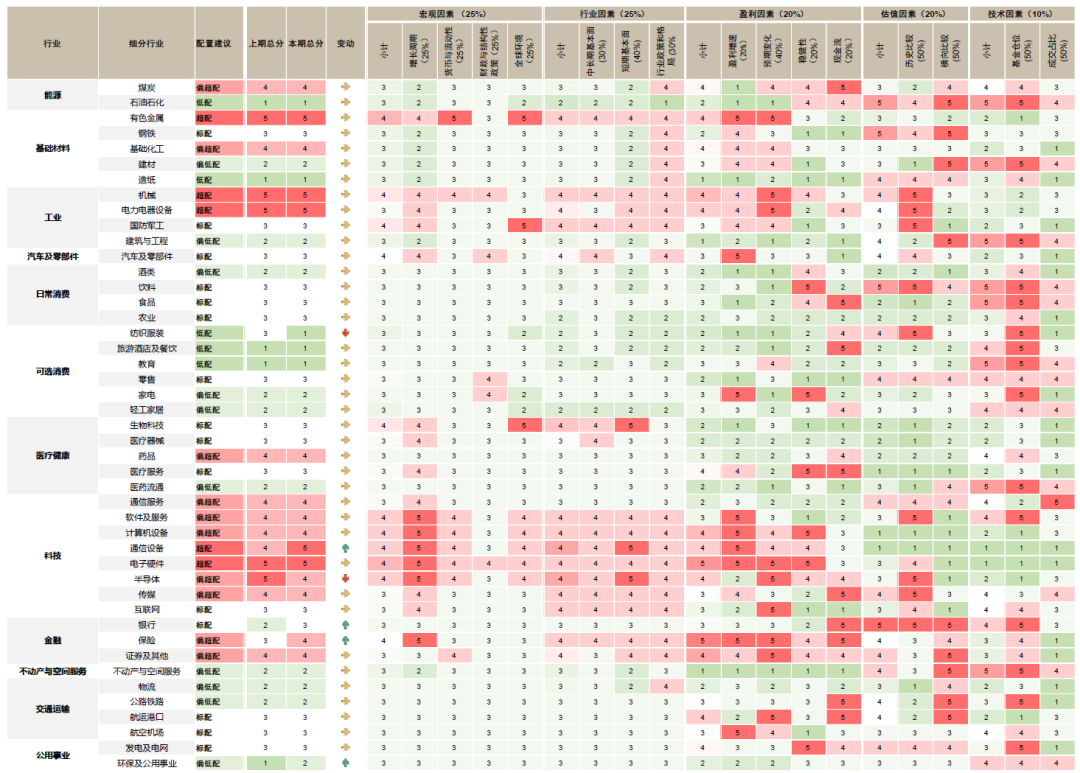
Core Viewpoint - The A-share market experienced fluctuations and adjustments in November, with a decline in trading activity and a short-lived "high to low" style transition, while global stock markets saw widespread declines due to fluctuating expectations regarding the Federal Reserve's interest rate cuts and concerns over potential AI asset bubbles [1][2]. Market Overview - In November, the A-share market showed a decline in trading activity, with a brief "high to low" style transition that lacked clarity in its main themes, while dividends showed slight relative performance [2]. - Global stock markets faced declines, influenced by investors' changing expectations regarding the Federal Reserve's interest rate cuts and rising concerns about the sustainability of the current AI narrative [1][2]. Industry Performance Energy and Basic Materials - The "anti-involution" policy is advancing, leading to a divergence in demand between old and new economies, with the Federal Reserve's interest rate cut pace still under observation [3]. - Prices for various cyclical products showed mixed performance: coal prices rose by 6%, rebar by 1%, gold by 5%, copper by 3%, lithium carbonate by 16%, and neodymium oxide by 16%, while coking coal and iron ore prices fell by 17% and 1%, respectively [3]. Industrial Products - The domestic real estate chain remains weak, but emerging markets present significant opportunities, with a slowdown in price increases within the photovoltaic industry chain [4]. - In October, domestic excavator sales grew by 2% year-on-year, while export sales increased by 13% [4]. Consumer Products - Traditional consumer sectors are struggling, with policies aimed at boosting consumption being gradually introduced [5]. - In October, sales of washing machines, refrigerators, and air conditioners fell by 23%, 27%, and 24% year-on-year, respectively [5]. Technology - Continuous innovation in AI applications is observed, with domestic models progressing steadily, benefiting from expanded capital expenditures in computing power [6]. - In October, smartphone sales increased by 15% year-on-year, while sales of laptops and computer peripherals declined by 27% and 15%, respectively [6]. Financial Sector - Banks are attracting medium to long-term capital due to their high dividend yields, while stock market sentiment and activity have slightly decreased [7]. - In October, insurance industry premium income grew by 8% year-on-year, and total assets of insurance companies increased by approximately 16% year-on-year [7]. Real Estate - The focus remains on destocking and debt reduction, with significant policy support and demand improvement anticipated [8]. - In November, the sales area of commercial housing in 30 major cities fell by 36% year-on-year, while the sales price index for new and second-hand residential properties dropped by 2.6% and 5.4%, respectively [8]. Investment Recommendations - Focus on AI applications, domestic computing power, optical modules, and cloud computing infrastructure, with attention to sectors like innovative pharmaceuticals and energy storage [8]. - Emerging markets are expected to see improved profit margins for export-oriented companies, particularly in sectors like electrical equipment and engineering machinery [8].

中金 | 12月行业配置:风格切换不易,成长阶段占优
中金点睛· 2025-12-01 23:51
Industry Overview - The A-share market experienced fluctuations in November, with a brief "high to low" style switch that lacked clarity in the main themes, while dividend stocks showed slight relative performance [2] - Global stock markets saw declines, influenced by fluctuating expectations regarding the Federal Reserve's interest rate cuts and concerns over potential AI asset bubbles [2] - The outlook suggests that style switching may not be sustainable in the short term, with a focus on large-cap growth styles until early next year [2] Energy and Basic Materials - The "anti-involution" policy is advancing, leading to a divergence in demand between old and new economies, with the Federal Reserve's interest rate cut pace under observation [2] - Prices for various commodities showed mixed performance: thermal coal up 6%, lithium carbonate up 16%, while coking coal and iron ore prices fell by 17% and 1% respectively [2] - The U.S. government has resumed operations, alleviating some liquidity concerns, but the job market remains resilient, warranting attention to future Federal Reserve meetings [2] Industrial Products - The domestic real estate chain remains weak, while emerging markets present significant opportunities for exports [3] - In October, domestic excavator sales grew by 2% year-on-year, while export sales increased by 13% [3] - The photovoltaic industry chain has seen a slowdown in price increases, with prices for polysilicon and solar cells remaining stable month-on-month [3] Consumer Products - Traditional consumer sectors are struggling, with policies aimed at boosting consumption being gradually introduced [4] - Home appliance sales have declined significantly, with washing machines, refrigerators, and air conditioners down by 23%, 27%, and 24% year-on-year respectively [4] - The Central Committee has emphasized the need to stimulate consumption, with plans to create three trillion-level consumption sectors by 2027 [4] Technology - Continuous innovation in AI applications is noted, with domestic models progressing steadily [5] - The technology sector's leading stocks faced adjustments in November, but companies in communication equipment are expected to benefit from increased capital expenditure in North America [5] - The gaming sector remains robust, with 166 game licenses issued in October, maintaining a high level [5] Financial Sector - Bank stocks are attracting long-term capital due to their high dividend yields and stable earnings [6] - The insurance sector saw an 8% year-on-year increase in premium income in October, with total assets growing by approximately 16% [6] - The average daily trading volume in the A-share market fell to 1.9 trillion yuan in November, indicating a decline in market activity [6] Real Estate - The focus remains on destocking and debt reduction, with significant policy support anticipated [6] - In November, the sales area of commercial housing in 30 major cities fell by 36% year-on-year, although it rose by 1% month-on-month [6] - The price index for new and second-hand residential properties in 70 major cities declined by 2.6% and 5.4% year-on-year respectively [6] Recommendations - Focus on AI applications, particularly in domestic computing power, optical modules, and cloud computing infrastructure, as well as sectors like innovative drugs and energy storage [7] - Certain non-ferrous metals are expected to benefit from global monetary order restructuring and demand recovery [7] - Export performance is currently stronger than domestic demand, with companies in sectors like electrical equipment and engineering machinery showing promising prospects [7]

大盘成长风格有望持续占优!鹏扬中证A500指数增强型基金(A类022756/C类022757)兼顾风险分散与增长动力
Xin Lang Cai Jing· 2025-11-04 02:59
Group 1 - The core viewpoint highlights that multiple favorable factors, including new policy deployments and the Federal Reserve's interest rate cuts, are expected to support market confidence and performance in the short term, benefiting core assets [1] - Since Q3 2025, A-shares have continued to rise, with a significant increase in investor risk appetite, leading to a rebound in active fund size by 478.6 billion yuan to 3.95 trillion yuan [1] - Passive funds also saw substantial growth, with a rise of 996.6 billion yuan to 4.76 trillion yuan, indicating a strong performance in the context of new index highs [1] Group 2 - The CSI A500 index is heavily weighted in sectors such as power equipment, defense, pharmaceuticals, and computers, representing new productive forces [2] - The index covers a full chain of the semiconductor industry, ensuring a comprehensive layout of emerging sectors rather than focusing solely on large-cap leaders [2] - Since September, financing funds have significantly increased their positions in electronics, electrical equipment, and non-ferrous metals, which are the top weights in the CSI A500 index, confirming the index's upward momentum [2] Group 3 - The CSI A500 index, published by the China Securities Index Company, selects 500 securities with large market capitalization and good liquidity to reflect the overall performance of representative listed companies across various industries [3] - The index is recognized as a "barometer of China's new productive forces," utilizing a unique compilation logic that balances industry and market capitalization while focusing on strategic national industries [3] - The top ten weighted stocks in the CSI A500 index include major companies such as CATL, Kweichow Moutai, and China Ping An, providing investors with a quality vehicle to share in the economic transformation dividends and diversify risks [3]
国泰海通:主动股混基金“抱团”程度明显上升 整体更偏向大盘成长风格
Zhi Tong Cai Jing· 2025-10-29 13:38
Core Insights - The report indicates an overall increase in stock positions for active mixed equity funds, with a slight reduction in active positions, particularly in the dual innovation board [1][2] - The top 5% of heavily held stocks accounted for approximately 38.78% of the total stock investment value, reflecting a significant increase in "herding" behavior among funds [3] Group 1: Position Analysis - Overall stock positions have increased, but active positions have decreased slightly. The weighted average equity fund position is 87.38%, up 1.64 percentage points from the previous quarter [2] - The increase in stock positions is primarily driven by market gains, with an estimated active reduction of about 0.43% when adjusted for the performance of the CSI 800 index [2] Group 2: Sector Allocation - There is a notable increase in allocation to the dual innovation board, with the proportion of main board stocks decreasing by 6.53% to approximately 58.97%, while allocations to the ChiNext, Sci-Tech Innovation Board, and Beijing Stock Exchange increased by 4.53%, 1.92%, and 0.08% respectively [2] - The allocation to Hong Kong stocks in active Hong Kong-Shanghai-Shenzhen funds is approximately 33.43%, down 2.89 percentage points from the previous quarter [2] Group 3: Heavyweight Stock Characteristics - The top ten heavily held stocks include three from the electronics sector, two from internet Hong Kong stocks, and two from the AI computing sector, with significant increases in holdings for stocks like New Yisheng and Alibaba [2][3] - The overall trend shows a preference for large-cap growth stocks, with the "herding" degree among funds increasing [3] Group 4: Industry Trends - Active increases in holdings are observed in the electronics, communication, and retail sectors, while reductions are noted in banking and automotive sectors [3][4] - The top five industries for heavy holdings are electronics, pharmaceuticals, electric equipment, communication, and non-ferrous metals, with a notable increase in the electronics sector by approximately 5.25% [3]

沪指突破4000点!创业板ETF天弘(159977)强势翻红涨近1%冲击三连涨,创业板改革即将再次启动!
Sou Hu Cai Jing· 2025-10-28 02:36
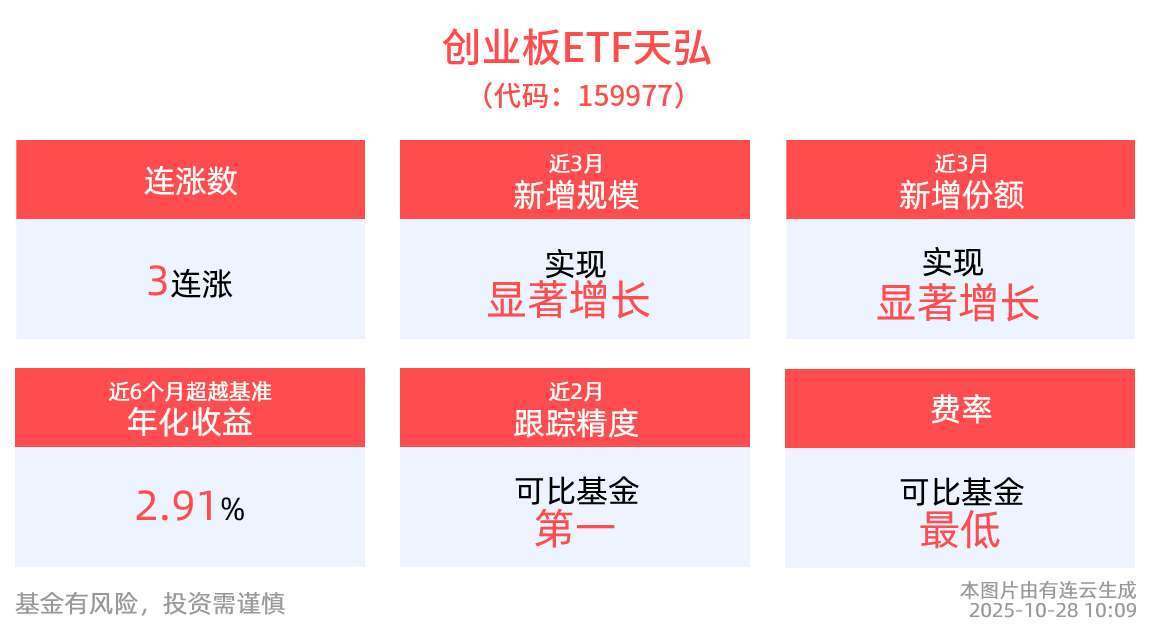
Core Viewpoint - The China Securities Regulatory Commission (CSRC) will implement reforms to the ChiNext board, aiming to establish listing standards that better align with the characteristics of emerging industries and innovative enterprises, providing more precise and inclusive financial services for new industries and technologies [5]. Group 1: Market Performance - As of October 28, 2025, the Tianhong ChiNext ETF (159977) rose by 0.72%, marking a three-day increase, with a transaction volume of 67.69 million yuan [3]. - The ChiNext ETF has seen significant growth, with an increase of 840 million yuan in scale over the past three months and a rise of 2.136 billion units in trading volume [3]. Group 2: Product Highlights - The Tianhong ChiNext ETF (159977) tracks the ChiNext Index, which is currently near its historical median, with growth potential. Its PE, PB, and PS valuations are below the 64th percentile over the past five years, indicating attractive valuation levels compared to other broad-based indices [4]. - The Tianhong A500 ETF (159360) covers 35 secondary industries and tracks 500 constituent stocks, serving as a balanced allocation to core assets of the Chinese economy [4]. - The Tianhong Sci-Tech Index ETF (589860) covers 97% of the Sci-Tech board's market value, focusing on hard technology sectors, with over 80% allocation to strategic emerging industries such as semiconductors and artificial intelligence [4]. Group 3: Institutional Perspectives - CICC believes that the market may see a shift in style between large and small caps, with large-cap growth stocks expected to outperform in the medium term (3-6 months). The macroeconomic environment remains supportive of emerging growth sectors, with continued encouragement for innovation and M&A activities [6].






社保基金,新进63只个股!花旗,下调小米目标价
2 1 Shi Ji Jing Ji Bao Dao· 2025-10-27 23:45
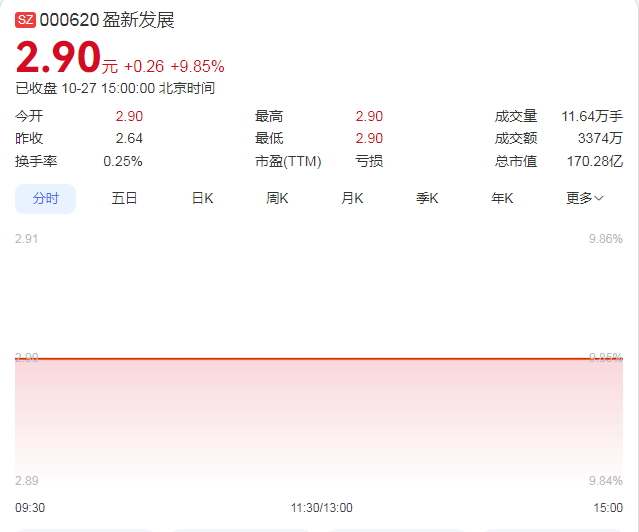
Group 1: Social Security Fund Holdings - As of the end of Q3 2023, the Social Security Fund held a total of 2.377 billion shares across 135 stocks, with a market value of 51.33 billion yuan [1] - In Q3, the fund initiated positions in 63 stocks, increased holdings in 28 stocks, and reduced holdings in 32 stocks [1] - Huace Navigation and Sankeshu are favored by the fund, with three different combinations holding a total of 29.04 million shares and 15.02 million shares respectively [1] Group 2: Yingxin Development Stock Performance - Yingxin Development experienced a six consecutive trading limit increase, with a closing price of 2.9 yuan per share and a total market capitalization of 17.028 billion yuan [2] - The stock has risen by 76.83% during the consecutive limit-up period, with a turnover rate of 14.16% [2] Group 3: A-Share Q3 Earnings Reports - By October 26, 2023, 1,311 A-share companies had disclosed their Q3 earnings, with 773 companies reporting a year-on-year net profit growth of approximately 58.96% [5] - Notable companies with over 50% year-on-year net profit growth include Baofeng Energy, Tonghuashun, Luoyang Molybdenum, and Zijin Mining [5] - Industries such as building materials, steel, electronics, and non-bank financials showed significant profit growth, with some sectors exceeding 50% year-on-year [5] Group 4: Xiaomi Target Price Adjustment - Citigroup has lowered its target price for Xiaomi Group to 65 HKD from 66 HKD, citing expectations of slightly lower performance in Q3 2025 due to smartphone gross margins and IoT revenue [6] - Despite the downgrade, Citigroup maintains a "Buy" rating, emphasizing the long-term growth potential of the company [6] Group 5: Japanese Egg Prices - Japanese egg prices are nearing historical highs due to rising feed costs and reduced production from summer heat, with wholesale prices in Tokyo reaching 325 JPY per kilogram [7] - This price is close to the historical peak of 350 JPY per kilogram recorded during the "egg shortage" in spring 2023 [7] Group 6: JD.com Insurance License Approval - JD.com has received approval for an insurance brokerage license in Hong Kong, allowing it to operate in both general and long-term insurance sectors [8]
中金公司:大盘成长风格有望中期占优
Xin Lang Cai Jing· 2025-10-27 08:41
Group 1 - The core viewpoint of the report indicates that the large-cap growth style is expected to outperform in the medium term (3 to 6 months) [1] - The current macroeconomic environment supports emerging growth sectors, with ongoing economic recovery, rapid technological iteration, and policies favoring innovation, mergers and acquisitions, and IPOs for tech enterprises [1] - The proportion of large-cap emerging growth companies is increasing, leading to a more balanced impact on large and small caps compared to the past [1] Group 2 - Institutional investors in A-shares still have room for increased shareholding concentration, with the proportion of institutional holdings in large-cap emerging growth styles expected to rise [1] - In the long term, emerging growth sectors, which represent China's future strategic development direction, are likely to maintain relative advantages, with an expected increase in the number and market capitalization of large-cap growth companies [1]