
股债跷跷板效应

Search documents
节后市场波动加大
Qi Huo Ri Bao· 2026-02-10 06:06
Group 1 - The core viewpoint of the articles indicates that the bond market is stabilizing, driven by monetary policy adjustments and market conditions, while the real estate sector continues to face challenges [1][4][5] Group 2 - In early 2025, fixed asset investment decreased by 3.8% year-on-year, primarily due to declines in real estate development and infrastructure investment, with manufacturing investment showing a slight increase of 0.6% [2] - Real estate development investment fell by 17.2% year-on-year, and the sales of commercial housing dropped by 12.6%, indicating ongoing instability in the real estate market [2] - The consumer price index (CPI) rose by 0.8% year-on-year in December 2025, marking a 34-month high, while the producer price index (PPI) decreased by 1.9%, suggesting gradual improvement in domestic demand [2] Group 3 - As of the end of January, the bond market's outstanding scale exceeded 197.71 trillion yuan, with net financing in January amounting to 14,189 billion yuan, showing a slight year-on-year decline [4] - The central bank indicated that there is still room for further interest rate cuts and reserve requirement ratio reductions in 2026, aiming for a moderately loose monetary policy [4][5] - The central bank's net bond purchases in January amounted to 1,000 billion yuan, contributing to a generally loose market liquidity ahead of the Spring Festival [4][5] Group 4 - Looking ahead, the bond market is expected to stabilize before the holiday, with potential fluctuations and increased volatility in the long-end bond market after the holiday [6]

周观:债市震荡格局如何打破?(2026年第6期)
Soochow Securities· 2026-02-08 10:16
Report Industry Investment Rating No information provided in the content. Core Views of the Report - This week (2026.2.2 - 2026.2.6), the yield of the 10 - year Treasury active bond 250016 dropped from 1.81% last Friday to 1.802% this Friday, a decrease of 0.8bp. The bond market oscillated within a very narrow range, with 1.8% becoming the invisible lower limit of the 10 - year Treasury yield. It is recommended to add duration cautiously to avoid the disturbances brought by the recovery of production demand after the Spring Festival and the goals of the Two Sessions in March [1][9][14]. - The significant fluctuations of overseas assets in the early stage have been repaired this week. The market's divergence is significantly increasing, and the previous structured market is undergoing "destructuring". It is expected that at least in the first half of 2026, the technology growth will maintain its momentum. The subsequent interest rate path is still dominated by fundamental data [15]. - The number of initial jobless claims in the US fluctuates in the short - term, and the number of continued claims declines. The unemployment rate steadily rises, and the labor participation rate fluctuates weakly, indicating the structural pressure in the employment market. The year - on - year increases of the US CPI and core CPI continue to narrow, and the inflation pressure is further alleviated. The Fed has pressed the "pause button" on interest rate cuts, and the global monetary policy shows significant "diversification" characteristics [16][18][19]. Summary According to the Directory 1. One - Week Views - **Analysis of the Bond Market's Narrow - Range Oscillation**: This week, the yield of the 10 - year Treasury active bond 250016 decreased. The bond market oscillated in a narrow range. The central bank's net purchase of Treasury bonds in the open - market in January 2026 was 100 billion yuan, the highest since the resumption of Treasury bond trading last October, but more restrained compared with 2024. The reasons are that it can supplement the liquidity gap at the beginning of the year and reduce the bank's liability cost, and the central bank tends to maintain a reasonable and sufficient liquidity [1][9][14]. - **Analysis of the Future Trend of US Treasury Yields**: Overseas asset fluctuations have been repaired. The technology growth is expected to maintain its momentum in the first half of 2026. The Fed's policy signal has turned dovish this week, and the expectation of interest rate cuts has increased. The subsequent interest rate path depends on fundamental data [15]. - **Analysis of US Economic Data**: The US labor market has a "low - hiring, low - firing" pattern, and the employment market has structural pressure. The inflation pressure in the US is further alleviated, and the manufacturing shipment volume and inventory total expand synchronously. The Fed has paused interest rate cuts, and the global monetary policy shows "diversification" [16][18][19]. 2. Domestic and Overseas Data Summary 2.1 Liquidity Tracking - **Open - Market Operations**: From 2026/2/2 to 2026/2/6, the total net investment in the open - market was - 756 billion yuan, indicating a net withdrawal of funds [29]. - **Interest Rate Comparison**: The money - market interest rates, including R, DR, and SHIBOR, showed different degrees of decline this week compared with last week [34]. 2.2 Domestic and Overseas Macroeconomic Data Tracking - **Commodity Price Changes**: Steel prices and LME non - ferrous metal futures official prices have all declined. The prices of coking coal and thermal coal, vegetable price indices, RJ/CRB commodity price indices, and South China industrial product price indices have shown different trends [52]. - **Stock and Bond Market Performance**: The VIX panic index led the increase, while the Shanghai Composite Index and the Shanghai Stock Index led the decline. The short - end and long - end of the US Treasury yield curve have both risen [62][68][71]. 3. One - Week Review of Local Government Bonds 3.1 Primary Market Issuance Overview - **Issuance Scale**: This week, 90 local government bonds were issued in the primary market, with a total issuance amount of 579.673 billion yuan, a repayment amount of 300 million yuan, and a net financing amount of 579.373 billion yuan, mainly invested in the comprehensive field [81]. - **Regional Issuance**: 15 provinces and cities issued local government bonds, and the top five in terms of total issuance amount were Jiangxi, Guangdong, Henan, Jiangsu, and the Guangxi Zhuang Autonomous Region. 11 provinces and cities issued local special refinancing special bonds for replacing hidden debts, and the top five in terms of total issuance amount were Jiangsu, Henan, Jiangxi, the Guangxi Zhuang Autonomous Region, and Chongqing [85][89]. - **Early Redemption of Urban Investment Bonds**: The total early redemption scale of urban investment bonds this week was 3.6 billion yuan, all from Anhui Province. Since November 15, 2024, the total early redemption scale of national urban investment bonds has been 121.007 billion yuan, with Chongqing having the highest redemption scale [91][95]. 3.2 Secondary Market Overview - **Trading Volume and Turnover Rate**: The stock of local government bonds this week was 55.89 trillion yuan, the trading volume was 437.52 billion yuan, and the turnover rate was 0.78%. The top three provinces with active local government bond trading were Guangdong, Zhejiang, and Shandong. The top three trading - active terms were 30Y, 10Y, and 20Y [99]. - **Yield Changes**: The maturity yields of local government bonds showed a differentiated trend this week [102]. 3.3 Local Government Bond Issuance Plan for This Month The issuance plans of local government bonds in some provinces and cities such as Zhejiang, Yunnan, Shaanxi, Shanxi, Hunan, Hebei, Guangdong, and Beijing from February 9 to February 11, 2026, are presented [106]. 4. One - Week Review of the Credit Bond Market 4.1 Primary Market Issuance Overview - **Overall Issuance**: This week, 440 credit bonds were issued in the primary market, with a total issuance amount of 358.206 billion yuan, a total repayment amount of 102.182 billion yuan, and a net financing amount of 256.024 billion yuan, an increase of 100.335 billion yuan compared with last week [107]. - **By Bond Type**: Urban investment bonds had a net financing amount of 57.856 billion yuan, and industrial bonds had a net financing amount of 198.167 billion yuan. By bond type, short - term financing bonds had a net financing amount of 35.325 billion yuan, medium - term notes had a net financing amount of 88.497 billion yuan, enterprise bonds had a net financing amount of - 2.186 billion yuan, corporate bonds had a net financing amount of 124.115 billion yuan, and private placement notes had a net financing amount of 10.273 billion yuan [108][114]. 4.2 Issuance Interest Rates The issuance interest rates of short - term financing bonds increased by 6.61bp, medium - term notes decreased by 14.33bp, and corporate bonds increased by 3.54bp [124]. 4.3 Secondary Market Trading Overview The total trading volume of credit bonds this week was 561.09 billion yuan, with different trading volumes for each bond type [125]. 4.4 Maturity Yields The maturity yields of national development bonds declined across the board this week. The yields of short - term financing bonds and medium - term notes showed a differentiated trend, the yields of enterprise bonds generally declined, and the yields of urban investment bonds showed a differentiated trend [124][126][127][128]. 4.5 Credit Spreads The credit spreads of short - term financing bonds and medium - term notes increased across the board, the credit spreads of enterprise bonds generally increased, and the credit spreads of urban investment bonds generally increased [130][132][134]. 4.6 Grade Spreads The grade spreads of short - term financing bonds, medium - term notes, enterprise bonds, and urban investment bonds showed a differentiated trend [137][141][145]. 4.7 Trading Activity The top five most actively traded bonds in each bond type are listed, and the industrial sector had the largest weekly trading volume of bonds, followed by public utilities, finance, materials, optional consumption, and daily consumption [149][151]. 4.8 Changes in Subject Ratings There were no bonds with upgraded ratings or outlooks this week [152].
光大期货金融期货日报-20260203
Guang Da Qi Huo· 2026-02-03 03:11
Report Industry Investment Rating - The investment rating for stock index futures is "volatile" [1] - The investment rating for treasury bond futures is "relatively strong" [1] Core View - The A-share market is experiencing high valuations in hot sectors, with the dynamic PE of the CSI 500 index exceeding twice the standard deviation of the past 5 years. The "stock-bond seesaw effect" is evident, and regulatory authorities are emphasizing market stability. High-valuation sectors may face capital outflow pressure, and volatility is expected to increase around the Spring Festival [1] - Treasury bond futures show mixed performance, and the bond market lacks strong upward momentum under the backdrop of continuous policy support. Interest rates are expected to remain range-bound [1][2] Summary by Directory Research View - **Stock Index Futures**: The market adjusted with all three major indices down over 2%, and nearly 4,700 stocks falling. High valuations, regulatory emphasis on stability, and measures to cool the market may lead to capital outflows from high-valuation sectors and increased volatility [1] - **Treasury Bond Futures**: The 30-year contract rose 0.18%, while the 10-year and 5-year contracts declined slightly. The central bank conducted 750 billion yuan of 7-day reverse repurchases, resulting in a net withdrawal of 755 billion yuan. The bond market lacks strong upward momentum, and interest rates are range-bound [1][2] Price Changes - **Stock Index Futures**: IH, IF, IC, and IM all declined, with IC dropping 5.49% and IM down 4.71% from January 30 to February 2, 2026 [3] - **Stock Indices**: All major indices, including the Shanghai Composite 50, CSI 300, CSI 500, and CSI 1000, decreased, with the CSI 500 falling 3.98% [3] - **Treasury Bond Futures**: TS remained flat, TF and T declined slightly, and TL rose 0.13% [3] Market News - **Overall Trend**: The market adjusted throughout the day, with all three major indices down over 2%. Nearly 4,700 stocks fell, and trading volume reached 2.61 trillion yuan [1][5] - **Industry Sectors**: Only the power grid equipment and brewing sectors rose, while precious metals, non-ferrous metals, oil and gas, and semiconductor chips led the decline [5] - **Hot Concepts**: Power grid equipment stocks and liquor stocks rose, while precious metals, oil and gas, and semiconductor chip stocks declined significantly [5] Chart Analysis - **Stock Index Futures**: Charts show the historical price trends and basis trends of IH, IF, IC, and IM [7][8][9] - **Treasury Bond Futures**: Charts display the price trends, basis trends, inter - period spreads, and cross - variety spreads of treasury bond futures, as well as the yields of treasury bonds and the capital interest rates [14][15][16] - **Exchange Rates**: Charts present the exchange rate trends between the US dollar, euro, pound, yen, and the RMB, including spot and forward exchange rates [22][23][24] Member Introduction - Zhu Jintao, a master's degree holder from Jilin University, serves as the director of macro - financial research at Everbright Futures Research Institute [29] - Wang Dongying, an index analyst with a master's degree from Columbia University, focuses on stock index futures, including macro fundamentals, key industry sectors, index financial reports, and market capital tracking [29]
股指期货策略月报-20260202
Guang Da Qi Huo· 2026-02-02 09:38
1. Report Industry Investment Rating - No relevant information provided 2. Core Viewpoints of the Report - In January, the stock market showed a strong performance with significant volume increase, but the subsequent momentum weakened. The A - share market had high - valued sectors, and regulatory policies aimed to guide the market towards a "long - term bull" rather than a "crazy bull." International geopolitical issues in February were a major concern, and different asset classes might show differentiated trends in the short, medium, and long terms [3]. 3. Summary According to the Directory 3.1 Monthly Data Tracking - **Index Performance**: In January, Wind All - A rose by 5.83% with an average daily trading volume of 3.05 trillion yuan, but dropped 1.59% in the last week. The CSI 1000, CSI 500, SSE 50, and CSI 300 had monthly increases of 8.68%, 12.12%, 1.17%, and 1.65% respectively [3][5]. - **Index Valuation**: The dynamic PE of the CSI 500 index exceeded twice the standard deviation of the past five - year average, indicating a relatively high valuation [3]. - **Sector Impact**: The electronics and non - ferrous metals sectors were the main driving forces for the indices, while the banking sector's correction dragged down the broader market indices [3][13]. - **Margin Trading and Implied Volatility**: The margin trading balance increased by 197.1 billion yuan monthly and 14.7 billion yuan weekly. The implied volatility of the CSI 1000 (1000IV) rose from 20.21% to 25.44%, the CSI 300 (300IV) from 16.78% to 19.49%, and the SSE 50 (50IV) from 15.02% to 19.19% [22][24]. - **Fund Issuance**: In January 2026, the issuance scale of equity funds dropped to 20 billion yuan, while that of hybrid funds reached 46.9 billion yuan, much higher than the 2025 monthly average of 13.4 billion yuan. Institutional investors focused more on balanced stock - bond allocation [25][27]. - **Net Short Positions**: At the end of January, the net short positions of each index increased significantly [28]. - **Exchange Rate and Valuation**: The dynamic valuation of the STAR 50 index returned to 180 times, and the RMB exchange rate continued to strengthen, with the US dollar against the offshore RMB closing at 6.9482 [30][32]. 3.2 2025 Third - Quarter Report Overview - **Revenue and Profit Growth**: The cumulative year - on - year revenue growth of the entire A - share market excluding finance in Q3 was 0.74%. The cumulative year - on - year net profit growth was 1.89%, higher than Q2 (0.83%) but lower than Q1 (3.45%). The cumulative year - on - year profit of large - scale industrial enterprises was 3.2%, the highest in the year [86][89]. - **Profit Share**: The net profit share of the financial industry was still high, with banks accounting for 33% and non - banks 13%, totaling 46% [90][92]. - **Technology Sector**: The technology sector entered the profit realization stage [93]. - **ROE Situation**: ROE was still in the bottom - oscillating range [96]. - **ROE DuPont Analysis**: The report presented the DuPont analysis of ROE for the entire A - share market excluding finance, including operating net profit margin, gross profit margin, asset turnover, and equity multiplier [99][100]. - **Index Financial Indicators**: All the main indicators of each index increased. After the index component adjustment in December 2025, the financial indicators of each index showed some changes, but overall, they still maintained an upward trend [102][104].
利率市场周度回顾:资金跨月压力可控,10Y国债收益率震荡下行-20260202
East Money Securities· 2026-02-02 05:51
Group 1: Fixed Income Market Overview - The 10Y government bond yield has shown a downward trend, decreasing by 2.10 basis points to 1.8090% compared to the previous week, influenced by discussions on new monetary policy tools and a weakening equity market [2][3] - The overall liquidity in the money market remains stable, with a slight increase in funding rates as the month-end approaches, but the central bank's supportive stance keeps the cross-month pressure manageable [4][11] Group 2: Money Market Analysis - The central bank's net liquidity injection this week was 530.5 billion, with a notable increase in the 7-day reverse repo balance to 17,615 billion, up by 5,805 billion from the previous week [11][12] - Funding rates have slightly increased, with DR007 rising by 9.91 basis points to 1.59% and R007 increasing by 10.41 basis points to 1.64% as of January 30, 2026 [25][26] Group 3: Primary Market Supply - The net supply of interest rate bonds decreased significantly this week to 3,805.14 billion, a drop of 3,544.45 billion from the previous week, with government bonds showing a net supply of -1,133.40 billion [32][34] - The net financing scale of negotiable certificates of deposit (NCD) turned positive this week, totaling 37.30 billion, an increase of 1,544.40 billion from the previous week [32][39] Group 4: Secondary Market Performance - The yield curve for government bonds is flattening, with the 10Y/1Y yield spread narrowing, indicating a shift in market sentiment [42][50] - The absolute level of government bond yields shows a downward trend, with the 10Y yield slightly decreasing, while the 30Y local government bond yield has seen a minor increase [47][49]
光大期货:2月2日金融日报
Xin Lang Cai Jing· 2026-02-02 02:22
Group 1: Market Performance - In January, the Wind All A index rose significantly with a monthly increase of 5.83% and an average daily trading volume of 3.05 trillion yuan, although it fell by 1.59% in the last week [3] - The CSI 1000 index increased by 8.68%, the CSI 500 by 12.12%, the CSI 300 by 1.65%, and the SSE 50 by 1.17%, driven mainly by the electronics and non-ferrous metals sectors, while the banking sector dragged down the overall index [3] - Domestic investor sentiment was high, with a monthly increase in financing balance of 197.1 billion yuan, while the issuance of stock funds decreased to 20 billion yuan, but mixed funds surged to 46.9 billion yuan, significantly above the monthly average of 13.4 billion yuan in 2025 [3][4] Group 2: Policy Expectations - The current valuation levels of A-share hot topics are high, with the dynamic PE of the CSI 500 index exceeding two standard deviations above the past five years [4] - The China Securities Regulatory Commission emphasized the need for a stable market, discouraging excessive speculation and market manipulation, indicating a preference for a "slow bull" market rather than a "crazy bull" [4][5] - The Shanghai and Shenzhen stock exchanges have introduced measures to increase the minimum margin ratio for financing purchases of stocks [4] Group 3: Bond Market Dynamics - In January, the bond market experienced a decline followed by a recovery, with the People's Bank of China (PBOC) significantly increasing the net injection of Medium-term Lending Facility (MLF) [6][7] - As of January 30, the yields for 2-year, 5-year, 10-year, and 30-year government bonds were 1.38%, 1.58%, 1.81%, and 2.29% respectively, with varying changes from the previous month [6] - The issuance of government bonds in January was 2.08 trillion yuan, with a net issuance of 1.181 trillion yuan, including 426.7 billion yuan of central government bonds and 754.3 billion yuan of local government bonds [8] Group 4: Manufacturing and Economic Indicators - The official manufacturing PMI for January was 49.3, below the expected 50.1, indicating a contraction in the manufacturing sector [9][10] - The decline in PMI is attributed to seasonal factors and insufficient market demand, with labor-intensive industries experiencing a drop in exports and early returns of workers for the Spring Festival [10] - The price indices for raw materials and factory output both increased, with the purchasing price index at 56.1 and the factory price index at 50.6, indicating potential pressure on corporate profits [11][12] Group 5: Precious Metals Market - In January, gold prices rose by 13.01% to 4,880.034 USD/oz, while silver surged by 19.12% to 85.259 USD/oz, with both metals experiencing extreme volatility [25][26] - The market dynamics were influenced by geopolitical tensions, concerns over the US dollar's credibility, and expectations of continued loose monetary policy from the Federal Reserve [25][26] - The sharp adjustment on January 30 was seen as a forced liquidation of overbought positions, but the long-term drivers for precious metals remain intact [26][27]

2月利率债月报:利率:利率胜率高于赔率,久期策略蓄势
CAITONG SECURITIES· 2026-02-01 07:25
Market Overview - The 10-year government bond yield is stabilizing around 1.8%, while the 30-year yield is at 2.25%[2] - Economic and inflation expectations are weakening, leading to a high probability of central bank support despite continued government debt net financing[2] Investment Strategy - February's bond market has a higher win rate than odds, suggesting a dynamic view on central bank threshold limits and a focus on duration strategy[2] - The market may see a bullish momentum if the 30-year bond yield breaks below 2.15%[2] Supply and Demand Dynamics - January government bond issuance reached approximately 2.08 trillion yuan, with net financing exceeding seasonal levels[21] - February government bond issuance is expected to decrease year-on-year to 2.11 trillion yuan, with net financing dropping by 3.4 billion yuan[27] Economic Indicators - PMI data has shown an unexpected decline, contributing to weakened expectations for the New Year[3] - External demand may provide some support to the economy, with exports expected to drive growth[3] Market Sentiment - Bank buying power has increased, which is a key factor in the January interest rate decline[3] - The trading market's confidence in duration strategies is recovering, although it may take time for full restoration[3]
盘中巨震,金属全线大跌!分析了那么多,这句箴言却忘了?特朗普听取多种打击伊朗方案
Qi Huo Ri Bao· 2026-01-30 08:12
今日早盘,小编刚发了刚刚,金、银价格急跌后反弹,油价大涨!数十万人爆仓!特朗普称俄对乌部分地区停火一周 结果,市场直接来了个"大嘴巴子",全球金融市场集体杀跌,再现剧烈波动! 金属板块昨日巨震后,今日急转直下 截至发稿,伦敦金跌4.45%,伦敦银跌7.05%,伦铝跌1.52%,伦铜跌2.86%,纽约铂跌8.07%,纽约钯跌7.83%。 国内商品期货市场收盘,主力合约多数下跌。跌幅方面,碳酸锂跌停,跌幅10.99%,钯跌近12%,铂跌超11%,沪锡跌超8%,多晶硅、沪银跌超6%,沪 金、铸造铝跌超4%,沪镍跌近4%,沪铝跌超3%,国际铜、沪铜跌近3%,不锈钢跌超2%,玻璃、氧化铝跌近2%,欧线集运、棉花、沪铅、鸡蛋、纸浆等 跌超1%;涨幅方面,PVC涨超3%,原木涨超2%,焦煤、丁二烯胶、焦炭涨超1%。 一德期货贵金属分析师张晨表示,2026年以来,贵金属市场大幅上涨,其中金、银、铂价格不断创历史新高,白银市场更是出现单月价格涨超60%的史诗 级暴涨,市场看涨情绪浓厚。如今,金属市场冲高后回落且下跌斜率陡峭,原因是前期行情火热下的部分潜在利空因素开始兑现: 一是资金减仓离场。比如,世界最大的白银SLV-ETF在 ...

50万亿定存到期,银行理财的「进退两难」
3 6 Ke· 2026-01-30 02:50
随着定期存款陆续到期,银行理财市场依然有着近水楼台的优势,但从长期来看,如果收益率下行趋势难以扭转,到底要如何重构自己的护城 河呢? 虽然暂时没有全行业统一的官方口径,但不同券商测算的结果一致指向一个庞大的数字——2026年,一年期以上居民定期存款的到期规模将超过50万亿 元。 在很多人眼中,这仿佛是一个庞大的「弹药库」,就等着「存款搬家」点燃A股市场。 理想固然「丰满」,但市场对于资金流向有着更加冷静的研判:「存款到期」不等于「存款搬家」。 国金证券在研报中指出,从过去几年的数据来看,居民存款的续作率约在90%左右。这意味着绝大部分到期存款其实并没有流出银行系统,即便是发生 「存款搬家」,也主要是去向低风险资产。 作为低风险产品的典型代表,更是离存款最近的财富管理工具,这一点,在2025年银行理财市场的已经有所展现。 根据银行业理财登记托管中心最新发布的《中国银行业理财市场年度报告(2025年)》(下简称2025理财报告),截至2025年末,银行理财投资者数量达 到1.43亿户,同比增长14.37%;银行理财存续规模达33.29万亿元,同比增长11.15%,双双实现两位数增长。 要知道,过去一年,银行理财收 ...

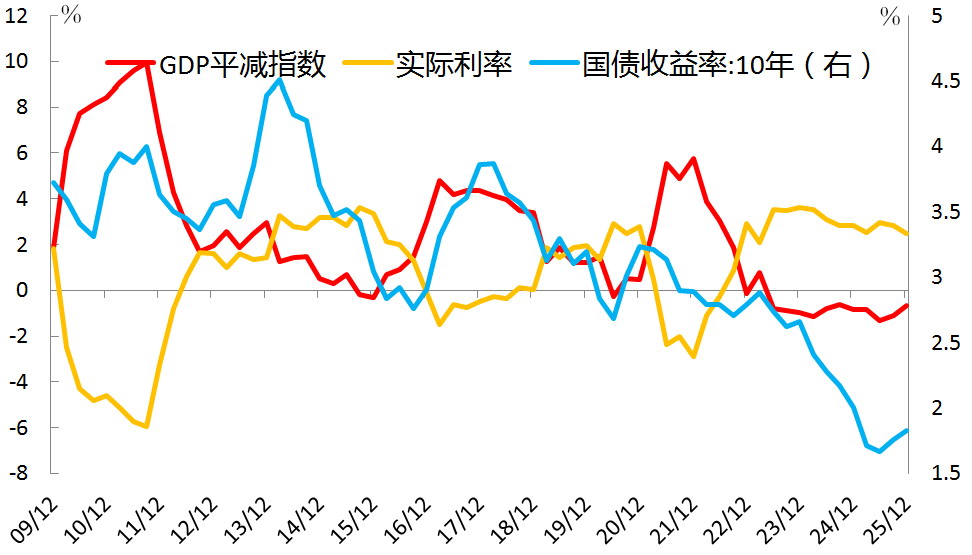
固收深度报告20260128:分子与分母的拉锯战:债市波动中不同权益板块的应对逻辑
Soochow Securities· 2026-01-28 06:07
证券研究报告·固定收益·固收深度报告 [Table_Tag] [Table_Summary] 观点 2026 年 01 月 28 日 证券分析师 李勇 执业证书:S0600519040001 010-66573671 liyong@dwzq.com.cn 证券分析师 徐沐阳 执业证书:S0600523060003 xumy@dwzq.com.cn 相关研究 固收深度报告 20260128 分子与分母的拉锯战:债市波动中不同权益 板块的应对逻辑 《"十五五"规划中的"债"机遇:详 解政策东风如何重塑产业债格局(主 线篇)》 2026-01-26 《 转债建议同时关注高胜率顺周期 标的》 2026-01-26 东吴证券研究所 1 / 12 请务必阅读正文之后的免责声明部分 ◼ 股债定价逻辑与 DDM 模型:股利折现模型(DDM)为理解股价与债券 收益率之间的关系提供了清晰框架。在该模型中,股价受两条路径影响: 一是分子端,即股息及其未来增长潜力,主要反映了经济预期与企业盈 利;二是分母端,即无风险利率,通常以国债收益率为代表。一般情况 下,当经济预期向好时,分子端上行支撑股价,但分母端利率也可能同 步上行,压制估 ...