关税战

Search documents
金融期货周报-20251017
Jian Xin Qi Huo· 2025-10-17 11:05
1. Report Industry Investment Rating There is no information provided regarding the report's industry investment rating in the given content. 2. Report's Core View - The A - share market is expected to experience continued volatility due to the escalation of Sino - US trade disputes, high valuations in the technology sector, and high uncertainty in end - of - month negotiations. Short - term strategies can include arbitrage (long large - cap blue - chips and short small - cap growth stocks) and reducing positions. Attention can be paid to defensive sectors and policy - beneficial sectors [13]. - The bond market is expected to stabilize in October, but a counter - offensive may require a resurgence of easing expectations. The short - term stock - bond seesaw is significant, and the bond market's safe - haven sentiment is boosted by the frictions in the external environment. The sustainability of the bond market's strength is questionable, and it is advisable to wait patiently for better bond - market allocation opportunities, which may appear in the second half of the fourth quarter [100][110]. - For the shipping index, the spot freight rates are currently falling, but the shipping companies are raising prices for the second half of October and November, and there is an expectation of a price increase in the far - month contracts. The December contract has the opportunity for an oversold correction [130]. 3. Summary According to the Directory 3.1 Stock Index 3.1.1 Market Review - Since the beginning of the year, the A - share market has shown a trend of short - term correction followed by a strong run, a sharp decline after external shocks and then a rebound and continuous upward movement, and consolidation after the realization of positive news and a stalemate in negotiations. The market has been affected by various factors such as technological trends, economic concerns, trade policies, and policy stimuli [7]. - From October 13 - 17, 2025, the A - share market declined with reduced trading volume. The futures market was generally weaker than the spot market. The market is expected to continue to fluctuate due to Sino - US trade disputes and high valuations in the technology sector [10][13]. 3.1.2 Transaction and Position Analysis - Stock index trading volume increased. The average daily trading volumes of IF, IH, IC, and IM increased compared to the previous week. The overall position of the stock index also increased [14]. 3.1.3 Basis, Inter - period Spread, and Inter - variety Spread Analysis - Basis trends were divergent. The basis of CSI 300 widened, SSE 50 changed from premium to discount, CSI 500 basis widened, and CSI 1000 basis narrowed [18][19]. - The inter - period spreads of IF, IH, IC, and IM all showed negative values and widened. The same was true for the spreads between the current - quarter and the current - month contracts [25]. - Large - cap blue - chips performed relatively better. The ratios of different indices were at different historical percentile levels and changed compared to the previous period [27]. 3.1.4 Industry Sector Overview - In the CSI 300, the financial, energy, and public sectors led the gains, while the information, communication, and pharmaceutical sectors led the losses. In the CSI 500, the energy sector led the gains, and the information, raw material, and industrial sectors led the losses [30][31]. - At the primary industry level, the banking, coal, and food and beverage sectors led the gains, while the electronics, media, and automobile sectors led the losses [32][34]. 3.1.5 Valuation Comparison - As of October 17, 2025, the rolling price - to - earnings ratios of CSI 300, SSE 50, CSI 500, and CSI 1000 were at different levels and historical percentile positions [36]. 3.2 Treasury Bonds 3.2.1 This Week's Market Review - **Treasury Bond Futures Market**: The A - share market's performance affected the bond market. The long - end futures generally outperformed the cash bonds. There were certain positive arbitrage opportunities in each contract, and the basis of 10 - year, 5 - year, and 2 - year bonds was relatively low with potential for upward regression. Due to poor liquidity, it is not recommended to participate in the inter - period strategy of the 2603 contract. A flattening strategy (short short - end and long long - end) can be considered [41][43][58][62]. - **Bond Cash Market**: Most treasury bond spot yields declined this week. A - share adjustments boosted the sentiment of long - term bonds, and long - end yields declined more significantly. US bond yields also declined across the board [71]. - **Funding Situation**: At the beginning of the month, the funding pressure was low, and the central bank mainly conducted net withdrawals. The funding situation returned to a relaxed state, and there was no liquidity stratification between banks and non - banks. Funding rates fluctuated [77][78]. - **Interest Rate Derivatives**: Most yields of interest rate swaps declined this week, and the liquidity expectation was stable [94]. 3.2.2 Market Analysis - **Recent Market Logic**: The bond market is expected to stabilize in October, but a counter - offensive may require a resurgence of easing expectations. The sustainability of the bond market's strength is questionable, and it is advisable to wait patiently for better allocation opportunities [100]. - **This Week's Fundamental Situation**: September's export data was better than expected, but inflation and social financing were still weak. Export growth may face risks in the later period, inflation showed slow recovery, and social financing had both negative and positive signals [101][102]. - **Next Week's Bond Market Outlook**: The short - term stock - bond seesaw is significant, and the bond market's safe - haven sentiment is boosted by the frictions in the external environment. Attention should be paid to next week's economic data [110]. 3.2.3 Next Week's Open - Market Maturities and Important Economic Calendar Next week, there will be a total of 7891 billion yuan of reverse repurchase maturities in the open market, and there will be important economic data such as September's LPR loan quotes and third - quarter economic data [112]. 3.3 Shipping Index 3.3.1 Market Review The SCFIS continued to decline for 13 consecutive weeks, but shipping companies raised freight rates for the second half of October and November, and China's counter - measures against the US improved the sentiment of far - month contracts [114]. 3.3.2 Container Shipping Market Situation - **Spot Market**: Freight rates on most ocean routes rebounded, and shipping companies raised freight rates for the second half of October and November. Although the full implementation of the price increase may be difficult, a bottom - up trend is likely to form, which is expected to boost the expectations of far - month contracts [120]. - **Supply - Demand Fundamentals of Container Shipping**: On the supply side, the container shipping capacity in Europe in October was at a relatively high level in the off - season, and the potential capacity is expected to continue to grow. The actual capacity decreased slightly, but the supply pressure still exists. The progress of the cease - fire agreement in the Red Sea is uncertain, and it is unlikely to bring additional supply pressure this year. On the demand side, the eurozone's economic indicators showed a slowdown, and the macro - demand continued weak recovery, which may have limited support for container shipping prices [125][126]. 3.3.3 Market Outlook In October, it is the traditional off - season, and the supply pressure still exists. However, shipping companies are raising prices for the end - of - year long - term contract season, and there is an expectation of price increases in far - month contracts. The December contract has the opportunity for an oversold correction [130].
泥沙俱下!股市到了关键时刻
Sou Hu Cai Jing· 2025-10-17 09:22
Core Viewpoint - The recent market downturn is characterized by widespread declines, with over 4,800 stocks falling, indicating a significant impact across the board [2] Group 1: Market Analysis - The recent drop in the market is attributed to high profit-taking in the technology sector and ongoing uncertainties in trade negotiations, leading to a lack of investor confidence [2][4] - The Shanghai Composite Index has shown weakness around the 3,900-point level, with a lack of buying interest in high-positioned technology stocks, suggesting a potential downward trend [4][5] Group 2: Economic Factors - U.S. Treasury Secretary's controversial remarks and aggressive trade policies have heightened fears in global markets, particularly concerning rare earth policies that have prompted collective panic in Europe and Japan [4] - The upcoming key events, including domestic meetings and international summits, are expected to influence market direction, with potential trade negotiation outcomes being critical [4][5] Group 3: Investment Strategy - Investors are advised to maintain a balanced portfolio, incorporating both defensive and technology stocks, while avoiding high-priced stocks until a clearer market bottom is established [3][5] - The expectation is for the Shanghai Composite Index to fluctuate between 3,900 and 3,800 points until further news on trade negotiations and monetary policy is released [5]


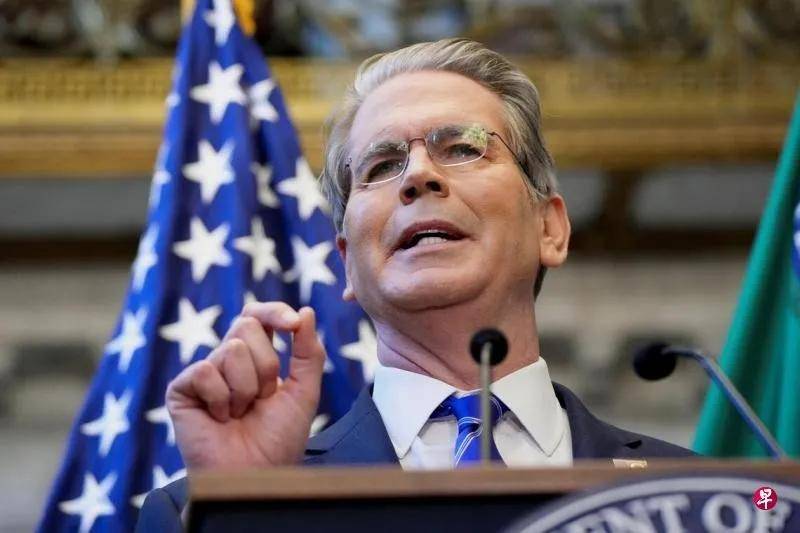
美国财政部长,说着说着都有些哽咽:我们不想脱钩,我们只是想去风险,大家不要误会
Sou Hu Cai Jing· 2025-10-17 07:24
Core Insights - The U.S. Treasury Secretary's recent comments highlight the economic struggles faced by the U.S., emphasizing a desire to "de-risk" rather than decouple, amidst soaring national debt of $37.86 trillion [1] - The U.S. government's imposition of tariffs has led to supply chain disruptions and operational halts in various sectors, raising concerns about social stability [1] - The U.S. is exhibiting double standards, shifting from advocating for free trade to imposing tariffs as its competitive edge diminishes, which reflects a misguided attempt to transfer risks to other nations [1][3] Economic Context - The U.S. national debt has reached an alarming level, creating immense pressure on the economy, with the likelihood of repayment appearing nearly impossible without significant action [1] - The ongoing tariff wars have resulted in a government shutdown, affecting multiple departments and even military payrolls, indicating severe operational challenges [1] Geopolitical Implications - The U.S. leadership's mindset reveals a desire to maintain its global dominance while expecting compliance from other nations, which is increasingly seen as outdated and counterproductive [3] - The global landscape is shifting towards equality and cooperation, challenging the notion that any single country can dictate terms [3]
美国再次威胁对华加税100%,我们应该怎么办?
Sou Hu Cai Jing· 2025-10-17 03:34
美国贸易代表格里尔日前表示,特朗普仍有可能在 11 月 1 日或更早对中国征收 100% 的关税。他说:"这事儿很大程度上 得看中国人怎么做,是他们主动选择让局势变得更紧张的。" 美国这哪是霸道啊,简直就是耍无赖。这种做法,跟以前那些土匪、现代的黑社会团伙有啥两样,完全不像是一个国家该 干的事儿。 你看啊,最先封禁对华半导体技术和产品的,是美国;最先挑起关税战的,也是美国;最先嚷嚷着要对中国进口俄罗斯石 油加征50%惩罚性关税的,还是美国;最先对中国货轮加收高额"港口停靠费"的,依旧是美国。结果中国只是采取了反制 措施,管控稀土出口,美国倒好,反过来指责是中国"故意让局势变得更紧张",还说要再对中国加征100%的税。 美国的逻辑就是,只能我打你,你不许还手。面对这样的美国,我们能和他讲理吗?讲得通道理就不是美国了,这个世界 就没有什么美国的霸道霸权霸凌了,这个世界也没有战争了。退一万步,即便我们再次与美国谈判,特朗普政府答应把新 加的100%关税税率降到20%,看似美国让步了80%,但还不是等于美国依然加税20%了吗? 但是,我们还必须看到这样的情况,那就是即便中国让步,美国同意把计划的这100%的关税降到1 ...

美方应拿出谈的诚意
Jing Ji Ri Bao· 2025-10-16 22:12
Core Viewpoint - The article discusses China's justified export controls on rare earth materials in response to perceived economic coercion from the U.S., emphasizing China's readiness to engage in dialogue while firmly opposing unilateral trade measures [1][2][3]. Group 1: China's Position on Export Controls - China asserts that its export controls on rare earth materials are legitimate and necessary for national security, as foreign entities have misused these materials for military purposes, posing threats to China's interests [1]. - The Chinese government maintains that these export controls do not equate to a complete ban, as applications that meet regulations will continue to be approved [1]. Group 2: U.S. Actions and Responses - The U.S. has been accused of abusing the concept of "national security" and implementing discriminatory practices against China, particularly through extensive export controls on semiconductors and related technologies [2]. - Since the Madrid economic talks in September, the U.S. has introduced numerous restrictive measures against China, undermining the atmosphere for bilateral economic discussions [2]. Group 3: Call for Constructive Dialogue - China emphasizes the need for dialogue based on equality, respect, and mutual benefit, while also expressing readiness to confront challenges if necessary [3]. - The article highlights that U.S. officials have shown a desire for talks but must demonstrate genuine intent without resorting to threats or new restrictions [3].
银河期货有色金属衍生品日报-20251016
Yin He Qi Huo· 2025-10-16 14:48
Group 1: Report Industry Investment Rating - Not provided Group 2: Core Views of the Report - The copper market is affected by factors such as supply disruptions, low processing fees, and high prices suppressing downstream demand. The overall view is to buy on dips cautiously [2][7][8]. - The alumina market has a static surplus, and prices are expected to remain weakly volatile. Attention should be paid to the production dynamics of enterprises [11][15][16]. - The aluminum market's mid - term upward trend remains unchanged. After the price correction, downstream stocking drives inventory reduction, and consumption shows resilience [18][19][22]. - The casting aluminum alloy market is less affected by the US tariff policy. The shortage of scrap aluminum and seasonal demand support prices, and the short - term view is to buy on dips [26][28][29]. - The zinc market has an oversupply situation. The domestic market is under pressure, while the overseas market is strong. Short - selling on rallies is recommended [31][34][36]. - The lead market has a situation of weak supply and demand, with supply being weaker. There is a risk of price decline in the second half of the month, and short - selling on rallies can be considered [38][39][40]. - The nickel market is in a long - term oversupply situation. LME inventory is increasing, and prices are under pressure. Short - selling on rallies is advisable [42][44][45]. - The stainless steel market has high inventory and low prices. The price is still under pressure, and short - selling on rallies is recommended [49][50][52]. - The tin market has tight supply at the mine end, slow demand recovery, and prices are expected to be volatile at high levels. Attention should be paid to Myanmar's resumption of production [55][59][60]. - The industrial silicon market is under short - term price pressure, but there is a possibility of balance sheet repair in November. Short - selling on rallies is recommended [62][63][64]. - The polysilicon market may experience a short - term correction, but the medium - and long - term upward trend remains unchanged. Buying on dips is recommended [69][70][71]. - The lithium carbonate market has strong demand and short - term price strength. The view is to be bullish on the short - term trend [75][76][79]. Group 3: Summary by Related Catalogs Copper - **Market Review**: On October 16, the Shanghai Copper 2511 contract closed at 85,050 yuan/ton, up 0.11%. The Shanghai Copper index reduced positions by 10,111 lots to 546,200 lots. Shanghai spot premiums stabilized, while Guangdong's inventory ended a 5 - day increase, and North China's procurement was weak [2]. - **Important Information**: Peru's copper production in August decreased by 1.6% year - on - year to 242,740 tons. From January to August 2025, it was about 1.81 million tons, up 2.6% year - on - year. As of October 16, SMM's national mainstream copper inventory increased by 0.55 million tons to 177,500 tons compared to Monday. Japan, Spain, and South Korea expressed concerns about the decline in copper processing and refining fees [3][4][5]. - **Logic Analysis**: Macroscopically, the US employment market is cooling, and Powell may support interest rate cuts. Fundamentally, supply disruptions at the copper mine end increase, and processing fees are expected to decline. Consumption is weak, but there may be an increase in demand after price corrections [7]. - **Trading Strategy**: For unilateral trading, buy on dips cautiously. Hold long - term cross - market arbitrage positions, and start cross - period arbitrage after domestic inventory decline. Wait and see for options [8]. Alumina - **Market Review**: On October 16, the Alumina 2601 contract decreased by 9 yuan to 2,790 yuan/ton. Spot prices in various regions showed a downward trend [10]. - **Related Information**: On October 15, some aluminum plants made purchases. The national alumina production capacity was 114.62 million tons, with 98.55 million tons in operation. Some enterprises in Shanxi and Henan were in a loss situation, and an enterprise in Shanxi reduced production due to ore shortages [11]. - **Logic Analysis**: The static surplus of alumina is absorbed by downstream stocking, but the surplus trend remains. Prices are expected to be weakly volatile, and more production cuts may occur in November [15]. - **Trading Strategy**: For unilateral trading, expect prices to be weak. Wait and see for arbitrage and options [16]. Electrolytic Aluminum - **Market Review**: On October 16, the Shanghai Aluminum 2512 contract increased by 100 yuan to 20,975 yuan/ton. Spot prices in different regions showed different trends [18]. - **Related Information**: China's September economic data showed some improvements. The US tariff policy on China was uncertain, and on October 15, the main market electrolytic aluminum inventory decreased by 12,000 tons [18]. - **Trading Logic**: The impact of the US tariff policy on aluminum prices is expected to be less severe than in April. After the price correction, downstream stocking drives inventory reduction, and the mid - term upward trend remains unchanged [19]. - **Trading Strategy**: For unilateral trading, be bullish on dips in the short - term. Wait and see for arbitrage and options [22]. Casting Aluminum Alloy - **Market Review**: On October 16, the Casting Aluminum Alloy 2511 contract increased by 90 yuan to 20,490 yuan/ton. Spot prices in different regions were stable [26]. - **Related Information**: The US tariff policy was uncertain, and on October 15, the inventory of recycled aluminum alloy ingots in three places increased slightly, while the warehouse receipts decreased [26][27]. - **Trading Logic**: The impact of the US tariff policy on aluminum alloy prices is limited. The shortage of scrap aluminum and seasonal demand support prices [28]. - **Trading Strategy**: For unilateral trading, buy on dips in the short - term. Wait and see for arbitrage and options [29]. Zinc - **Market Review**: On October 16, the Shanghai Zinc 2512 contract decreased by 0.32% to 21,965 yuan/ton. The spot market had low trading volume, and downstream purchasing was weak [31][33]. - **Related Information**: As of October 16, the SMM's seven - region zinc ingot inventory was 162,700 tons. The International Lead and Zinc Research Group predicted an oversupply of zinc in 2025 and 2026 [34]. - **Logic Analysis**: At the mine end, domestic production may decrease, and imported zinc concentrate is in a loss situation. At the smelting end, production is expected to increase. Consumption is expected to weaken. The domestic market is under pressure, while the overseas market is strong [34][35]. - **Trading Strategy**: For unilateral trading, hold short positions and add short positions on rallies. Wait and see for arbitrage and options [36]. Lead - **Market Review**: On October 16, the Shanghai Lead 2512 contract increased by 0.26% to 17,130 yuan/ton. The spot market had average trading volume [38]. - **Related Information**: As of October 16, the SMM's five - region lead ingot inventory was 37,700 tons. The International Lead and Zinc Research Group predicted an oversupply of lead in 2025 and 2026 [39]. - **Logic Analysis**: From September to mid - October, domestic lead production was low. After the National Day, inventory decreased. In the second half of October, supply may increase, and prices may decline [39]. - **Trading Strategy**: For unilateral trading, expect prices to decline from high levels. Wait and see for arbitrage, and sell out - of - the - money call options [40]. Nickel - **Market Review**: On October 16, the Shanghai Nickel main contract NI2511 increased by 250 to 121,270 yuan/ton. Spot premiums showed an upward trend [42]. - **Related Information**: In August 2025, the global refined nickel supply was in surplus. The global nickel market is expected to be oversupplied until 2030. LME nickel inventory is increasing [44]. - **Logic Analysis**: The global nickel market is in a long - term oversupply situation. LME inventory increase indicates high export enthusiasm of domestic enterprises, and prices are under pressure [44]. - **Trading Strategy**: For unilateral trading, sell on rallies. Wait and see for arbitrage, and sell a wide - straddle option combination for the 2512 contract [45][46][47]. Stainless Steel - **Market Review**: On October 16, the Stainless Steel main contract SS2512 increased by 60 to 12,615 yuan/ton. Spot prices were weak and stable [49]. - **Important Information**: The EU's policies may increase the cost of stainless steel imports. The national stainless steel inventory decreased slightly [50][51]. - **Logic Analysis**: Nickel prices are rising, but 300 - series cold - rolled inventory is increasing, and prices are under pressure. The current price is lower than the factory cost, and attention should be paid to inventory digestion and production plans [51]. - **Trading Strategy**: For unilateral trading, sell on rallies. Wait and see for arbitrage [52][53]. Tin - **Market Review**: On October 16, the main contract of Shanghai Tin 2511 closed at 281,350 yuan/ton, up 940 yuan/ton or 0.34%. The spot price decreased slightly [55]. - **Related Information**: Peru's tin production increased in August. In August 2025, the global refined tin supply was in short supply. Indonesia's tin production is expected to recover in 2026 [56][58]. - **Logic Analysis**: The US may cut interest rates. The supply at the tin mine end is tight, and the processing fee is low. Demand is recovering slowly. Attention should be paid to Myanmar's resumption of production [59]. - **Trading Strategy**: For unilateral trading, expect prices to be volatile at high levels. Wait and see for options [60][61]. Industrial Silicon - **Important Information**: On October 11, an environmental impact assessment of a silicon project was announced [62]. - **Logic Analysis**: Market rumors of polysilicon production cuts are negative for industrial silicon demand. In the short term, there is a slight surplus, and prices are under pressure. In November, there may be production cuts, and the balance sheet may be repaired [63]. - **Strategy Suggestion**: For unilateral trading, expect prices to be weak in the short term. Wait and see for arbitrage and options [64][65][66]. Polysilicon - **Important Information**: The rumor of the establishment of a polysilicon storage platform is false [69]. - **Logic Analysis**: The short - term rise was due to false rumors, and prices may correct. But capacity integration is progressing, and production is expected to decrease in November and December, with a possible slight inventory reduction [70]. - **Strategy Suggestion**: For unilateral trading, buy on dips after a short - term correction. Hold a reverse arbitrage position for the 2511 and 2512 contracts. Adjust the previous double - buying strategy [71][72][73]. Lithium Carbonate - **Market Review**: On October 16, the Lithium Carbonate 2511 contract increased by 1,880 to 75,080 yuan/ton. Spot prices were stable [75]. - **Important Information**: The government issued a plan for electric vehicle charging facilities. Hainan Mining shipped lithium concentrate [76]. - **Logic Analysis**: Production increased, inventory decreased, demand was strong, and prices were supported. Market funds returned, and volatility may increase [76][78]. - **Trading Strategy**: For unilateral trading, be bullish on the short - term trend. Wait and see for arbitrage, and sell a wide - straddle option combination for the 2601 contract [79].
国泰君安期货:锌:偏弱震荡
Guo Tai Jun An Qi Huo· 2025-10-16 03:51
Group 1: Report Industry Investment Rating - The investment rating for zinc is "Weak and volatile" [1] Group 2: Core View of the Report - The zinc market shows a weak and volatile trend, with a trend strength of -1, indicating a relatively bearish outlook [1][3] Group 3: Summary of Related Catalogs 1. Fundamental Tracking - **Prices**: The closing price of SHFE zinc main contract was 22,015 yuan/ton, down 0.92%; the closing price of LME zinc 3M electronic disk was 2,949 dollars/ton, down 2.09% [1] - **Trading Volume**: The trading volume of SHFE zinc main contract was 124,266 lots, down 41; the trading volume of LME zinc was 19,272 lots, up 6,240 [1] - **Open Interest**: The open interest of SHFE zinc main contract was 89,912 lots, down 5,282; the open interest of LME zinc was 223,801 lots, up 4,285 [1] - **Premiums and Discounts**: Shanghai 0 zinc premium/discount was -50 yuan/ton, up 5; LME CASH - 3M premium/discount was 115 dollars/ton, up 26 [1] - **Inventory**: SHFE zinc futures inventory was 65,666 tons, up 7,172; LME zinc inventory was 38,350 tons, down 250 [1] 2. News - The US Treasury Secretary signaled easing, and the working - level of both sides maintained communication. China's Ministry of Commerce reiterated its stance on the tariff war. US media analysis pointed out that the US's recent contradictory statements revealed internal policy differences, and it was difficult to implement extreme tariff measures [1]
宝城期货国债期货早报(2025年10月16日):品种观点参考—金融期货股指板块-20251016
Bao Cheng Qi Huo· 2025-10-16 01:39
Report Summary 1. Report Industry Investment Rating - No information provided on the industry investment rating. 2. Core Viewpoint - The short - term view on TL2512 is "oscillation", the medium - term view is "oscillation", and the intraday view is "oscillating weakly", with an overall view of "oscillation". The core logic is that the long - term expectation of interest rate cuts still exists, but the possibility of a short - term comprehensive interest rate cut is low [1]. - For TL, T, TF, and TS, the intraday view is "oscillating weakly", the medium - term view is "oscillation", and the reference view is "oscillation". The short - term uncertainty of the tariff war is strong, and the market is in a wait - and - see state. In the short term, the domestic economic data shows strong resilience, and the need for a comprehensive interest rate cut is insufficient. In the long run, due to the problem of insufficient effective domestic demand, there is an expectation of a loose monetary policy, which supports the Treasury bond futures. Overall, Treasury bond futures will maintain a bottom - oscillating pattern in the short term [5]. 3. Summary by Related Catalogs Variety Viewpoint Reference - Financial Futures Stock Index Sector - **TL2512**: Short - term "oscillation", medium - term "oscillation", intraday "oscillating weakly", overall "oscillation". Core logic: Long - term interest rate cut expectation exists, short - term comprehensive interest rate cut possibility is low [1]. Main Variety Price Market Driving Logic - Financial Futures Stock Index Sector - **TL, T, TF, TS**: Intraday "oscillating weakly", medium - term "oscillation", reference view "oscillation". Yesterday, Treasury bond futures closed slightly lower. Short - term tariff war uncertainty, strong domestic economic data resilience, insufficient short - term need for comprehensive interest rate cut, weak implicit interest rate cut expectation, lack of upward momentum for Treasury bond futures. Long - term insufficient effective domestic demand, expectation of loose monetary policy, strong support for Treasury bond futures. Short - term bottom - oscillating pattern [5].
宝城期货股指期货早报-20251016
Bao Cheng Qi Huo· 2025-10-16 01:21
Report Summary 1. Report Industry Investment Rating No relevant content provided. 2. Core View of the Report - The stock index is expected to maintain wide - range fluctuations in the short term due to the game between profit - taking sentiment and policy support. In the medium term, it is expected to rise as the inflow trend of funds into A - shares remains unchanged and policy support is strong [1][5]. 3. Summary by Related Catalogs Variety View Reference - Financial Futures Stock Index Sector - For IH2512, the short - term view is "oscillation", the medium - term view is "rise", the intraday view is "oscillation with a slight upward bias", and the overall view is "wide - range oscillation". The core logic is the conflict between short - term profit - taking willingness of funds and the fermentation of long - and medium - term policy - favorable expectations [1]. Main Variety Price Market Driving Logic - Financial Futures Stock Index Sector - For IF, IH, IC, and IM, the intraday view is "oscillation with a slight upward bias", the medium - term view is "rise", and the reference view is "wide - range oscillation". Yesterday, all stock indexes oscillated and rebounded. The total trading volume of the Shanghai, Shenzhen, and Beijing stock markets was 2.0904 trillion yuan, a decrease of 506.2 billion yuan from the previous day. The market sentiment is generally optimistic, and there is capital entering the market on dips. However, there is also caution among funds chasing higher near the previous high. In the short term, there are external uncertainties and high valuation levels, leading to technical correction pressure. In the long - and medium - term, policy support is strong due to issues such as insufficient domestic demand and external tariff disturbances [5].
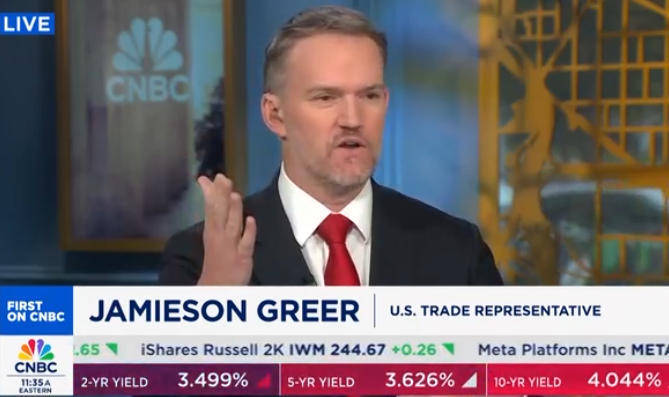
美贸易代表气急败坏:忍不了中国能说“不”
Sou Hu Cai Jing· 2025-10-16 00:57
Group 1 - The core viewpoint of the article highlights the escalating tensions between the U.S. and China, particularly regarding trade and tariffs, with the U.S. threatening to impose 100% tariffs on Chinese goods depending on China's actions [1][3] - U.S. Trade Representative Jamison Greer indicated that the U.S. is focused on reducing dependency on China by bringing supply chains back to the U.S. and emphasized the importance of cooperation with China for long-term economic success [3][4] - The article mentions that the recent Chinese export control measures on rare earths took the U.S. by surprise, although there were prior warnings from China regarding potential retaliatory actions [3][4] Group 2 - A senior U.S. official warned that China had previously indicated it would implement retaliatory measures that exceeded expectations, suggesting that the U.S. could face significant consequences [4] - China reiterated that its export control measures are legitimate actions based on legal regulations and are not outright bans, as they will continue to approve applications that meet the criteria [4] - The Chinese stance on the trade war remains consistent: they are open to negotiations but will respond firmly to threats and new restrictions from the U.S. [4]