大国博弈

Search documents
莫迪真的“卖了”普京?特朗普期盼已久的事,印度终于松口了
Sou Hu Cai Jing· 2025-10-21 03:51
Core Viewpoint - Trump announced that India has committed to stop purchasing Russian oil, framing it as a significant diplomatic victory, although India's response remains ambiguous [1][3]. Group 1: Diplomatic Pressure and Economic Impact - The U.S. imposed a 25% punitive tariff on India due to its purchase of Russian oil, resulting in a dramatic 20.7% drop in India's exports to the U.S. from $6.86 billion to $5.44 billion in September [3]. - The U.S. strategy involved appointing a trusted ambassador to India and negotiating defense and high-tech cooperation, while simultaneously leveraging high tariffs to compel concessions from India [6]. Group 2: India's Energy Dependency and Economic Considerations - Russia now accounts for 35% of India's oil imports, a significant increase from less than 1% before the Ukraine conflict, making it a critical energy supplier for India [6]. - India's Finance Minister emphasized the importance of national interest and energy security, questioning the rationale behind not purchasing discounted oil, indicating that halting Russian oil imports could lead to soaring domestic costs and potential civil unrest [8]. Group 3: Geopolitical Implications - The U.S. aims to weaken Russia's economic position while expanding its influence in the region by encouraging India and Japan to align with Western interests against Russia [10]. - India's ambiguous stance serves to maintain leverage in negotiations with both the U.S. and Russia, reflecting its pragmatic diplomatic approach [10][12].

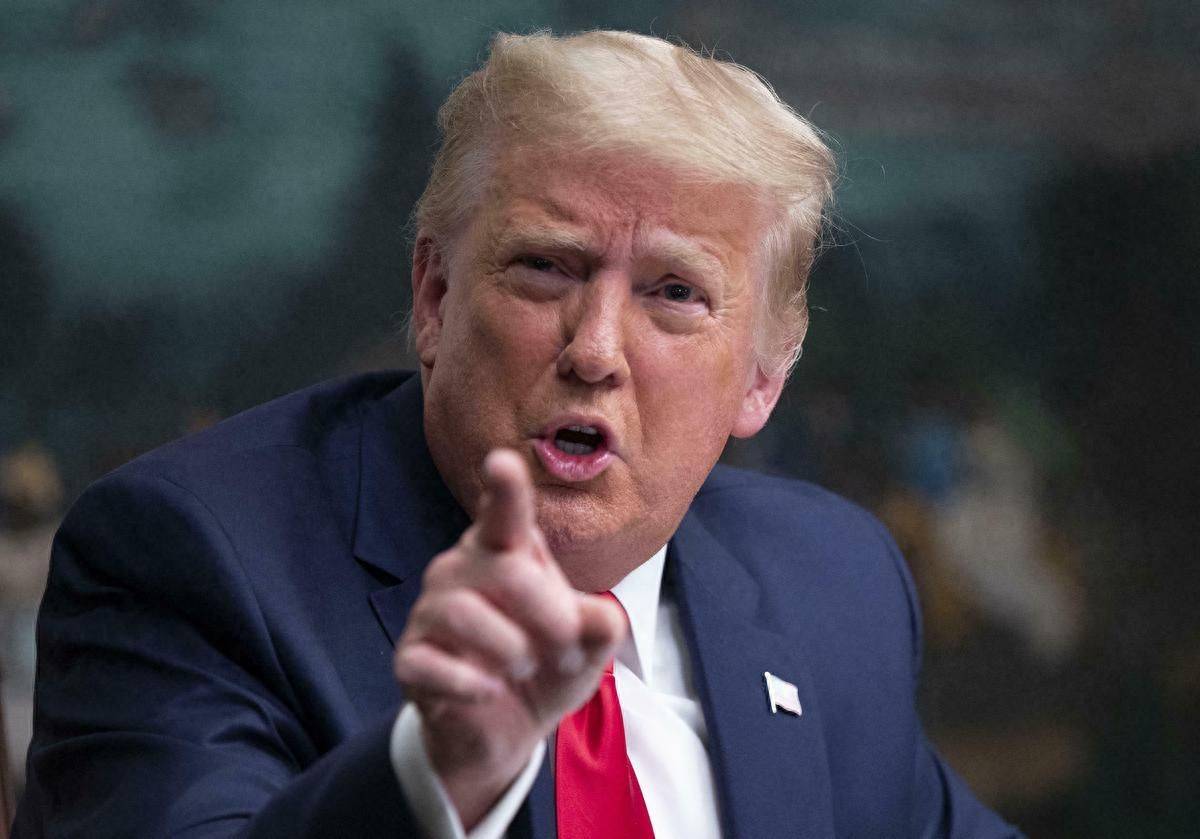
特朗普对印度下“关税通牒”:再买俄油,等着交50%的高额关税!印度482亿出口要凉?
Sou Hu Cai Jing· 2025-10-20 14:26
Core Viewpoint - Trump has issued a "tariff ultimatum" to India, threatening hefty fines if India continues to purchase Russian oil, which could escalate tensions between the US and India and disrupt global trade [1][8]. Group 1: Tariff Actions - Trump has already imposed tariffs on India three times, starting with a 25% tariff on goods exported to the US in late July, followed by an additional 25% tariff due to India's oil purchases from Russia, raising the total tariff rate to 50% [3]. - The tariffs could impact India's $48.2 billion export revenue, especially considering the projected $128.8 billion total trade volume between India and the US for 2024 [3]. Group 2: Geopolitical Implications - The situation reflects a larger geopolitical struggle, where the US seeks market access while India aims to protect its agricultural sector, which supports 60% of its population [5]. - The US is pressuring India to choose sides, as India benefits from purchasing Russian oil at lower prices while also wanting to enhance its international standing through relations with the US [5]. Group 3: Future Outlook - The likely outcome of this conflict is a "fight without breaking," where India may publicly resist US pressure while quietly seeking negotiation space by reducing tariffs on US products like bourbon whiskey [6]. - The US may not fully sever ties with India, as losing India would weaken its "Indo-Pacific strategy," suggesting that the situation may result in targeted industry actions rather than a complete fallout [6].
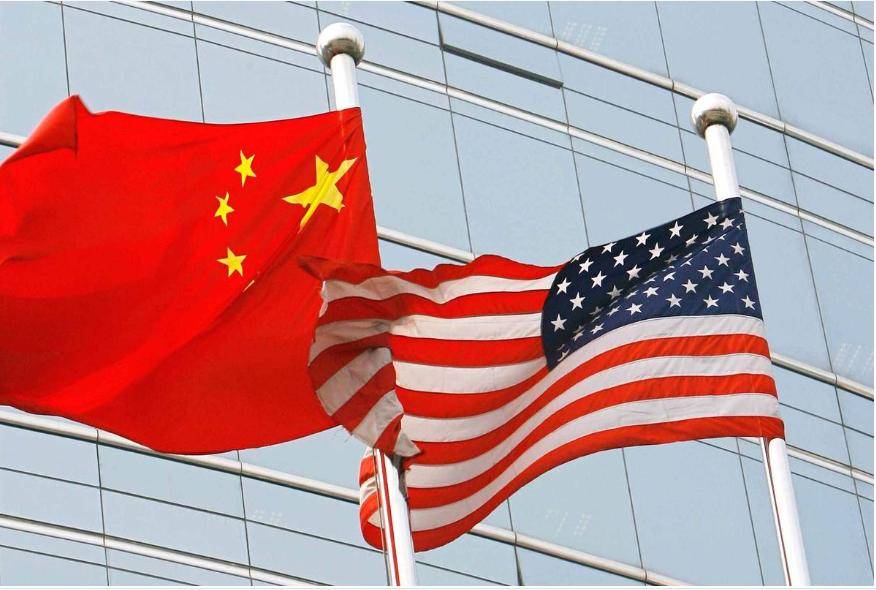
外资大行谈中国稀土政策调整:德银看大国博弈,美银看非中供应链替代机会
Zhi Tong Cai Jing· 2025-10-16 14:41
Group 1 - The adjustment of China's rare earth export policy is interpreted as a strategic move in response to U.S. pressure, aiming to gain negotiation leverage in semiconductor discussions [2][3] - The U.S. has expanded export restrictions, which has weakened China's trust in trade negotiations, indicating a potential backlash against U.S. policies [2] - China has linked rare earth controls directly to semiconductor parameters, establishing a negotiation logic of "equivalent exchange" with the U.S. [3] Group 2 - Bank of America predicts a price differentiation trend in rare earths, forecasting that the average price of neodymium-praseodymium will reach $85 per kilogram by the second half of 2025, with significant increases for heavy rare earths by 2030 [4][5] - Non-Chinese rare earth supply chains are considered "scarce assets," with limited companies capable of large-scale production outside of China, leading to a buy rating for Lynas Rare Earths and MP Materials [5] - Lynas Rare Earths is the only company outside China with significant production capacity for both light and heavy rare earths, benefiting from government support and potential valuation increases [5]

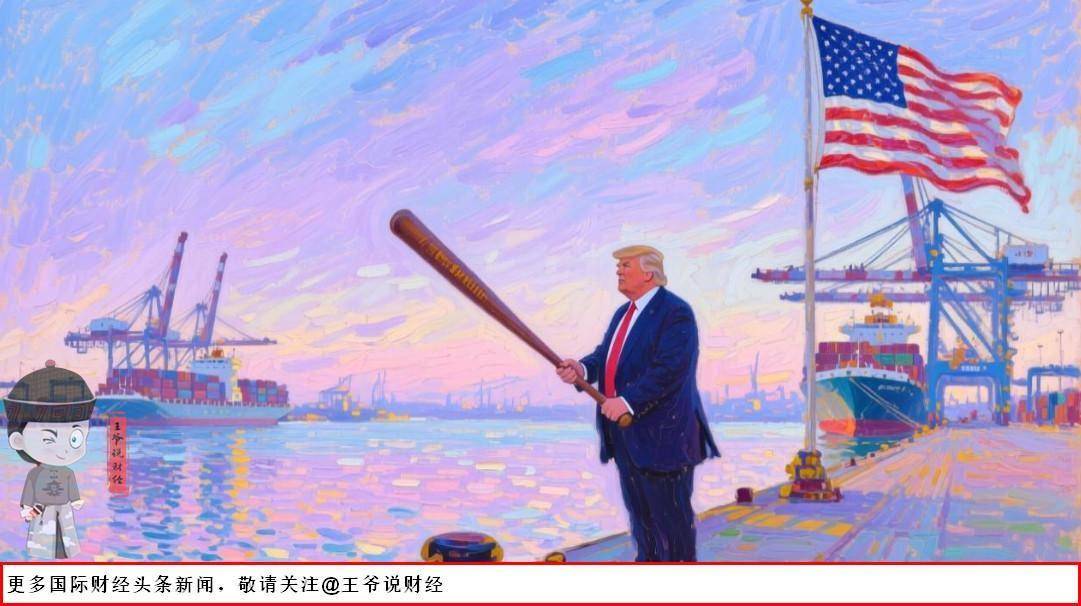
突发美国船运巨头缴费,中国要求严格执行,客户费用零增加
Sou Hu Cai Jing· 2025-10-16 01:37
2025年10月,风起云涌,全球航运圈子一夜炸开了锅,中国交通运输部突然亮出底牌,宣布对美国船舶加收特别港务费,消息传得飞快,圈内外都屏住了呼 吸,这是一场硬碰硬的对峙局面,气氛里全是火药味,谁都看得出来这里头的分量。 中国这一步说白了,就是对美国此前的举措进行对等反制,官方文件里也写得清楚——分阶段、逐步加码,最终要实现完全对等,这不是一次性收割,而是 一场拉锯战,留足了变数和空间,谁也不知道后面还有多少招。 有位上海的货代朋友,做了十几年美森的客户,他说他们本以为这次运费肯定要涨,没想到公司宁可自己扛,也不涨价,外贸圈里不少人都松了口气,毕竟 现在利润薄得像纸,谁都吃不起新加的成本,这种小动作里其实藏着行业里的大智慧。 所有人心里都明白,这种承诺能撑多久谁也说不准,中方的特别港务费是分阶段递增的,意味着每过一段时间,美森的压力就要再上一个台阶,企业决策层 也在算账,看这个局能不能一直维持下去,还是说哪天不得不改口。 美森的动作并非孤例,其他航运公司也在观望,谁都不想第一个涨价,大家都清楚,这种时候比的不是谁赚得多,而是谁能先稳住客户,全球化和保护主义 拉扯得够呛,企业的商业理性成了唯一能依靠的底线,这种理 ...
科技股再度强势 基金经理称A股结构性行情延续
Zheng Quan Shi Bao· 2025-10-15 17:59
Market Overview - A-share market is experiencing a significant style switch as it approaches the end of the fourth quarter, with sectors like gold, non-ferrous metals, rare earths, coal, electricity, steel, and banking leading in performance since October, while previously high-performing sectors like AI, innovative pharmaceuticals, and batteries lag behind [1] - The market is in a high-level fluctuation, with a temporary cooling of investment sentiment in the technology sector, but a rebound occurred on October 15, with the Shanghai Composite Index returning to 3900 points, indicating continued strength in technology and new energy sectors [1] Structural Market Trends - Fund companies and analysts believe that A-shares will continue to exhibit structural trends, focusing on company valuations and fundamentals for mid to long-term investments, emphasizing the selection of high-quality companies with low expectations and valuations [1] - Recent market style shifts are driven by two short-term factors: changes in the external environment prompting a demand for risk aversion and the diminishing catalytic effect of previously rapid gains in the technology sector [1] Economic Indicators and External Environment - The technology and new energy sectors showed strong performance on October 15, supported by better-than-expected September import and export data, highlighting the resilience of China's foreign trade and reinforcing the long-term growth logic in sectors like new energy and smart equipment [2] - The U.S. Federal Reserve's recent comments suggest a weakening labor market and the possibility of interest rate cuts, which may support global liquidity and enhance risk appetite for A-shares [2] Investment Strategies - Analysts recommend focusing on high-growth sectors and cyclical sectors benefiting from economic recovery and "anti-involution" policies, with an emphasis on technology, new energy, and high-end manufacturing as key investment areas [2] - Investment strategies should balance between low-valuation blue-chip stocks (like banks and public utilities) and high-growth sectors (like semiconductors and high-end manufacturing), avoiding blind chasing of stocks with excessive prior gains and panic selling during market downturns [3] Long-term Outlook - The technology sector is expected to be a core area in the context of major power competition, driven by technological innovation and industrial policy, with structural opportunities in the TMT and high-end manufacturing sectors likely to persist [3] - The ongoing implementation of domestic demand expansion and "anti-involution" policies is anticipated to yield positive effects, benefiting consumer assets and leading cyclical assets as fundamental expectations improve [3]
再传重磅!这类ETF火了!
Ge Long Hui· 2025-10-15 07:36
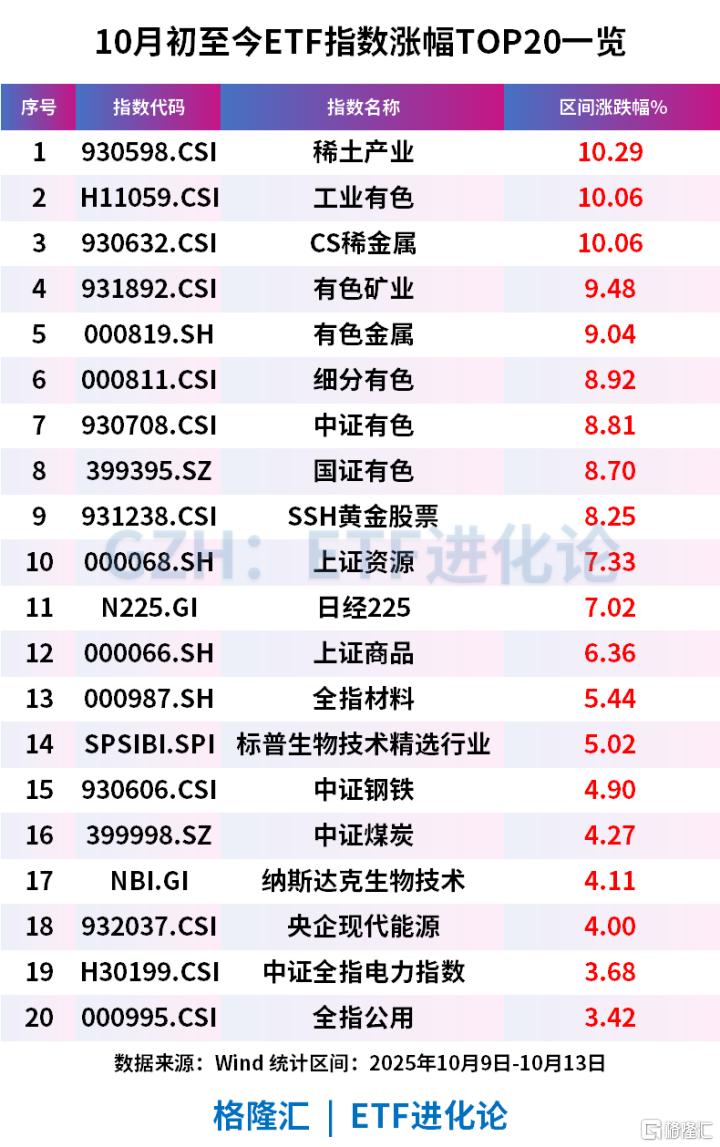
Core Viewpoint - The global rare earth and rare metal market has experienced a significant surge in 2023, with A-shares witnessing a remarkable revaluation of resource values, particularly in the rare earth and non-ferrous metal sectors, which have seen index increases exceeding 10% [1][2]. Group 1: Market Performance - The rare earth industry index rose by 10.29%, while the industrial non-ferrous index increased by 10.06%, and the rare metal index also saw a 10.06% rise [2]. - Other related indices, such as non-ferrous mining and non-ferrous metals, recorded increases of 9.48% and 9.04%, respectively [2]. Group 2: ETF Market Dynamics - The rare earth ETF managed by Jiashi (516150) attracted a net inflow of 613 million yuan after a nearly 7% single-day increase, indicating strong investor interest [4]. - The rare metal ETF (562800) has seen continuous inflows exceeding 1.066 billion yuan over four days, with its latest scale surpassing 3.6 billion yuan [4]. Group 3: Strategic Resource Dynamics - Recent geopolitical tensions have heightened concerns in the U.S. and Europe regarding the security of rare earth supplies, particularly for AI semiconductors and military applications [6]. - The U.S. government is considering partnerships or equity stakes in several domestic companies to accelerate the development of the rare earth supply chain [6]. Group 4: Policy Changes and Market Reactions - China's recent export control regulations on rare earths mark a significant policy shift, implementing detailed controls across the entire industry chain and introducing a "long-arm jurisdiction" principle [8]. - Following the new regulations, major Chinese rare earth companies have raised their prices, with Baotou Steel and Northern Rare Earth announcing a 37.13% increase in the price of rare earth concentrates [10]. Group 5: Broader Commodity Trends - The prices of other rare metals such as copper, tin, tungsten, and cobalt have also surged, contributing to a broader commodity supercycle alongside gold and silver [10]. - Gold prices reached a historical high of $4,000, with a cumulative increase of 59%, while silver prices exceeded $53, marking an 80% rise since the beginning of the year [11][12]. Group 6: Investment Implications - The strategic significance of rare earths and rare metals has evolved, with these resources now viewed as "strategic assets" rather than mere industrial materials, influencing global supply chains [4][24]. - The shift in resource strategy reflects a broader trend where critical resources are becoming essential for national competitiveness and security [24][25].


2025年9月进出口数据点评:韧性强化的外贸与市场
Tebon Securities· 2025-10-14 09:34
Export Growth - In September 2025, China's export value (in USD) increased by 8.3% year-on-year, marking the highest growth rate since April 2025[4] - Exports to major economies outside the US showed significant recovery, with double-digit growth recorded for most regions[4] - Key export categories with notable growth included machinery and high-tech products, with year-to-date growth rates of 9.6% and 8.0% respectively[4] Import Dynamics - September 2025 saw a 7.4% year-on-year increase in imports, the highest since May 2024, indicating a recovery in domestic demand[5] - Major contributors to import growth included Hong Kong (304.2%), Brazil (24.1%), and Japan (20.9%) among others[5] - High-tech and machinery imports also grew significantly, with increases of 10.3% and 5.8% respectively[5] Trade Balance and Market Resilience - The trade surplus in September 2025 was 645.47 billion RMB and 90.45 billion USD, reflecting a stable trade environment[7] - The report highlights that the ongoing US-China trade tensions have led to a decline in bilateral trade, while trade with other regions has diversified, enhancing resilience[6] - The overall trade data suggests a strengthening of China's position in the global market amidst geopolitical challenges[6]
稀土亮剑,美国低头!特朗普改口背后的大国博弈真相
Sou Hu Cai Jing· 2025-10-14 04:03
Core Insights - The statement by Trump that "China is just in a bad mood" reflects the underlying strategic vulnerability of the U.S. regarding critical resources, particularly in the rare earth sector [1][3] - China controls 80% of global rare earth production and nearly all heavy rare earth supplies, making it a crucial player in high-tech industries such as semiconductors, military, and artificial intelligence [3] - The competition between major powers is fundamentally about resource control and technological autonomy, with China's rare earth resources serving as a strategic leverage point against the U.S. [5] Industry Analysis - Rare earth elements are essential for manufacturing key components like magnets, drive parts, and sensors, which are critical in various high-tech applications [3] - The U.S. is facing a strategic reassessment of its dialogue and negotiation tactics with China due to its limited options in the face of China's dominance in rare earth resources [3][5] - The current situation indicates that what appears to be a compromise may actually signal the beginning of deeper competitive tensions between the U.S. and China over core technologies and resource control [5]
牛市震荡似“危”实“机”!
2025-10-13 14:56
Summary of Key Points from Conference Call Records Industry or Company Involved - The discussion primarily revolves around the Chinese economy, U.S. economic strategies, and the implications for various sectors including real estate, technology, and emerging industries. Core Insights and Arguments 1. **China's Financial Development** China is revitalizing its assets through capital markets, leveraging advantages in rare earth supply chains and technological breakthroughs, marking a significant shift in its financial development path distinct from the West [1][2][3] 2. **U.S. Economic Strategy** The U.S. relies on debt expansion and technology capital expenditure for economic growth. However, if technology investments do not significantly enhance labor productivity, the U.S. may face stagflation risks [3][4] 3. **Real Estate Market Stability** The most critical phase of risk in China's real estate sector has passed, with a declining proportion of real estate-related income, indicating it no longer poses a systemic risk. Major cities are expected to see price rebounds by 2026 [6][9] 4. **Technological Competition** The primary competitive arena between China and the U.S. in the coming years will be technology. Investors should focus on high-quality assets related to technology and emerging industries [7][8] 5. **Government Support for Emerging Industries** The Chinese government is shifting from debt expansion to equity financing, actively supporting emerging industries such as new energy and semiconductors through government funds [3][12][13] 6. **Impact of Central Bank Policies** Following the Central Financial Work Conference, the People's Bank of China has increased support for financial companies, indicating a proactive approach to stabilize and activate capital markets [15] 7. **Investment Opportunities in Strategic Assets** In the context of U.S.-China competition, strategic assets like gold, rare earths, and military-related investments are highlighted as having long-term investment value [22] 8. **Emerging Consumer Trends** The new consumption sector is seen as a potential safe haven amid global market volatility, with specific brands showing significant growth potential [33] 9. **Sector-Specific Recommendations** - **Technology Sector**: Focus on AI, IoT, and semiconductor equipment as key growth areas [24] - **Real Estate**: High-end commercial properties in Hong Kong and mainland China are expected to recover, driven by low-interest rates and high dividend yields [25] - **Gold Sector**: Companies in the gold industry are projected to see substantial profit growth, with some expected to increase production significantly [31][32] Other Important but Possibly Overlooked Content 1. **Consumer Savings Impact** Chinese household savings are substantial, with a significant portion in real estate. The sluggish real estate market may redirect funds into safer assets, which could enhance domestic consumption when the stock market becomes active [14] 2. **Differences Between A-shares and Hong Kong Stocks** A-shares are more supported by government interventions, while Hong Kong stocks have a short-selling mechanism, which may present different investment opportunities [16] 3. **Future of the Commercial Vehicle Market** The commercial vehicle market is expected to see growth due to local subsidies, despite current low sales and profits [28] 4. **Challenges in the Pharmaceutical Sector** The pharmaceutical sector is facing challenges due to potential regulatory changes, but innovative drugs are still expected to perform well internationally [35][36] 5. **Investment in High-Dividend Stocks** High-dividend stocks are recommended for risk-averse investors, particularly in stable sectors like utilities and consumer staples [25] This summary encapsulates the key insights and strategic directions discussed in the conference call, providing a comprehensive overview of the current economic landscape and investment opportunities.
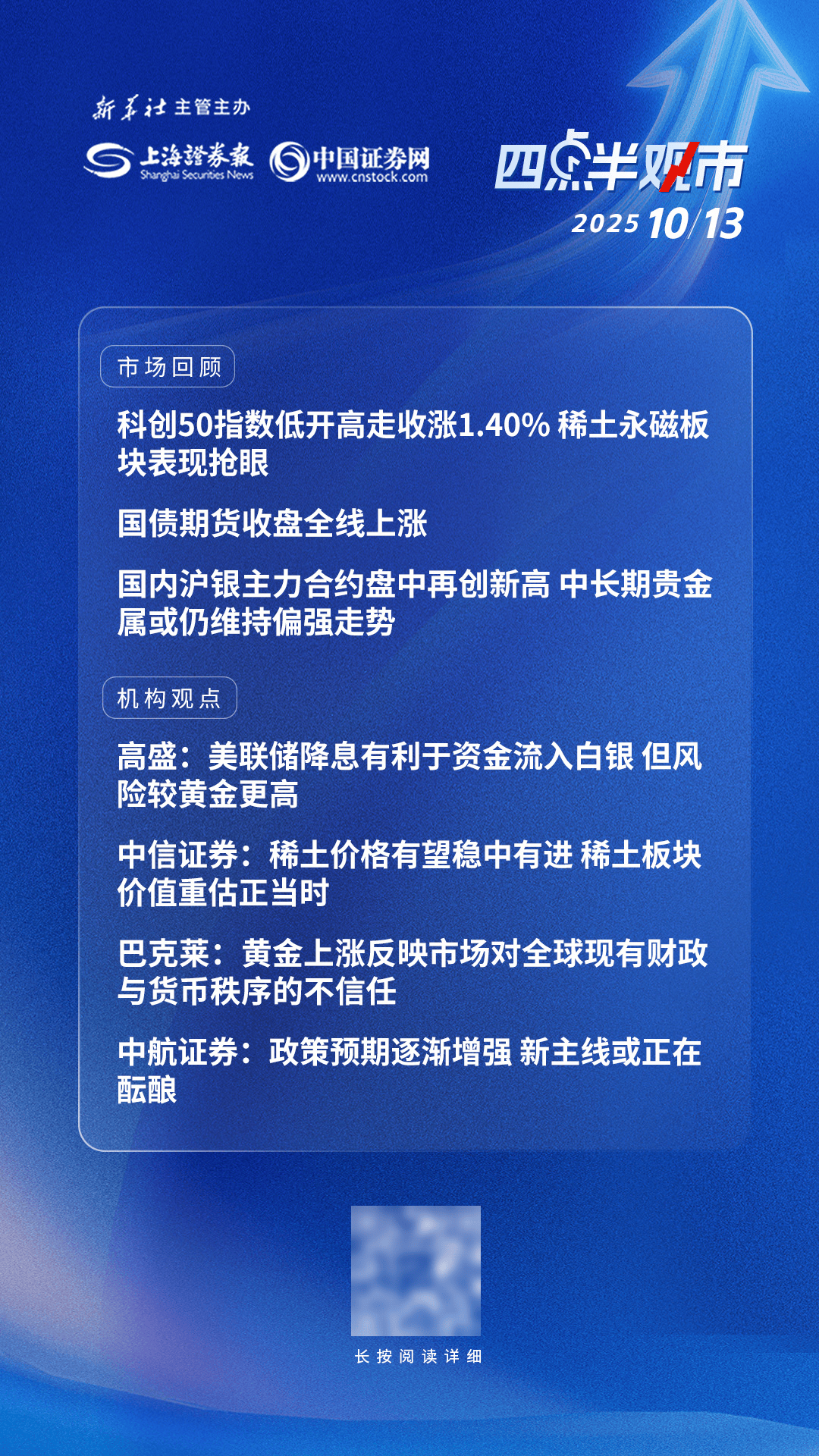
四点半观市 | 机构:美联储降息有利于资金流入白银 但风险较黄金更高
Sou Hu Cai Jing· 2025-10-13 08:49
Market Overview - The ChiNext 50 Index opened lower but closed up by 1.40%, with the rare earth permanent magnet sector showing strong performance, including stocks like China Rare Earth and Northern Rare Earth hitting the daily limit [1][4] - The Shanghai Composite Index fell by 0.19%, the Shenzhen Component Index dropped by 0.93%, and the ChiNext Index decreased by 1.11% [4] - The total trading volume in the Shanghai and Shenzhen markets reached 2.35 trillion yuan [4] Bond Market - On October 13, government bond futures closed higher across the board, with the 2-year main contract up by 0.02%, the 5-year up by 0.03%, the 10-year up by 0.10%, and the 30-year up by 0.37% [5] Commodity Market - Domestic commodity futures showed mixed results, with the main contract for silver rising sharply in the afternoon and reaching a new intraday high [6] - The ETF market had varied performances, with rare earth ETFs such as E Fund (159715) rising by 7.78%, while Hong Kong medical ETFs saw declines [6] Institutional Insights - Goldman Sachs reported that despite silver prices exceeding $50 per ounce, the medium-term outlook remains bullish, driven by inflows from private investments due to Federal Reserve rate cuts, although silver's volatility and downside risks are higher than gold [7] - CITIC Securities indicated that the supply of rare earths is becoming more rigid, and with the traditional peak season approaching, the supply-demand dynamics are improving, suggesting a stable increase in rare earth prices and a timely revaluation of the sector [7] - Barclays' global research chairman noted that gold prices have risen over 50% this year, reflecting increasing market distrust in the current fiscal and monetary order [7] - Zhonghang Securities' chief economist anticipates a significant policy window in October that could drive A-shares upward, despite potential external disturbances [7]